Storage Furniture
Beds with storage: which type I would choose, and why
A double bed sits on 2.6 square metres of floor whether it stores anything or not. Making that footprint work is the best value move in any small bedroom.
The bed is the one piece of furniture in a bedroom you do not get to argue with. Everything else is a choice. So if the bed is going to occupy a third of a small room regardless of what I do, I would much rather it earned that space than simply sat on it.
The four types, ottoman, drawer, platform and headboard, hold quite different amounts and need quite different clearances around them. Choosing the wrong one for your room shape is the most common way I see people end up with storage they cannot open, and what frustrates me about it is that a tape measure would have caught it in thirty seconds.
So before I talk about capacity at all, I want to talk about which direction the thing opens. No product page will tell you, and it is the fact that decides whether any of this works.
Ottoman beds: most capacity, slowest access
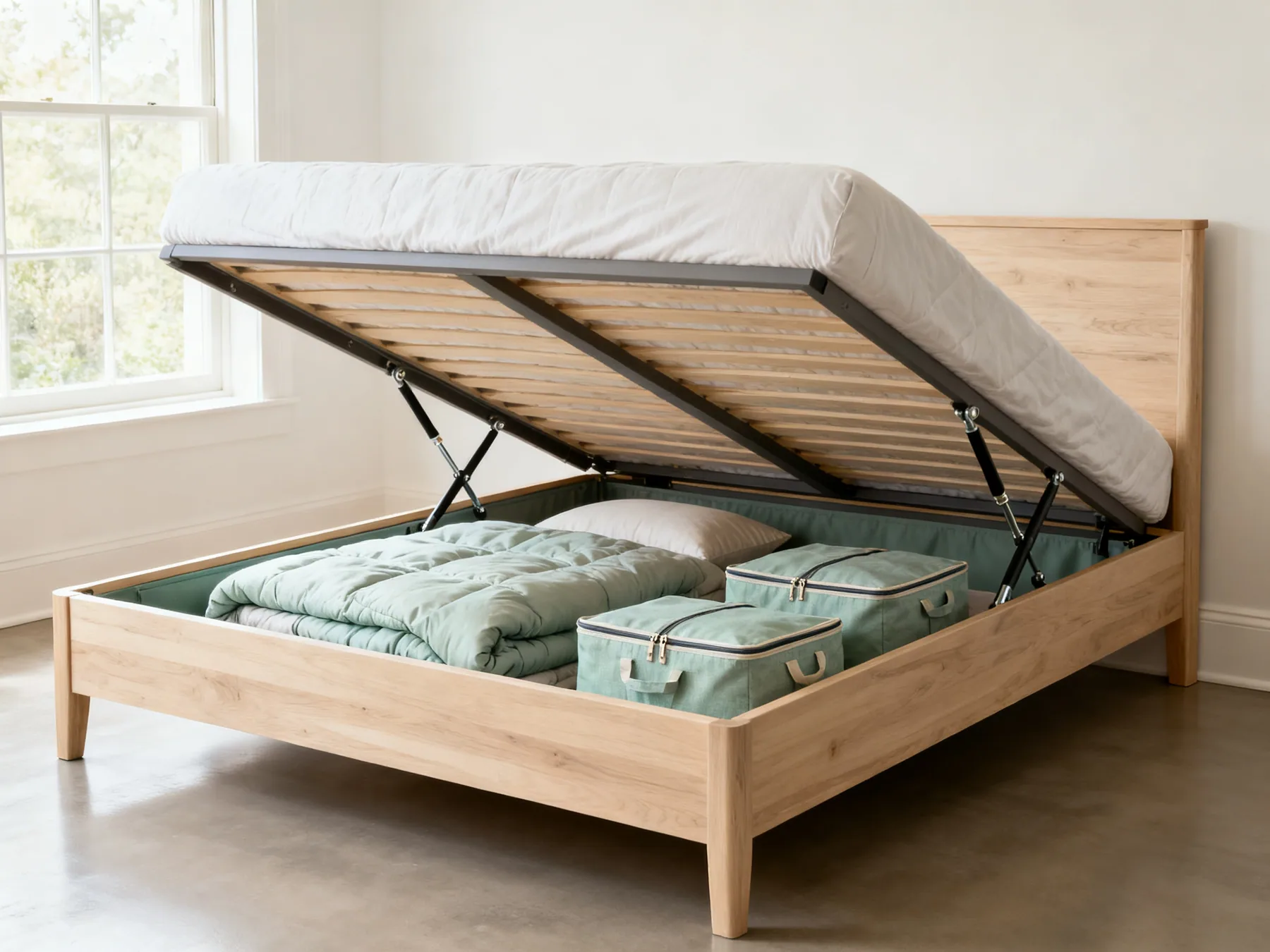
An ottoman lifts the whole mattress base on gas struts and gives you the entire under-bed volume as one open compartment. Because there are no drawer boxes or runners eating into it, it holds more than any other storage bed, and it is the one I recommend most often when the room can take it.
The trade is that you have to clear the bed to open it. I want to be blunt about what that means in practice, because the showroom demonstration is always done on an empty bed. If there are cushions, a throw and a book on it, opening the ottoman is a two-minute job rather than a two-second one. That makes it excellent for bedding, off-season clothes and suitcases, and genuinely impractical for anything you need on a Tuesday morning.
Check whether it lifts from the end or the side
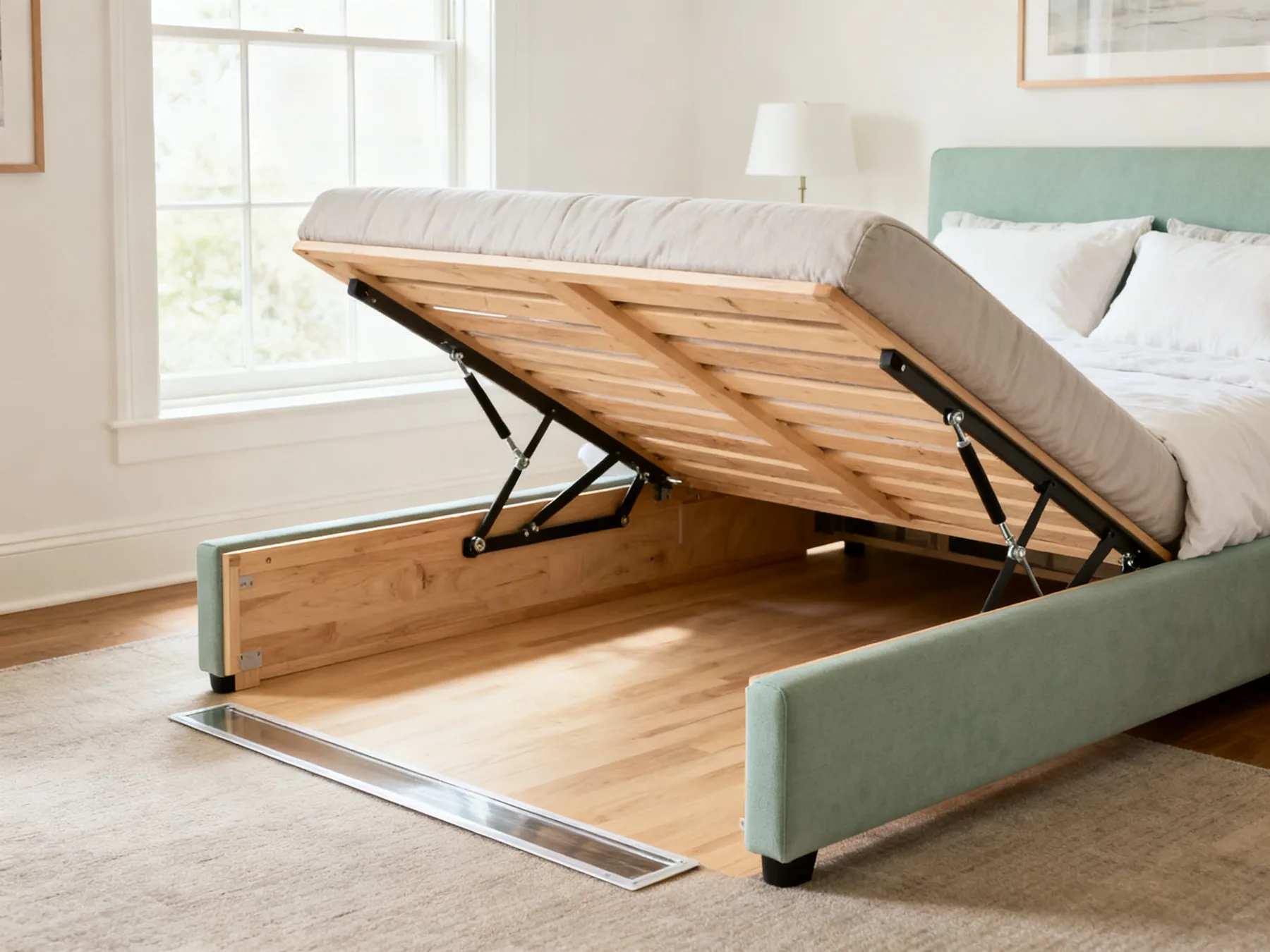
An end-lift needs about 700mm of clear floor at the foot. A side-lift needs the same at one side. If your bed sits in an alcove or against a wall, only one of those will work, and getting it wrong makes the storage unreachable. This is the question I ask before anything else.
Measure the clearance before you order
Divide the compartment with soft bags
One large open volume becomes a jumble within a month. Two or three fabric zip bags inside it keep categories separate and let you lift a whole category out at once.
Check the strut rating against your mattress
Gas struts are matched to a mattress weight range. A heavy pocket-sprung or latex mattress on struts specified for lightweight foam will be a fight to lift and will wear the mechanism out early. The spec is published, and it is worth reading.
Drawer beds: less space, far better access
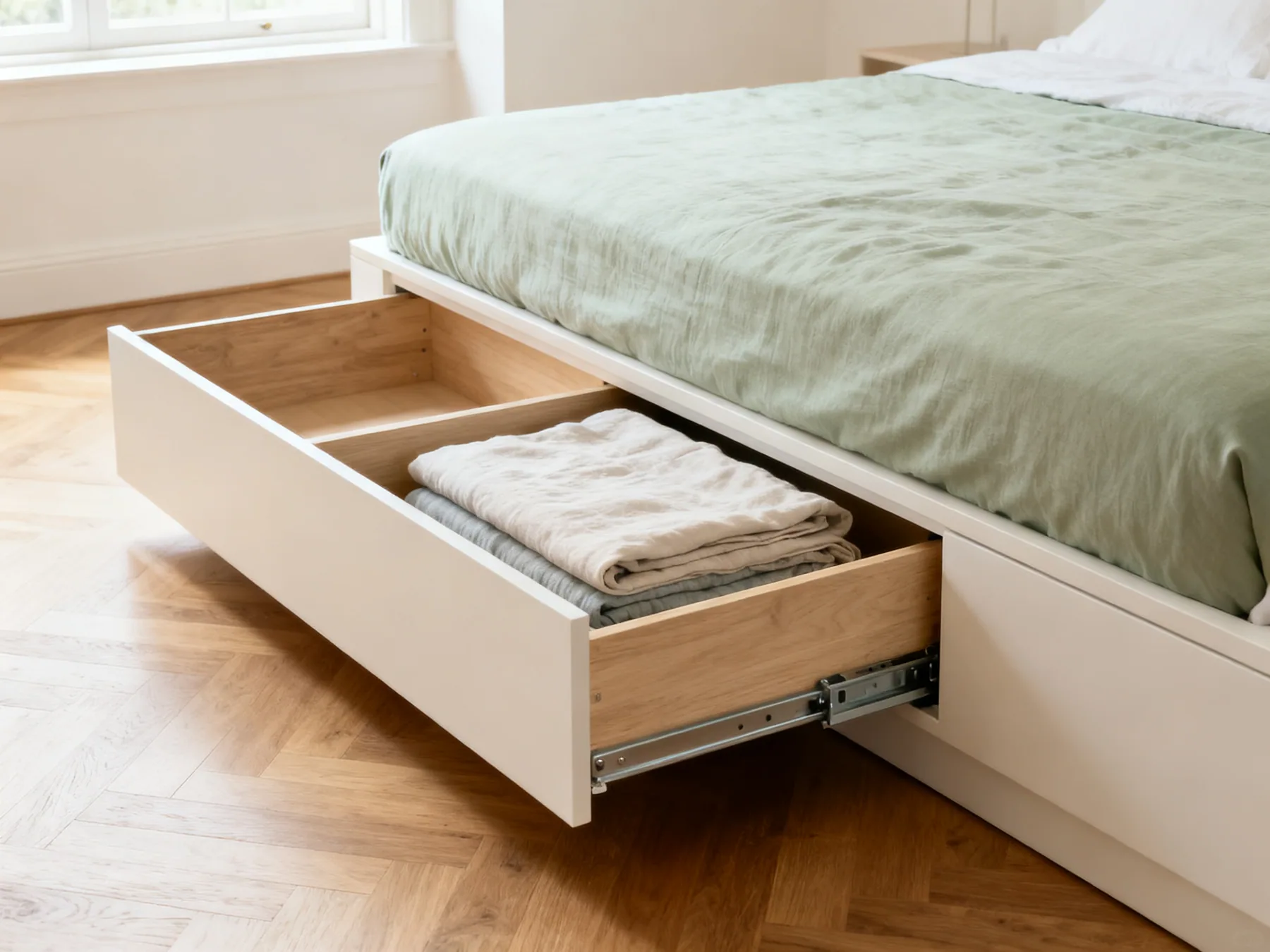
Drawer beds trade total volume for convenience. The drawer boxes and runners consume space, and the drawers cannot be as deep as the full under-bed height, so you typically get 50 to 65 percent of what an equivalent ottoman holds.
On paper that looks like a clear loss, and for a long time I would have steered people towards the ottoman on the numbers alone. I do not any more. Storage you open without thinking about it gets used, and storage you have to plan around slowly stops being used at all. For most people the drawer bed is the better trade even though it holds less.
Use them for what you need weekly
Current-season clothes, spare bed linen, children's things. All the stuff an ottoman is too slow for.
Allow 500 to 700mm beside the bed
That is what a side drawer needs to open fully. If one side of the bed is against a wall, buy a frame with drawers on one side only rather than paying for drawers you can never open.
Insist on full-extension runners
A drawer on partial runners permanently hides its back third, which recreates the exact problem you were solving. Full extension costs more and is worth it here.
Consider a footboard drawer instead
Some frames put one wide drawer at the foot, which works in rooms with walls on both sides. Easy access, and it does not compete with bedside furniture.
Platform and cabin beds
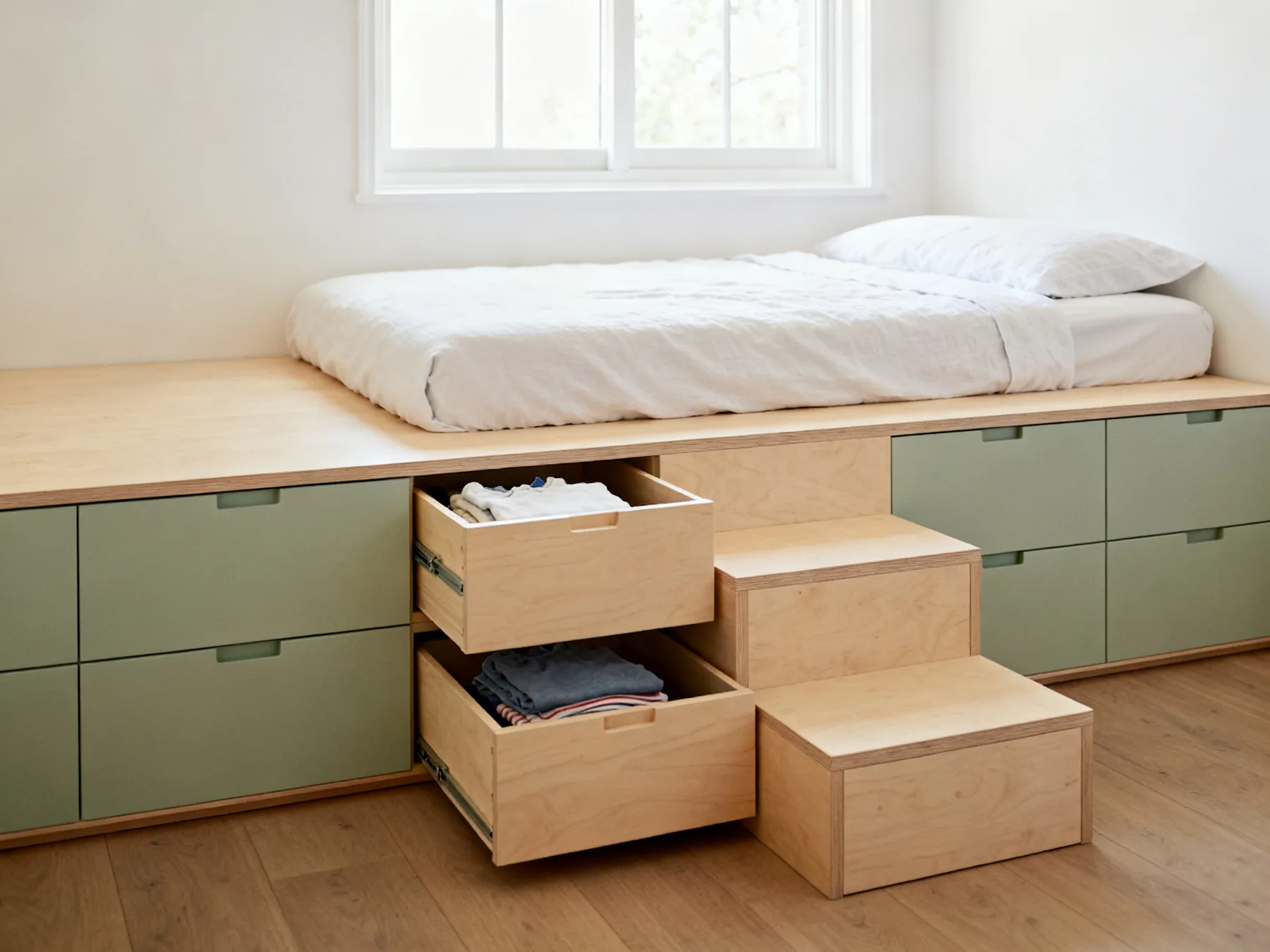
If the room has height to spare, raising the mattress onto a plinth of drawer units converts the entire bed footprint into storage. It is often cheaper than a purpose-built storage bed, and it is what I suggest most for children's and teenagers' rooms.
Build the platform from stock drawer units
A run of standard cabinets under a mattress base does the same job as a bespoke storage bed for less money, and you can change the configuration later.
Make the steps drawers too
Where a bed is raised, the steps up are a natural place for drawers. Nothing wasted, and it keeps the climb safe rather than improvised out of a chair.
Check headroom before a high loft bed
Allow at least 900mm from mattress top to ceiling so you can sit up in bed, plus usable standing height beneath. Below about 2.4m of room height a loft bed stops being comfortable, and I would talk someone out of it.
Storage headboards, and the space around the bed
In a narrow room where two bedside tables will not fit, a headboard is the piece that solves it, and it adds nothing to the footprint.
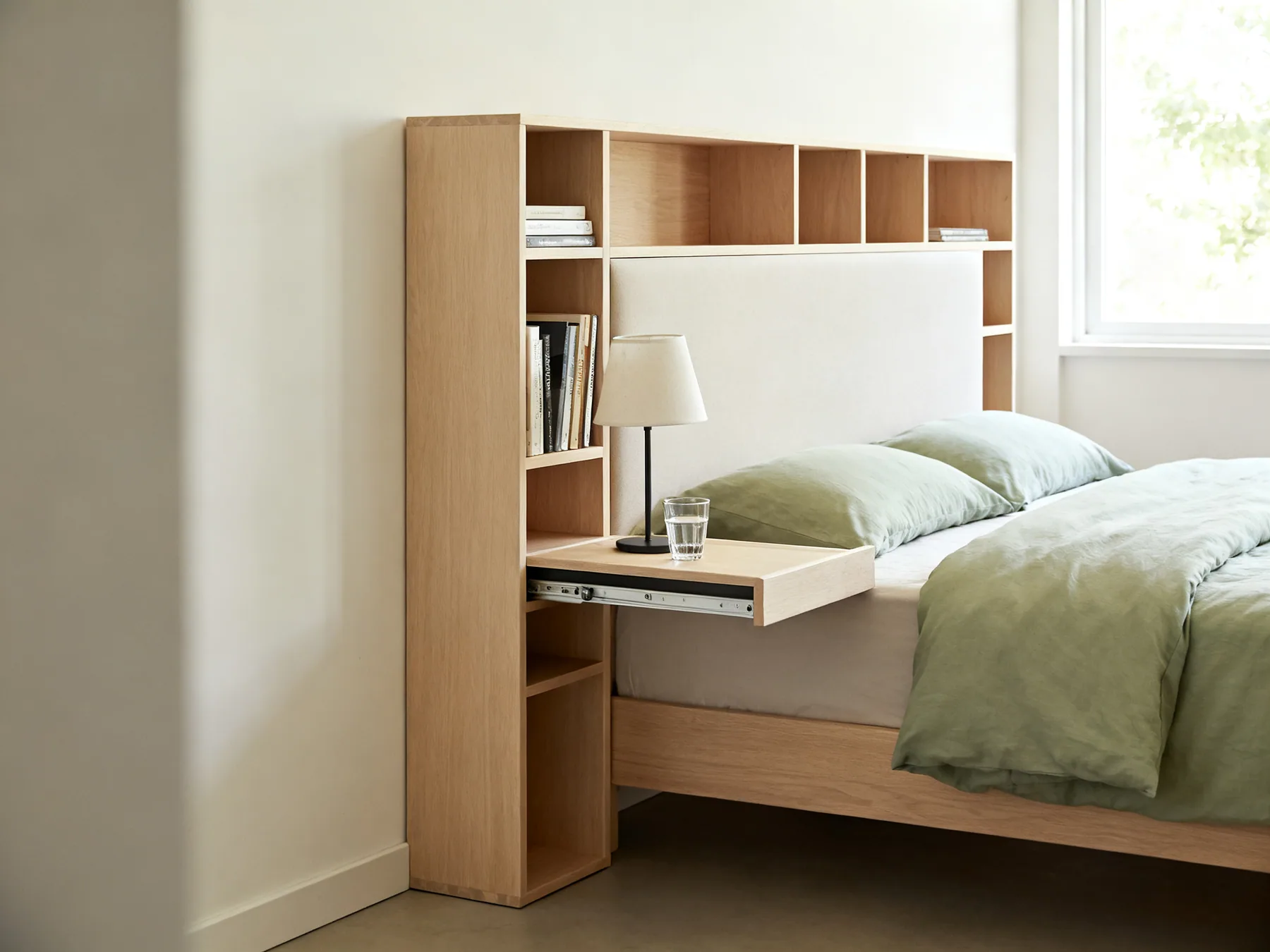
A headboard with cubbies replaces both nightstands
Shelves or sliding cubbies in the headboard free the floor on both sides of the bed, which is usually where a narrow room is losing its circulation space.
A blanket box at the foot
The strip of floor at the end of a bed is normally pure circulation. A lidded box there stores bedding and gives you somewhere to sit and put shoes on.
A floating shelf instead of a bedside table
Same surface, no legs, and visible floor underneath, which makes a small room read as larger.
Storing things under a bed without ruining them
Under-bed storage has two consistent problems and both are manageable once you know them. It is the dustiest zone in a bedroom, and it has almost no airflow. The one I have to warn people about is the second, because the first is visible and the second is not. Put a duvet away when it is very slightly damp and it comes out months later smelling of a cellar, and at that point washing it is the only fix.
The rule I use is simple: if I am not certain something is bone dry, it does not go under the bed.
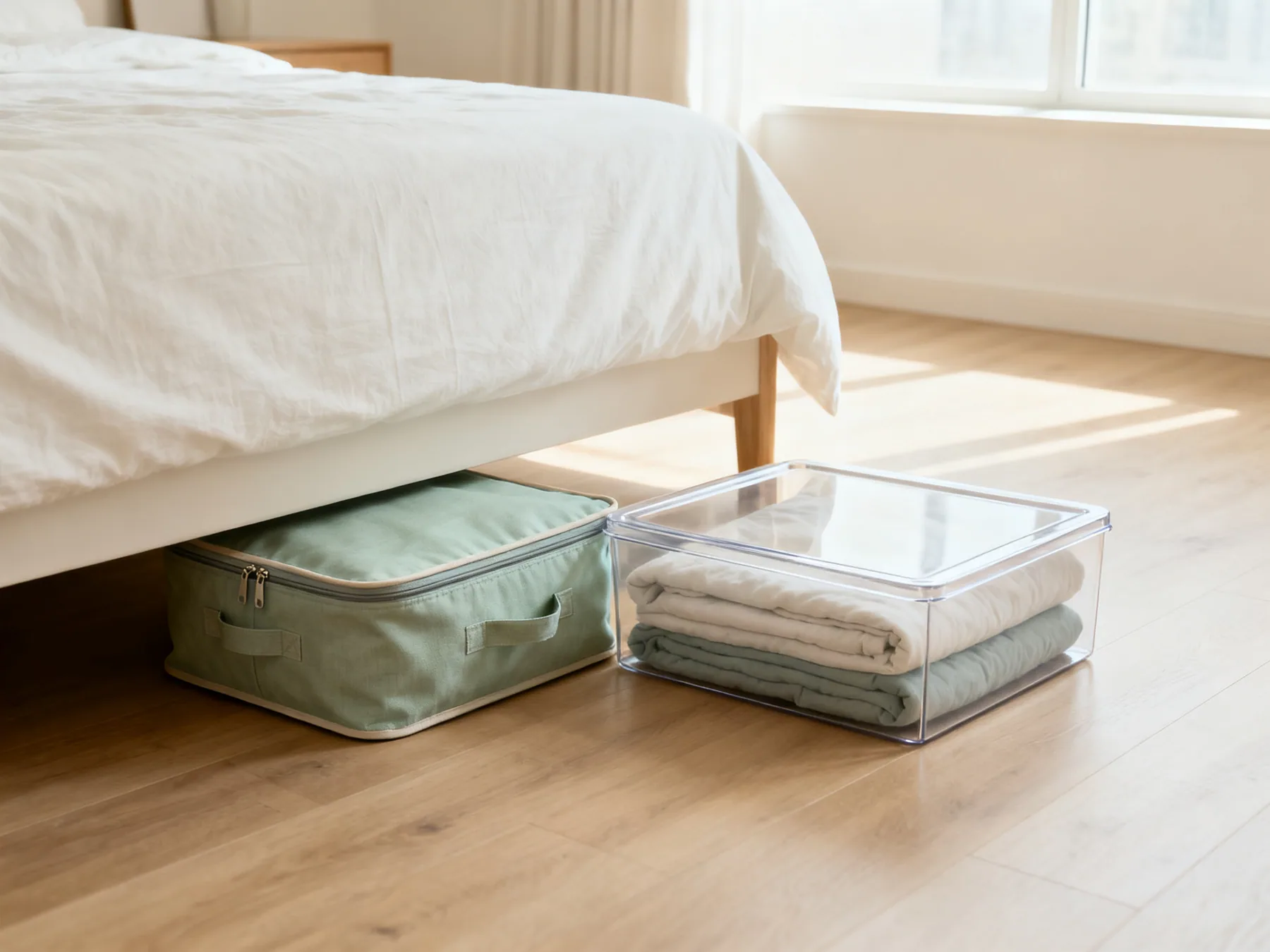
- Everything must be completely dry before it goes in. Damp plus no airflow equals mustiness within weeks.
- Use lidded containers or zip bags, because under a bed collects more dust than anywhere else in the room.
- Do not leave down or synthetic fill vacuum-compressed for years. Re-loft it annually or it stays flat.
- Keep wool and cashmere in sealed containers with cedar rather than loose, because this is where moths do their work.
- Avoid storing paper, photographs or electronics under a bed in a room prone to condensation.
- Keep the opening clearance permanently free. A rug or a chair blocking an ottoman lift makes the storage useless.
Beds with storage: frequently asked questions
How much storage does an ottoman bed have?
Roughly 0.7 to 0.9 cubic metres under a double, as one single open compartment, which takes a spare duvet, pillows, a season of clothing and a suitcase. It holds more than a drawer bed of the same size because there are no drawer boxes or runners consuming the space.
Ottoman bed or drawer bed, which is better?
Ottoman for capacity, drawer for access. An ottoman holds substantially more but you must clear the bed to open it, which suits bedding and off-season clothes. Drawers hold around 50 to 65 percent as much and open without moving anything, which suits what you need weekly.
How much space do you need around a storage bed?
An end-lift ottoman needs about 700mm of clear floor at the foot, a side-lift needs the same at one side, and drawer beds need 500 to 700mm beside the bed to open fully. Check which side your room can actually give you before ordering, because the wrong orientation makes the storage unreachable.
Is it bad to store things under the bed?
Only if you store them badly. Under a bed has poor airflow and collects the most dust in the room, so use lidded containers, make sure everything is completely dry first, and do not leave duvets vacuum-compressed indefinitely because the fill loses loft permanently.
Do storage beds work with any mattress?
Not with ottoman beds. The gas struts are rated for a mattress weight range, so a heavy pocket-sprung or latex mattress on struts specified for lightweight foam will be hard to lift and will wear out early. Check the strut rating against your mattress weight before buying.
What is the cheapest way to get a bed with storage?
Build a platform from stock drawer units and put the mattress base on top. It converts the whole bed footprint into storage, usually costs less than a purpose-built storage bed, and you can reconfigure it later. It works best in rooms with a little height to spare.