Kitchen & Food Items
Spice storage ideas that keep the spices worth using
The handiest spot for spices is the shelf above the hob. It is also the fastest way to turn an expensive spice rack into coloured dust.
A spice is a delivery system for volatile aromatic oils. That is what you are paying for, it is what you can smell when you open a fresh jar, and it is exactly what heat, light and air take away. Which means spice storage has a requirement most kitchen storage does not: the place has to be dark, cool and dry, not merely convenient.
And there is a direct conflict there, because the most convenient spot in any kitchen is within arm's reach of the hob, which is the hottest, steamiest, brightest place in the room. A rack on the wall above the cooker is the classic arrangement and it will flatten a set of spices in months.
So the job is finding somewhere both handy and dark. There are two good answers and one very good one.
Not above the hob, and not in the window
Worth being blunt about this because it is the single most common spice storage arrangement and it is the worst one. Above a hob you have radiant heat, steam and often direct light, which is a complete set of the things that degrade a spice.
A sunny windowsill is the other classic mistake, and it looks lovely. Light bleaches ground spices visibly, and you can often see it: the side of the jar facing the window is pale and the back is still red.
Cool, dark and dry. A drawer, a closed cupboard away from the cooker, or the inside of a cupboard door.
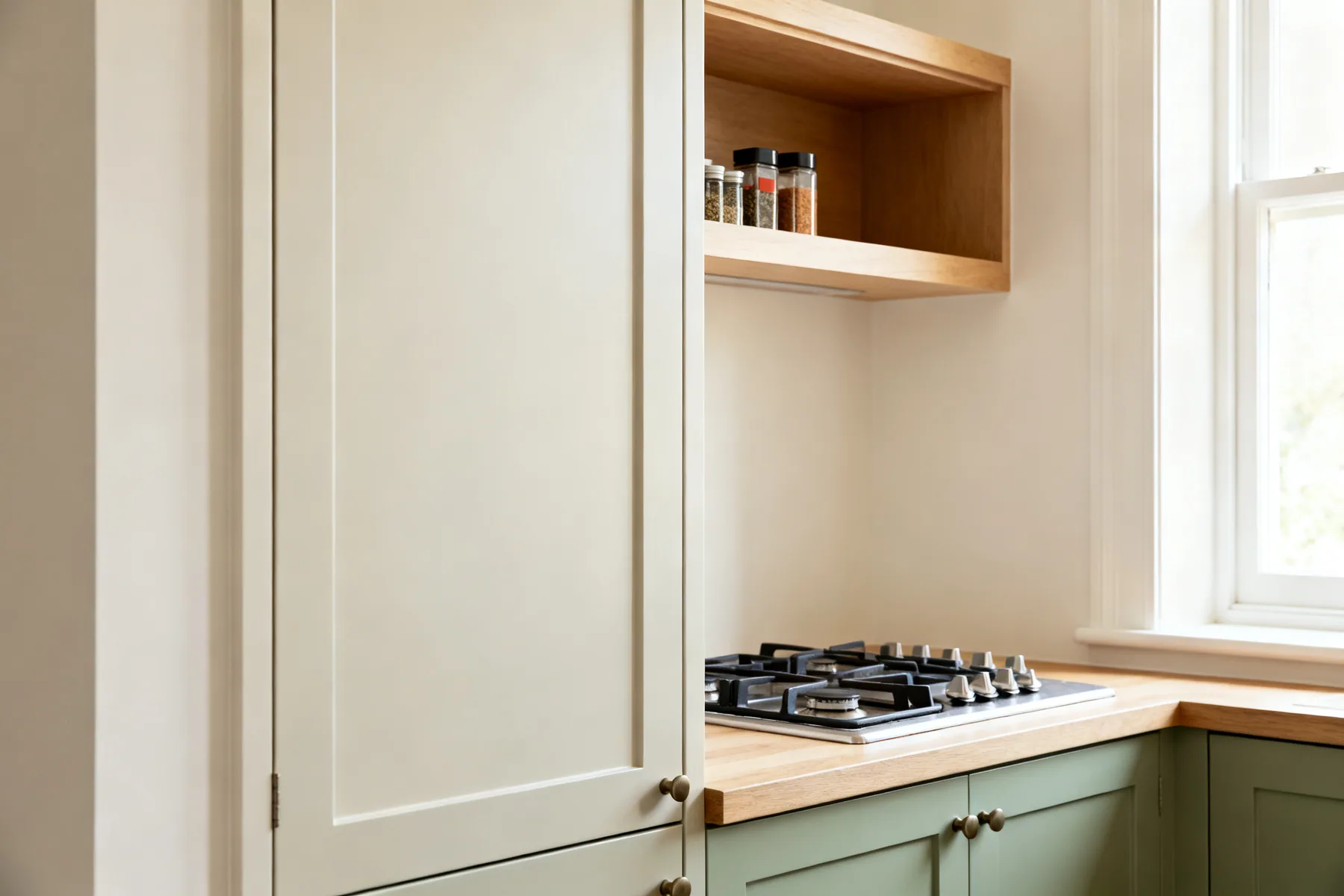
Move them at least a cupboard away from the hob
Radiant heat drops off quickly with distance, so you do not need to put them across the room. One or two cupboards away, with a door on it, is a large improvement over directly above.
Heat, steam and light all degrade spices
Keep them out of clear jars in daylight
Clear glass is much easier to identify and it lets light in. If the collection lives somewhere with daylight, opaque or tinted containers are the better trade. In a drawer or closed cupboard, clear is fine.
Keep the lids properly closed
Air is the third degrader. Screw-top jars beat shaker tops with a flip lid for long-term storage, and a jar you have not closed properly is losing aroma continuously.
Do not store above the dishwasher or kettle either
Both produce bursts of steam, and moisture is what makes ground spices clump and cake. It is a less obvious version of the same problem.
The drawer, which is the best answer
If you have a shallow drawer to spare, that is where spices should live, and it is not a close contest.
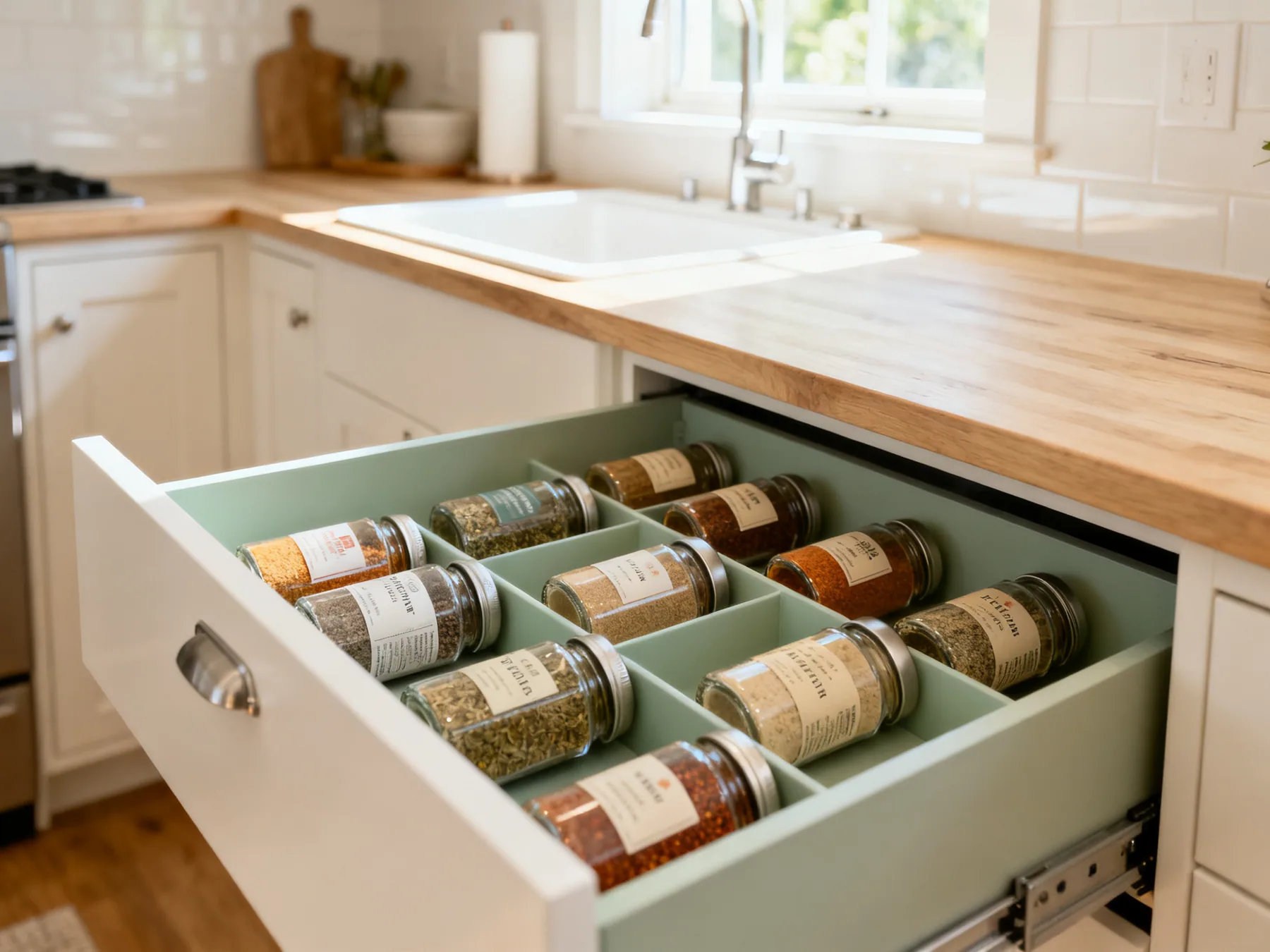
Lying flat in a tiered insert, every jar is visible from standing height at the same time. You read the whole collection in one glance, which is the thing every other arrangement fails at. It is dark when closed, it is away from the hob, and it uses a drawer that would otherwise hold utensils you could put elsewhere.
The one requirement is depth: a shallow drawer, because a deep one wastes most of its volume on a single layer of jars.
Use a tiered drawer insert
Angled tiers hold the jars so the labels face up towards you rather than lying flat. Worth having over a flat arrangement, because it means you read labels rather than lids.
Label the lids as well
In a drawer the lid is what you see. Label both the lid and the front so the jars work wherever they end up, since collections get moved.
Lay them in alphabetical order if the collection is large
Past about twenty jars, grouping by cuisine stops working and alphabetical starts to. Below that, keeping the ten you use weekly at the front is more useful.
Do not stack jars in a deep drawer
The bottom layer becomes invisible and unreachable, which recreates the problem. If the only spare drawer is deep, use a tiered riser inside it rather than two layers.
The cupboard door, if there is no drawer
The next best answer, and it uses space that is currently holding nothing at all. The inside face of a cupboard door is flat, vertical, dark when closed and right where you are standing when the cupboard is open.
Spices are almost the ideal thing to put there: shallow, numerous, light, and much easier to find in a single visible row than jumbled at the back of a shelf.
The constraint is depth, and it is tighter than people expect. Measure the gap between the closed door and the front edge of the shelves before buying anything.
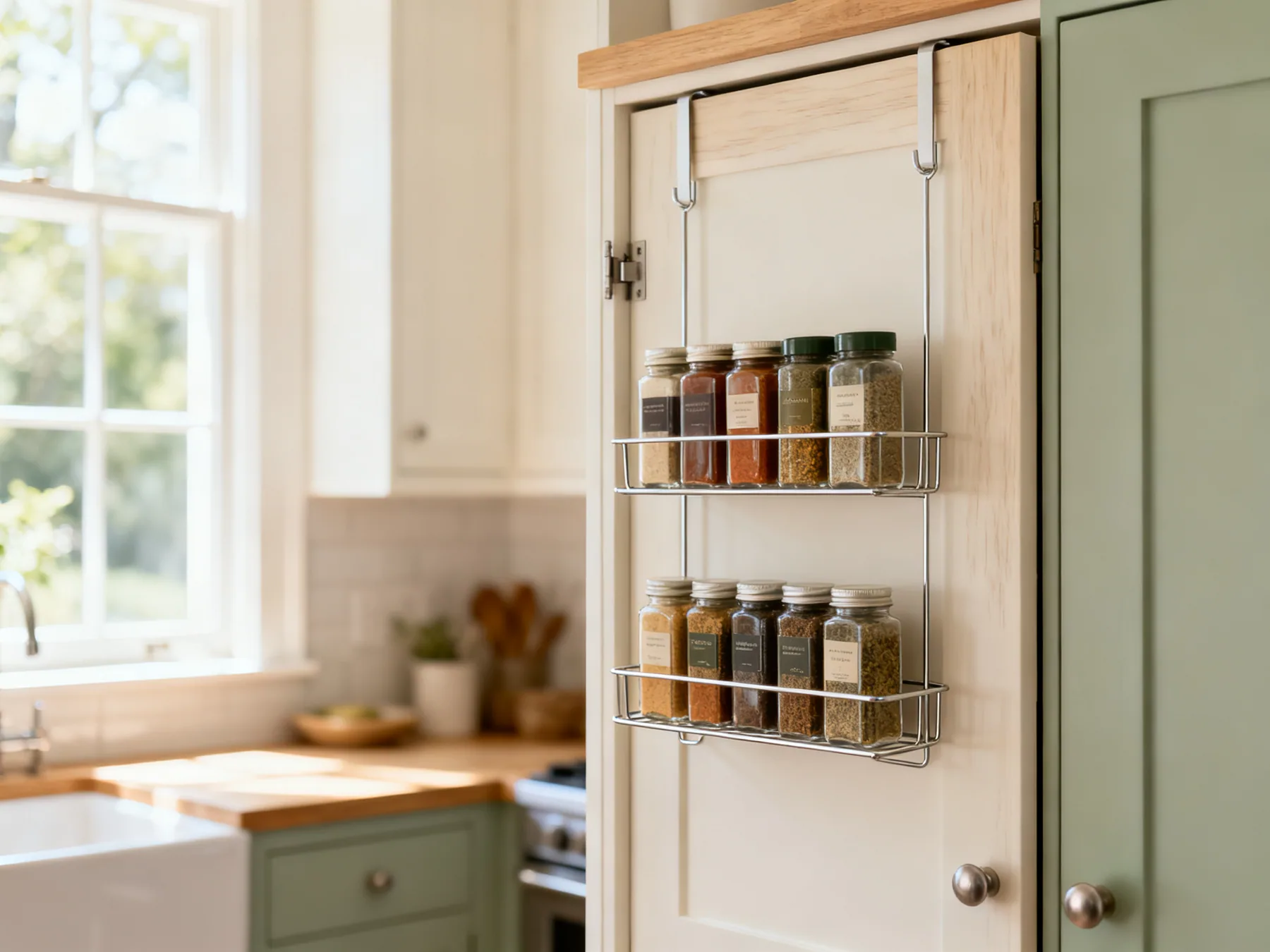
Fit slim tiered wire racks
Two or three shallow tiers hold a full collection in one visible arrangement. Check they clear the shelves when the door shuts, which is usually the deciding measurement.
Measure the shelf clearance first
Keep the weight low on the door
A loaded door drops on its hinges over time and then stops closing flush. Spices are light individually and a full rack is not, so put the rack low on the door rather than high.
Choose magnetic tins for a metal surface
Small magnetic tins on the side of a fridge or a steel panel work well and take no depth at all. Keep them out of direct light, and remember the fridge side nearest the cooker is not the place.
Use a riser inside the cupboard for the overflow
Whatever does not fit the door goes on a stepped riser on the shelf, so the back row is still readable. Between the two you can usually house a large collection.
Uniform jars, and labelling them properly
Decanting into matching jars genuinely helps. Commercial spice packaging comes in a dozen different shapes and sizes, which wastes space and makes a shelf unreadable. One jar shape, ideally square or hexagonal so they sit flush, uses noticeably more of the available space.
But the labelling is where this goes wrong, and it is the same mistake as decanting anything else: the information on the packet gets thrown away with the packet.
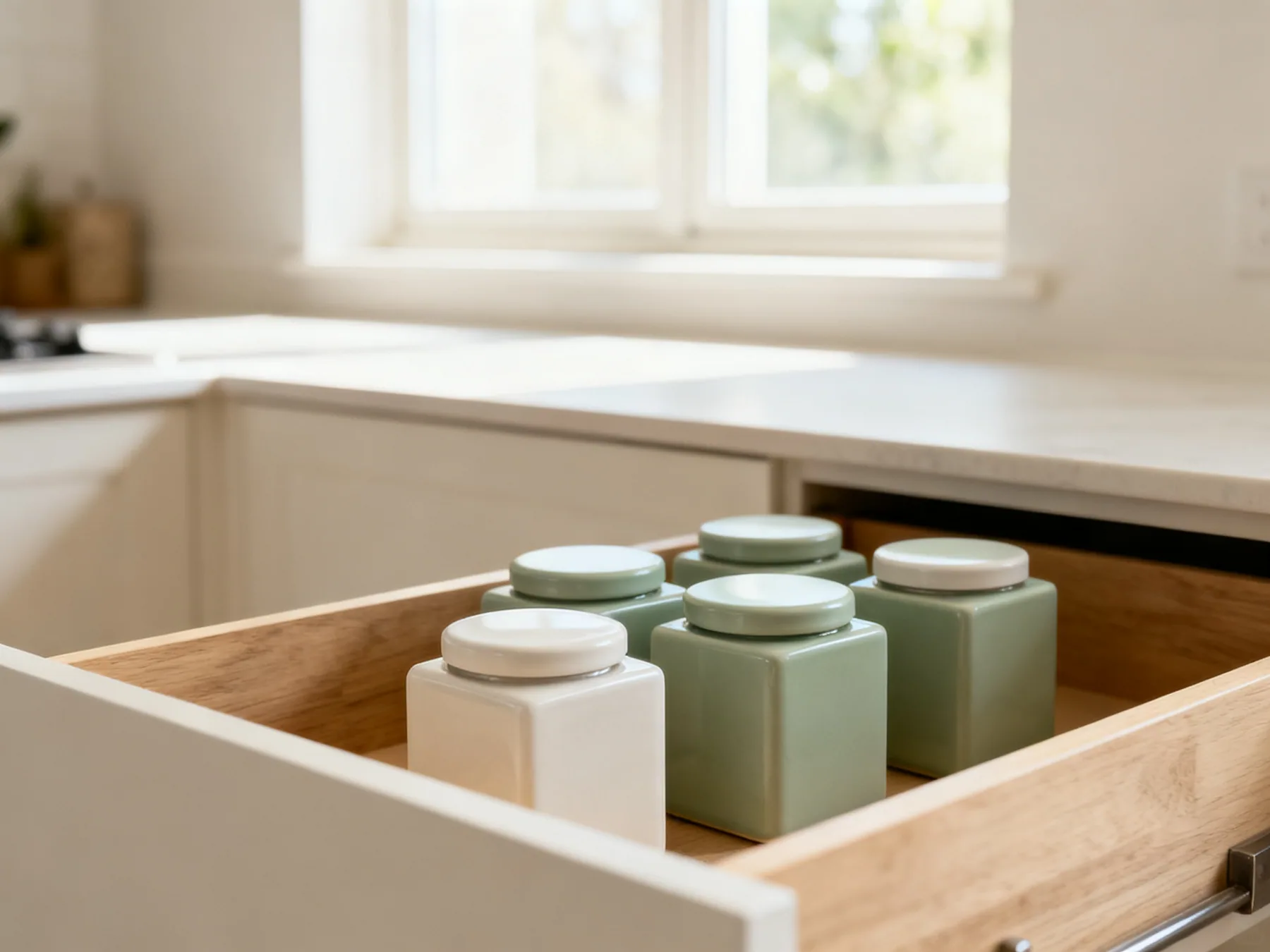
Label the lid and the front, both
A jar in a drawer is read from above and a jar on a shelf is read from the side. Doing both means the collection still works when you rearrange the kitchen.
Choose square or hexagonal over round
Round jars only touch at one point, so a row of them wastes a gap either side of every jar. Flat-sided jars sit flush and use about a fifth more of the same space.
Keep it to one or two jar sizes
A small size for the expensive things you use sparingly and a larger one for the everyday. More sizes than that and you lose the space advantage of uniformity.
Do not decant more than fits
A jar topped up from a bag that then sits half-used in the cupboard is worse than no decanting. Buy the quantity that matches the jar, or keep the bag sealed and labelled in a basket.
Dating them, and knowing when they are done
The last part, and the reason a well-organised spice rack can still be useless. Spices do not spoil in a way that hurts you, they just quietly stop tasting of anything, and because the change is gradual nobody notices.
Ground spices are the short-lived ones, at roughly a year from opening. Whole spices last considerably longer, often three or four years, because the oils are still sealed inside the seed or bark. That difference is a decent argument for buying whole and grinding what you need.
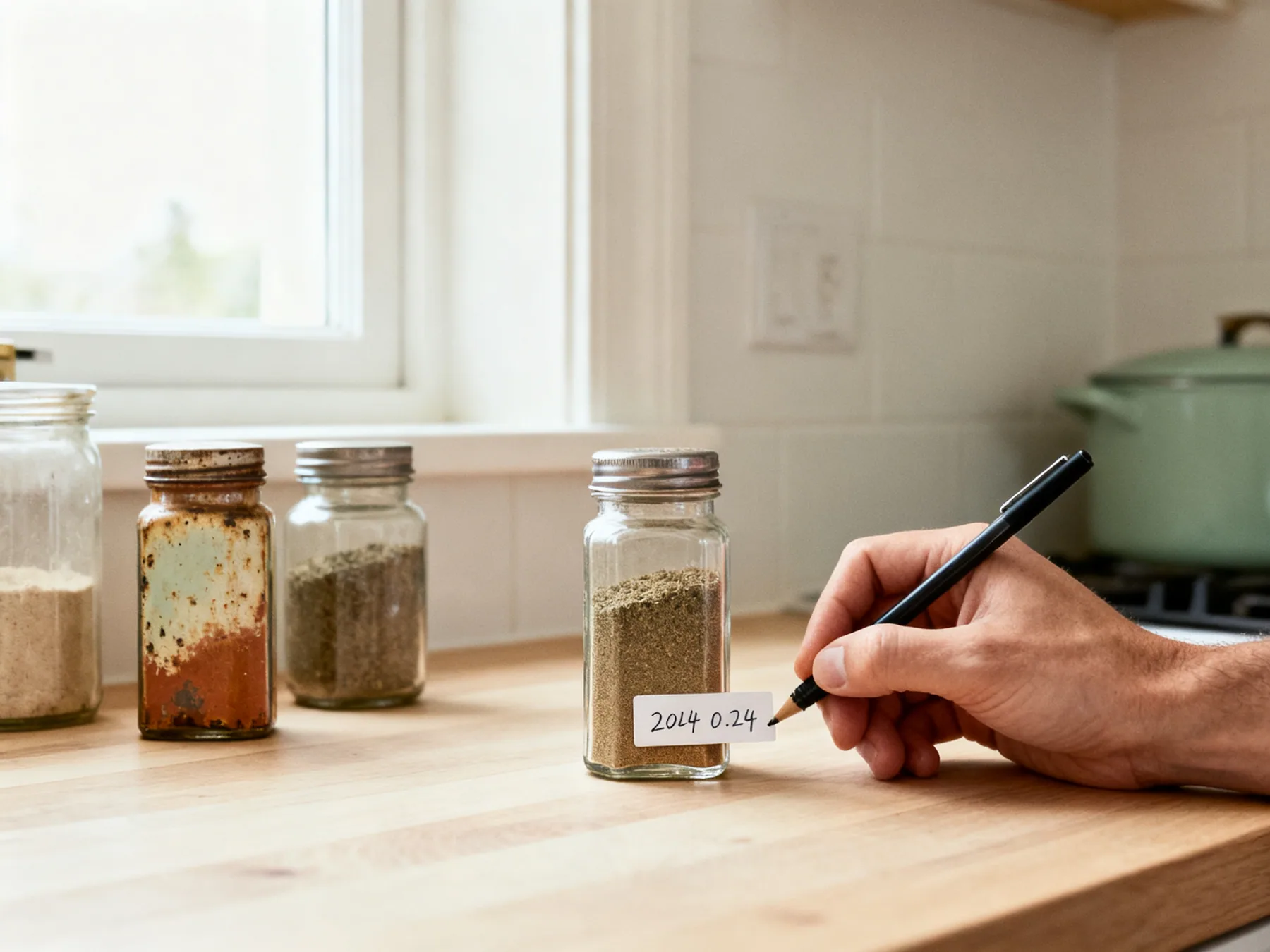
- Write the date on the jar when you open it, not the date you bought it.
- Treat ground spices as good for about a year and whole spices for three or four.
- Buy whole where you can and grind small amounts, which keeps the flavour far longer.
- Buy small quantities of anything you use rarely, however much better value the large jar looks.
- Smell test before you cook. If it has no aroma in the jar it will do nothing in the pan.
- Keep salt and anything hygroscopic away from steam, since caking is a moisture problem.
- Store chilli powder and paprika somewhere especially dark, as they fade fastest and visibly.
- Retire faded spices rather than doubling the quantity to compensate.
Spice storage ideas that keep the spices worth using: frequently asked questions
Where should I store spices in a kitchen?
Somewhere cool, dark and dry, and away from the hob. A shallow drawer with a tiered insert is the best option because you read the entire collection at once from standing height. Failing that, slim racks on the inside of a cupboard door, which uses space that holds nothing and is dark when closed.
Is it bad to store spices above the stove?
Yes, and it is the most common arrangement there is. Above a hob you get radiant heat, steam and often direct light, which is a complete set of the things that destroy the volatile oils you are paying for. Moving them a cupboard or two away, behind a door, makes a large difference without putting them out of reach.
How long do spices last?
Ground spices for roughly a year from opening, whole spices for three or four years, because the oils are still sealed inside the seed or bark. They do not spoil dangerously, they just stop tasting of anything, and the change is gradual enough that nobody notices. Write the date on the jar when you open it and smell test before cooking.
Are clear spice jars a bad idea?
Only where there is daylight. Light bleaches ground spices, and you can often see it as a pale stripe on the side of the jar facing the window. In a drawer or a closed cupboard clear glass is ideal because it is easy to identify. On an open shelf in a bright kitchen, opaque or tinted containers are the better trade.
Should I decant spices into matching jars?
It helps, because commercial packaging comes in a dozen shapes and wastes space, and flat-sided jars sit flush and use about a fifth more of the same shelf than round ones. Just label the lid and the front, and write the opening date on, because the information on the packet gets thrown out with the packet.
Why have my spices gone hard and clumpy?
Moisture. Ground spices are hygroscopic, so steam from a kettle, a dishwasher or the hob will cake them, and a lid that is not properly closed lets it in. Move the collection away from any source of steam, use screw-top jars rather than flip lids for storage, and never dip a wet spoon into a jar.