Awkward Spaces
Wall storage ideas, starting with what the wall can hold
Every wall storage article talks about shelves. The thing that decides whether it works is the fixing, and almost nobody mentions it.
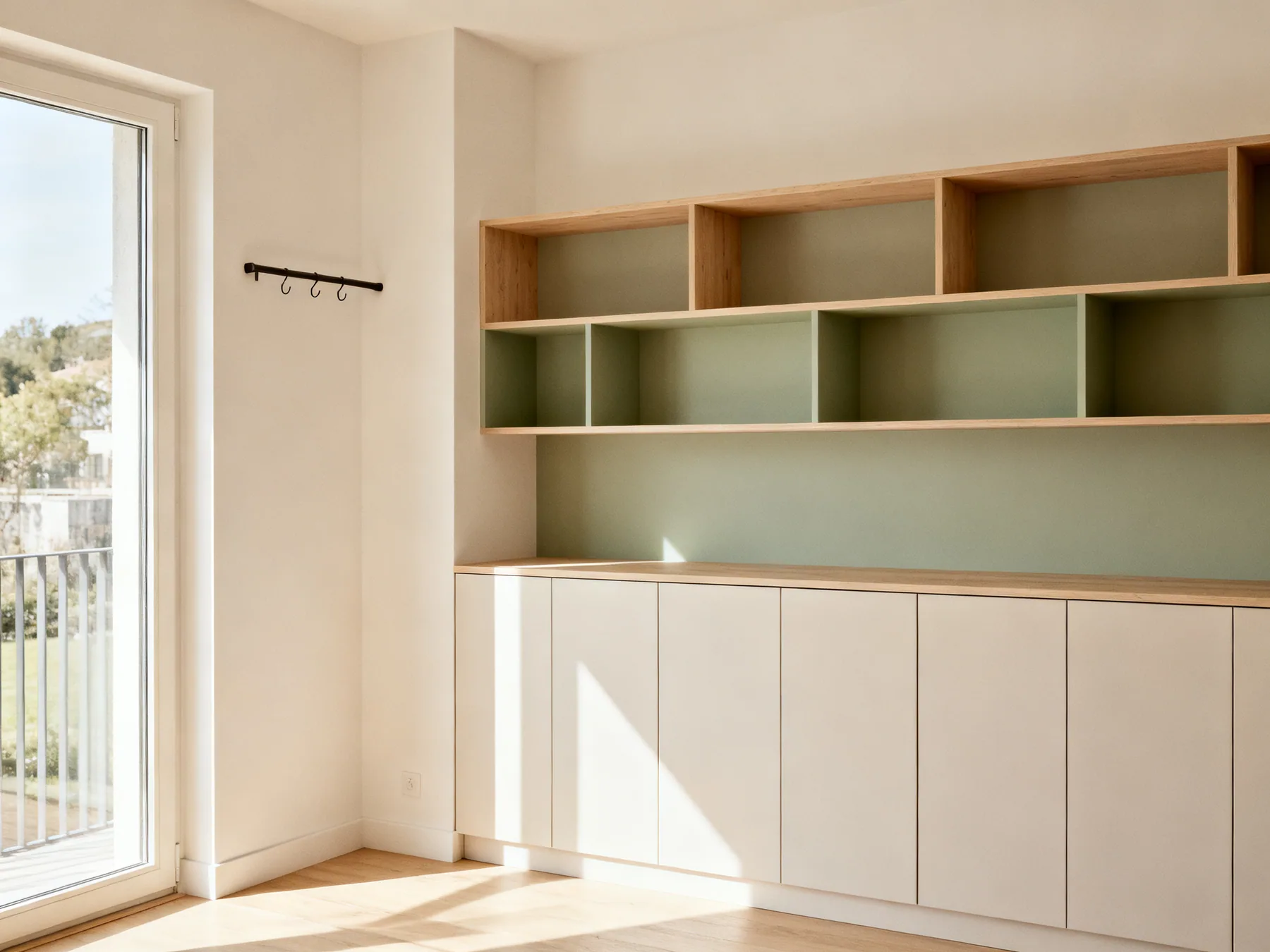
Walls are the best storage opportunity in any home, for a simple reason: floor is finite and already contested, while the band of wall above about 1.5m is empty in nearly every room of nearly every house.
But wall storage has a failure mode that floor storage does not. A bookcase standing on a floor cannot fall off the floor. A shelf fixed badly into plasterboard can and eventually will come off the wall, usually taking a chunk of the wall with it, and often when there is something breakable underneath.
So this article starts with the fixings rather than the shelves, because that is the part that decides everything and the part every other article skips.
Find out what the wall is made of
Before choosing anything, work out what you are fixing into, because the answer changes both the hardware and what the wall can carry.
Solid masonry, meaning brick or block with plaster on it, is excellent and takes a plug and screw almost anywhere. A stud partition is plasterboard on a timber frame, and the timber studs are the only strong points, at roughly 400 to 600mm centres. Dot-and-dab is plasterboard glued to masonry with a cavity behind, which behaves differently again and needs a longer fixing to reach the block.
Knock along the wall and listen. Solid sounds dull everywhere. A stud wall sounds hollow between studs and dull on them. Then confirm with a detector, and mark the studs in pencil before you commit to a layout.
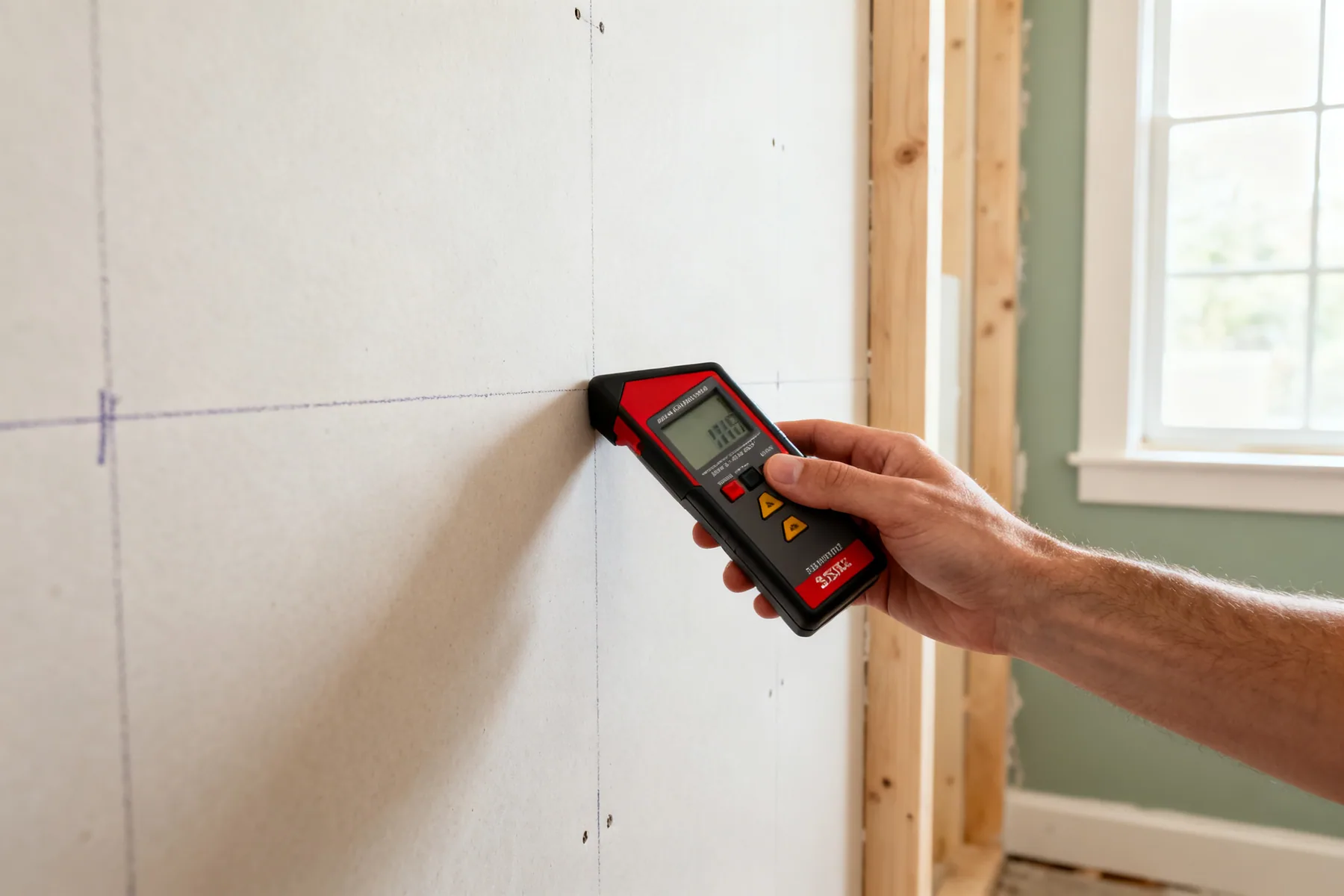
- Identify solid masonry, stud partition or dot-and-dab before buying fixings.
- Use a detector to find studs and mark them, rather than guessing at 400mm.
- Check for cables and pipes on the same pass, especially above sockets and switches.
- Never drill directly above or below a socket, switch or light fitting.
- In a converted or commercial building, expect services in unexpected positions.
- Drill tile slowly with the correct bit, because a cracked tile is a bigger job than the shelf.
- If you cannot identify the wall, use freestanding storage instead.
Match the fixing to the load, then halve it
Plasterboard on its own is weak in a way people consistently underestimate. A simple plastic plug in plasterboard holds a picture and will not hold a loaded shelf. The board itself is only around 12mm thick and it crumbles under a point load, which is why a failed fixing usually takes a fist-sized piece of wall with it.
Where you can hit a stud, do. Where you cannot, use proper cavity fixings rated for the load: metal collapsible anchors or spring toggles rather than plastic plugs. And treat the printed rating as optimistic, because it assumes perfect installation in perfect board. I plan to about half of it.
Then remember that books, records and tinned food are the heaviest things a domestic shelf carries, and a metre of any of them runs to 20 to 30kg.
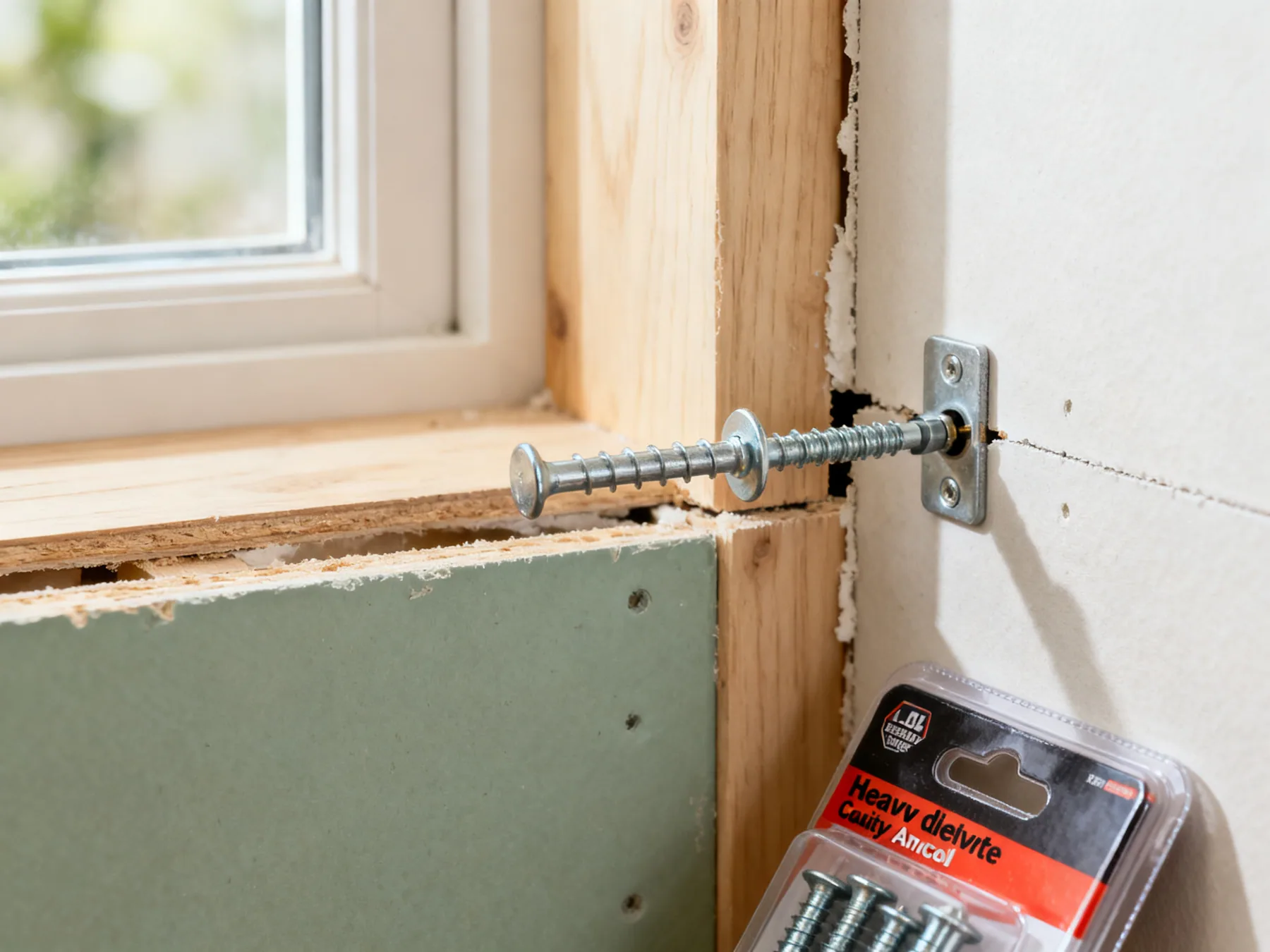
Into a stud whenever the layout allows it
A screw into solid timber is the strongest domestic fixing available and it costs nothing extra. Design the shelf positions around the studs rather than the other way round.
Studs beat any cavity fixing
Metal anchors or toggles, never plastic plugs, in plasterboard
Collapsible metal anchors and spring toggles spread the load behind the board. Plastic plugs are for masonry and do almost nothing in plasterboard.
Two fixings minimum per bracket, and use every hole
Brackets have several holes because they need them. Using two of four halves the strength and lets the bracket rotate under load.
Put the heaviest things on the lowest shelf
Both because it keeps the load path short and because a high shelf failing drops its contents further. Books low, light bulky things high.
Test it before you trust it
Push down hard on the front edge of an empty shelf before loading it. If it moves at all, stop and fix it properly rather than loading it gently.
Track systems mean one set of holes
If you are fixing shelves you may want to move later, a track and bracket system is worth knowing about. Two or three vertical rails go into the wall, ideally into studs, and the brackets clip into slots anywhere along them.
The advantage is that you drill once. Rearranging shelf heights afterwards takes seconds and leaves no new holes, which matters both for a growing collection and for a wall you would rather not perforate repeatedly.
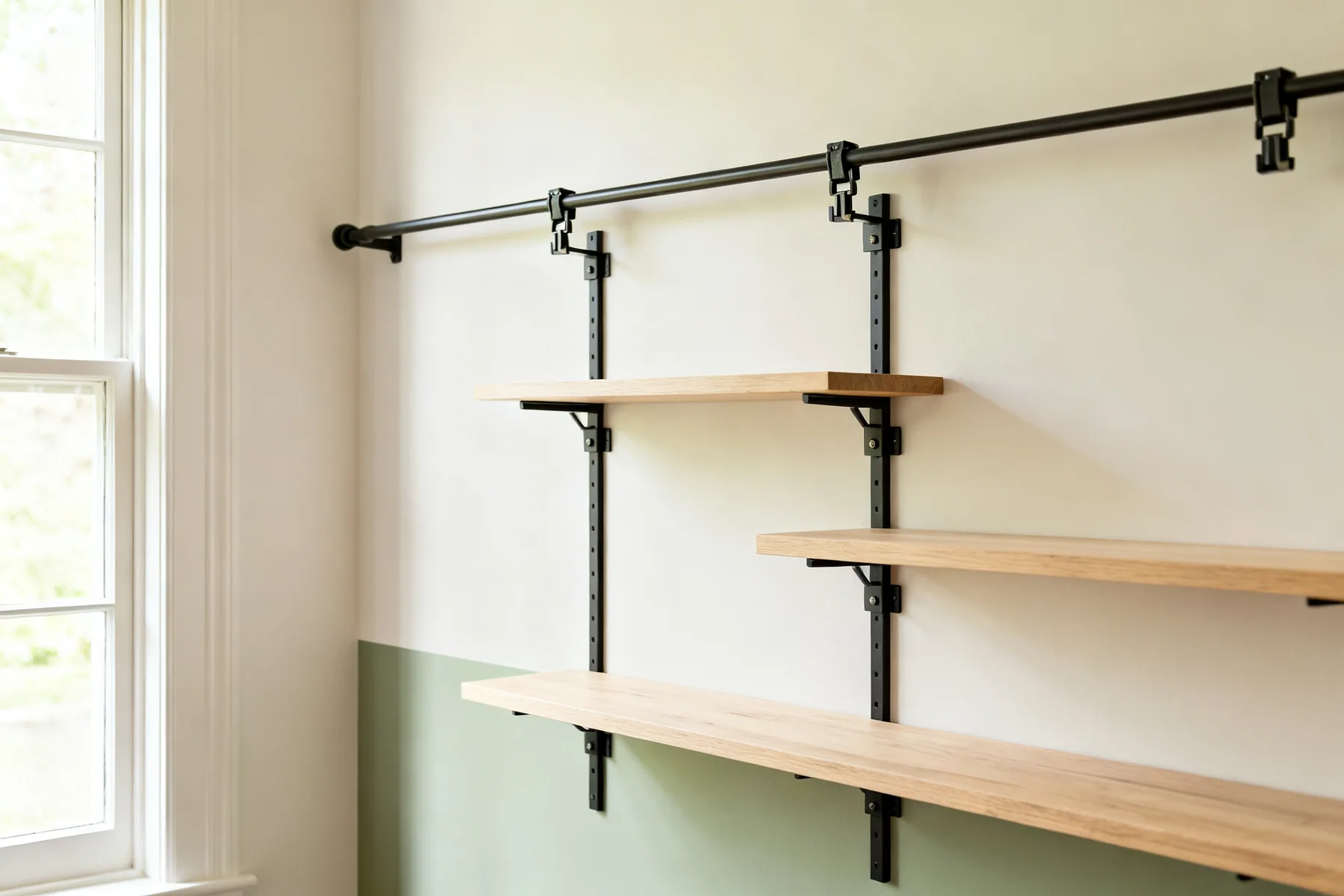
Fix the rails into studs and space the shelves later
The rails carry everything, so their fixings are the only ones that matter. Get those into timber and the rest is adjustable forever.
Good for anything that changes
Books, growing collections, a utility wall whose job keeps shifting. Poor value for a single shelf you will never move.
Check the shelf span between rails
Rails do not remove the span limit. For books, keep the unsupported distance between brackets under about 800mm or the shelf still bows.
Buy a system you can still get parts for
You will want another bracket in two years. A common system is worth more than an unusual one, and mismatched brackets do not interchange.
Pegboard, and other flexible panels
Pegboard is the answer when what you are storing keeps changing, which is true of a kitchen wall, a workshop, a craft room and a hallway.
The whole point is that the panel takes the fixings and everything else clips into it. Rearranging means moving a hook, not drilling a wall, so a pegboard wall improves over time instead of becoming a record of decisions you regret.
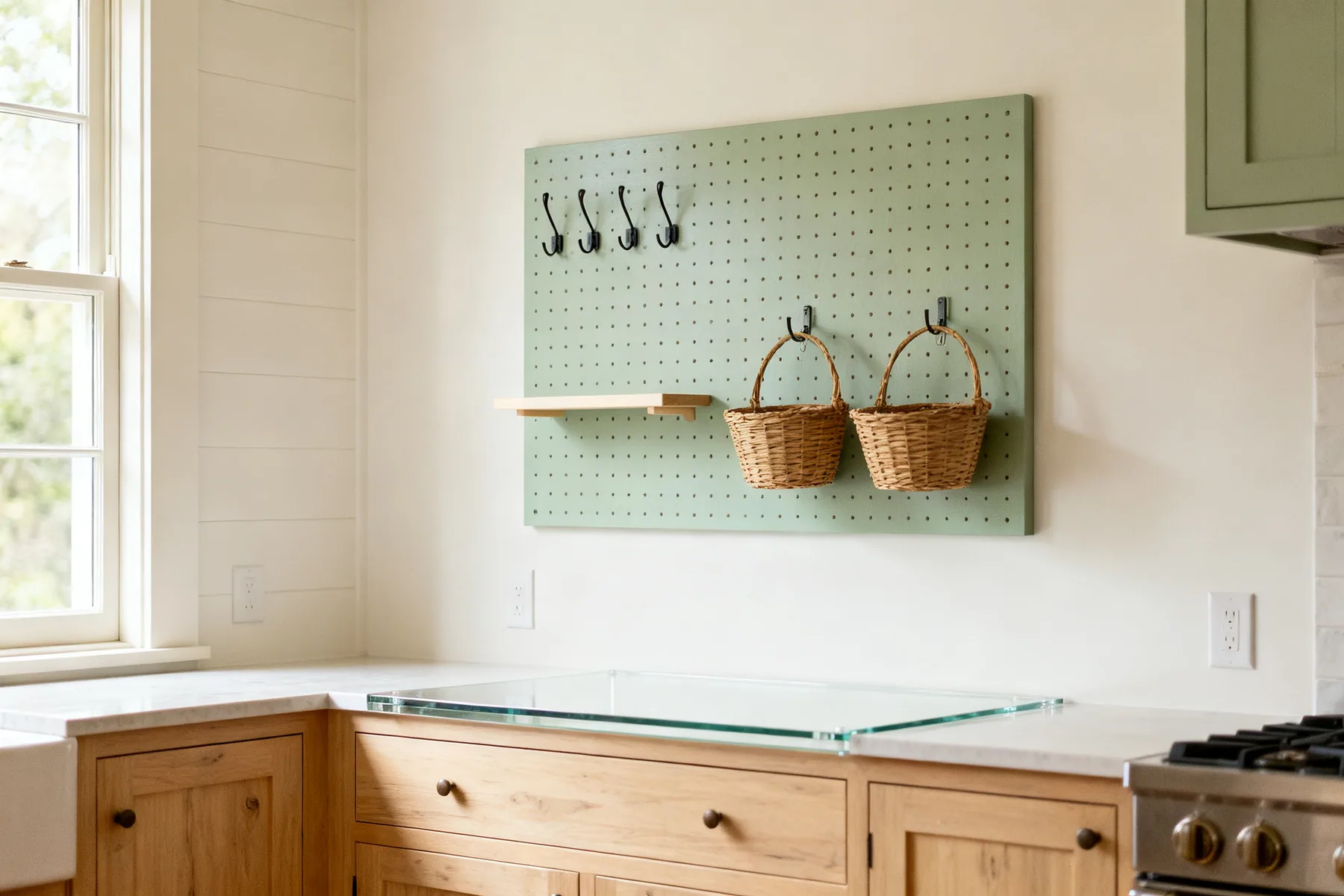
Fix the panel to battens, into studs
Battens give the pegs somewhere to project behind the board and let the panel sit off the wall. Fix the battens into studs and the panel to the battens.
Paint it to match the wall
A pegboard painted the wall colour reads as part of the room rather than as workshop equipment, which makes it acceptable in a kitchen or hallway.
Mix hooks, small shelves and baskets
The accessories are what make it work. A pegboard with only hooks is a hook rail. Add a couple of shelves and a basket and it becomes real storage.
Slatwall for heavier loads
Where the load is beyond pegboard, slatted panel systems take considerably more weight and work the same way. Common in garages for that reason.
What to put on a wall, and what not to
Last, the judgement part. Wall storage is excellent for some things and a poor idea for others, and the deciding factors are weight, frequency and what is underneath.
- Good on walls: books on short spans, kitchen tools on rails, coats on hooks, plants, boxed light items.
- Poor on walls: anything very heavy, anything you lift down daily, anything fragile above a hard floor.
- Never above a bed, a cot or a sofa unless it is light and fixed into structure.
- Keep the band above 1.5m for things you need occasionally, since you are reaching up.
- Leave a clear route past anything projecting into a corridor.
- Do not wall-mount storage on a wall you know has been damp.
- In a rental, check the tenancy, and consider over-door and tension solutions instead.
- If in doubt about the wall or the load, use a freestanding unit and lose nothing.
Wall storage ideas, starting with what the wall can hold: frequently asked questions
How much weight can a plasterboard wall hold?
Much less than people assume, and it depends entirely on the fixing. Plasterboard is around 12mm thick and crumbles under a point load, so a plastic plug in it holds a picture and not a loaded shelf. Use metal collapsible anchors or spring toggles, treat the printed rating as optimistic, and plan to about half of it.
How do I find the studs in a wall?
Knock along it first: a stud wall sounds hollow between studs and dull on them. Then confirm with an electronic detector and mark them in pencil before deciding your layout. Studs sit at roughly 400 to 600mm centres, and a screw into solid timber is the strongest domestic fixing available.
Is a track and bracket shelving system worth it?
Yes if you expect to move the shelves. Two or three vertical rails take all the fixings, and brackets clip in anywhere along them, so you drill once and rearrange for free afterwards. Good for books and growing collections, poor value for a single shelf you will never touch again.
What is pegboard best for?
Anything that keeps changing, which covers kitchen walls, workshops, craft rooms and hallways. The panel takes the fixings and everything else clips into it, so rearranging means moving a hook rather than drilling a wall. Fix the panel to battens into studs, and paint it the wall colour if it is in a living space.
What should I not put on a wall?
Anything very heavy, anything you lift down every day, and anything fragile above a hard floor. Also nothing above a bed, cot or sofa unless it is light and fixed into structure. Reserve the band above 1.5m for things you need occasionally, since you are reaching upward to get them.
How far apart should wall shelf brackets be?
For books, keep the unsupported span under about 800mm, because a metre of books runs to 20 to 30kg and ordinary shelving board bows beyond that. A track system does not change this: the rails let you move shelves, but the span between brackets still governs whether the shelf stays straight.