Tools & DIY
Tool storage ideas built around putting things back
Tool collections rarely run out of space. They decay because tools do not get put back, and because steel rusts in an unheated garage.
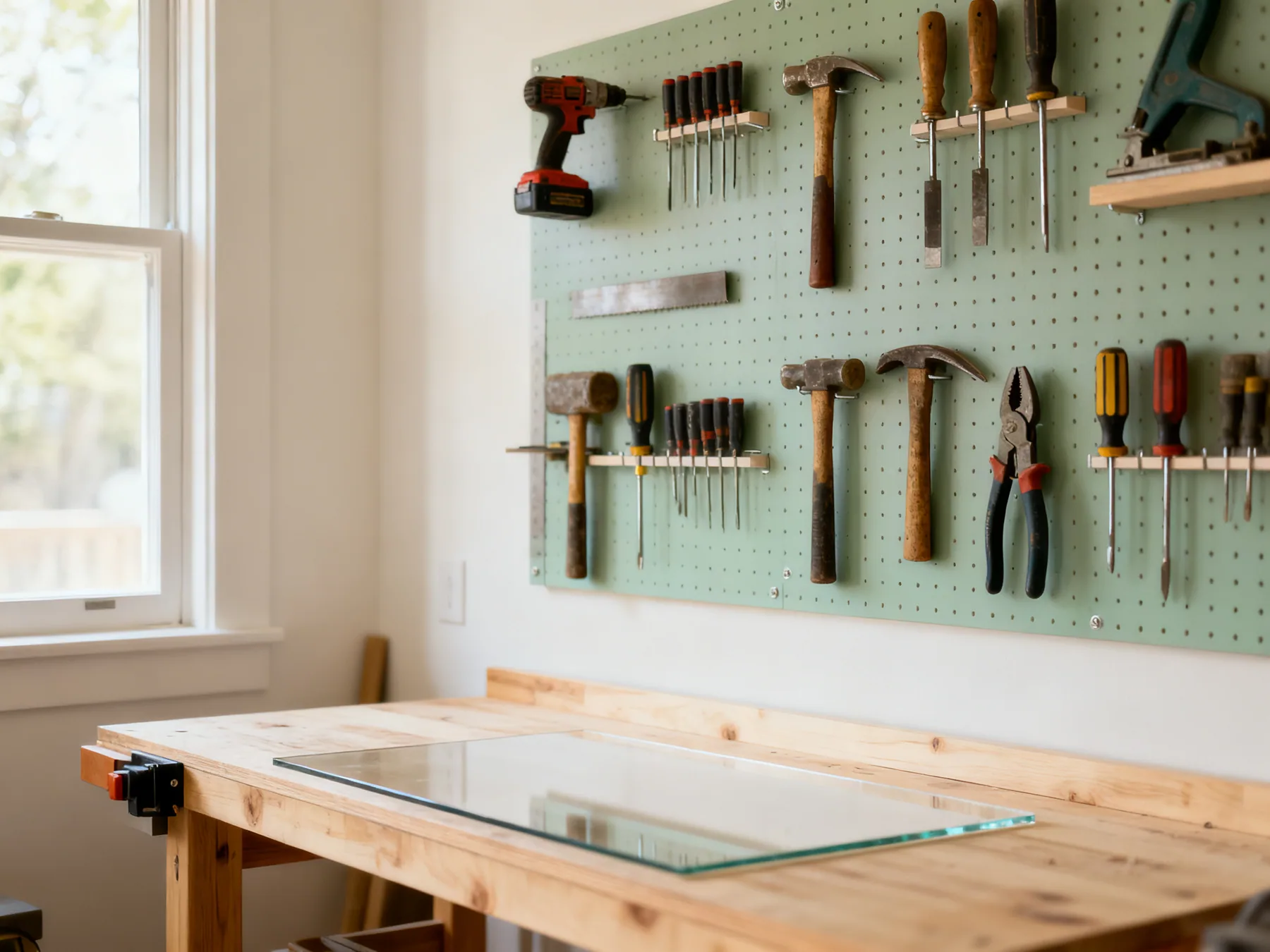
Ask someone what is wrong with their tool storage and they will usually say there is not enough of it. Watch how a tool collection actually deteriorates and it is two other things: tools that were used once and never made it back to a defined place, and steel that has been quietly rusting in a cold garage.
Neither of those is a capacity problem, and both have storage answers. The first is about visibility, because a tool goes back if the empty space it belongs in is obvious and does not go back if putting it away means opening a box and lifting three other things out of the way.
The second is about condensation rather than rain, which surprises people. An unheated garage swings in temperature, and warm damp air meeting cold steel deposits water directly onto the thing you least want it on.
Make it visible, and it goes back
This is the whole behavioural half of tool storage. If a tool lives on a hook on a board, putting it away is one motion and the empty hook is a visible prompt. If it lives in a drawer under other things, putting it away is a small task, and small tasks lose to whatever you were actually doing.
So for hand tools in regular use I would default to open, visible, wall-mounted storage every time, and accept that it looks less tidy than a closed cabinet. A workshop where every tool is on the wall and the bench is clear works better than one where everything is boxed and the bench is covered.
Fit a pegboard or slotted wall panel
It is cheap, reconfigurable as the collection changes, and it uses wall that was doing nothing. Group by task rather than by type: the things you reach for together should hang together.
Best default for hand tools
Keep the bench clear as the actual goal
Bench space is the scarce resource in a workshop, in the same way counter is in a kitchen. Any storage that ends up living on the bench has cost you more than it gave you.
Hang long-handled tools on a rail
Spades, rakes, brooms, sledgehammers. A single rail with spring grips at about 1.5m gets them off the floor, and it usually recovers a surprising amount of usable space.
Put the most-used tools at chest height
The band between hip and shoulder is prime real estate. Screwdrivers, pliers, tape measure and the drill go there, and the things you use twice a year go high or low.
Give consumables their own labelled bins
Screws, nails, plugs and fixings in small labelled containers, sorted by type and size. Loose in a tin they become a bag of unknown fixings that gets replaced rather than used.
Outlines, for the tools that walk
The main way a tool set decays is not breakage, it is attrition. A tool gets borrowed, or taken to another room, or put down mid-job, and because nobody can see that it is missing it stays missing until the day you need it.
Painting or drawing an outline behind each tool fixes that completely. An empty silhouette is unmissable, and it tells you exactly what has gone before you start a job rather than halfway through it.
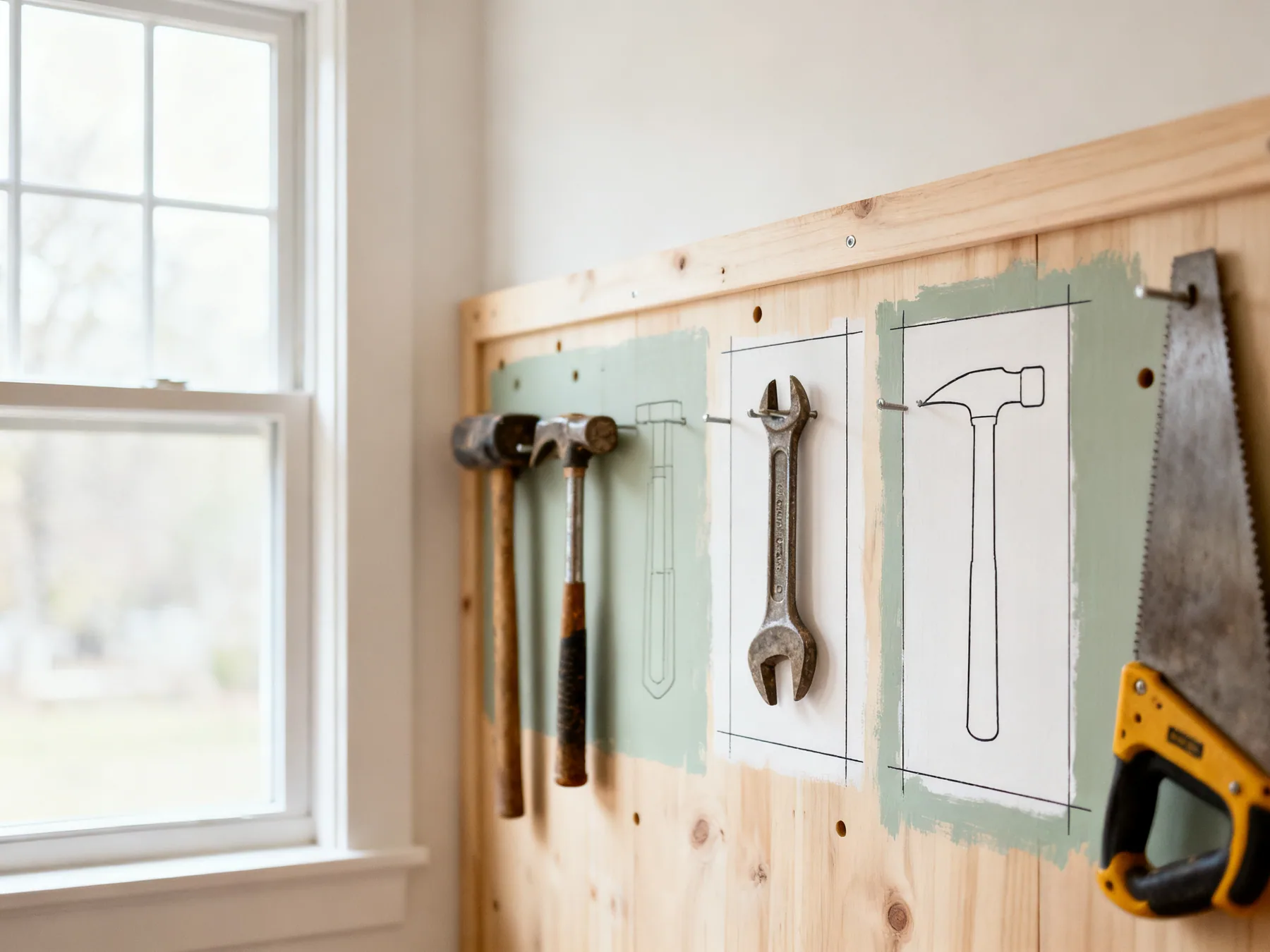
Draw round each tool on the board
A marker outline is enough, painted is neater. Do it once when you set the board up and it pays back for years. This is standard practice in professional workshops for exactly this reason.
Outline drawer foam too
The same principle inside a drawer: cut recesses so a missing tool leaves an obvious hole. It works better than a general tool tray for the same reason.
Keep a separate loan set if people borrow
If tools get lent out, a cheap second set kept apart from the good one protects the collection you care about and avoids the awkward conversation.
Do a walk-past at the end of a job
Look at the board, not at the floor. Any empty outline is a tool still somewhere in the house, and finding it now is far easier than in three months.
Drawers, cases and precision tools
Not everything belongs on a wall. Anything with a fine edge, a calibrated face or delicate moving parts should not be knocking against other steel, and that rules out a general drawer or a bucket.
Chisels, planes, measuring tools, drill bits and anything with a machined surface need separation. Foam cut to shape does that and has the outline benefit built in.
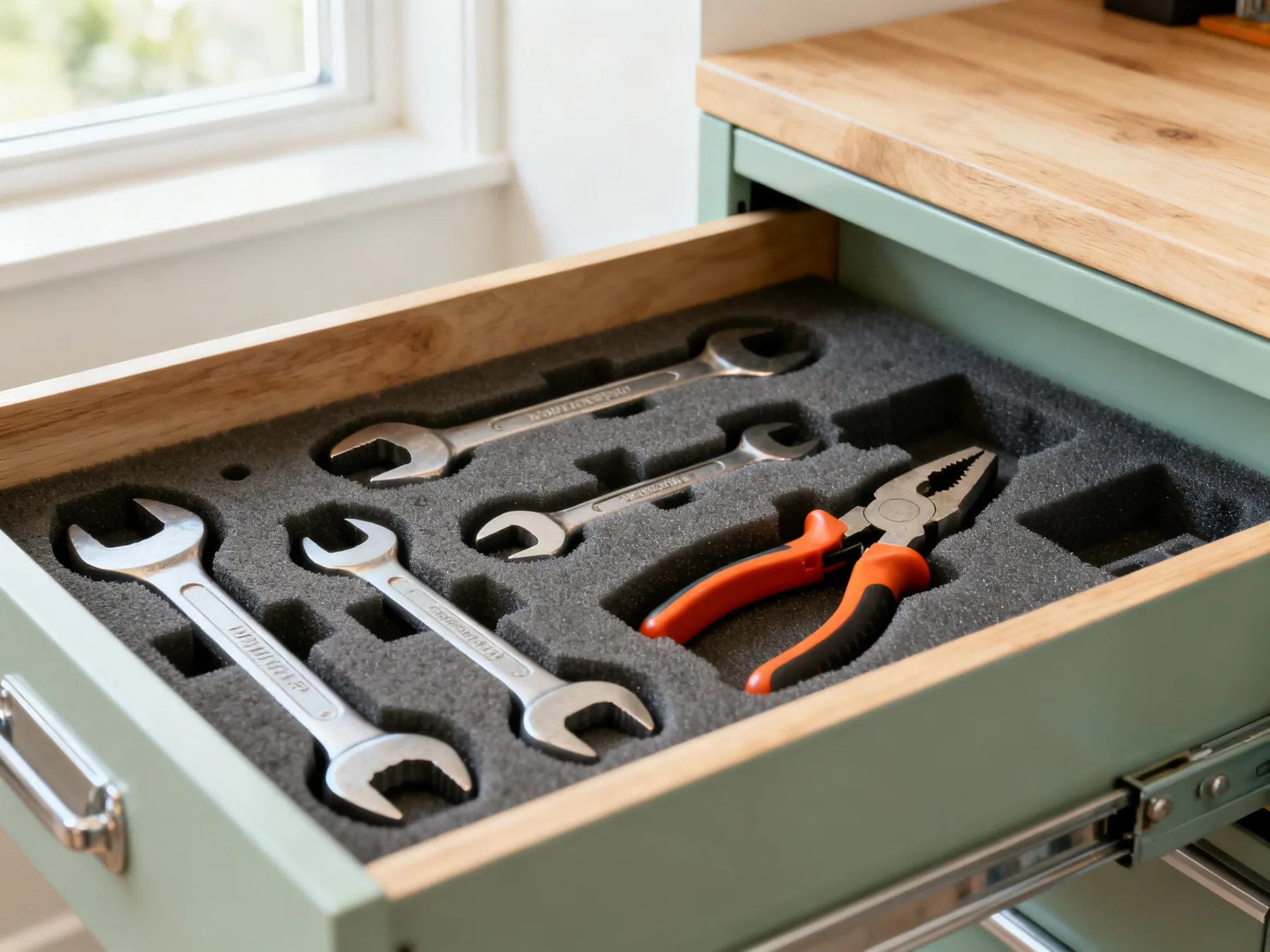
Use cut foam for precision hand tools
Dense foam with recesses for each tool stops movement entirely, which is what protects edges and calibration. It is the right answer for chisels, planes and measuring equipment.
Keep chisels and plane blades edge-protected
A blade guard, or at minimum stored so the edge touches nothing. A chisel rolling loose in a drawer will be blunt by the time you need it, and it is a hazard to reach in after.
Loose blades are a cut hazard
Keep power tools in their cases if you have them
The moulded case is doing a real job: it keeps the tool, its charger, the spare battery and the accessories together. Cases are bulky and losing the charger is worse.
Store drill bits in an indexed block
A bit index tells you instantly which size is missing, and it stops bits knocking their cutting edges together. Loose bits in a tin are how you end up owning nine of one size.
Do not store lithium batteries fully charged or flat
For long storage, around half charge and somewhere at room temperature rather than a freezing garage. Cold and extremes of charge both shorten their life significantly.
Bring batteries indoors over winter
Weight, height and getting hurt
Worth a short section because tool storage has more genuine injury potential than most storage, and the mistakes are predictable.
A full power tool case is heavy and awkward, and taking one down from above shoulder height with both hands occupied is how people hurt their backs and drop things on their feet. Heavy goes low, always, regardless of how often you use it.
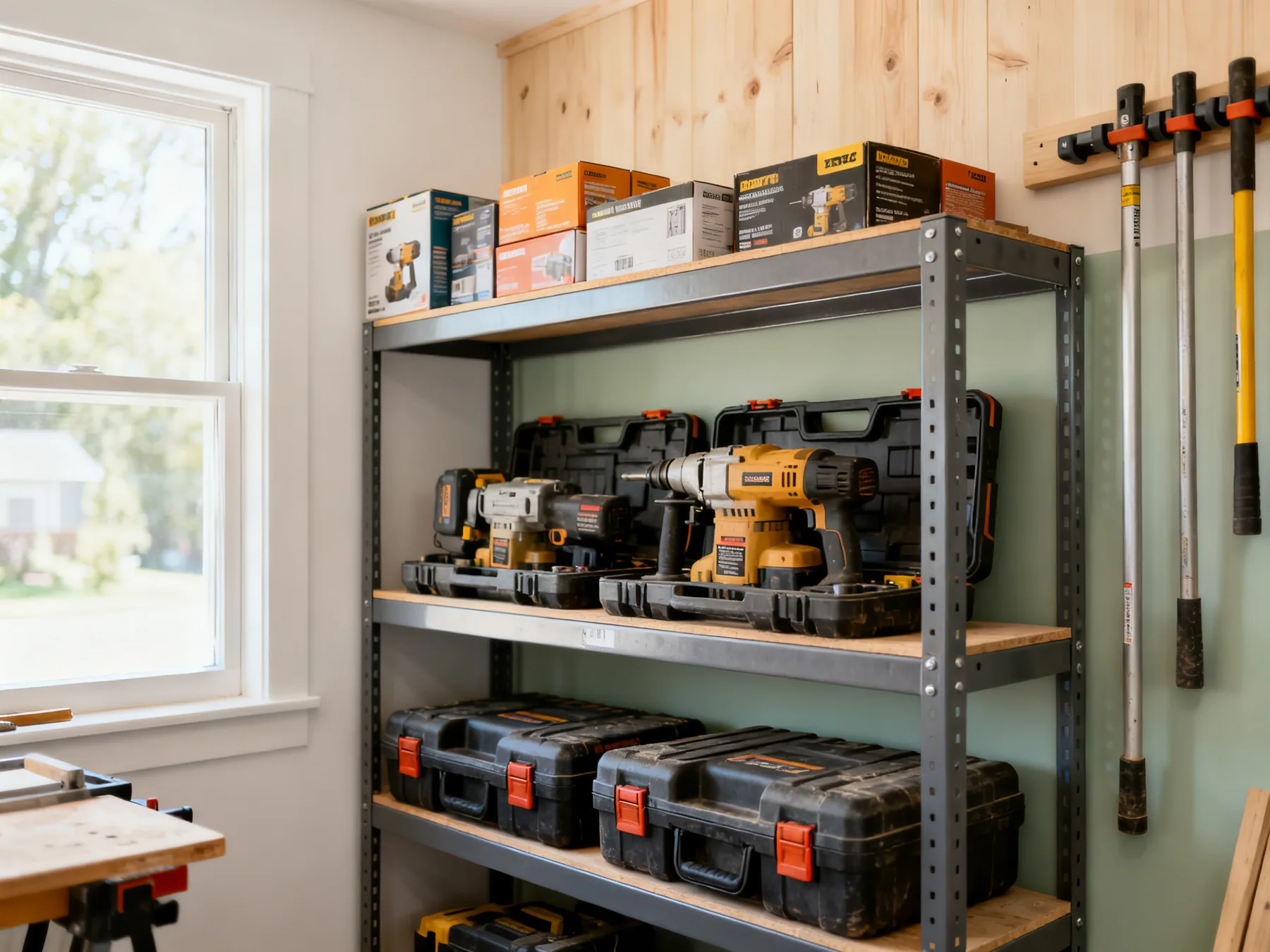
- Heavy cases and power tools on the lowest shelves, whatever their frequency of use.
- Anchor tall shelving and tool chests to the wall, especially on an uneven garage floor.
- Keep sharp tools stored edge-in or guarded, so reaching for something is not a risk.
- Do not store anything heavy directly above a bench where you sit or work.
- Keep the floor clear. Trip hazards in a workshop are the most common accident there is.
- Store fuel, gas cylinders and solvents per the label, ventilated and away from ignition sources.
- Keep a first aid kit somewhere visible and known rather than in a drawer.
- Lock away anything genuinely dangerous if there are children in the house.
Rust, and what actually causes it
The last part, and the one where the common assumption is wrong. People protect tools from rain and are then surprised to find rust on a spanner that has never been wet.
The mechanism is condensation. An unheated garage or shed follows the outside temperature, and when warm damp air meets cold steel, water forms directly on the metal. That happens repeatedly through spring and autumn, and it is why bare steel pits in a single season in an outbuilding while the same tool lasts decades in a heated house.
So the answer is not a better lock or a thicker tarpaulin. It is reducing standing humidity, keeping tools off cold concrete, and putting a barrier on the steel.

- Keep tools off concrete floors and away from cold external walls.
- Store hand tools in a closed cabinet or drawer rather than open in a damp outbuilding.
- Put a desiccant tub or a couple of silica packs in the cabinet and replace them when spent.
- Wipe bare steel with a lightly oiled rag before winter, and after any wet use.
- Dry tools completely before putting them away, especially garden tools.
- Improve ventilation in a shed with a low and a high vent on opposite walls.
- Consider bringing precision and measuring tools indoors entirely over winter.
- Deal with surface rust early with fine abrasive and oil, before it becomes pitting.
Tool storage ideas built around putting things back: frequently asked questions
What is the best way to store hand tools?
Visibly, on a wall. A pegboard or slotted panel means putting a tool away is one motion and the empty space is a prompt, whereas a tool in a box under other things does not get returned. Group by task rather than by type, keep the most-used tools between hip and shoulder height, and treat a clear bench as the actual goal.
How do I stop losing tools?
Draw or paint an outline behind each tool on the board. An empty silhouette is unmissable, so you know what has gone before you start a job rather than halfway through it. Attrition, not breakage, is how most tool sets decay. If tools get borrowed, keeping a cheap second set apart protects the good one.
Why do my tools rust in the garage even though they never get wet?
Condensation. An unheated garage follows the outside temperature, and when warm damp air meets cold steel, water forms directly on the metal, repeatedly through spring and autumn. Keep tools off concrete and away from cold external walls, store them in a closed cabinet with a desiccant, and wipe bare steel with a lightly oiled rag.
Should I keep power tools in their cases?
Yes, if you still have them. The moulded case keeps the tool, charger, spare battery and accessories together, which is worth more than the space it costs, since losing a proprietary charger is expensive and annoying. Store the cases on the lowest shelves, because a full one is heavy and awkward to bring down from height.
How should I store drill batteries?
At around half charge, somewhere at room temperature rather than in a freezing garage. Both extremes of charge and low temperatures shorten lithium battery life significantly, so for winter I would bring them indoors. Do not leave a battery on the charger for months, and do not store one fully flat.
How do I store chisels and sharp tools safely?
So the edge touches nothing, either in cut foam recesses, a tool roll, or with blade guards fitted. A chisel rolling loose in a drawer arrives blunt and is a genuine cut hazard when you reach in after it. Foam recesses have the added benefit of showing at a glance which tool is missing.