From the blog · Renting
No-drill storage ideas for rented homes
A tenancy agreement that forbids drilling rules out most storage advice. It does not rule out most storage.
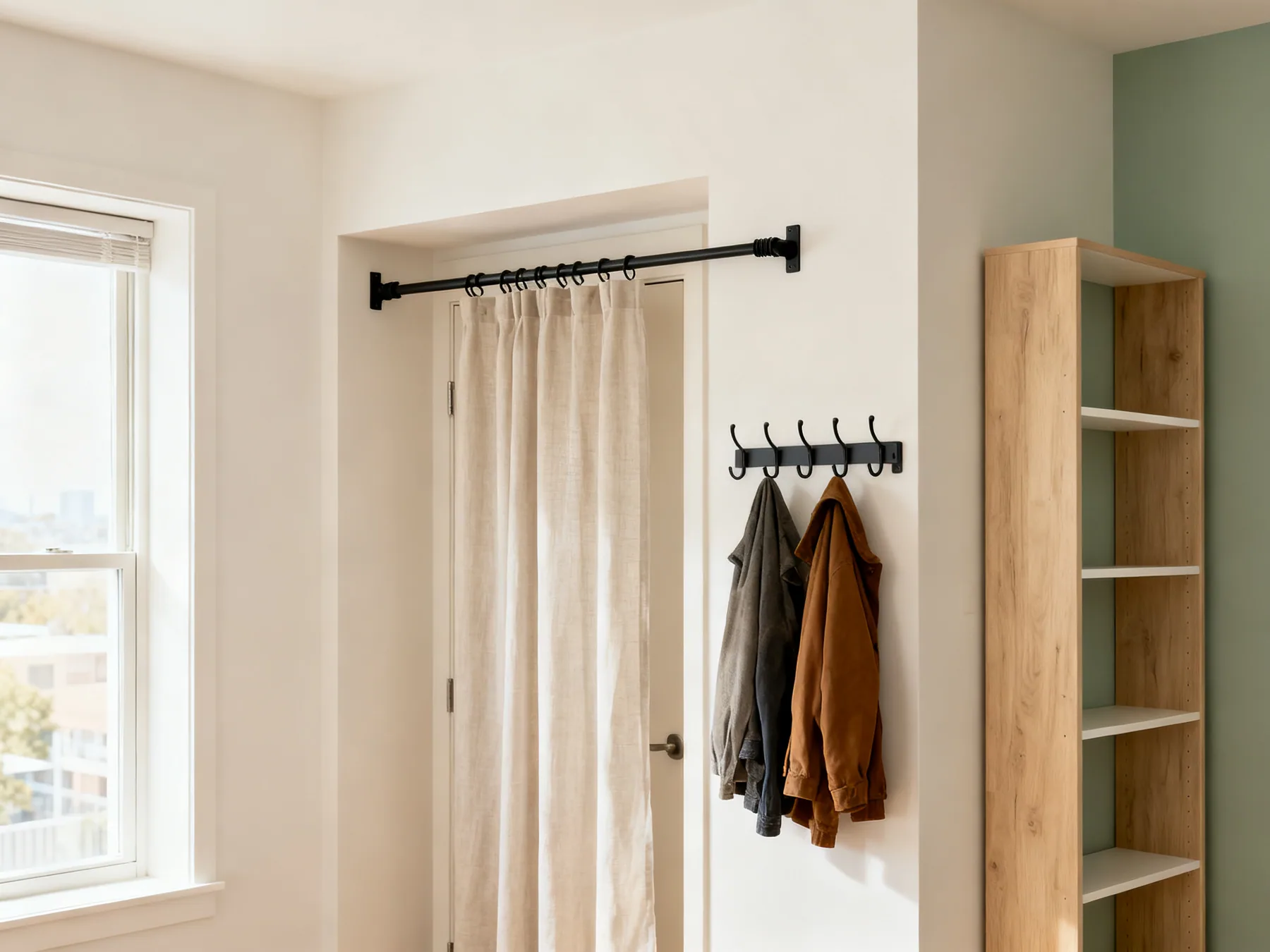
Renting removes the two things most storage advice assumes: permission to fix things to walls, and an interest in improving a property you do not own. What is left has to be free-standing, tension-mounted, hooked over something, or stuck on in a way that comes off cleanly.
The good news is that the highest-value storage space in a home. The vertical band above 1.5m, the back of every door, the volume under the bed. Is all reachable without a single hole.
Storage that needs no fixings at all
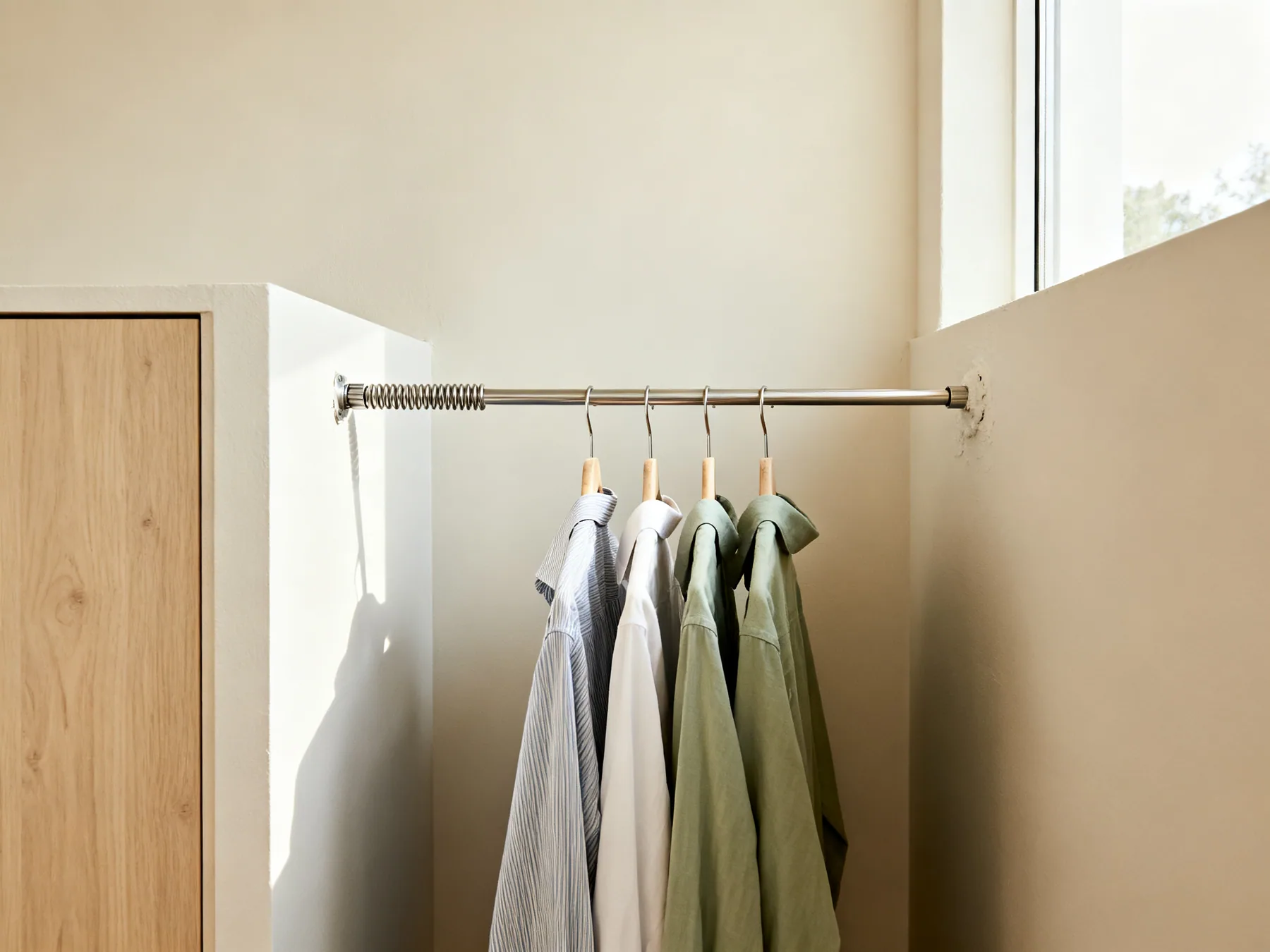
Tension rods, everywhere
A spring-loaded rod wedges between two surfaces and holds real weight in shear. Use one in an alcove as a hanging rail, under a sink for spray bottles, inside a cupboard to make a second tier, or across a recess for a curtain that hides open storage.
The most versatile renter fixing
Over-door hooks and organizers
Hook over the top edge of any door: multi-hook rails for coats and bags, pocket organizers for shoes and pantry items. No tools, no marks, and it comes with you. The single best-value purchase for a rented flat.
Floor-to-ceiling tension poles
Braced between floor and ceiling, these hold bikes, shelves or clothing rails with no wall contact. Needs a solid ceiling rather than a suspended one, and needs the floor to be firm.
Freestanding full-height shelving
A tall open unit gives you the vertical capacity that wall shelves would, without touching the wall. Load heavy items on the bottom shelves for stability, and add an anti-tip strap if children use the room.
Rolling carts in narrow gaps
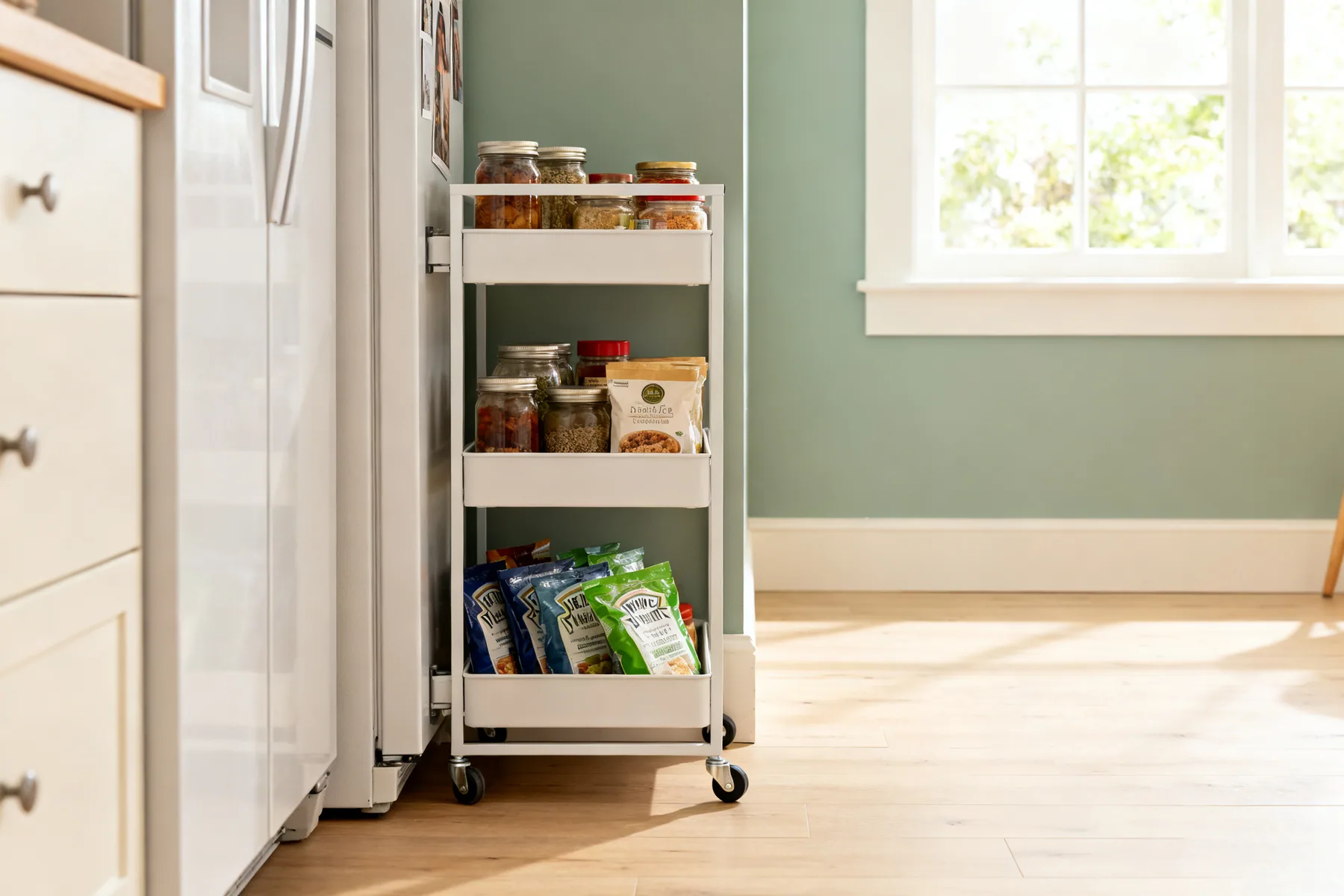
A slim three-tier cart slots into a 150–300mm gap beside a fridge, washing machine or bath and rolls out for access. Claims space that is otherwise permanently wasted.
Under-bed boxes on castors
Around 0.75m³ under a double bed, available in any home regardless of tenancy. Lidded and wheeled, for off-season clothes and bedding.
Adhesive fixings: what they can honestly hold
Removable adhesive strips and hooks are genuinely useful and routinely overloaded. They are engineered to a specific weight and they fail suddenly rather than gradually, usually taking a patch of paint with them.
- Read the rating and treat it as a maximum, not a guide. Halve it for anything you care about.
- Clean the surface with isopropyl alcohol first, not household cleaner, which leaves residue.
- Let the adhesive cure for the stated time, usually an hour, before loading it.
- They perform poorly on textured wallpaper, freshly painted walls and anything damp.
- Never use them for anything fragile, valuable, or positioned above where someone sits.
- Remove by stretching the tab slowly and straight down, not by pulling the hook away from the wall.
Making a rental work without changing it
Add storage furniture rather than storage fittings
An ottoman, a lidded bench, a storage bed and a lift-top coffee table all add substantial capacity and are yours to take. In a rental, furniture that stores is worth more than in an owned home, because it is the only permanent option.
Use the top of existing wardrobes and cupboards
The gap between the top of built-in furniture and the ceiling is dead space you are already renting. Matching lidded boxes there look deliberate and hold everything seasonal.
Put a curtain across an alcove
A tension rod and a curtain turn any recess into a closed storage bay. Cheaper than a wardrobe, entirely reversible, and it hides open shelving that would otherwise read as clutter.
Ask before assuming no
Many landlords will permit a few small fixings, particularly for safety items like anti-tip straps on tall furniture, if you ask in writing and offer to make good on leaving. Get any agreement in writing.
What to check in your tenancy agreement
- Whether any wall fixings are permitted, and of what size.
- Whether adhesive fixings count as damage under your agreement.
- Whether you are required to make good and redecorate on leaving.
- Whether anything may be fixed to woodwork, doors or tiling.
- Whether the inventory records existing marks. Photograph everything on move-in.
- Who is responsible if a freestanding unit damages a floor or wall.
Frequently asked questions
How can I add storage to a rental without drilling?
Tension rods in alcoves and under sinks, over-door hooks and organizers, floor-to-ceiling tension poles, tall freestanding shelving, slim rolling carts for narrow gaps, and under-bed boxes. Between them these reach the vertical space above head height, the back of every door and the volume under the bed. The three highest-value storage areas in any home.
Do adhesive wall hooks damage paint?
Not if you stay within the weight rating and remove them correctly by stretching the tab slowly straight down. They fail suddenly when overloaded and usually take paint with them, so halve the stated limit for anything you care about, and avoid textured wallpaper and freshly painted walls entirely.
Is tall freestanding shelving safe in a rental?
Only with weight loaded on the lower shelves, and with an anti-tip strap if children use the room. Anti-tip straps do require fixing to the wall, which is worth asking your landlord about in writing. Most will permit a safety fixing, and some are obliged to consider it.