Home Types
Small space storage ideas that do not make rooms feel smaller
Small homes rarely lack space. They lack usable height, and they have dead volume in places nobody thinks to look.
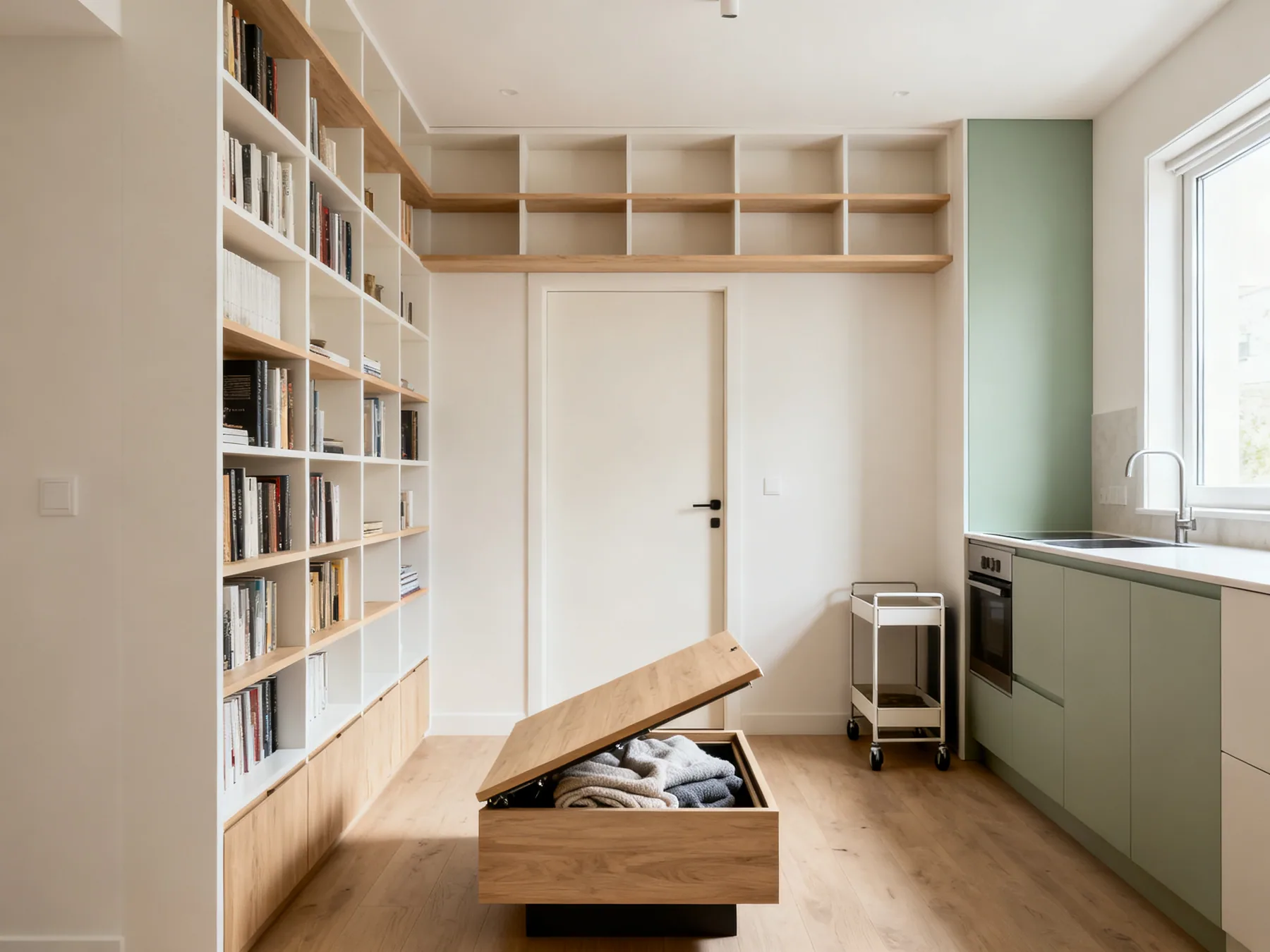
When someone tells me their flat has no storage, the first thing they usually want to do is buy a chest of drawers. I understand the instinct and I almost always talk them out of it. A chest of drawers solves a storage problem and creates a circulation problem, and in a small room circulation is the thing that makes it liveable rather than merely occupiable.
What I look for instead is capacity that costs no floor area at all. Every home I walk into has three reserves of it: the vertical band above about 1.5m that furniture cannot reach, the dead volume tucked under and behind fixtures that are already there, and the dual-purpose potential of furniture you own today. I want those exhausted before anything new gets put on the floor.
I audit the dead space before I buy anything
This is the part I never skip, and it is free. I walk each room looking specifically for volume that is enclosed but holding nothing. In most small homes I find somewhere between one and three cubic metres of it, which is more capacity than any single piece of furniture you could buy and put in the way.
Take the list below round the flat with you. I would be surprised if you scored fewer than five.
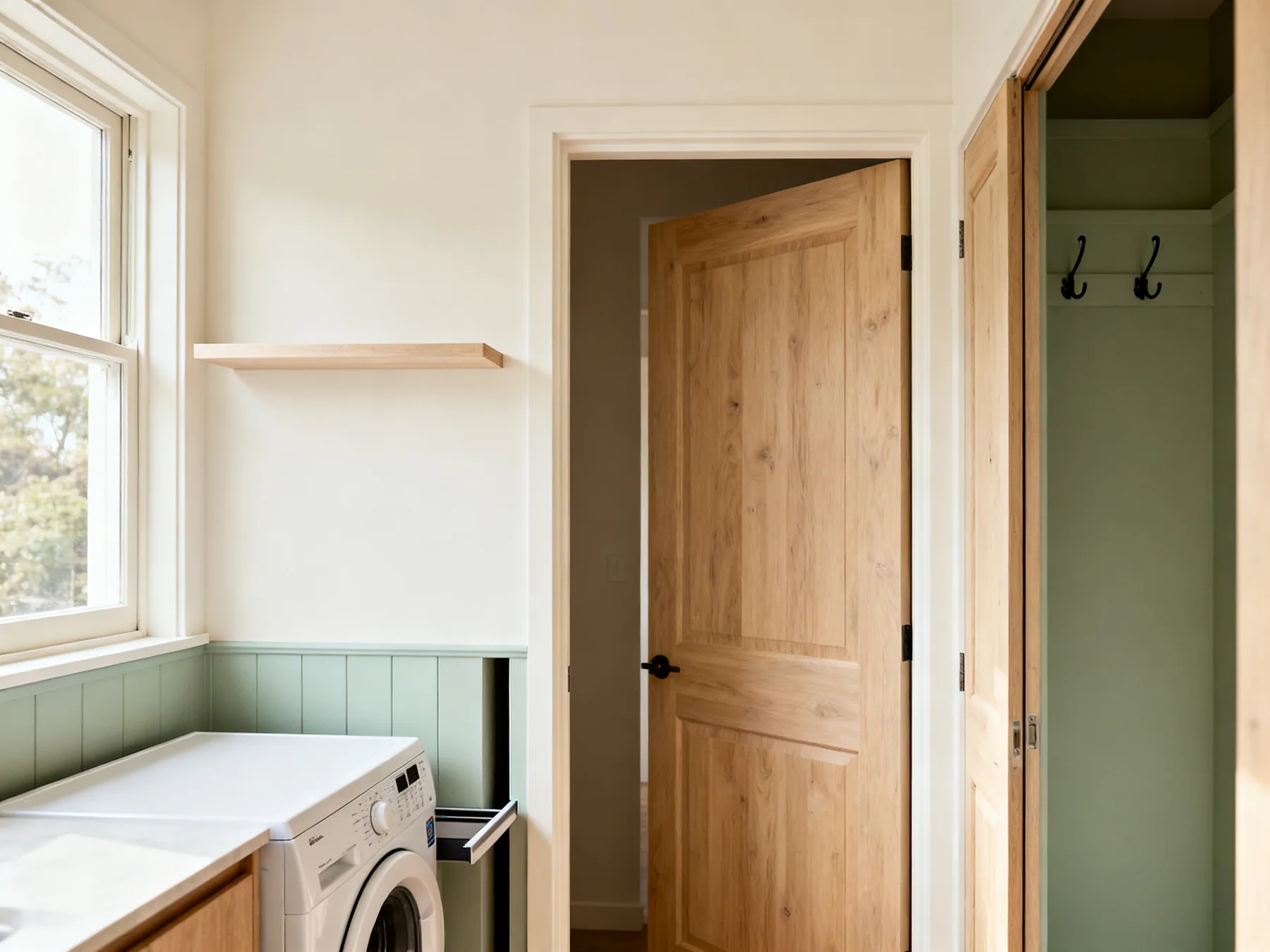
- Under the bed, typically about 0.75m³ under a double.
- Under the sink, around the plumbing trap.
- Above the wall cabinets in the kitchen, up to the ceiling.
- The strip above every interior door, usually around 300mm tall.
- The back of every door.
- Inside the staircase, if it is open or has one small door.
- The corner of every room, which rectangular furniture cannot use.
- Under a raised bed platform or the side of a sofa.
- The gap beside the fridge or washing machine, if it is over 150mm.
Build upward before you build outward
Height is the reserve people leave untouched, and I think it is because most furniture is sold at a height that fits a lorry rather than a room. Nothing standard reaches the top third of your walls, so it sits empty in flat after flat.
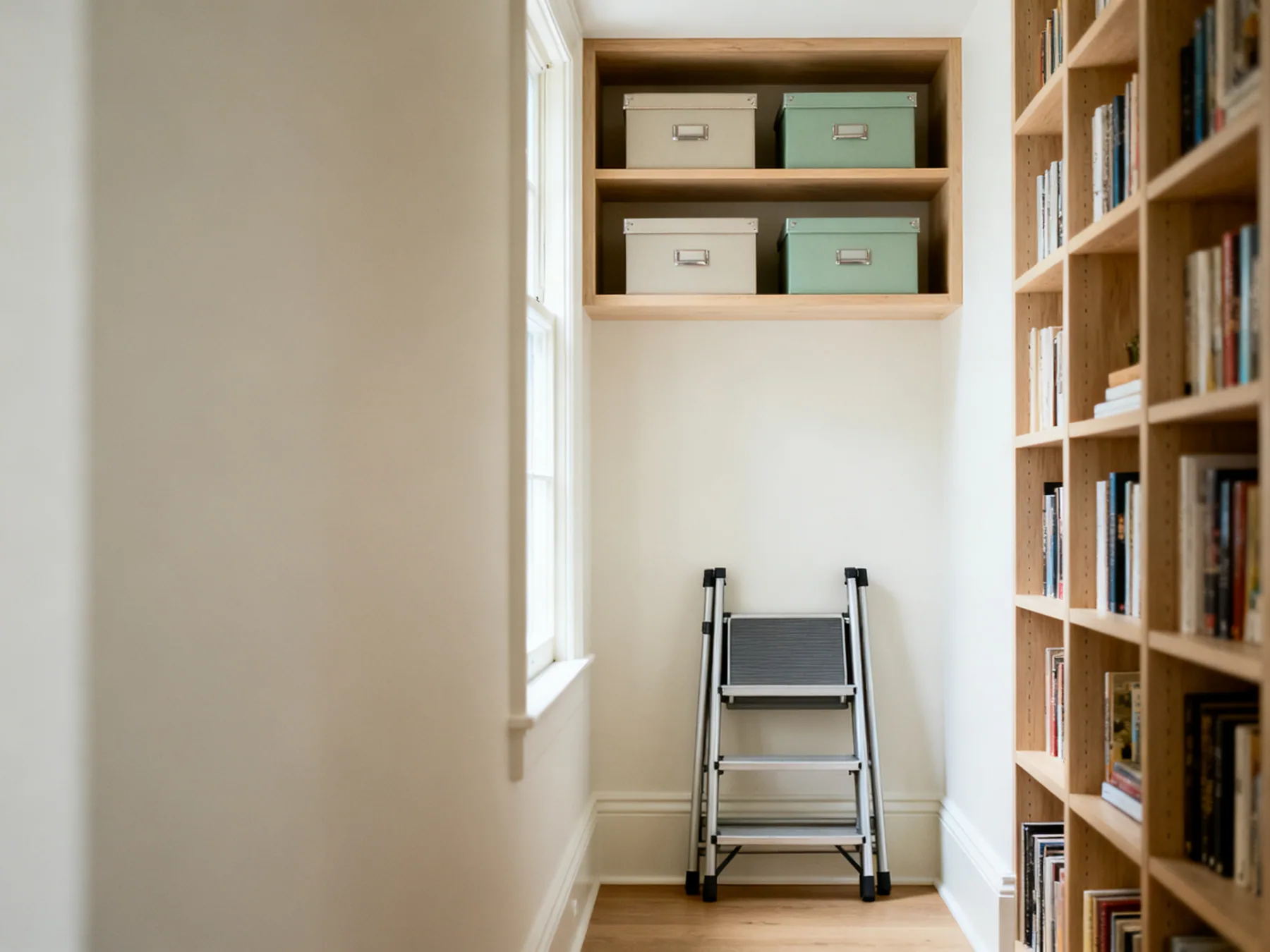
Take shelving all the way to the ceiling
A bookcase that stops at 1.8m in a 2.4m room is wasting a quarter of itself. Full-height shelving holds substantially more in exactly the same footprint, and the top shelf becomes long-term storage you reach with a step stool twice a year. This is the best capacity-per-footprint gain available anywhere in a small home.
Best capacity-per-footprint gain available
Run a high shelf around the perimeter
One continuous shelf at about 1.9m, above door head height, reads as architectural moulding rather than as storage. It takes books, boxes and baskets on a plane that nothing else in the room is using. I like this one because it adds capacity without adding an object.
Choose tall and narrow over wide and low
A 400mm-wide tower to head height holds roughly what a 900mm-wide low chest holds, in under half the floor. In a small room the scarce thing is footprint, not height, and most furniture is shaped as though the opposite were true.
Wall-mount rather than stand on the floor
A floating shelf or a wall-hung cabinet gives you the same capacity as a floor unit while leaving the floor visible underneath. That visible floor is precisely what stops the extra storage making the room feel tighter, and it is why I keep pushing people towards wall fixings.
Use the wall above the door
The 300mm above a doorway is dead in every home I have been in. One shelf there per room, holding boxed things you rarely need, adds up fast across a whole flat. Nobody looks up there, which is exactly the point.
Dual-purpose furniture, and its one catch
Furniture that stores is how a small home reaches capacity without gaining pieces. The catch is always access. Something has to be moved before you can reach the contents, so the only question that matters is how often you need what is going inside.
Get that matching right and dual-purpose furniture is the best value in a small home. Get it wrong and you have built a box you resent opening.
Ottoman or storage bed
The single biggest capacity gain available in a small bedroom. An ottoman bed opens the whole under-bed volume as one compartment on gas struts, and there is around 0.75m³ under a double. That will swallow all your bedding and your off-season clothes together.
Storage bench at the entrance
Somewhere to sit plus shoe storage, in a strip of hallway that is otherwise pure circulation. Keep the seat at 450mm and the depth under 400mm in a narrow hall, or you have traded a storage problem for a squeezing-past problem.
Lift-top coffee table
Holds remotes, chargers, games and blankets in the middle of a living room, which is somewhere a cupboard would look ridiculous. The lifting top doubles as a laptop or eating surface, which in a studio matters more than the storage does.
Bed platform with drawers or steps
Where you have height to spare, raising the bed onto a platform of drawers turns the entire bed footprint into storage. It works particularly well in studios and children's rooms, though I would check your ceiling height honestly before committing.
Nesting tables and folding furniture
A drop-leaf table that folds to 300mm against a wall gives you a dining table without a dining room. Not storage exactly, but it releases the floor that storage can then occupy, which comes to the same thing.
Renter-friendly small space storage
If you cannot drill, you can still claim most of what is available. I have planned whole flats this way. Everything here leaves no trace and comes with you when you move, which over three or four tenancies makes it better value than it looks.
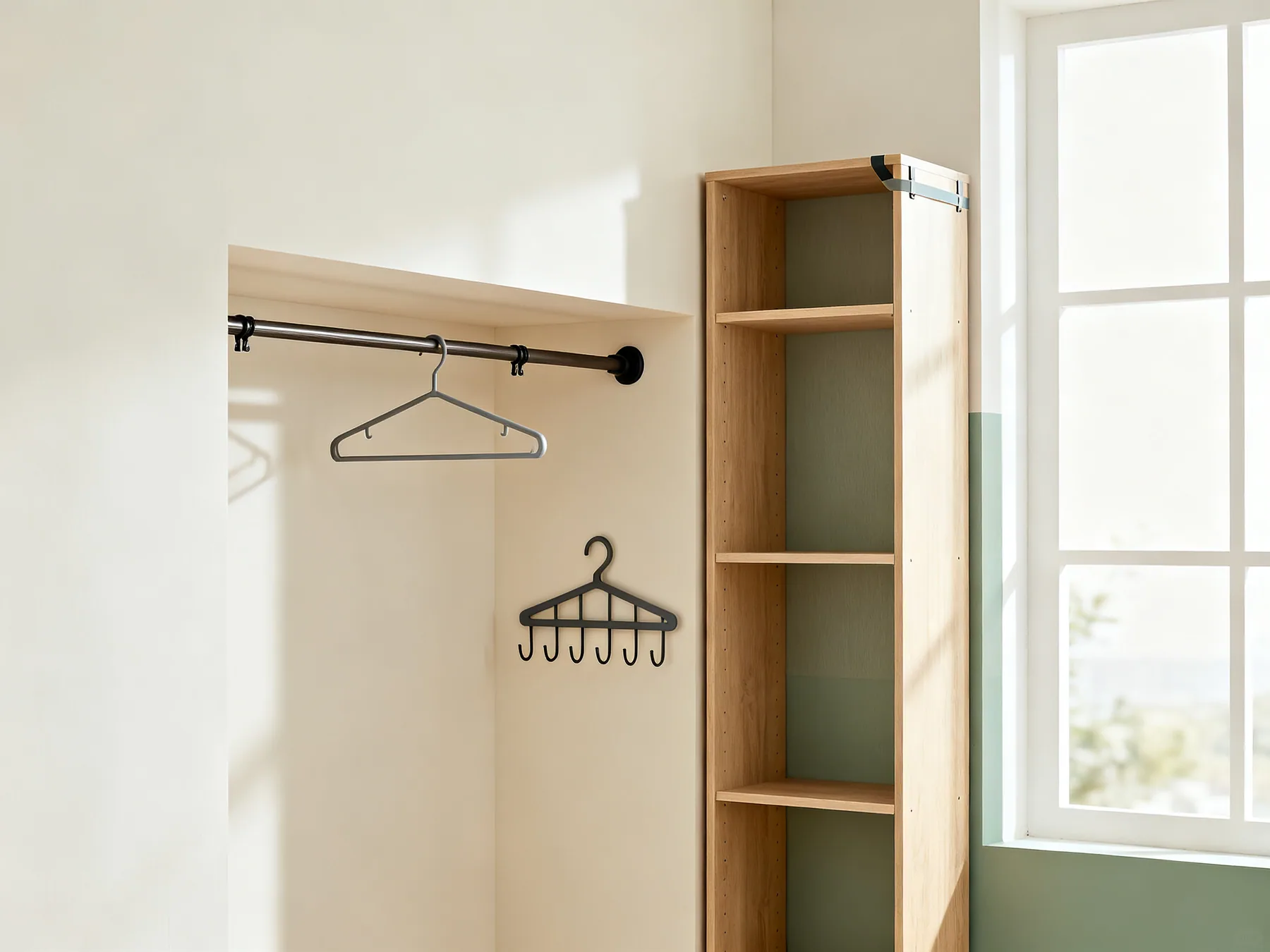
Tension rods in any alcove
A spring-loaded rod between two walls gives you a hanging rail in an alcove, a place for cleaning sprays under a sink, or a second row of storage across a window. No fixings, no damage, and it takes about a minute.
Renter-friendly
Over-door hooks and organizers
Hooked over the top of a door: no screws, immediate capacity for coats, bags, shoes or pantry items. If you asked me for the single highest-value thing a renter can buy for storage, this is it.
Freestanding shelving, braced not fixed
A tall freestanding unit gives you full-height storage with no wall fixings at all. Use anti-tip straps if there are children in the house, and keep the heavy things on the lowest shelves so the whole unit stays bottom-heavy.
Adhesive hooks and rails, used honestly
Removable adhesive fixings work genuinely well inside their stated weight limit and fail messily above it. Check the rating, clean the surface properly first, and do not trust them with anything heavy or anything you would be upset to see on the floor.
Rolling carts in every narrow gap
A slim three-tier cart slots into a 150 to 300mm gap beside an appliance and rolls out when you need it. Nothing permanent, and it moves house with you.
Keeping the room feeling open
This is the part that separates storage that helps from storage that makes things worse. You can add real capacity to a small room and end up with a room that feels smaller than it did, and then you have lost. The choices below are how I avoid that.
- Keep the sightline from the doorway across the room clear of tall furniture.
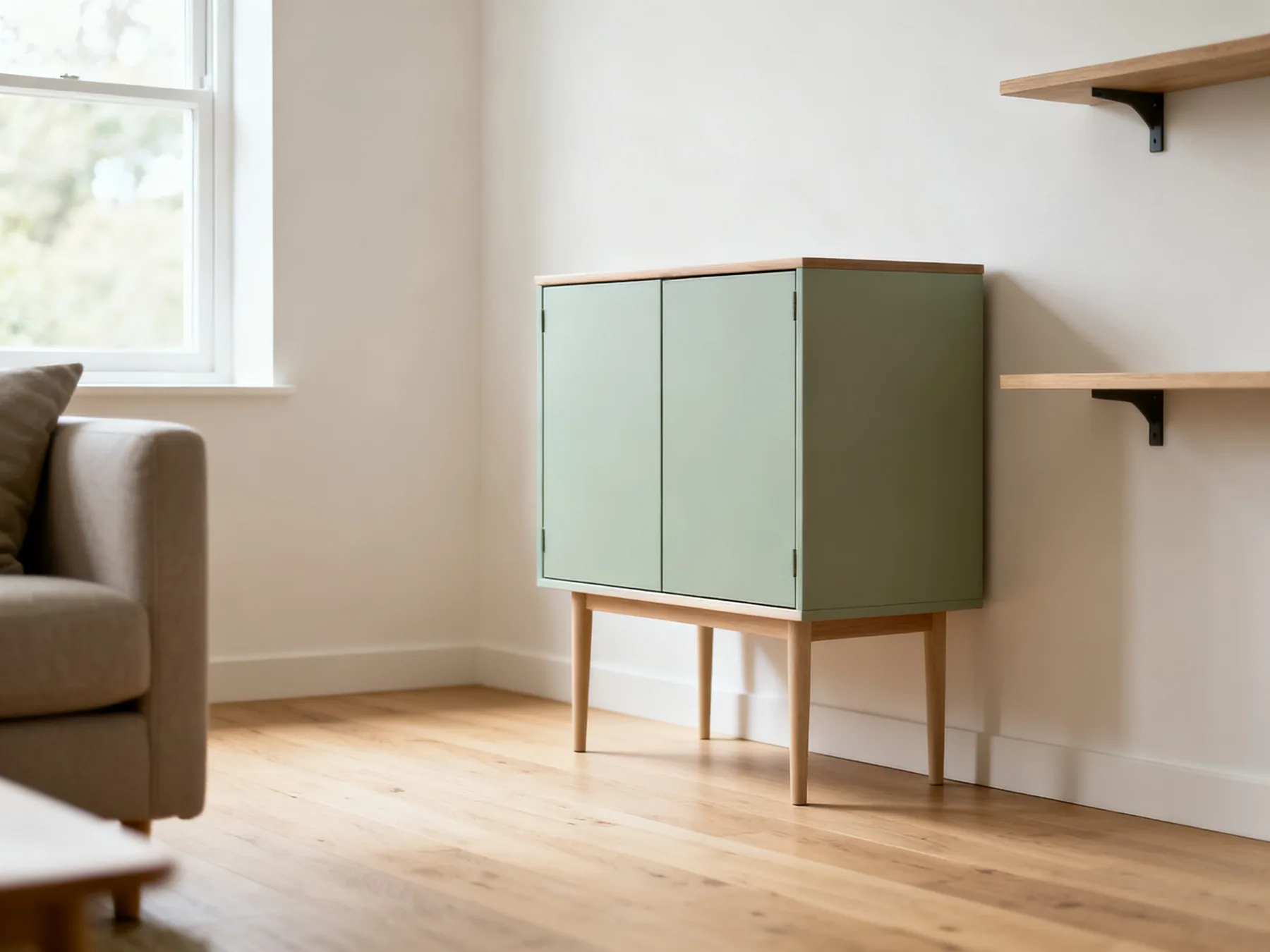
- Choose furniture on legs over furniture with solid plinths. Visible floor reads as more floor.
- Prefer closed storage in small rooms. Open shelving of mixed objects reads as visual noise.
- Use one container style throughout a room so the storage reads as a single system.
- Put the tallest storage on the wall you see least, which is usually the one the door is in.
- Leave one surface deliberately empty. A small room with no clear surface always feels full.
- Rotate seasonal things out of the living space entirely rather than storing everything on show.
Small space storage ideas that do not make rooms feel smaller: frequently asked questions
How do I add storage to a small home without making it feel cramped?
Go vertical and keep the floor visible. Full-height shelving and wall-mounted units add capacity without consuming floor area, and furniture on legs rather than solid plinths lets you see the floor underneath, which is what makes a room read as larger. Keep the sightline from the door across the room clear of tall pieces.
What is the most underused storage space in a small home?
The band above about 1.5m, which no standard furniture reaches, and the 300mm strip above every interior door. After that it is the volume under the bed, around 0.75 cubic metres under a double, and then the awkward space under the sink around the plumbing trap.
Is dual-purpose furniture worth it in a small space?
Yes for anything you need occasionally, no for anything daily. An ottoman bed or a lift-top table trades access speed for capacity, which is a good trade for bedding, off-season clothes and games, and a frustrating one for the things you reach for every morning.
How can I add storage to a rental without drilling?
Tension rods in alcoves and under sinks, over-door hooks and organizers, tall freestanding shelving with anti-tip straps, and slim rolling carts in the gaps beside appliances. Together those claim most of the available space and leave no trace when you move out.
Should small rooms use open or closed storage?
Mostly closed. Open shelving displaying a mix of objects reads as clutter, and in a small room there is nowhere for the eye to rest. Use closed storage for the bulk of it, then one or two open shelves for the things you genuinely want to look at.