Home Types
Studio apartment storage ideas for one room doing every job
In a studio there is no door to close on anything. Storage has to divide the room as well as fill it.
A studio is not just a small flat. It is one room being asked to be a bedroom, a living room, a kitchen and often an office, all at once and all visible from every point in it.
That changes two things about storage. First, it has to do a second job: dividing the space into places that feel separate, because a single undifferentiated room is what makes a studio feel like a bedsit rather than a home. Second, almost everything has to be behind a door, because there is nowhere for visible clutter to hide. In a house you shut the bedroom door on an unmade bed. In a studio you look at it while you eat.
The good news is that the largest single area in the room is the bed footprint, and it is the one most people never think to use.
Let the storage make the rooms
The instinct in a studio is to keep everything low and against the walls so the room feels bigger. It is worth resisting, because an open box of a room with furniture pushed to the edges feels like a waiting area rather than a home, and it gives you nowhere that feels like anything in particular.
Dividing it makes it feel larger, not smaller, because you get two defined places instead of one undefined one. And if the divider is a storage unit rather than a partition, you get the zoning and the capacity from one object.
Use a double-sided unit as the divider
Accessible from both faces: books on the living side, clothes baskets on the sleeping side. Around 1.4m high defines the zones while keeping sightlines and light above it.
Zoning and storage from one object
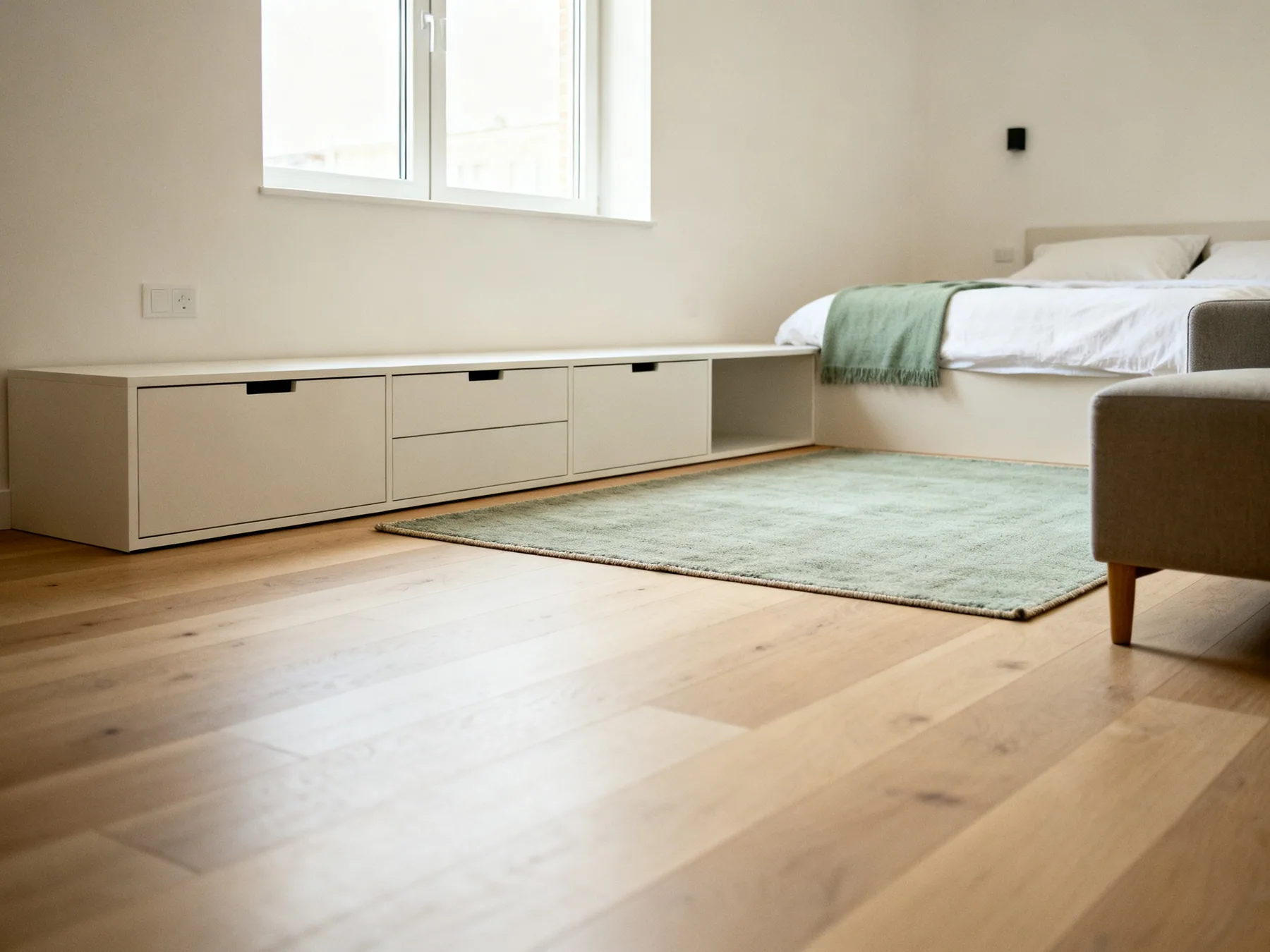
A run of low units separates without walling
Waist height in a line marks a boundary you read rather than one you bump into, and the tops become a surface. Good between a kitchenette and a living area.
Brace anything tall standing free
A unit in the middle of a room has nothing to lean on. Weight it low, strap it if you can, and never load the top shelves heavily.
A rug does zoning work for nothing
Not storage, but it defines a living area within an open room more cheaply than any furniture, and it makes the arrangement of storage read as deliberate.
Keep one clear route across the room
Dividing a studio creates circulation you did not have before. Walk it before fixing anything, because an object in the wrong place makes the whole room awkward.
The bed footprint is the biggest prize
A double bed occupies about 2.6 square metres. In a studio of perhaps 20 to 25 square metres, that is more than a tenth of the entire flat, and in most studios it is holding nothing but dust.
Converting it is the single largest capacity gain available anywhere in the room, and there are two good ways depending on ceiling height.
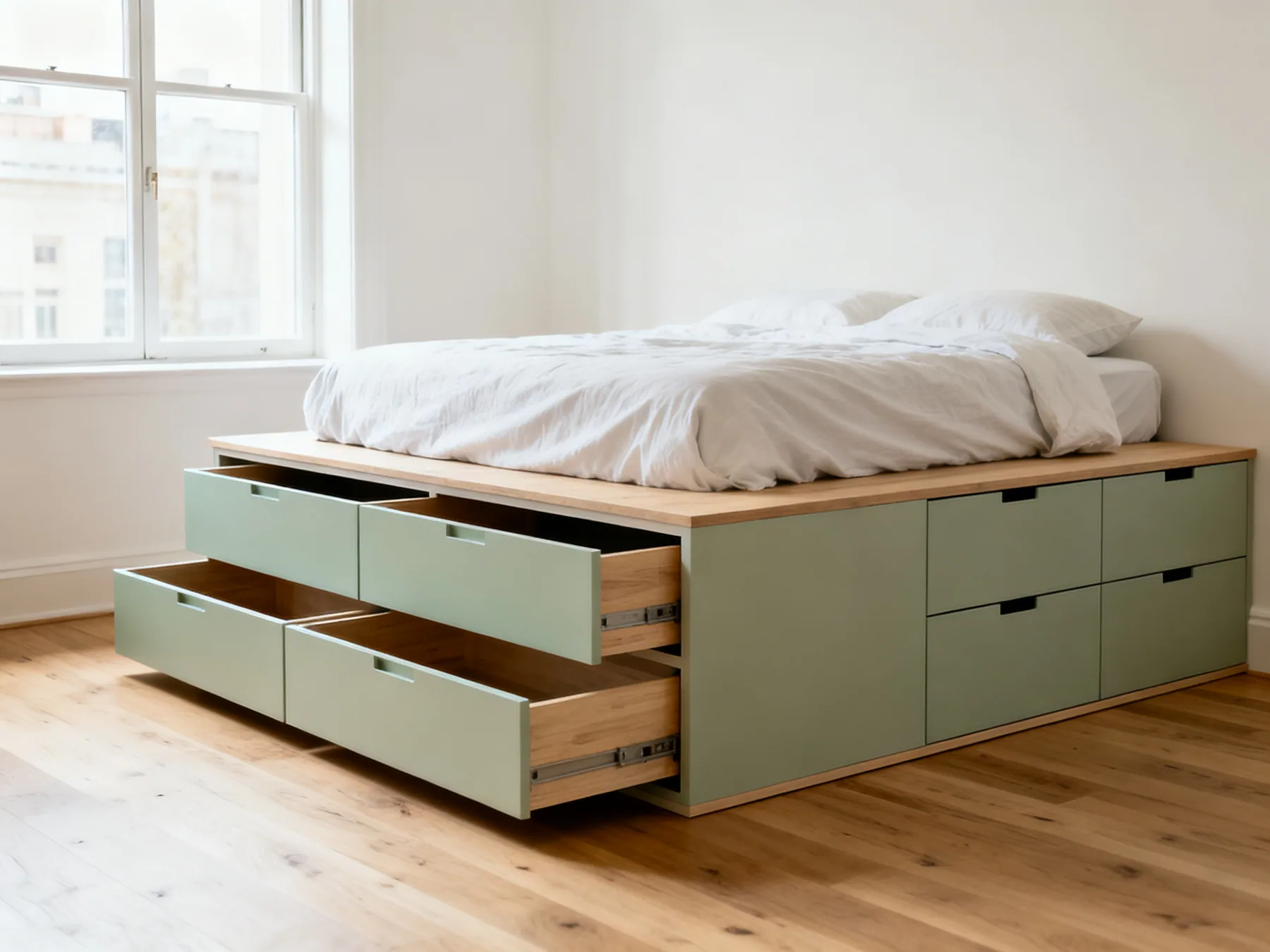
Raise the bed onto a platform of drawers
This converts the whole footprint. Build it from stock drawer units and it is usually cheaper than a purpose-made storage bed, and you can reconfigure it later.
Make the steps drawers too
Where the platform is high enough to need a step up, that step is a natural drawer. Nothing wasted, and it keeps the climb safe rather than improvised.
Or use an ottoman bed if height is tight
Roughly 0.7 to 0.9 cubic metres under a double as one open compartment. Check which end or side it lifts from and whether the studio gives you that clearance.
Measure the lift clearance first
Consider a sofa bed only if you will actually fold it
A sofa bed frees the footprint by day and only if it gets folded away daily. Be honest about that: an unfolded sofa bed is a worse bed and a worse sofa.
Do not put a loft bed in a low room
Allow at least 900mm from mattress to ceiling to sit up, plus usable height beneath. Below about 2.4m of room height it stops being comfortable.
Screen the bed, close the storage
Two related points about how a studio feels rather than how much it holds, and in one room those matter more than usual.
A visible unmade bed sets the tone for the whole flat, and screening it is cheap. And because there is no door to close on anything, open shelving of mixed objects is on show permanently, from every seat in the room. That tips the balance decisively towards closed storage even though open shelving is what small-space interiors are usually photographed with.
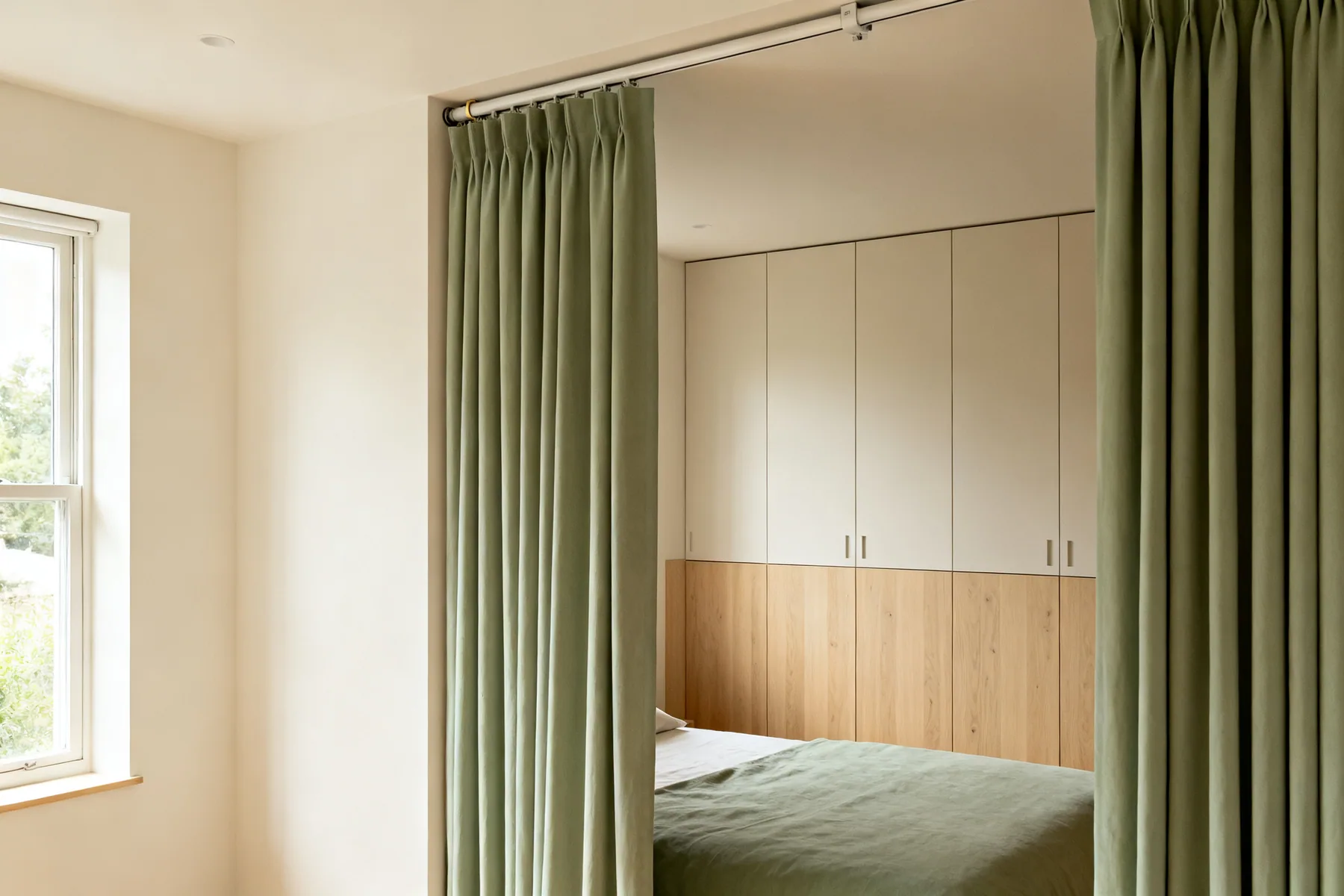
Fit a ceiling curtain track
A track and a heavy curtain screens the sleeping area in seconds and folds back to nothing. Far cheaper than any partition and it needs only ceiling fixings.
Closed doors at and below eye level
Where you look while sitting is where visual noise costs you most. Cupboard doors there and open shelves only above, holding a small deliberate group.
Use one container style throughout
In one room you see all your storage at once, so mismatched boxes read as accumulation. One repeated shape reads as a system.
A folding screen if you cannot fix a track
Freestanding, moves with you, no fixings at all. Less effective than a curtain and it works, particularly to hide a desk at the end of the day.
The kitchen is always on show
A studio kitchenette has no door, which means the counter is part of the living room. Anything left on it is in your eyeline while you relax, and a cluttered counter makes the whole flat read as busy however tidy the rest is.
So the counter has to stay clear, which means the same discipline as a small kitchen but with a stronger reason.
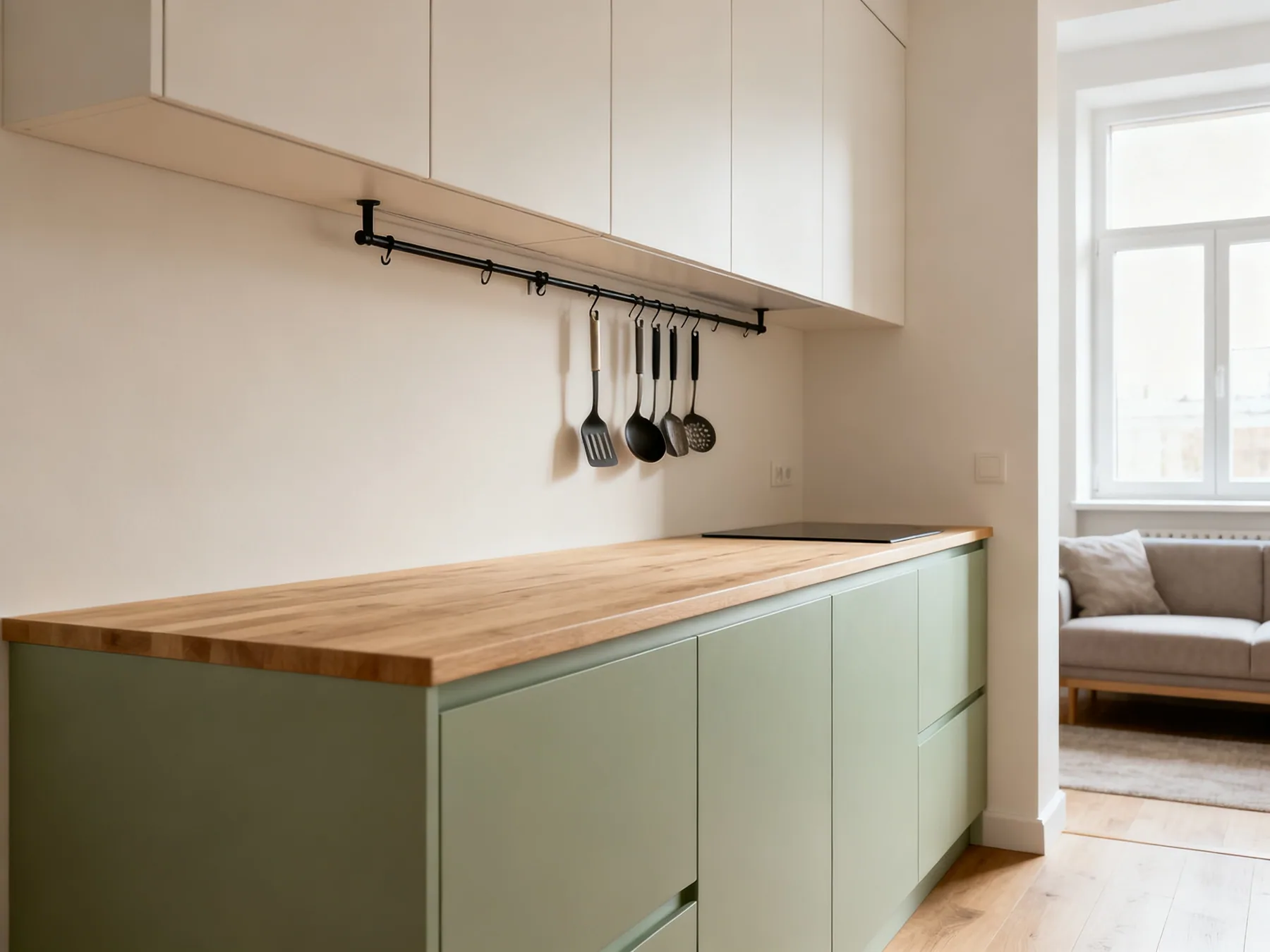
- Take the wall cabinets to the ceiling, or box in the gap above them.
- Get the daily utensils onto a wall rail and the knives onto a magnetic strip.
- Keep nothing on the counter permanently. In a studio it is living-room furniture.
- Use a shallow drawer for the foil, bags and clips that otherwise colonise a corner.
- Decant dry goods into matching square containers, which look calmer and use more of the shelf.
- Store bulk food outside the kitchen area entirely.
- Keep one set of everything. Duplicates fill a studio kitchen immediately.
- Run the extractor when cooking, because cooking smells travel to the bed in one room.
Above the door, behind it, and up
The last places to look, and in a single room they matter disproportionately because there is only one room to find them in.
The 300mm band above the door and the back of the door itself are the two surfaces nobody uses in any home. In a studio they are also the only surfaces not competing with something else.
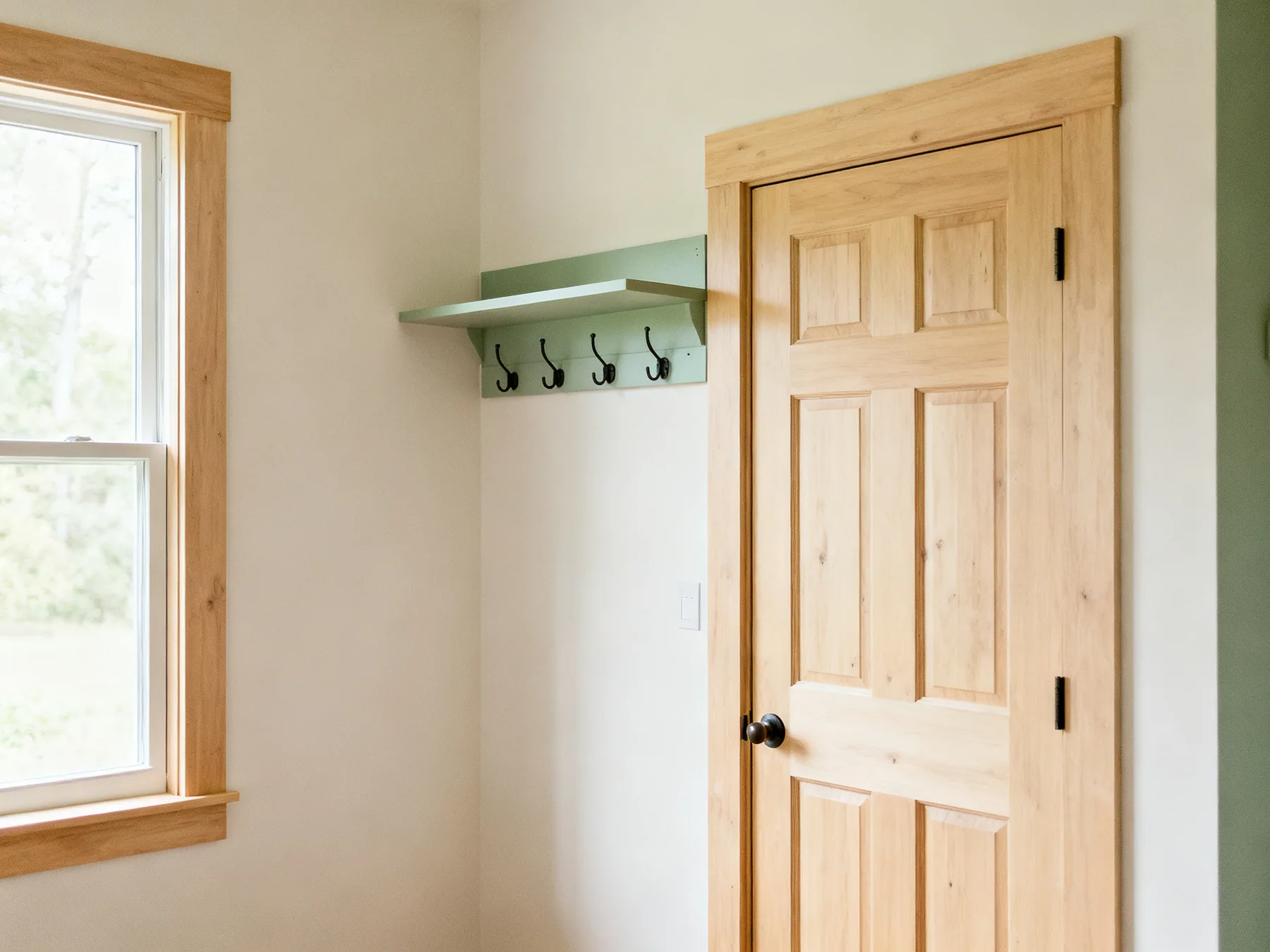
- Fit a shelf in the band above the door for lidded boxes of seasonal things.
- Put a hook rack or a slim organiser on the back of the door.
- Take shelving to the ceiling and keep a folding stool for the top tier.
- Use the wall above the bed head for light items only, fixed into structure.
- Claim any alcove or recess with a tension rod or a fitted shelf.
- Put a slim rolling cart in any gap over 150mm beside an appliance.
- Rotate off-season clothing into the highest storage, or out of the flat if you can.
- Keep the floor visible where possible, since visible floor is what keeps one room feeling open.
Studio apartment storage ideas for one room doing every job: frequently asked questions
How do I create separate areas in a studio apartment?
Use a storage unit as the divider rather than a partition, because a partition costs you floor and holds nothing while a double-sided unit does both jobs. Around 1.4m high defines the zones while keeping light and sightlines above it. Dividing a studio makes it feel larger, not smaller, because you get two defined places instead of one undefined one.
What is the biggest storage win in a studio?
The bed footprint. A double bed occupies about 2.6 square metres, which in a 20 to 25 square metre studio is more than a tenth of the whole flat, and it is usually holding nothing. Raise the bed onto a platform of drawers to convert all of it, or use an ottoman bed if the ceiling height is tight.
Should studio storage be open or closed?
Closed, more so than anywhere else. There is no door to shut on anything, so open shelving of mixed objects is on show permanently from every seat in the room. Use cupboard doors at and below eye level, save open shelving for a small deliberate group above it, and keep to one container style so it reads as a system.
How do I hide the bed in a studio?
A ceiling curtain track with a heavy curtain is the cheapest effective answer: it screens the sleeping area in seconds, folds back to nothing and needs only ceiling fixings. A low storage unit or a folding screen also works. A visible unmade bed sets the tone for the whole flat, so it is worth screening.
Is a sofa bed a good idea in a studio?
Only if you will genuinely fold it away every day. It frees the bed footprint by day, which is a real gain, and an unfolded sofa bed is both a worse bed and a worse sofa. Be honest about the habit before choosing one over a platform bed with drawers, which needs no daily effort at all.
How do I stop a studio kitchen making the whole flat feel cluttered?
Treat the counter as living-room furniture, because with no door it effectively is. Take the wall cabinets to the ceiling, move the daily utensils onto a wall rail and the knives onto a magnetic strip, and keep nothing on the counter permanently. A cluttered counter makes the entire flat read as busy however tidy everything else is.