Home Types
Small apartment storage ideas when you cannot drill the walls
An apartment has no loft, no garage and no understairs. Everything has to come from the walls, and often without a single hole.
A small apartment is a different problem from a small house, and it is worth being precise about why. A house has spare places: a loft, a garage, an understairs void, a shed. An apartment has none of those. Whatever you own has to live in the rooms you live in.
On top of that, most small apartments are rented, which removes the tool most storage advice assumes you have. You cannot fit built-in cabinetry, and depending on the tenancy you may not be able to put a screw in a wall.
So the brief is narrow: get capacity from the vertical space, get it without permanent fixings where necessary, and make the furniture you already own do two jobs. That is genuinely enough, and it is more than people expect.
Everything comes from the walls
In a flat the floor is the scarce resource and the walls are mostly empty above head height. That is the whole opportunity, and it holds in every room.
The specific number worth remembering is 1.5m. Below that, furniture already competes for the space. Above it, almost nothing standard reaches, so the band from 1.5m to the ceiling is sitting unused in every room of the apartment at once. Adding a shelf at 1.9m in four rooms is a surprising amount of storage for very little money.
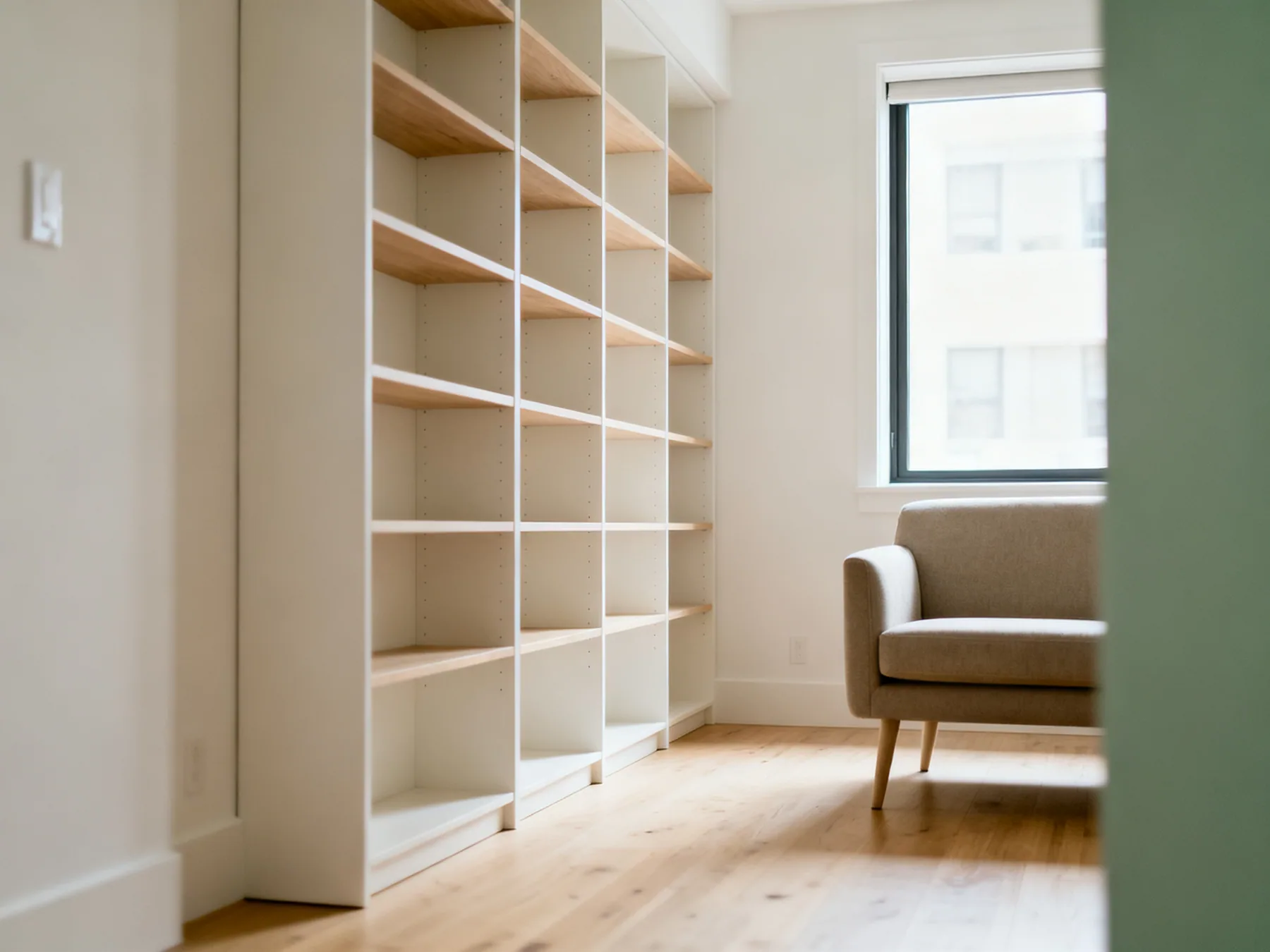
Take shelving to the ceiling, not to 1.8m
Full-height shelving holds substantially more in exactly the same footprint, and the top shelf becomes long-term storage you reach twice a year with a folding stool.
Best capacity per square metre available
Use the band above every door
Around 300mm of wall above each doorway, dead in every flat. One shelf per room, holding boxed things you rarely need, adds up quickly across four doors.
Choose tall and narrow over wide and low
A 400mm-wide tower to head height holds roughly what a 900mm-wide low chest holds, in under half the floor. In a flat, footprint is what you are short of, not height.
Wall-mount rather than stand on the floor
Same capacity, and the floor stays visible underneath, which is what stops added storage making a small room feel tighter. Only where you are allowed to fix, obviously.
A high perimeter shelf reads as architecture
One continuous shelf at about 1.9m running round a room looks like moulding rather than storage, and it takes books and lidded boxes on a plane nothing else uses.
Renter-safe, and genuinely capable
If you cannot drill, you can still claim most of the available space. I have planned whole flats this way and the capacity loss is smaller than people assume.
The important point is that these are not compromises to be embarrassed about. A tension rod in an alcove holds a full rail of clothes. An over-door hook rack is the single highest-value thing a renter can buy. And everything here comes with you to the next flat, which over three tenancies makes it better value than built-in ever was.
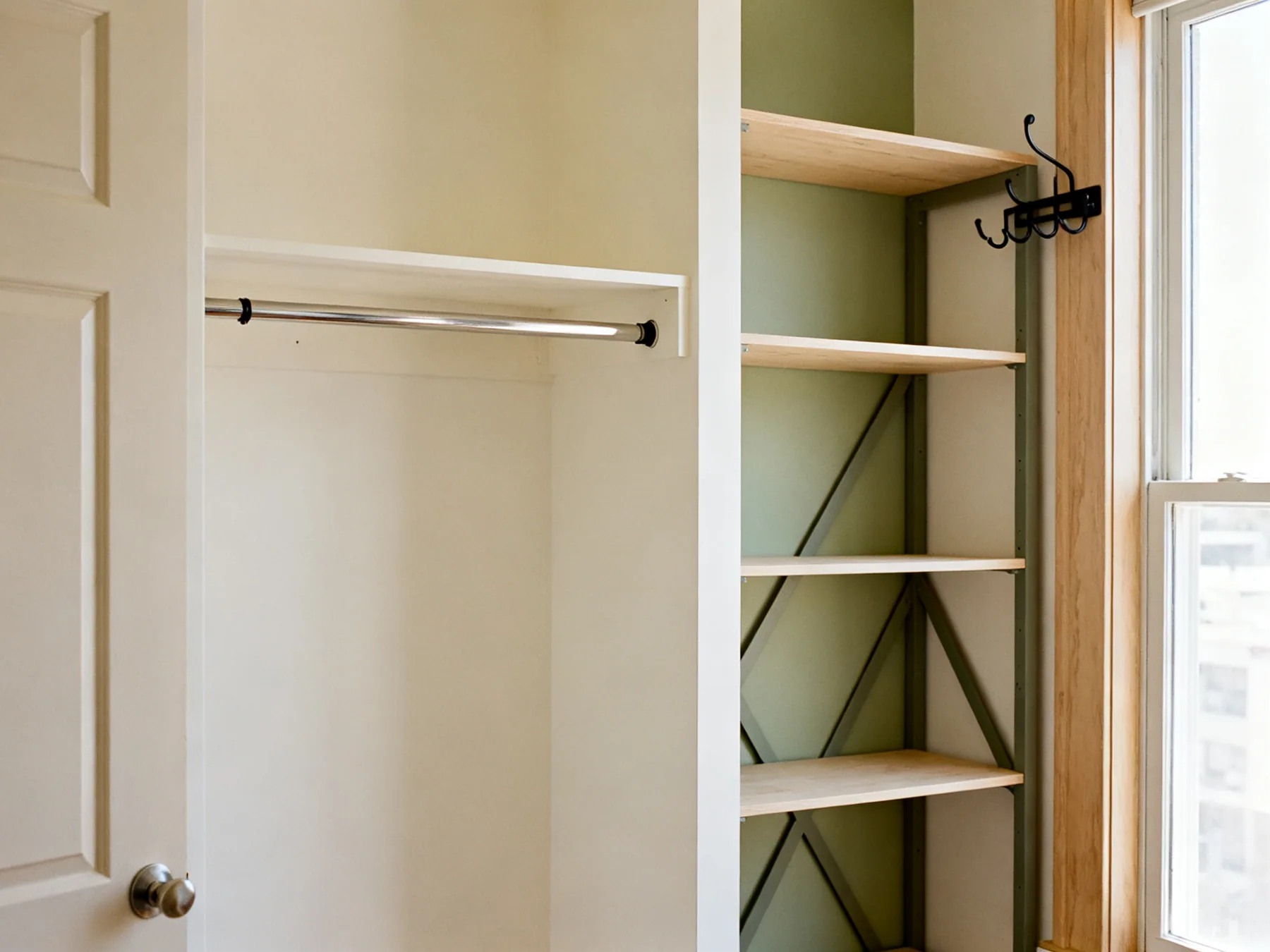
Tension rods in any alcove or recess
A spring-loaded rod between two walls gives you a hanging rail, a place for cleaning sprays under a sink, or a second tier across a window recess. No fixings, no damage, one minute to fit.
Renter-friendly
Over-door hooks everywhere
Hooked over the top of a door: coats, bags, towels, a shoe organiser. No screws at all. If you buy one thing from this article, buy these.
Braced freestanding shelving
A tall freestanding unit gives you full-height storage with no wall fixings. Use anti-tip straps if there are children, keep heavy things on the lowest shelves so it stays bottom-heavy.
Adhesive fixings, used honestly
Removable adhesive hooks work well inside their stated weight limit and fail messily above it. Check the rating, clean the surface first, and do not trust one with anything you would mind hitting the floor.
Check the tenancy before assuming you cannot drill
Many agreements permit small fixings if holes are filled on leaving. It is worth asking rather than assuming, because a few screws unlock considerably more capacity.
Make the furniture do two jobs
This is how a flat reaches capacity without gaining objects, and in a small apartment gaining objects is the thing to avoid. Every new piece of furniture costs circulation space, and circulation is what makes a small flat liveable rather than merely occupiable.
The trade with dual-purpose furniture is always access: something has to be moved before you reach the contents. So match it to how often you need what is going in.
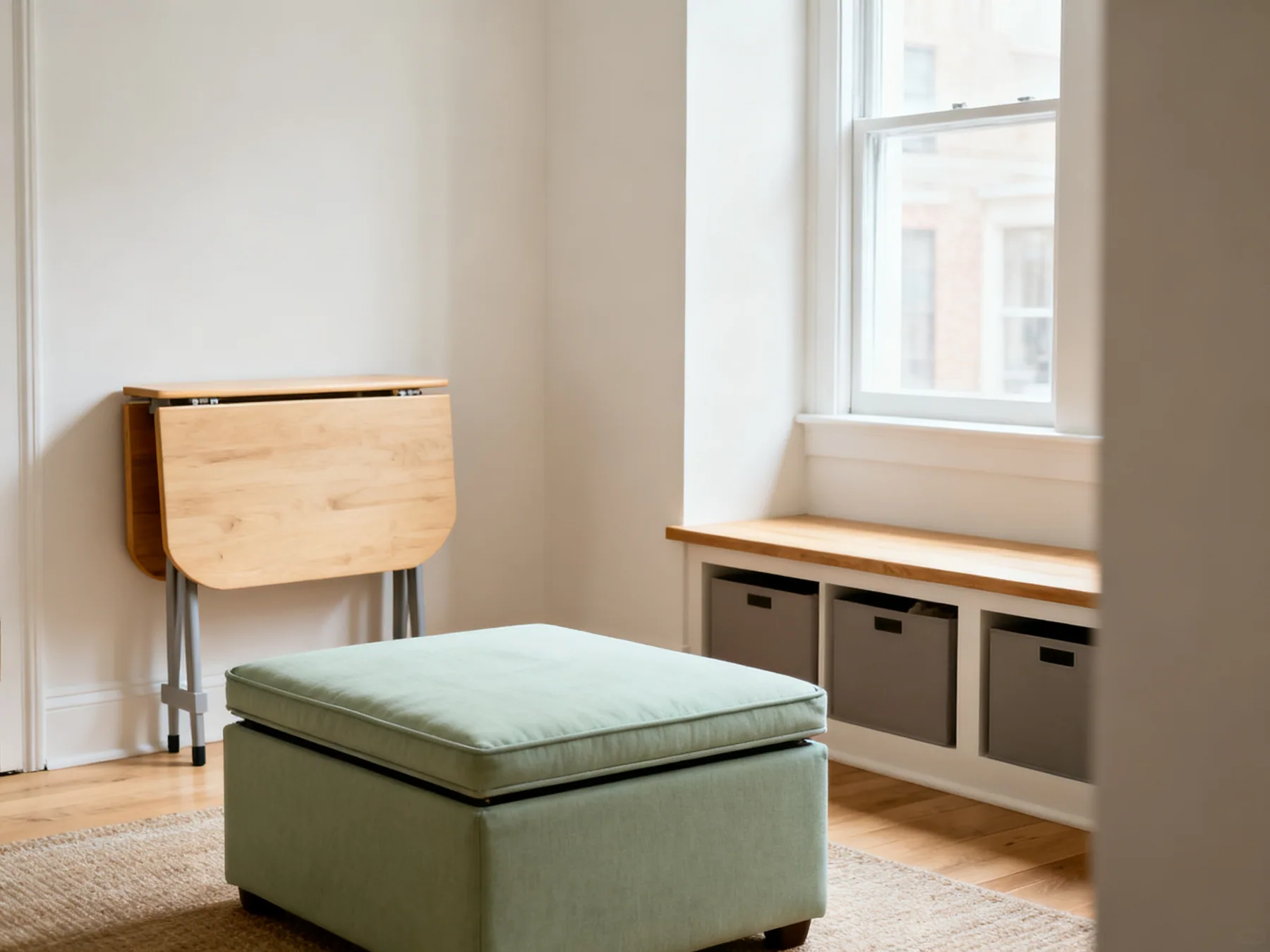
A lidded ottoman as the coffee table
Holds blankets, games and chargers, gives you a surface, and you can put something in it from a seated position. The highest-value single piece of storage furniture in a flat.
An ottoman or drawer bed
Roughly 0.75 cubic metres under a double. In a flat with no loft, this is where the bedding and off-season clothes go, and it is the largest single volume available.
A drop-leaf or folding table
Folds to 300mm against a wall and gives you a dining table without a dining room. Not storage, but it releases the floor that storage then occupies.
A storage bench under a window
Seating plus a large enclosed volume, in a strip of floor that is usually doing nothing. Works particularly well in a bay or a wide reveal.
Slim rolling carts in every narrow gap
Anything over about 150mm beside an appliance or a unit takes a three-tier cart that rolls out when you need it. Nothing permanent, and it moves with you.
The entrance, however small it is
Flats frequently have no hallway at all, so the front door opens straight into the living space. That makes a drop zone more important rather than less, because without one the coats, bags, keys and post spread into the only room you have.
It does not need much. A metre of wall by the door, used properly, keeps the rest of the flat clear.
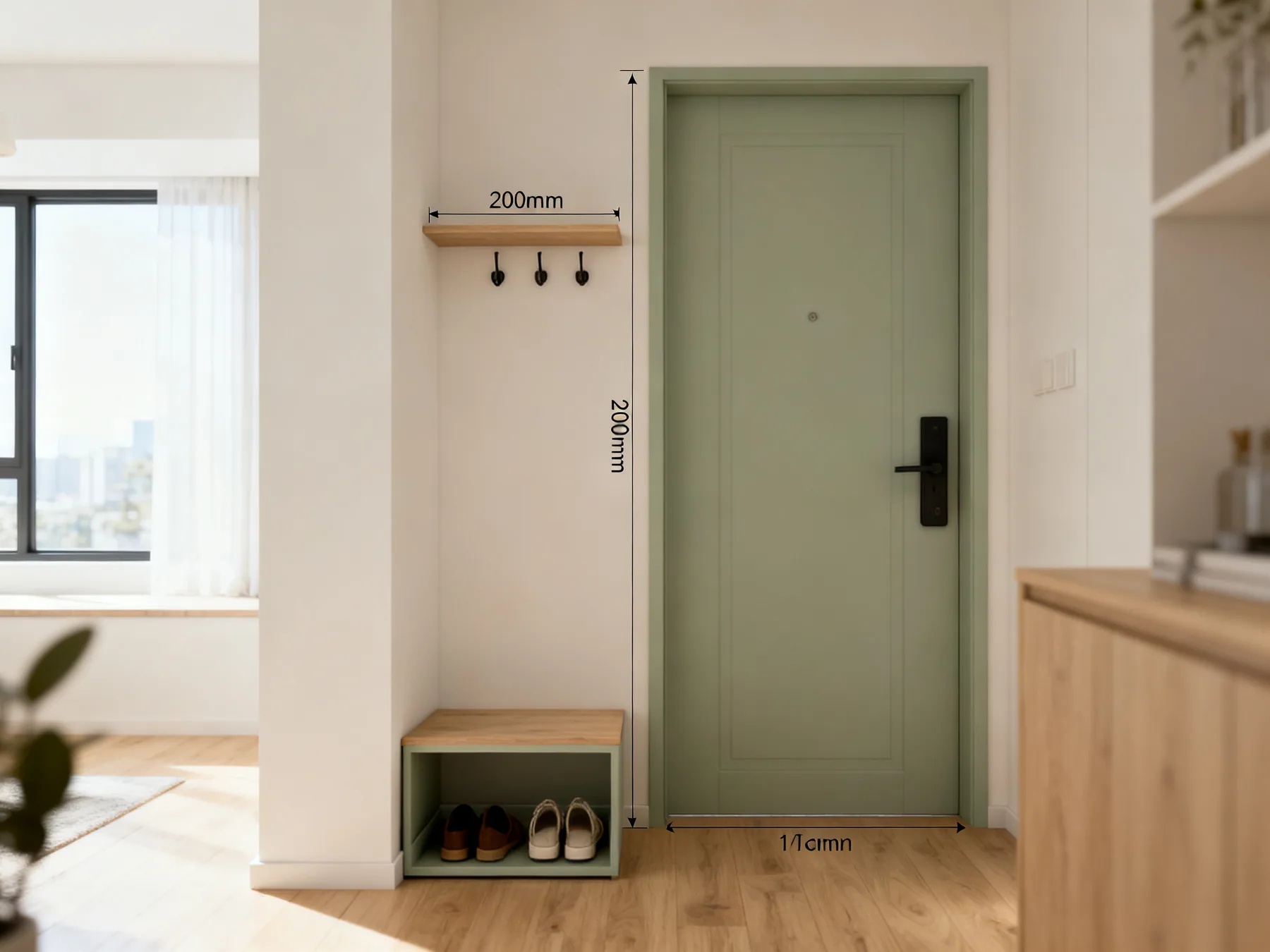
Three hooks and a 200mm shelf
Coats and a bag on the hooks, keys and post on the shelf. That is the minimum viable entrance and it prevents a surprising amount of spread into the living area.
A shallow shoe rack, current pairs only
Two pairs per person by the door and the rest in a wardrobe. A flat entrance cannot hold a footwear collection, and trying is what puts shoes across the floor.
Somewhere to sit if you possibly can
Even a small stool. Taking shoes off standing is awkward, which is why they get abandoned where you stepped out of them.
A basket for outbound things
Returns, post to send, things to pass on. One basket by the door stops those circulating a small flat for weeks.
Reduce what the flat has to hold
The honest last section. In a genuinely small apartment there is a volume of possessions above which no storage system works, and I would rather say that than sell you more boxes.
The least painful lever by a wide margin is seasonal rotation, and it is the one people skip. Roughly half your clothes are unwearable for roughly half the year, so if they all stay in the flat, the wardrobe is permanently holding double what it needs to.
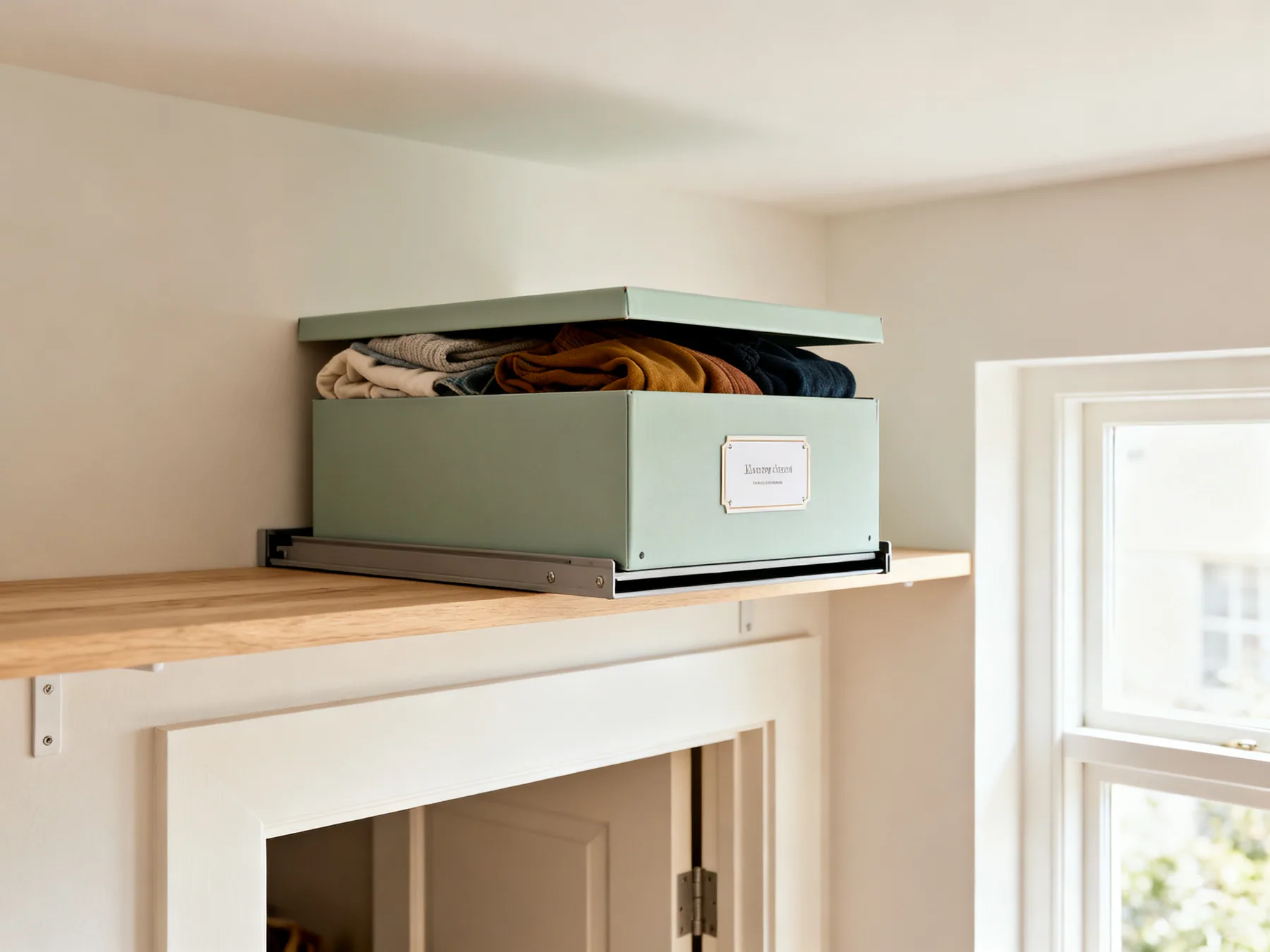
- Rotate off-season clothing into boxes on the highest shelf, or out of the flat entirely.
- Ask whether a friend, family or a cheap self-storage unit can take genuinely seasonal bulk.
- Keep one set of everything. Duplicate kitchen and cleaning items fill a small flat fast.
- Store bulk shopping outside the kitchen, and keep only what is in use to hand.
- Decant dry goods into square containers, which use about a fifth more of a shelf than round.
- Leave one surface and about a fifth of the storage deliberately empty.
- Be honest about anything untouched for a year, especially if it is bulky.
- Reassess when a tenancy ends. Moving is the cheapest time to reduce.
Small apartment storage ideas when you cannot drill the walls: frequently asked questions
How do I add storage to a small apartment?
Take it from the walls above about 1.5m, which is unclaimed in every room at once. Full-height shelving holds substantially more than shelving stopping at 1.8m in the same footprint, and the 300mm band above every doorway is dead space in every flat. Adding a shelf there in four rooms is a lot of capacity for very little money.
What storage can I use in a rental without drilling?
Tension rods in alcoves and recesses, over-door hook racks, tall braced freestanding shelving with anti-tip straps, and slim rolling carts in the gaps beside appliances. Together those reach most of the available space and leave no trace. Over-door hooks are the single highest-value purchase, and everything here moves with you.
Is dual-purpose furniture worth it in a small flat?
Yes, because in a small apartment every additional piece of furniture costs circulation space, and circulation is what makes a flat liveable. A lidded ottoman as a coffee table and an ottoman bed are the two biggest wins. The trade is always access, so put things you need seasonally in them rather than daily.
My front door opens straight into the living room. What do I do?
Build a drop zone anyway, because without one the coats, bags, keys and post spread into your only room. Three hooks and a 200mm shelf within a metre of the door is the minimum that works, plus a shallow rack for current-season shoes and, if you can fit it, a small stool so shoes come off sitting down.
What is the difference between small apartment and small house storage?
A house has spare places: a loft, a garage, an understairs void, a shed. An apartment has none of those, so everything you own has to live in the rooms you live in. That rules out the seasonal-rotation trick that solves a lot of small-house problems, unless you can find somewhere outside the flat for genuine bulk.
What should I do if the flat is simply too full?
Rotate seasons first, because roughly half your clothes are unwearable for half the year and keeping them all in the flat means the wardrobe holds double what it needs to. After that, be honest about anything untouched for a year, keep one set of everything rather than duplicates, and use the end of a tenancy as the natural point to reduce.