Home Types
RV storage ideas for a home that moves at 60mph
An RV is the only home that accelerates. That single fact changes every storage decision you make in one.
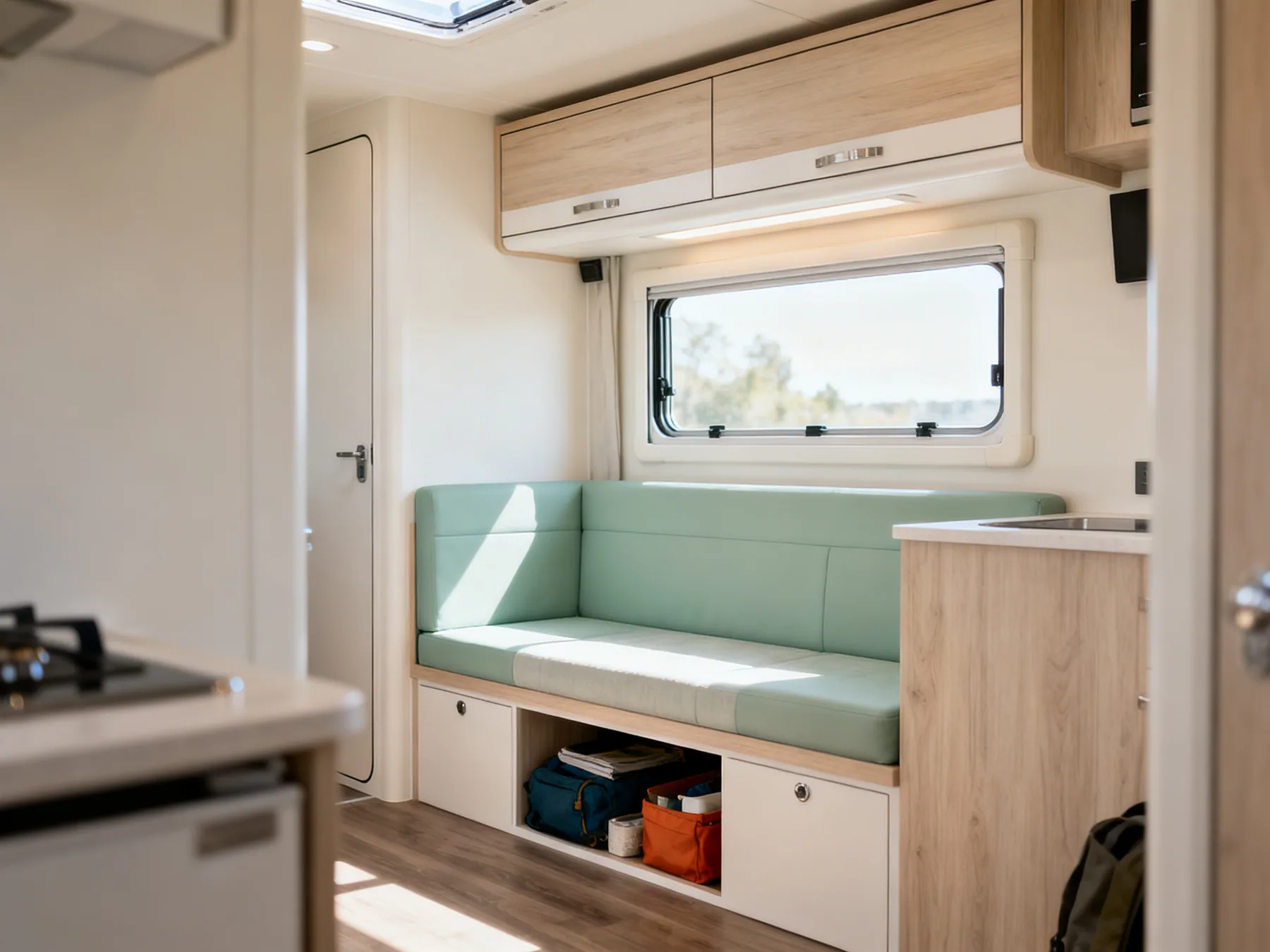
Everything I know about storing things in a house has to be re-examined in a motorhome, because a house does not corner. In an RV, camper or motorhome, anything not properly secured is a projectile the first time you brake hard, and anything stored high changes how the vehicle handles.
That makes two things safety matters rather than tidiness preferences: where the weight sits, and whether the catches can shake open. I would sort both before thinking about clever organisers, and most articles on this subject skip straight past them.
The third thing that surprises people is condensation. A well-sealed vehicle with people breathing and cooking inside it produces a lot of moisture, and it condenses on every cold surface, which in a motorhome means the inside of the lockers on the outer walls.
Weight first, and where it sits
Before capacity, payload. Every motorhome has a maximum authorised mass and a payload figure, which is what you may add in people, water, fuel, gas and belongings. It is genuinely easy to exceed, particularly on smaller vans, and it is a legal limit with insurance and safety consequences rather than a manufacturer being cautious.
Then there is where that weight sits, which affects handling more than most people expect. Load heavy items low and close to the centre of the vehicle, between the axles where you can. Weight high in overhead lockers raises the centre of gravity and makes the vehicle noticeably less settled in crosswinds and on cambered roads.
A useful test: if you would not want it landing on someone, it does not belong in an overhead locker.
Find your payload figure and work to it
It is on the vehicle plate and in the handbook. Weigh the loaded vehicle at a public weighbridge once, fully packed as you actually travel, and you will know for certain rather than guessing. Most people who do this are surprised.
Payload is a legal limit
Heavy items low and between the axles
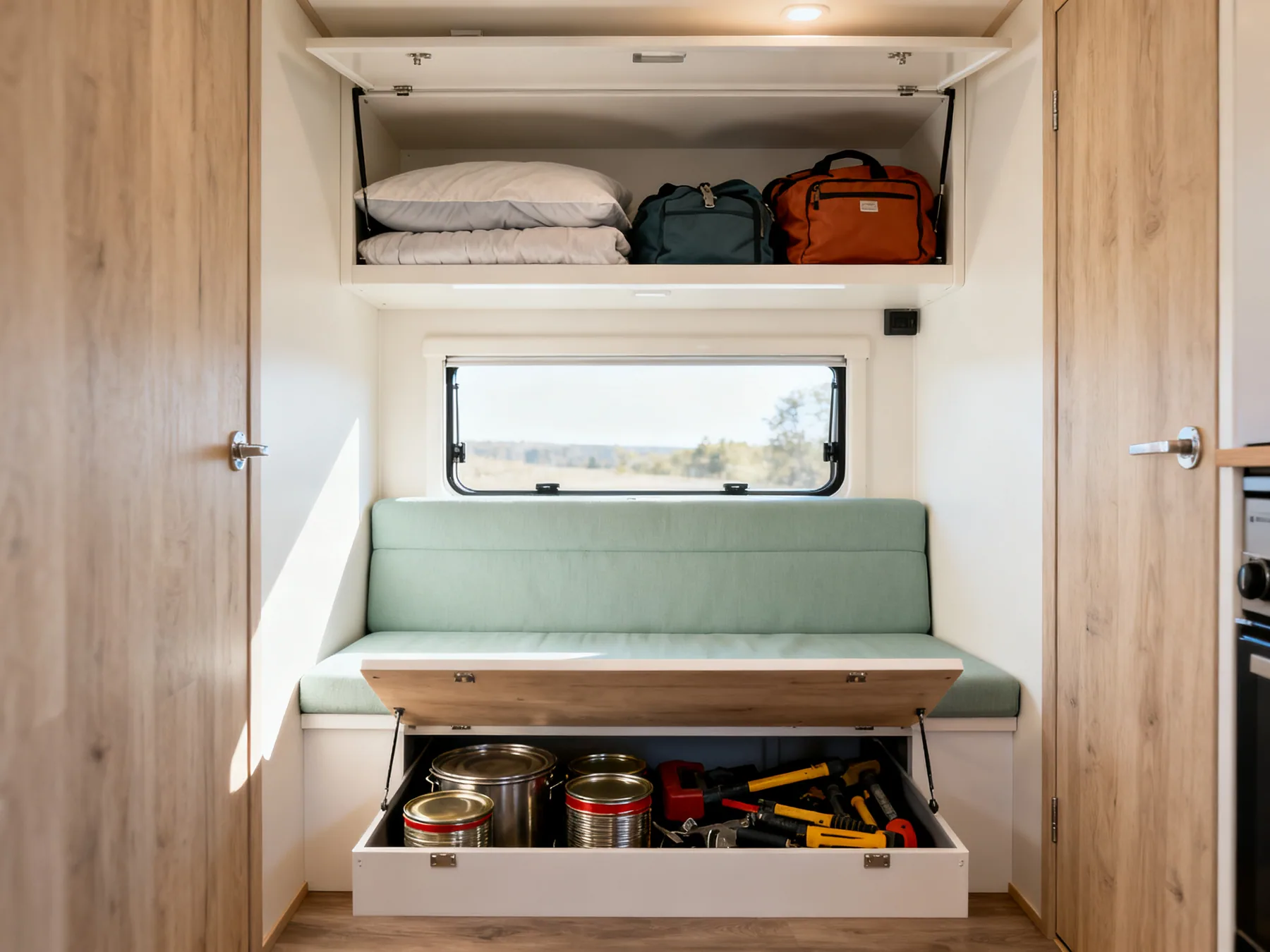
Tins, tools, water containers, cast iron. Under-bench and under-seat lockers are the right home for all of it. This is both a handling matter and a braking one.
Overhead lockers for soft and light only
Bedding, towels, clothing, empty bags. Nothing rigid, nothing heavy, nothing with a hard edge. An overhead locker that bursts open on a hard stop should spill something soft.
Keep the rear overhang light
Weight behind the rear axle acts as a lever and can lighten the front, which affects steering. Rear garages in particular invite heavy loading exactly where it does the most harm.
Balance side to side as well
Loading one side heavily is less obvious than loading high, and it still shows up in handling and in how level the vehicle sits on a pitch.
Latches that cannot shake open
The second safety item, and the one people discover the hard way after a single rough road.
Domestic cupboard catches rely on friction or a light magnet. Both are perfectly adequate in a building and neither is adequate in a vehicle, because sustained vibration is very good at working a friction catch loose. Motorhome cupboards use positive latches, which need a deliberate action to release, and if any of yours have been replaced with domestic hardware at some point, that is worth checking before your next trip.
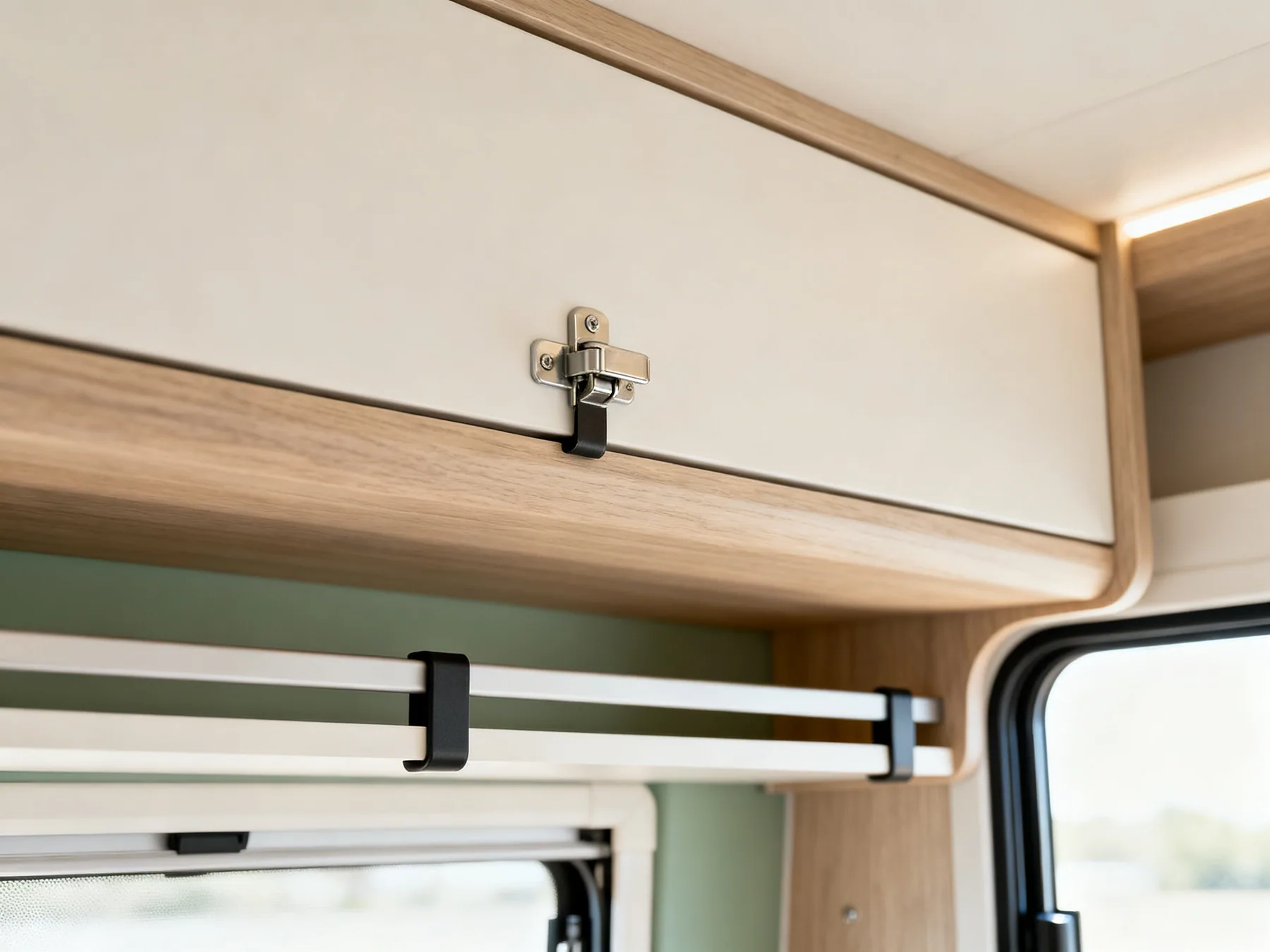
Check every catch is a positive latch
Push and shake each door with the vehicle stationary. If a firm shove opens it, the road will. Replacement latches are inexpensive and it is a half-hour job.
The most common overlooked risk
Fit retaining rails or bars to open shelves
Any open shelf needs a lip, a rail or a bungee across the front. Without one, everything on it is on the floor at the first roundabout.
Use non-slip matting inside lockers and drawers
Rubber matting stops contents sliding and drastically reduces rattle, which matters more than it sounds over a long drive. It is the cheapest single improvement in a motorhome.
Stow the loose items before every drive
Kettle, cups, laptop, the fruit bowl. A five-minute walk-through before moving off becomes automatic quickly, and it is the habit that prevents almost all interior damage.
Secure the fridge and any doors that swing
Fridge doors and shower doors both have travel catches. Using them is easy to forget and the consequences are messy.
Choose kit by its stored volume
This is the mental shift that makes a small van workable. At home you judge equipment by how well it does its job. In a vehicle you judge it by how much room it takes up when it is not doing its job, because that is 99% of the time.
A rigid mixing bowl and a collapsible one do the same work, and one of them takes a tenth of the space in the drawer. Once you start choosing on that basis the interior stops feeling cramped.
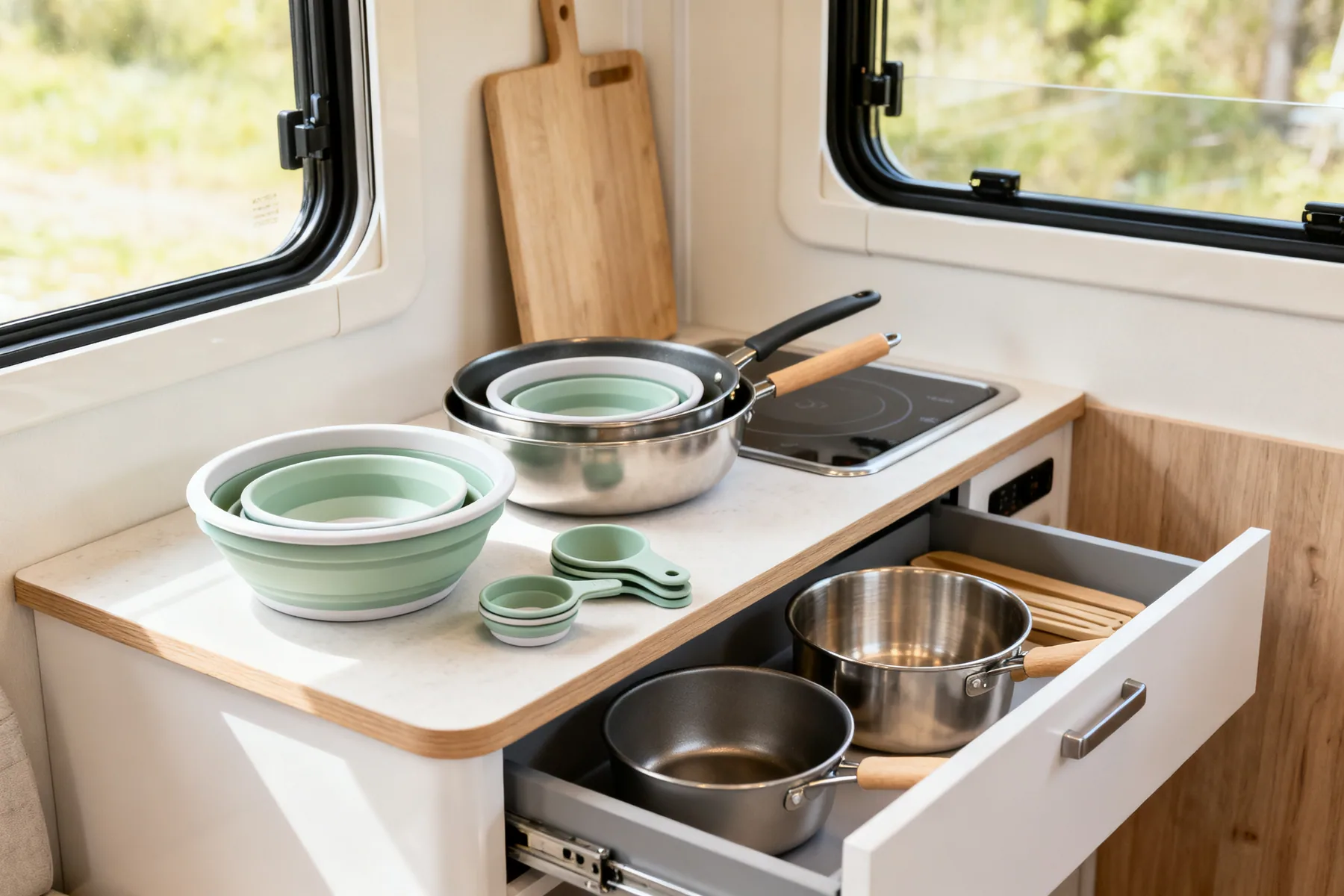
Collapsible bowls, colanders and buckets
Silicone versions of all of these fold nearly flat. This is where the biggest space saving in a motorhome kitchen comes from, and there is no real performance penalty.
Nesting cookware and stacking crockery
A nesting pan set with removable handles takes a fraction of the space of separate pans. Melamine or enamel crockery that stacks tightly beats anything with a decorative rim.
One tool that does two jobs
A pressure cooker that is also a pan, a chopping board that is also a sink cover. In a van the win is not the function, it is the item you did not have to bring.
Soft bags rather than hard cases
Soft luggage squashes into odd spaces and can be flattened when empty. Hard suitcases occupy their full volume permanently and have nowhere to live.
Decant dry food into square containers
Square uses roughly a fifth more of a shelf than round, and sealed containers matter more here because a spill in a moving vehicle spreads a long way.
Condensation, and venting the lockers
Now the thing that quietly damages motorhomes. Four people sleeping in a well-sealed vehicle produce a surprising amount of moisture overnight, and cooking adds more. That moisture condenses wherever the surface is coldest, which is the outer walls, which is exactly where the lockers are.
So a locker packed tight against a cold outer wall with bedding in it is the ideal place for mould to start, and you will not see it until you unpack at the end of the season.
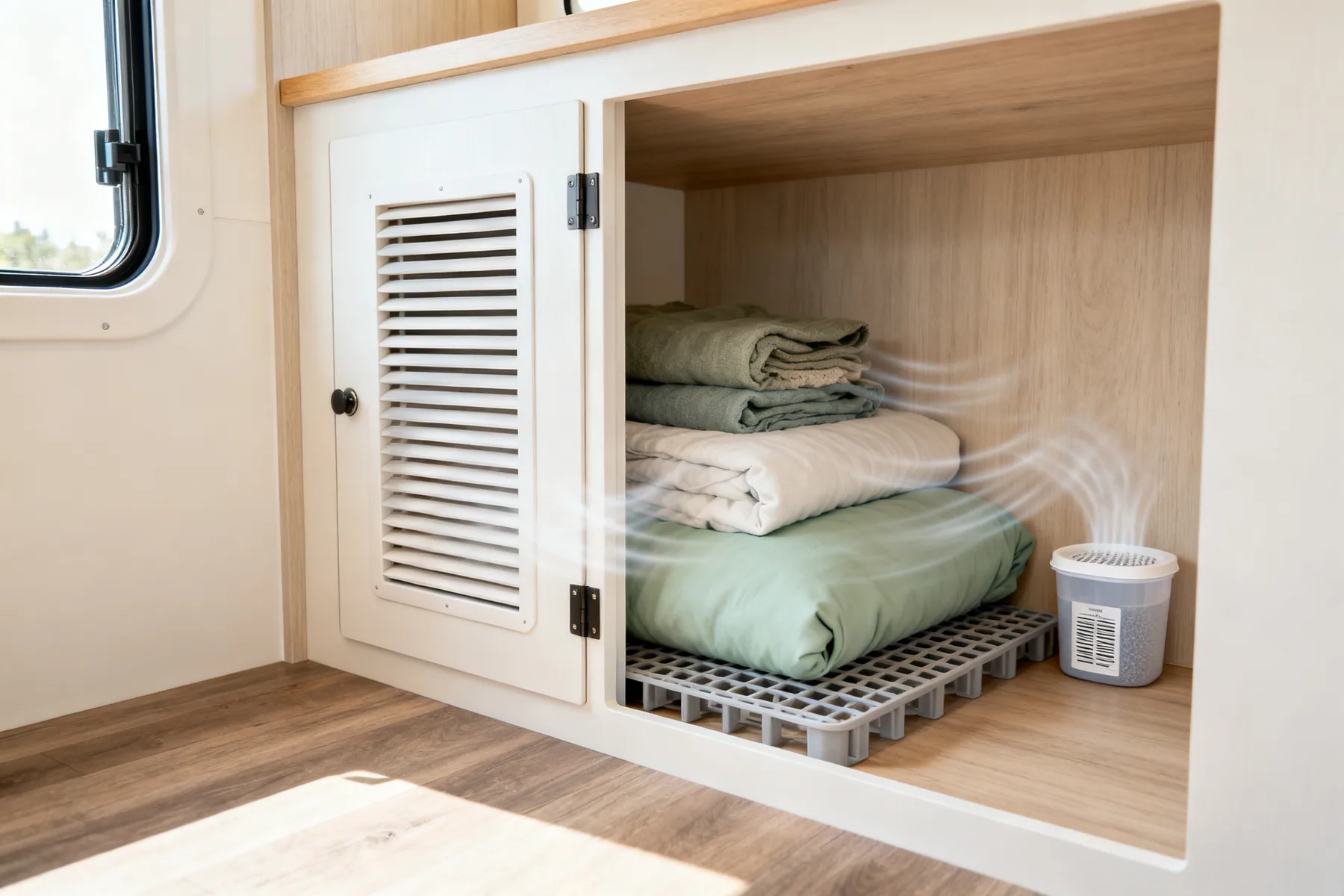
- Do not pack lockers tight against outer walls. Leave an air gap behind the contents.
- Raise stored items on a plastic grid or matting so air can pass underneath.
- Use ventilated locker doors, or leave doors ajar when parked up.
- Keep roof vents open a little, even in cold weather. Sealing the van makes condensation worse.
- Put a moisture absorber in the lockers most prone to damp.
- Never store anything damp. A wet towel in a locker affects everything around it.
- Air the whole vehicle regularly during storage, and take bedding out over winter.
- Check behind and under seating occasionally, since that is where damp goes unnoticed longest.
The garage, the roof and the awning
External storage has its own rules, and two of them are worth stating because they get broken constantly.
A rear garage is enormously useful and it is behind the rear axle, so it is the worst place in the vehicle for weight. And a roof box or roof rack adds weight at the highest possible point while also increasing wind resistance and overall height, which is how motorhomes meet car park barriers.
- Keep the rear garage for light bulky items: chairs, awning, hoses, empty containers.
- Strap everything in the garage down. Loose items there make the most noise and do the most damage.
- Note your travel height on a card by the driver's seat, and update it if you fit anything to the roof.
- Check the roof loading limit in the handbook before fitting a box or rack.
- Keep gas bottles in their designated vented locker, never anywhere else.
- Store fuel and gas per the vehicle handbook and local regulations, not by convenience.
- Keep the levelling blocks and hookup cable where you can reach them without unpacking the garage.
- Rinse and dry the awning before it goes away, since a damp rolled awning mildews quickly.
RV storage ideas for a home that moves at 60mph: frequently asked questions
How should weight be distributed in an RV?
Heavy items low and close to the centre, between the axles where possible, and only soft light things in overhead lockers. Weight high raises the centre of gravity and makes the vehicle noticeably less settled in crosswinds, and weight behind the rear axle acts as a lever that can lighten the steering. Also check your payload figure, because it is a legal limit and easy to exceed.
How do I stop cupboards flying open while driving?
Make sure every catch is a positive latch rather than a friction or magnetic one. Domestic catches are fine in a building and inadequate in a vehicle, because sustained vibration works them loose. Test each door with a firm shove while parked: if it opens, the road will open it. Add retaining rails to any open shelf.
What is the best storage for a small camper?
Collapsible and nesting equipment, chosen by how much room it takes when stored rather than how well it performs in use. Silicone bowls, colanders and buckets fold nearly flat, and a nesting pan set with removable handles takes a fraction of the space of separate pans. Soft bags rather than hard cases, since they squash into odd spaces.
Why do my motorhome lockers get damp?
Condensation. People sleeping and cooking in a sealed vehicle produce a lot of moisture, and it condenses on the coldest surfaces, which are the outer walls where the lockers are. Leave an air gap behind the contents, raise things on matting, keep a roof vent open even in cold weather, and never store anything damp.
Can I store heavy things in the rear garage?
It is the worst place for them. A rear garage sits behind the rear axle, so weight there acts as a lever that lightens the front of the vehicle and affects steering. Use it for light bulky items like chairs, the awning and hoses, strap everything down, and put the heavy things low and between the axles instead.
Is a roof box a good idea on a motorhome?
Only with care. It adds weight at the highest point, which is the worst place for handling, and it increases both wind resistance and your travel height. Check the roof loading limit in the handbook first, and write your new travel height on a card by the driver's seat, because that is how motorhomes meet car park barriers.