Storage guide · Planning
How to plan storage for a whole home
Most people buy storage first and plan second. Reversing that order is what turns a house full of boxes into a house that works.
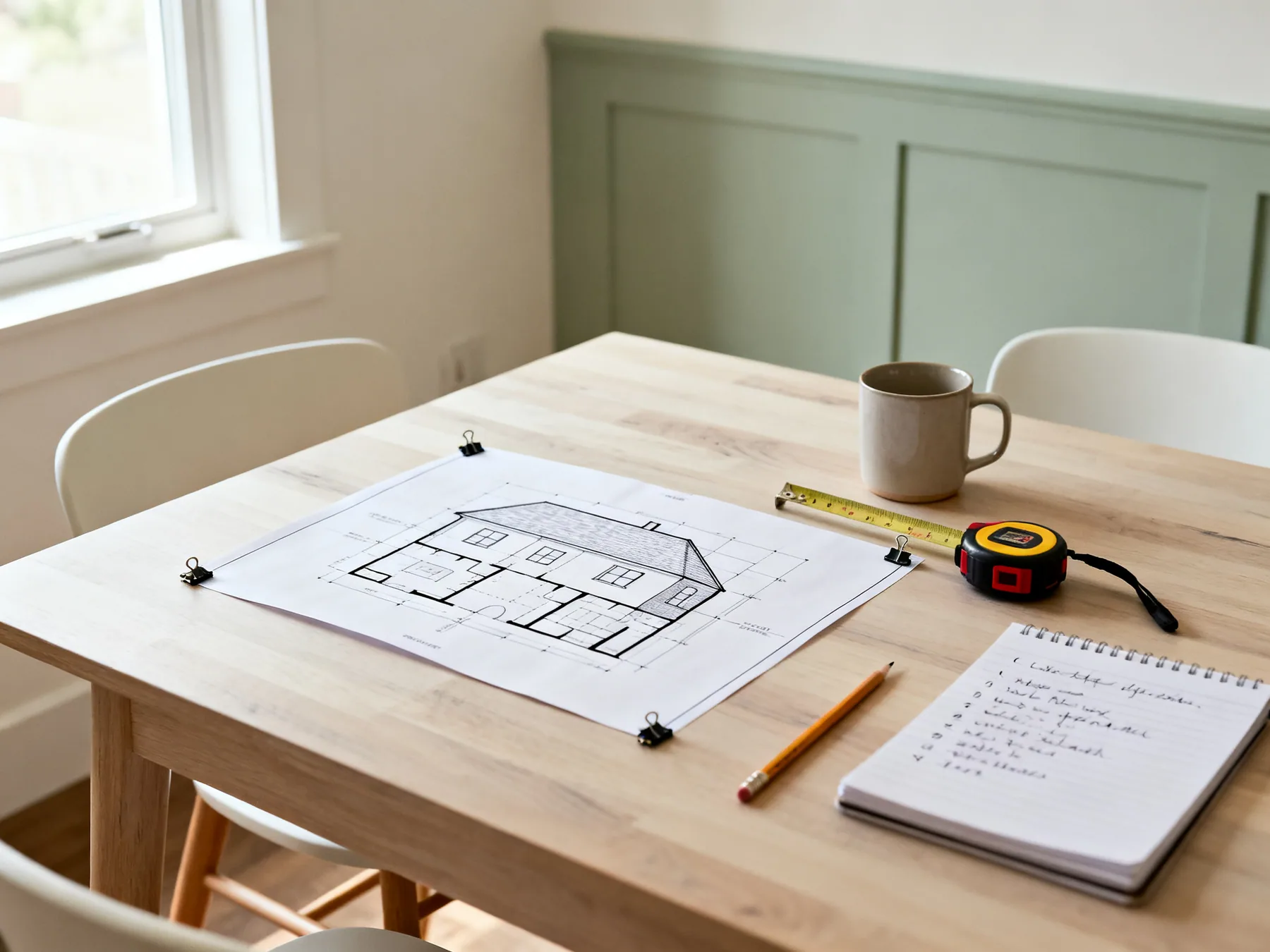
Storage problems feel like space problems, so the instinct is to buy more storage. But a home that is short on storage almost always has two other things going on first: it contains more than it has capacity for, and it has unused volume in places nobody has looked.
This guide is the order of operations that fixes both. It takes an afternoon of thinking and saves a great deal of money, because by the end of it you will know exactly what to buy, and it will usually be less than you expected.
Step 1: Establish what you actually own
You cannot plan storage for an unknown quantity. Pick one category that is causing pain. Clothes, tools, toys, paperwork, and gather every instance of it in the house into one place. This is uncomfortable and it is the most useful step in the process.
The point is not to throw things away, although some of that usually happens. The point is to establish volume. A category you thought needed a shelf turns out to need a cupboard, or the reverse. Until it is all in one pile, you are guessing.
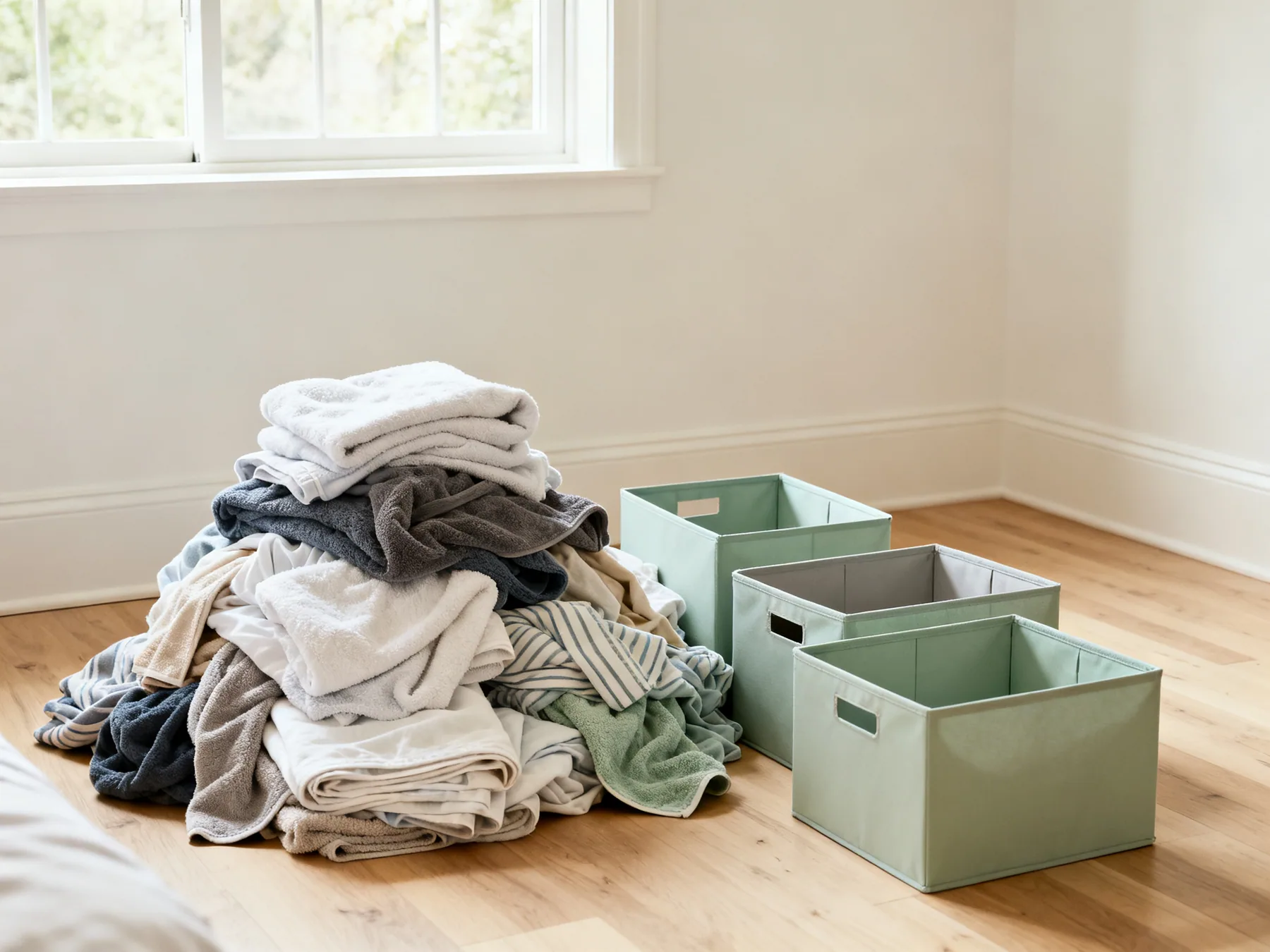
- Choose one category, not one room. Categories are what overflow.
- Gather every instance of it from every room, including the loft and garage.
- Sort into: use weekly, use monthly, use yearly, do not use.
- Measure the rough volume of each pile. A bin bag is about 80 litres, a stacking box about 50.
- Only now decide what leaves the house.
Step 2: Find the dead space you already have
Before adding any furniture, walk the house looking specifically for enclosed volume that holds nothing. Most homes have more of it than they have storage problems, and claiming it costs a fraction of what furniture costs.
- Under every bed. Around 0.75m³ under a double.
- Above the kitchen wall cabinets, up to the ceiling.
- The 300mm strip above every internal door.
- Inside the staircase, especially the shallow end.
- Under the basin, around the plumbing trap.
- The back of every door in the house.
- The full height of every wardrobe above the hanging rail.
- Room corners, which rectangular furniture cannot use.
- The wall band above 1.5m in every room.
- The gap beside the fridge or washing machine.
Step 3: Zone by frequency, not by category
This is the single idea that separates storage that stays tidy from storage that decays. Conventional advice says group like with like. Better advice: put things where they are used, at a height that matches how often you use them.
The prime zone in any room is between hip and eye height. Roughly 750mm to 1.6m. That band should hold only what you touch daily. Below the knee and above the shoulder is for weekly and monthly items. Anything needing a step stool is for once or twice a year. A system built this way maintains itself, because putting things back is easier than leaving them out.
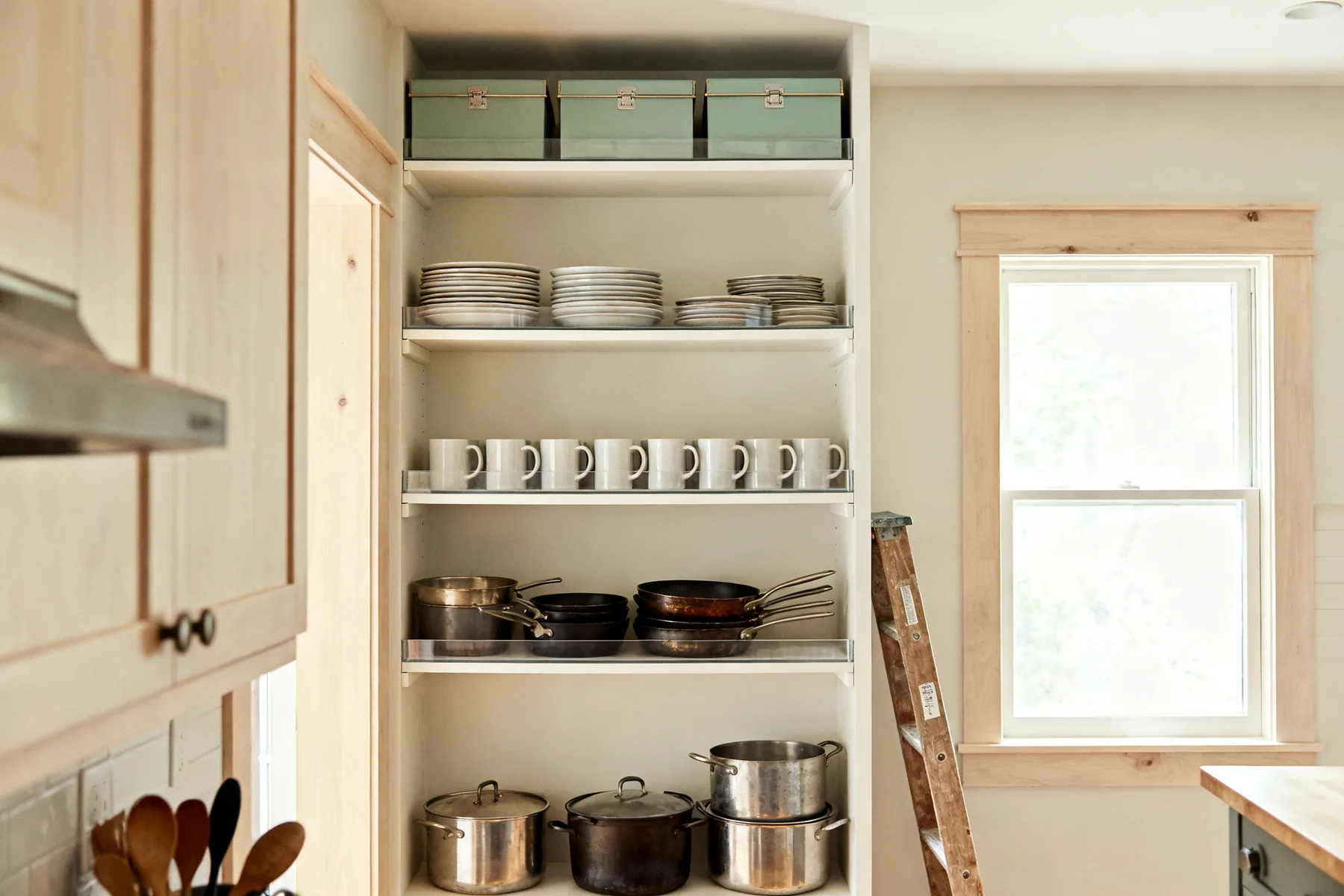
Prime zone: 750mm to 1.6m
Daily items only. In a kitchen that is everyday plates and pans; in a bedroom, current-season clothes. If something in this band has not been touched in a month, it is in the wrong place.
Secondary zone: floor to 750mm, and 1.6m to 2m
Weekly and monthly items. Heavy things belong low here. You should never lift weight above shoulder height. Light bulky things belong high.
Deep storage: above 2m, lofts, garages, under beds
Annual and sentimental items. Access effort is high, which is correct: the cost of retrieving something should match how rarely you need it.
Point of use beats point of category
Keep a second set of cleaning cloths upstairs rather than one set in a downstairs cupboard. Duplicating cheap consumables at the point of use eliminates more friction than any organizer.
Step 4: Set a capacity limit for every category
Storage expands to fill the space available, and then keeps going. The fix is to define the container before defining the contents: one drawer for cables, one shelf for board games, one box for sentimental paperwork.
When the container is full, something comes out before something goes in. This sounds austere and is actually liberating, because it removes the recurring decision about whether the house is getting too full. The container answers it.
- Assign one defined container or shelf per category.
- Write the limit down if it helps. "one box of children's artwork per year".
- Review at the point of adding, not on a schedule.
- Anything without a category gets one, or it leaves.
- Revisit limits when life changes. A new baby legitimately needs more, a grown child less.
Step 5: Only now, buy something
By this point you know the volume of each category, the dead space available, and where each thing needs to live. That turns shopping from browsing into a specification.
- Write down the internal dimensions you need, not the external ones.
- Measure the opening the storage must pass through to get into the room.
- Check the clearance a drawer or lid needs to open, and whether the room has it.
- Prefer one container style per room so storage reads as a system rather than clutter.
- Buy adjustable over fixed wherever the price difference is small. Your needs will change.
- Buy the boring thing that fits over the attractive thing that nearly fits.
What to do when the house is genuinely full
Sometimes the honest conclusion is that the home has less capacity than the household has possessions, and no amount of planning changes that arithmetic. At that point there are three real options and it is worth naming them plainly.
Reduce the volume. The cheapest and the hardest. Add capacity structurally. An understairs conversion, a loft hatch and boarding, a garden store. Or move the low-frequency volume off site, which for genuinely archival items can be more sensible than reorganizing the same boxes for a fourth time. Most households end up doing some of all three.
Frequently asked questions
Where do I start with home storage when the whole house is a mess?
Start with one category, not one room. Gather every instance of it from the whole house into a single pile so you can see the real volume, sort it by how often you use each item, and only then decide what it needs. Rooms feel like the natural unit, but categories are what overflow.
Should I organize by category or by how often I use things?
By frequency, then by category within that. The band between hip and eye height. Roughly 750mm to 1.6m. Should hold only daily items, whatever category they belong to. Grouping strictly by category is what puts the fondue set at eye level and the everyday plates on the top shelf.
How much unused storage space does a typical home have?
Usually one to three cubic metres, spread across the space under beds, above kitchen wall cabinets, above door frames, inside the staircase and around plumbing under basins. That is more capacity than most people gain by buying an additional piece of furniture, and it costs far less to claim.
How do I stop storage filling up again?
Give every category a defined container and treat it as the limit. When the box is full, something comes out before something goes in. Storage always expands to fill available space, so the constraint has to be set deliberately rather than discovered when the cupboard will not close.