Storage guide · Preservation
How to store things long term without ruining them
Most damage to stored possessions happens in storage, not in use. Damp, heat and crushing account for nearly all of it.

Putting something away for a year is an act of optimism. Lofts swing from below freezing to over 40°C, garages condense moisture on every cold surface, and basements sit at humidity levels that mould finds ideal. The box is rarely the problem; the environment is.
This guide covers what actually degrades stored possessions, which locations are safe for what, and the specific handling that keeps clothes, paper, photographs, electronics and batteries in usable condition.
Choose the location before the container
The container matters far less than where you put it. A cheap box in a stable interior cupboard will preserve things better than an expensive one in a loft.
Interior cupboards and under beds, best
Stable temperature, moderate humidity, no direct sun. Suitable for everything including paper, photographs and electronics. This is where anything irreplaceable should go.
Lofts. Heat, not damp
A loft can exceed 40°C in summer and drop below freezing in winter. That is fine for hard plastics, tools and Christmas decorations, and poor for candles, vinyl records, photographs, electronics and anything with adhesive. Store above the insulation, never compressing it.
Garages and sheds. Damp and swings
Condensation on cold surfaces is the defining problem. Acceptable for tools, garden equipment and hard containers; unsuitable for fabric, paper, batteries and anything with a lithium cell. Raise everything off the floor.
Basements, humidity
Usually the most humid location in a house and the most prone to actual flooding. Store on shelving at least 150mm off the floor, in sealed rigid containers, and never keep anything irreplaceable there.
Containers: what to use and when
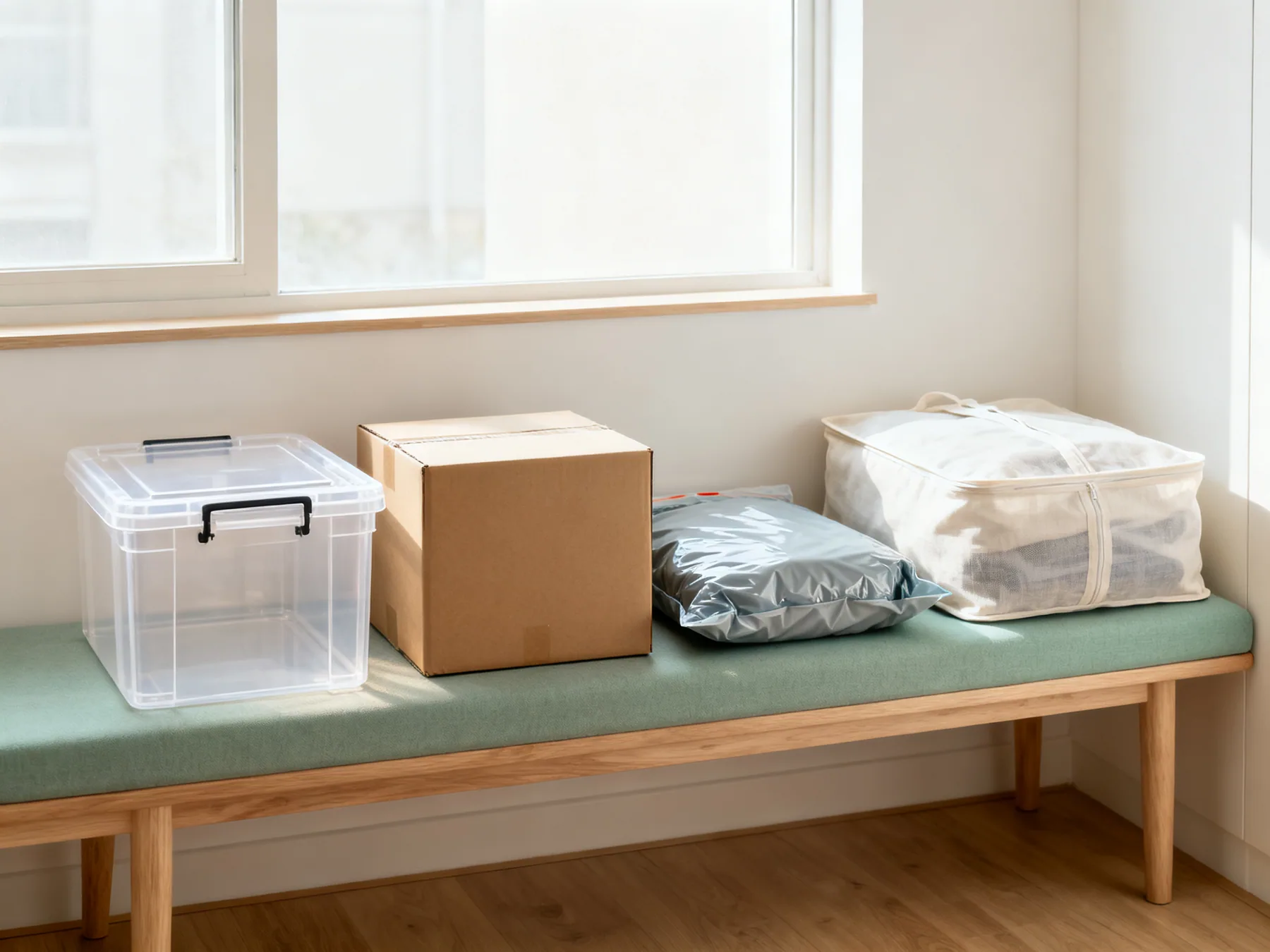
- Rigid plastic with a clip lid: the default for most long-term storage. Stacks, seals, resists rodents.
- Cardboard: fine in a dry interior cupboard, poor anywhere with humidity, and no barrier against pests.
- Vacuum bags: excellent for bulk reduction of bedding and clothing, but do not leave down or synthetic fill compressed for years. It loses loft permanently.
- Breathable cotton garment bags: for leather, fur, wool and anything that must not be sealed airtight.
- Acid-free boxes and tissue: for photographs, documents and textiles you care about. Ordinary cardboard and newsprint are acidic and will stain and embrittle over years.
- Anti-static bags: for circuit boards and bare electronics.
- Avoid black bin bags for anything you intend to keep. They tear, they trap moisture, and they get thrown out.
Storing clothes and textiles
Wash everything before storing it
Body oils, food traces and perspiration are what attract moths and set as permanent stains. A garment that looks clean but has been worn is not clean enough for a year in a box.
The single most important step
Fold knitwear, never hang it
Wool and cashmere stretch under their own weight on a hanger and never fully recover. Fold with acid-free tissue between layers to prevent hard creases.
Use cedar or lavender, not mothballs
Cedar and lavender deter moths without leaving naphthalene odour in the fabric. Refresh cedar annually by sanding lightly. It stops working once the surface oils are gone.
Let leather breathe
Leather jackets, bags and shoes need airflow or they grow mould. Use a breathable cotton cover, stuff bags lightly to hold their shape, and never seal leather in plastic.
Keep textiles out of light entirely
UV fades dyes and weakens fibres, and the damage is cumulative and irreversible. Dark storage is genuinely better storage.
Storing paper, photographs and media
Store paper flat, in acid-free boxes
Rolled documents set into a permanent curl. Ordinary cardboard is acidic and will yellow paper along the contact line over a few years. Never use a loft or garage for documents.
Interleave photographs, do not stack them bare
Emulsion sticks to emulsion in humidity, and separating them later destroys both. Use acid-free interleaving or archival sleeves, and store upright rather than in a heavy stack.
Store vinyl vertically and cool
Records stored flat in a stack warp under the weight of those above. Store them upright, snug but not compressed, well away from heat. A loft in summer will genuinely deform them.
Accept that digital media degrades too
Recordable discs and hard drives are not archival. Anything you truly cannot lose needs at least two copies in two places, refreshed onto current media every few years.
Storing electronics, batteries and chemicals
This is the category where bad storage is not just costly but occasionally dangerous, so it is worth being precise.
- Remove batteries from anything being stored. Alkaline cells leak and corrode contacts irreparably.
- Store lithium-ion batteries and power tool packs indoors at room temperature, charged to roughly 50–60%, not full, not flat.
- Never store lithium cells in an unheated garage, shed or loft; both heat and freezing shorten their life and raise risk.
- Keep electronics in a dry interior location; condensation inside a device is what kills it.
- Coil cables loosely. Tight coils damage internal conductors over time.
- Keep water-based paint indoors above 5°C; freezing ruins emulsion permanently.
- Store fuel only in approved containers, in minimal quantity, well ventilated, away from any ignition source, and check local regulations.
- Never store propane cylinders in an attached garage or any enclosed space.
Label so that future you can find it
A perfectly preserved box whose contents are unknown is only marginally better than a lost one. Labelling is the part everybody skips and everybody regrets.
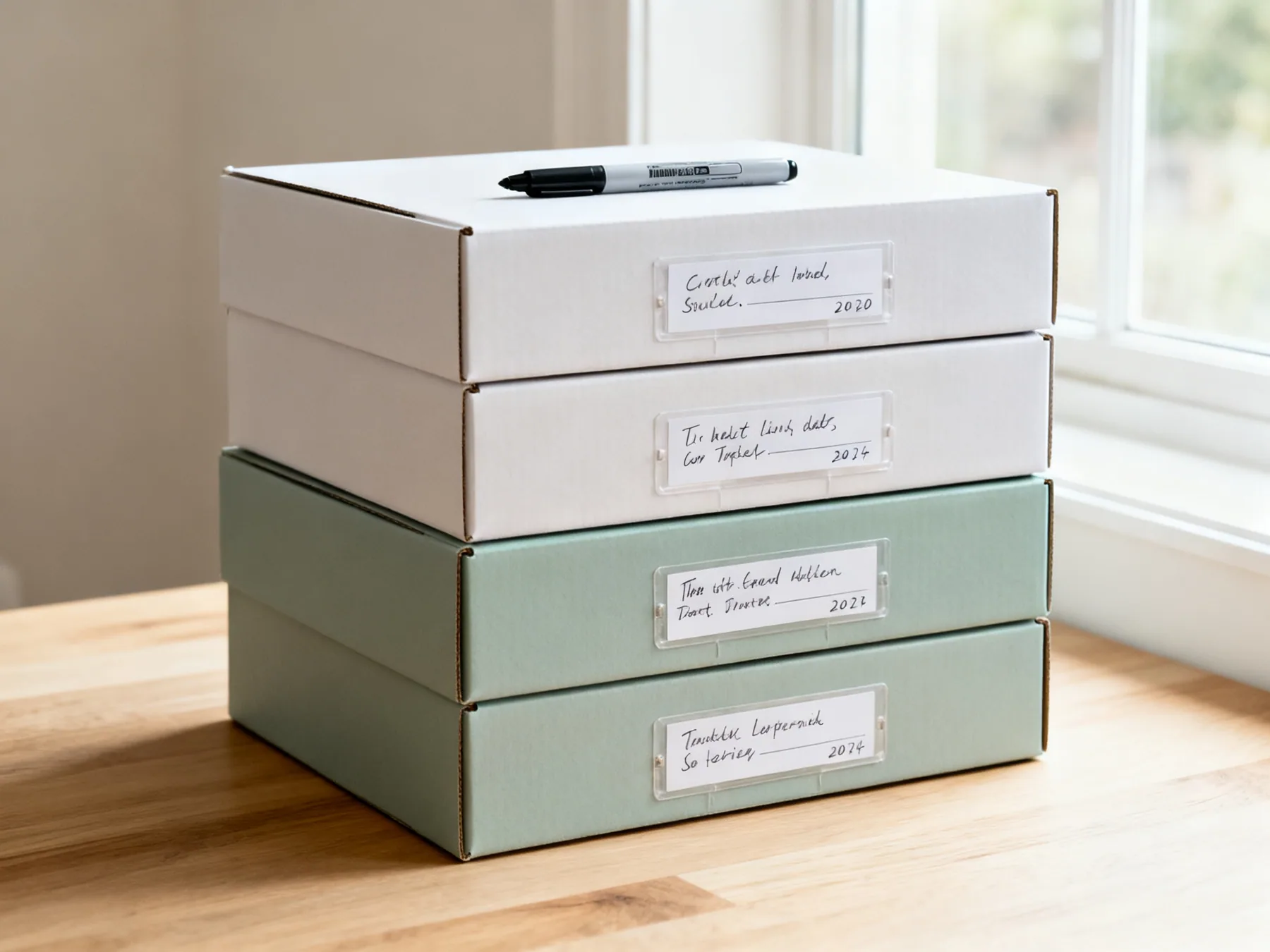
- Label the sides, not the lid. Lids are invisible once boxes are stacked.
- Write what is inside and the date it went in.
- Number the boxes and keep a list on your phone; searching a note beats opening ten boxes.
- Photograph the contents before sealing and attach the photo to the note.
- Mark anything fragile clearly, and keep it off the bottom of a stack.
- Add a review date. Boxes with no review date are how lofts fill up for twenty years.
Frequently asked questions
What is the ideal humidity for long-term storage?
Between about 35% and 55% relative humidity. Above that, mould and mildew become likely on anything organic; below it, leather, paper and timber can dry and crack. More important than hitting an exact figure is avoiding locations that condense, which is what makes garages and basements risky.
Can I store clothes in the loft or garage?
You can, but only in sealed rigid containers, and it is not ideal. Lofts swing from freezing to over 40°C and garages condense moisture, both of which are hard on fabric. Wash everything first, because body oils attract moths, and never use a garage or loft for anything irreplaceable.
Is it bad to leave things vacuum-packed for years?
For down and synthetic-filled items, yes. The fill loses loft permanently if compressed indefinitely, so a duvet that spent three years in a vacuum bag will not recover its warmth. Vacuum bags are excellent for a season; re-loft the contents annually if storing longer.
How should I store lithium batteries and power tool packs?
Indoors at room temperature, charged to roughly 50–60% rather than full or empty. Do not store them in an unheated garage, shed or loft. Both heat and freezing degrade the cells and increase risk. Remove batteries from devices you are putting away, since alkaline cells in particular leak and corrode contacts.
Why should I not store boxes directly on a concrete floor?
Concrete wicks moisture up from the ground, so cardboard sitting on it absorbs damp from below and anything absorbent inside follows. Put storage on shelving or pallets at least 150mm clear of the floor, which also protects against minor flooding.