Bedding & Linen
Blanket storage ideas for homes with more blankets than shelves
Blankets are stored for bulk and used for convenience, and those two things pull in opposite directions.
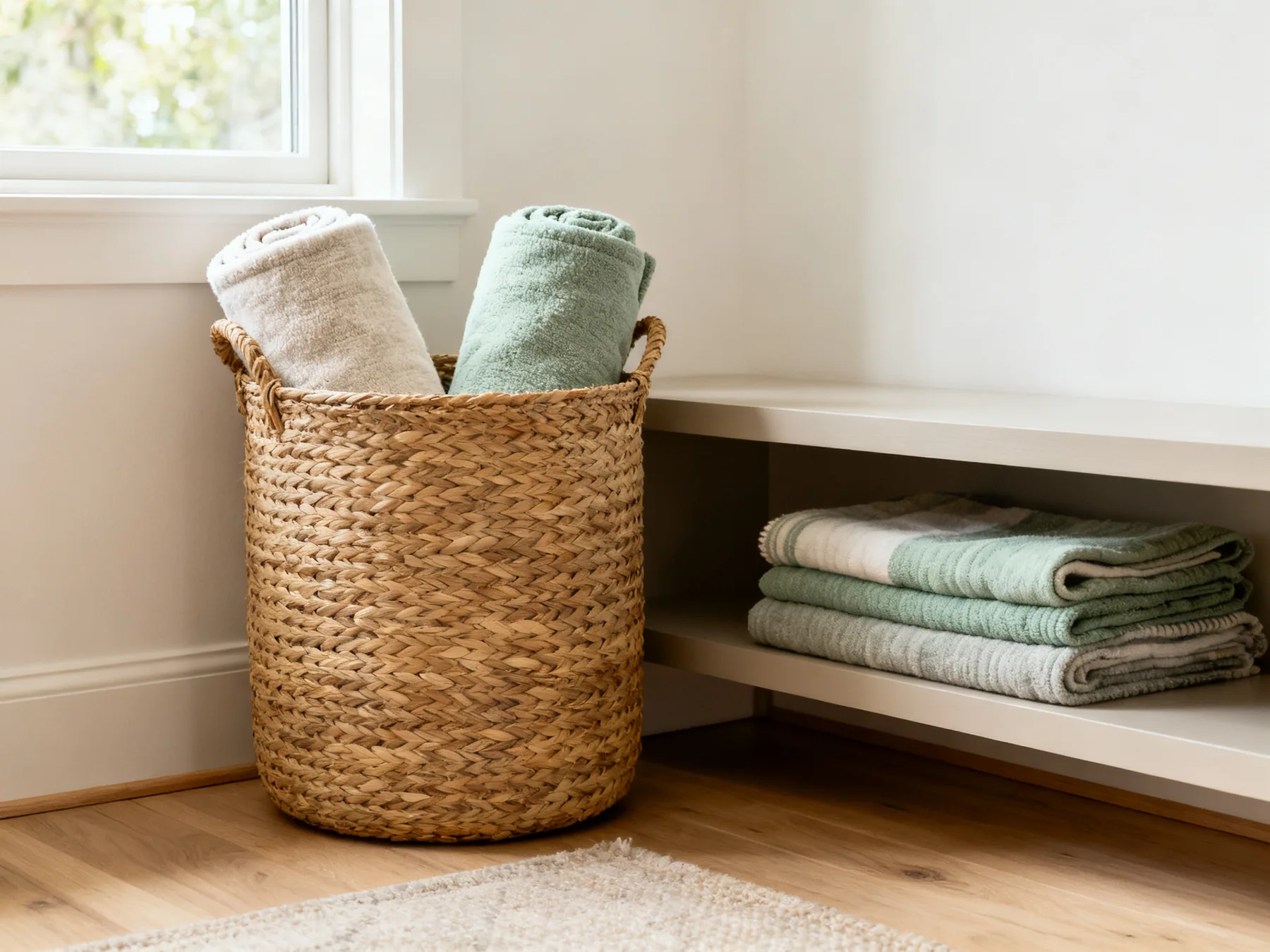
Blankets create a particular kind of storage problem. They are bulky, so the sensible instinct is to put them somewhere out of the way. They are also something you want at the exact moment you are already sitting down and comfortable, which means anything stored out of the way does not get used.
I see the result of that tension constantly. A house with nine blankets, seven of them in a loft, and the same two on the back of the sofa all winter because those are the reachable ones.
So the first thing I do is split the collection in two. The ones in rotation live in the room where they get used, and they are stored for access. Everything else is bulk, and bulk gets stored properly for the season. Those are two different jobs and trying to solve them with one container is why blanket storage usually fails.
Split the collection first
This takes five minutes and it makes every later decision obvious. Go through the blankets and put them in two piles: the ones actually reached for, and the ones kept for guests, for cold snaps, or for no clearly stated reason.
The first pile is usually two or three. Those get stored in the room where they are used, at arm's reach, and I care about nothing except how easy they are to grab and put back. The second pile is bulk, and it gets stored well, out of the way, for the season.
The mistake is treating all nine as one problem. Do that and you either fill the living room with blankets or you put the useful ones in the loft.
- Separate the blankets you actually reach for from the ones you keep in case.
- Keep two or three in the room where they get used, stored for easy access.
- Move the rest into proper seasonal storage, clean and contained.
- Be honest about the ones nobody has used in two winters.
- Count guest bedding separately, because that is a different requirement again.
The ones in rotation: roll, do not stack
For the blankets in daily use, folding and stacking is the wrong choice, and the reason is the same as with clothes in a drawer. A stack gives you access to the top item only, so in practice one blanket does all the work and the ones underneath are decorative.
Rolled and stood upright in a basket, every blanket in the container is individually reachable, and you can take one from the middle without dismantling the pile. It also survives being put back badly, which matters more than it sounds, because a system that needs care to maintain does not get maintained on a cold evening.
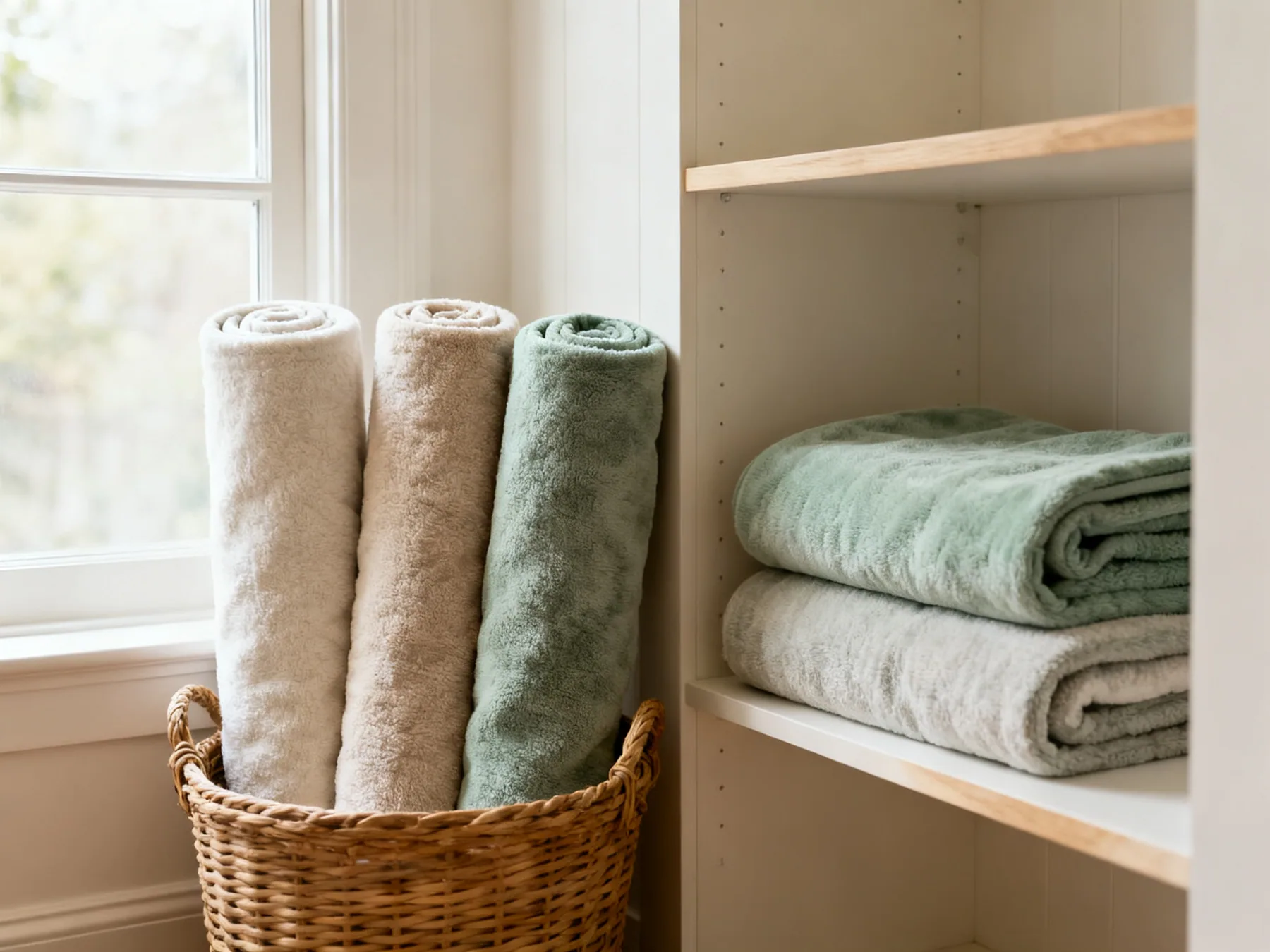
Roll and stand them in a basket
A large woven basket holding three or four rolled blankets on end is the best living-room solution I know. Every one is visible and reachable, it tolerates untidy replacement, and a basket reads as furniture rather than as storage.
Best option for blankets in daily use
Use a ladder or rail for one or two
A leaning blanket ladder holds two or three draped over the rungs in about 400mm of wall and very little depth. It keeps them airing, which matters for anything used often, and it looks deliberate.
Fold flat only where things stack
Folding is the right choice on a shelf inside a cupboard, where the stack is supported on both sides and the shelf is sized to the fold. In an open basket, folded blankets slump and the stack collapses within a week.
Give the sofa blanket a home that is not the sofa
One blanket living on the arm of a sofa is fine and I would not fight it. The problem is when it becomes three. A basket beside the sofa gives the others somewhere to go that is no harder than the sofa arm.
The bulk: put it inside furniture you already have
Blankets are among the bulkiest soft things a house stores, and buying a cupboard for them is rarely the right answer. What works better is using the enclosed volume inside furniture that is already in the room doing another job.
An ottoman at the foot of a bed, a storage bench in a hallway, the space under a divan. All of those hold a lot of blanket and cost you no additional footprint at all.
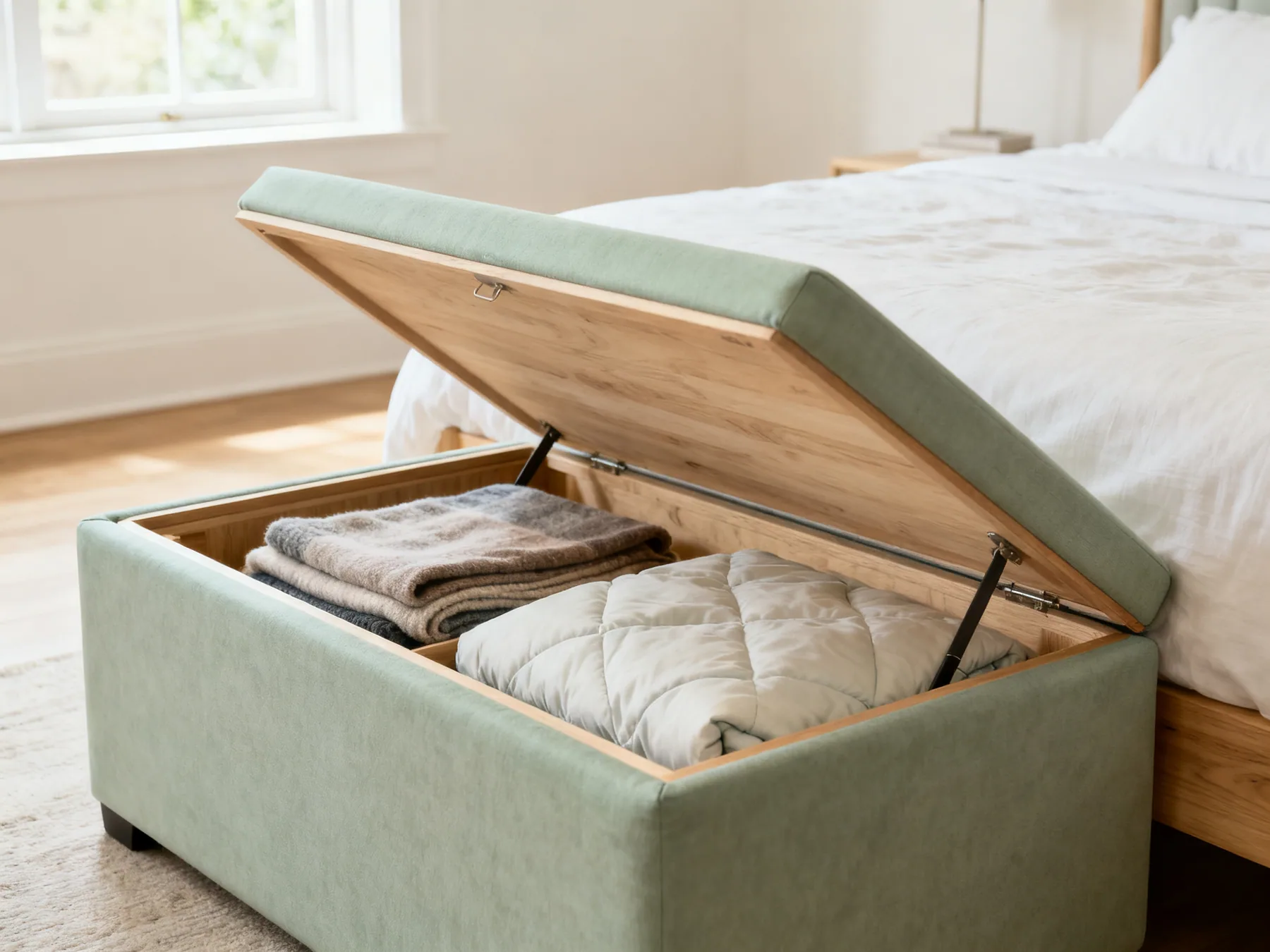
Use an ottoman or storage bench
A lidded bench at the foot of a bed will take several folded blankets and a spare duvet, and it gives you somewhere to sit. This is where I put household blanket bulk first, before considering anything new.
Use the volume under the bed
There is roughly 0.75 cubic metres under a standard double. Blankets are ideal for it, because they are bulky, soft and needed seasonally rather than daily. Use lidded containers, since under a bed is the dustiest place in a bedroom.
Take the top shelf of the wardrobe
The full-depth shelf above the hanging rail is awkward for clothes and perfect for blankets. High, dry, dark and enclosed, which is exactly what stored bedding wants.
Avoid the loft for anything you want to use
A loft swings hard in temperature and humidity, and it is far enough away that a blanket stored there is effectively gone. I would use it only for genuine long-term surplus, and only in sealed hard containers.
Storing them so they come out well
Two things matter for anything going away for a season, and both are about the container rather than the arrangement. It has to breathe, and what goes in has to be clean.
The breathing part is where I see the most avoidable damage. Someone wants to protect a good wool blanket, so they seal it in a plastic tub or a vacuum bag. Plastic holds moisture against the fibres, and in a warm cupboard that produces exactly the musty smell they were trying to prevent.
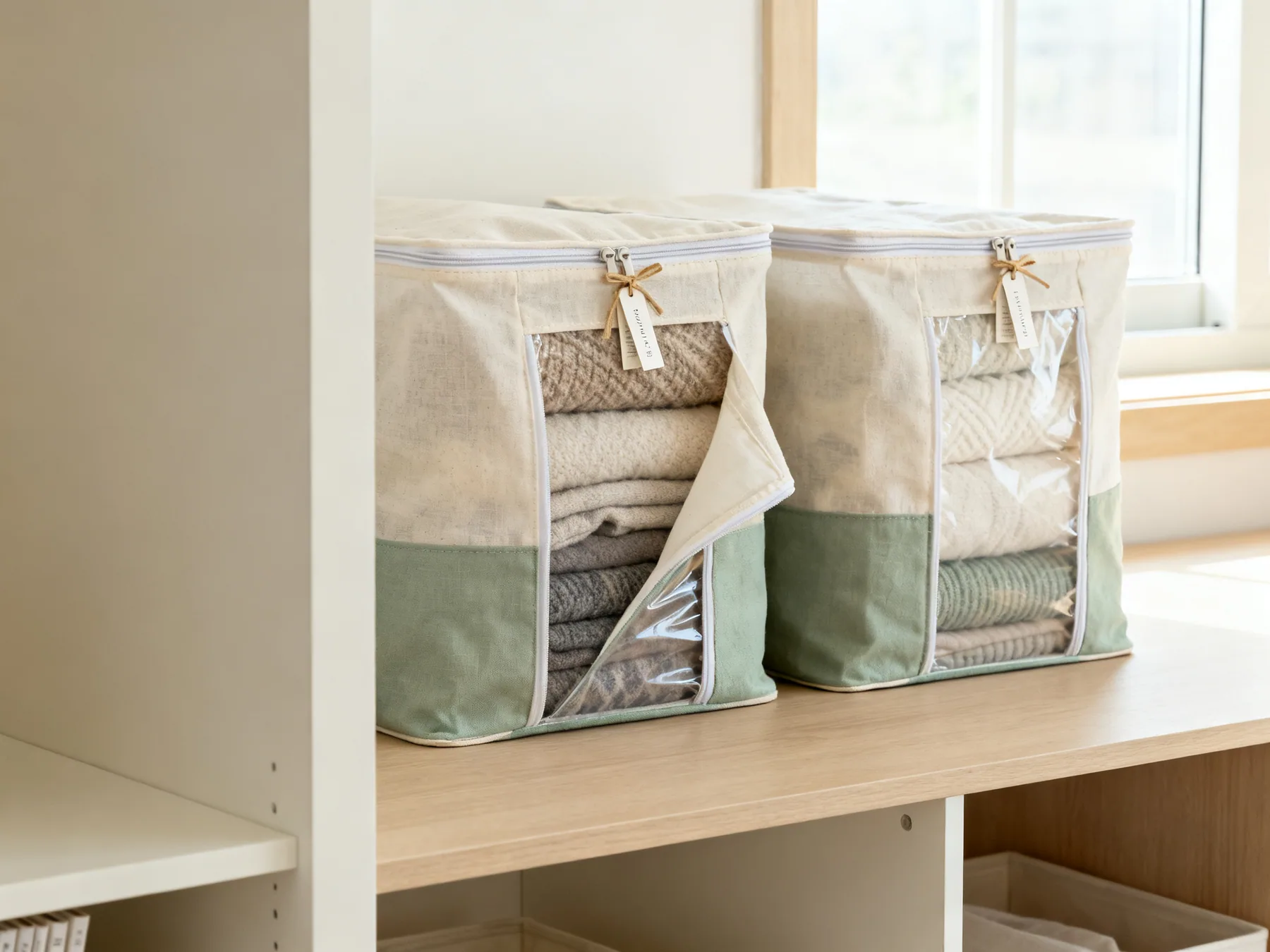
- Wash or air everything before storing, and make sure it is completely dry.
- Use breathable cotton zip bags or lidded boxes with some air movement, not sealed plastic.
- Label the outside. Folded blankets in bags are indistinguishable and you will open all of them.
- Keep them off the floor and out of cellars and garages.
- Do not vacuum-compress wool or down. Both rely on trapped air and lose loft permanently.
- Store somewhere dark, because light fades dye even through a thin bag.
- Fold along different lines each year so a permanent crease does not set into the same place.
Wool, and the thing about moths
Wool blankets are the ones worth being careful with, because they are the ones moths want and they are usually the expensive ones. And the single most useful fact here is one most people have never been told.
Clothes moths do not eat wool. Their larvae feed on the proteins in sweat, skin oils and food traces, and they are drawn to fibre carrying them. A wool blanket that has been used on a sofa all winter and put away unwashed is bait. The same blanket washed first is far less interesting to them.
So washing is not about tidiness. It is the actual moth prevention, and cedar is a distant second.
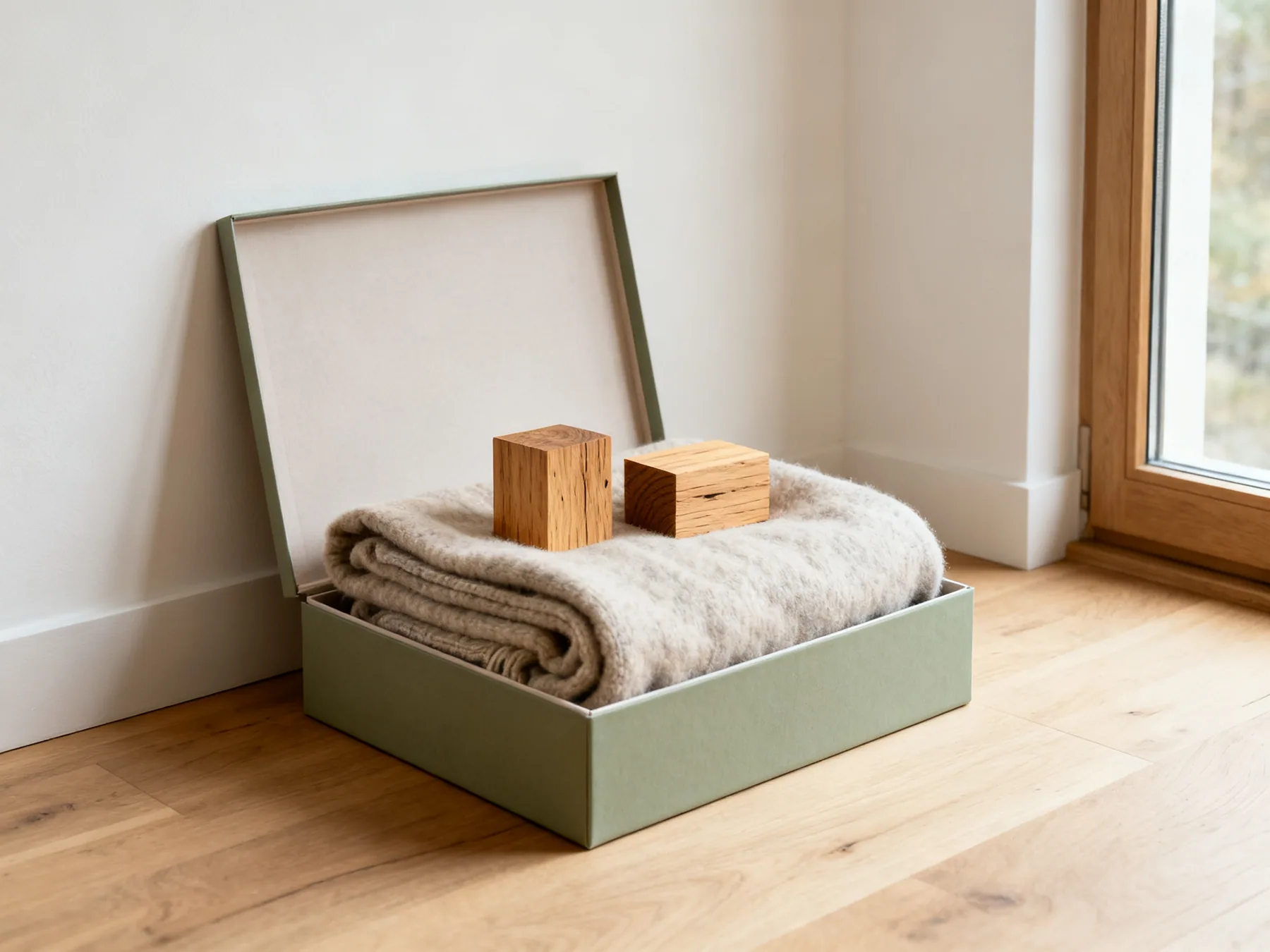
Wash before storing, every time
This matters more than any deterrent you can add. Follow the care label, and for anything delicate a specialist wool wash or dry cleaning is worth it once a year given what a good blanket costs.
The real moth prevention
Add cedar and refresh it
Cedar blocks work through their oils, and those fade after about a year. A light sanding brings the scent back. Lavender sachets do a similar job and need replacing annually.
Check stored wool mid-season
Open the box once around the middle of the storage period. Damage caught early is confined to one blanket, and moths found late have usually moved through a whole container.
Keep wool out of vacuum bags entirely
Compression flattens the fibre semi-permanently, and the whole reason a wool blanket is warm is the air held in it. Fold it and accept the volume.
Blanket storage ideas for homes with more blankets than shelves: frequently asked questions
What is the best way to store blankets in a living room?
Rolled and standing upright in a large basket. Every blanket stays individually reachable, you can take one from the middle without dismantling a stack, and it survives being put back untidily, which is what a living room system has to tolerate. Keep only the two or three you actually use there and store the rest properly for the season.
Should blankets be rolled or folded?
Roll them for access and fold them for stacking. Rolled blankets stood on end in a basket are each independently reachable. Folded blankets are better on a supported shelf inside a cupboard, where the stack has sides to hold it and the shelf matches the fold. In an open basket, folded blankets slump within a week.
How do I stop stored blankets smelling musty?
Make sure they are completely dry before storing and use breathable cotton bags or lidded boxes rather than sealed plastic. Plastic traps moisture against the fibres, and in a warm cupboard that is exactly what produces the smell. Keep them off floors and out of cellars and garages, where damp and temperature swings are worst.
How do I protect wool blankets from moths?
Wash them before storing. Moth larvae feed on the sweat and skin oils in used fibre rather than on the wool itself, so an unwashed blanket is what attracts them and washing is the actual prevention. Then add cedar blocks or lavender, refresh them annually, and open the box once mid-season so any damage stays confined to one blanket.
Can I vacuum-pack blankets to save space?
Only synthetic ones, and only for a season. Wool and down rely on trapped air for their warmth, and long compression flattens the fibre semi-permanently so the blanket comes out thinner than it went in. For those, fold them into a breathable bag and accept that they take more room.
Where should I store spare blankets?
Inside furniture that is already in the room. A lidded ottoman or storage bench, the volume under a bed, or the full-depth top shelf of a wardrobe. All three hold a lot of blanket without adding any footprint. I would avoid the loft for anything you actually intend to use, because it is far enough away that it stops getting used.