Bedding & Linen
Towel storage ideas that keep them dry and off the floor
Towels are the one textile that goes into storage damp. Drying them and storing them are not two jobs, they are the same job.
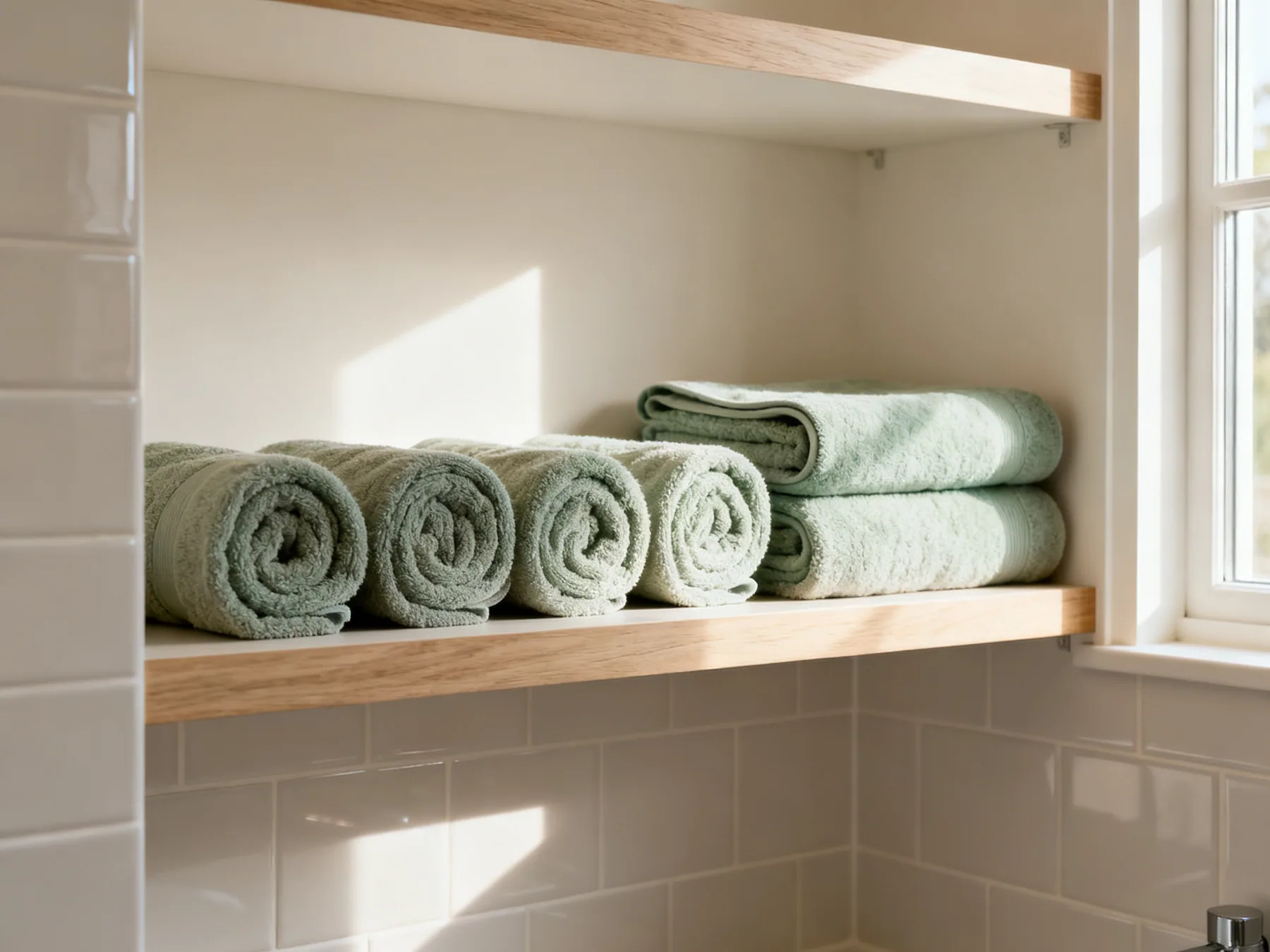
Every other textile in a house goes away clean and dry. A towel goes away wet, several times a week, in the most humid room in the building. That one difference is why towel storage advice that treats them like bedding does not work, and it is why a bathroom that is otherwise clean can still smell faintly of damp cloth.
So I split the problem in two. There is the towel in use, which needs to dry fully between uses and therefore needs air far more than it needs tidiness. And there is the clean stock, which needs to be visible and reachable so the set gets used evenly.
Get the first one right and the smell problem disappears. Get the second right and you stop washing the same two towels forever while four sit at the bottom of a stack.
The towel in use needs air, not tidiness
This is where almost all towel trouble starts. A used towel holds a lot of water, and it will only give that water up to moving air. Folded neatly in half over a rail, most of its surface is touching itself, so the inside faces stay wet for hours and sometimes until the next use.
A towel that never fully dries develops that sour, slightly musty smell, and then it transfers it to you and to everything stored near it. Washing more often treats the symptom. Hanging it open treats the cause.
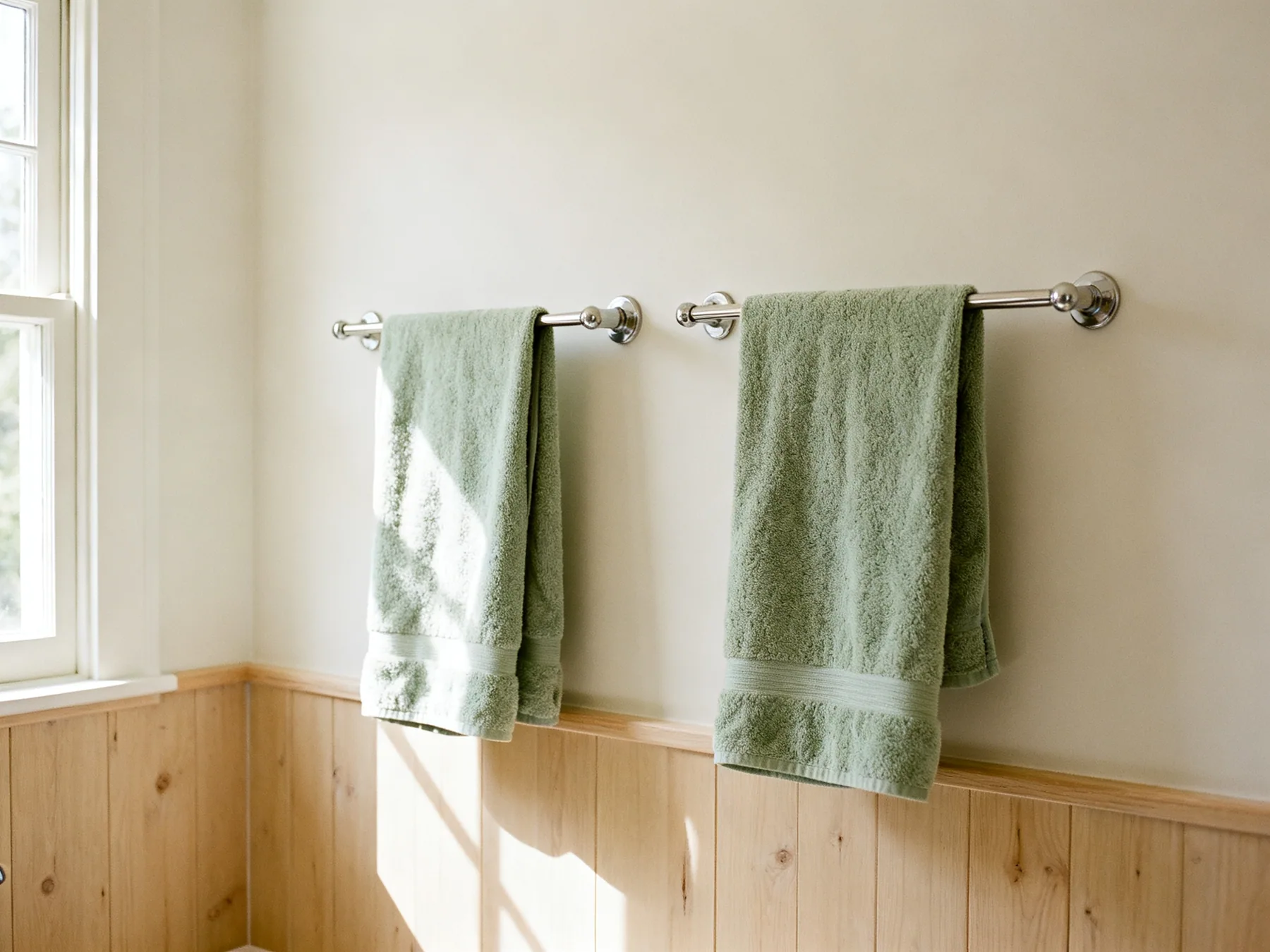
One towel per rail, spread out
Not two towels on one rail and not folded double. If there is not enough rail for everyone, more rails or hooks is the answer rather than doubling up. This is the single change that fixes a musty bathroom.
The cause of most towel smell
Leave air space either side
A towel pressed against a wall or against the next towel dries on one face only. A gap of a few centimetres round it roughly halves the drying time.
Hooks dry better than you would expect
A towel on a hook has more of its surface exposed than one folded over a rail, so the tidier-looking option is often the worse one. If drying is the priority, hooks win.
Ventilate the room, not just the towel
Run the extractor for ten minutes after a shower or leave a window ajar. In a bathroom with no airflow, nothing dries properly however you hang it.
Do not put a damp towel in a closed cupboard
Ever. It affects everything stored around it and takes days to notice. If it is not bone dry it stays on the rail.
Rolling versus folding
For the clean stock, the choice between rolling and folding is not about looks, it is about how you get one out.
A folded stack gives you access to the top towel only. Take one from the middle and the stack collapses, so in practice people use the top two repeatedly. Rolled towels standing in a row or in a basket are each independently reachable, so the whole set gets used.
Folding is still right on a supported shelf inside a cupboard, where the sides hold the stack and the shelf is sized to the fold. In the open, rolling wins.
Roll for open shelves and baskets
Rolled towels hold their shape, look deliberate, and let you take any one without disturbing the rest. They also tolerate being put back untidily, which matters more than people admit.
Fold for closed cupboard shelves
Where the stack is supported on both sides and you can see the whole shelf at once, folding is more space-efficient. Fold to the shelf depth so nothing overhangs.
Group by size
Bath sheets, bath towels, hand towels and flannels each in their own stack or row. Mixed together you unfold two things to find the size you wanted.
Keep one guest set separately
Somewhere else entirely, ideally, so it stays a guest set. A guest towel in the main rotation is just a towel.
Where to put them in a small bathroom
In a bathroom with no spare floor, the honest options are the walls, the back of the door and the space above the fixtures. A towel cupboard is a luxury most small bathrooms do not have, and it is not obviously the best answer even where there is room.
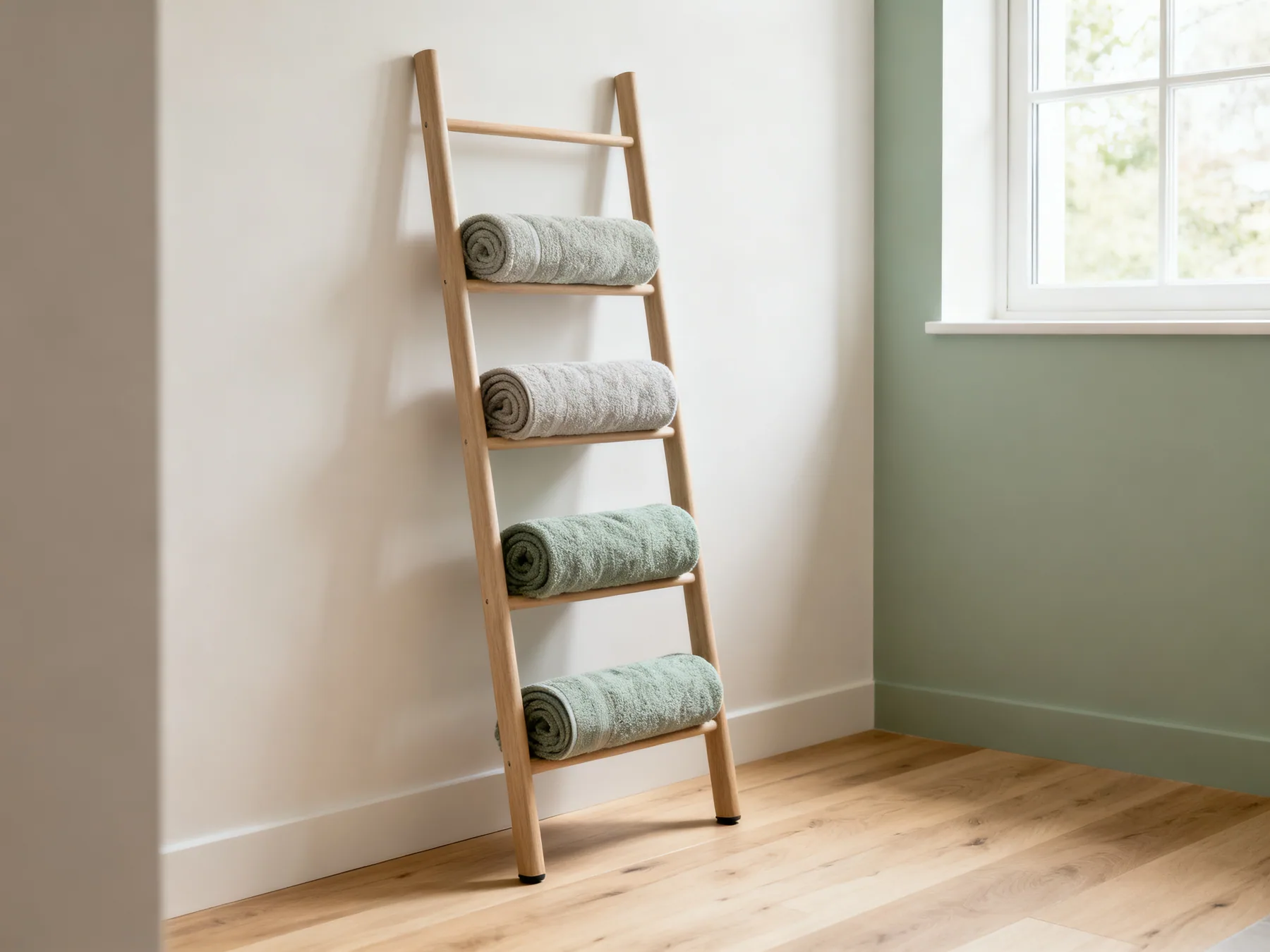
Use a leaning ladder
Four rolled towels in about 400mm of wall and 200mm of depth, which beats any cupboard on space, and the towels keep airing rather than sitting in still air. My first suggestion in most small bathrooms.
Best space-to-capacity in a small room
Put a shelf above the door
The band above a door frame is dead space and towels are light, so it is a good match. Keep folded spares up there and the in-use ones at hand height.
Use the wall above the cistern
A shallow shelf 150 to 200mm deep takes folded hand towels neatly, since a folded hand towel is roughly that width. Leave clearance above the cistern lid so it can still be lifted.
Hooks on the back of the door
For the towel and dressing gown in daily use. It claims the last unused vertical surface in the room and costs nothing.
Consider a heated rail carefully
Good for drying, and worth checking the capacity honestly: most hold fewer towels than a household needs, and loading one up defeats it. Treat it as a drying rail for one or two, not as storage.
Children, and the towel on the floor
Same principle as coats in a hallway. If the only towel rail is at adult height, a child physically cannot fold a towel over it and get it to stay, so the towel ends up on the floor. That is a design problem rather than a behaviour problem and it takes ten minutes to fix.
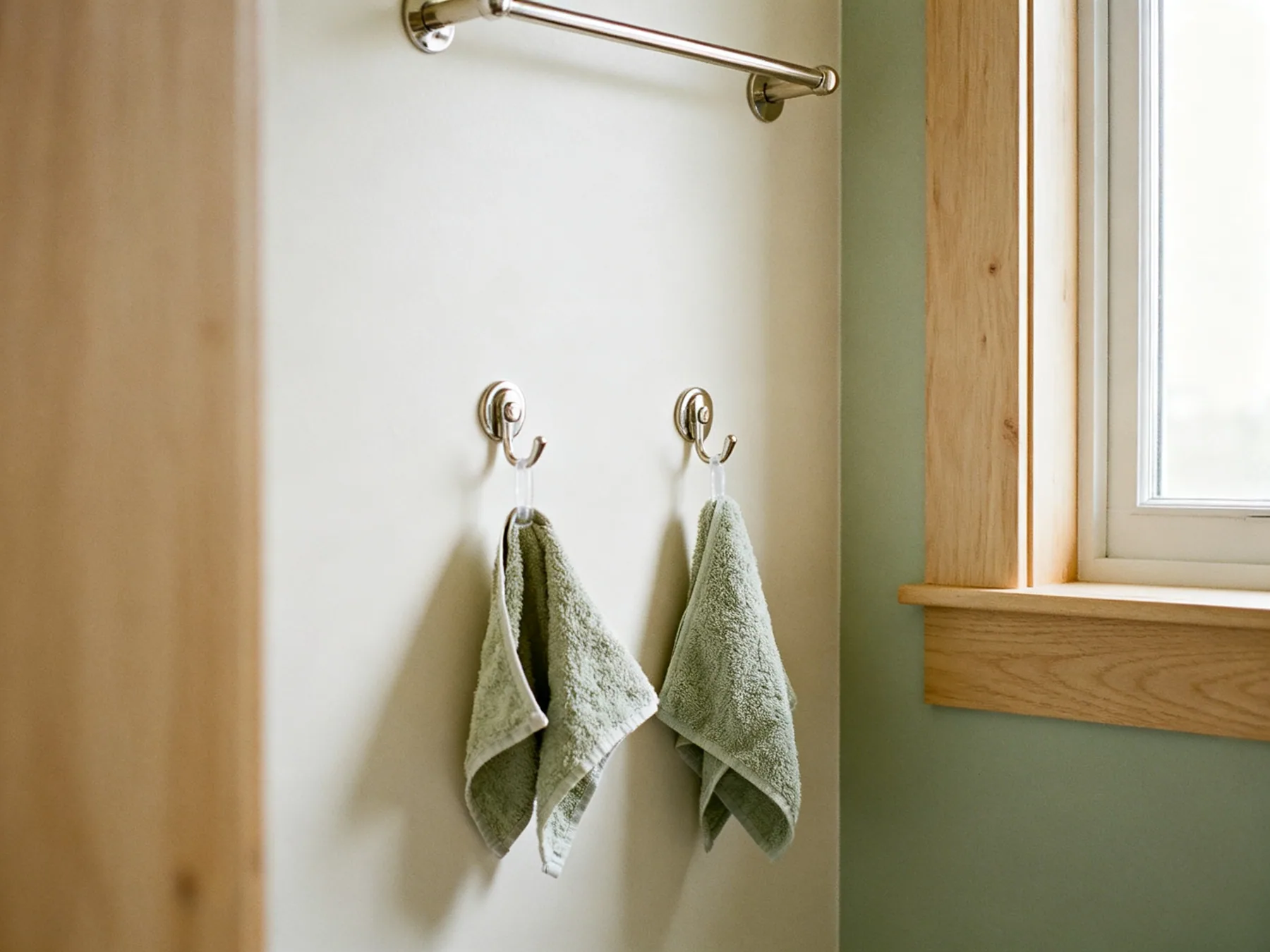
Fit hooks at child height
Around 900mm to 1.1m off the floor. A hook rather than a rail, because hanging a towel on a hook is a single motion and folding one over a rail is not.
One hook per child, spaced apart
Two towels on one hook do not dry. Give each child their own and leave a gap between them, which also stops the argument about whose towel is whose.
Use different colours per person
The simplest way to stop towels being shared without anyone noticing, which matters if somebody has a skin or eye infection.
Keep their spare towels reachable too
If the clean stock is on a high shelf, an adult is involved every time. A low basket of their towels means they can sort it out themselves.
Rotating the set, and when to replace
The last piece, and it is the one that quietly wastes money. Most households own plenty of towels and wear out three of them, because the same ones are always on top of the stack.
Put laundered towels at the bottom rather than the top and the whole set wears evenly. It takes no extra time and it noticeably extends how long a set lasts.
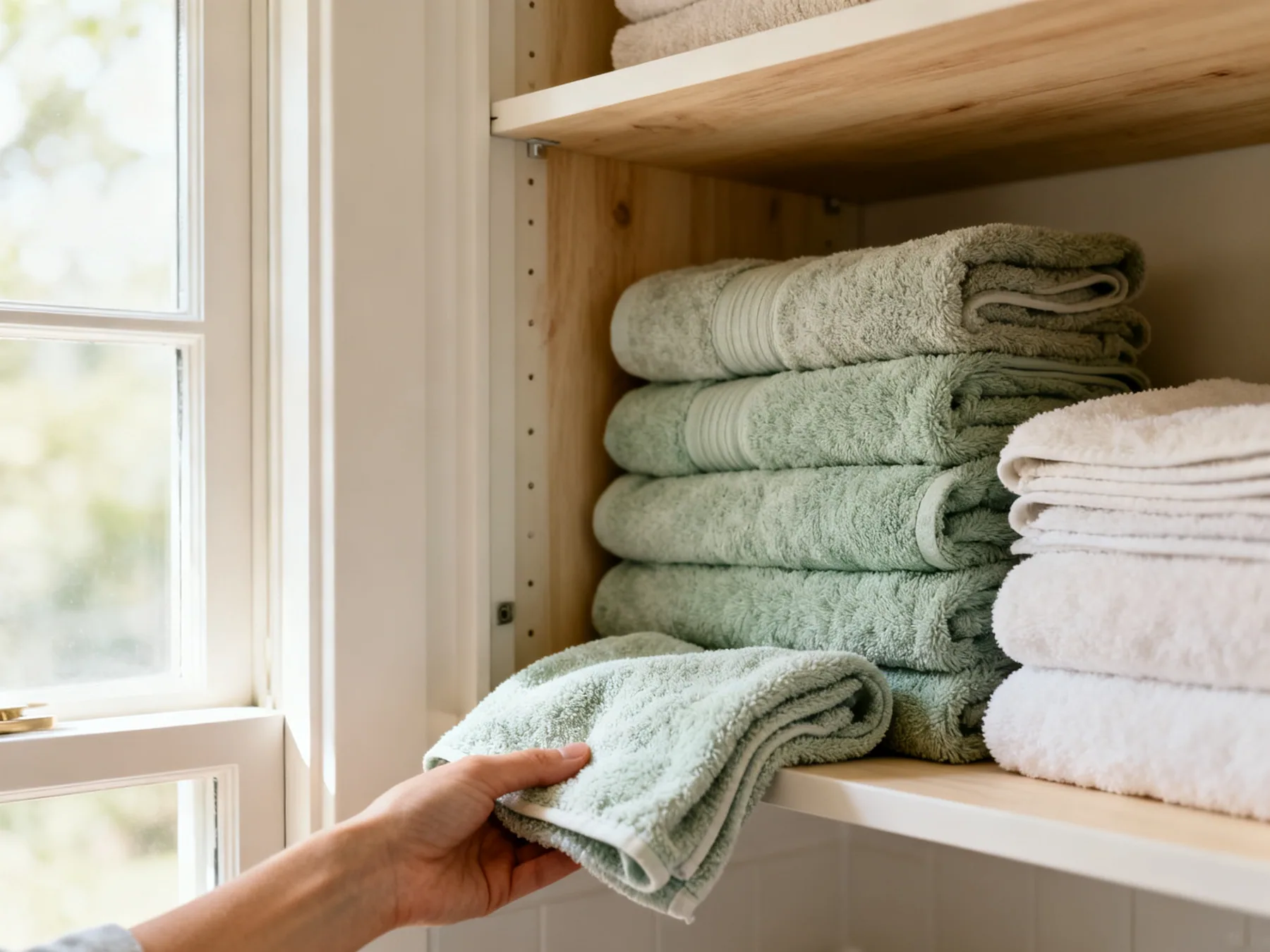
- Put freshly laundered towels at the bottom of the stack so older ones get used first.
- Keep the number of towels in circulation matched to your rails and hooks. Extra towels with nowhere to hang become floor towels.
- Wash towels at the temperature on the label, and avoid fabric softener, which coats the fibres and reduces absorbency.
- Make sure towels are fully dry before they go in a cupboard, not just dry to the touch.
- Keep a dedicated cloth or old towel for spills and pets, so a good towel is not used for it.
- Retire towels to cleaning rags when they stop absorbing, which is usually before they look worn out.
- Store spare towels somewhere dry rather than in the bathroom itself if you have the option.
- Air a linen cupboard occasionally by leaving the door open, especially if it backs onto a bathroom.
Towel storage ideas that keep them dry and off the floor: frequently asked questions
Why do my towels smell even after washing?
They are almost certainly not drying fully between uses. Folded over a rail, most of a towel's surface touches itself and the inner faces stay wet for hours. Hang one towel per rail, spread open with air space either side, and run the extractor for ten minutes after a shower. Also skip fabric softener, which coats the fibres and reduces absorbency.
Should towels be rolled or folded?
Roll them for open shelves and baskets, fold them for supported shelves inside a cupboard. A folded stack only gives you the top towel, so in practice the same two get used repeatedly, while rolled towels are each independently reachable. Rolling also tolerates being put back untidily, which matters in a real bathroom.
Where should I store towels in a small bathroom?
A leaning ladder is usually the best answer: four rolled towels in about 400mm of wall and 200mm of depth, and they keep airing rather than sitting in still air. After that, a shallow shelf above the door, a 150 to 200mm shelf above the cistern for folded hand towels, and hooks on the back of the door for the ones in daily use.
How do I stop children leaving towels on the floor?
Fit hooks at their height, around 900mm to 1.1m, one per child and spaced apart. A hook rather than a rail, because hanging a towel on a hook is one motion while folding one over a rail is not, and a child cannot reach an adult rail anyway. Keep their clean towels somewhere low too, or an adult is involved every time.
How many towels should I keep out?
As many as you have rails and hooks for, and no more. Towels in circulation with nowhere to hang become floor towels, which is how the smell problem starts. Keep the rest as clean stock somewhere dry, ideally outside the bathroom, and rotate them in from the bottom of the stack.
Can I store towels in the bathroom?
In-use towels yes, and spare stock only if it is genuinely dry in there. A bathroom is the most humid room in the house, so a closed cupboard of folded towels backing onto it can stay slightly damp and start to smell. If you have somewhere else for the spares, use it, and air any bathroom cupboard by leaving the door open occasionally.