Utility & Work Rooms
Laundry room storage ideas that fix the workflow, not just the shelves
A laundry room is a workflow before it is a storage problem. Get the sequence right and it needs less shelving than you think.
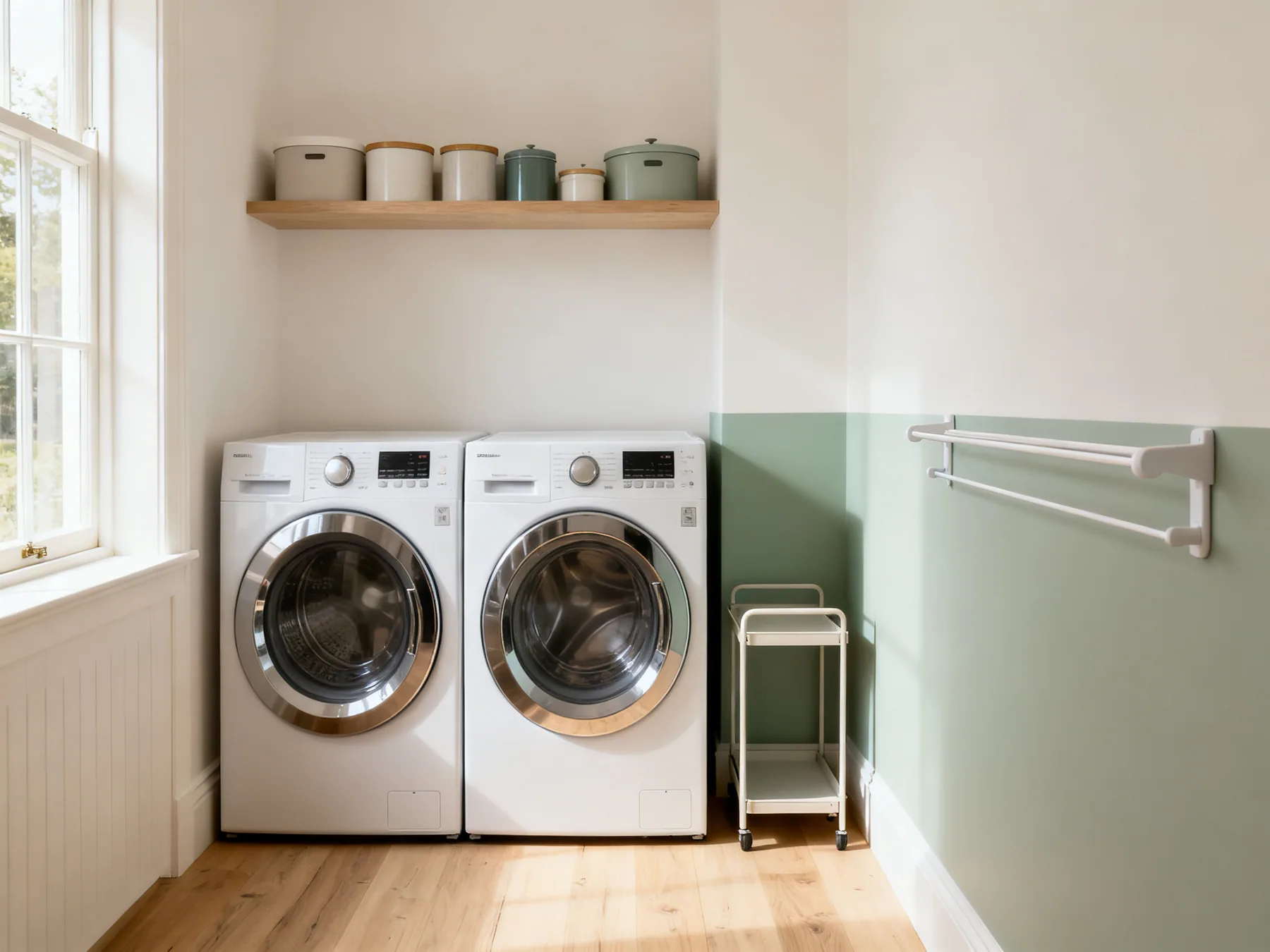
Two appliances take the floor and cannot move, so almost every decision in a laundry room is about a wall, the space above the machines, or the gap beside them. That part is straightforward and I will go through it.
But the reason most laundry rooms feel like they are failing is not shelving. It is that the room has to hold laundry at four different stages at once. Dirty and unsorted, sorted and waiting, wet and drying, and clean and waiting to be put away. Four states, and if any one of them has nowhere to be, it ends up on the floor and the room reads as chaos regardless of how much storage is on the walls.
So I want to deal with both: the physical space, and the sequence. The sequence is the part that actually gets the pile off the floor.
Sort on the way in, not on the day
This is the change that does the most and costs the least, and it is the one people skip because it does not feel like storage. If everything goes into one basket, then at some point you have to tip it out and sort it, and the only surface big enough is the floor. That is the pile. It is not untidiness, it is a missing step.
Two or three labelled baskets under a worktop turns wash day into loading a machine. You sort once, at the moment you undress, in one-garment increments that cost no effort at all.
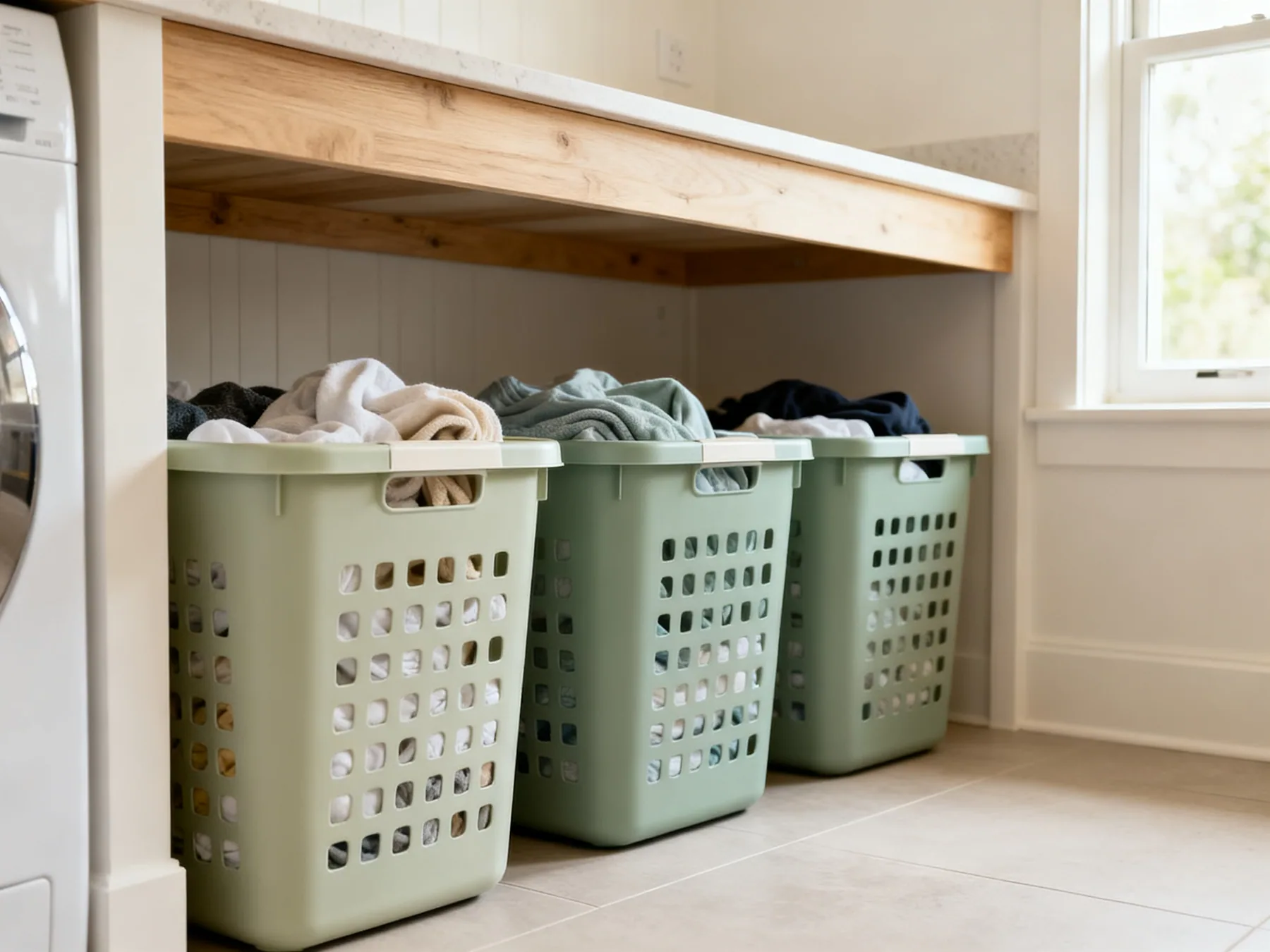
- Use two or three baskets: whites, colours, and delicates or hand-wash.
- Label them, especially if more than one person uses the room.
- Put them where clothes are actually taken off if you can, not only in the utility room.
- Size them so a full basket is one machine load rather than two.
- Keep one basket free for clean laundry waiting to be put away, which is the stage everyone forgets.
- Choose ventilated baskets rather than sealed bins, because damp towels in a closed container go sour quickly.
The wall above the machines
This is the largest piece of unused space in the room and it is the first thing I would build. A shelf run across the wall above a washing machine and dryer takes everything you need at the point of use, and it costs no floor at all.
The one dimension that matters is clearance. Leave enough height to open the door fully and to lift a full basket in and out without catching your knuckles. Around 400mm above the machine top is usually about right, and I would rather have one shelf at a comfortable height than two that make the machines awkward to use.
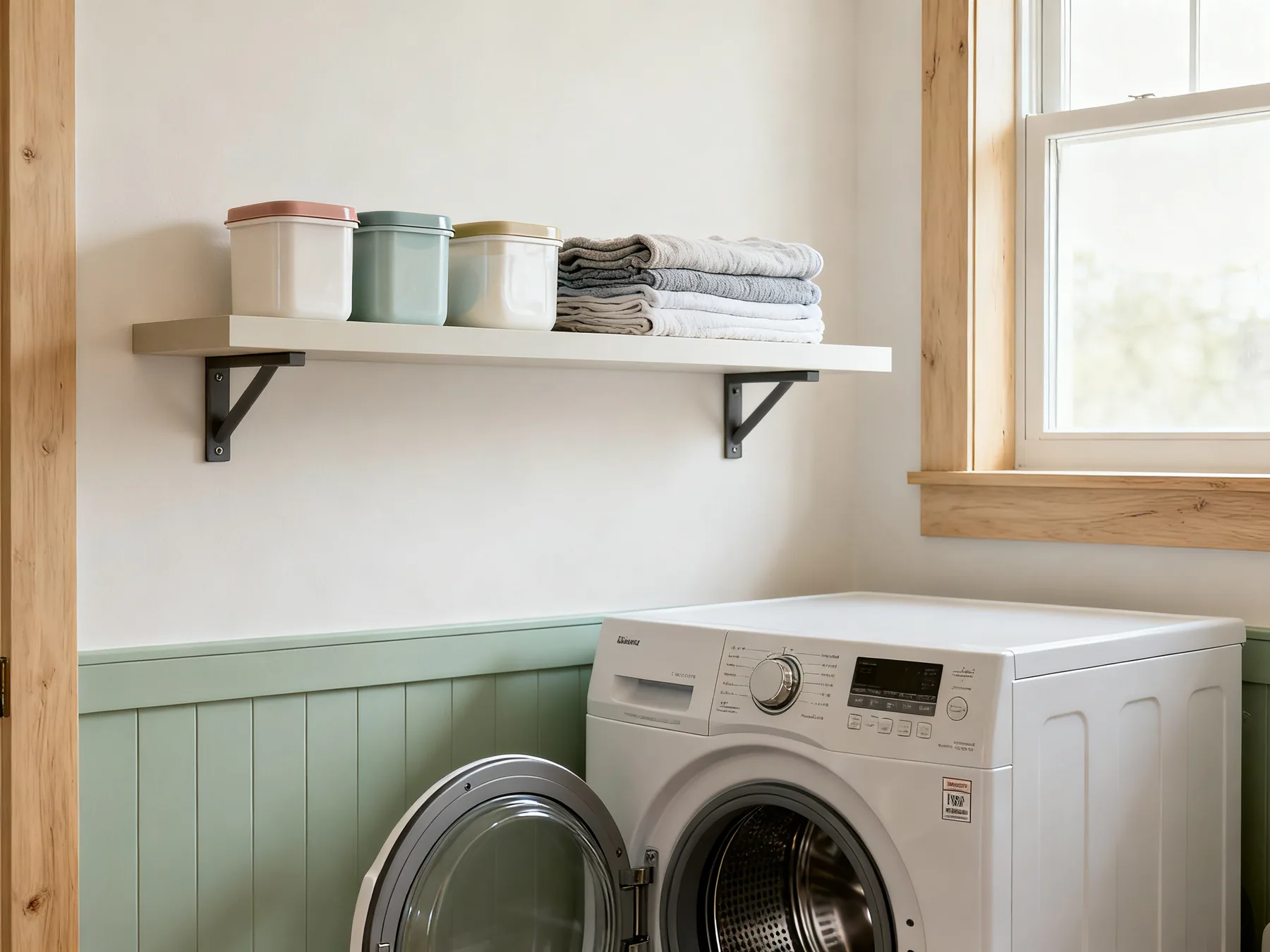
Run one sturdy shelf across both machines
A single continuous shelf reads as deliberate and gives you a run long enough for containers, a folded stack of cloths and a small basket of odds. Fix it properly into masonry or studs, because it will end up holding more than you planned.
Leave about 400mm clearance above the machines
Decant detergent into lidded containers
Commercial packaging is bulky, mismatched and usually leaks a little around the cap. Lidded containers of a consistent size make the shelf hold more, look calmer, and stop the sticky ring that builds up under a detergent bottle.
Add a wall cabinet if there are children
Detergent pods in particular are a real poisoning risk and they look like sweets. A closed cabinet above adult reach is the right answer, and I would treat it as non-negotiable rather than a preference.
Detergent pods are a poisoning risk
Do not store anything loose directly above an open drum
A small item knocked off a shelf into an open washing machine drum is easy to miss and a nuisance at best. Keep the shelf directly over the machine for boxed and lidded things only.
Fit a worktop over the machines if they are front loaders
A continuous worktop across two front-loading machines gives you a folding surface, which is the thing most laundry rooms lack. Folding at the machine is what stops clean laundry migrating to a bed.
The gap beside the appliance
Almost every utility room has a slot somewhere between an appliance and a wall or a unit. It is usually between 100mm and 300mm, it is usually holding nothing, and it is genuinely useful storage if you stop trying to reach into it and make it come out to you.
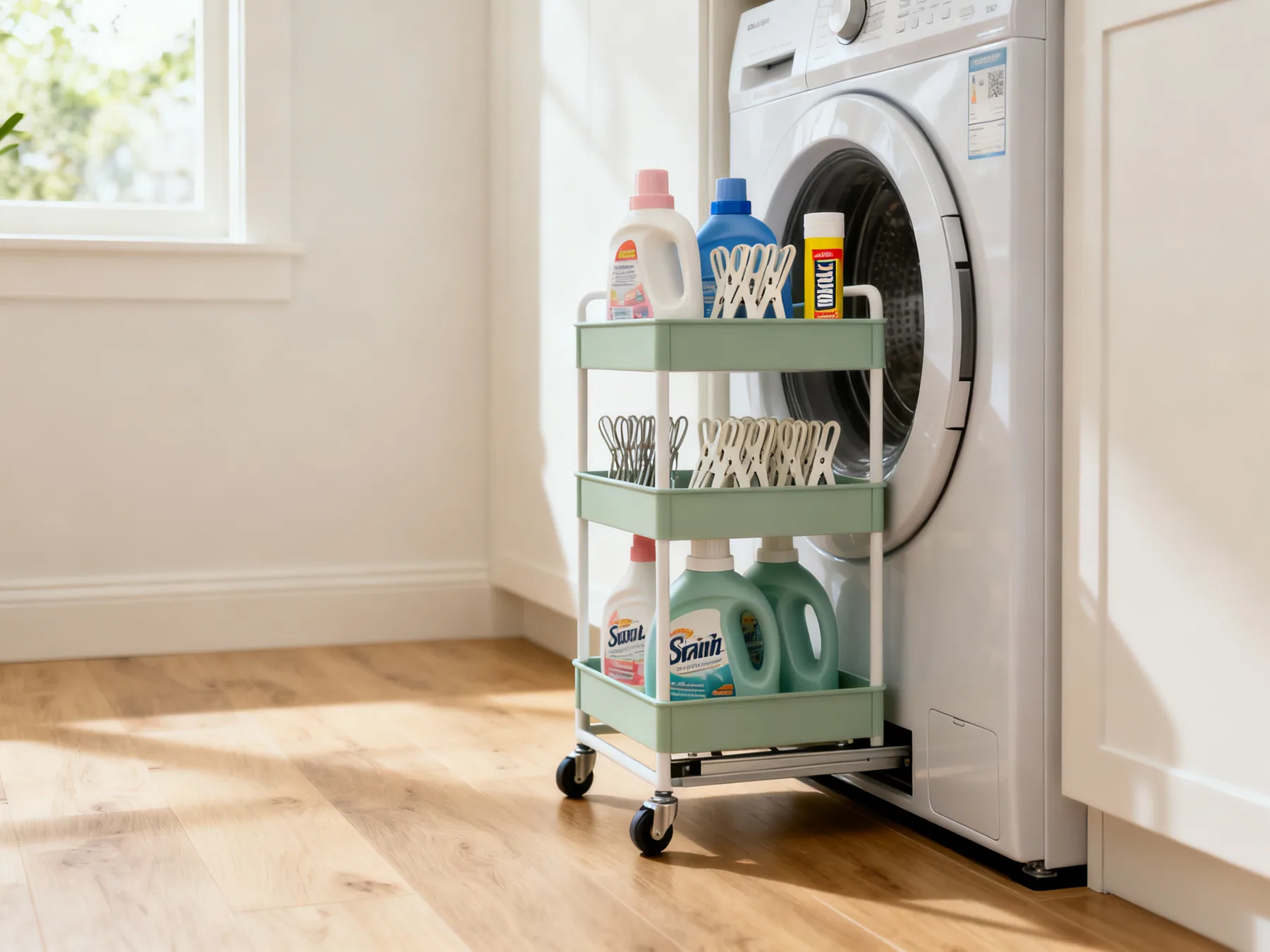
Slide in a slim rolling cart
A narrow three-tier cart on castors fits a gap over about 150mm and rolls out when you need it. That rolling-out is the whole point: things at the back of a fixed slot are invisible and therefore unused.
Use a narrow pull-out for the very tight gaps
Below about 150mm a cart will not fit, but a slim board on castors, or even a stiff tray you can hook out, turns a 100mm slot into somewhere to keep pegs, brushes and stain sticks.
Keep the gap clear of anything that must not get warm
The sides of a tumble dryer and the back of any appliance run warm. I would not store candles, aerosols or anything with a temperature limit in a slot pressed against them.
Leave the ventilation gap the appliance needs
Machines need air around them, particularly condenser dryers. Check the manual before you fill a gap that the manufacturer specified for airflow, or you will trade storage for a shorter appliance life.
Check the appliance ventilation clearance
Drying space is storage too
Drying is the stage that most often has nowhere to go, and it is the one with consequences beyond untidiness. Wet laundry in a small room with poor ventilation pushes the humidity up sharply, and that shows up as condensation on the coldest surface in the house, which is usually a window reveal or an external wall corner.
So drying needs designed space, and the space needs air moving through it rather than simply somewhere to hang things.
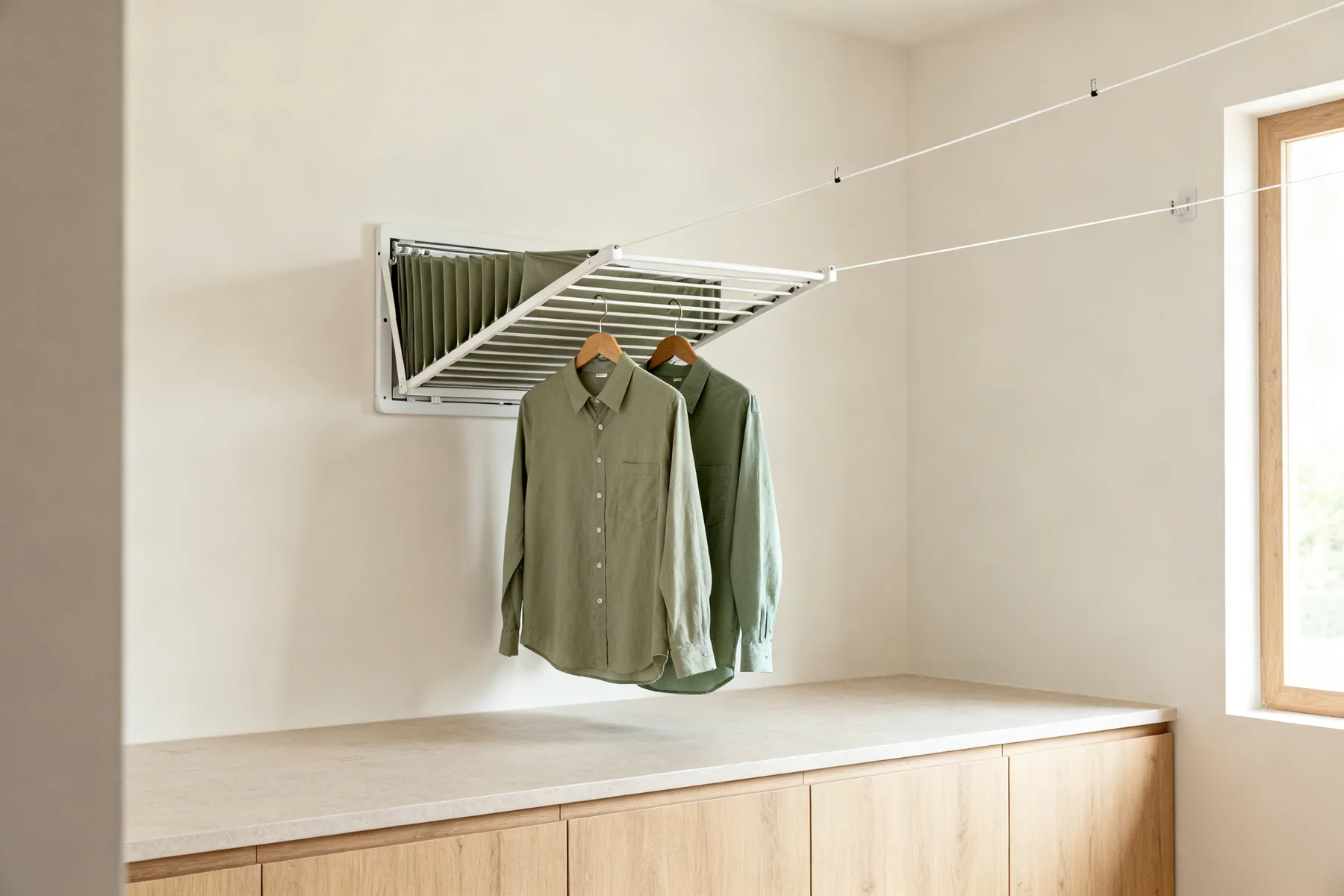
Fit a wall-mounted concertina rack
A rack that folds flat against the wall when not in use gives you a metre or two of drying line and disappears afterwards. Better than a floor airer in a small room, because a floor airer occupies the only clear floor you have and never gets put away.
Leave air space between items
A crowded rack does not dry, it just holds water in the room for longer. Space things so air can pass on both sides, and dry in two smaller batches rather than one crammed one if you have to.
Add a short hanging rail for shirts
A 400mm rail above the worktop lets shirts and anything that creases go straight onto a hanger out of the machine, which removes most of the ironing. This is the highest-value small addition to a laundry room.
Ventilate while drying
Run the extractor or open a window while anything is drying indoors, and keep the door shut so the moisture does not distribute itself around the house. Without that, indoor drying is how a cold corner starts growing mould.
Indoor drying needs active ventilation
Finishing the room off
A few things that are easy to add at the start and annoying to retrofit, plus the safety points that belong in a room containing water, electricity and chemicals.
- Put hooks on the back of the door for the ironing board and a laundry bag.
- Keep a small lidded pot for the coins, buttons and hair clips that come out of pockets.
- Store the iron somewhere it can cool safely, not straight into a cupboard.
- Keep detergents in their original containers where possible, or label decanted ones clearly.
- Store all cleaning chemicals above child height or in a locked cupboard.
- Never store anything on top of a tumble dryer that blocks its vents.
- Keep a torch or a cloth within reach of the machines, because leaks are always found at an inconvenient moment.
- Leave one clear surface. A laundry room with no free surface always feels like it is failing.
Laundry room storage ideas that fix the workflow, not just the shelves: frequently asked questions
How do I stop laundry piling up on the floor?
Sort on the way in rather than on wash day. If everything goes into one basket, at some point you have to tip it out and sort it, and the floor is the only surface big enough, so the pile is a missing step rather than untidiness. Two or three labelled baskets turn wash day into simply loading the machine.
How much clearance do I need above a washing machine for a shelf?
Around 400mm above the machine top. That leaves room to open the door fully and to lift a full basket in and out without catching your hands. I would rather fit one shelf at a comfortable height than two that make the machines awkward, because an awkward machine is used badly for years.
What can I put in the narrow gap beside my washing machine?
A slim three-tier rolling cart fits anything over about 150mm and rolls out so you are not reaching into a slot. Below that, a narrow board on castors or a stiff pull-out tray works for pegs, brushes and stain sticks. Check the appliance manual first, since some machines specify that gap for ventilation.
Is it bad to dry laundry indoors?
It is fine as long as you ventilate while you do it. Wet laundry raises indoor humidity sharply, and that moisture condenses on the coldest surface in the house, typically a window reveal or an external wall corner, which is where mould starts. Run an extractor or open a window, and keep the door shut so the damp air does not spread.
Where should laundry detergent be stored?
In lidded containers on a shelf above the machines, and above child height or in a locked cupboard if there are children in the house. Detergent pods are a genuine poisoning risk and they look like sweets, so a closed high cabinet is the right choice rather than an open shelf. Avoid storing loose items directly above an open drum.
What is the most useful thing to add to a small laundry room?
A short hanging rail above the worktop, about 400mm long. Shirts and anything that creases go straight from the machine onto a hanger, which removes most of the ironing before it becomes a job. After that, a worktop across the machines to fold on, because folding at the machine is what stops clean laundry migrating to a bed.