From the blog · Opinion
Nine storage mistakes that quietly cost you space
These are not aesthetic complaints. Each of these mistakes measurably reduces how much your home can hold.
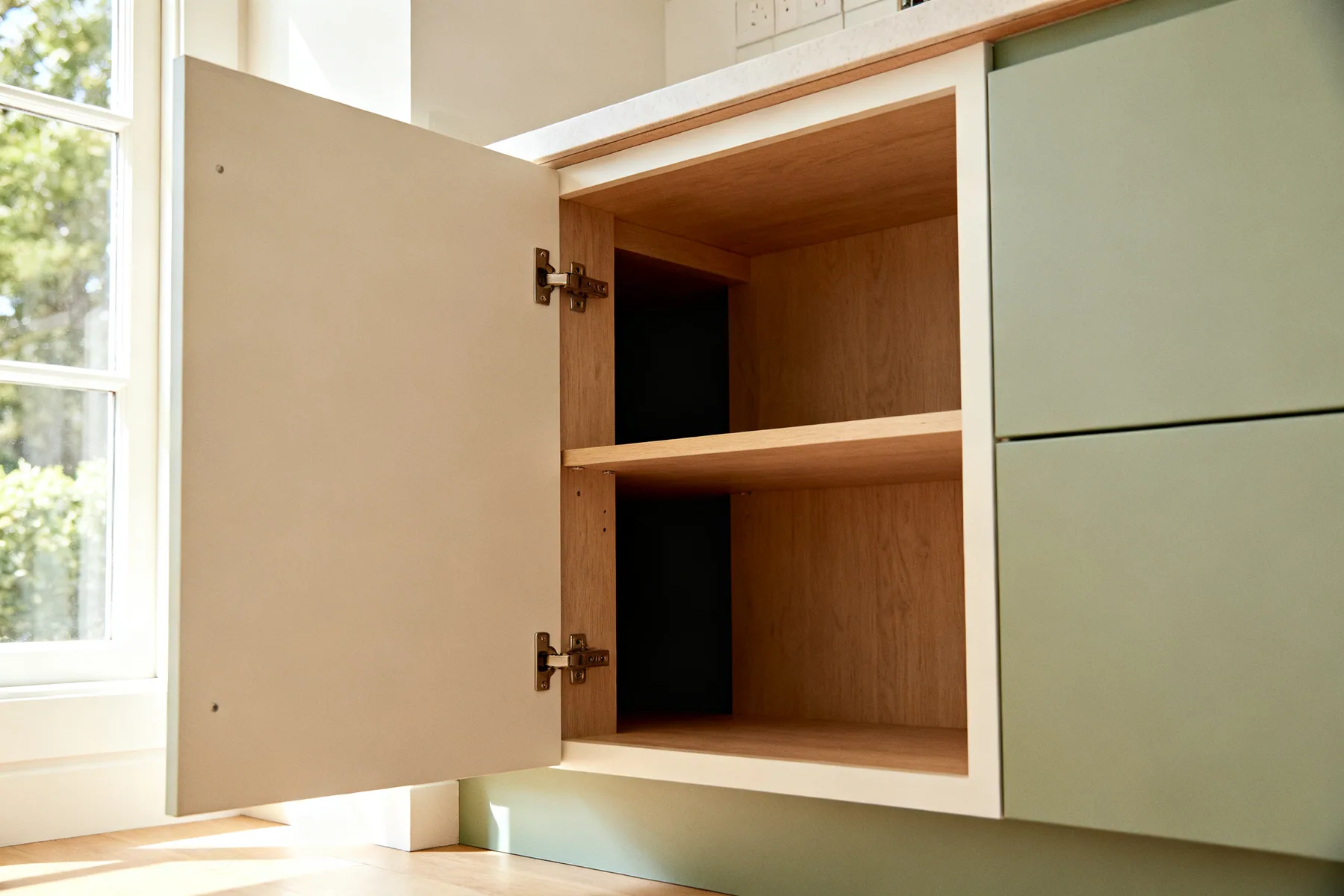
There is a version of home storage advice that is really interior decoration. Matching baskets, labelled jars, a colour-coordinated pantry. It photographs well. It does not necessarily store more.
These nine mistakes are the ones that cost actual capacity. Most homes make at least four of them, and fixing them typically recovers more space than buying another cupboard.
The nine mistakes
Using deep fixed shelves
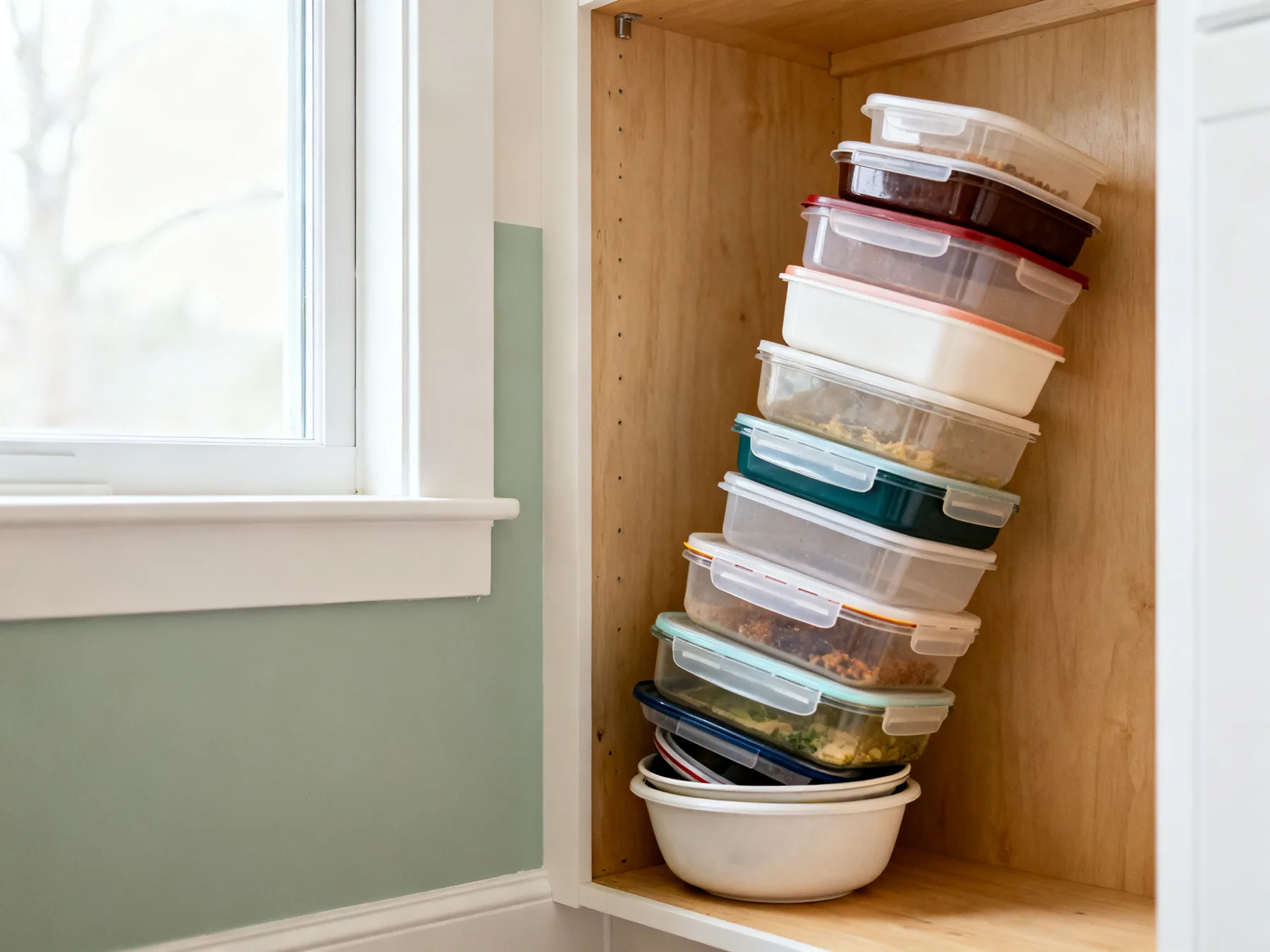
A 600mm-deep shelf has about 300mm of usable depth, because nothing behind the front row is visible or reachable. Every deep cabinet in a home is quietly operating at half capacity. Pull-outs, drawers and tiered risers are the fix, and they are retrofit jobs rather than renovations.
Stacking anything you use regularly
A stack is a queue where only the top item is available. Three pans stacked means one pan in practice. Vertical division. Pans on edge, lids in a rack, trays in slots. Turns the whole stack into a set you can actually use.
Buying containers before sorting
You cannot specify a container for an unmeasured volume. Almost everyone who buys storage boxes first ends up with boxes that are the wrong size, and then stores the boxes. Sort, measure, then buy.
Storing by category instead of by frequency
Grouping strictly by category is why the fondue set sits at eye level and the everyday plates live on a top shelf. The prime zone between hip and eye height should hold only what you touch daily, whatever category it belongs to.
Ignoring everything above 1.5m
In most rooms the wall band above head height is completely empty, and it is the cheapest storage in the house. A single high shelf per room, or taking a wardrobe to the ceiling, adds real capacity with no floor cost.
Choosing opaque containers with no labels
An unlabelled opaque box is a decision deferred indefinitely. You will not open it to check, so you will buy another one of whatever is inside. Clear boxes or labelled sides. On the side, not the lid.
Filling storage to capacity
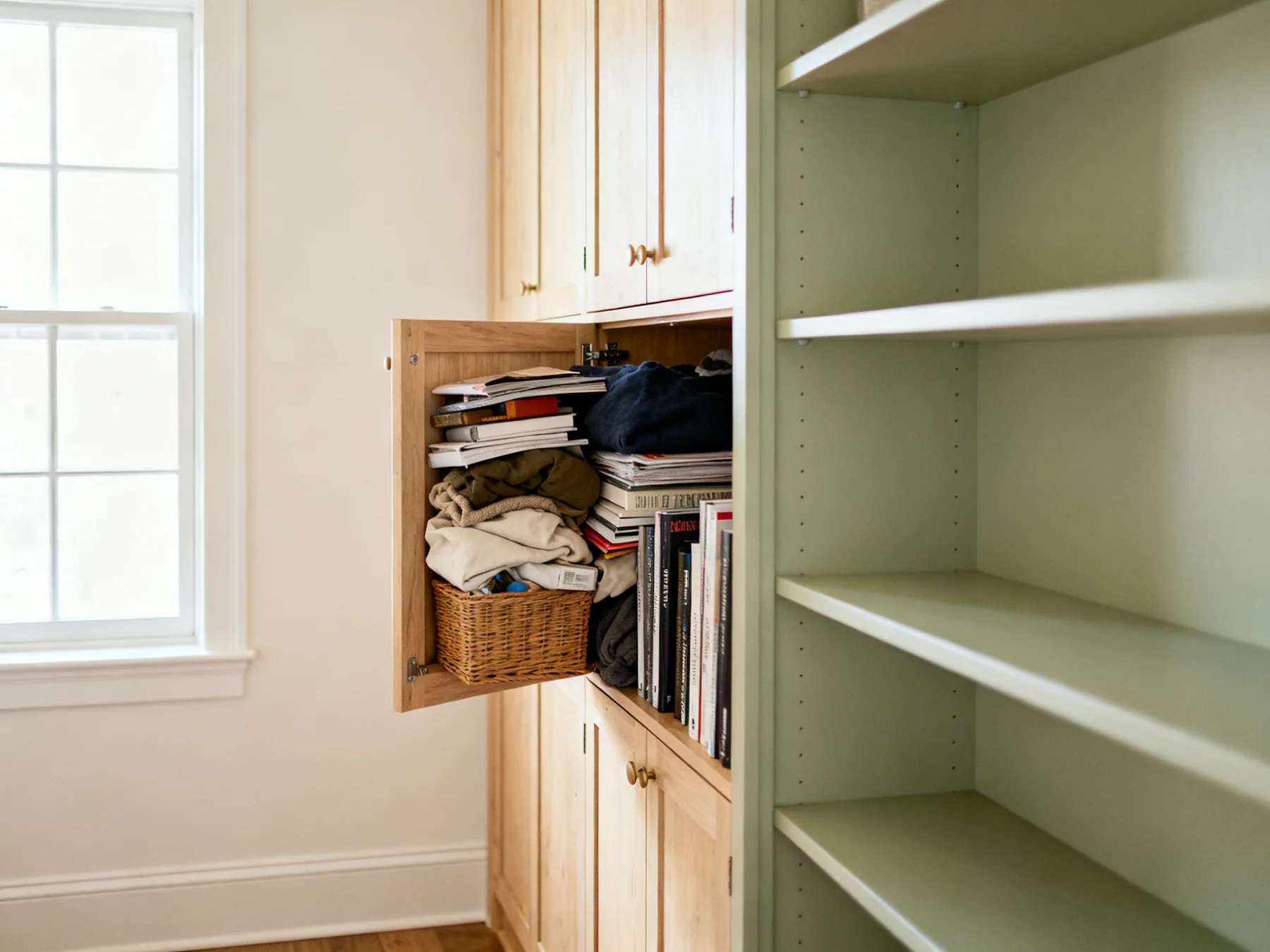
A cupboard packed to the door cannot be used, because retrieving anything requires unpacking. Aim for around 80% full. The empty fifth is what makes the other four fifths accessible.
Leaving no home for the awkward essentials
The ironing board, the vacuum, the recycling and the spare bulbs are rarely assigned a location, so they migrate. Every awkward item needs one defined home chosen for where it is used, or it will live behind a door forever.
Solving a volume problem with organization
The hardest one to accept. If every container is full and the cupboards will not close, the house is being asked to hold more than it can, and rearranging it is treating a symptom. At that point the options are reducing volume, adding capacity structurally, or moving low-frequency items off site.
What to fix first
If you only do one thing, convert your deepest cabinet. The kitchen base unit or the hallway cupboard, from fixed shelves to pull-outs. It is the highest-yield change available and it requires no building work.
If you do two, add a second hanging rail to your wardrobe. Shirts and folded trousers need about a metre of drop, so most wardrobes have a metre of unused air under the clothes.
- Convert the deepest cabinet to pull-outs.
- Add a second wardrobe rail.
- Put one shelf above head height in each room.
- Divide one drawer properly.
- Give the vacuum and ironing board a defined home.
Frequently asked questions
What is the biggest storage mistake people make?
Using deep fixed shelves. A 600mm-deep shelf has only about 300mm of usable depth because you cannot see or reach the back, so every deep cabinet in the house runs at roughly half capacity. Converting to pull-outs or drawers recovers that space without any building work.
How full should a cupboard be?
About 80%. A cupboard packed to the door cannot be used without unpacking it, so the last fifth of capacity actively costs you access to the rest. Leaving deliberate slack is what keeps storage usable rather than merely full.
Should I buy storage containers before or after decluttering?
After, always. Until things are sorted you do not know the volume of each category, so any container you buy is a guess, and the common outcome is a set of boxes that do not fit what you own, which then need storing themselves.