Clothes & Personal Items
Bag storage ideas that keep handbags in shape
Bags are the one thing in a wardrobe where storage decides whether the item survives. Most bag damage I see was done by how it was put away.
Bags are unusual in a wardrobe. A jumper stored badly is creased and a five-minute problem. A structured leather bag stored badly is permanently misshapen, and there is no fixing it once the leather has set into the wrong form.
Which means bag storage is not really a tidiness question. Three things do nearly all the damage I come across, and none of them look like damage while they are happening: bags stacked so they crush each other, bags hung by the strap until the handle distorts, and bags sealed in plastic covers so the leather cannot breathe.
The good news is that all three are easy to avoid, and the solutions cost very little. Get those right and the rest of it is just deciding what you reach for daily.
Upright, separated, and never stacked
The default way bags get stored is in a pile on a wardrobe shelf, and it fails in two ways at once. The bags underneath are crushed flat by the ones on top, and you can only see the top one, so in practice you use the top one and forget the rest.
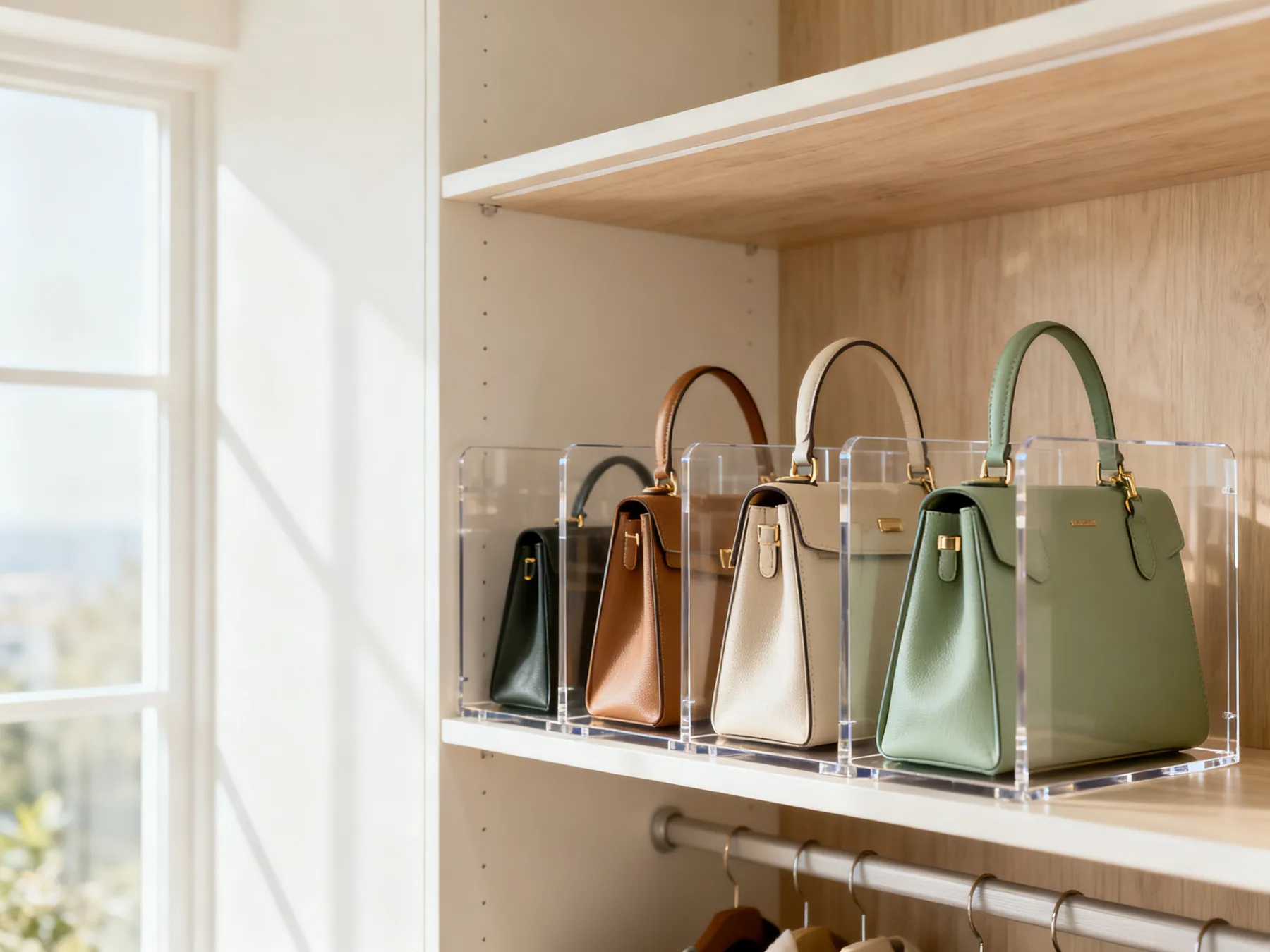
Standing them upright in their own slots fixes both problems with the same move. Everything holds its shape because nothing is bearing weight, and you can see the whole collection from the front without moving a single bag.
Use shelf dividers to make slots
Clear acrylic dividers turn one wide shelf into a row of upright slots. This is the change I would make first. It costs very little, needs no tools, and it is the difference between a collection you can see and a pile you excavate.
The single best fix for handbags
Stand them spine down, opening up
A bag standing on its base with the opening upward holds its intended shape, because that is the orientation it was built to sit in. Laid on its side it slowly settles into a different form, and stiffer leathers keep that form.
Give the biggest bags the ends of the shelf
Sorting roughly by size means the large totes are not leaning against small structured bags and pressing them out of shape. It also just makes the shelf readable at a glance.
Use magazine files or open boxes if you have no dividers
Upright magazine files or shallow open-fronted boxes do exactly the same job as purpose-made dividers. I have used both and the bags cannot tell the difference.
Keep clutches and small bags in a shallow drawer
Small bags disappear on a shelf between larger ones. A shallow drawer or a divided tray, laid flat in a single layer, keeps them visible and stops them being crushed between their bigger neighbours.
Stuffing, and the thing not to stuff them with
A structured bag empty on a shelf will slowly slump, and once leather has creased across the front panel that crease is permanent. Filling it out so it holds its form is the difference between a bag lasting a decade and a bag looking tired in two years.
The mistake I want to head off is what people reach for. Newspaper is the obvious free option, and printing ink transfers into a pale lining, at which point you have traded a shape problem for a staining problem.
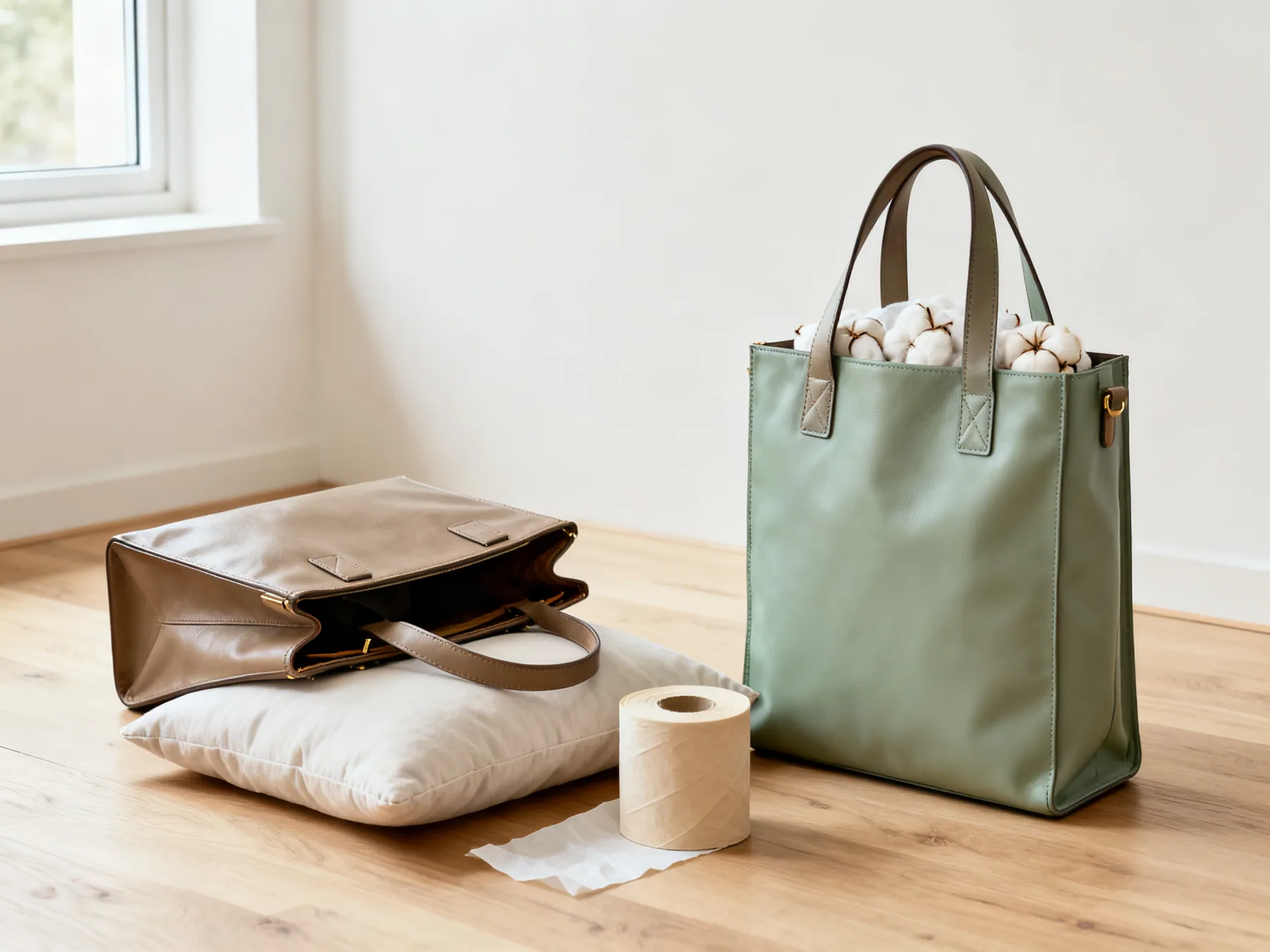
Use acid-free tissue or a cotton insert
Acid-free tissue is cheap and does the job properly. A soft cotton pillow insert is even better for a bag you care about, because it holds a consistent shape rather than settling. Both are inert, which is the whole point.
Never newspaper. Ink transfers into a lining
Fill it out, do not pack it tight
The aim is to support the shape, not to stretch it. Overstuffing pushes the panels and the seams outward and can distort the bag as surely as leaving it empty. It should feel like the bag does when you are carrying a normal amount in it.
Support the handles too
On a bag with structured top handles, a small roll of tissue under each handle stops them flopping sideways and creasing at the base. It is a small thing that shows up clearly after a couple of years.
Empty it completely first
A pen left in a lining leaks eventually, and coins and keys press marks into the base from the inside. I always turn a bag out fully before it goes away, and it is worth checking every internal pocket rather than the obvious one.
When to hang a bag, and when not to
Hanging bags is space-efficient and it is genuinely right for some of them, but it is wrong for others in a way that causes real damage, so this is worth getting straight.
The variable is weight and structure. An unstructured fabric tote weighs almost nothing and has no shape to lose, so hanging it by the strap is completely fine. A heavy structured leather bag hung by one strap is being asked to hold its entire weight through the handle attachment for months, and that is how straps stretch and handle bases crack.
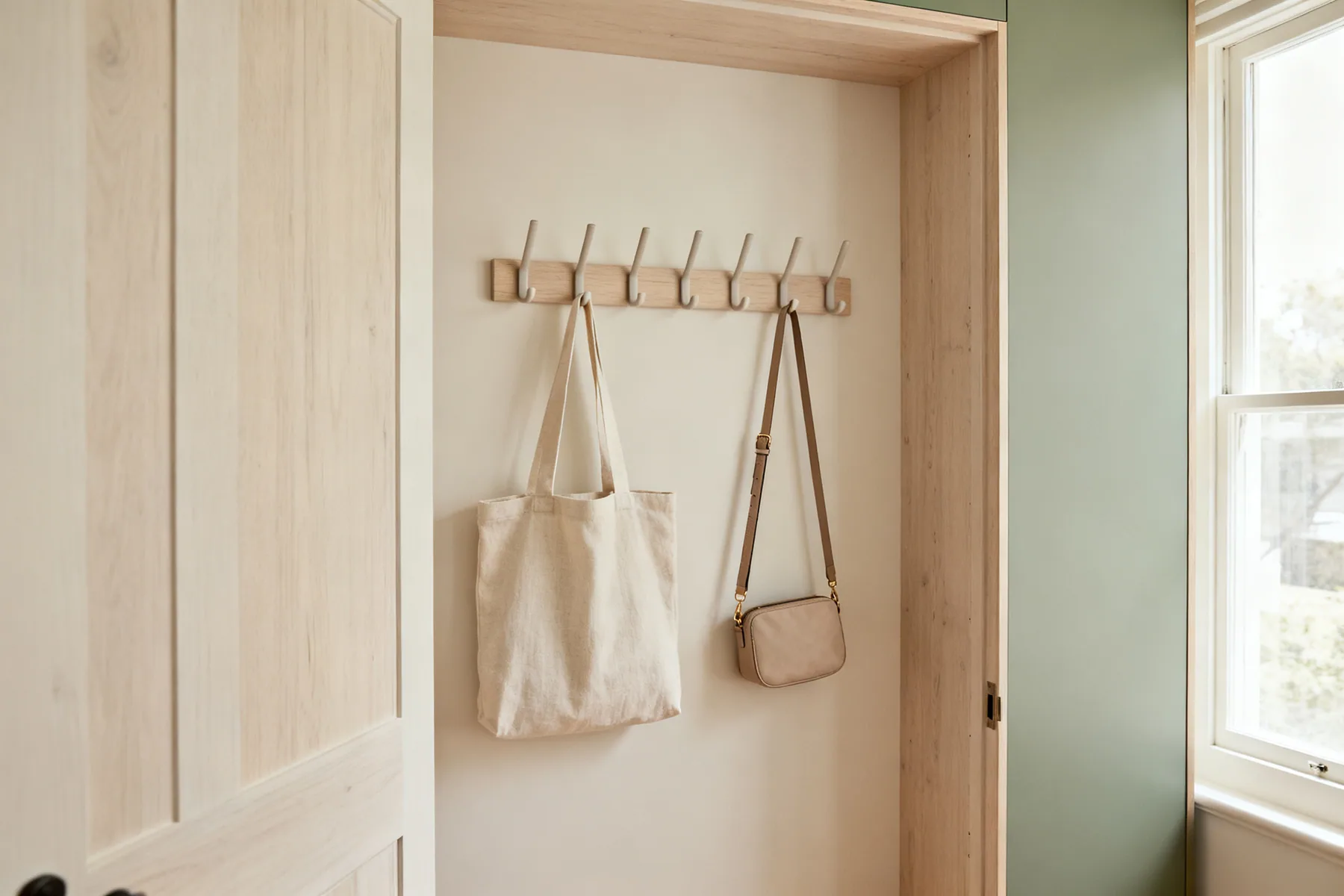
Hang soft totes and canvas bags on hooks
Slim hooks on the inside of a wardrobe door or along a side wall hold fabric totes flat against the surface, taking almost no depth. Good use of a surface that was doing nothing.
Do not hang heavy structured bags by the strap
Over months the strap stretches and the hardware attachment takes strain it was not designed to hold continuously. Those bags belong upright on a shelf. If a bag is heavy enough that you notice the weight when you pick it up, put it on a shelf.
Distorted handles cannot be fixed
Use wide hooks rather than thin ones
A narrow hook concentrates the load into one point of the strap and leaves a mark there. A wider hook or a padded one spreads it out. Same principle as a coat hanger, and it matters for the same reason.
Consider an over-door organiser for everyday bags
A hanging organiser with open pockets on the back of a wardrobe door suits the soft bags you use often. It keeps them visible and off the shelf, which frees the shelf for the structured ones that need it.
Dust bags, long-term storage and luggage
For anything stored for a season or longer, the environment starts to matter more than the arrangement. This is where I see the most avoidable damage, and it usually comes from good intentions. Someone wanted to protect a bag, so they sealed it in the plastic cover it came in.
Leather needs to breathe. Sealed plastic holds moisture against the surface, and in a warm cupboard that is exactly how mould gets started on something expensive.
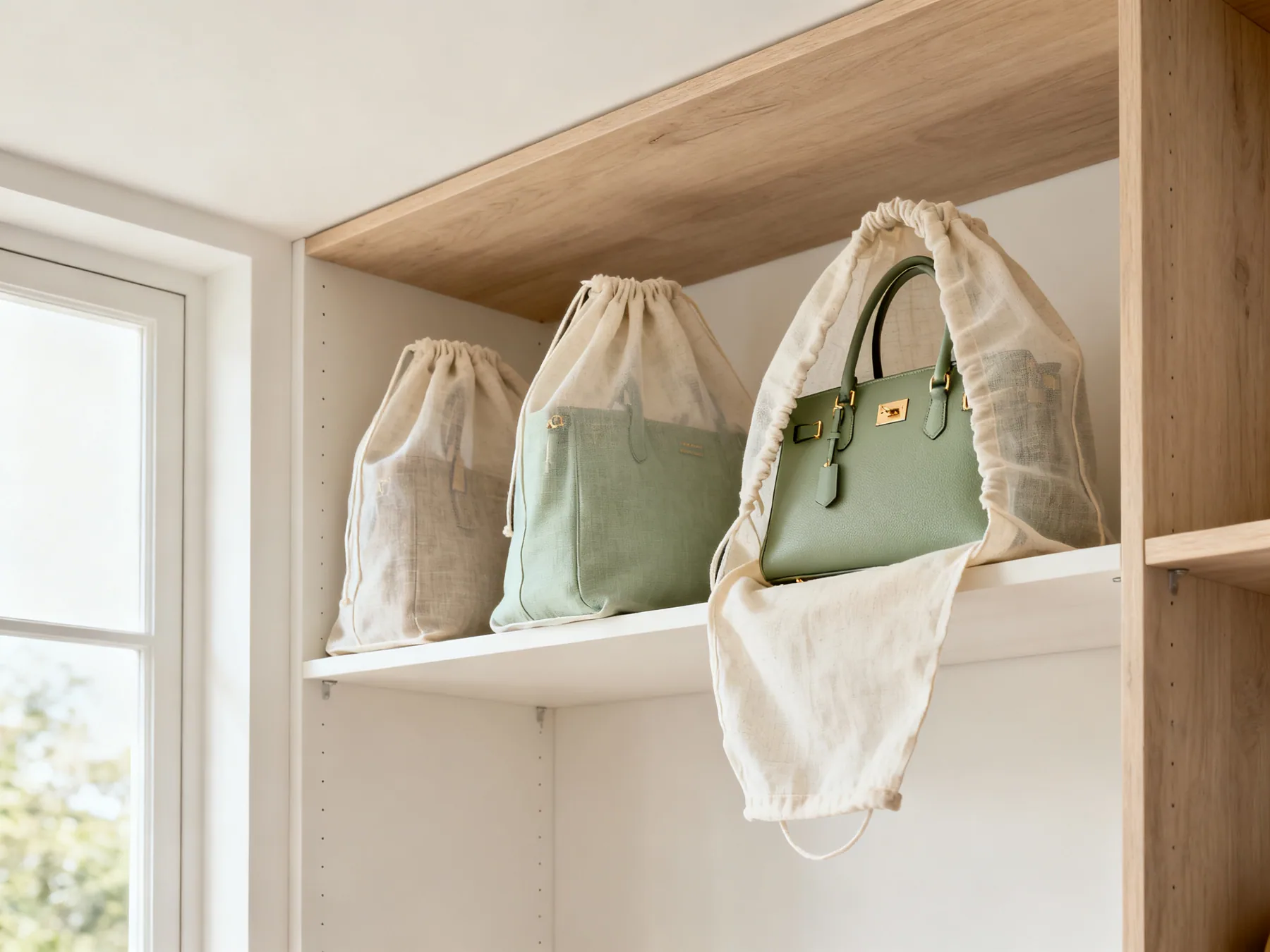
- Use breathable cotton dust bags. Never plastic, and never the plastic cover it was shipped in.
- Store away from direct sunlight. Leather and dyed fabric both fade, and it happens faster than you expect.
- Keep bags off the floor and out of lofts and cellars, where damp and temperature swings are worst.
- Label dust bags on the outside, or you will open all six looking for one bag.
- Nest smaller luggage inside larger cases, but put a cotton sheet between them so zips do not mark linings.
- Leave suitcases slightly open rather than zipped shut, so the inside can air.
- Check stored bags once or twice a year. Problems caught early are usually still fixable.
- Keep leather conditioner off anything going straight into storage. Apply it when the bag comes back out.
The bag you actually use every day
Everything above is about the collection. The bag you carry daily is a different problem and it needs to sit outside the system entirely.
If the everyday bag has to go back onto a divided shelf inside a wardrobe each evening, it will not. It will end up on the floor by the door, on a chair, or on the kitchen counter. That is not carelessness, it is a system asking for more effort than the moment allows.
So give it one hook of its own, somewhere on the route you actually walk when you come in. One hook, one bag, nothing else on it. That single fixing prevents more mess than any organiser I could recommend.
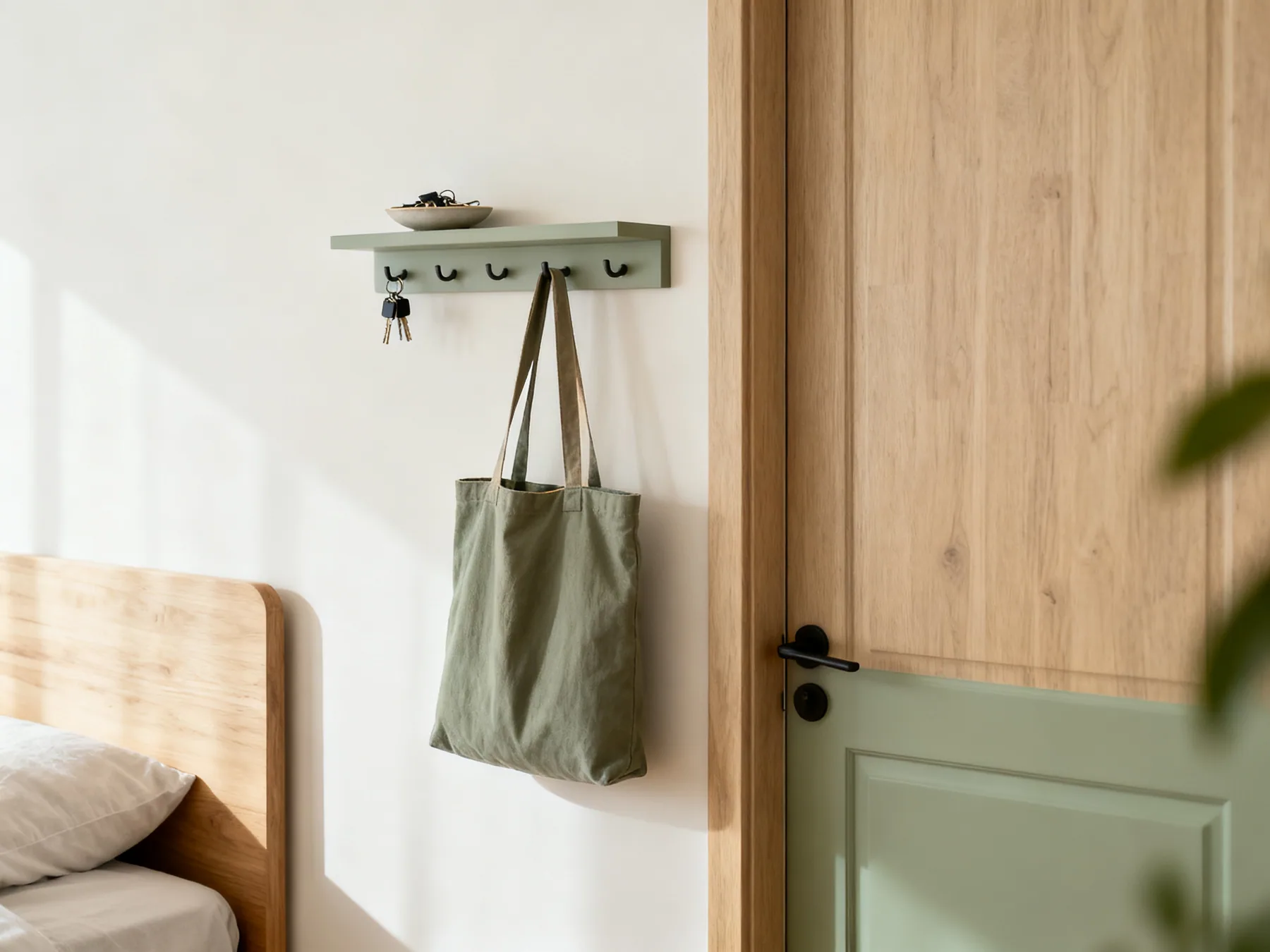
One hook at shoulder height on the route in
Not inside the wardrobe, and not in another room. Somewhere you pass anyway, at a height where you can hang the bag without looking. If it takes a detour it will not be used.
Add a small shelf or dish above it
Keys, cards and whatever comes out of the bag need somewhere immediate too, or they end up in the bag permanently and you cannot find them. A dish on a small shelf above the hook closes that loop.
Swap bags on a rhythm you can keep
If you like rotating bags, keep the current one on the hook and the rest on the shelf, and change it when you want to rather than on a schedule. The system only has to handle one bag being out at a time.
Empty it before it goes back to the shelf
When a bag comes out of daily use, turn it out, wipe the lining and stuff it before it rejoins the collection. Ten minutes now, and it goes away in the condition you want to find it in.
Bag storage ideas that keep handbags in shape: frequently asked questions
How should I store handbags to keep their shape?
Stand them upright on a shelf with dividers between them so nothing leans or bears weight, and stuff each one with acid-free tissue or a soft cotton insert so the panels stay supported. Fill them out rather than packing them tight, because overstuffing distorts the seams just as surely as leaving a bag empty.
Can I hang bags on hooks?
Soft fabric totes and canvas bags, yes. Heavy structured leather bags, no. Hung by one strap for months, the strap stretches and the handle attachment takes continuous strain it was not designed for, and a distorted handle cannot be repaired. If you notice the weight when you pick a bag up, it belongs on a shelf.
Should I keep bags in their dust bags?
Yes, as long as the dust bag is breathable cotton. What you must not do is store a leather bag in a plastic cover, including the one it was shipped in. Plastic traps moisture against the leather, and in a warm cupboard that is how mould starts on an expensive bag.
What should I stuff a handbag with?
Acid-free tissue paper or a soft cotton pillow insert. Do not use newspaper, which is the thing most people reach for, because printing ink transfers into a pale lining and then you have a staining problem instead of a shape problem. Put a small roll under structured top handles too, so they do not crease at the base.
Where should I store the bag I use every day?
On one hook of its own, at shoulder height, somewhere on the route you already walk when you come in. Not on the shelf with the collection. A daily bag that has to be put back into a divided shelf inside a wardrobe ends up on the floor instead, and that is a system problem rather than a habit problem.
How do I store suitcases and luggage?
Nest smaller cases inside larger ones to save space, with a cotton sheet between them so zips and buckles do not mark the linings. Leave them slightly unzipped rather than sealed shut so the inside can air, and keep them out of lofts and cellars where damp and temperature swings do the most damage.