Clothes & Personal Items
Jewelry storage ideas that stop tangling and tarnishing
Almost every jewelry problem is one of two things: pieces touching each other, or silver meeting air. Both are cheap to fix.
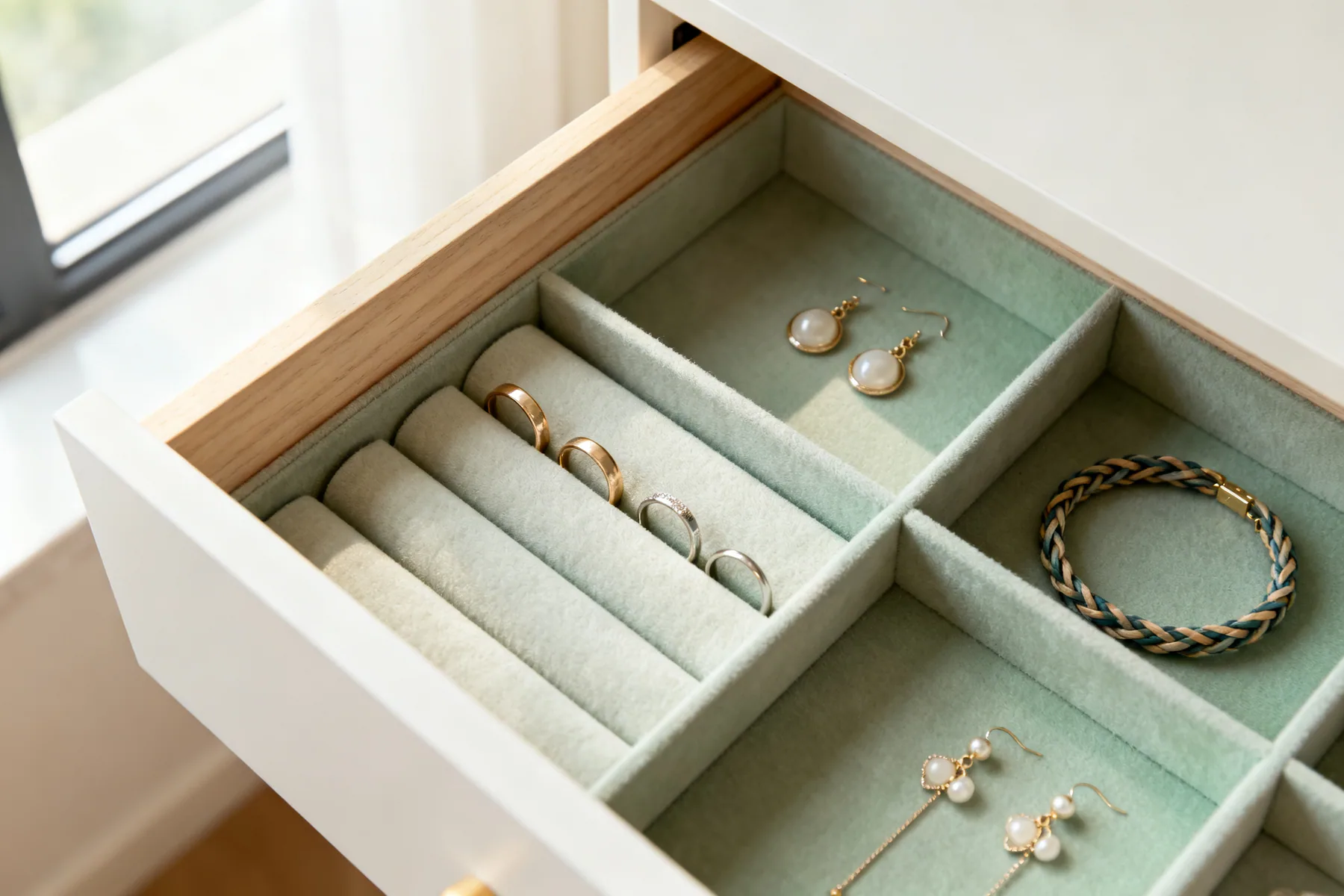
Jewelry is stored badly in a really consistent way: a bowl or a box with everything in it, layered, where chains knot around each other and harder stones scratch softer metal. Then the pieces that are annoying to untangle stop being worn, which is the real cost.
There are only two mechanisms behind nearly every complaint I hear. The first is mechanical, which is pieces touching. Chains knot, stones scratch metal, and anything layered gets crushed. The second is chemical, which is silver reacting with sulphur compounds in air and tarnishing, faster in humidity.
Separate the pieces and limit the air, and you have solved most of it. Everything below is a version of those two ideas.
One layer, divided
This is the rule that does most of the work. A drawer or tray with small compartments, one item per compartment, one layer deep, everything visible from above. Nothing on top of anything else.
It sounds obvious written down, and almost nobody does it, because the default containers sold for jewelry are boxes with volume rather than trays with divisions. Volume invites layering, and layering is what causes both the tangling and the scratching.
A shallow drawer lined with a soft cloth and divided with cheap inserts beats an expensive jewelry box with three deep compartments, every time.
Use a divided tray in a shallow drawer
Velvet or felt-lined inserts sized so each ring, pair of earrings or bracelet has its own slot. If you already have a suitable drawer, this is the cheapest good solution there is and it holds a lot more than a box of the same footprint.
Better than almost any jewelry box
Keep earrings in pairs, in their own compartments
Studs in particular vanish. A compartmented tray with pairs kept together, or a small piece of foam or card with holes punched through, stops the endless business of owning one earring.
Line everything soft
Metal against a hard surface picks up fine scratches over the years. Felt, velvet or even a folded cloth in the base of a drawer prevents it and costs nothing.
Do not stack rings
A ring with a stone will scratch a plain band it is resting against. Ring rolls or a row of narrow slots keep them separated and upright, which also makes them much easier to see.
Avoid the single bowl
A dish on a chest of drawers is a fine landing spot for one or two pieces you are wearing that week. As the main storage for a collection it guarantees tangling and scratching.
Necklaces get hung, not laid down
Chains are the one category where flat storage does not work well however carefully you divide it. A chain has a lot of length and no structure, so any movement lets it fold over itself, and once two chains are in the same space they will find each other.
Hanging solves it completely, because a suspended chain stays straight and cannot migrate. This is the single change that stops the untangling job for good.
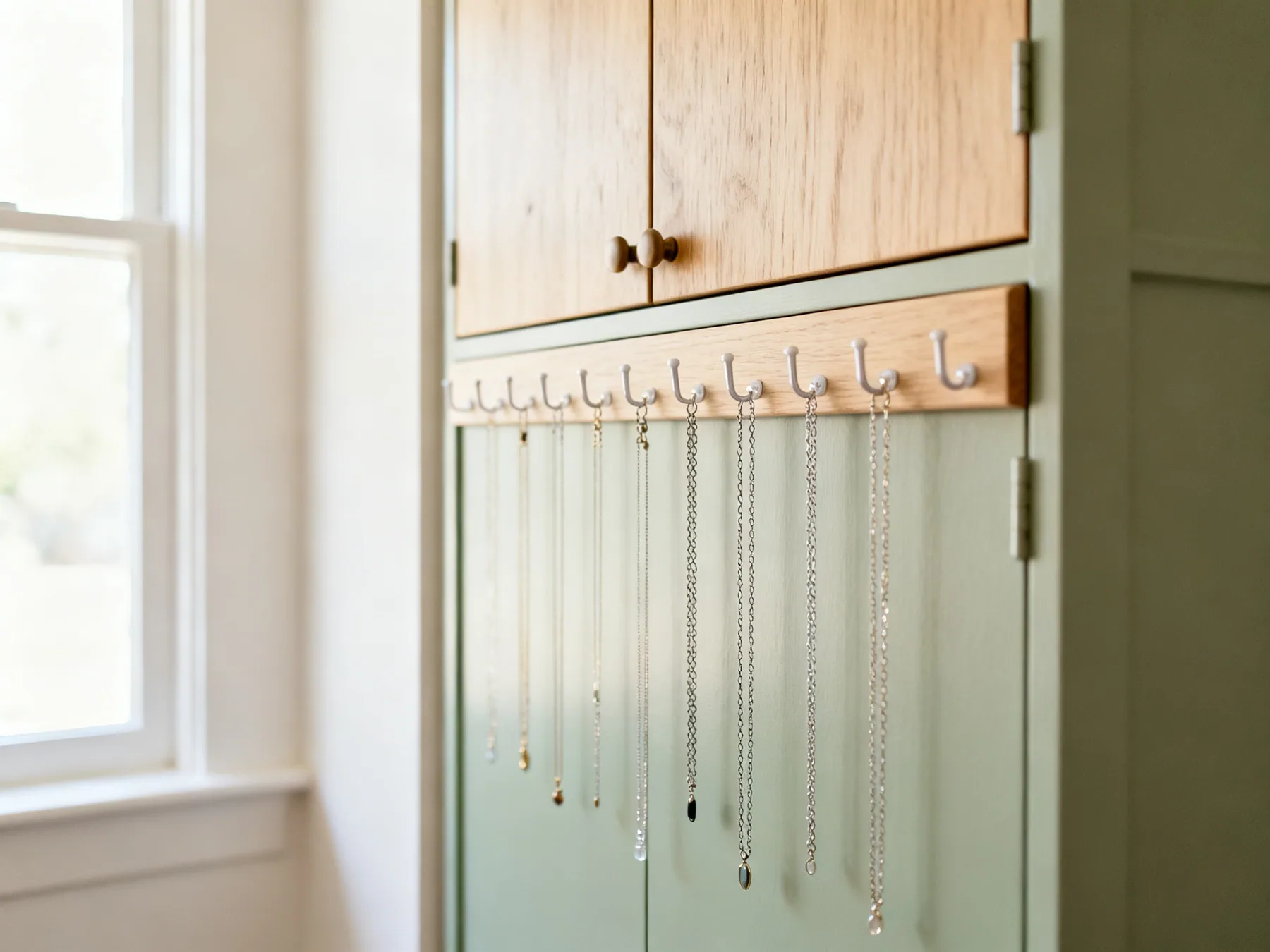
Fit small hooks inside a cabinet or wardrobe door
A row of slim hooks on the inside of a door gives every necklace its own place, keeps them clear of each other, and takes almost no depth. Closing the door keeps light and dust off, which an open wall display does not.
Space the hooks so nothing touches
The point is separation, so spacing matters more than fitting the maximum number on. If two chains can swing into each other when the door moves, they will eventually tangle.
Fasten the clasp before hanging
A fastened chain cannot thread itself through a neighbour or slip off the hook. It takes a second and it is the difference between a system that works and one that mostly works.
Use a hanging organiser for a large collection
A fabric organiser with clear pockets, hung on the wardrobe rail, keeps a lot of pieces separated and visible. Good for costume jewelry in particular, where the quantity is the problem.
Store very fine or valuable chains in individual pouches
For anything delicate I would use a small soft pouch per piece rather than a shared hook. It handles separation and tarnish at the same time.
Tarnish, and where not to keep silver
Silver tarnishes because it reacts with sulphur compounds present in ordinary air. It is not a sign of poor quality and it is not caused by wearing it, which is the opposite of what people often assume. Wearing silver regularly actually keeps it brighter, because handling polishes it.
What accelerates it is air, humidity and certain everyday chemicals. Which leads to the single worst place in a house to keep jewelry, and it is where an enormous number of people keep it: the bathroom.
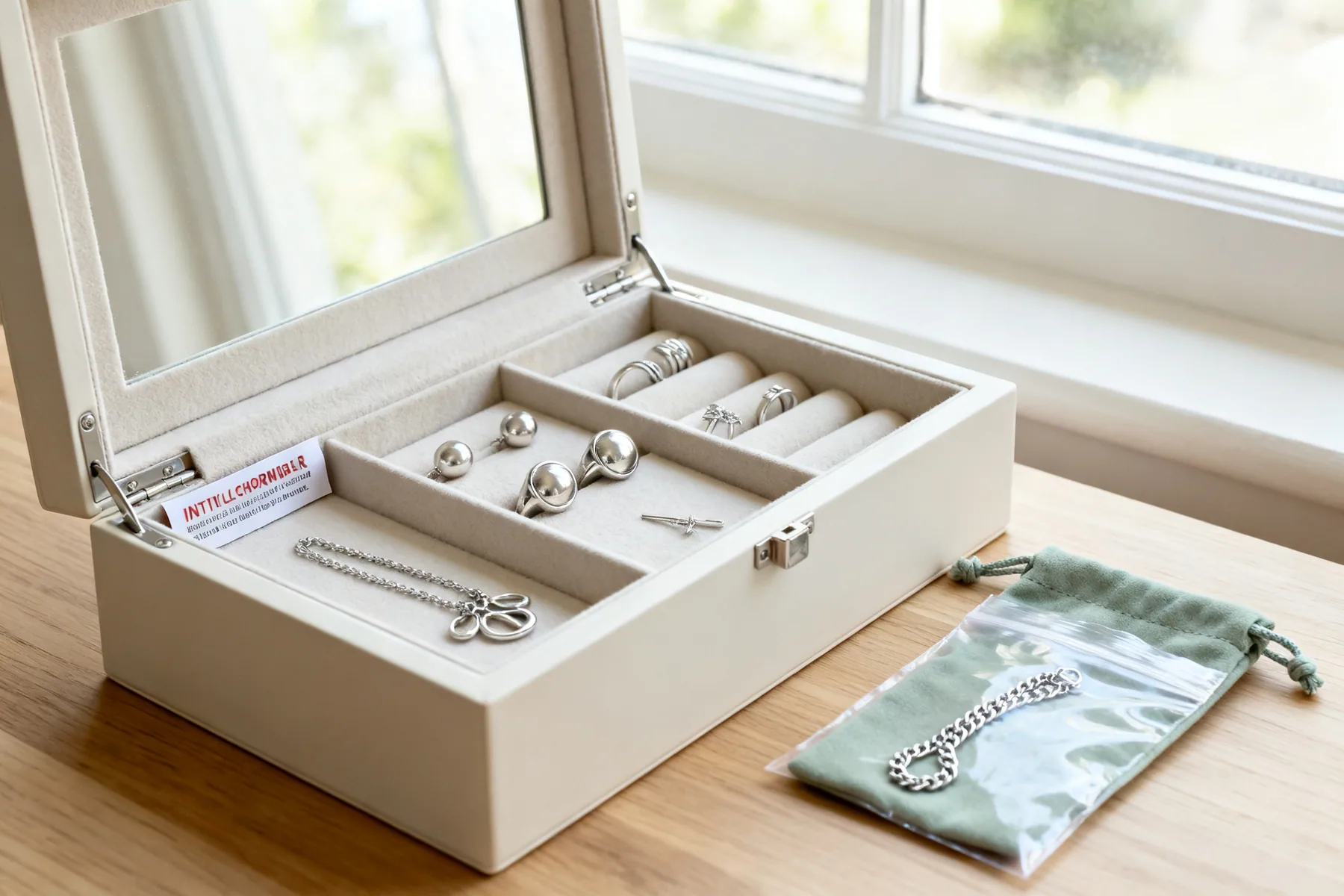
Keep jewelry out of the bathroom
A bathroom is the most humid room in the house and it fills with steam daily. It is the fastest way to tarnish silver and it is not good for pearls, coral or anything strung on silk either. Move the collection to a bedroom drawer.
Humidity is what accelerates tarnish
Use a closed box with anti-tarnish strips
Anti-tarnish strips absorb the sulphur compounds that cause the reaction, and in a closed container they work noticeably well. Replace them roughly every six to twelve months, since they exhaust.
Bag individual silver pieces you rarely wear
A small sealed pouch or zip bag, ideally with a strip inside, is the best protection for a piece you only wear occasionally. Less air means less reaction.
Put jewelry on last and take it off first
Perfume, hairspray, lotion and cleaning products all attack finishes and can dull plating permanently. Getting into the habit of jewelry last, off first, does more for its condition than any storage.
Do not seal pearls or organic materials airtight
Pearls, coral, opals and amber contain water and can dry out and craze in a genuinely airtight environment. Keep those in a soft pouch in a closed box rather than in a sealed bag.
Different rule from silver
The pieces you wear every day
Everything above is about the collection. The two or three pieces you wear constantly are a separate problem, and if you try to make them live in the main system they will not.
They come off at the end of the day when you are tired, often in a different room, and if putting them away means opening a drawer and finding a compartment, they end up on a windowsill or in a pocket. That is where things get lost.
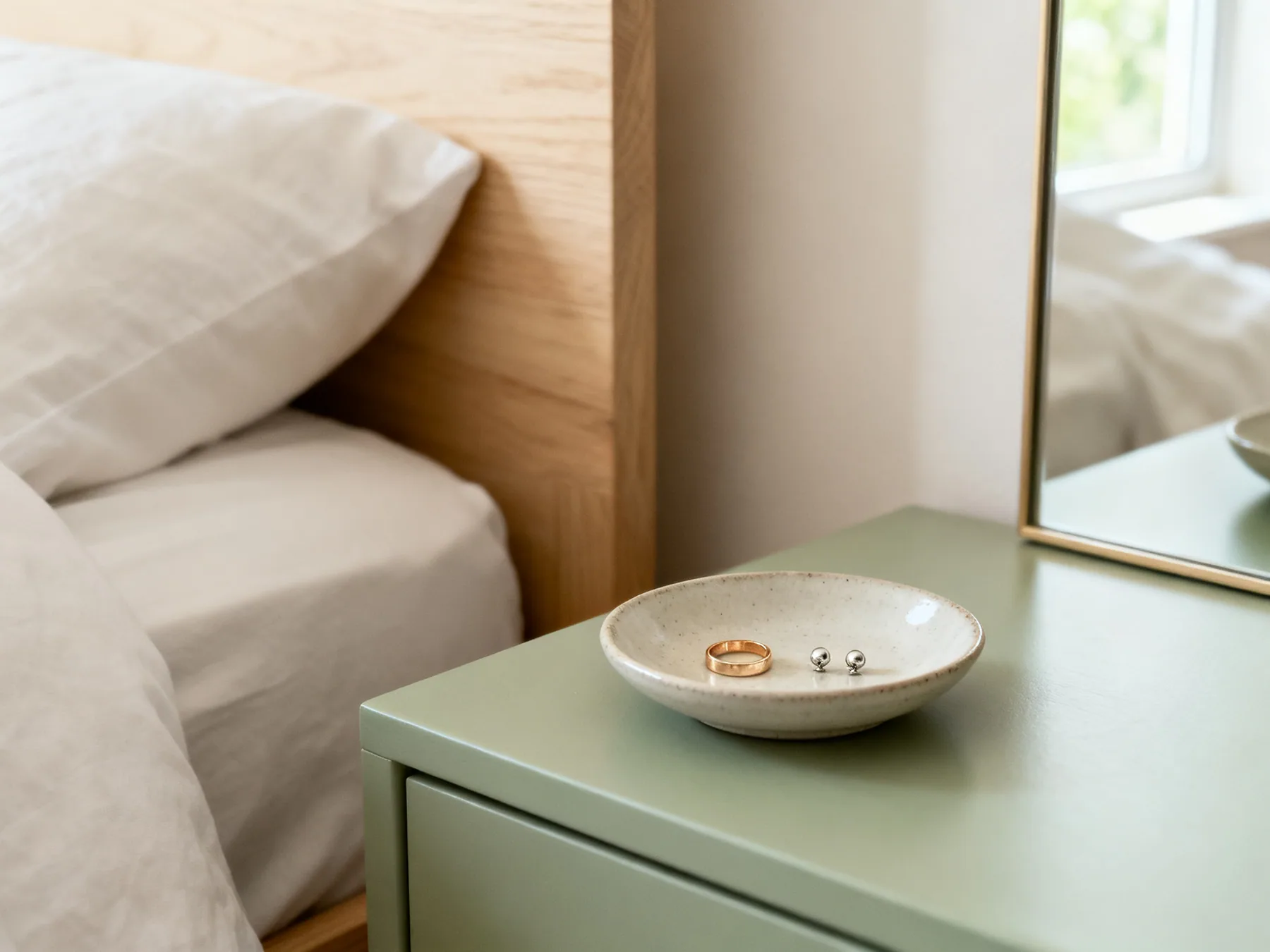
Put a small dish where you actually take them off
Bedside, by the sink in the bedroom, wherever it genuinely happens. One shallow dish, holding only the daily pieces. This prevents more lost jewelry than any organiser.
Keep it to two or three pieces
A dish works because it holds very little. Once five things are in it you are back to a bowl, with the tangling and scratching that comes with one.
Never a dish by a bathroom or kitchen sink
Rings go down drains from exactly there, and it is the humidity problem as well. If you take rings off to wash up, the dish needs to be away from the plughole rather than beside it.
The most common way rings are lost
Return them to the collection when they come out of rotation
When something stops being a daily piece, move it back into the divided tray rather than leaving it in the dish. That is what keeps the dish working.
Travel, and the long-term stuff
Two last cases. Travel is where a lot of damage happens, because a pouch full of loose jewelry in a bag gets shaken for hours. And genuinely valuable or sentimental pieces you rarely wear need thinking about differently, since the risk is loss rather than tangling.
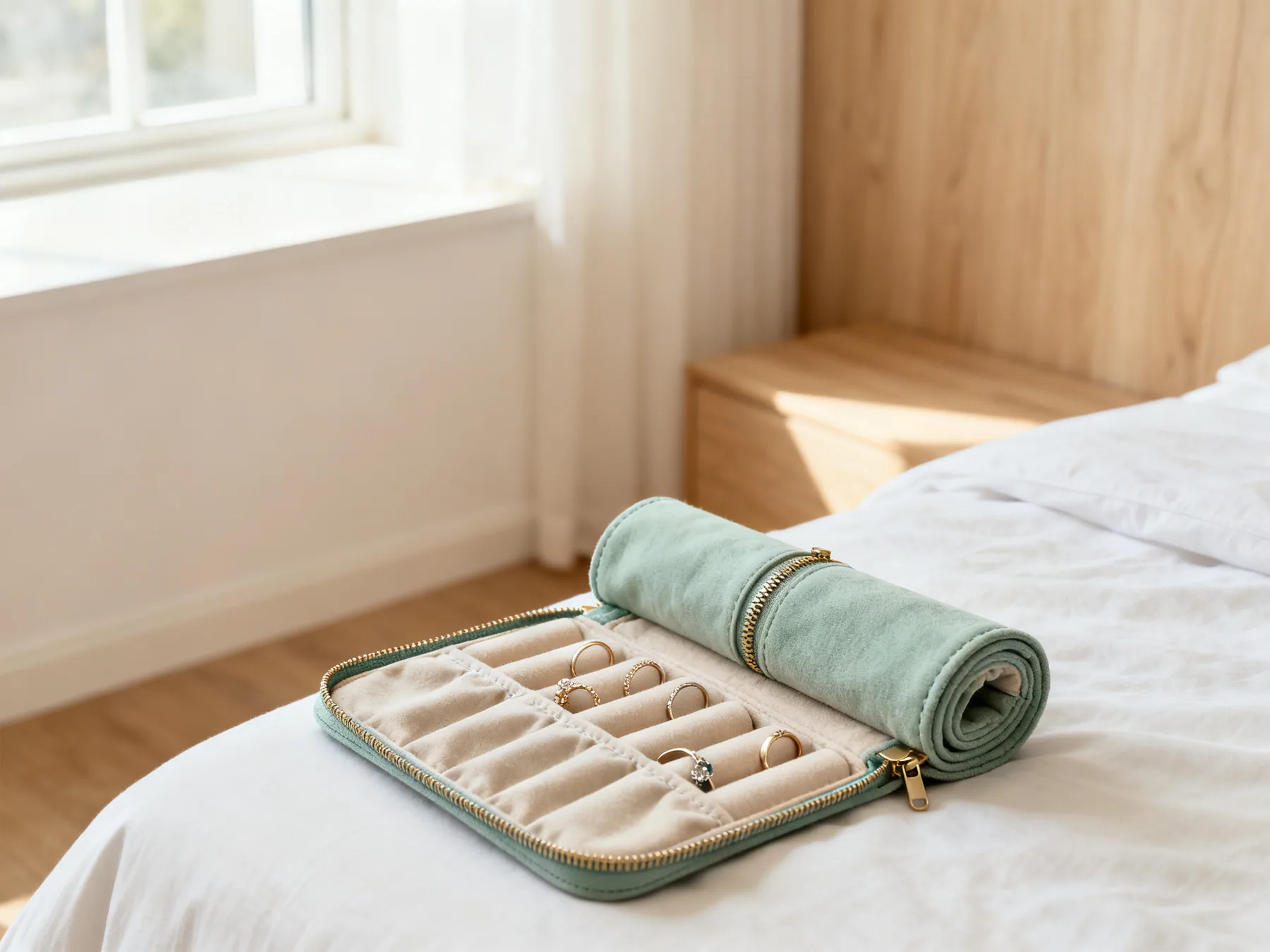
- Use a travel roll with separate zipped pockets and padded ring bars, not a single pouch.
- Thread a chain through a drinking straw or fasten it through a card slot to stop it knotting in transit.
- Keep valuables in your hand luggage rather than checked baggage.
- Take less than you think. Most of what people pack is not worn.
- Store rarely worn valuables somewhere secure, and photograph them for insurance.
- Check the terms of your home insurance. Many policies cap unspecified jewelry quite low.
- Keep certificates and valuations separately from the pieces themselves.
- Re-check clasps and settings on older pieces occasionally, because a worn clasp is how things are lost.
Jewelry storage ideas that stop tangling and tarnishing: frequently asked questions
How do I stop necklaces tangling?
Hang them individually rather than laying them down, with enough space between hooks that nothing can swing into a neighbour, and fasten the clasp before you hang it. A chain has length and no structure, so any movement lets it fold over itself, and two chains sharing a space will always find each other eventually. Hooks inside a wardrobe or cabinet door work well and keep dust off.
What is the best way to store jewelry?
One layer deep in a divided tray, with each piece in its own compartment and a soft lining underneath. The containers usually sold for jewelry are boxes with volume, and volume invites layering, which is what causes both the tangling and the scratching. A shallow drawer with cheap felt inserts genuinely outperforms most jewelry boxes.
Why does my silver jewelry tarnish in storage?
Silver reacts with sulphur compounds in ordinary air, and humidity speeds it up. It is not a sign of poor quality, and wearing silver actually keeps it brighter because handling polishes it. Use a closed box with anti-tarnish strips, replace the strips every six to twelve months, and keep individually bagged anything you rarely wear.
Can I keep jewelry in the bathroom?
I would move it. A bathroom is the most humid room in the house and fills with steam daily, which is the fastest way to tarnish silver and is also bad for pearls, coral and anything strung on silk. A bedroom drawer is a far better home. A dish by a bathroom sink is also how a lot of rings go down drains.
How should I store jewelry for travel?
A roll with separate zipped pockets and padded ring bars, rather than everything loose in one pouch, because a bag gets shaken for hours. Thread fine chains through a drinking straw or fasten them through a slot in a card so they cannot knot. Keep anything valuable in hand luggage rather than checked baggage.
Should pearls be stored differently from silver?
Yes, and this catches people out. Pearls, coral, opals and amber contain water and can dry out and craze in a genuinely airtight container, so the sealed-bag approach that suits silver is wrong for them. Keep those in a soft pouch inside a closed box instead, away from heat and direct sun.