Clothes & Personal Items
Clothes storage ideas that do not wreck the clothes
Storage is where most clothes are damaged, and almost none of it happens while they are being worn.

Most of the clothing damage I get asked about did not happen in the wash and it did not happen in wear. It happened in a cupboard, slowly, over a season, and nobody watched it happen. Stretched shoulders on a favourite jumper. A silk blouse with a permanent crease along the hanger line. A wool coat with two small holes near the hem that were not there in March.
Every one of those has a cause that is easy to avoid once you know it, and none of them are obvious. This article is about those causes rather than about buying containers.
The organising side matters too and I have covered the room itself elsewhere. Here I want to stay on the garments, because the difference between clothes lasting five years and fifteen is mostly decided by how they sat while you were not wearing them.
Hang what creases, fold what stretches
This is the decision that does the most damage when it goes the wrong way, and it goes the wrong way in nearly every wardrobe I open, usually in the same direction. Jumpers on hangers.
A knitted garment has no structure to hold itself up. Hung on a hanger, its entire weight pulls down through the shoulders, and knit stretches. Over a season the shoulders widen and the body lengthens, and it does not come back. Fold knitwear, always.
The reverse is true for anything woven and structured. A shirt or a blazer folded in a drawer creases along the fold and holds that crease, and a jacket in particular loses its shape at the shoulder if it is not hung.
- Hang: shirts, blouses, dresses, blazers, jackets, coats, tailored trousers.
- Fold: jumpers, cardigans, knitted dresses, t-shirts, sweatshirts, jeans, activewear.
- Fold anything beaded or heavily embellished, because the weight will distort it on a hanger.
- Hang trousers from the cuffs on a clip hanger if you have the drop, which keeps the crease out of the leg.
- When in doubt, ask whether the garment holds its own shape. If it does not, fold it.
The hanger is doing more than you think
Hangers are the cheapest thing in a wardrobe and they have a disproportionate effect on what comes out of it. A wire hanger from a dry cleaner concentrates the whole weight of a garment into two thin points at the shoulder, and on anything with structure it leaves a visible dent. On a heavier coat it can crease the shoulder pad permanently.
I would replace every wire hanger in a wardrobe before buying a single storage box, and it is the change people are most surprised by.

Use broad shaped hangers for jackets and coats
A jacket needs a hanger that follows the shoulder line and is roughly as wide as the shoulder itself. Too narrow and the sleeve head collapses inward. This is the one category where a good hanger is genuinely worth the money.
Match the hanger width to the shoulder
Use velvet-flocked hangers for anything slippery
Silk, satin and fine jersey slide off smooth hangers and end up on the wardrobe floor, which is how they get creased and dusty. Flocked hangers grip. They are also slim, so you fit more on the rail.
Throw the wire hangers away
They dent shoulders, they rust in a humid room and mark fabric, and they bend under weight so garments hang crooked. There is no garment they are the right choice for.
Leave a little air between hangers
A rail packed solid creases everything on it and stops air moving, which matters in any room prone to damp. If you cannot slide a hanger along the rail without force, the rail is over capacity and a second tier is the answer.
Do not hang wet or damp clothes in a wardrobe
One damp shirt raises the humidity inside a closed wardrobe enough to affect everything near it, and that is how a whole rail ends up smelling musty. Air things fully outside the wardrobe first.
Folding, and the reason to stand things on edge
Folded clothes fail in a specific and familiar way. They get stacked, so you can see the top item and nothing else, and in practice you wear the top three things repeatedly while the bottom of the pile goes untouched for a year.
Standing folded items on edge, like files in a drawer, fixes that completely. It takes the same space. It is purely a change of orientation and it makes the entire drawer visible at once.
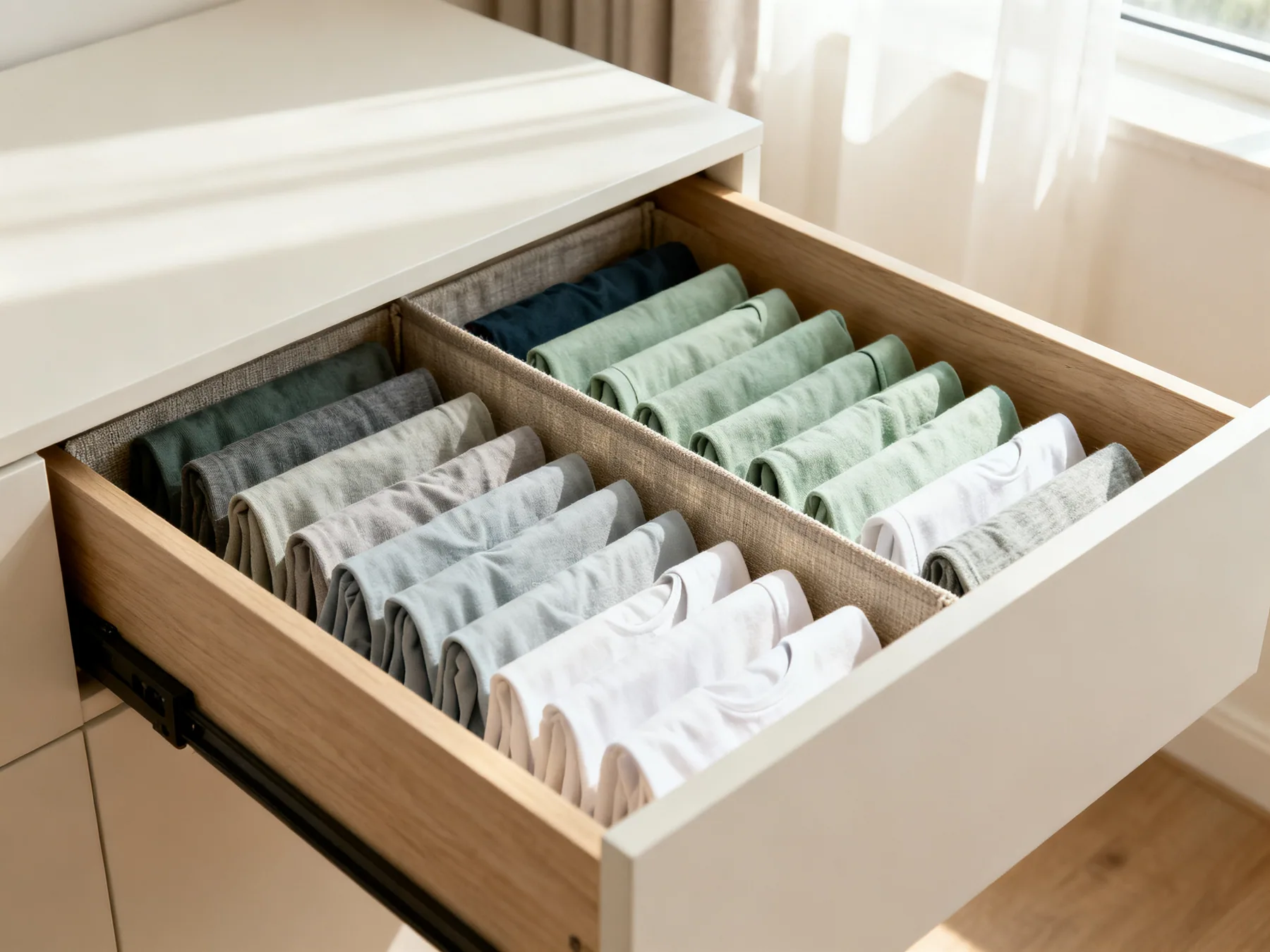
Fold to a consistent width, then stand them up
Pick a width that suits your drawer depth and fold everything to it. Consistency is what lets them stand without leaning. Once they do, you can see every item and pull one out without disturbing its neighbours.
Divide the small-item drawer
Socks and underwear merge into a single mass without compartments. Fabric dividers or small open boxes inside the drawer are genuinely necessary here rather than a refinement.
Roll rather than fold for travel and tight spaces
Rolling creases less than folding for t-shirts and knitwear and packs into odd gaps well. For everyday drawer storage I still prefer folding on edge, because rolls are harder to keep upright and tidy.
Do not fold tailoring
A blazer folded in a drawer will not recover its shoulder line. If there is no hanging space at all, lay it flat on top of everything else rather than folding it into a small volume.
Storing clothes for a season or longer
Long-term storage is where the real damage happens, because the clothes are out of sight for months and whatever is going wrong has time to finish the job. Three things matter: the garments are clean, the container breathes, and the place is dry and dark.
The first one is the one people skip, and it is the most important, so I want to be specific about why. Clothes moths do not eat wool. Their larvae feed on the proteins in sweat, skin oils and food traces, and they are drawn to fabric that carries them. A worn jumper put away unwashed is bait. The same jumper washed and put away is much less interesting to them.
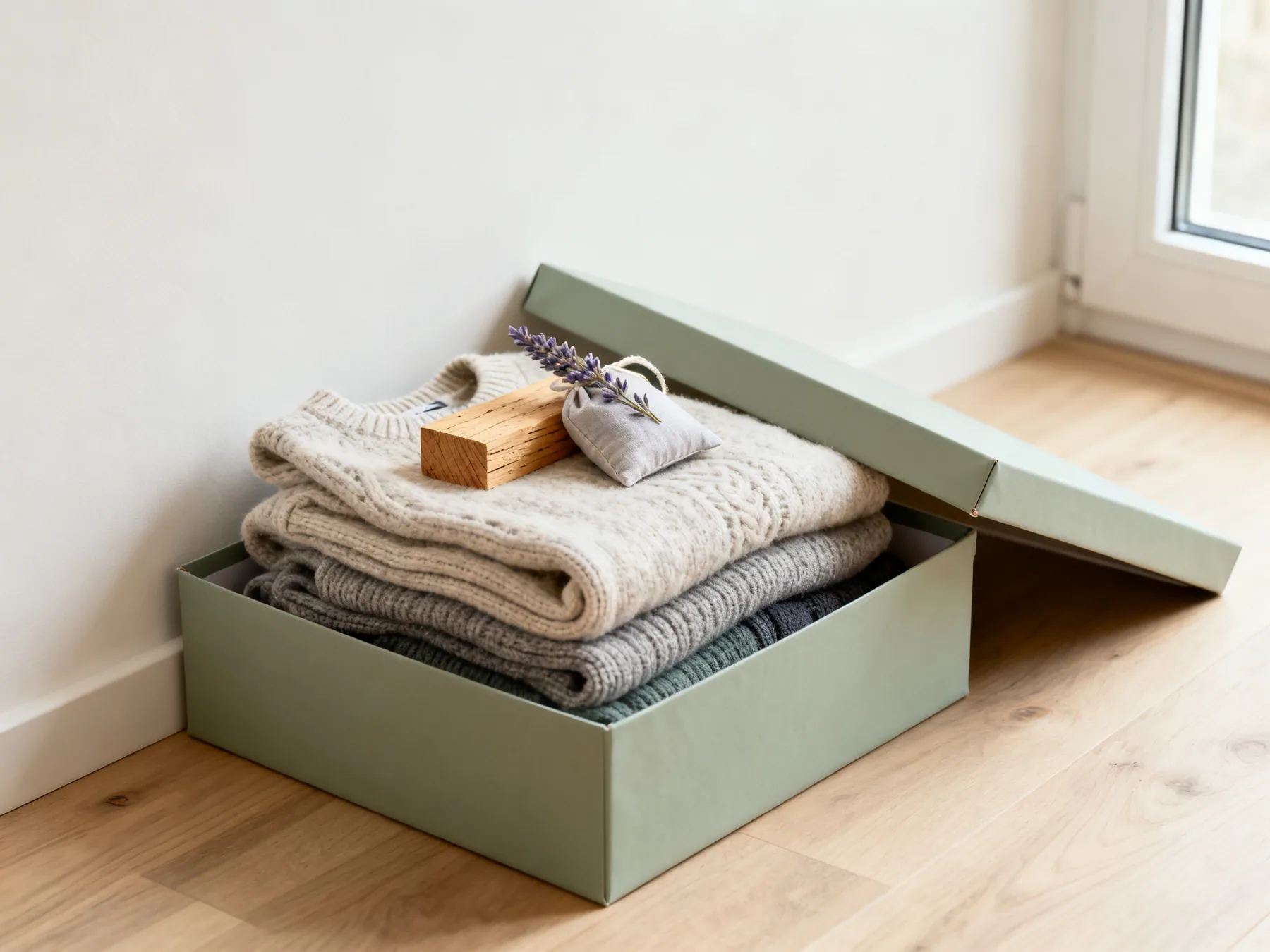
- Wash or dry-clean everything before it goes into storage, including things worn only once.
- Remove dry-cleaning plastic entirely. It traps solvent vapour and moisture against the fibres.
- Use breathable cotton bags or lidded boxes rather than sealed plastic for natural fibres.
- Add cedar blocks or lavender for wool, and refresh cedar by sanding it lightly once a year.
- Store somewhere dark. Light fades dye even through a thin bag, and it happens faster than you expect.
- Avoid lofts, cellars and garages. Temperature swings and damp do more damage than the storage saves.
- Check stored wool once mid-season. Moth damage caught early is confined to one garment.
Vacuum bags, and when they are the wrong answer
Vacuum compression bags are genuinely useful and they are also the thing I most often see used on exactly the garments they should not be used on.
They work by removing the air, and air is the entire reason wool, cashmere and down have any warmth or loft. Crush a down duvet or a cashmere jumper for a year and you get it back thinner, because the fibres have taken a set. Synthetic filling recovers reasonably well from a season. Natural fibre does not recover properly at all.
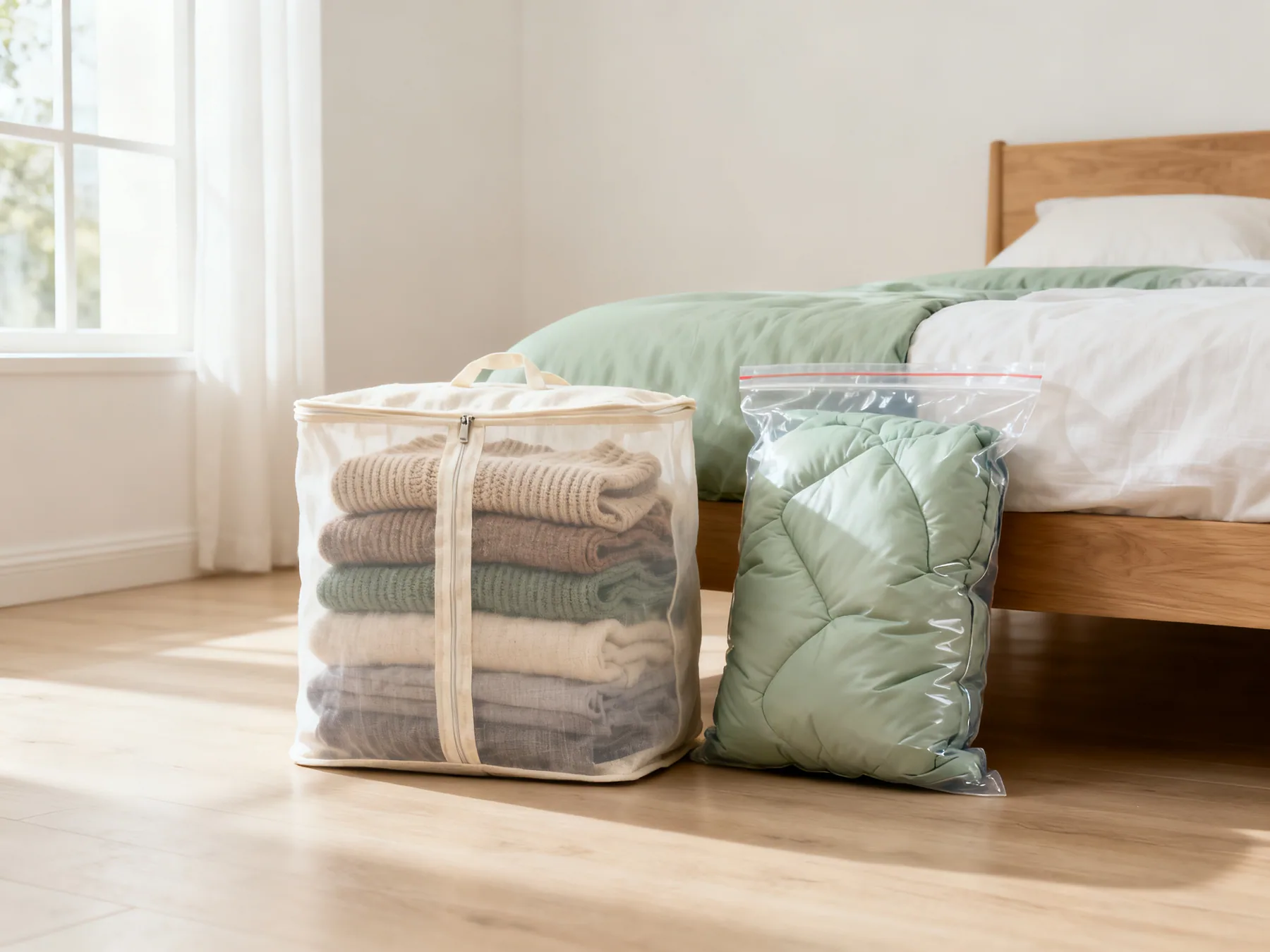
Use them for synthetic bulk
Synthetic duvets, fleece, padded coats with synthetic fill, spare pillows. These are the things vacuum bags are for, and the space saving is dramatic and largely harmless over a single season.
Keep wool, cashmere and down out of them
These need air in the fibre to work at all, and compression flattens them semi-permanently. Store them folded in a breathable bag or box instead and accept that they take more room.
Compression permanently reduces loft
Do not leave anything compressed for years
Even where compression is appropriate, I would open the bags and let things re-loft annually. A season is fine. Three years in a vacuum bag is how a good duvet becomes a thin one.
Check the bag actually holds a seal
A bag that slowly refills is worse than no bag, because you get the compression damage and none of the space saving, and a bag half-full of stale air is a good place for mustiness. If it has inflated by the next morning, replace it.
Clothes storage ideas that do not wreck the clothes: frequently asked questions
Should clothes be hung or folded?
Hang anything that creases or holds its own structure, so shirts, dresses, blazers, jackets and tailored trousers. Fold anything knitted or stretchy, so jumpers, cardigans, t-shirts and activewear. Knitwear on a hanger carries its whole weight through the shoulders and stretches out of shape within a season, and it does not recover.
How do I stop moths getting into stored clothes?
Wash everything before you store it. Moth larvae feed on the sweat, skin oils and food traces in worn fabric rather than on the wool itself, so a garment put away unwashed is what attracts them. After that, use breathable cotton bags or lidded boxes, add cedar or lavender, and check stored wool once mid-season so any damage stays confined to one item.
Are vacuum storage bags bad for clothes?
They are fine for synthetic bulk like fleece, padded coats and synthetic duvets, and wrong for wool, cashmere and down. Those fibres rely on trapped air for their warmth and loft, and long compression flattens them semi-permanently. Even where a vacuum bag is appropriate, open it and let the contents re-loft once a year rather than leaving them compressed for years.
Can I store clothes in the dry-cleaning bag?
No, take it off as soon as the clothes come home. That plastic traps residual solvent vapour and moisture against the fibres, and over months it can yellow pale fabrics and leave a persistent chemical smell. Use a breathable cotton garment bag if you want to keep dust off.
What is the best way to fold clothes in a drawer?
Fold everything to a consistent width and stand the items on edge like files rather than stacking them flat. It takes exactly the same space, but you can see every item at once and pull one out without disturbing the rest, so the bottom of the drawer stops being a place clothes disappear into.
Where should I not store clothes?
Lofts, cellars and garages. All three swing widely in temperature and humidity, and damp plus still air is how stored fabric goes musty and how moth damage goes unnoticed for months. If those are the only options, use sealed hard containers rather than fabric bags and check them more often than you think you need to.