Clothes & Personal Items
Hat storage ideas that keep the brim and crown in shape
Nearly everything about storing hats follows from one fact: a hat resting on its brim is being bent by its own weight.

Hats are stored badly more consistently than anything else in a wardrobe, and it is almost always the same mistake made for a sensible reason. A hat is put down the way you wear it, brim down, crown up, because that is the way up a hat looks right. And then it sits there for eight months with its entire weight pressing on the thinnest, most easily deformed part of itself.
Turn it over. That is genuinely most of the advice. On its crown, the weight goes through the strongest part and the brim touches nothing at all.
The rest of it is a short list of distinctions: structured hats behave differently from soft ones, brims crease each other if you nest them dry, and caps are the one type that stacks safely. Once those are clear, hat storage stops being a problem.
Upside down, always
A brim is a thin, wide, unsupported cantilever, which is a shape that will bend given enough time and a small enough force. The weight of the hat itself is enough. Left brim down on a shelf for a season, a felt hat spreads outwards at the edge and a straw hat can develop a wave that never fully comes out.
Sitting on its crown, the load passes down through the strongest part of the structure and the brim floats clear of everything. It looks wrong on a shelf. It is right.
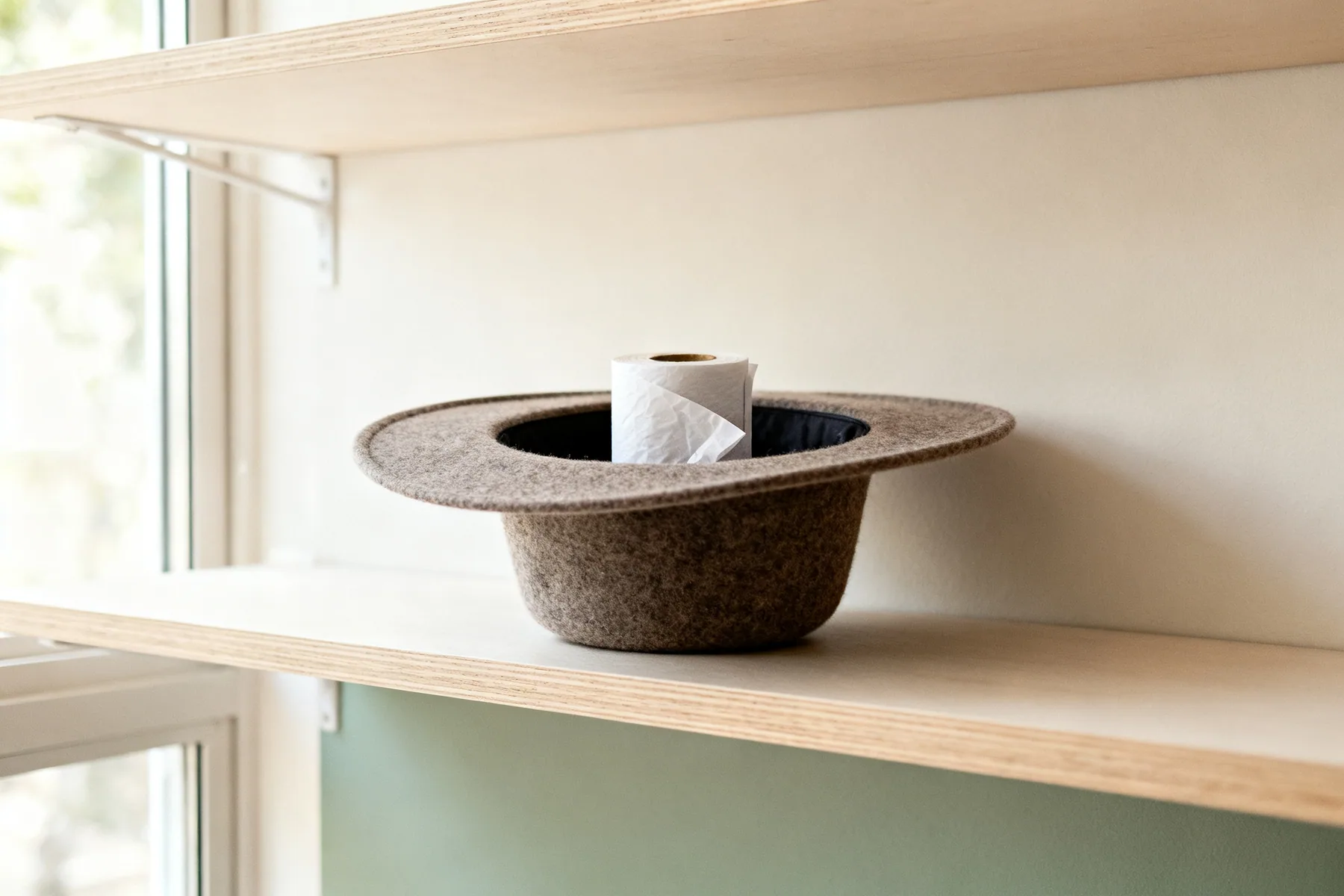
Rest structured hats on the crown
Fedoras, panamas, boaters, wide-brimmed sun hats, anything with a defined shape. Turn it over so the crown takes the weight. Check the brim is genuinely clear of the shelf all the way round rather than touching at the back.
The single most important habit here
Put tissue inside the crown
A crown left empty can collapse inward, especially in soft felt, and a dent in the crown is harder to correct than a bent brim. A loose roll of acid-free tissue inside holds the shape and weighs nothing.
Never use newspaper for this
It is the obvious free option and printing ink transfers into a pale hat lining. Acid-free tissue costs very little and it is the difference between support and a stain.
Give each hat its own footprint
Hats resting against each other push each other out of shape. If the shelf is crowded enough that they lean, you need a second shelf rather than a cleverer arrangement.
Boxes, and when they are worth it
A hat box is not just packaging. For anything you care about, an enclosed container solves dust, light and knocks all at once, and dust is a real problem for hats because a felt surface holds it and does not release it easily.
That said, I would not box a hat you wear weekly. Anything in regular use should be somewhere you can pick it up in one movement, or you will stop wearing it.
Box the hats you wear seasonally
Summer straw over winter, felt over summer. A rigid box on a high shelf keeps light and dust off and stops anything being crushed by whatever else lands on the shelf.
Choose rigid over soft-sided
A soft fabric hat bag protects against dust and nothing else. If something heavy goes on top of it, the hat takes the load. Rigid boxes are the point.
Label the outside
Round hat boxes are indistinguishable from each other on a shelf, and you will open four to find one hat. A label or a photograph on the end solves it.
Do not seal them airtight
Felt and straw both do better with some air movement. A box with a lid is right. A sealed plastic tub in a warm cupboard risks mustiness, and a musty felt hat is difficult to rescue.
Nesting, for when there is no shelf left
Nesting hats inside one another is the biggest space saving available and it is safe if you do one thing. Without it, the brim of the inner hat presses a line into the crown of the outer one and both take a crease.
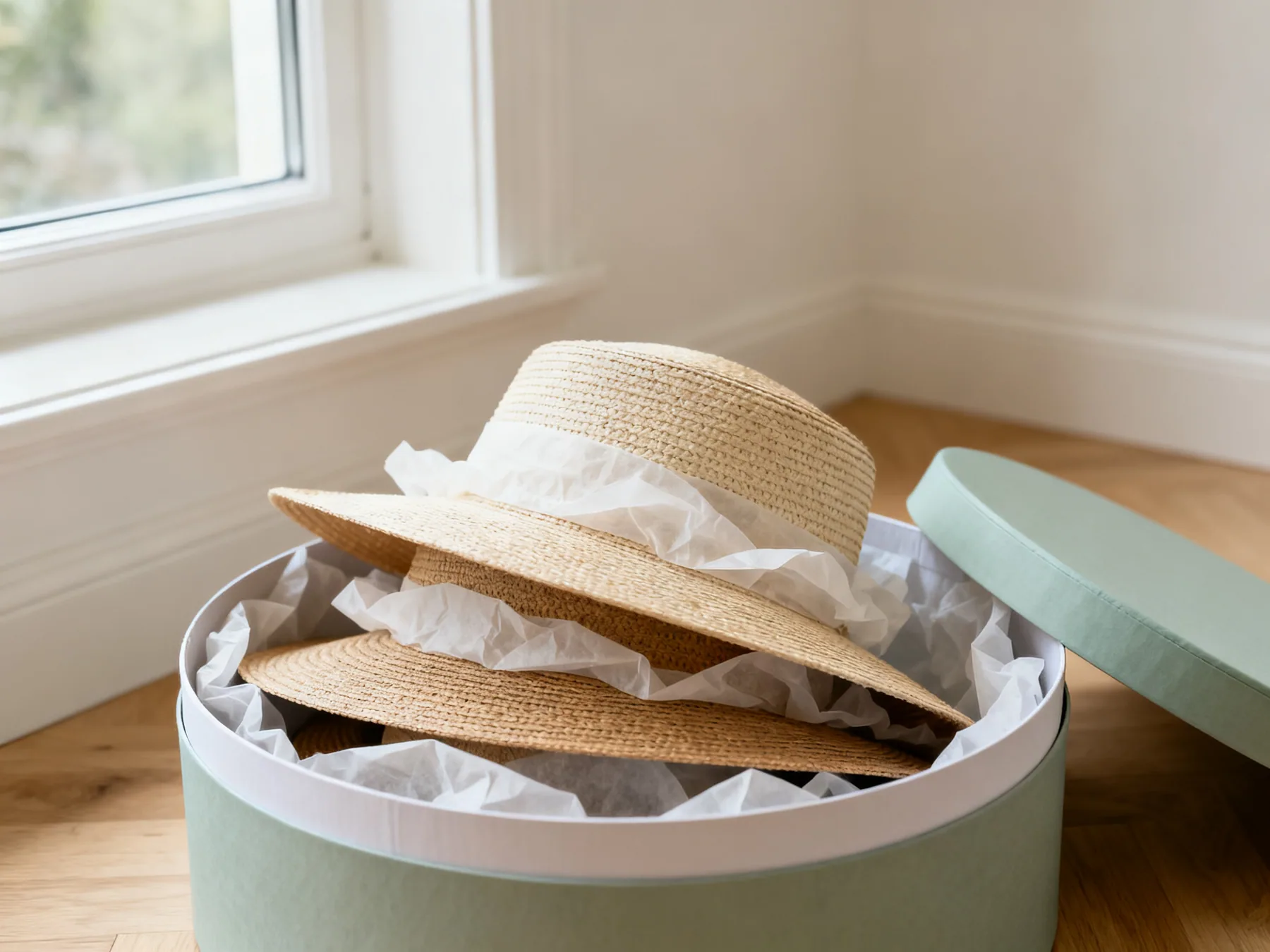
Put tissue between every layer
A sheet of acid-free tissue between each hat spreads the contact and stops one brim printing a line onto the next. This is the whole trick, and without it nesting does real damage.
Never nest hats dry
Nest largest to smallest, three or four deep
Beyond about four the weight at the bottom starts to matter and the bottom hat carries all of it. If you have more than four to store, use two stacks.
Nest only similar stiffnesses
A heavy felt hat inside a fine straw one will deform the straw. Group by weight as well as by size, and keep the delicate ones out of a stack entirely if you can.
Keep the stack upside down too
The same rule applies to the outer hat. If the stack sits brim down, the bottom brim is carrying the whole pile, which is the worst version of the original mistake.
Hooks, walls and the hats that can take it
Hooks get recommended constantly for hats and they are right for some and quietly damaging for others. The distinction is whether the hat has a shape to lose.
A knitted beanie has none, so hanging it costs nothing and it is genuinely the best way to store one. A structured felt hat hung by its brim is carrying its whole weight on the two centimetres touching the hook, and that is exactly how a brim develops a permanent kink.
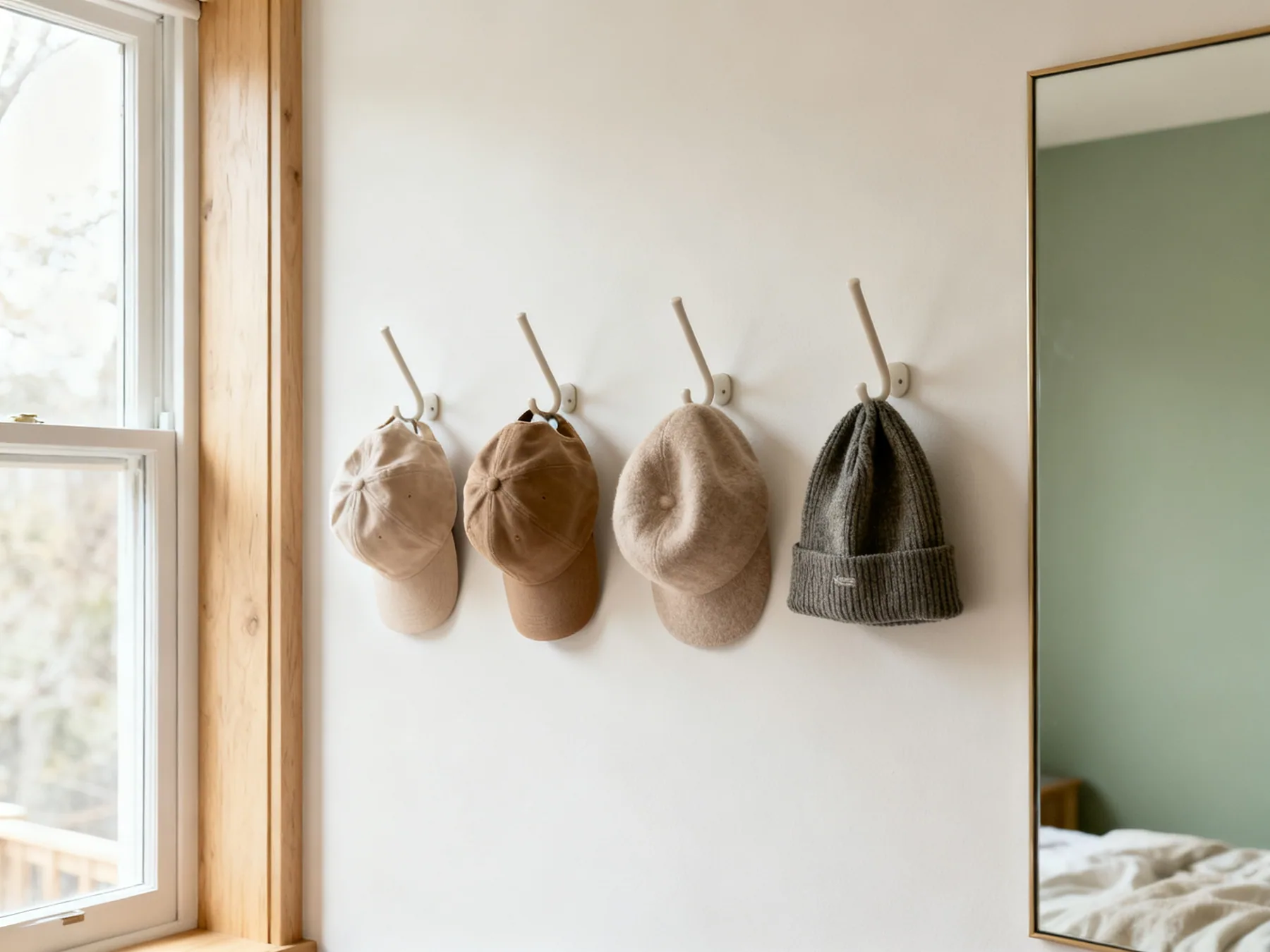
Hooks for soft hats only
Beanies, knitted hats, soft bucket hats, anything unstructured. A row of slim hooks at head height keeps them visible and off a shelf, which frees the shelf for the hats that need it.
Use a wide hook if you must hang something structured
If there is genuinely no shelf space, a broad or padded hook spreads the load rather than concentrating it. It is still second best to a shelf, and I would treat it as temporary.
Store winter hats folded in a drawer instead
Knitted hats stack perfectly happily in a drawer or a basket and take almost no room. Hooks are for the ones you want to see and grab, and a drawer is fine for the rest.
Keep hooks off the back of a door in a damp room
A bathroom door is a poor place for a wool hat, because it will sit in the humidity after every shower and slowly go musty. Hallways and bedrooms are fine.
Caps, sunlight and the small print
Baseball caps are the exception to nearly everything above, which is worth saying plainly because the general advice does not apply to them. They have a stiff peak and a shaped crown that holds itself, so they stack front to back without harm and take up almost nothing.
The last few points apply to every hat and they are the ones that quietly ruin things over years rather than months.

- Stack caps front to back on a slim rack or in a shallow drawer. They are the one hat that stacks safely.
- Keep all hats out of direct sunlight. Straw goes brittle and felt fades unevenly, often on one side only.
- Let a hat dry completely before storing it. A damp sweatband in a closed box is how mould starts.
- Brush felt hats with a soft brush before storing, following the nap in one direction.
- Store straw hats somewhere with a little humidity rather than next to a radiator, which makes the fibres brittle.
- Keep hats above shoe level and off the wardrobe floor, where they get knocked and dusty.
- Reshape a damp hat on a form or a bowl rather than flat, and let it dry away from heat.
Hat storage ideas that keep the brim and crown in shape: frequently asked questions
How should I store a hat so it keeps its shape?
Upside down, resting on its crown, with the brim clear of the shelf all the way round, and a loose roll of acid-free tissue inside the crown so it cannot collapse inward. A hat left resting on its brim is carrying its own weight through the thinnest part of itself, and over a season the brim spreads or waves permanently.
Can I hang hats on hooks?
Soft ones yes, structured ones no. A knitted beanie has no shape to lose, so a hook is genuinely the best way to store it. A felt or straw hat hung by its brim carries all its weight on the small area touching the hook, and that produces a permanent kink. Those belong on a shelf, upside down.
Is it safe to stack hats inside each other?
Yes, as long as you put a sheet of acid-free tissue between every layer. Nested dry, the brim of the inner hat presses a line into the crown of the one outside it and both take a crease. Keep stacks to three or four, group hats of similar stiffness, and keep the whole stack upside down.
How do you store baseball caps?
Stacked front to back on a slim rack or in a shallow drawer. Caps are the exception to most hat storage advice because the stiff peak and shaped crown hold themselves, so they stack without damage. A vertical rack inside a wardrobe door holds around six in the depth of one.
Why do straw hats go brittle?
Dry heat. Straw needs a little moisture in the fibre to stay flexible, so a hat stored next to a radiator or in a hot loft dries out and starts to crack at the brim edge. Keep straw hats somewhere with normal room humidity and out of direct sun, which does the same damage faster.
Should hats be stored in boxes?
For anything seasonal or valuable, yes. A rigid box handles dust, light and knocks at once, and felt in particular holds dust that is hard to get back out. Do not seal them airtight though, and do not box a hat you wear weekly, because anything that takes two steps to reach gradually stops being worn.