Clothes & Personal Items
Shoe storage ideas: what actually fits a narrow hallway
A pair of adult shoes lying flat needs about 320mm of depth. Tilt them and it drops to about 170mm. That one number decides whether your hallway can take shoe storage at all.
Shoes are the highest-traffic storage problem in a house. They come off at the door, they are usually wet or gritty, they are bulky relative to their value, and there are always more of them than anyone admits to owning. Any system that needs care will be abandoned inside a week.
So I work from three numbers. A men's size 10 is roughly 320mm long, 110mm wide and 130mm tall. Boots need 400 to 500mm of height. And a slim tilting cabinet is about 170mm deep, because the shoes inside are on their edge. Those figures decide almost everything that follows.
Entryway shoe storage: the depth problem
The hallway is where shoes actually come off, so it is where storage has to be. It is also usually the narrowest part of the house, which is why so many people conclude there is no room and give up.
There is almost always room, because you do not have to store a shoe flat. On its edge it needs about 170mm, and 170mm is a corridor you can still walk down.
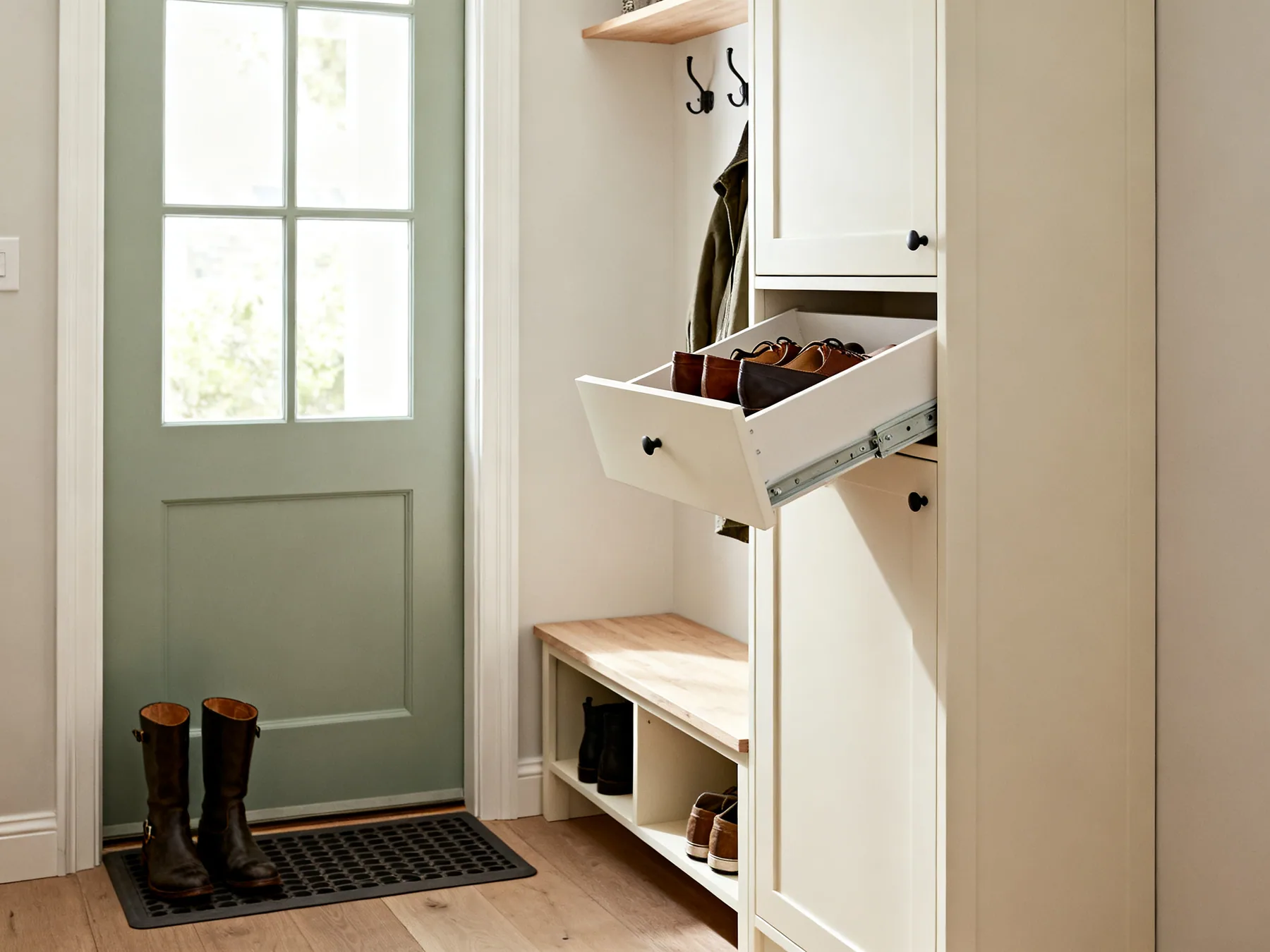
A slim tilting-drawer cabinet
These hold shoes at an angle so the whole unit is only 170 to 200mm deep, against 320mm for a flat shelf. Two or three tiers take six to twelve pairs against a wall you can still pass. This is the first thing I suggest for a narrow hallway and it solves most cases outright.
About 170mm deep
A stacked angled rack
Simple metal or timber racks with angled bars, around 250mm deep. Cheap, ventilated, and the open construction lets wet shoes dry, which a closed cabinet does not. Less tidy looking, more forgiving in use.
A boot tray by the door
A raised-lip tray contains water, grit and road salt in one wipeable place. Not glamorous. It is the thing that keeps the rest of the system working through winter, and I would fit it before anything decorative.
A wall rail for heels
Heeled shoes hook over a horizontal rail or a length of moulding by the heel itself, taking no floor at all. Only works for heels. Flats and trainers will not hang, so do not plan a whole wall around it.
The bench is not a luxury
This is the thing I argue about most and I have never once been wrong on it. Shoe storage without somewhere to sit gets used half as much, because putting on boots standing up is awkward and people give up and leave them where they are.
A bench at 450mm with open cubbies underneath does both jobs in one footprint. Open, not closed, so damp shoes can dry.
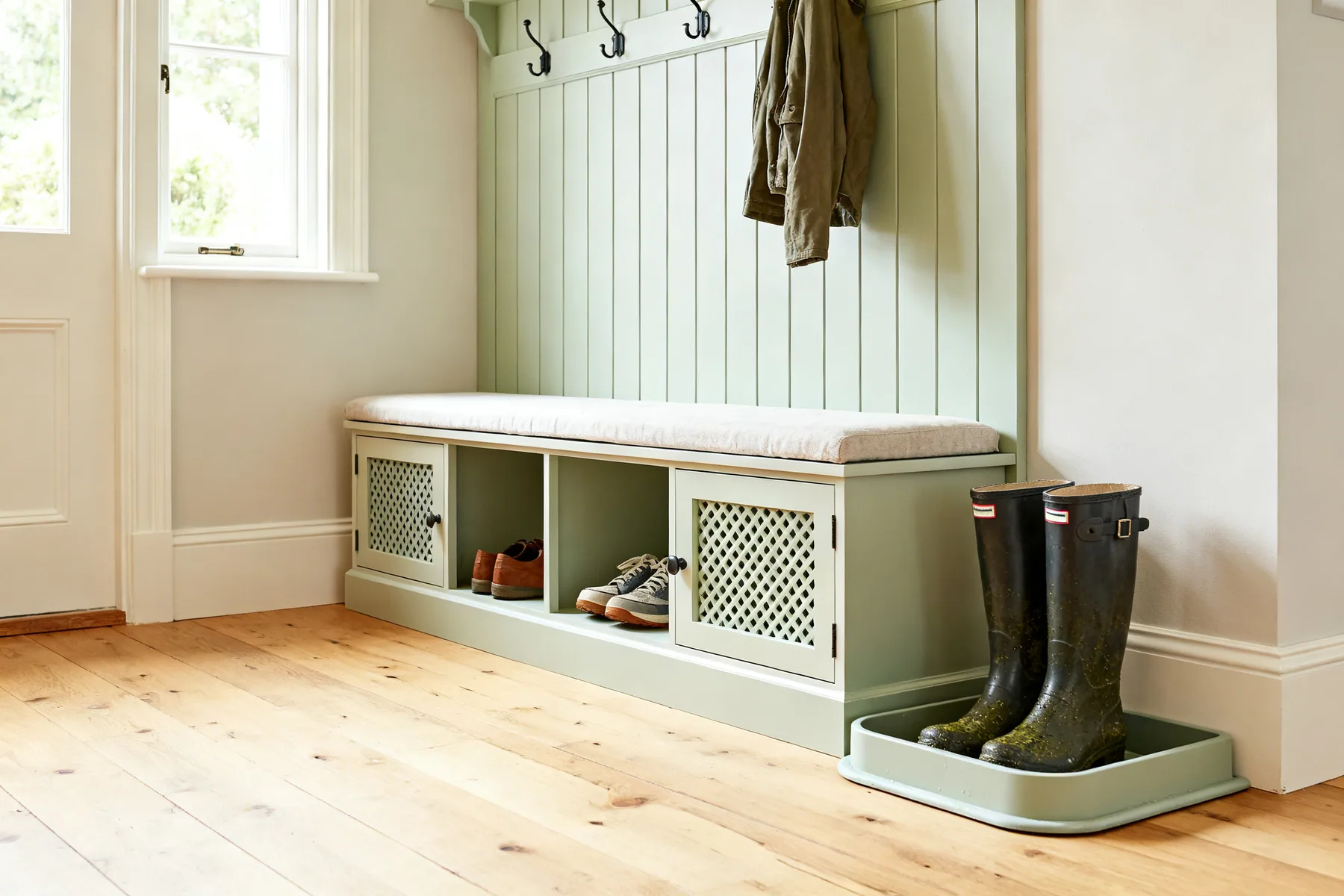
Seat at 450mm, cubbies beneath
One pair per cubby, ventilated, at the height where you can reach them sitting down. In a narrow hall keep the total depth under 400mm and it will still work.
Hooks above the bench, not a rail
Coat hooks above turn the same square metre into a proper entrance. A full hanging rail needs 1.5m of drop, which most hallway walls above a bench do not have.
Closet shoe storage
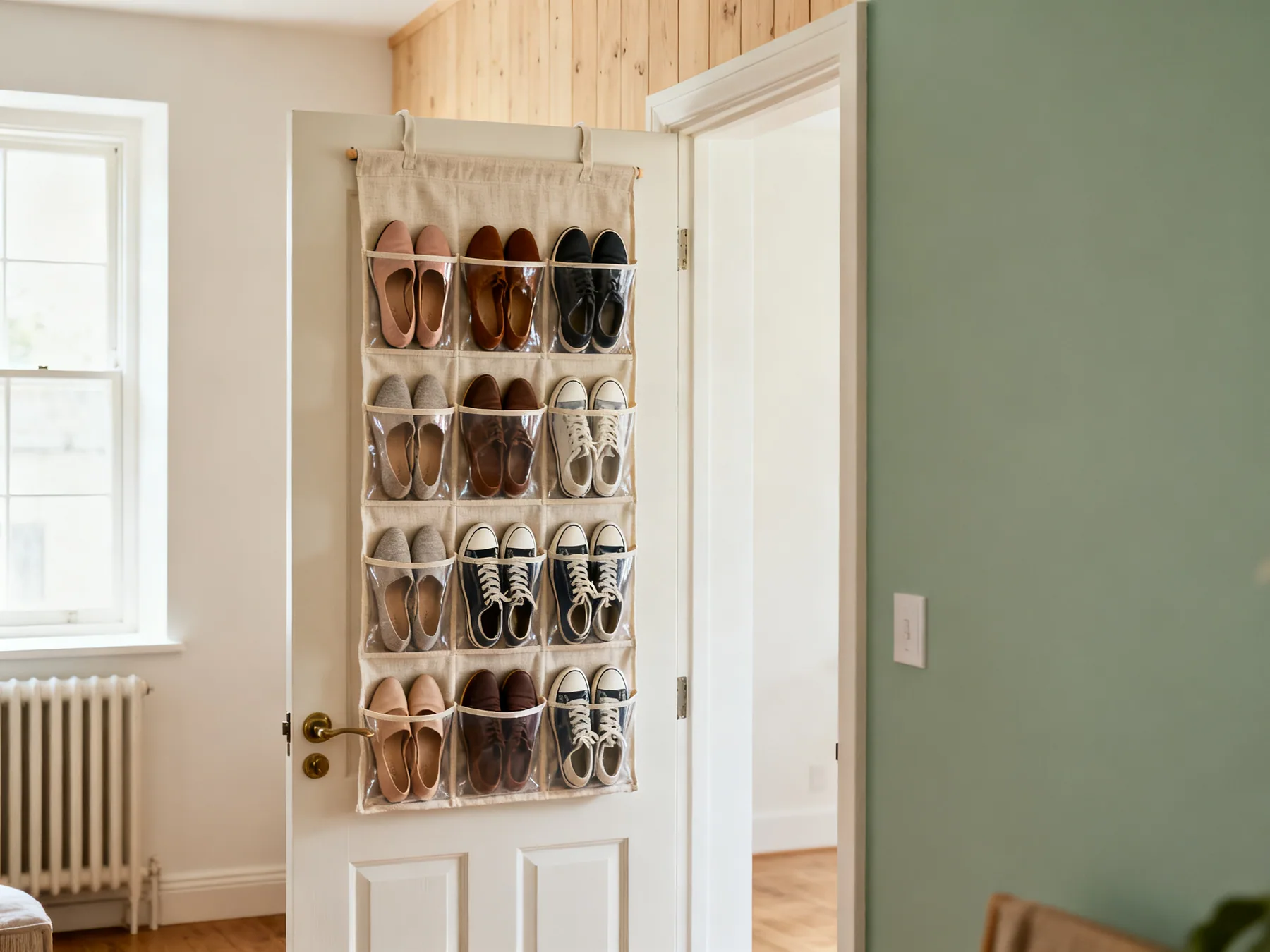
An over-the-door pocket organiser
Twelve to twenty-four pairs in about 60mm of depth, for very little money, and no drilling at all if you use over-door hooks. Best for flats, trainers and children's shoes. Bulky boots will not sit in a pocket.
Renter friendly
Two-tier expandable racks on the closet floor
The closet floor is prime shoe space and it always becomes a heap. A two-tier rack doubles what that floor holds and keeps pairs together, which is most of the problem solved.
Clear-fronted boxes for off-season pairs
On the closet top shelf, which is usually the least used shelf in the house. If the boxes are opaque, photograph the shoe and tape the picture to the end. You will not open a box to check, so make checking unnecessary.
Boots, which need different treatment
Boots are where I see the most avoidable damage. A tall boot left lying on its side creases at the ankle, and that crease is permanent. Once it has set, no amount of conditioning takes it out.
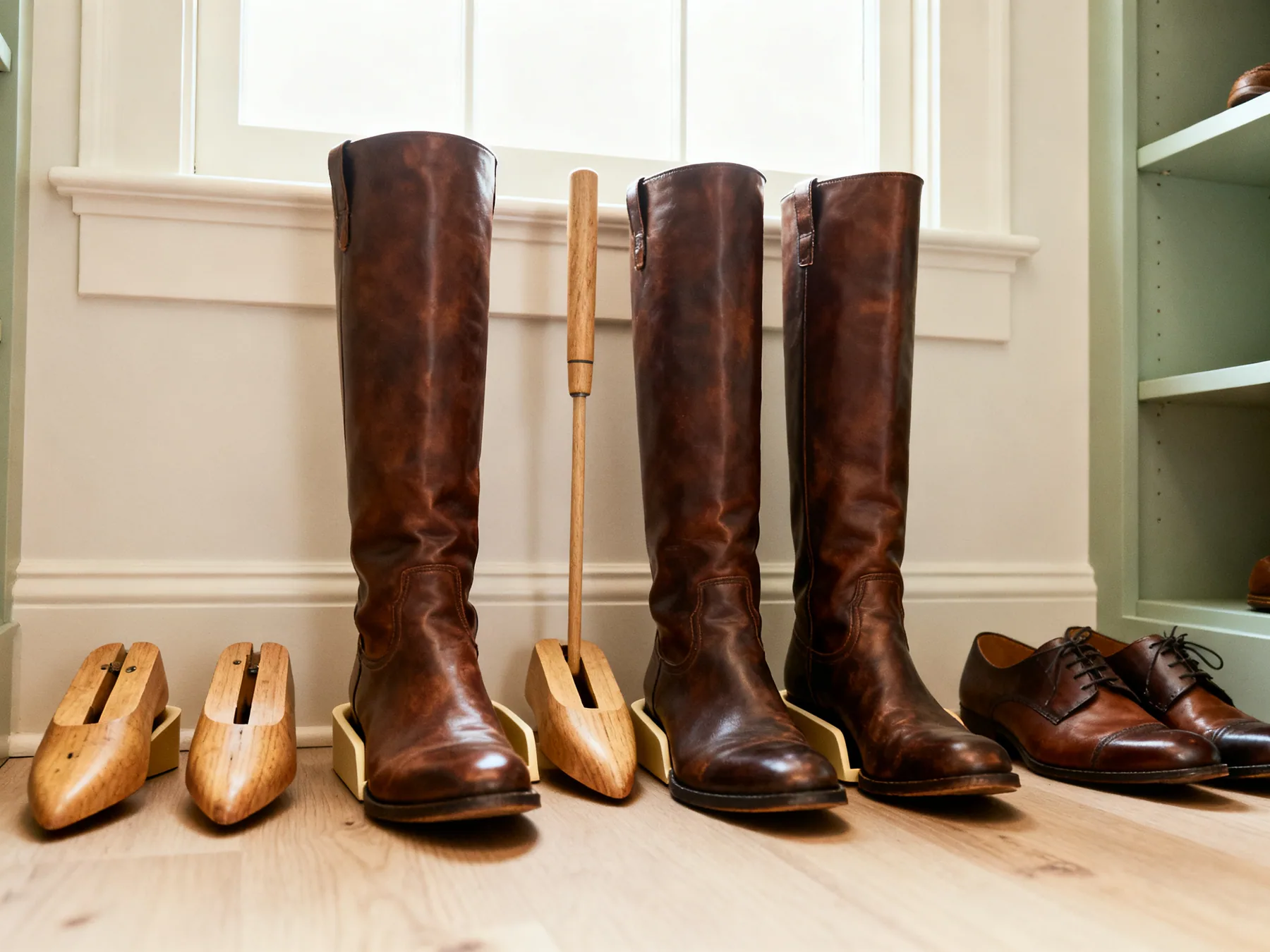
Store them upright with shaft support
Boot shapers, purpose-made inserts, or rolled-up magazines if you would rather not spend anything. All three work. What does not work is standing them up and hoping the shaft holds itself.
Clean the salt off before they go away
Road salt draws moisture and stains leather permanently. A wipe with clean water before storing costs two minutes and saves the boots.
Allow 400 to 500mm of height
That is what a tall boot needs standing up. It rules out most shoe cabinets, which is why boots usually want their own spot rather than being forced into the system.
Where the off-season pairs go
Nearly every overflowing hallway I see is overflowing because it is holding twelve months of footwear. Sandals in February are taking up space you need in February.
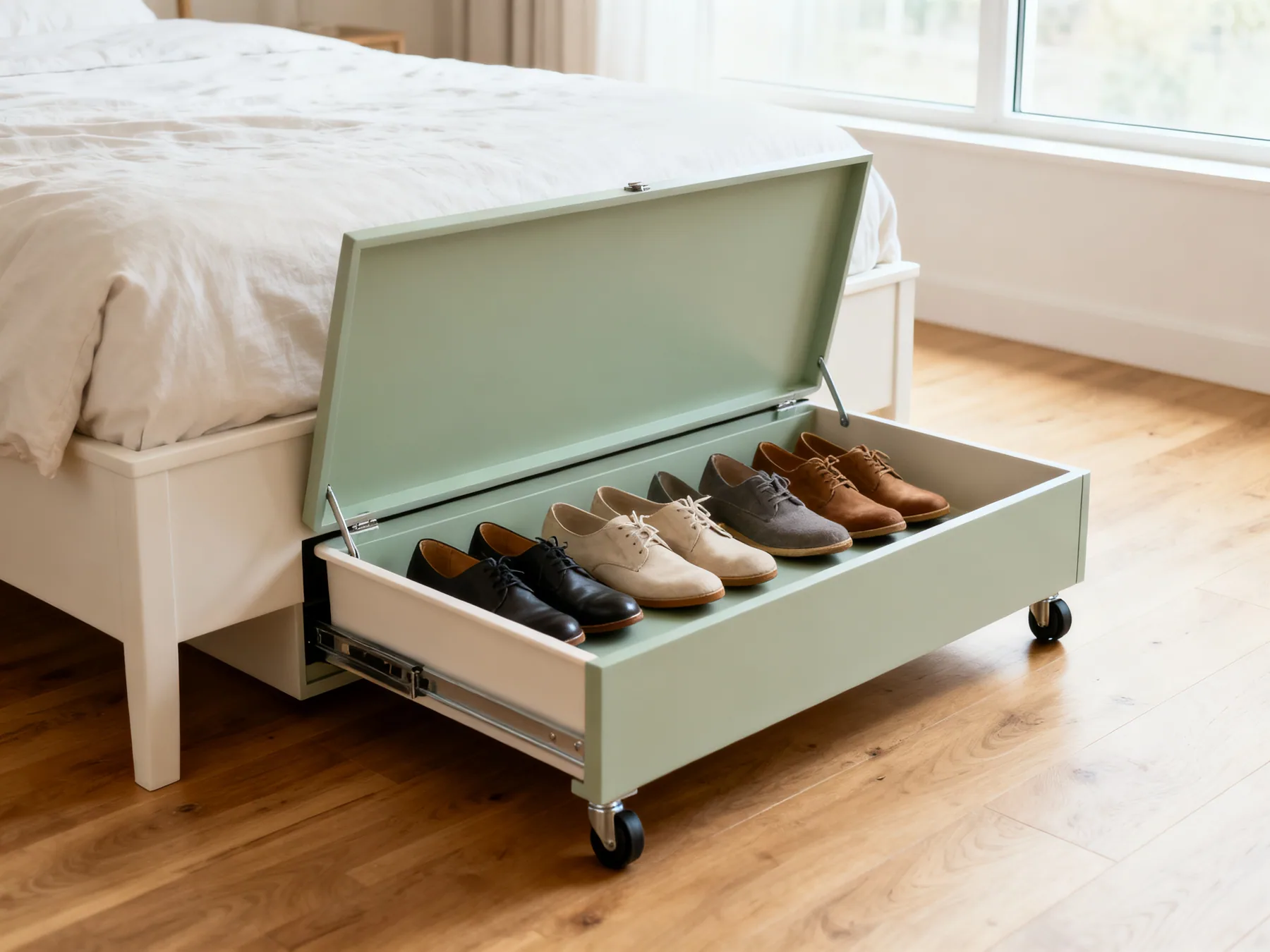
Flat trays under the bed
Shoes lying flat need about 130mm of clearance, which nearly every bed provides. Trays on castors hold eight to twelve pairs and are the natural home for whatever season you are not in.
The gap under a hallway radiator
The space beneath a wall-mounted radiator is dead, roughly the right height for shoes, and the warmth helps them dry. Leave a 100mm air gap and do not block the radiator completely.
The shallow end of an understairs cupboard
Where head height drops to 200 or 300mm, nothing else fits but shoes lying flat. Slide-out trays make that otherwise unreachable wedge genuinely useful.
How to stop shoe storage smelling
This is a storage problem, not a cleaning one, and people almost always attack it from the wrong end. Smell in a shoe cabinet is trapped damp. No amount of scrubbing or deodorising fixes a design that puts wet shoes in a sealed box.
- Give worn shoes 24 hours in open air before they go into anything enclosed.
- Choose open racks over closed cabinets for everyday pairs.
- Use cedar shoe trees in leather shoes. They absorb moisture and hold the shape.
- Never store leather in a sealed plastic box. It needs some airflow or it grows mould.
- Keep shoes out of direct sunlight, which cracks leather and yellows white midsoles.
- Stuff trainers lightly with acid-free paper for long-term storage. Polyurethane midsoles degrade fastest in heat.
Shoe storage ideas: frequently asked questions
How do I store shoes in a narrow hallway?
Use a slim tilting-drawer cabinet, which holds shoes at an angle so the unit is only about 170mm deep instead of the 320mm a flat shelf needs. Add a bench if there is room, because somewhere to sit is what makes people actually use shoe storage rather than leaving shoes on the floor.
How much space does a pair of shoes need?
About 320mm deep, 110mm wide and 130mm tall for an average adult shoe. Boots need 400 to 500mm of height. Stored at an angle the depth requirement drops to roughly 170mm, which is what makes slim hallway cabinets possible.
Should shoes be stored in boxes or on open racks?
Open racks for anything in regular rotation, because they let damp shoes dry and you can see what you have. Boxes for off-season pairs, ideally clear-fronted or labelled. Never put a damp shoe in a closed box, and never store leather in sealed plastic.
How do I stop my shoe storage smelling?
Ventilation and drying time. Give worn shoes 24 hours in open air before they go into anything enclosed, use cedar shoe trees to absorb moisture, and choose open racks over closed cabinets for everyday shoes. The smell is trapped damp, not a cleaning problem.
What is the best way to store boots?
Standing upright with shaft support, using boot shapers, purpose-made inserts or even rolled magazines, so the ankle does not crease permanently. Clean off road salt first because it stains and draws moisture, and keep them out of direct sunlight.
How many pairs should I keep by the front door?
Only the current season, and ideally one or two pairs per person. Nearly every overflowing hallway is holding twelve months of footwear at once. Move the rest to flat trays under a bed or to a closet shelf and the hallway problem usually disappears without buying anything.