Outdoor & Garden
Bike storage ideas for homes with no garage
A bike leaned against a wall takes about 1.7m of floor. Hung vertically it takes 400mm of wall. That ratio is basically the whole of bike storage.
Bikes are the worst-shaped thing most households have to store. Long, tall, dirty, valuable, and needed several times a week. They resist every normal storage solution, which is why I so often find them in a hallway blocking a door, or chained to a fence and quietly rusting.
Before I suggest anything, I ask two questions: does the bike live inside or outside, and how often is it actually ridden. Those two answers decide everything else. A daily commuter needs to come out in one motion at ground level. A bike ridden twice a month can go up a wall or onto the ceiling. Getting this backwards is the single most common reason I see expensive bike storage sitting unused with the bike leaning against it.
Indoor bike storage ideas
Indoors is the best place for a bike, and it is not close. Dry, secure, no weather. The whole problem is that the bike has to share a hallway or a living room with people, and a bike is not a small object.
Hang it vertically on a wall hook
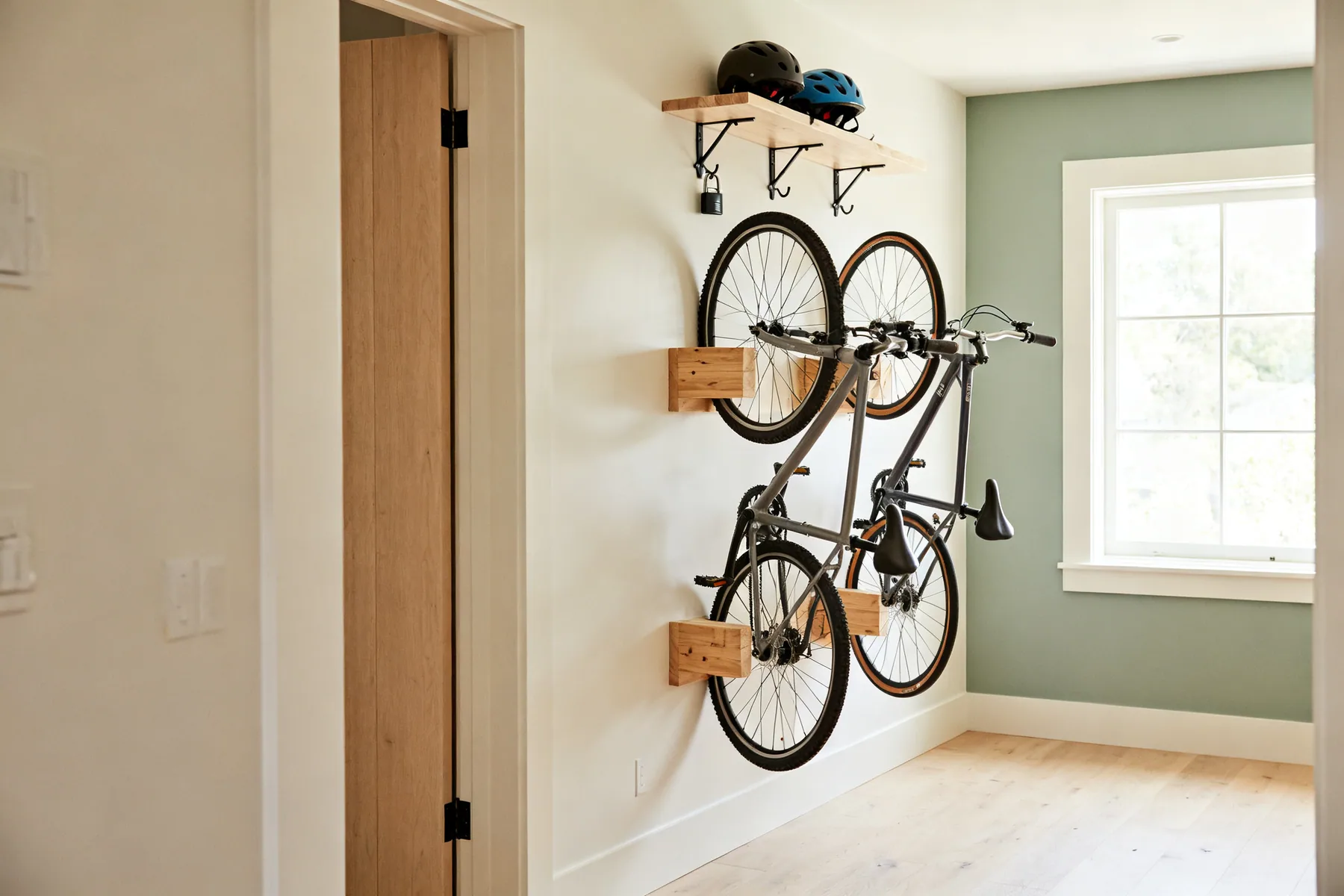
One wheel hook fixed into a stud or masonry holds the bike flat against the wall in about 400mm of width. This is the cheapest and most space-efficient option by a wide margin, and it is what I fit most often. Put a strip of hardboard or a proper wall protector behind the tyre, because a tyre will mark paintwork surprisingly fast.
Fix into a stud or masonry, never plasterboard alone
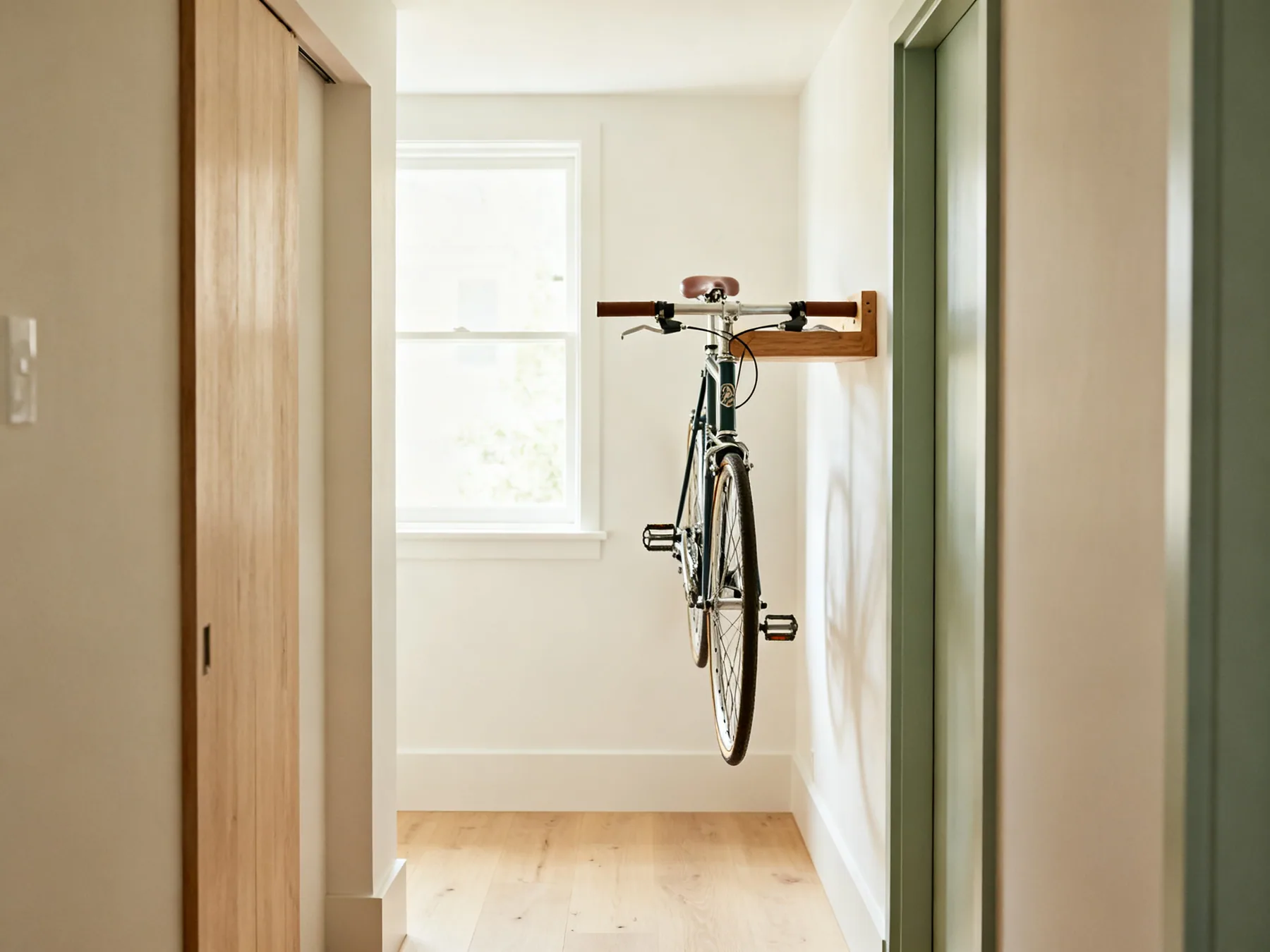
Use a horizontal rack in a corridor
A horizontal mount holds the bike parallel to the wall, projecting about 400mm into the room but needing no height at all. In a hallway I nearly always prefer this to hanging vertically, because a hanging bike wants around 1.8m of clear height and most corridors have a light fitting or a coat rail in the way.
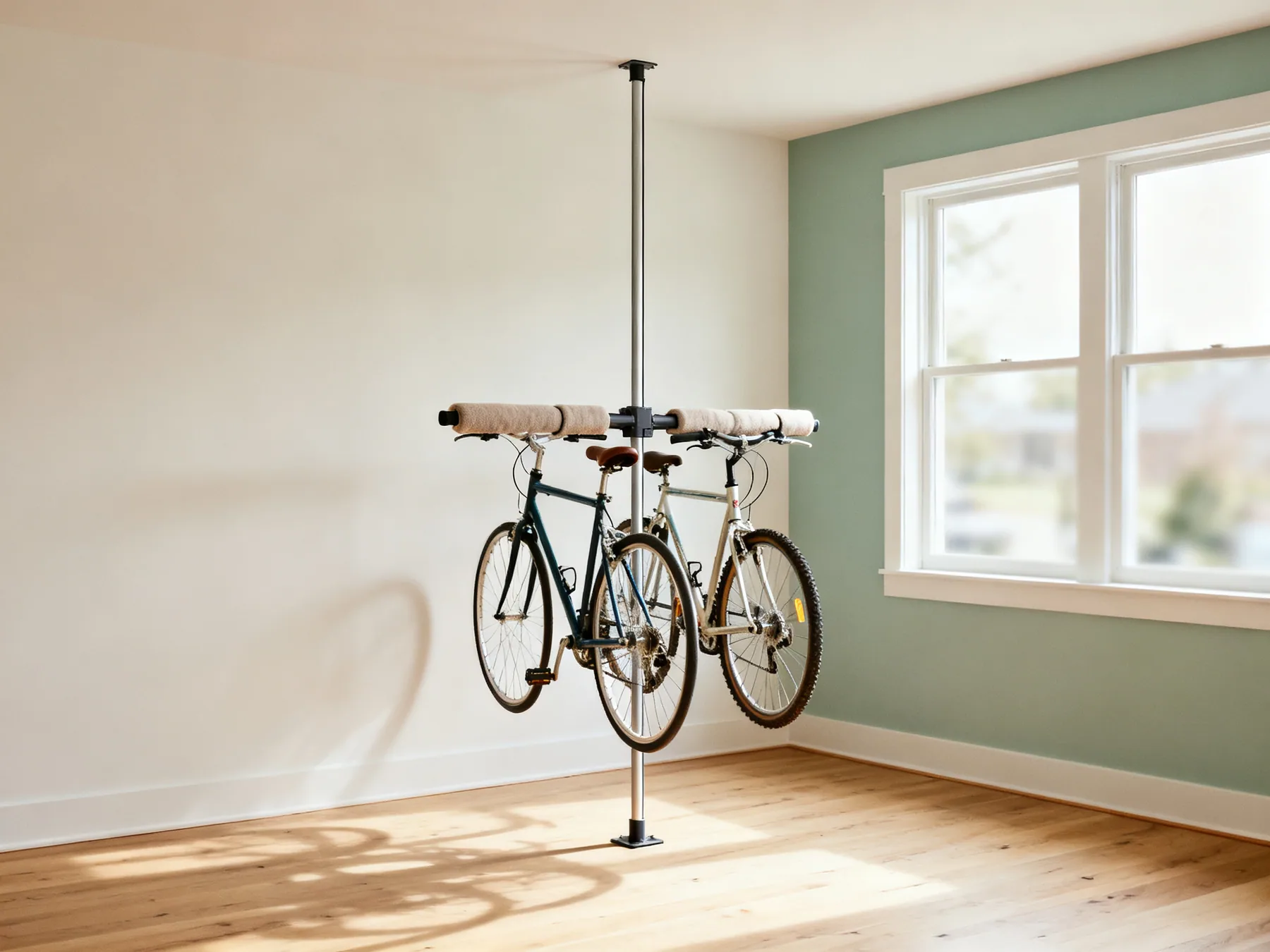
Fit a floor-to-ceiling tension stand
A pole braced between the floor and the ceiling holds two bikes with no drilling anywhere. If you rent, this is usually my first suggestion. It needs a solid ceiling to brace against rather than a suspended one, so press up and check before you buy.
Renter-friendly, no drilling
Use a ceiling hoist where you have height
A pulley lifts the bike completely out of the way. Genuinely good for a bike used occasionally, and genuinely bad for a daily commuter. The effort per use is just high enough that people stop bothering after a fortnight, and then the bike lives on the floor under the hoist.
Choose a bike shelf if it lives in a living room
A wall-mounted timber shelf that the top tube rests in doubles as a shelf and treats the bike as something to look at rather than something to hide. It costs more than a hook. I suggest it when the bike has to look deliberate, which in a living room it does.
Outdoor bike storage ideas
Outside you have two problems at once, and I always deal with them in this order: weather first, then theft. That order surprises people, but a corroded drivetrain is a certainty over a wet winter and a theft is a risk. You should handle both, and you will feel the weather one sooner.
Use a purpose-made metal bike store
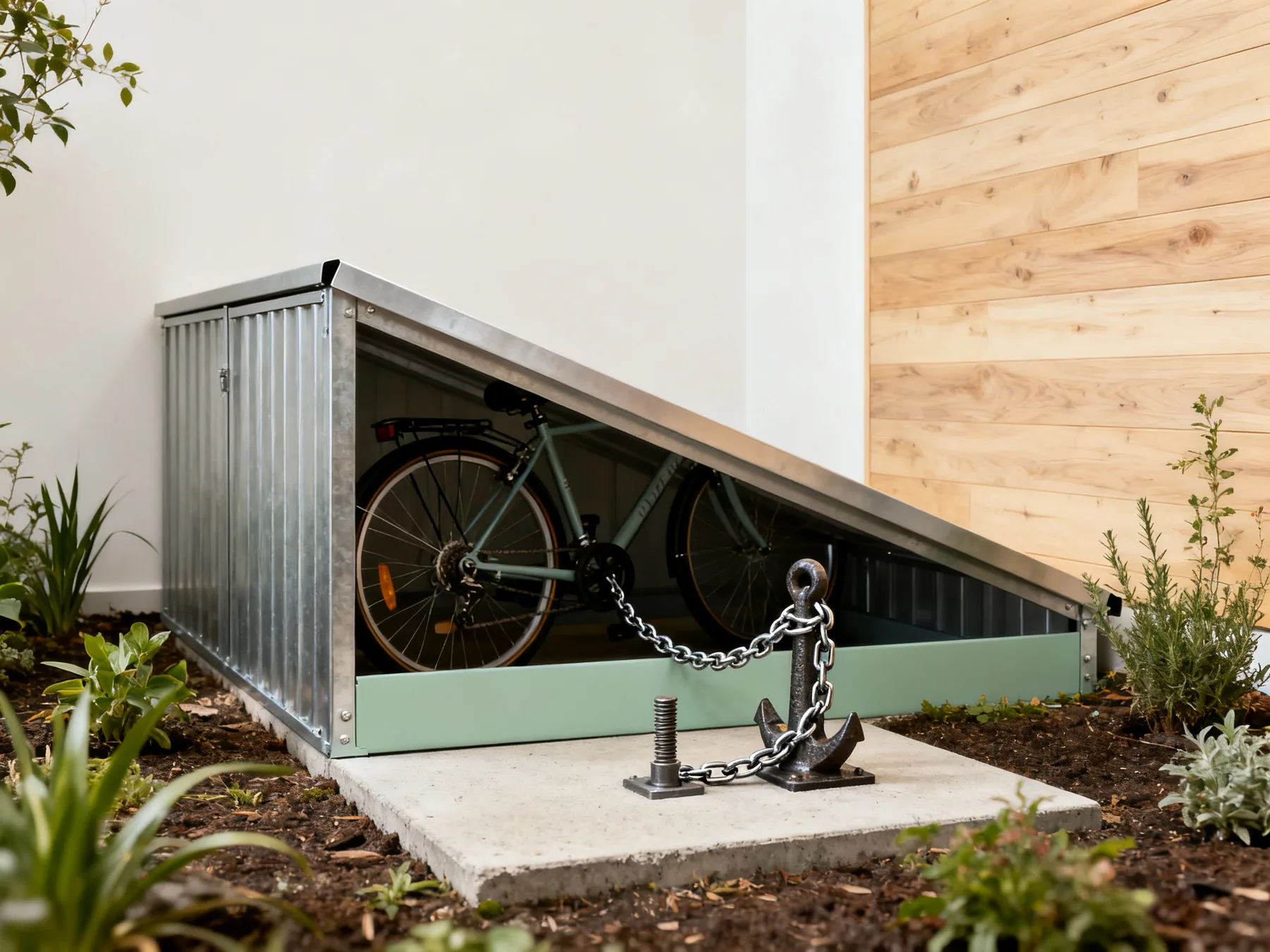
A low steel locker sized for two or three bikes, with a sloping lid and a lockable hasp. I prefer these to a garden shed for bikes because there is far less to lever against and the footprint is smaller. Bolt it down to whatever it is standing on.
Put a ground anchor inside whatever you use
This is the step people skip, and it is the step that actually matters. A concrete-set or bolt-down ground anchor with a Sold Secure Gold or Diamond rated chain means a thief has to defeat the lock rather than just the shed door. A shed door is plywood and three screws.
The shed is weather protection. The anchor is security
Use a breathable cover, not a tarpaulin
Under any open shelter you want a breathable cover that keeps rain off while letting moisture escape. A sealed tarpaulin traps condensation against the frame and is genuinely worse than no cover at all. I have unwrapped bikes that were wetter under the cover than the rain outside.
Get the wheels off the ground
A bike standing on damp concrete or soil corrodes from the bottom up, which means the chain, the cassette and the spoke nipples go first. A wheel-holding floor rack or a hook keeps everything clear of standing damp.
Check whether your council runs bike hangars
Plenty of councils operate secure on-street bike hangars for a modest annual fee. For a flat with no outdoor space at all this is often better than anything you could build, so it is worth a phone call before you spend money.
Fitting several bikes into one space
Two bikes is not twice one bike. The moment there is more than one, the constraint stops being floor space and becomes handlebar width, and that changes what I recommend.
Alternate the hanging heights
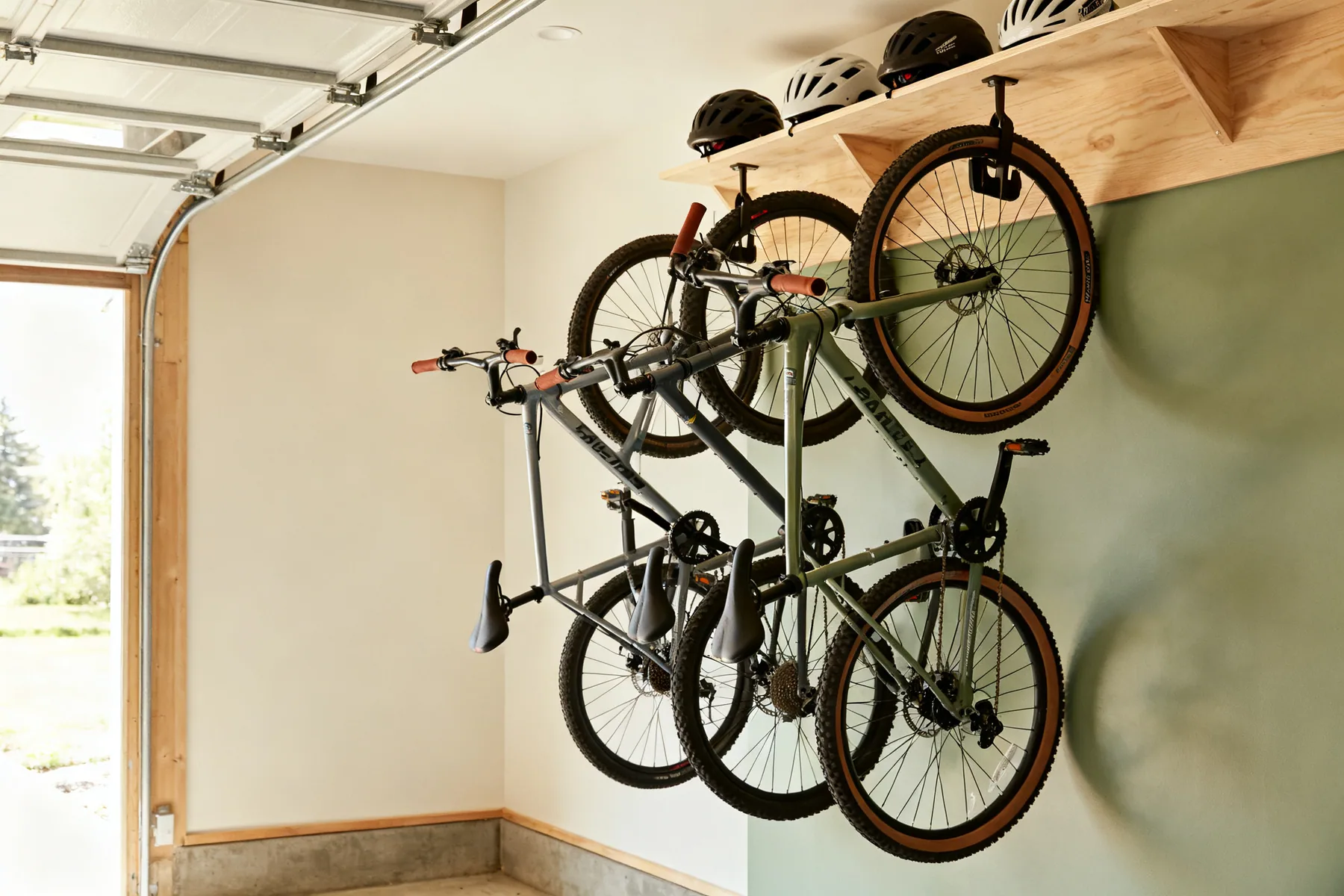
Bikes hung at the same height clash at the bars, and then you cannot get the middle one out without moving both neighbours. Staggering alternate bikes about 300mm higher lets them nest, and it cuts the wall width per bike to roughly 350mm.
Give children a floor rack
A child has to be able to get their own bike out, and that rules out wall hooks entirely. A simple wheel-slot floor rack at ground level is the only system I have seen kids use without being asked. Height beats tidiness here.
Put the least-used bike highest
The rule I apply everywhere: access effort should be inversely proportional to how often you need the thing. The winter bike goes on the ceiling hoist. The daily bike goes at ground level near the door.
Keep helmets and kit with the bikes
A shelf or a couple of hooks above the bikes for helmets, lights and locks keeps the whole activity in one place, which is what stops the lock ending up in a kitchen drawer. Do not shut a wet helmet in a sealed box.
Putting a bike away for the winter
A bike stored badly over winter comes out in spring in worse condition than one that was ridden all the way through it. That still strikes me as unfair, but it is consistently true, and the reason is that a dirty chain holds moisture against steel for four months.
Ten minutes before you put it away prevents nearly all of it.
- Clean and dry the drivetrain, then re-lubricate the chain. Grit on a chain holds moisture exactly where you do not want it.
- Inflate the tyres to normal pressure. A flat tyre left for months deforms the sidewall and the casing can crack.
- Store above freezing if you can, particularly with hydraulic brakes or a suspension fork.
- Hang or stand the bike rather than leaving it resting on its tyres for months.
- Take a lithium e-bike battery off, charge it to roughly 50 to 60%, and keep it indoors at room temperature rather than in a cold shed or garage.
- Avoid storing a bike with hydraulic discs upside down for long periods, which lets air migrate towards the lever.
- Slacken suspension and dropper post settings if the manufacturer recommends it.
Bike storage ideas for homes with no garage: frequently asked questions
Is it bad to hang a bike by one wheel?
No, and this is the question I get asked most. A bicycle wheel is built to carry a rider's full weight through the rim and spokes, so holding the bike's own weight from one hook is comfortably within what it was designed for. The only real cautions are protecting the wall where the tyre touches it, and not leaving a bike with hydraulic discs upside down for very long periods.
How much space does bike storage need?
A bike leaned against a wall takes about 1.7m of floor. Hung vertically it takes roughly 400mm of wall width and wants about 1.8m of height. Horizontal wall mounts project around 400mm into the room but need no height. If you stagger the heights of several hanging bikes, the width drops to about 350mm each.
How do I store a bike outside securely?
Fit a ground anchor inside whatever shelter you use and secure the frame to it with a Sold Secure Gold or Diamond rated chain or D-lock. A bolted-down metal bike locker is better than a timber shed because there is less to lever open, but the security comes from the anchor and the lock rather than from the shed itself.
Can I store a bike in a garden shed over winter?
Yes, as long as you prepare it. Clean and re-lubricate the chain, inflate the tyres to normal pressure, and keep the bike off the damp floor on a rack or a hook. If it is an e-bike, take the battery out and store it indoors at around 50 to 60% charge, because cold shortens lithium battery life noticeably.
What is the best bike storage for a rented flat?
A floor-to-ceiling tension stand. It braces between the floor and the ceiling, holds two bikes, and leaves no holes and no damage. Check the ceiling is solid rather than suspended before you commit. If there is no indoor space at all, it is worth asking whether your council runs secure on-street bike hangars, because many do for a modest annual fee.