Outdoor & Garden
Firewood storage ideas that actually season the wood
Storing firewood is a drying job, not a stacking job. The instinct that ruins it is wrapping the pile up to keep the rain off.
Wet wood does not burn, it smoulders. Freshly felled timber is somewhere around half water by weight, and a log needs to get down to roughly 20% moisture content before it will burn cleanly and give you the heat you paid for. Everything about firewood storage is in service of that drying.
Which is why the most common firewood mistake is a well-intentioned one. Somebody buys logs, sees rain coming, and wraps the stack in a tarpaulin down to the ground. That keeps the rain off and it also stops all the air movement, so the moisture already in the wood has nowhere to go. Wood stored like that can be wetter after a year than it was at the start, and it will have started to rot.
The rule is: covered on top, open at the sides. Once you have that, the rest is straightforward.
Off the ground, always
The bottom row is the row that fails first, and it fails because it is in contact with damp soil. Concrete is barely better, since it holds and transmits moisture too. Whatever the surface, the wood needs to be lifted clear of it with air able to pass underneath.
A hundred millimetres is enough, and a couple of timber bearers or a pallet will do it. This is the cheapest part of the whole exercise and skipping it costs you the bottom layer every year, plus whatever the rot spreads to above.
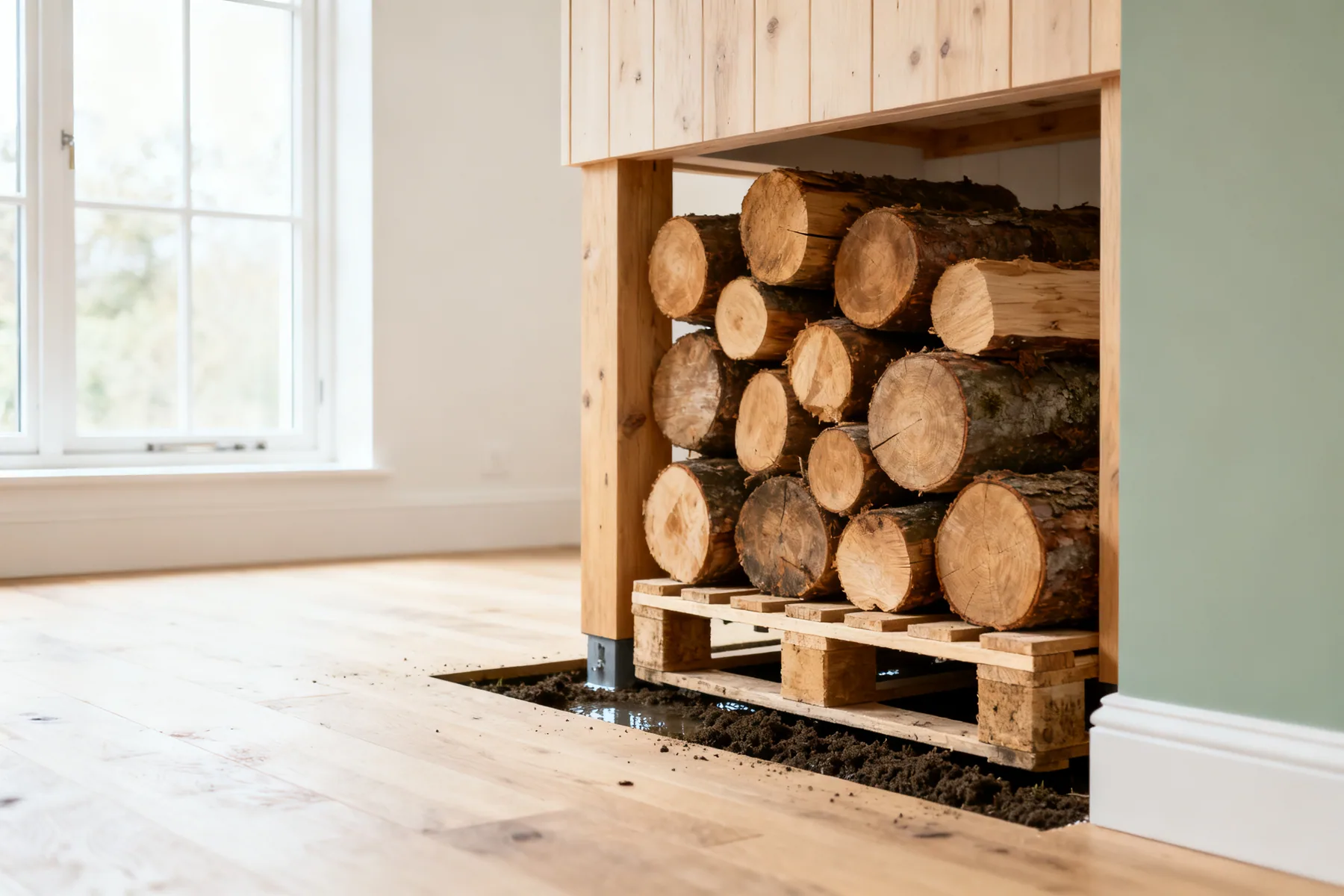
Use bearers or a pallet as the base
Two lengths of treated timber laid across the run, or a pallet, lift the stack clear and let air move under it. Pallets are usually free and are close to ideal for this.
At least 100mm of clear air
Pick a surface that drains
Gravel or hardcore beneath the stack is much better than bare soil or grass, both of which hold water. If you are building a permanent store, spend the effort on the base.
Keep the stack off the house wall
Leave a gap of at least 100mm behind it. Wood tight against masonry holds damp against the building and gives insects a bridge straight into it, which is a problem worth avoiding on both counts.
Choose the sunniest, windiest spot you have
Drying is driven by air movement and sun. A sheltered corner feels like the sensible place to put a log pile and it is the slowest place to season one.
Covered on top, open at the sides
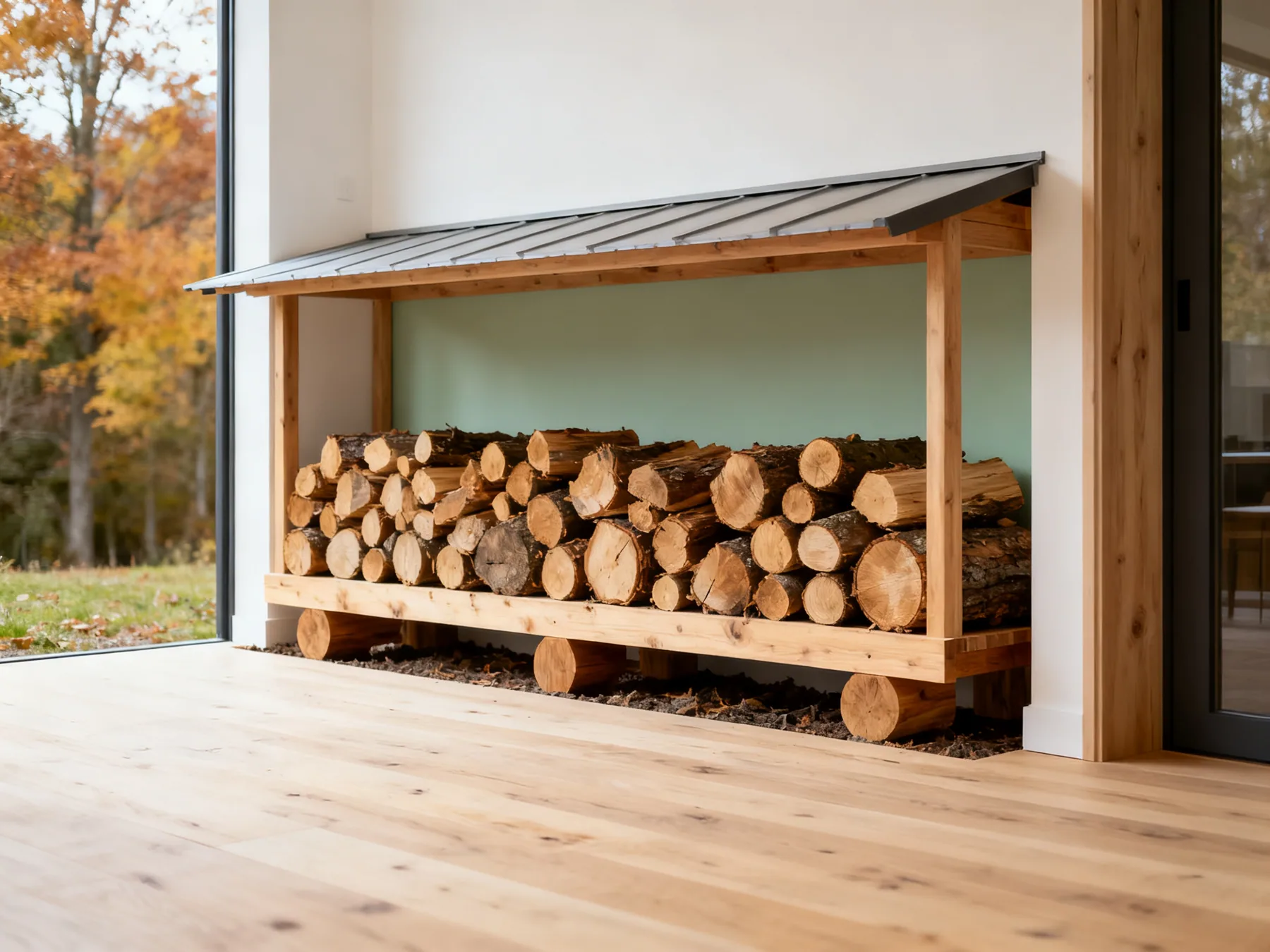
This is the rule that matters most and the one most often broken. Rain landing on the top of a stack does real harm, so a roof or a cover over the top is worth having. Air moving through the sides is what removes the moisture already inside the wood, so blocking the sides is self-defeating.
A tarpaulin over the top with the sides left open works perfectly well and costs almost nothing. A tarpaulin wrapped all the way round turns your log store into a humid box.
Overhang the cover, do not wrap it
Let the cover project past the front and back of the stack so run-off falls clear, and leave both sides fully open. Weight it down rather than tying it around the pile.
The single most important rule here
Build a simple lean-to store if it is permanent
A sloping roof, an open front and slatted or open sides is the classic log store shape and it is that shape for good reasons. Face the open side towards the prevailing wind if you can.
Do not enclose wood in a shed to season it
A closed shed has poor airflow, so green wood put in one stays wet and can rot. Season outside in the open, then move seasoned wood into a shed for storage if you want it out of the weather.
Check the cover after wind
A cover that has blown across the front of the stack is doing the harm you were trying to avoid. Worth a glance after a rough night.
Stack single rows, split faces out
How you arrange the logs decides how fast they dry. A single row, one log deep, with the split faces exposed to the air, dries far quicker than the same volume of wood in a deep pile, because every log has air on both sides and the split surface is where moisture leaves fastest.
A big square heap looks efficient and keeps its centre damp for years. If you have a lot of wood, build several single rows with gaps between them rather than one deep block.
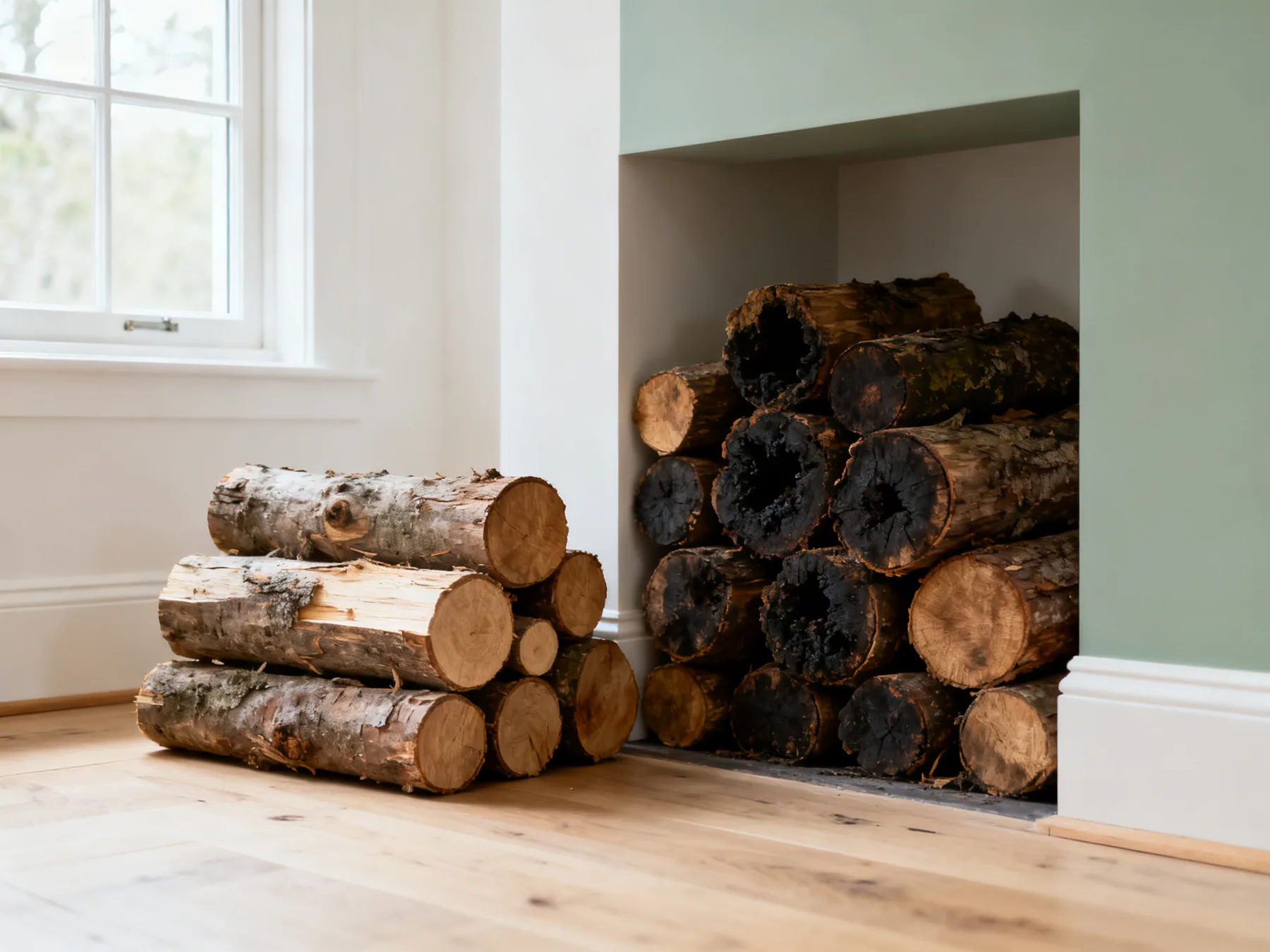
One row deep, with gaps between rows
Leave enough space between parallel rows for air to move down the gap. This is the difference between wood ready in a season and wood still hissing in the stove after two.
Turn the split faces outward
Bark is designed to keep water in a tree, and it does the same job in a log pile. The split faces are the fast route out for moisture, so point them at the air.
Split before you stack, not after
A split log dries several times faster than a round one because you have opened up the end grain and the split face. Splitting first is the single biggest thing you can do for drying time.
Cross-stack the ends for stability
Alternating the direction of logs at each end of a row, or using a pair of stakes, keeps a freestanding stack from collapsing sideways as it settles and dries.
Check moisture with a meter before burning
A cheap moisture meter takes the guesswork out. Split a log and test the fresh inner face, aiming for around 20% or below. Testing the outside of a log tells you about the weather, not the wood.
Indoor storage, and how much to bring in
Indoor firewood storage is a different job. The wood is already dry, so this is about convenience and about not bringing the outdoors in with it.
Keep the indoor store small on purpose. A large pile of logs inside the house is also a large quantity of bark, and bark carries insects, spiders and occasionally woodworm. A few days of wood in a basket by the stove is enough, and it lets what you bring in warm up and dry off the surface before you burn it.
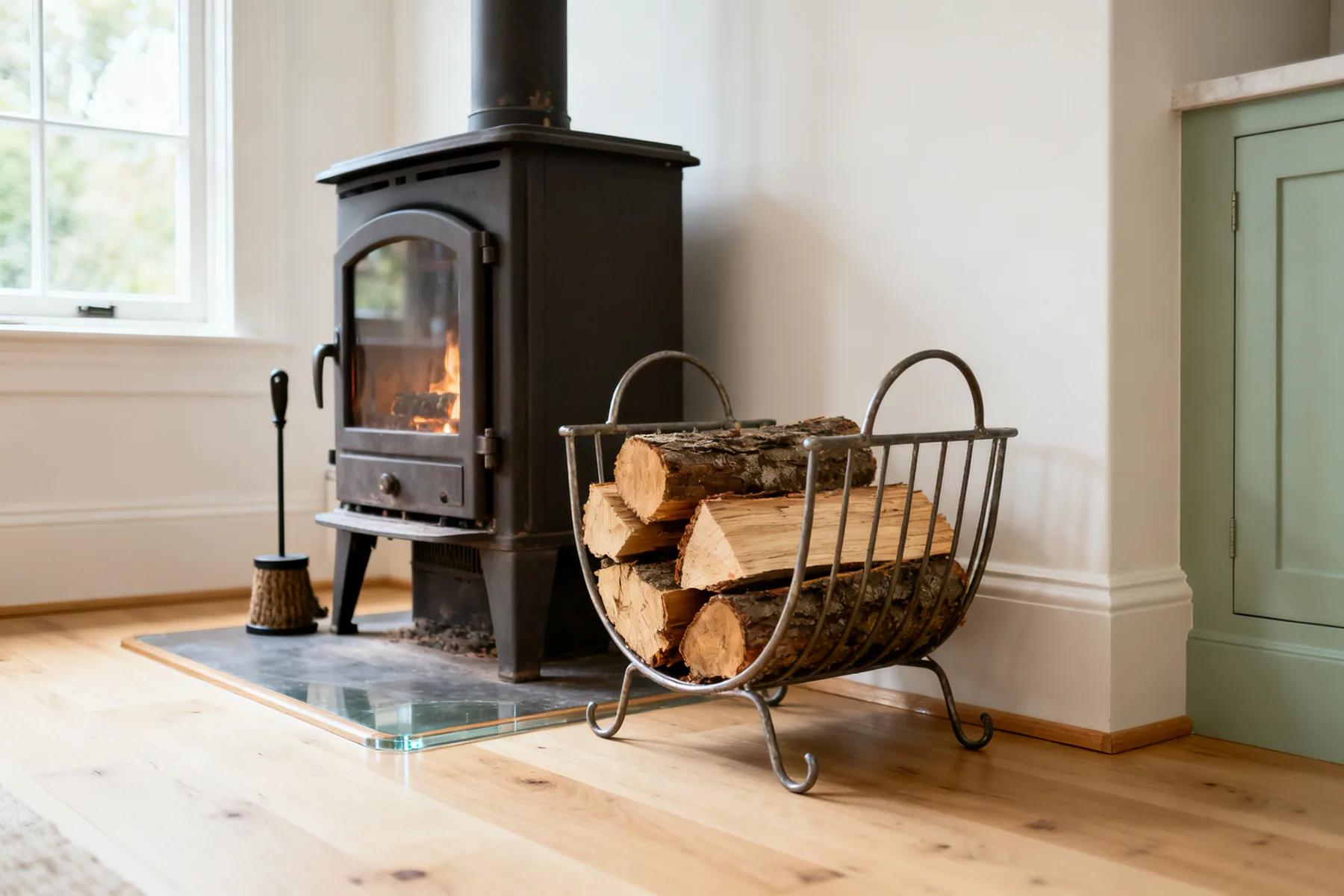
Use a basket or a metal log holder
Sized for two or three days. Metal or wicker with a solid base, so the bark and grit that comes off stays in one place and can be tipped out rather than swept off a floor.
Bring wood in a day before you burn it
It lets the surface dry and takes the chill off, both of which make lighting easier. It also means you are not going out in the rain for logs.
Do not stack logs against a hot stove
Keep the store outside the manufacturer's stated clearances. Wood in prolonged contact with radiant heat can char and, over time, ignite. This is a real hazard rather than a theoretical one.
Respect the stove clearances
Keep kindling separate and dry
A small lidded box or a second basket for kindling and firelighters. Mixed in with the logs it gets buried, damp and crushed.
Pests, timing and the practical points
A log pile is a habitat as well as a fuel store, which is mostly fine outdoors and less welcome against the house. A few last points that make the difference between a store that works for years and one that becomes a problem.
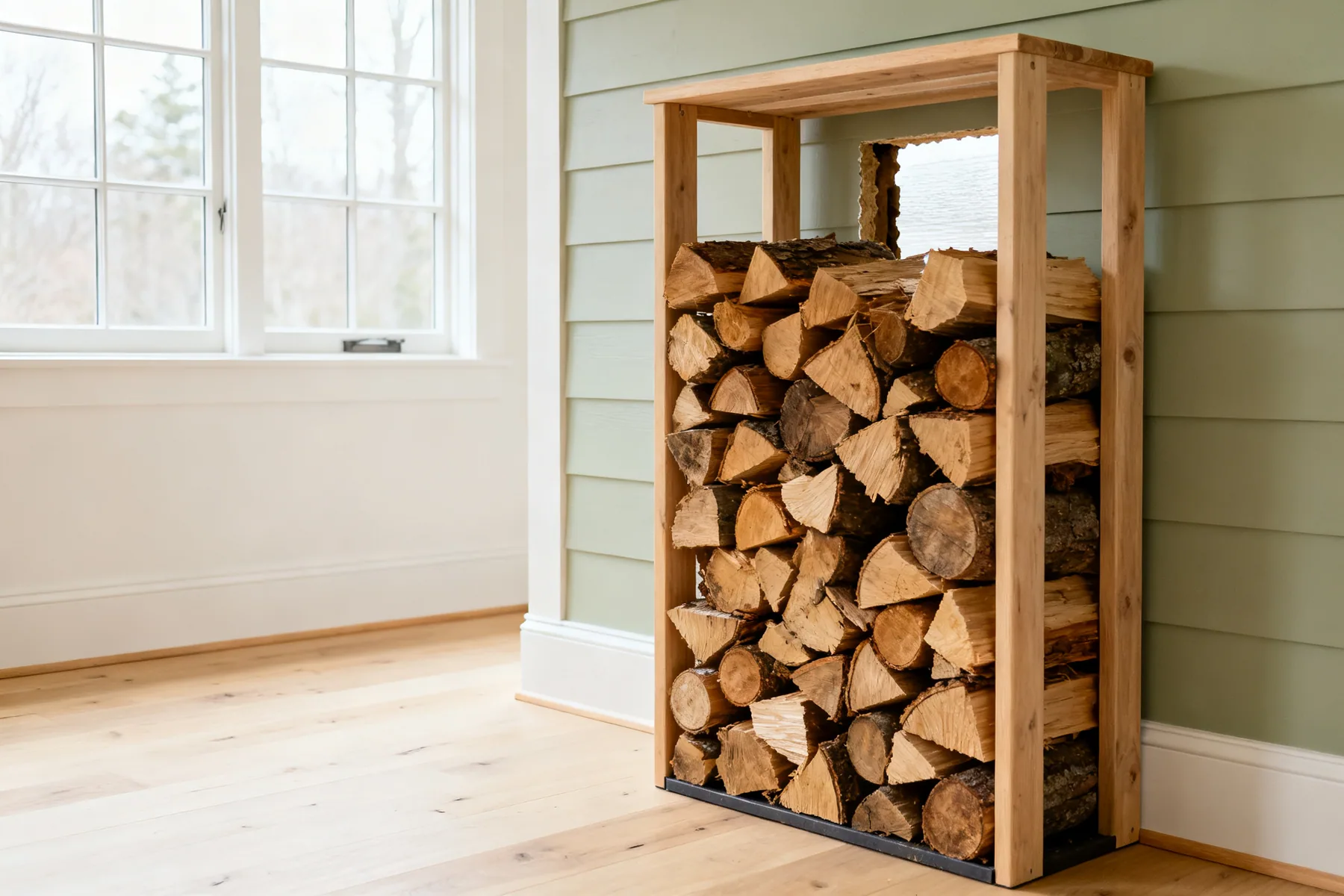
- Keep the stack away from the house wall and away from any timber structure.
- Buy or cut wood a full year before you need it, and two years for oak and other dense hardwoods.
- Use the oldest wood first. Stack so you can take from one end and add to the other.
- Do not store logs in a garage attached to the house if you can avoid it, because of insects.
- Leave the very bottom of an old stack for wildlife if you like, but move it away from the building.
- Never store logs where they block a vent, a flue or an escape route.
- Watch for sawdust piles, which indicate boring insects at work in the stack.
- Keep the area around the store clear so you can sweep up bark and see what is happening.
Firewood storage ideas that actually season the wood: frequently asked questions
Should I cover my firewood with a tarp?
Over the top only, never wrapped around the sides. Rain landing on a stack does real harm, so a cover is worth having, but air moving through the sides is what removes the moisture already inside the wood. A stack wrapped to the ground becomes a humid box and can end up wetter after a year than it started, and it will begin to rot.
How long does firewood take to season?
Around a year for most softwoods and lighter hardwoods, and closer to two for oak and other dense species. That assumes it is split, stacked in single rows off the ground with the split faces exposed, covered on top and open at the sides. In a deep pile or wrapped in a tarpaulin it may never get there.
Why does my firewood not burn properly?
It is almost certainly too wet. Wood needs to be around 20% moisture content or below to burn cleanly, and freshly felled timber is roughly half water by weight. Check it with a cheap moisture meter, splitting a log and testing the fresh inner face, because testing the outside tells you about recent weather rather than the wood.
Can I store firewood in a shed?
Seasoned wood yes, green wood no. A closed shed has poor airflow, so unseasoned logs put in one stay wet and can rot. Season outside in the open with the top covered, then move the dry wood into a shed for storage if you want it out of the weather.
How far from the house should a log store be?
Not tight against it. Leave at least 100mm behind the stack so air can pass, because wood against masonry holds damp against the building, and a log pile touching the house gives insects a direct bridge inside. For the same reason I would avoid storing quantities of logs in a garage attached to the house.
How much firewood should I keep indoors?
Two or three days worth, in a basket or metal holder by the stove. A large indoor pile brings in a large quantity of bark, and bark carries insects and spiders. Bringing wood in a day ahead also lets the surface dry and takes the chill off, which makes lighting easier. Keep it outside the stove's stated clearances.