Outdoor & Garden
Kayak storage ideas that do not deform the hull
A plastic kayak slowly takes the shape of whatever is holding it up. That makes how you support it more important than where you keep it.
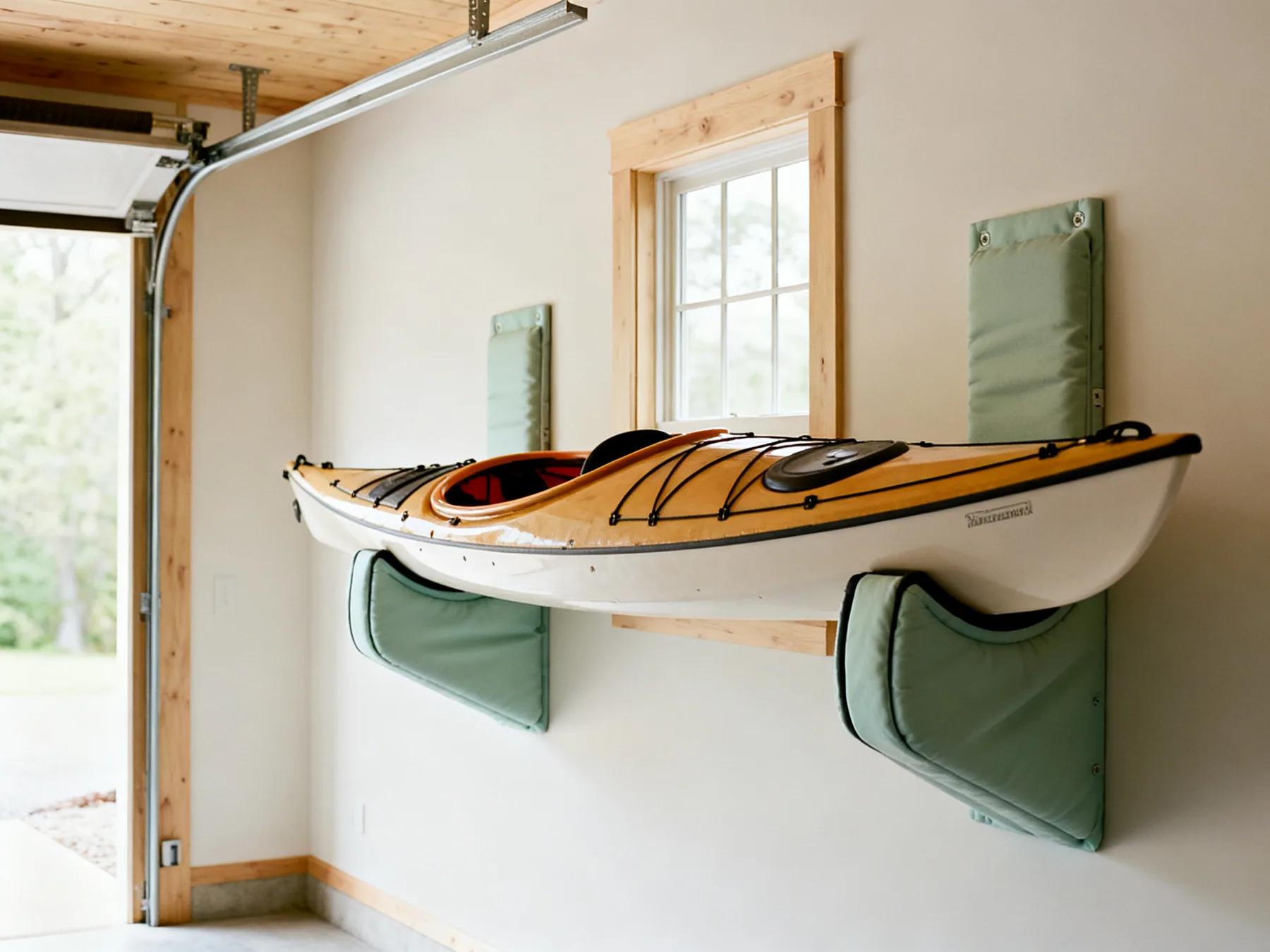
Kayaks are awkward to store because they are long, light and made of a material that quietly changes shape. Polyethylene, which most recreational kayaks are moulded from, creeps: under a sustained load it deforms slowly and does not spring back.
That produces the two classic kinds of damage, and both look completely harmless while they are happening. A kayak left resting flat on its hull develops a dished flat spot where its own weight has pressed down. And a kayak hung in narrow straps develops indents where the straps were, because all the weight went through two thin lines.
Neither comes out. So the whole of kayak storage is about spreading the load and putting it somewhere the hull is strong. The good news is that the correct method is also the cheapest.
Never flat on the hull
The hull is the largest, least supported panel on the boat, and it is the one people rest the whole weight on because that is how a kayak sits in the water. In the water the pressure is spread over the entire surface. On a garage floor it is concentrated wherever the floor touches.
Left like that for a winter, a plastic kayak develops a visible flat or dished area. It affects how the boat tracks and it does not recover. Composite boats are stiffer and less prone to it, and I would still not do it.
On its side, or upside down, the load goes through the gunwale line or the deck, both of which are far stiffer.
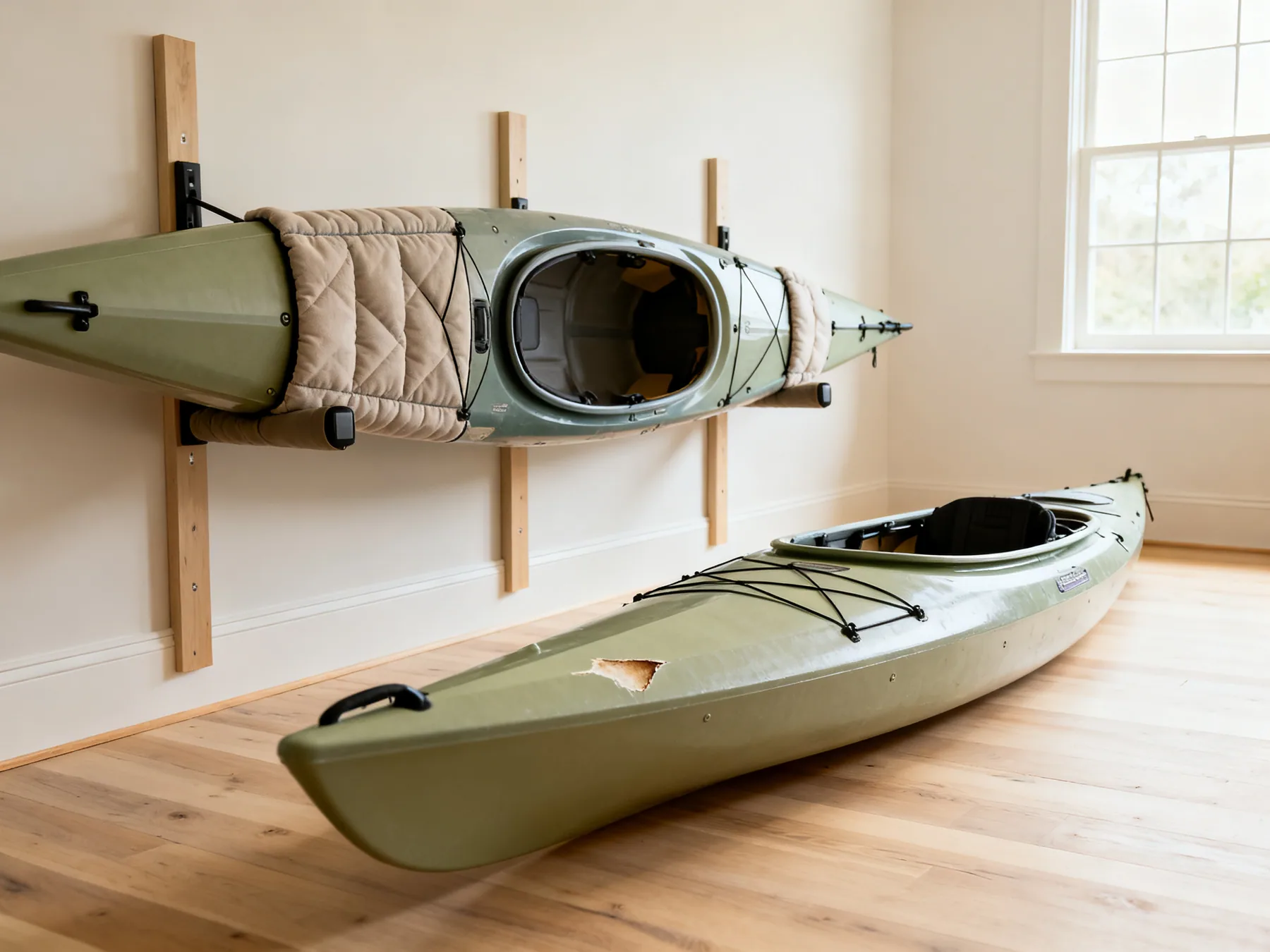
On its side, in padded cradles
The most reliable arrangement for long-term storage. The boat rests on its stiff side rather than its flexible bottom, and it takes very little space against a wall.
The standard correct method
Or upside down on padded bars
Deck down, hull up, resting on the gunwales. Also fine, and it keeps water, dust and insects out of the cockpit, which is why I slightly prefer it outdoors.
Never on the hull for more than a few days
A day off the water is nothing. A season is what causes the flat spot. If it has to sit on the ground briefly, put it on foam and turn it.
Do not lean it against a wall on one end
All the weight goes into whichever end is on the ground and the boat bows. It is also the arrangement most likely to fall on somebody.
Support near the bulkheads
Where you put the supports matters as much as what they are. A kayak has internal bulkheads, usually one behind the seat and one in front of the footwell, and those are the stiffest points on the boat because the hull is braced there.
Two supports positioned at or near the bulkheads carry the boat with almost no flex. The same two supports at the extreme ends, or in the middle of the cockpit, let the boat sag between them and that sag is what sets in.
Look at the outside of the hull and you can often see faint seam lines showing where the bulkheads sit. Otherwise reach inside and feel for them.
Two supports, roughly a third in from each end
That approximates the bulkhead positions on most recreational boats and it distributes the load evenly. Check yours rather than assuming.
Wide and padded, never narrow
Broad cradles or wide webbing spread the load. A bare metal hook or a thin strap concentrates it and leaves an indent within a season.
Fix wall cradles into studs or masonry
A kayak is not heavy but it is long and it will be pulled on. Into structure, and check the boat can come down without hitting anything.
Do not overtighten the straps
Straps are there to stop it falling, not to hold it in place. Cinched tight against a hull they cause exactly the indents you were avoiding.
Snug, not tight
Suspended storage, if you have the height
Hanging is an excellent use of a garage, because a kayak is light and the space above head height is usually empty. The requirement is the same: wide support in the right places.
Two wide webbing slings from ceiling joists, boat upside down, is a good arrangement and needs almost nothing. Check what you are fixing into, because ceiling joists in a garage may be sized only for the ceiling.
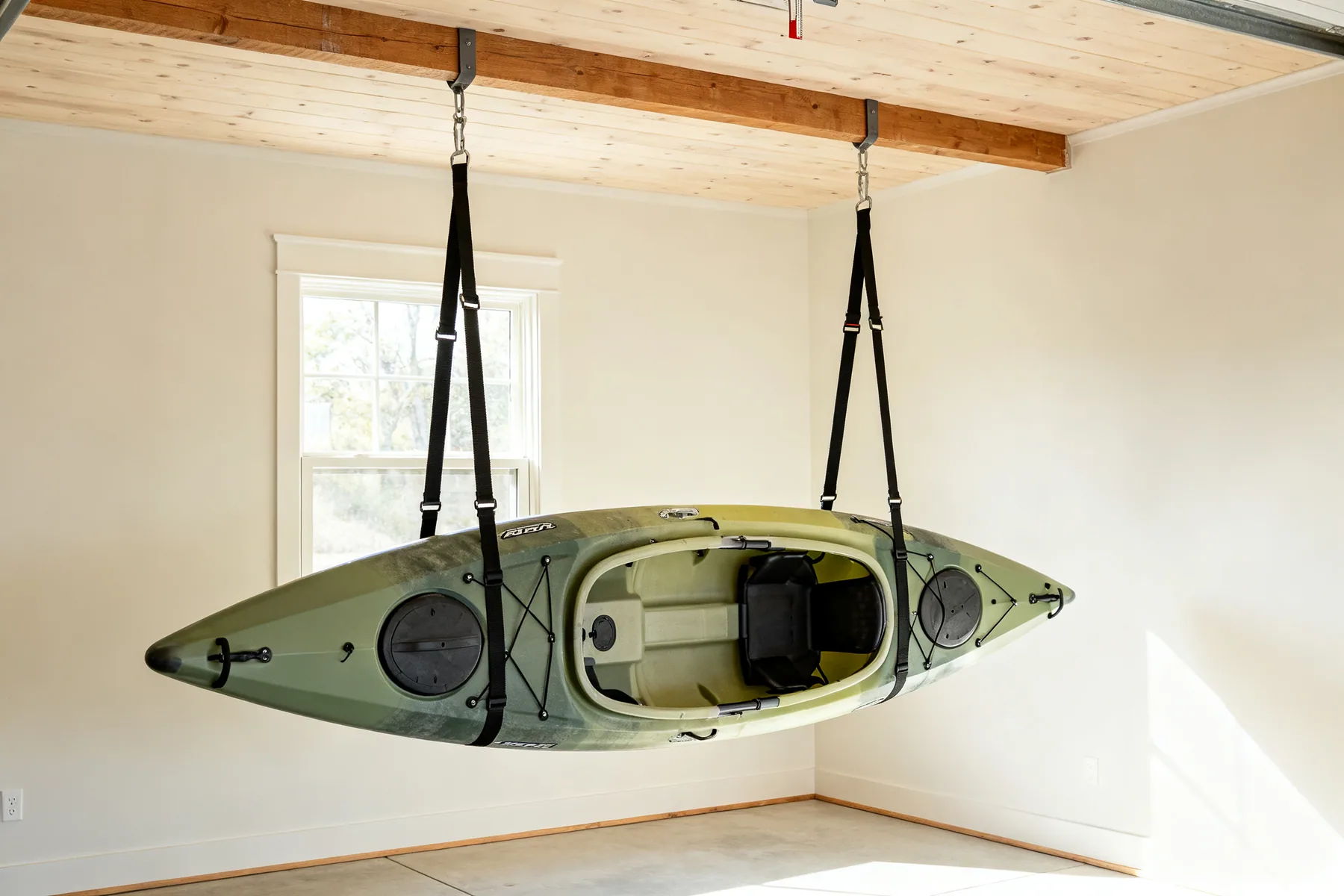
Wide webbing slings, hull upward
The webbing spreads the load and the upside-down orientation keeps the cockpit clean. Simple, cheap and kind to the boat.
Fix into joists, not just the ceiling board
Find the joists and fix into them. A kayak coming down unexpectedly is both a damaged boat and a real hazard.
A pulley hoist if it is going high
Lifting a boat above head height repeatedly is awkward and a hoist makes it a one-person job. Worth it if the kayak is used often.
Leave room to get it down
Check the boat can be lowered and turned without hitting a car, a light or a door. Plenty of hanging systems work until you try to use them.
Sunlight is the real destroyer
If a kayak is stored outside, UV is what will finish it, and it does more damage than any amount of rain or cold. Sunlight breaks down polyethylene, making it chalky, faded and eventually brittle, and it degrades gelcoat and any exposed webbing, bungee and seat fabric at the same time.
Shade is the answer, and a cover is second best. The important detail is that the cover must breathe: a sealed tarpaulin traps condensation against the hull and grows mould on the deck fittings and seat.
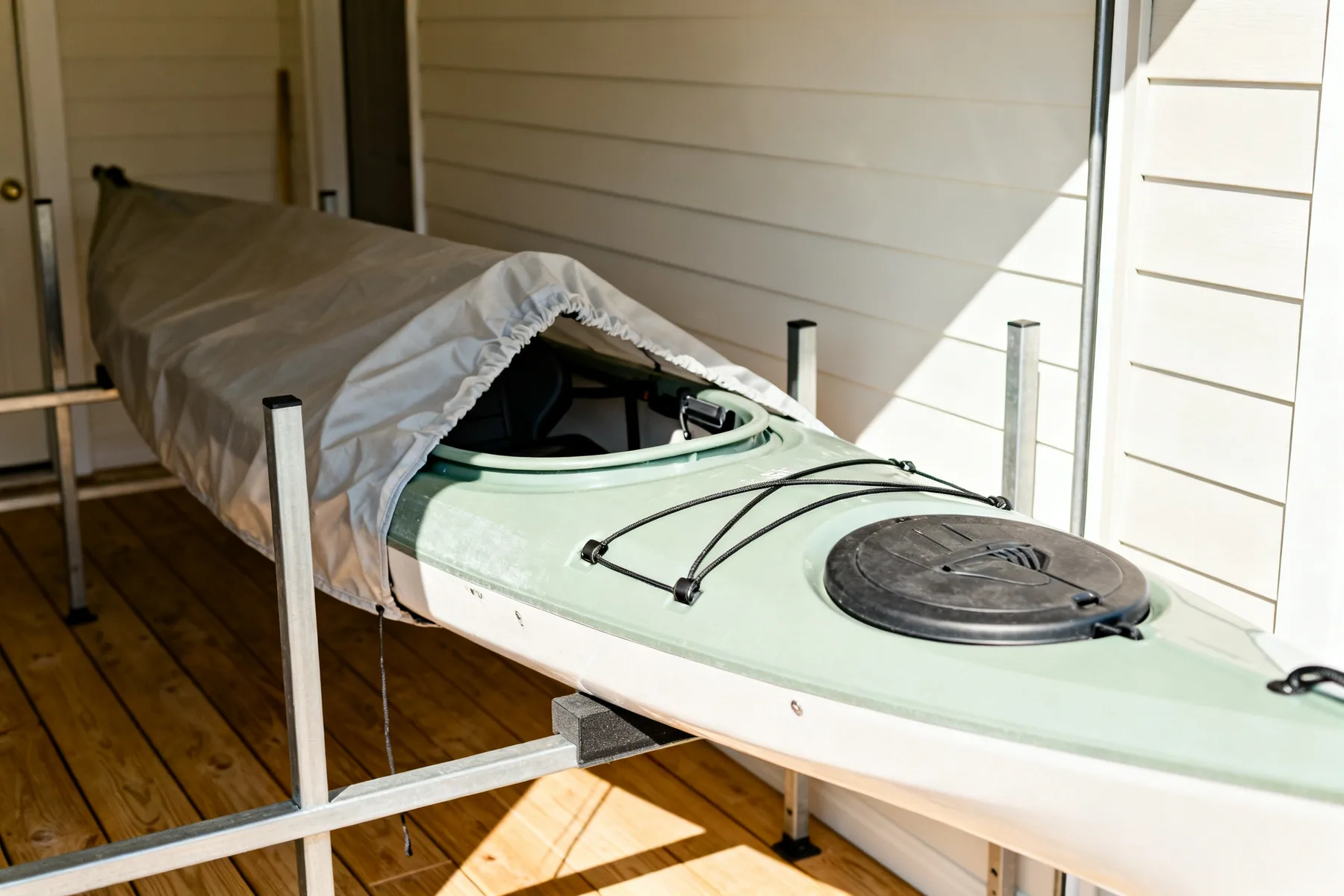
- Store indoors or in shade if you possibly can. UV is the main enemy outdoors.
- Use a breathable cover rather than a sealed tarpaulin.
- Plug or cover the cockpit so it does not fill with water, leaves or insects.
- Loosen the deck bungees slightly for long storage, since tension plus UV degrades them fastest.
- Do not store a kayak touching hot ground or a dark wall in summer sun.
- Empty every hatch and leave the covers slightly loose so the compartments air.
- Rinse salt water off thoroughly before storing, including the fittings.
- Keep it off the ground so damp and insects cannot get to it.
Paddles, buoyancy aids and the rest of the kit
The boat is the obvious part and the kit is what actually degrades unnoticed, because it usually gets stuffed in a bag damp and forgotten until the next trip.
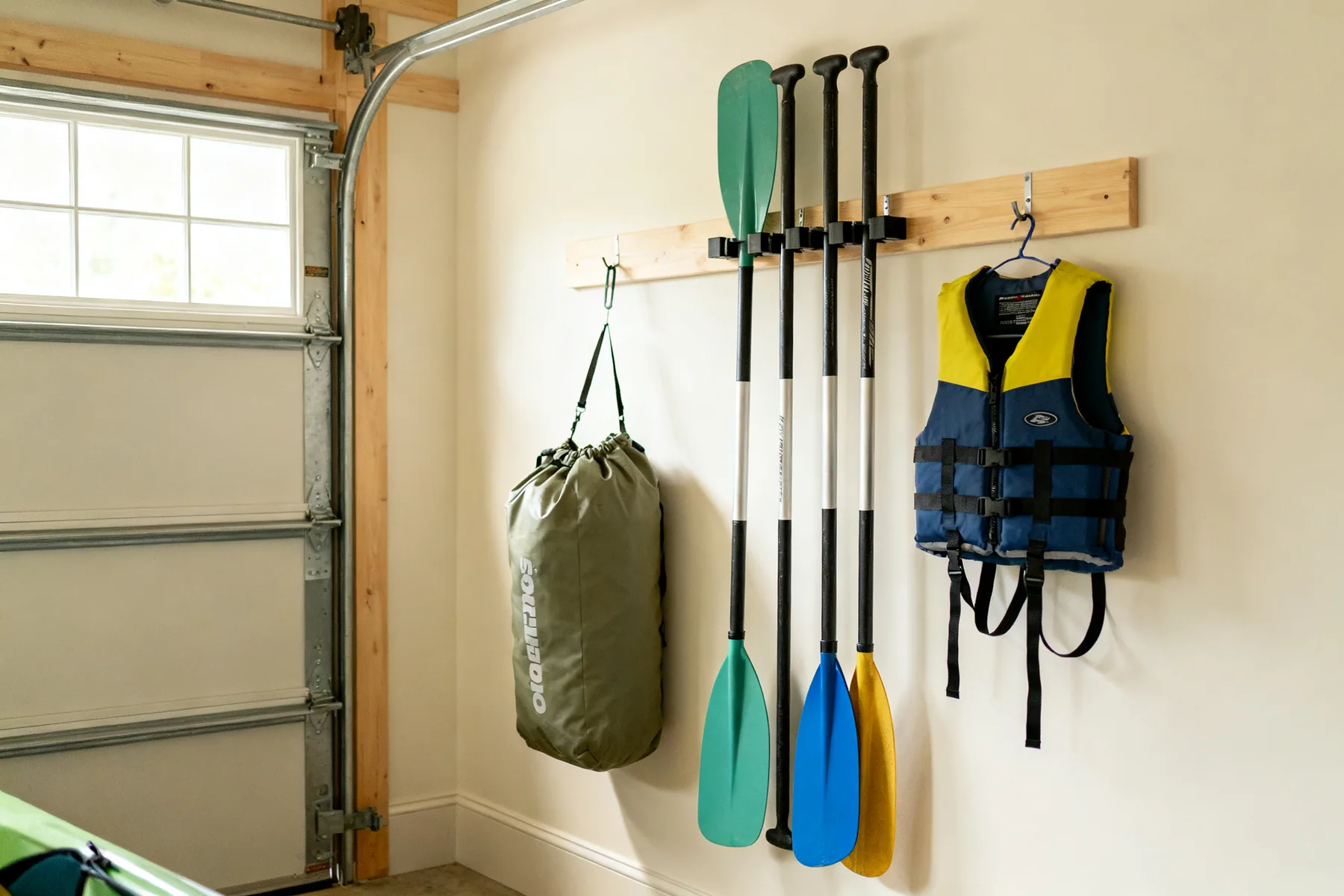
- Hang buoyancy aids on a broad hanger so they dry and hold their shape.
- Never store a buoyancy aid compressed or damp. Both reduce its performance.
- Split take-apart paddles and store them clipped to a wall rack, off the floor.
- Rinse and dry dry bags inside out, and store them open rather than rolled.
- Hang wetsuits on a wide hanger, never folded on a crease, and out of sunlight.
- Dry the seat and back band fully before the boat goes away for the winter.
- Store the pump, throw line and repair kit together somewhere you will find them.
- Check straps, buckles and bungees at the start of each season rather than on the bank.
Kayak storage ideas that do not deform the hull: frequently asked questions
Can I store a kayak flat on the ground?
Not for long. The hull is the largest, least supported panel on the boat, and polyethylene creeps under sustained load, so a kayak resting on its hull develops a dished flat spot that affects how it tracks and does not recover. Store it on its side or upside down, where the load goes through the much stiffer gunwale line.
Where should kayak supports be positioned?
At or near the internal bulkheads, usually one behind the seat and one ahead of the footwell, which is roughly a third in from each end on most boats. Those are the stiffest points because the hull is braced there. Supports at the extreme ends or under the cockpit let the boat sag, and the sag sets in.
Is it safe to hang a kayak from the ceiling?
Yes, with wide webbing slings and fixings into the joists rather than just the ceiling board. Hang it hull upward so the cockpit stays clean, position the slings near the bulkheads, and check the boat can actually be lowered and turned without hitting a car, a light or a door.
How do I protect a kayak stored outside?
Get it out of the sun, because UV is what actually destroys a kayak, making plastic chalky and eventually brittle and degrading webbing and bungee at the same time. Use a breathable cover rather than a sealed tarpaulin, which traps condensation against the hull, and keep the boat off the ground.
Should I strap a kayak tightly to its rack?
No. Straps are there to stop it falling, not to hold it against the cradle. Cinched tight, a narrow strap concentrates load on one line of the hull and leaves a permanent indent, which is the same failure as hanging it from bare hooks. Snug is right, tight is not.
How should I store a buoyancy aid and paddles?
Hang the buoyancy aid on a broad hanger so it dries and holds its shape, and never store it compressed or damp because both reduce its performance. Split take-apart paddles and clip them to a wall rack off the floor. Dry bags should be rinsed, dried inside out and stored open rather than rolled.