Outdoor & Garden
Garden tool storage ideas that keep steel out of the damp
Long handles on a rail recover a third of a shed floor. After that, garden tool storage is mostly about keeping steel away from damp.
Garden tools fail in two ways and neither is running out of room. They rust, and they get lost, and both are storage problems with cheap answers.
The rust is the expensive one. A spade left leaning in a corner of a damp shed all winter will pit along the blade, and pitted steel does not cut cleanly through soil afterwards. It is not the rain that does it either, which surprises people: it is condensation forming on cold metal as an unheated shed cycles in temperature, repeated through spring and autumn.
The losing is the annoying one. Small hand tools disappear into the bottom of a bucket or a drawer, and a dark shed makes it worse, so people buy a third pair of secateurs.
Both are fixed by getting things off the floor and where you can see them.
Long handles go on a rail
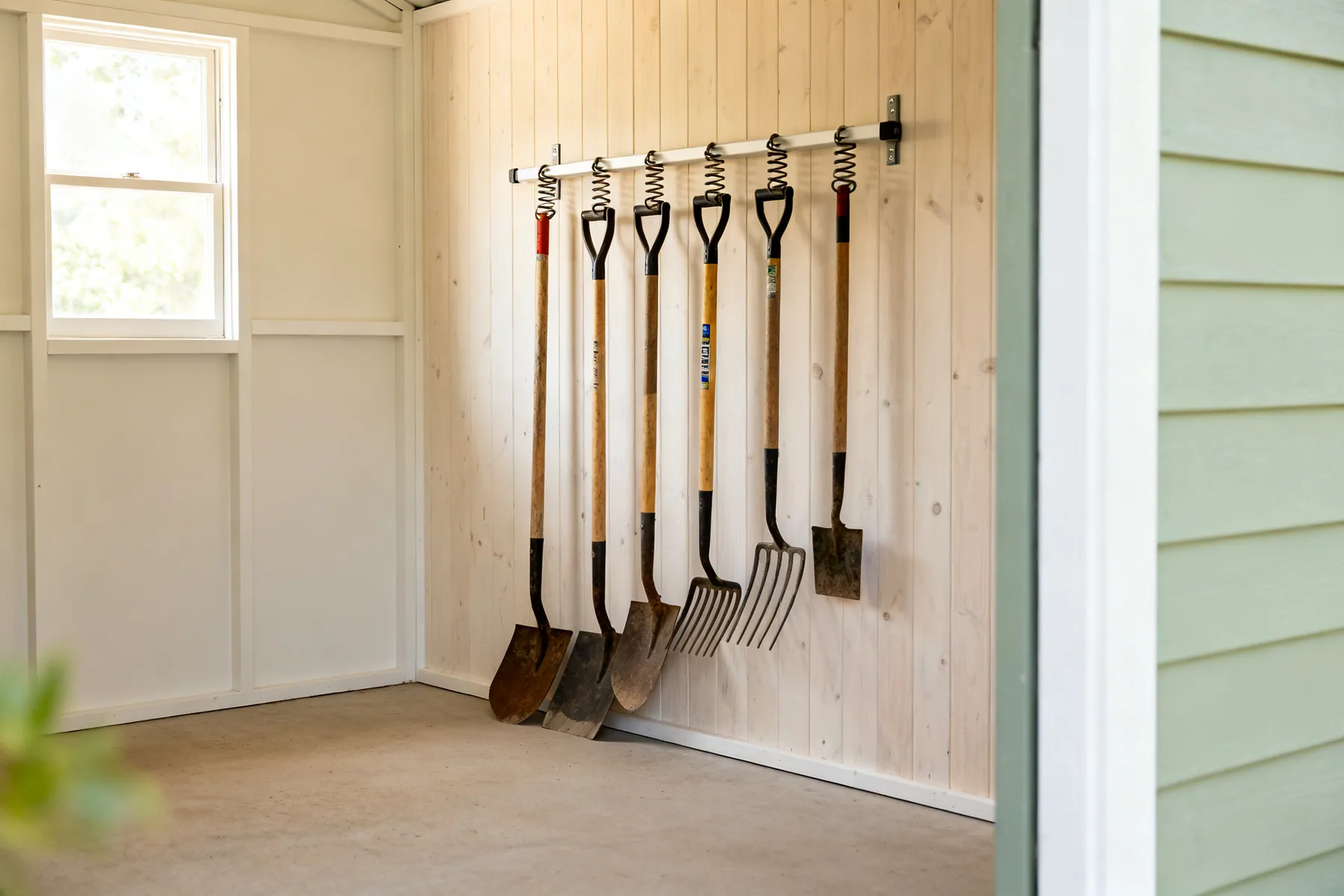
This is the highest-impact change in any shed or garage, and it costs the price of a rail and a handful of grips. Spades, forks, rakes, hoes, brooms and edging tools all stand upright against a wall instead of leaning in a corner falling over each other.
A single horizontal rail at around 1.5m with spring grips or J-hooks does it. In a shed you can fix straight into the studs with no plugs, since the frame is solid timber at roughly 400 to 600mm centres.
I have never fitted one in a small shed and recovered less than a third of the floor.
Fix the rail into studs, not cladding
Shed cladding is thin boarding and a loaded grip will pull straight through it. The frame behind takes screws directly, and a rail spanning two studs is genuinely strong.
Spring grips rather than open hooks
A grip holds the handle rather than letting it swing off when the door slams. Worth the small extra over a plain hook for anything heavy.
Blades upward or downward, consistently
Blades down means anything falling lands point-first. Blades up means the sharp end is at eye level. I prefer blades down with the tools at the far end of the shed, away from where you stand.
Hang the wheelbarrow vertically too
A barrow on the floor eats about 0.8m². Hung by its front lip on two heavy hooks it takes almost nothing. Fix into a stud, because it is heavier than it looks.
Keep the mower on the floor by the door
It is the heaviest thing and the one most often moved, so it gets the spot it can roll straight out of. Everything else goes on the walls around it.
Small tools have to be visible
Secateurs, trowels, hand forks, twine, gloves, labels, a dibber. These are the things that vanish, and the reason is that a shed is dark and a bucket is opaque.
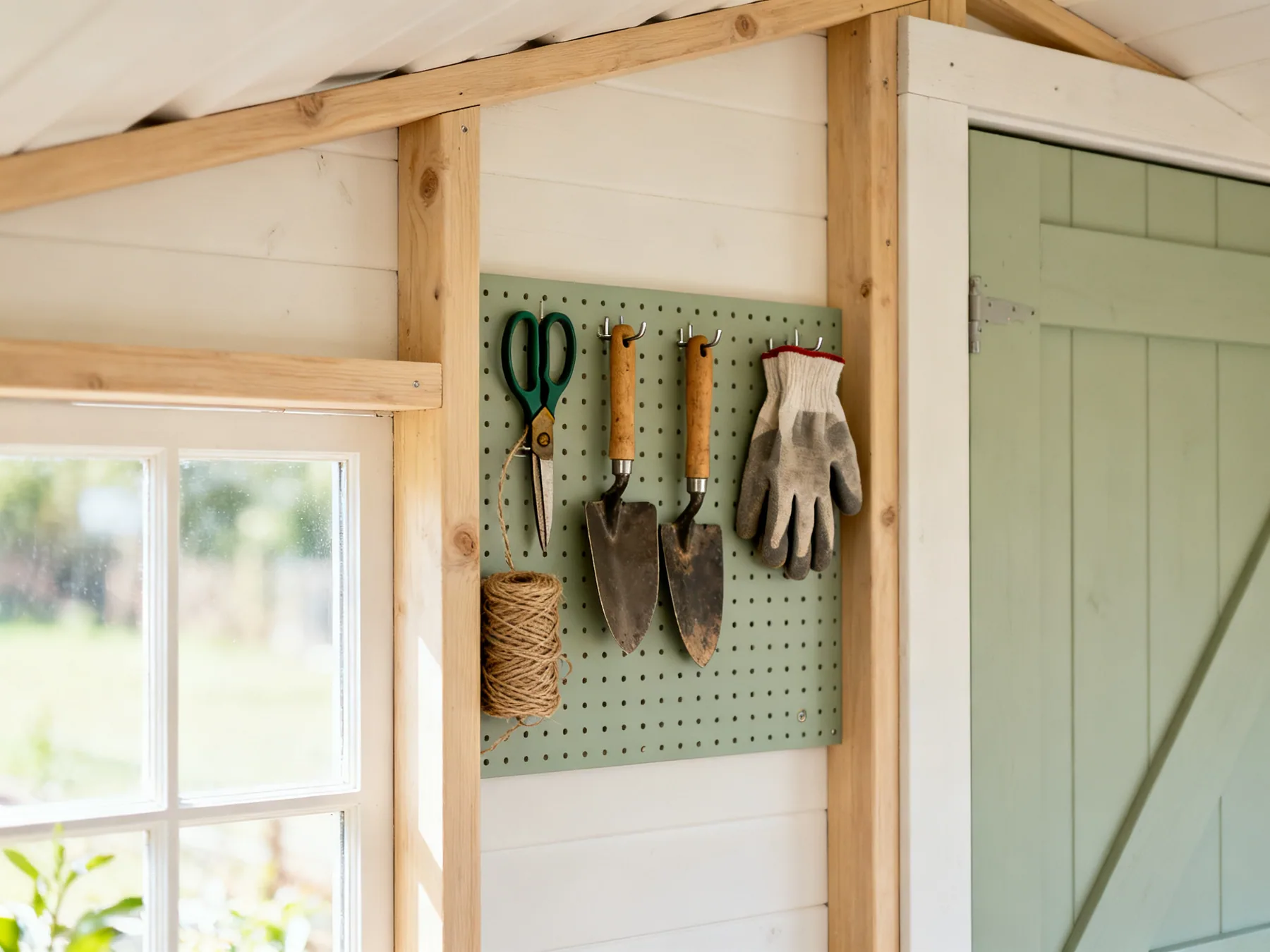
Visible storage matters more here than almost anywhere in a home. A pegboard panel between two shed studs, holding everything on hooks with an outline or a labelled spot, means you can see at a glance what is there and what has been left in the garden.
Pegboard between the studs
The studs project into the room, giving you ready-made bays 400 to 600mm wide. A panel on battens between two of them costs very little and holds a whole hand-tool kit.
Outline or label each tool position
An empty outline tells you a tool is still in the garden before you go looking for it. The same trick as a workshop shadow board, and it works for the same reason.
Magnetic strip inside the door for small steel
The back of a shed door is doing nothing. A magnetic strip holds small metal tools flat and visible. Keep the load light so the door still hangs true.
One bucket or tote for the tools you carry out
A grab-and-go tote with the three or four things you always take saves walking back, and it gives those items a defined home when they return.
Fit a light
A stick-on battery LED changes how much of a shed you actually use. Dark storage is storage you forget you own.
Rust: it is condensation, not rain
This is the part worth understanding, because it changes what you do. An unheated shed or garage follows the outside temperature, and when warmer, damper air meets cold steel, water forms directly on the metal. That happens repeatedly through spring and autumn, and it is why a tool that has never been rained on can still pit.
So a better lock and a thicker tarpaulin do nothing. What helps is reducing standing humidity, keeping steel off the floor and cold walls, and putting a physical barrier on the metal.

- Clean soil off before storing. Soil holds moisture against the blade all winter.
- Wipe steel with an oily rag before winter, and after any wet use.
- Keep tools off the shed floor, which gets damp first, and off cold external walls.
- Add a low vent and a high vent on opposite walls so you get airflow rather than trapped air.
- Store hand tools in a closed box or cabinet with a desiccant rather than open in a damp shed.
- A bucket of oiled sand is a genuinely good way to store and clean small steel tools.
- Bring anything precision or wooden-handled indoors for the winter if you can.
- Deal with surface rust early with fine abrasive and oil, before it becomes pitting.
Blades, and the safety part
Garden tools include some of the sharpest and heaviest things most households own, and a shed is often the least controlled space in a property. Worth a section rather than a footnote.
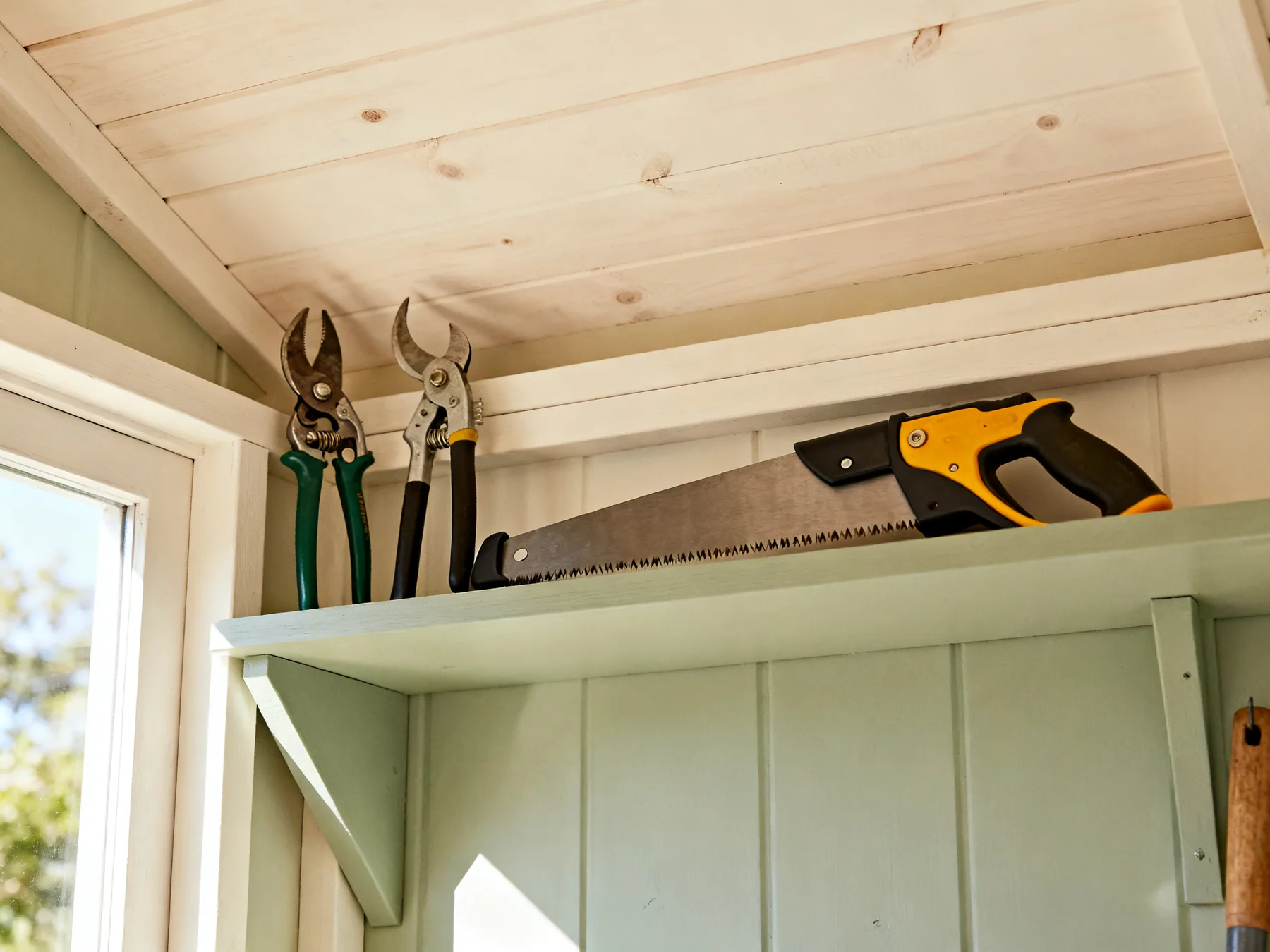
- Fit blade guards to shears, loppers, saws and hedge trimmers before storing them.
- Store sharp tools above child height, or in a locked cabinet if that applies.
- Never store a blade loose in a bucket or a drawer you reach into without looking.
- Hang powered tools on two hooks each, cutting head upward and cable coiled.
- Keep the shed lockable, with a closed-shackle padlock and hinge bolts, since hinges are the weak point.
- Store long-handled tools where they cannot fall across a doorway.
- Keep the floor clear. A trip in a shed full of blades is the accident to avoid.
- Check handles for splits before use, particularly on axes and sledgehammers.
Chemicals, fuel and the things with labels
The last category and the one with the most rules attached. Garden chemicals, fertilisers, fuel and lubricants all have storage requirements printed on them, and those requirements are the actual answer rather than anything I would invent.
- Keep everything in its original labelled container. Never decant into a drinks bottle.
- Read the label for temperature limits, since many products are ruined by freezing.
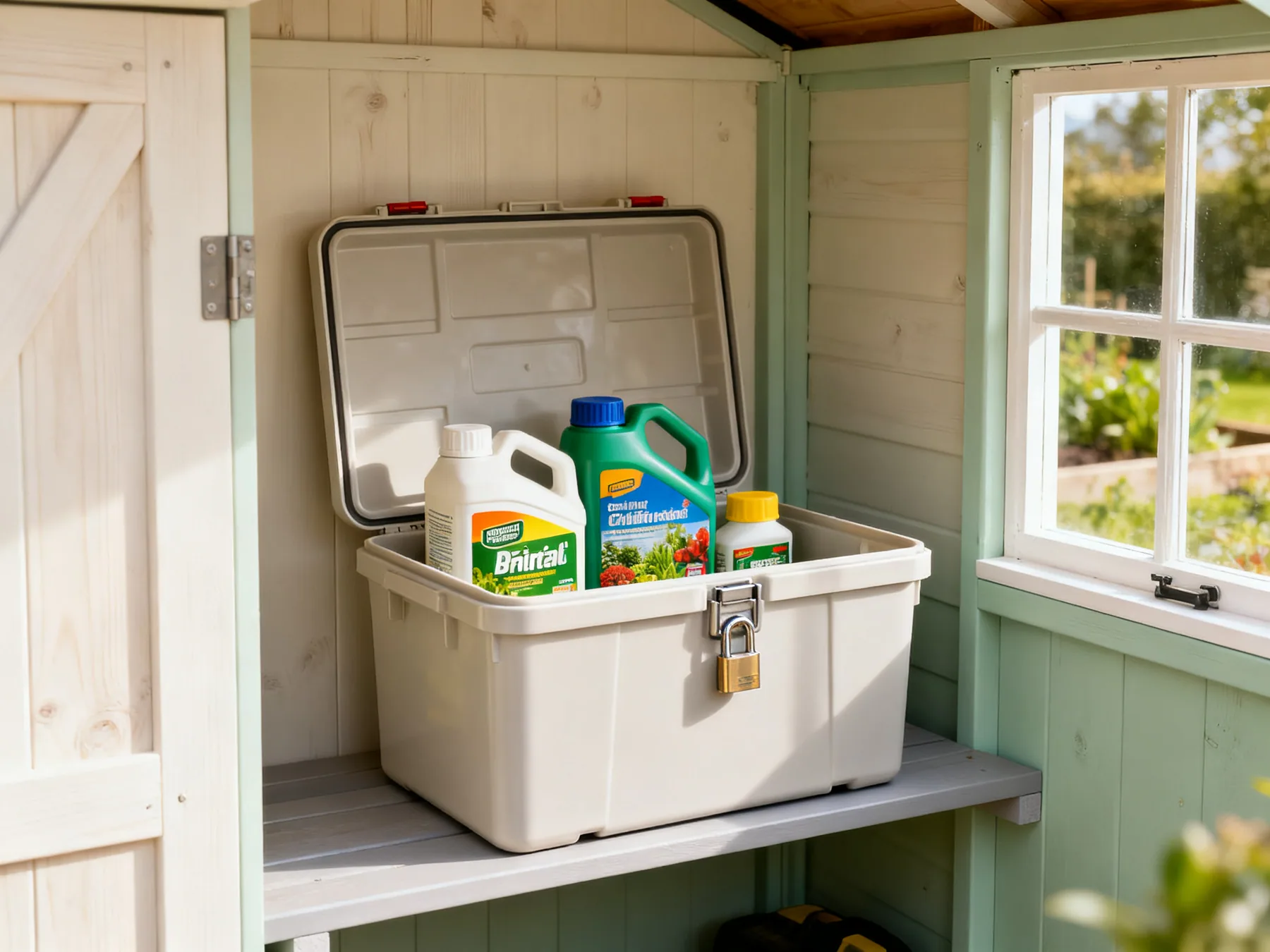
- Store in a sealed, lockable, frost-tolerant box, above child height.
- Keep chemicals away from fuel, and both away from any ignition source.
- Do not store petrol or propane in a small enclosed shed near anything that sparks.
- Run a petrol mower low on fuel before winter storage rather than leaving a full tank.
- Keep a lithium battery for cordless tools indoors at room temperature, around half charged.
- Check local regulations on domestic fuel quantities, which vary.
Garden tool storage ideas that keep steel out of the damp: frequently asked questions
What is the best way to store long-handled garden tools?
Upright on a single wall rail at about 1.5m with spring grips or J-hooks. It is the highest-impact change in any shed and it typically recovers a third of the floor. Fix into the studs rather than the cladding, since shed cladding is thin boarding that fixings pull straight through under load.
Why do my garden tools rust even under cover?
Condensation rather than rain. An unheated shed follows the outside temperature, and when warmer damp air meets cold steel water forms directly on the metal, repeatedly through spring and autumn. Keep tools off the floor and cold walls, add a low and a high vent for airflow, and wipe steel with an oily rag before winter.
How do I stop losing small garden tools?
Make them visible. A pegboard panel fitted between two shed studs holds a whole hand-tool kit on hooks, and marking an outline or a labelled spot for each one means an empty space tells you the tool is still out in the garden. A shed is dark, so visible storage matters more here than almost anywhere.
How should I store shears and other sharp garden tools?
With blade guards fitted, above child height, and never loose in a bucket or drawer you reach into without looking. Store long-handled tools where they cannot fall across a doorway, hang powered tools on two hooks with the cutting head upward, and keep the shed floor clear because a trip among blades is the accident to avoid.
Is a bucket of sand good for storing tools?
A bucket of sand with a little oil worked through it is genuinely useful for small steel hand tools. Pushing a trowel or a hand fork in and out cleans the soil off and leaves a thin film of oil on the metal, which is exactly the barrier that prevents condensation rusting it.
How should garden chemicals be stored?
In their original labelled containers, never decanted, in a sealed lockable frost-tolerant box above child height. Read the label for temperature limits, since many products are ruined by freezing. Keep chemicals away from fuel and both away from any ignition source, and check local rules on domestic fuel quantities.