Hobbies & Sport
Board game storage ideas that keep the pieces in the box
Storing board games upright looks tidy and quietly empties them. A cardboard insert only holds pieces while it is lying flat.
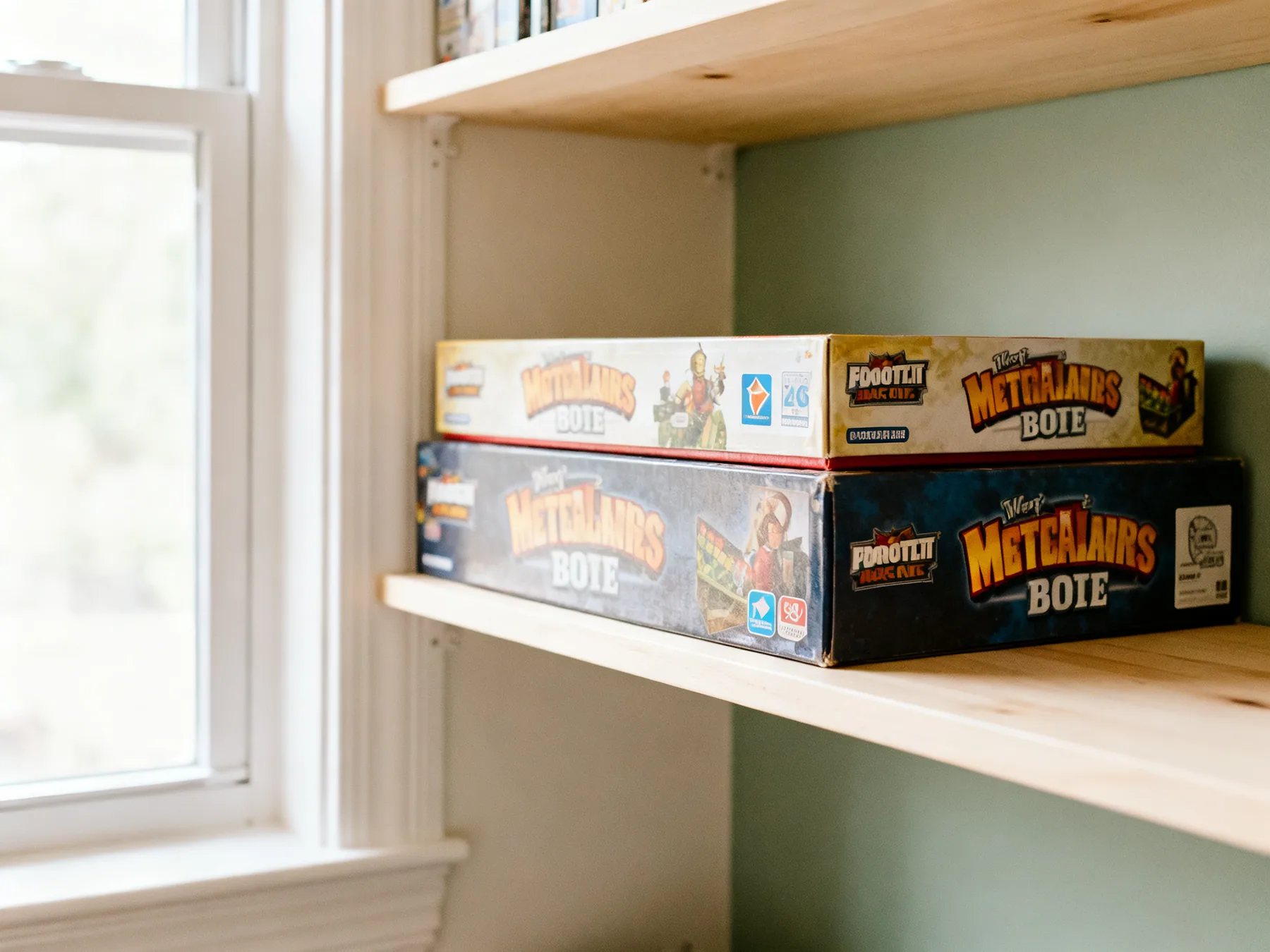
Board games are stored the way books are stored, on their edges with the spines out, because that is what a shelf invites you to do and it looks excellent. It is also the reason games lose pieces.
A game box is not a book. Inside it is a moulded or die-cut cardboard insert with open compartments, and those compartments only retain anything while gravity is holding it down. Turn the box on its end and every counter, card and meeple slides sideways, collects in the lid, and the next time somebody lifts that box off the shelf a proportion of it goes on the floor.
So the first rule is flat, and after that it is about bagging the pieces, respecting how heavy a shelf of games actually is, and keeping them out of the two places people most often put them.
Flat, always, and no more than five high
The trade with flat storage is that you cannot read the titles as easily and you have to lift boxes to reach the one underneath. Both are real, and both are much smaller problems than a game missing a third of its counters.
You can mitigate the reading part by turning the stacks so the box edges face out, which on most games carries the title. And you mitigate the lifting part by keeping stacks short, because a stack of nine means unstacking eight to reach the bottom, and in practice that means the bottom four never get played.
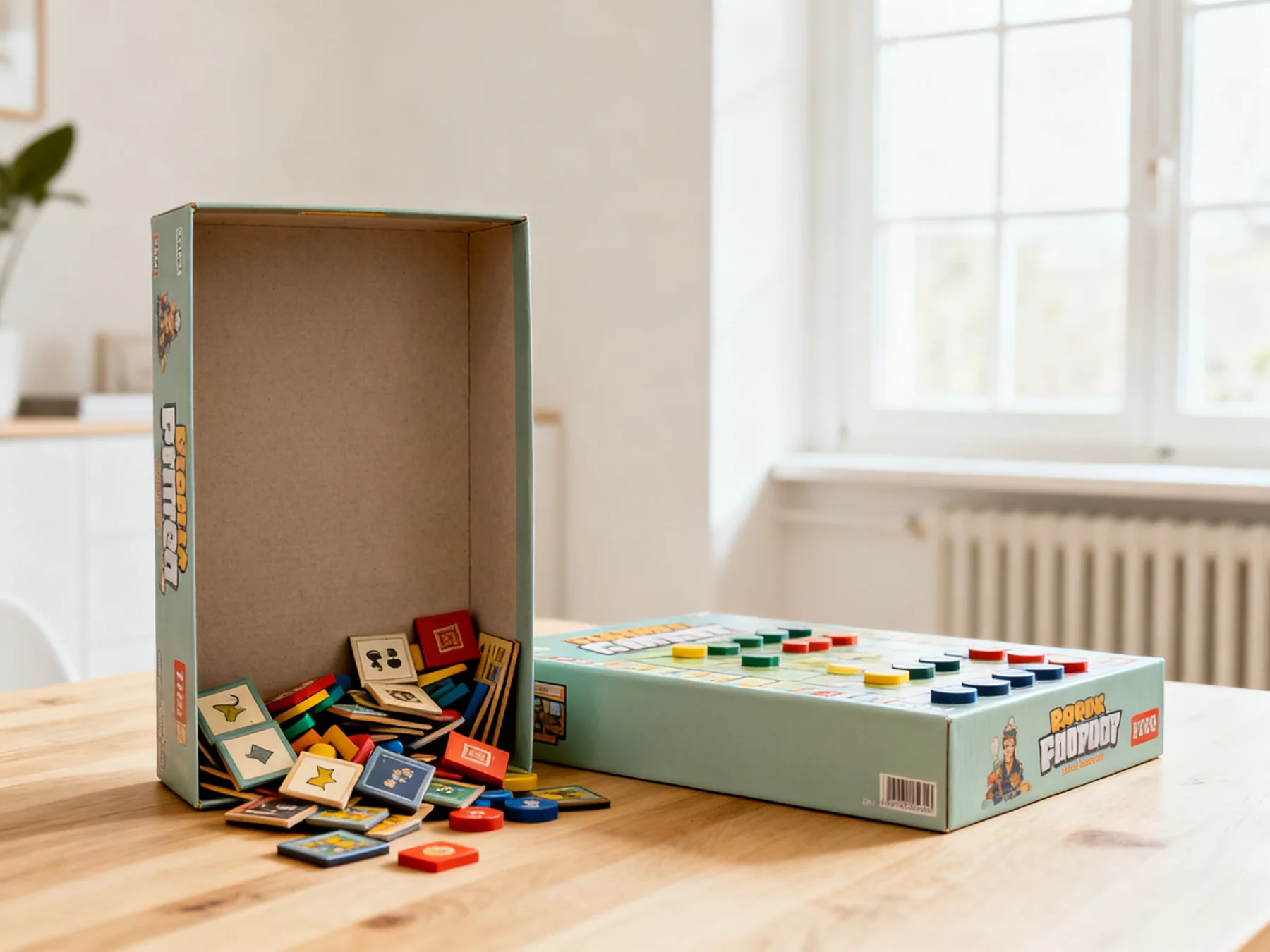
Two or three short stacks rather than one tall one
Five boxes is about the limit before reaching the bottom is a chore. Two stacks of four beats one of eight, and the games at the bottom actually get used.
The tallest stack is the least played
Heaviest at the bottom
Large boxes with a lot of components at the base, card games and small boxes on top. It is more stable and it means the heavy lifting is the least frequent.
Turn the box edges outward
Most games print the title on the box edge as well as the lid. Facing those out gives you most of the browsability of upright storage with none of the component migration.
Keep the games you play most on top
Obvious and often not done, because games get stacked in the order they were bought. Reordering by how often you actually play takes five minutes.
If a box must go upright, bag everything first
Sometimes the shelf only works vertically. In that case sealed bags for every component make it survivable, because the pieces cannot leave their bags even if the bags shift.
Bag the components by type
This is the single change that most improves a game collection, and it helps in two ways at once.
It protects the pieces, because bagged components cannot migrate between compartments or out of the box. And it dramatically cuts setup and pack-down time, because you take out five bags instead of sorting a tray of mixed counters, and putting a game away becomes dropping bags in rather than sorting.
Sort by component type rather than by player colour, unless the game genuinely deals per player. A bag of all the wooden discs is more useful than four bags each containing one of everything.
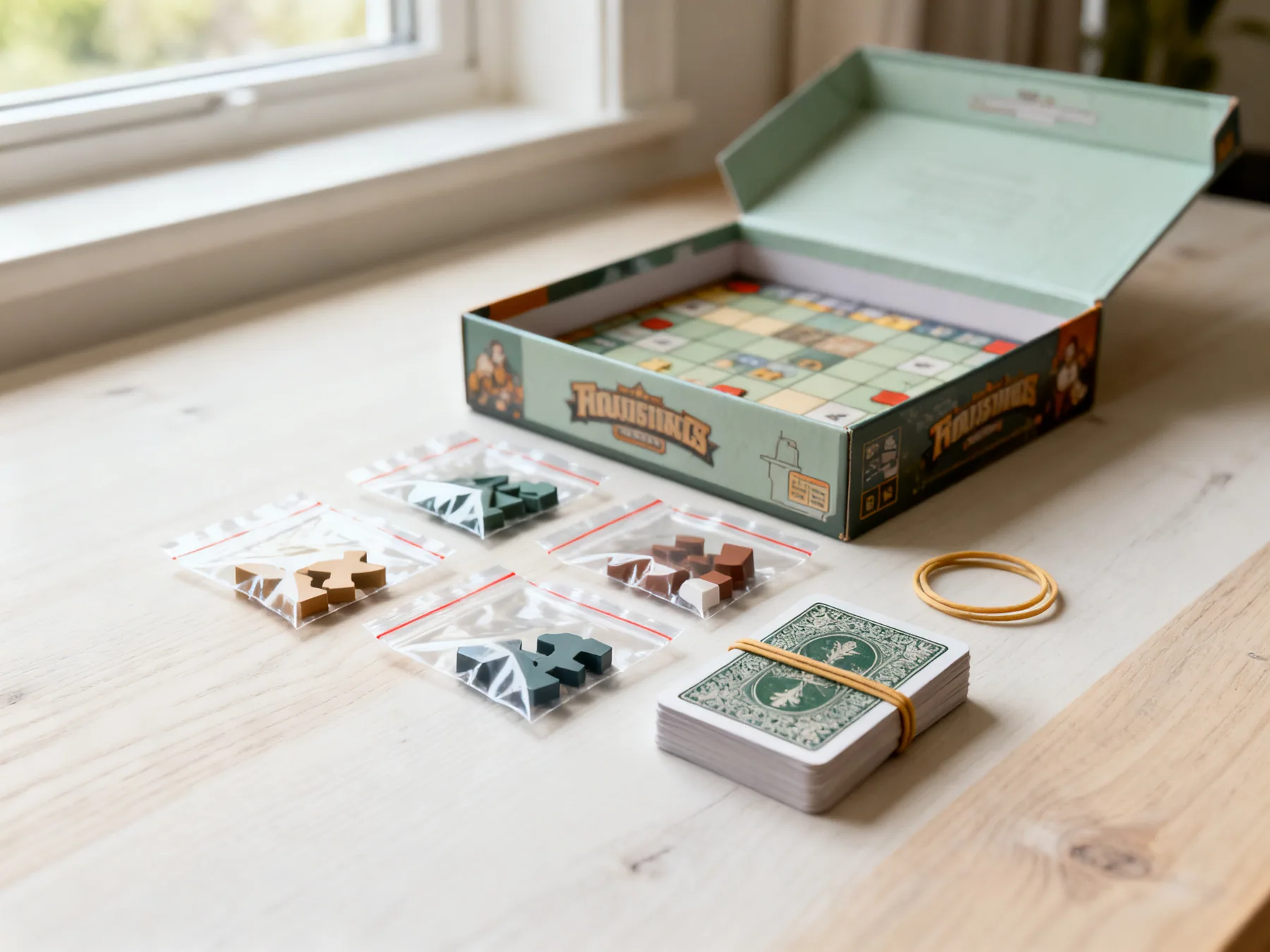
One resealable bag per component type
Small grip-seal bags, cheap in quantity. Counters, cubes, coins, tokens, cards, dice. Setup gets noticeably faster and nothing ends up in the wrong compartment.
Band the card decks
An elastic band around each deck keeps it together, and it stops cards fanning out into the box where they get bent. Do not band them so tightly that the edges deform.
Keep the rules on top, not underneath
Rulebooks at the bottom of a box get creased and torn by everything above them. On top of the insert, flat, and they survive.
Bin the shrink wrap and keep the insert
The insert is doing a job even when you bag components, because it stops the bags sliding into one heap. People throw inserts away to save space and then find the box rattles.
Photograph a set-up game before packing it away
For anything with a complicated insert or a lot of parts, a photo on your phone of how it fits back in saves genuine frustration months later.
The shelf itself, and the weight
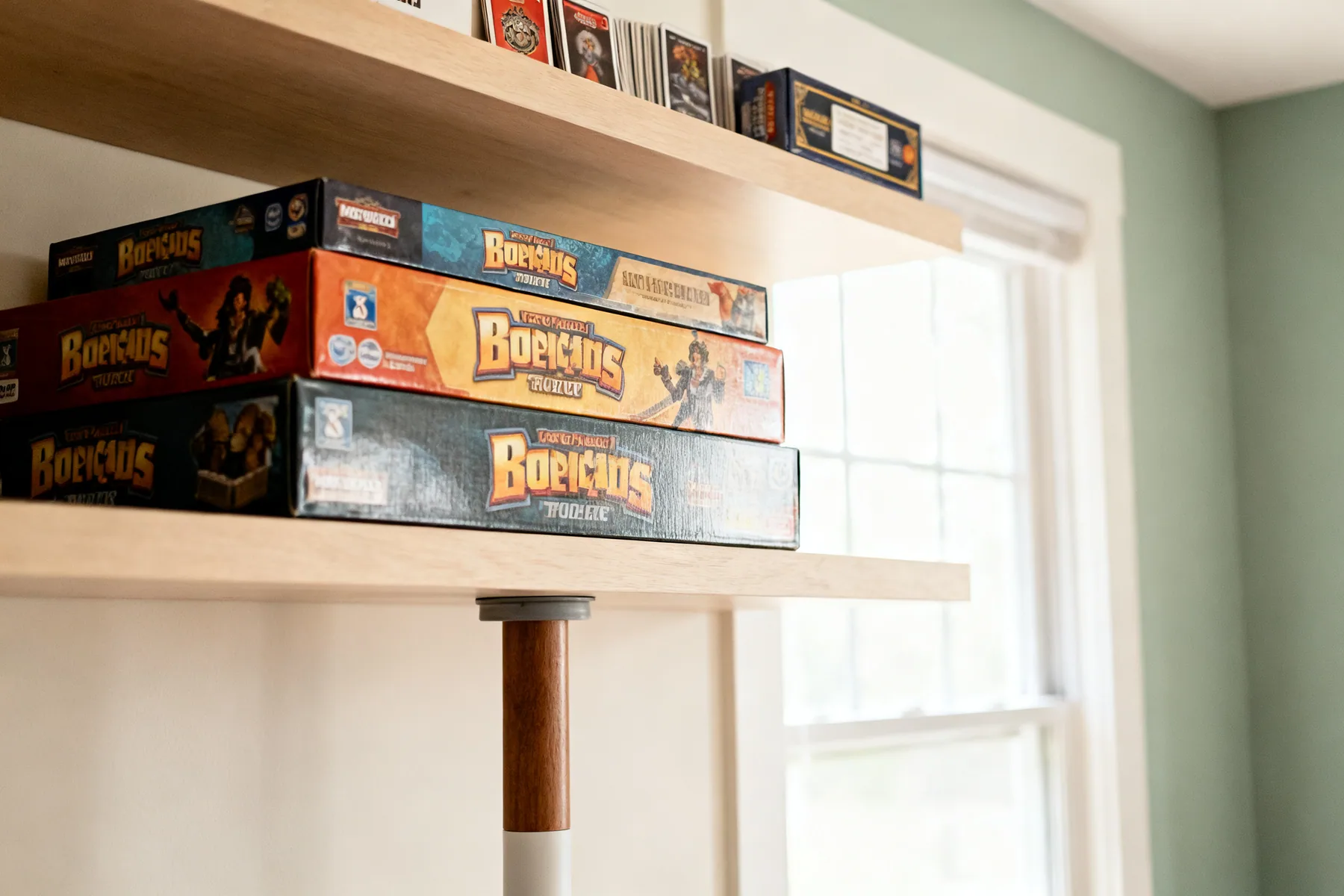
A shelf of large board games is heavier than most people plan for. Big-box games run to several kilograms each, and a metre of them is a load comparable to books, which is the heaviest thing most domestic shelving ever carries.
So the same rule applies: keep unsupported spans short, or the shelf will bow. And a bowed shelf is a one-way change, since it does not straighten again when you unload it.
- Keep unsupported shelf spans under about 800mm for a full row of large boxes.
- Add a batten along the back underside of an existing shelf that is starting to dip.
- Check the shelf is deep enough for your largest box, which is often 300mm or more.
- Put the heaviest games on the lowest shelf so the unit stays bottom-heavy.
- Anchor tall shelving to the wall, especially with children in the house.
- Leave a little space at the end of a shelf, or new games end up stacked on the floor.
- Keep card and small games together rather than lost between big boxes.
Where not to store games
The two places games most often end up are the two worst places for them, and the damage is permanent rather than cosmetic.
A loft swings from freezing to very hot and takes up humidity in between. A garage does the same with damp added. Board game boxes and boards are cardboard, and cardboard in those conditions warps, softens and delaminates. A warped board does not flatten out again, and a swollen box lid will not fit its base properly ever again.
Games belong on an interior wall in a heated part of the house, which is inconvenient because that is where space is scarce. It is still the right answer.
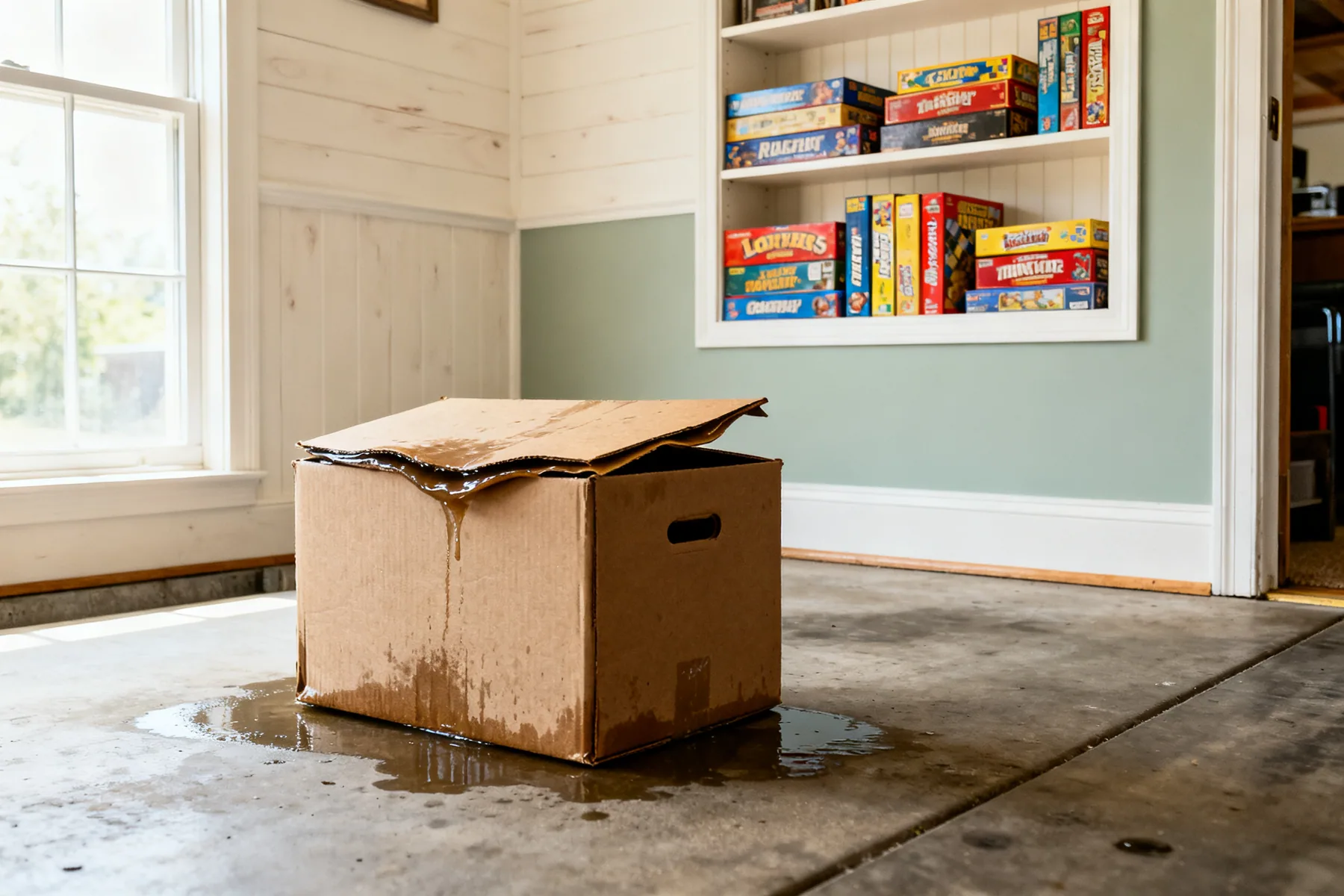
- Keep games out of lofts, garages, cellars and unheated outbuildings entirely.
- Store on an interior wall rather than against a cold external one.
- Keep them out of direct sunlight, which fades box art noticeably in a single summer.
- Do not stack anything heavy on top of a game box, which crushes the lid and the insert.
- Keep them off the floor, where they are vulnerable to spills and vacuum cleaners.
- If a box is already damaged, transfer the contents to a sturdy lidded box and label it.
- Check for warping if games have been stored somewhere marginal, because it worsens over time.
Large collections, and the box-free option
Past a certain size a collection stops fitting on any reasonable shelf, and at that point there is a decision worth knowing about, because the community is divided on it.
You can discard the boxes and store the components and boards in slim purpose-made sleeves or folders, which cuts the space a large collection takes by more than half. It works, and I would think carefully first: it is irreversible, it removes the artwork and the box, and it substantially reduces resale value.
For a collection you play constantly and would never sell, it is a reasonable trade. For anything collectible, it is not.
Keep the boxes for anything collectible or valuable
Original packaging is most of the resale value for out-of-print and collectible games. This is the case where I would take the space penalty without hesitating.
Consider sleeves only for the games you play constantly
If a game gets played monthly and will never be sold, slim storage is a genuine space saving. Keep the rules and a printed component list with it.
Store spare boxes flat if you keep them
Some people store components slim and keep the empty boxes flattened in a loft. Reasonable, as long as you accept the boxes will not be in mint condition afterwards.
Thin the collection instead
The less popular answer and often the right one. A collection that no longer fits and includes twelve games nobody has played in three years is a curation problem rather than a storage one.
Board game storage ideas that keep the pieces in the box: frequently asked questions
Should board games be stored flat or upright?
Flat. A game box is not a book: inside it is a cardboard insert with open compartments that only retain pieces while gravity holds them down. Stored on end, counters and cards slide sideways into the lid, and a proportion goes on the floor next time the box is lifted. Turn the box edges outward so you can still read the titles.
How high can I stack board games?
About five, heaviest at the bottom. Beyond that, reaching the bottom box means unstacking everything above it, and in practice those games stop being played. Two stacks of four is much better than one of eight, and it also keeps the load on the shelf more spread out.
What is the best way to organise game components?
One resealable bag per component type, sorted by type rather than by player colour unless the game genuinely deals per player. It stops pieces migrating between compartments and it cuts setup and pack-down time considerably, because you take out five bags instead of sorting a tray of mixed counters.
Can I store board games in the loft or garage?
No, and the damage is permanent rather than cosmetic. Both swing widely in temperature and humidity, and game boxes and boards are cardboard, which warps, softens and delaminates in those conditions. A warped board never flattens out again and a swollen lid will not fit its base properly. Interior wall, heated part of the house.
Should I throw away board game boxes to save space?
Only for games you play constantly and would never sell. Slim sleeves and folders can cut the space a large collection takes by more than half, and it is irreversible, removes the artwork and substantially reduces resale value. For anything collectible or out of print, keep the box and take the space penalty.
How much weight can a board game shelf take?
Treat it like a bookshelf, because a metre of large boxes is a comparable load. Keep unsupported spans under about 800mm in ordinary shelving board, put the heaviest games on the lowest shelf, and add a batten along the back underside if an existing shelf is starting to dip. A bowed shelf does not straighten when you unload it.