Hobbies & Sport
Book storage ideas, starting with what the shelf can actually hold
Books are the heaviest thing per metre most people ever put on a domestic shelf, and almost no advice about storing them mentions it.
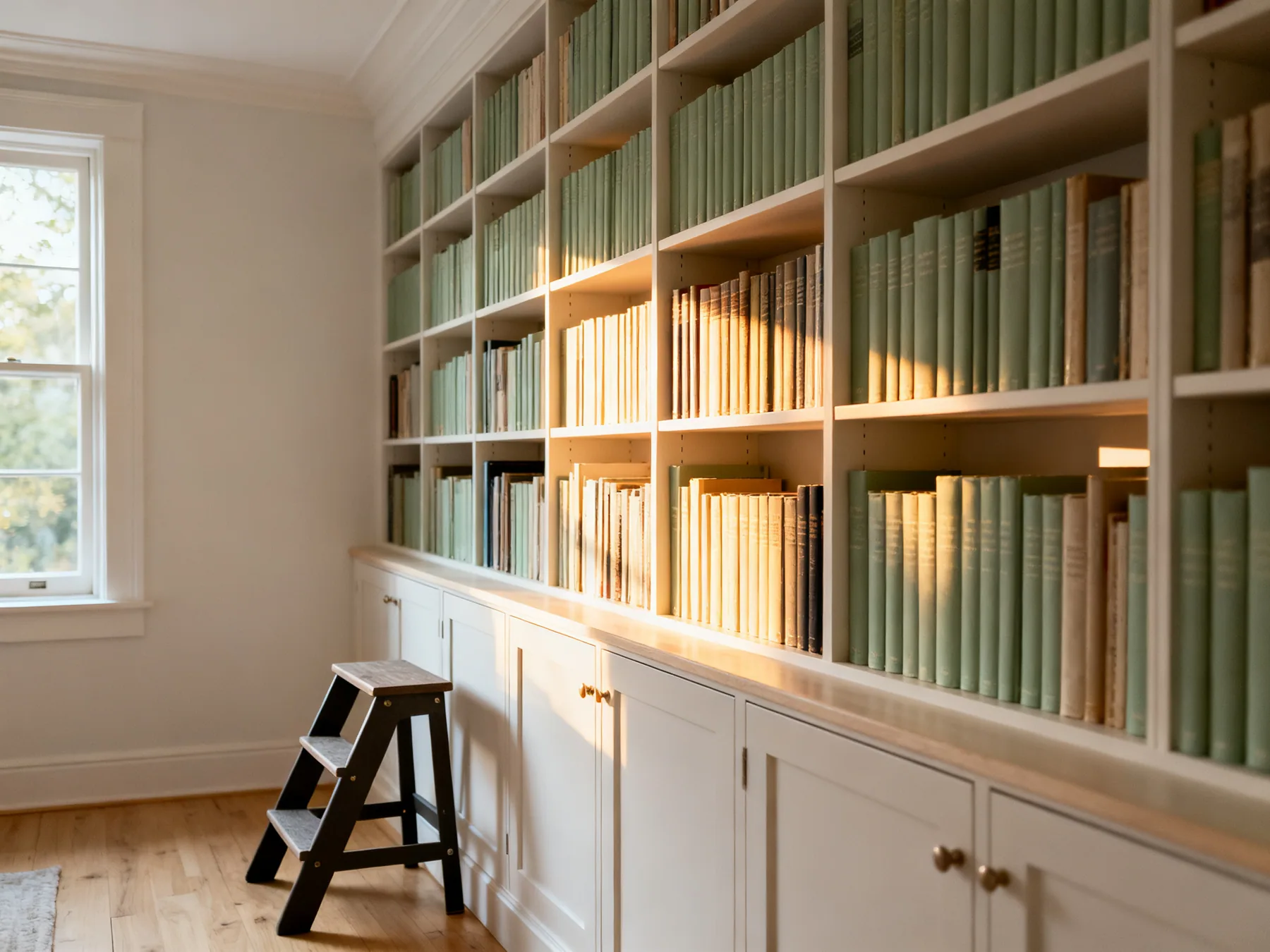
The thing about books is that they are dense. A metre of packed hardbacks runs to somewhere around 20 to 30kg, which is more than most people would guess and considerably more than a lot of flat-pack shelving is designed to take across an unsupported span.
Which is why the first genuinely sagging bookshelf is such a common sight. It is not a manufacturing fault. It is a shelf a metre and a bit wide, loaded with the heaviest possible thing, doing what physics said it would.
So I want to start with the boring structural part, because getting it right costs nothing at the planning stage and is annoying to retrofit. After that it is about keeping books in decent condition, which mostly means upright, out of the sun, and away from cold walls.
Shelf span, and the sag nobody plans for
This is the part I would fix first, because it decides whether the shelving is still straight in five years. The load is high and it is uniform, which is the worst combination for an unsupported span.
As a working rule I would not run a shelf carrying books more than about 800mm without support, in typical 18mm to 25mm timber or melamine board. Beyond that you need either a thicker board, a central support, or a batten fixed along the back edge to stiffen it.
The failure is slow and it is one-way. A shelf that has bowed under load does not straighten again when you unload it.
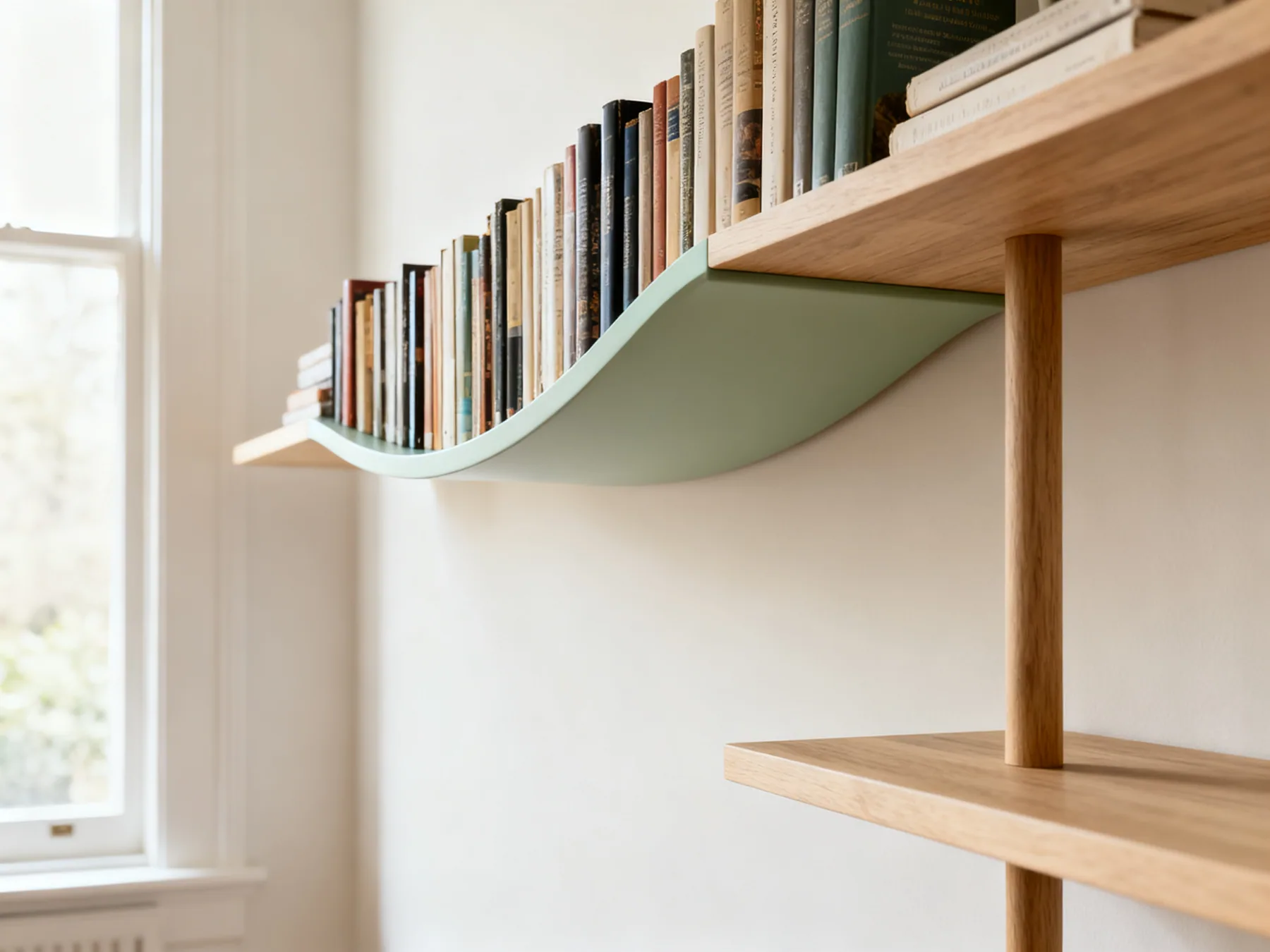
Keep unsupported spans under about 800mm
That is the figure I plan to for books in ordinary shelving board. If a run has to be wider, break it with a vertical divider rather than trusting the board. A divider also stops books toppling sideways, so it does two jobs.
Books are the heaviest load a domestic shelf takes
Add a batten along the back edge
A timber batten screwed along the back underside of a shelf massively increases its stiffness for very little cost or visual intrusion. This is the cheapest fix for an existing shelf that is starting to dip.
Put the heaviest books lowest
Large-format art books and reference volumes on the bottom shelf, paperbacks higher. It keeps the whole case bottom-heavy and stable, and the lowest shelf is usually the one with support nearest it.
Fix tall bookcases to the wall
A loaded bookcase is heavy and top-loaded ones tip. This is a genuine safety point rather than a formality, particularly if there are children in the house who will treat the shelves as a ladder.
Anchor any tall case to the wall
Take shelving to the ceiling
Books are uniform and dense, which makes full-height shelving easier to justify here than almost anywhere else. The top shelf becomes the books you keep rather than the books you read, and a step stool covers it.
Upright and square, or the spine takes it
A book is engineered to be stored standing, with its weight carried down through the boards and the text block. Stood upright and square that works indefinitely.
Let it lean and the load path changes. The weight goes through the spine instead, and a leaning book gradually sets in that shape, with the spine cocked and the text block sagging away from the boards. On an older or cloth-bound book the spine can crack along the hinge.
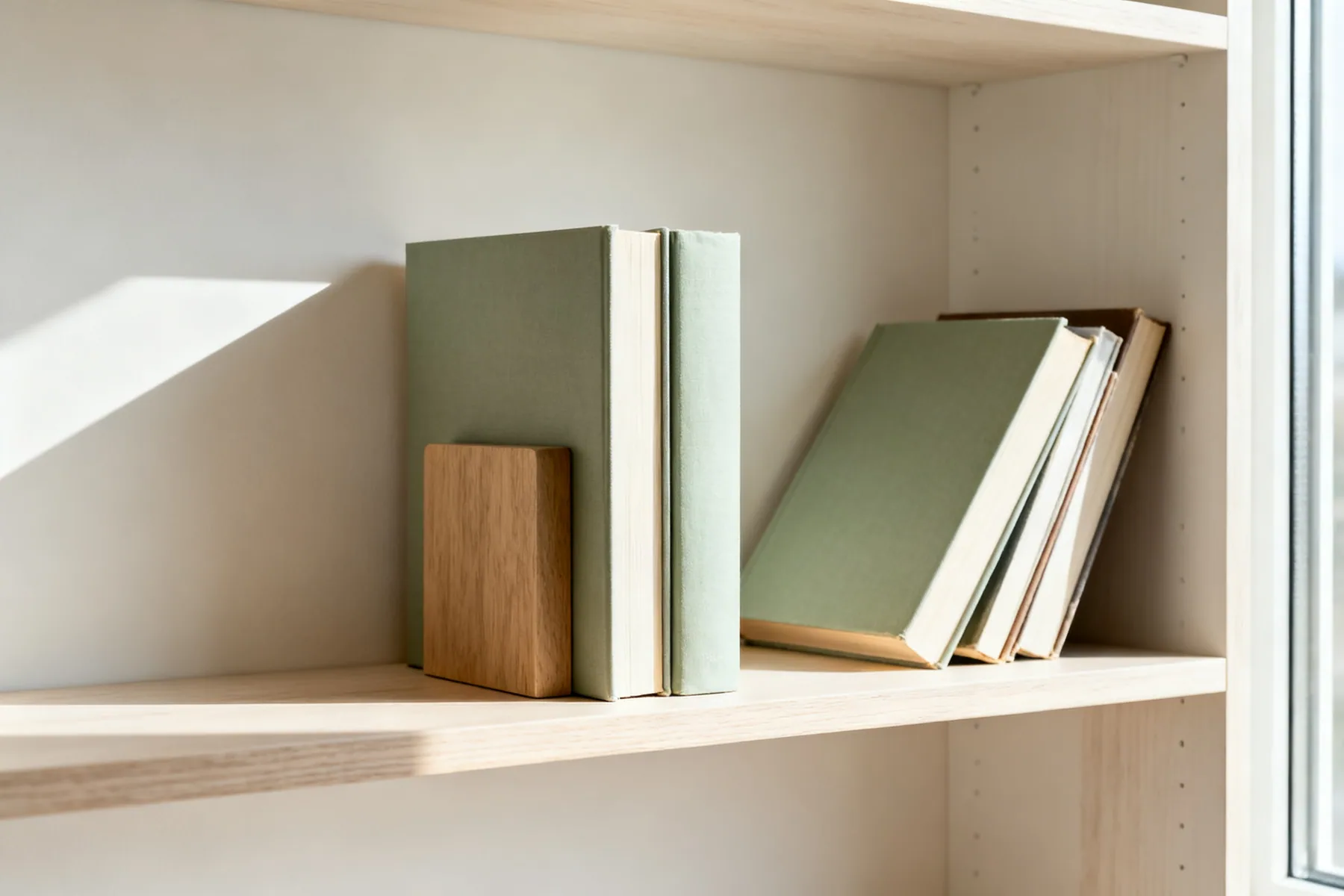
Fill the shelf or use a bookend
A half-empty shelf lets everything lean towards the gap. A heavy bookend holds the last book square, and it needs to be heavy enough not to slide, which most decorative ones are not.
Stack large-format books flat, not upright
Oversized art and photography books are heavy enough that standing them can pull the text block away from the spine under its own weight. Lay them flat in a short stack, heaviest at the bottom, no more than four or five high.
Do not pack a shelf so tightly you have to force books out
Pulling a book from a rammed shelf means gripping the headcap at the top of the spine, which is the part that tears first. Leave enough room to get a finger either side and pull from the middle of the spine.
Keep books at the front edge, not pushed to the back
Pushed hard against the back panel, books trap still air and any damp in the wall behind, and it makes them awkward to grip. A small gap at the back is better for the books and easier to use.
Light, damp and where a bookcase should stand
Where you put a bookcase does more for the condition of the books than anything you do to them afterwards, and the two things to avoid are direct sunlight and cold external walls.
Sun fades spines fast. One summer of afternoon light through a window will visibly lighten a row of coloured spines, and it is not recoverable. Cold walls are slower but worse, because condensation forming behind a bookcase against an uninsulated external wall goes unnoticed until something is spotted with mould.
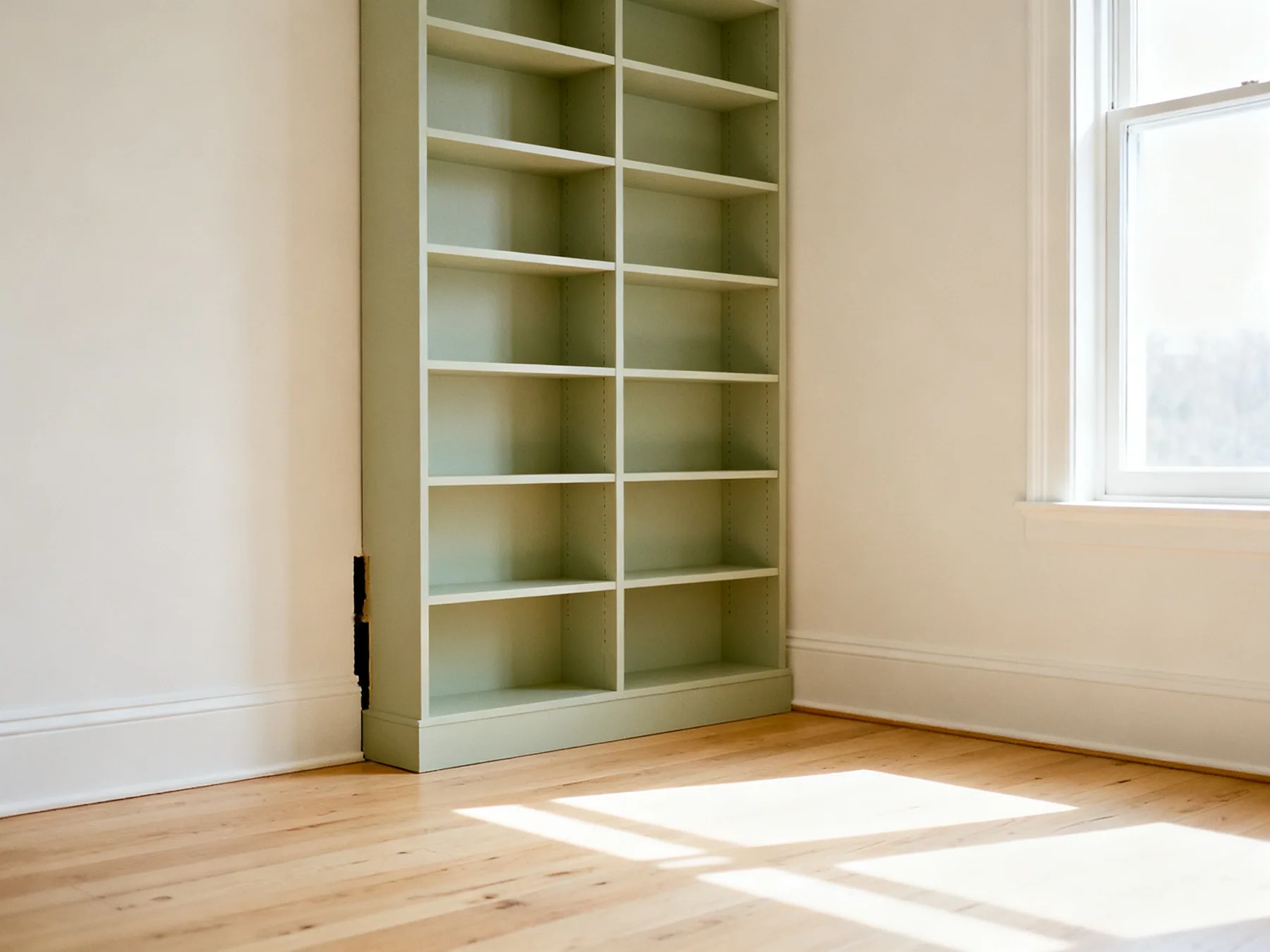
- Put bookcases on interior walls where you can, and out of direct sunlight.
- Leave a gap of at least 20 to 30mm behind a case standing against an external wall so air can move.
- Avoid placing bookcases against radiators. Dry heat makes leather and older bindings brittle.
- Keep books out of lofts, cellars and garages, where humidity swings are worst.
- Do not store books in sealed plastic boxes long term. Paper needs to breathe.
- Dust the top edges occasionally with a soft brush, working away from the spine.
- Deal with any damp smell immediately. It spreads through a shelf faster than you would expect.
When there are more books than shelf
At some point the collection outgrows the wall, and the honest options are to use the depth you have, find space nobody else is looking at, or accept that some books are going to leave.
I would work through them in that order, because the first two are usually good for a surprising amount.
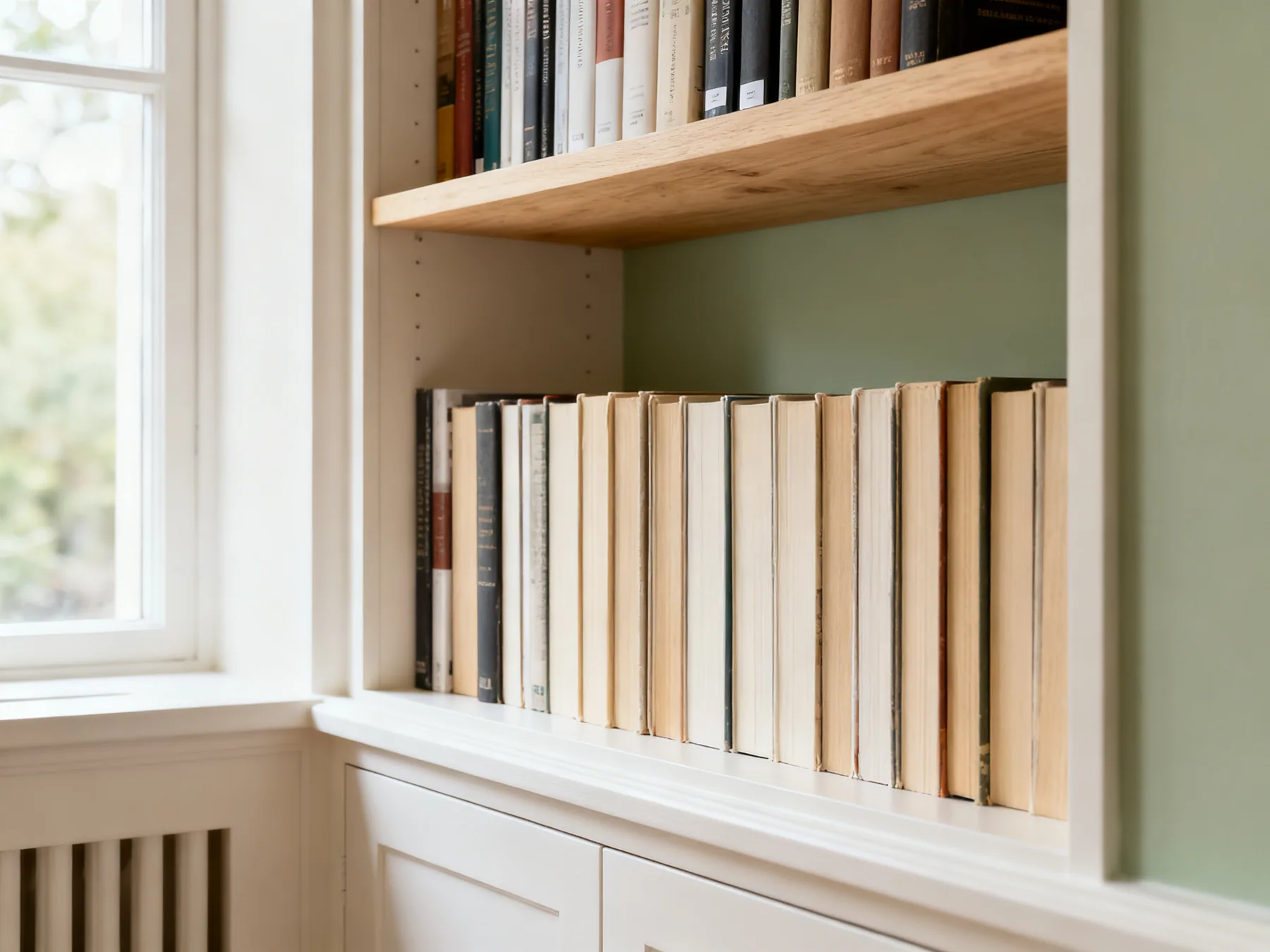
Double stack a deep shelf with the back row raised
A shelf deeper than about 250mm will take two rows of paperbacks. Raise the back row on a low riser so its spines stay readable above the front row, otherwise the back row becomes storage rather than a library and you forget what is in it.
Roughly doubles a deep shelf
Use the wall above doors and windows
The band above door head height takes a shelf easily and is completely unused in most rooms. Books are a good fit for it because they are uniform, so the run looks deliberate rather than like leftover storage.
Shelve a staircase wall or a hallway
Circulation space will take a shallow 200mm bookcase without affecting how the space works. A hallway lined with paperbacks is one of the better uses of a corridor I know.
Box the ones you are keeping but not reading
Books kept for sentiment rather than use can go in lidded boxes somewhere dry and out of the way, which frees the shelf for the ones in circulation. Not the loft, and label the ends.
Be honest about a proportion of them
This is the part nobody wants and it is sometimes the answer. If a shelf is bowing, the room is full and the books are still arriving, more storage is not the fix. I would rather say that than sell you a fifth bookcase.
Book storage ideas, starting with what the shelf can actually hold: frequently asked questions
How wide can a bookshelf be before it sags?
For books in ordinary 18mm to 25mm shelving board, I would keep unsupported spans under about 800mm. A metre of packed books is roughly 20 to 30kg, which is a heavy uniform load, and beyond that width the board will gradually bow. Add a vertical divider or a batten along the back underside if the run has to be wider.
Should books be stored upright or flat?
Upright and square for almost everything, because that is how a book is built to carry its own weight, through the boards and text block rather than the spine. Large-format art and photography books are the exception. They are heavy enough that standing them can pull the text block away from the spine, so lay those flat in short stacks.
Is sunlight bad for books?
Yes, and it works faster than most people expect. A single summer of afternoon sun through a window will visibly fade a row of coloured spines, and the fading is permanent. Put bookcases on interior walls or away from the light path, and if a sunny wall is the only option, consider glazed doors or a blind.
How do I fit more books on the shelves I have?
Double stack any shelf deeper than about 250mm, with the back row raised on a low riser so its spines stay readable. After that, use the wall above doors and windows, which is unused in most rooms, and consider a shallow 200mm case along a hallway or staircase wall, since circulation space takes that depth without becoming awkward.
Why do my books smell musty?
Damp and still air, usually from a bookcase pushed hard against a cold external wall where condensation forms behind it. Pull the case forward 20 to 30mm so air can move, and stop storing books in lofts, cellars, garages or sealed plastic boxes. Deal with it quickly, because the smell moves through a shelf faster than you would expect.
What is the safest way to pull a book off a tightly packed shelf?
Push the books either side back slightly and grip the one you want around the middle of the spine. Hooking a finger over the top of the spine and pulling is what tears the headcap, and on a tightly packed shelf that is the part taking all the force. If you cannot get a finger in at all, the shelf is over-packed.