Hobbies & Sport
Toy storage ideas that children can actually use themselves
Almost every toy storage product is designed to satisfy the adult buying it. The test that matters is whether a four-year-old can put something away without help.
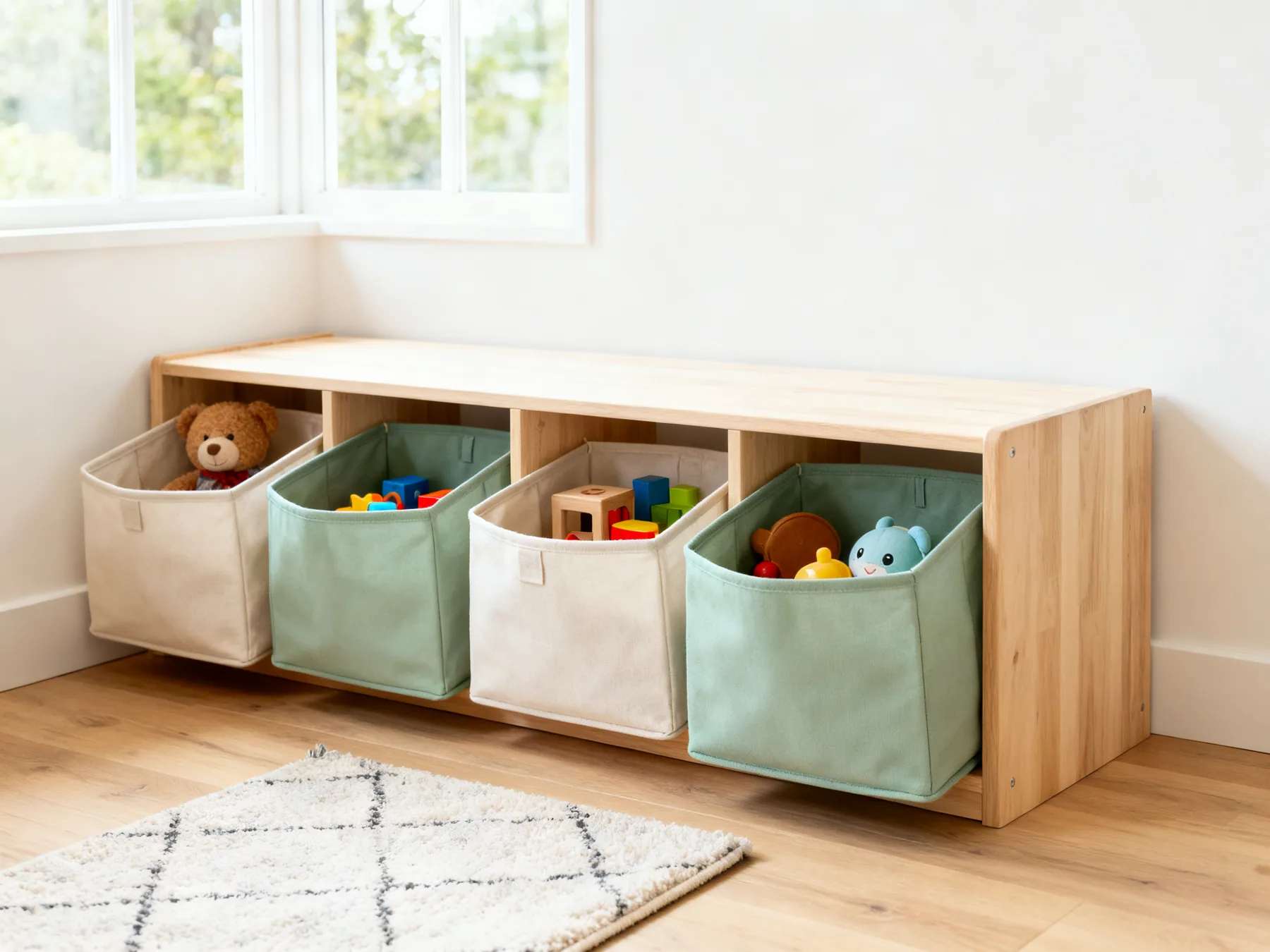
I have lost count of the number of beautiful toy storage units I have seen that guaranteed the parent would be doing all the tidying. Tall shelves, matching lidded boxes, everything labelled in a font a pre-reader cannot read, and all of it above the height of the child it was bought for.
It looks organised in a photograph. In use it fails, because a child cannot put a toy away into a container they cannot see into, cannot reach, and cannot open one-handed while holding the toy.
So the two questions I ask about any toy storage are: can the child see what is inside without opening it, and can they reach it standing on the floor. If the answer to both is yes, tidying becomes something they can do. If either is no, you have bought yourself a permanent job.
Get the height right before anything else
This is the whole thing, and it is the part that gets designed last. A child tidies up if putting something away is easy and does not require an adult. That means the storage for everyday toys has to be below their shoulder height, which for a pre-schooler is somewhere around 750mm to 900mm off the floor.
Everything above that height is adult storage. It is genuinely useful, but it is useful for different things, and I would not put a single daily toy up there.
- Measure your child's shoulder height and treat that as the ceiling for daily toys.
- Put the most-used categories at the most reachable height, not the tidiest-looking one.
- Keep the floor in front of the storage clear so a child can stand square to it.
- Anchor any tall unit to the wall. Children climb shelving, and this is a real risk rather than a formality.
- Reserve everything above adult shoulder height for rotation stock and small parts.
Open bins for daily toys, lids for storage
A lid seems like a small thing. It is not. For a young child a lid is an extra step that has to be done while already holding a toy, and it is reliably enough friction to stop the toy going away at all.
So I split toy storage by frequency rather than by type. Anything played with most days goes in an open-topped bin the child can drop things into and see into. Anything kept but not in current use gets a lid, because for that category the dust protection is worth more than the access.
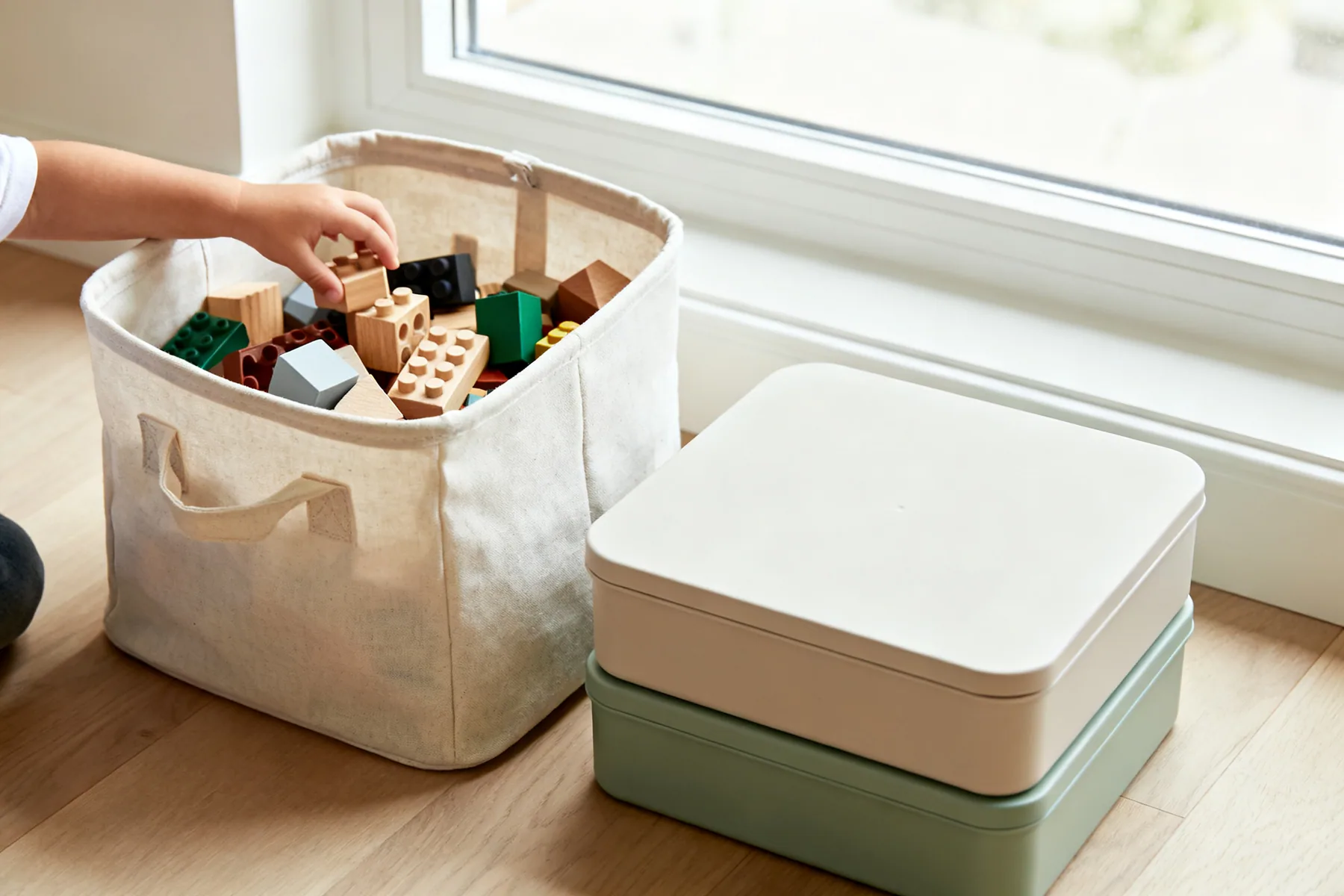
One bin, one category
A bin holding three kinds of toy gets tipped onto the floor every single time, because that is the only way to find anything. One category per bin is the difference between a child retrieving a toy and a child emptying a container. It also means tidying up is sorting, which small children are surprisingly willing to do.
The single most useful rule here
Use open fabric bins at floor level
Soft-sided open bins on a low unit are forgiving, quiet, light enough for a child to carry, and they have no lid or catch. If I could only fit one type of toy storage in a room, this is what it would be.
Label with photographs, not words
A photograph of what belongs in the bin, or the actual toy taped to the front, works for a child who cannot read. Word labels are for the adult, and there is no harm in both, but the picture is the one doing the work.
Keep clear-fronted boxes for the middle shelves
At the height a five or six-year-old can manage, clear-fronted or clear-sided boxes let them see in without opening. That is a good compromise once they are past the point of needing everything completely open.
Avoid deep toy chests for anything used often
A deep chest turns into a pit where the good toys sink and the bottom third never gets touched. If you already have one, I would use it for bulky soft toys and nothing else, and check it has slow-close or lid supports rather than a lid that can drop.
Check the lid cannot fall on fingers
Rotation is the trick that changes everything
If you take one thing from this article, take this one. Put roughly two thirds of the toys away in labelled lidded boxes on a high shelf, leave a small selection out, and swap them over every few weeks.
What happens is counterintuitive the first time you see it. Children play longer and more deeply with fewer toys out, because a full room of options is genuinely overwhelming, and choosing is harder than playing. Tidying also collapses to a manageable job, because there is far less on the floor to begin with.
And the toys that come back out after a month get treated as new. Nobody has to buy anything.
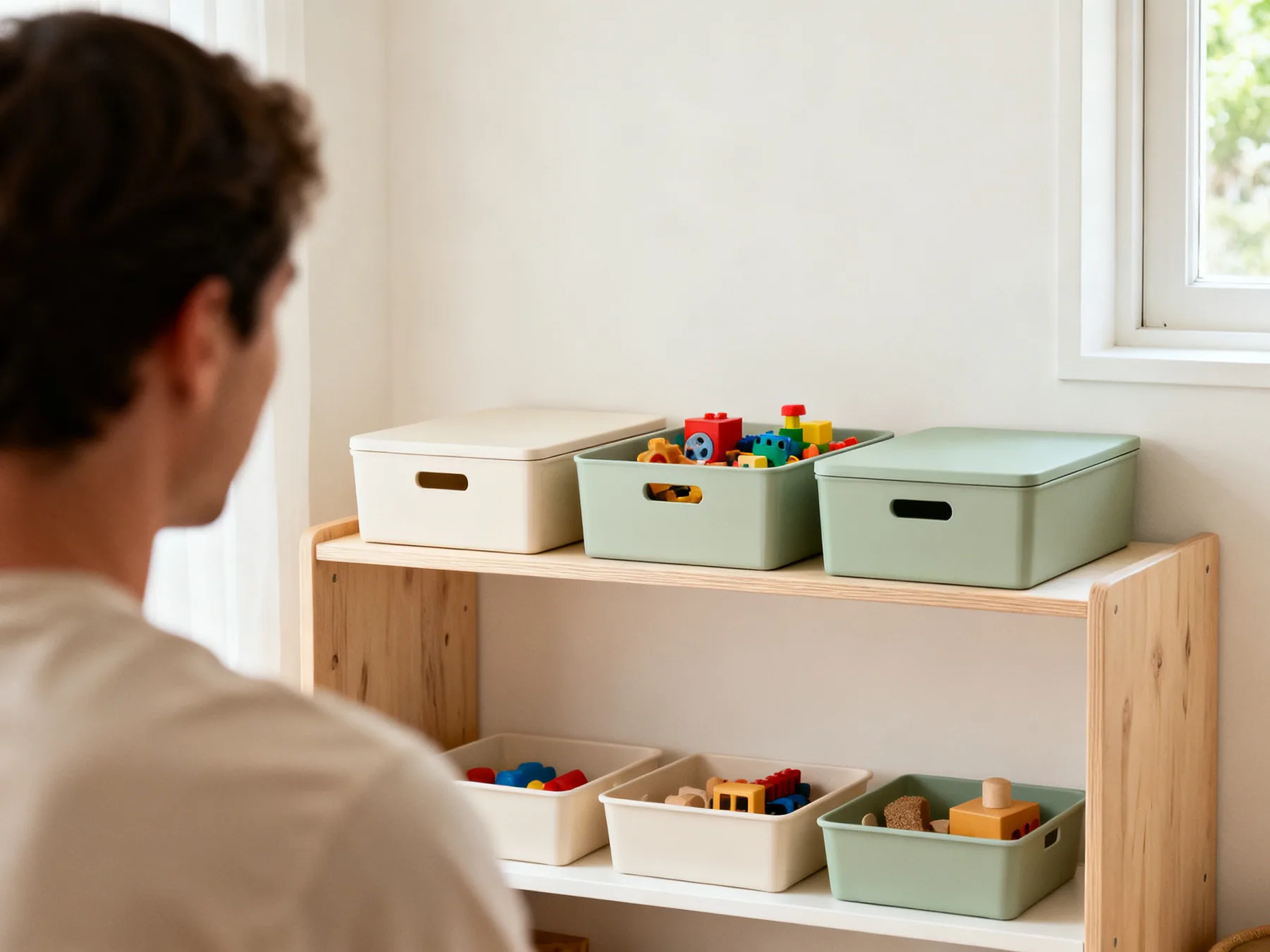
Keep about a third out at a time
That is the proportion I would start with, then adjust. The aim is a room where every toy out has a place and is visible, rather than a room where everything is available and nothing is findable.
Box the rotation stock by category, not randomly
Boxes of mixed toys are hard to swap in meaningfully. Sorted boxes let you bring back the construction toys or the small figures as a set, which is how children actually play with them.
Rotate on a rhythm, not on a rule
Every three or four weeks is about right, or simply when interest visibly drops. I would not put it in a calendar. The point is that it is easy, and a system that needs discipline is a system that stops.
Let them keep three or four constants
Whatever is genuinely loved stays out permanently. Rotation is for the broad middle of the collection, not for the comfort objects, and applying it too strictly is how you make a child dislike the whole idea.
Books, board games and the small-part problem
Three specific categories cause most of the remaining trouble, and each one needs a different answer than general toy storage gives it.
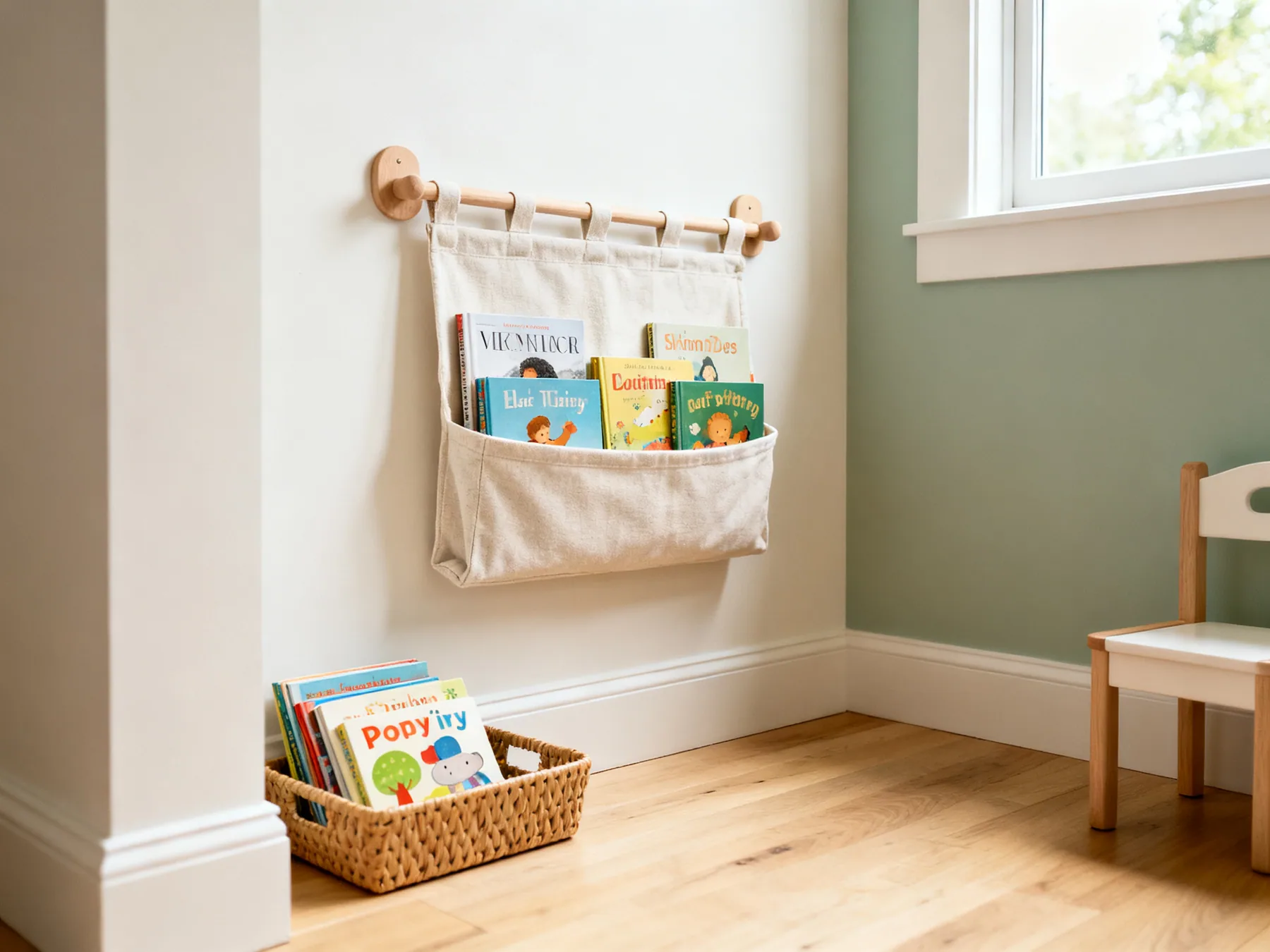
Store picture books facing forward
A pre-reader chooses a book by its cover, which means a spine at child height is effectively invisible to them. A sling shelf or a shallow front-facing rack gets books read. This one surprises people and it makes an immediate difference.
Keep a low basket of board books too
For the very young, a basket they can rummage in on the floor works better than any shelf. Board books survive it, and rummaging is part of how they choose.
Give small parts their own compartments
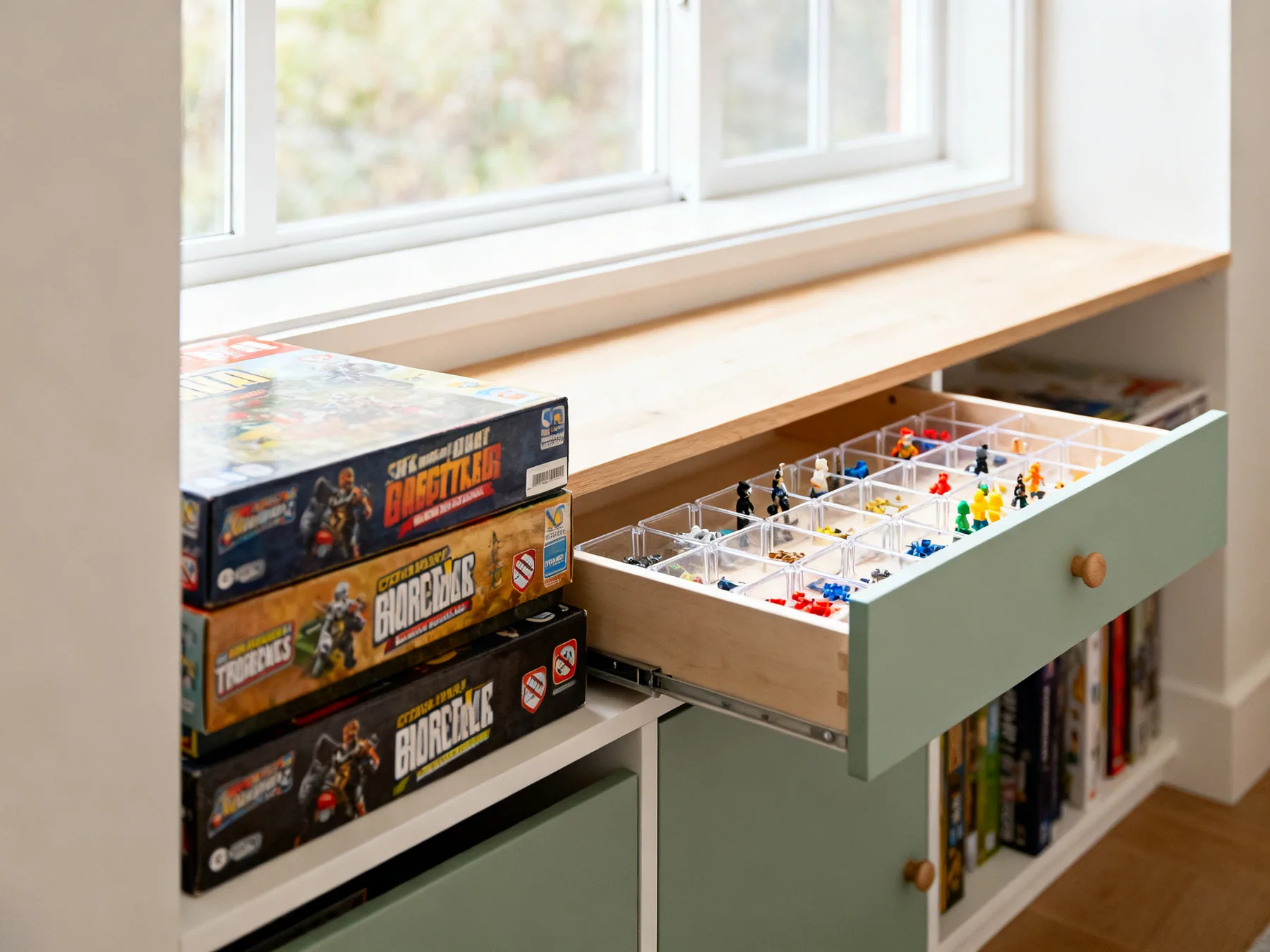
Tiny figures, blocks and vehicle sets need shallow compartmented drawers or small lidded tubs, one kind per compartment. Mixed into a general bin they sink to the bottom and are gone. This is also the category most worth keeping off the floor if there is a toddler in the house.
Small parts are a choking risk for under-threes
Store board games flat, not upright
A board game stored on its edge sheds every loose piece into the corner of the box and eventually out of it. Stacked flat, the lid stays down and the pieces stay in. Put the heaviest at the bottom of the stack and keep it to about four or five high so nobody has to unstack the lot.
Making it survive contact with real life
A toy storage system that needs an adult to maintain it is not finished. These are the things I would check after a couple of weeks of actual use, because the failures show up fast and they are usually easy to fix.
- Watch where toys actually get abandoned. That is where storage is missing, not where you thought it should go.
- If a bin is never used, it is too high, too small, or holds more than one category.
- Do a five-minute tidy at the same point each day rather than a big clear-up weekly.
- Keep one empty bin in the system permanently. New toys arrive, and a full system has nowhere to put them.
- Move anything outgrown into the rotation boxes rather than leaving it in the daily zone.
- Check anchor straps on tall units every few months.
- Re-photograph labels when the contents of a bin change, or they quietly stop meaning anything.
Toy storage ideas that children can actually use themselves: frequently asked questions
How do I get my child to put their toys away?
Make it physically possible first. Storage for daily toys has to be below their shoulder height, open-topped so no lid has to be managed, and holding one category per container so putting away is sorting rather than cramming. Most reluctance I see is a storage design problem rather than a behaviour problem, and it disappears when the containers change.
Are lidded toy boxes a good idea?
For storage yes, for daily toys no. A lid is an extra step a young child has to manage while holding a toy, and that friction is enough to stop the toy being put away at all. Use open bins for whatever is played with most days, and save lidded boxes for rotation stock and dust protection.
What is toy rotation and does it work?
You box up around two thirds of the toys, leave a smaller selection out, and swap them every few weeks. It works better than almost anything else I suggest. Children play longer with fewer options out, tidying becomes manageable, and toys coming back after a month get treated as new, so you buy less.
How do I store toys with lots of small pieces?
Shallow compartmented drawers or small lidded tubs, one kind of piece per compartment. In a general bin small parts sink to the bottom and are effectively lost. If there is a toddler in the house, keep small parts above their reach entirely, because they are a choking risk rather than just a tidiness issue.
How should children's books be stored?
Facing forward at child height. A pre-reader picks a book by its cover, so a row of spines is close to invisible to them. A sling shelf or shallow front-facing rack noticeably increases how often books get read, and for the very young a low basket they can rummage through works even better.
How many toys should be out at once?
I would start with about a third of what you own and adjust from there. The test is whether every toy that is out has a visible place to go back to. If the floor is the overflow, too much is out, and the fix is a rotation box rather than more storage.