Hobbies & Sport
Vinyl record storage ideas that stop records warping
Two storage habits do almost all the damage to a record collection, and both of them feel completely harmless at the time.
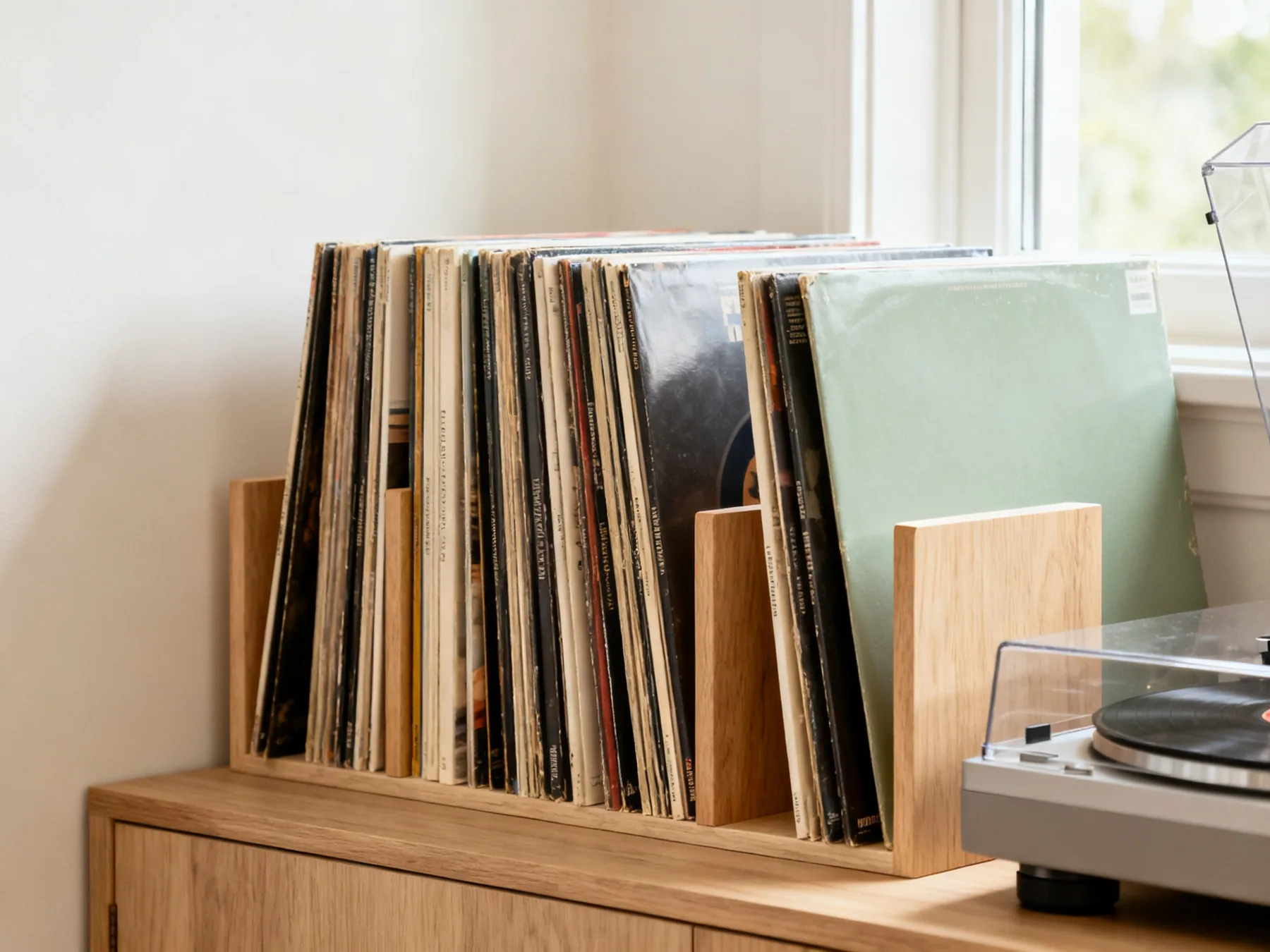
Vinyl is a thermoplastic, which is a technical way of saying it remembers whatever shape you leave it in for long enough, especially when it is warm. That single property explains nearly every damaged record I have been shown.
The two habits that cause the most harm are stacking records flat and letting an upright row lean. Stacked flat, the records at the bottom carry the weight of everything above them, pressing the grooves and eventually dishing the vinyl. Leaning, a record is held in a slight curve for months, and it sets in that curve.
Both look completely fine while they are happening, which is why they are so common. The good news is that the correct answer is simple, cheap and also the most convenient for actually finding a record.
Upright, and never flat
A record stored vertically carries its own weight through its edge, which it is well able to do indefinitely. A record at the bottom of a horizontal pile carries the weight of every record above it, pressed against whatever tiny irregularities exist in the sleeves between them.
Over months that produces two problems: the grooves themselves can be impressed by the pressure, and the disc can dish into a shallow bowl shape that never fully flattens. A pile of thirty albums on a floor is a genuinely bad idea, and it is how most people store the overflow when the shelf is full.
Vertical, always, even temporarily. A crate is better than a pile.
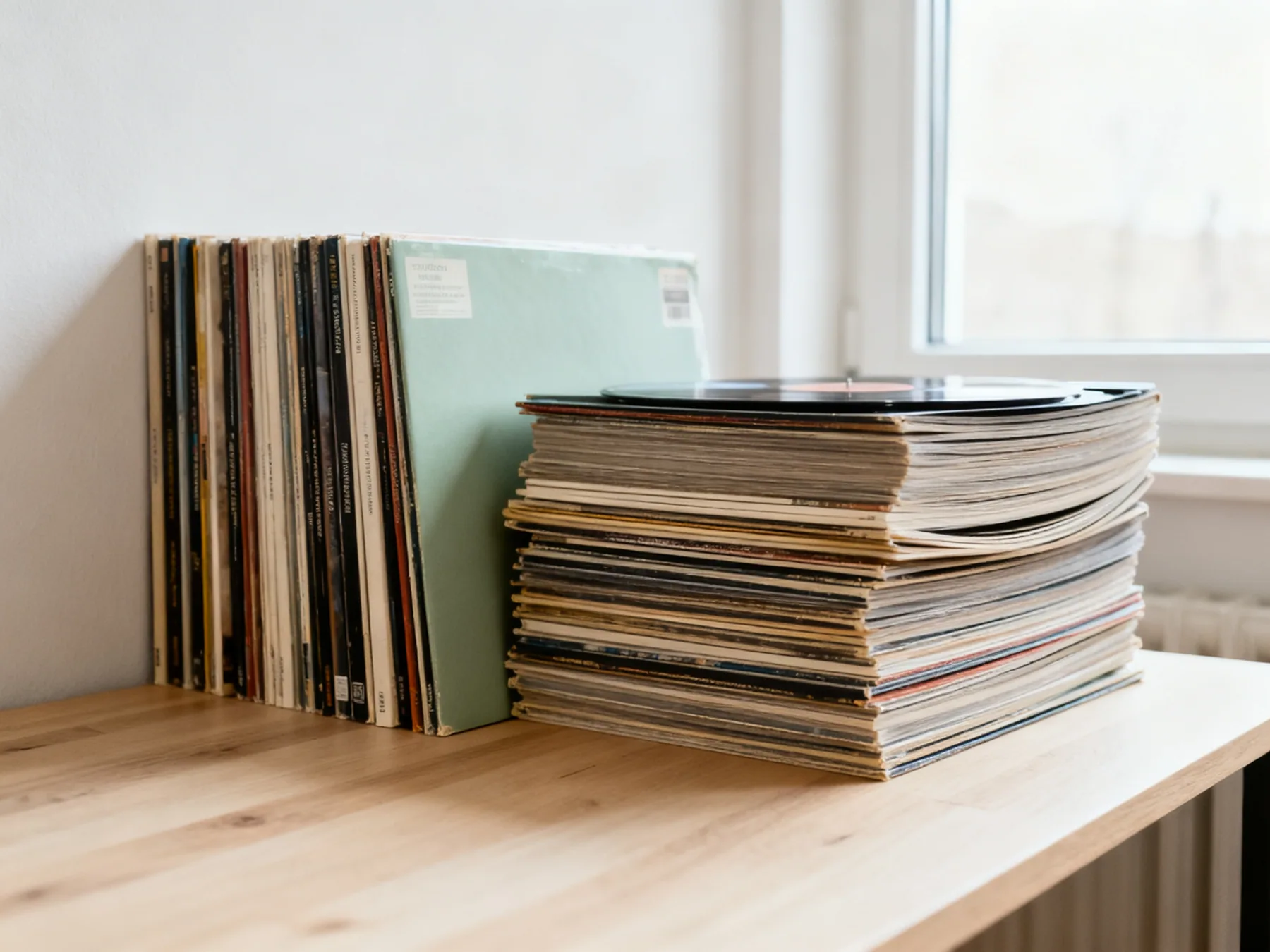
Store every record on its edge
No exceptions and no temporary piles. If there is no shelf space, a crate or a sturdy box that holds them upright is far better than laying them down while you sort it out.
Flat stacking is the worst thing you can do
Do not leave records on the turntable
A record left out is exposed to dust and, on a plinth in a warm room, to heat. It is also the easiest one to knock. Back in its sleeve and back in the row after playing.
Keep the shelf full enough to support the row
A half-empty shelf lets the whole row lean towards the gap. Use a divider or a heavy bookend to hold the last record square, and add more as the collection grows.
Never store records at an angle
Some furniture is designed with sloped record compartments and it should not be. A permanent lean is a permanent curve. If your unit slopes, pack it so the records still stand vertical.
Snug, but not tight
There is a narrow band to aim for here and both ends of it cause damage.
Too loose and the row leans, with the warping that follows. Too tight and pulling a record out drags its sleeve against its neighbours, which produces the ring wear you see on secondhand records: a visible circular scuff where the disc has been pressed through the cardboard.
The test I use is whether you can withdraw a record with two fingers, smoothly, without the ones either side coming with it. If you have to grip and yank, the row is too tight.
Use dividers every 30 to 50 records
Card or timber dividers hold sections upright independently, so the row is supported without being compressed. They also make the collection browsable, which is the other half of why you own it.
Leave a little room to flick through
A collection you can flick through gets listened to. One that requires excavation gets ignored, and you end up playing the same ten albums.
Pull from the middle of the spine
Tipping a record out by hooking the top edge of the sleeve is what tears the top seam. Push the neighbours back slightly and take it from the middle.
Keep shelf spans short
Records are dense: a metre of vinyl weighs a great deal, comparable to books. Keep unsupported spans under about 800mm or the shelf will bow, and a bowed shelf tips the whole row into a lean.
A metre of records is a heavy load
Sleeves, inner and outer
Two sleeves per record, and the inner one is the one that matters more for the sound.
Many records, particularly older ones, ship in plain paper inner sleeves. Paper is abrasive against vinyl, and every time the record slides in or out it takes a very fine scuff. Over hundreds of plays that accumulates as surface noise. Anti-static poly-lined inner sleeves cost very little and are the single best value upgrade for a collection.
The outer sleeve protects the jacket rather than the disc: it keeps the cardboard clean, stops seam splits and prevents ring wear. Worth it for anything you care about and not essential for everything.
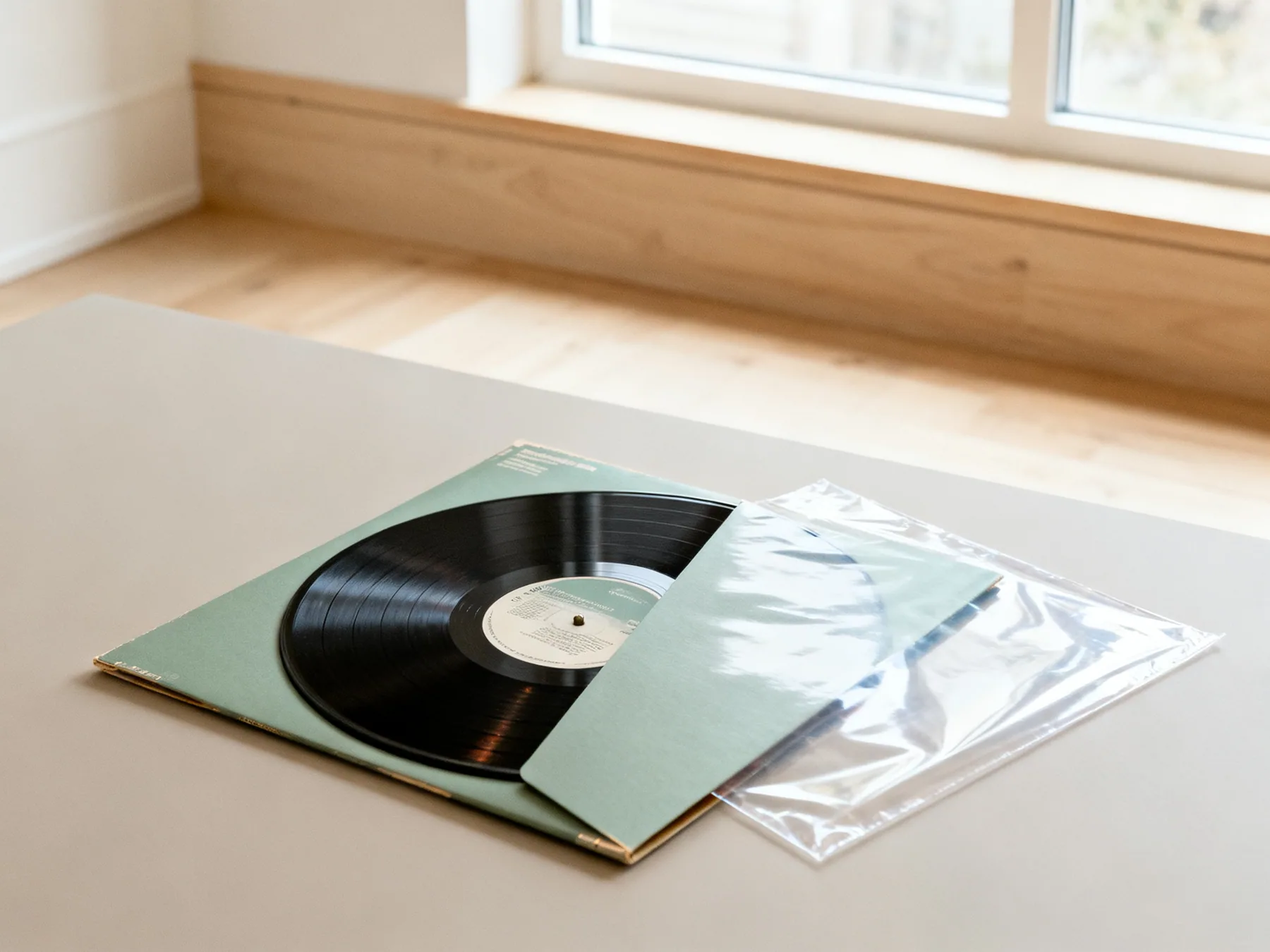
Replace paper inners with anti-static poly-lined ones
Cheap in bulk and a genuine improvement in surface noise over time. Keep the original paper inner in the jacket behind the record if it has artwork or credits on it.
Add clear outer sleeves for the ones you value
They prevent ring wear and seam splits and keep the jacket clean. Polypropylene rather than PVC, since PVC can degrade and interact with the sleeve over years.
Store the record outside the jacket, inside the outer
A trick worth knowing: the record in its inner sleeve placed alongside the jacket rather than inside it, with both in the outer sleeve. It eliminates ring wear entirely, at the cost of slightly more thickness.
Put the sleeve opening upward
So the record cannot slide out under its own weight when you lift the jacket, and so less dust gets in. A small habit and it prevents the occasional dropped record.
Heat, sun and where the shelf goes
This is the part that actually destroys records, and it is more about location than about any product you can buy.
Vinyl softens well below the temperature people assume. A record does not need to be near a fire: sustained warmth in a sunny bay window, on top of an amplifier, against a chimney breast with a stove behind it, or in a loft in summer is enough to introduce a warp. And direct sunlight will fade a jacket noticeably in a single summer.
So choose the position first and the shelving second.

- Interior wall where you can, away from external walls that get sun.
- Not above or beside a radiator, and not on top of an amplifier or any equipment that runs warm.
- Out of direct sunlight, which fades jackets fast and warms the vinyl.
- Never in a loft, a garage, a conservatory or a car. All four exceed safe temperatures easily.
- Away from damp, which grows mould on cardboard jackets and paper inners.
- Off the floor, so a spill or a leak does not reach them.
- Stable room temperature matters more than a cool one. Repeated cycling is worse than steady warmth.
- Check a collection that has been stored somewhere marginal, since warping worsens over time.
Crates, browsing and growing collections
The last practical point, which is about how you use the collection rather than how you protect it. A record collection you cannot browse gets played much less, and there is no point protecting records you never take out.
So I would treat browsability as a real requirement rather than a nicety, and it drives a couple of choices.
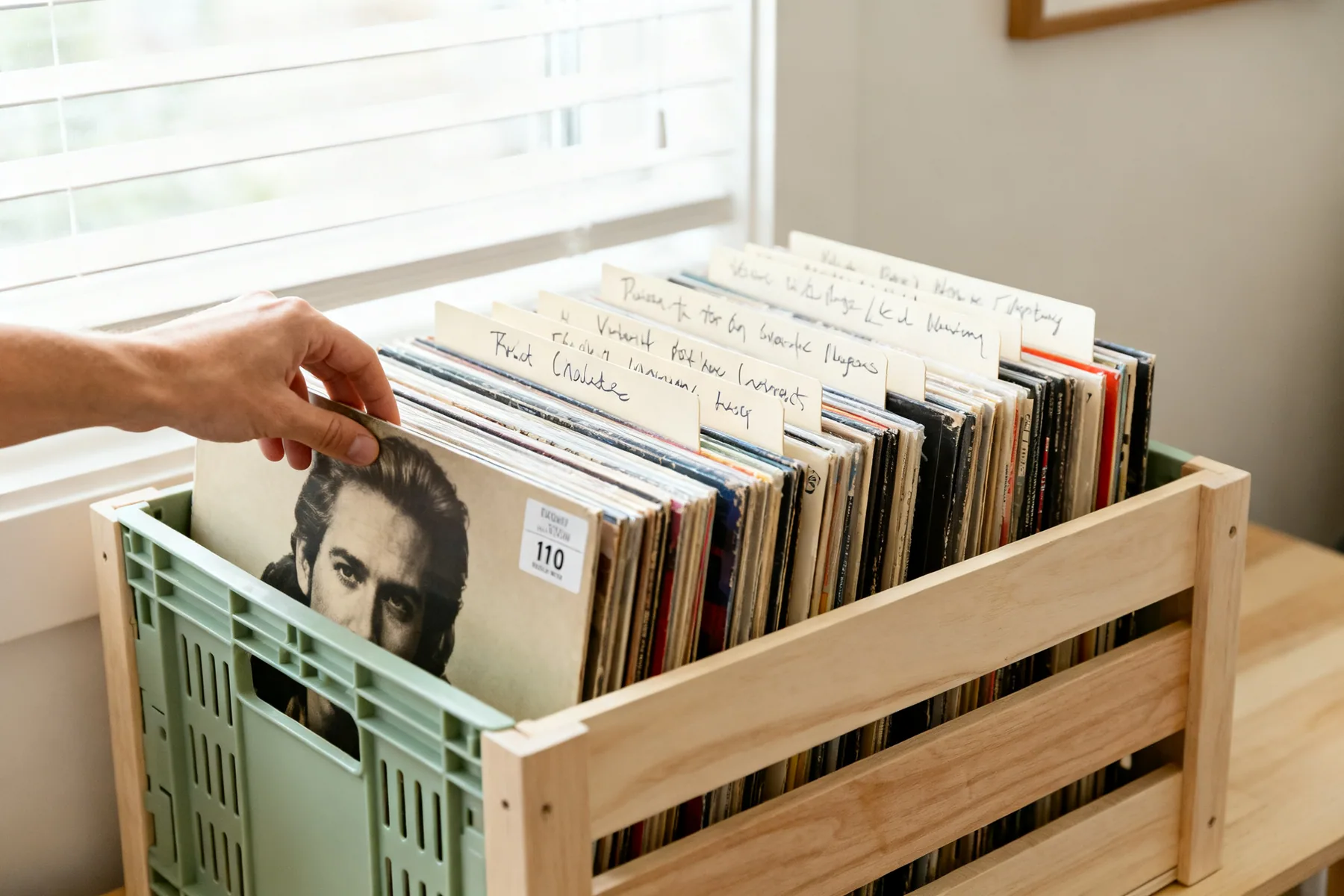
Use dividers you can write on
By genre, by artist, by whatever you actually search on. Handwritten card dividers are fine and they mean you can find something in seconds instead of flicking through everything.
Keep the shelf at a browsable height
Between hip and shoulder is where you can flick comfortably. Records on a very low or very high shelf get overlooked regardless of how good they are.
Plan for growth in units, not gaps
A collection grows, so add a crate or another cube rather than spreading the existing row thinner, because a thinner row leans. Each container should stay properly supported.
Keep a small stack of current listening separate
A dedicated slot or small crate for the ten albums in rotation, so the main collection is not being pulled apart daily. Just keep them upright too.
Vinyl record storage ideas that stop records warping: frequently asked questions
Should vinyl records be stored upright or flat?
Upright, always, and even temporarily. A vertical record carries its own weight through its edge indefinitely, while a record at the bottom of a flat pile carries the weight of everything above it, which can impress the grooves and dish the disc into a shallow bowl that never fully flattens. A crate is better than a pile.
How tight should records be packed?
Snug enough that nothing leans, loose enough to withdraw a record smoothly with two fingers without its neighbours coming too. Too loose and the row takes a permanent curve. Too tight and pulling records out drags the sleeves against each other, which is what produces the visible ring wear on secondhand records.
Do I need to replace the inner sleeves?
It is the best value upgrade for a collection. Plain paper inners, which many older records ship with, are abrasive against vinyl and add a very fine scuff every time the record slides in or out, accumulating as surface noise over hundreds of plays. Anti-static poly-lined inners cost very little. Keep the original paper inner in the jacket if it has artwork on it.
What causes records to warp?
Heat, and less of it than people assume, since vinyl is a thermoplastic that takes on whatever shape it is held in when warm. Sustained warmth in a sunny window, on top of an amplifier, against a chimney breast or in a loft in summer is enough. A permanent lean does the same thing at room temperature by holding the record in a curve for months.
Where should I not store vinyl?
Lofts, garages, conservatories and cars, all of which comfortably exceed safe temperatures. Also avoid external walls that catch sun, anywhere beside a radiator, and the top of any equipment that runs warm. Steady room temperature matters more than a cool temperature, because repeated heating and cooling is worse than constant mild warmth.
How much weight does a record collection put on a shelf?
A lot. A metre of vinyl is a load comparable to a metre of books, which is the heaviest thing most domestic shelving carries. Keep unsupported spans under about 800mm in ordinary shelving board, because a bowed shelf does not straighten when unloaded and it tips the whole row into the lean that causes warping.