Hobbies & Sport
Yarn storage ideas that let you actually shop your stash
Yarn is photographed sorted by colour and used sorted by weight. That mismatch is why a beautiful stash is often unusable.
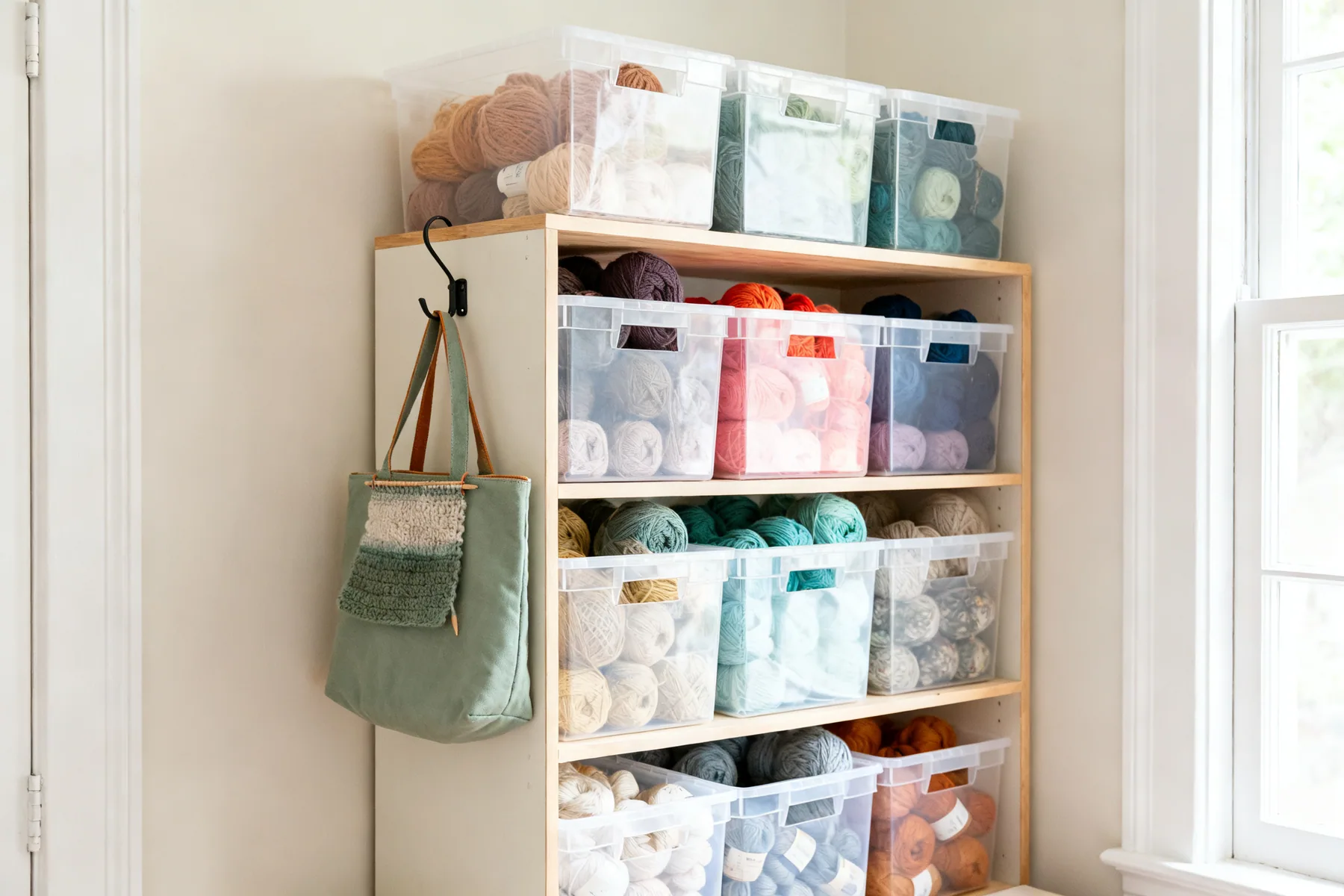
Every photograph of a yarn stash is arranged by colour, in a gradient, and it looks wonderful. Then you sit down with a pattern, and the pattern does not ask for teal. It asks for 400 metres of DK weight, and now you are opening every bin.
That is the central problem with yarn storage and it is not really about containers. A stash is a shop you own, and a shop you cannot search is a pile. Sorting by the thing patterns actually specify is what turns one into the other.
The other half of it is protection, and there is a genuinely useful distinction most articles skip: only some of your yarn is at risk from moths. Getting that right means you can stop treating a cotton stash like a wool one, which is less work and less plastic.
Sort by weight, then by colour
A pattern specifies a yarn weight and a yardage. Those are the two things you search on, so those are the things your storage has to answer. Colour is what you choose between once you have found the candidates, which makes it the second sort, not the first.
So: a bin or a shelf per weight. Fingering and sock in one, DK in another, worsted in another, chunky in another. Within each, group by colour if you like, because now that is decoration rather than the organising principle and it costs you nothing.
The moment I made this change in my own stash it stopped being a thing I browsed and became a thing I could use.
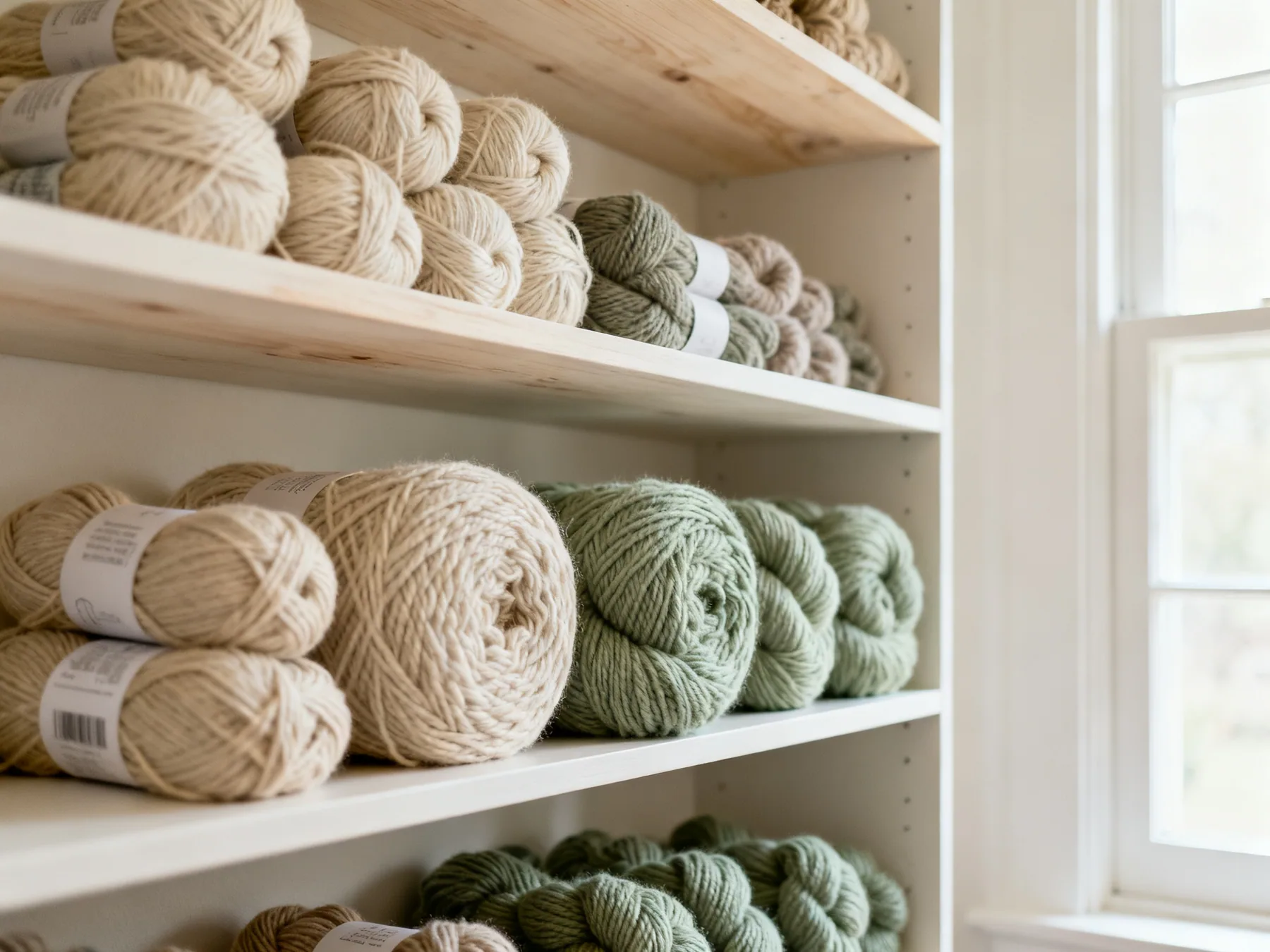
One container per weight, labelled
Label the weight on the outside in the terms your patterns use. If you knit from both US and UK patterns, put both on the label, because translating DK to light worsted in your head every time is exactly the friction that stops a system being used.
The single most useful change
Keep the ball band, always
The band carries the weight, the yardage, the fibre content, the needle size, the gauge and the dye lot. Without it you have an unknown quantity. If a band is falling apart, tuck it inside the centre of the ball rather than throwing it away.
Note the yardage where you can see it
For partial balls the remaining yardage is the one thing you cannot judge by eye and the one thing you need. Weighing a partial ball and writing the estimate on a tag takes seconds and saves a project.
Give single skeins their own place
A stash accumulates lone luxury skeins with no project. Grouped together in one basket they read as an opportunity. Scattered through the weight bins they just make those bins harder to search.
Keep a list if the stash is large
Past a certain size, a note on your phone or a stash app beats any physical system, because you can search it in a shop and avoid buying the fourth cream aran. The physical storage still needs to match it.
Only some of it needs sealing
This is the distinction that saves the most effort. Clothes moths and carpet beetles eat protein fibres, because their larvae digest keratin. That means wool, alpaca, mohair, cashmere and silk are at risk, and cotton, linen, bamboo, acrylic, nylon and polyester are not.
So a cotton and acrylic stash can live happily in open baskets on a shelf. It is the wool that needs a lid.
And the thing worth knowing about the wool: as with clothing, the larvae are drawn to fibre carrying traces of skin oils, sweat or food. A brand new sealed skein is low risk. Yarn frogged from a worn garment, or handled a lot, is more attractive to them than the shop-fresh ball beside it.
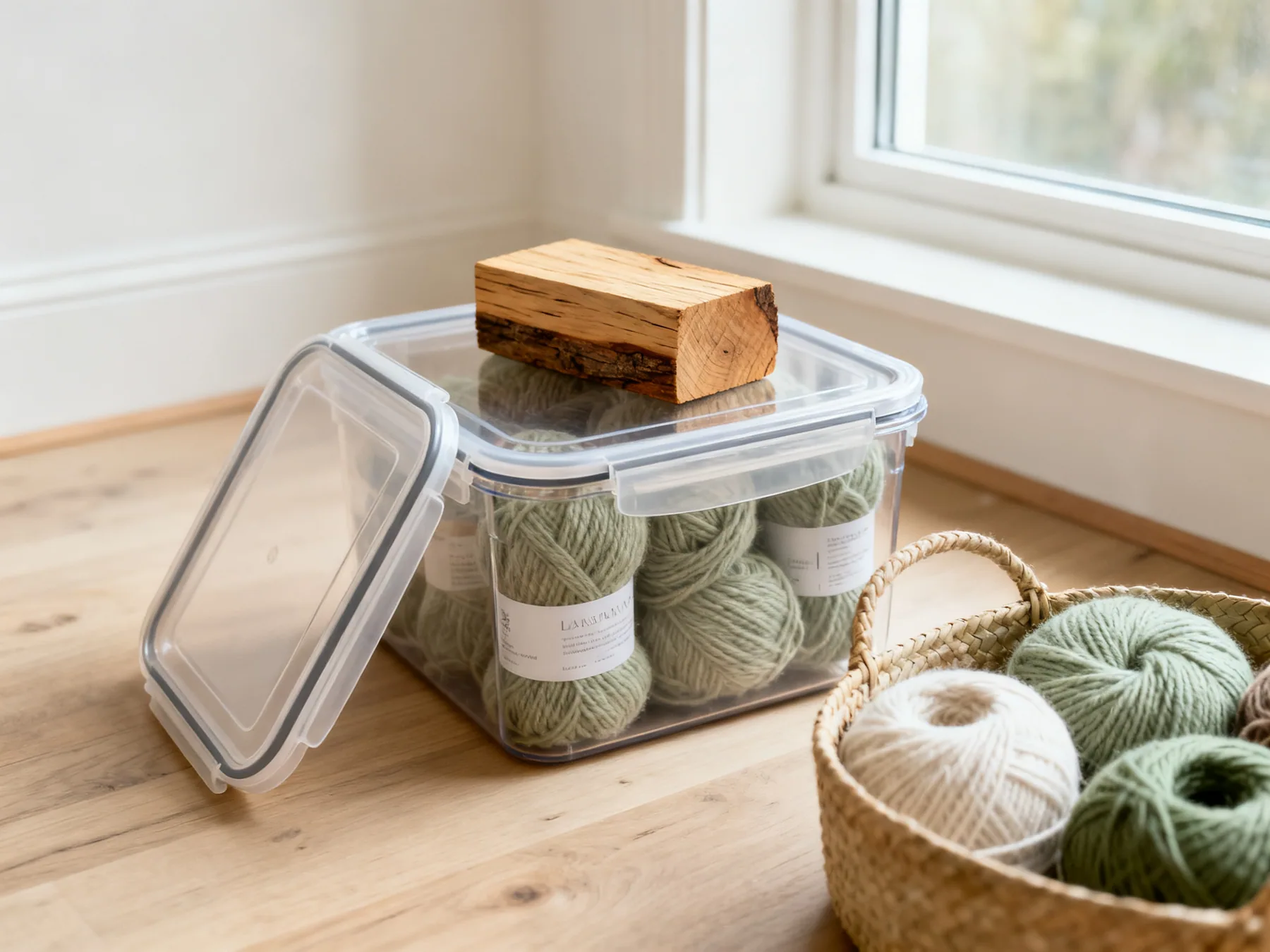
Seal wool and other protein fibres
Airtight clear containers with lids, ideally with a cedar block inside. Sealed means both that nothing can get in and that anything already present cannot spread to the rest of the stash, which is the failure mode that costs people a whole collection.
Wool, alpaca, mohair, cashmere, silk
Leave plant and synthetic fibres open
Cotton, linen, bamboo and acrylic are not food for moths, so open baskets are fine and much easier to shop from. Dust is the only real consideration, and a cloth over the top handles that.
Refresh cedar annually
Cedar works through its oils and those fade after about a year. A light sanding brings the scent back. Lavender sachets do a similar job and need replacing on the same sort of cycle.
Quarantine anything second-hand
Yarn from a destash, a charity shop or an inherited stash should go in a sealed bag on its own for a few weeks before it joins the collection. Freezing it for several days first is a reasonable precaution, and it is far cheaper than losing the lot.
How infestations usually arrive
Check sealed wool a couple of times a year
Open the containers, look for webbing, casings or fine grit at the bottom. Damage caught in one container stays in one container.
You have to be able to see it
Yarn is chosen visually. Weight narrows the field and then you pick by eye, feeling the fibre and holding shades against each other. Storage that hides the yarn breaks that, and the practical consequence is that you buy new yarn for projects you could already have made.
So I would take clear containers over pretty opaque ones in almost every case, and open shelving over a cupboard wherever the fibre allows it.
Use clear lidded bins
They satisfy both requirements at once for wool: sealed against moths and visible without opening. This is the default I would recommend for most stashes.
Keep it out of direct sunlight
Sunlight fades dyed yarn, and it fades the outside of a ball more than the inside, so you end up with a skein that changes shade partway through a project. That is worse than uniform fading because you only find out once it is knitted.
Faded yarn shows up mid-project
Avoid lofts, cellars and garages
Damp, temperature swings and, in the case of a garage, mice. Yarn is exactly the material a mouse wants for nesting material, and a cardboard box is not an obstacle to one.
Store it off the floor
Off the floor keeps it away from damp, from vacuum cleaners and from pets. Cats in particular regard a basket of yarn on the floor as an invitation.
Projects in progress
A stash is one problem and works in progress are another, and they need separating. A half-finished project is not just yarn: it is yarn plus specific needles plus a pattern plus a row count, and if any of those go missing the project quietly becomes unfinishable.
One bag per project, everything for it inside, is the whole answer.
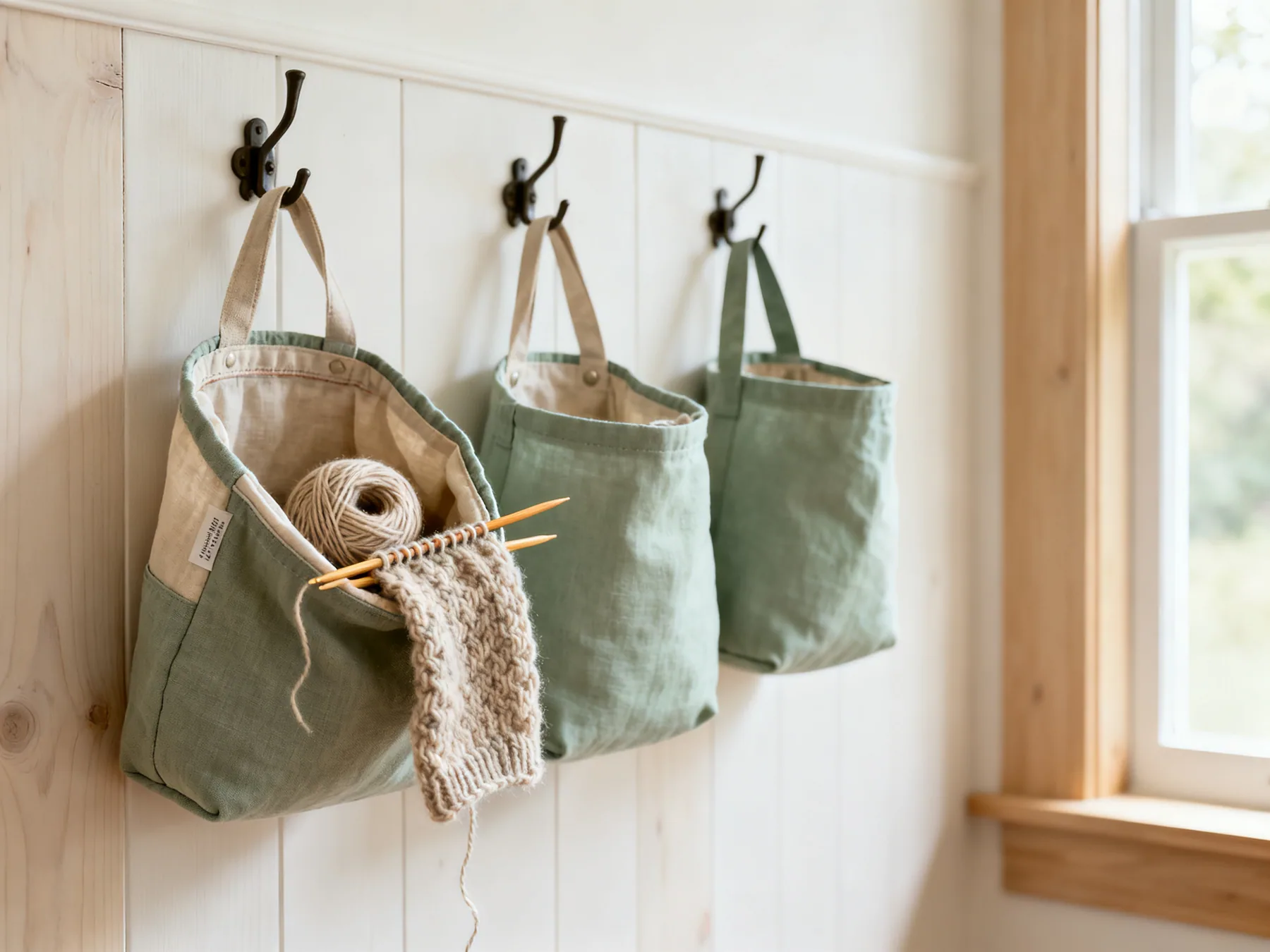
One bag per project, needles included
The needles stay in the work. Robbing needles from one project to start another is the most reliable way to abandon the first, and it is why people own six half-finished things and no free needles.
Put the pattern in the bag
Printed, or a note of where to find it, plus the row you are on and any modifications you have made. Coming back to a project after four months with no notes is how a project becomes frogging.
Hang project bags on hooks
Visible on hooks, they stay in mind and get picked back up. In a cupboard they hibernate. A row of hooks on a wall or the back of a door is enough.
Keep a stitch marker on the current row
Not storage exactly, but it is the thing that makes a stored project resumable. A marker plus a written row count means you can pick it up cold.
Needles, hooks and notions
The last category and the one most often thrown in a pot. Needles in a jar look charming and it is genuinely bad for them: circulars kink, double-pointed needles separate from their sets, and fine metal needles bend against each other.
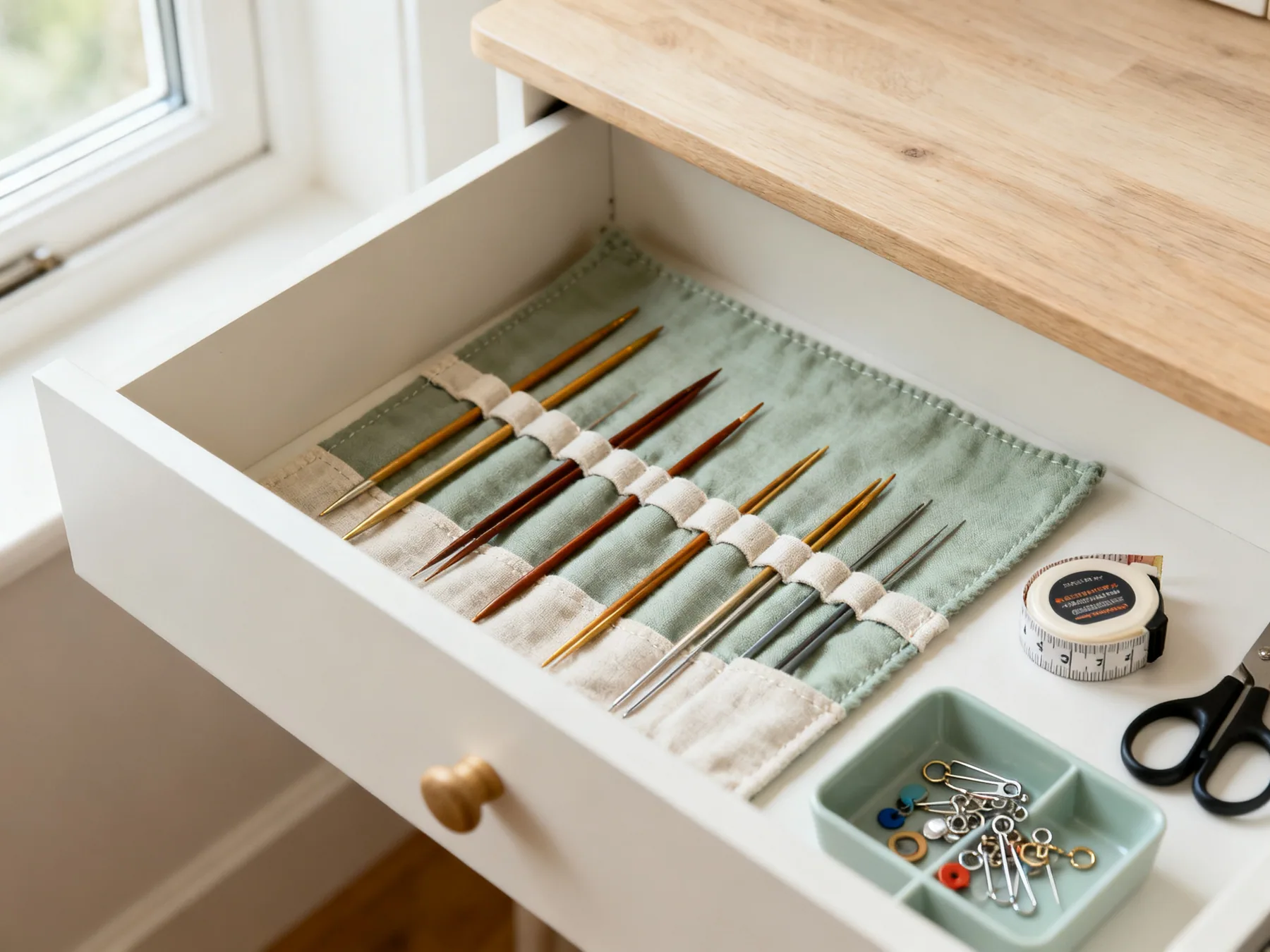
- Store straight and double-pointed needles flat, sorted by size, in a fabric roll or a divided drawer.
- Hang circular needles by their cables or keep them in labelled sleeves so the cable does not take a permanent kink.
- Keep double-pointed sets together. One missing needle makes a set useless.
- Label sizes clearly. Unmarked needles and a gauge are a five-minute job every single time.
- Give notions a divided tray: stitch markers, tape measure, scissors, darning needles, row counter.
- Keep a spare set of the sizes you use most, so starting a project does not require finishing one.
- Store bamboo and wooden needles away from damp and direct heat, both of which warp them.
- Keep scissors and cutters somewhere children cannot reach if that applies.
Yarn storage ideas that let you actually shop your stash: frequently asked questions
How should I organise a yarn stash?
By weight first, then colour. A pattern asks for a weight and a yardage, so those are what your storage has to answer, and colour is what you choose between once you have found the candidates. Sorting by colour first looks beautiful and means opening every bin to find enough DK, which is why a photogenic stash is often an unusable one.
Do I need to protect all my yarn from moths?
No, only the protein fibres. Moth and carpet beetle larvae digest keratin, so wool, alpaca, mohair, cashmere and silk are at risk while cotton, linen, bamboo, acrylic and nylon are not. That means the cotton and acrylic can live in open baskets, and only the wool needs airtight containers with cedar.
What is the best container for yarn?
Clear lidded bins for anything woollen, because they satisfy both needs at once: sealed against moths and visible without opening. Yarn is chosen by eye, so opaque containers mean opening everything to find one skein, which in practice leads to buying new yarn for projects you could already make from the stash.
Where should I not store yarn?
Lofts, cellars and garages. Damp and temperature swings are bad for the fibre, and a garage adds mice, which regard yarn as ideal nesting material and treat a cardboard box as no obstacle. Also keep it out of direct sunlight, which fades the outside of a ball more than the inside, so the shade changes partway through a project.
How do I stop losing track of half-finished projects?
One bag per project with everything in it: the yarn, the needles you are using, the pattern, the row you are on and any modifications. Keeping the needles in the work matters more than it sounds, because robbing needles to start something else is the most reliable way to abandon the first project. Hang the bags on hooks so they stay visible.
How should knitting needles be stored?
Flat and sorted by size in a fabric roll or a divided drawer, not upright in a pot. In a jar, circulars take a permanent kink in the cable, double-pointed sets get separated, and fine metal needles bend against each other. Label the sizes, because unmarked needles plus a gauge is a five-minute job every time you start something.