Room Storage
Bathroom storage ideas for a room with no spare wall
A bathroom is usually the smallest room in the house with the most small bottles in it. It is also the only room where getting the material wrong will destroy your storage within two years.
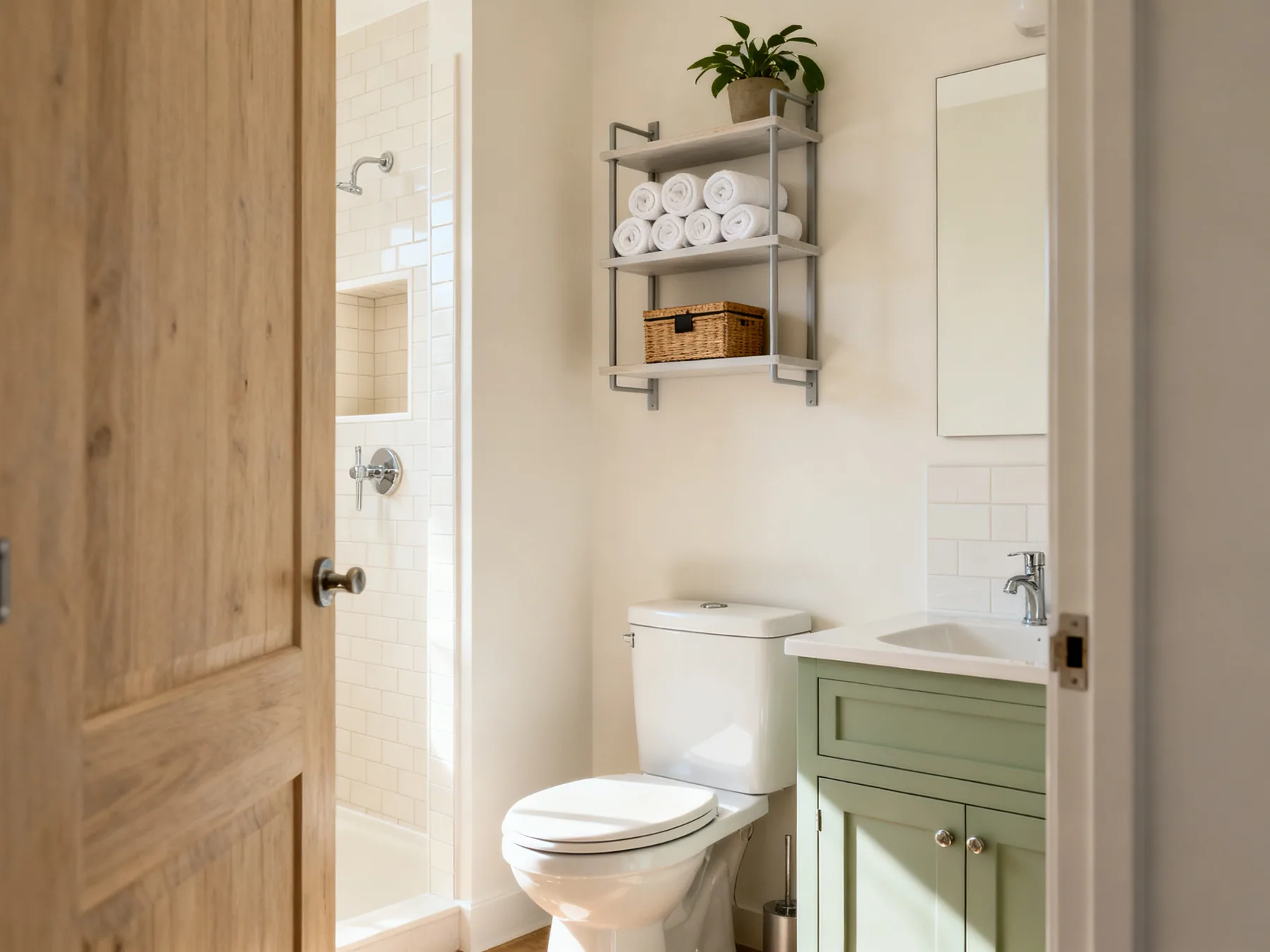
Every bathroom I walk into has the same three problems. A bath, a basin and a toilet, all immovable, all plumbed, and between them they have eaten every wall. What is left is the space above them, and almost nobody is using it.
The second thing I check is what the existing storage is made of, because this is the room that punishes a bad material choice. Chipboard swells, untreated timber warps, chrome-plated mild steel rusts straight through its plating, and anything with a fabric lining grows mildew. Before I look at a single idea I want to know whether it will still be intact in three years.
Over the toilet is the wall everyone forgets
The wall above a cistern is usually the largest unobstructed vertical surface in a bathroom, and in most houses it is completely empty. It is also structurally the easiest place to work, because no plumbing runs directly above a cistern.
Two constraints. Leave at least 250mm above the cistern lid so it can be lifted for maintenance, which people forget until the fill valve fails. And keep the lowest shelf shallow, 150 to 200mm at most, so nobody standing at the toilet hits their head on it.
A three-tier shelf unit
The standard answer and a good one. It adds roughly 0.3 square metres of shelf in dead space. Freestanding versions straddle the toilet and need no drilling, which suits a rental. Wall-mounted versions look lighter and leave the floor clear for cleaning.
Freestanding version is renter friendly
A shallow wall cabinet instead of open shelves
I lean towards a door here. Open shelving in a bathroom collects dust and airborne residue on everything, and in a room with nowhere for the eye to rest, closed doors make the space feel calmer. Spare rolls and medicines stay clean too.
Two lidded baskets on the cistern top
The no-tools option. Cotton pads, spare rolls, cleaning bits. Do not let anything overhang the cistern edges and never block access to the flush mechanism.
Small bathroom storage, in order of preference
In a small bathroom every solution has to justify its floor area, so I work through it in a fixed order. Recessed takes no space at all. Wall-mounted takes no floor. Over-fixture uses genuinely dead space. Freestanding furniture is the last resort, not the first idea.
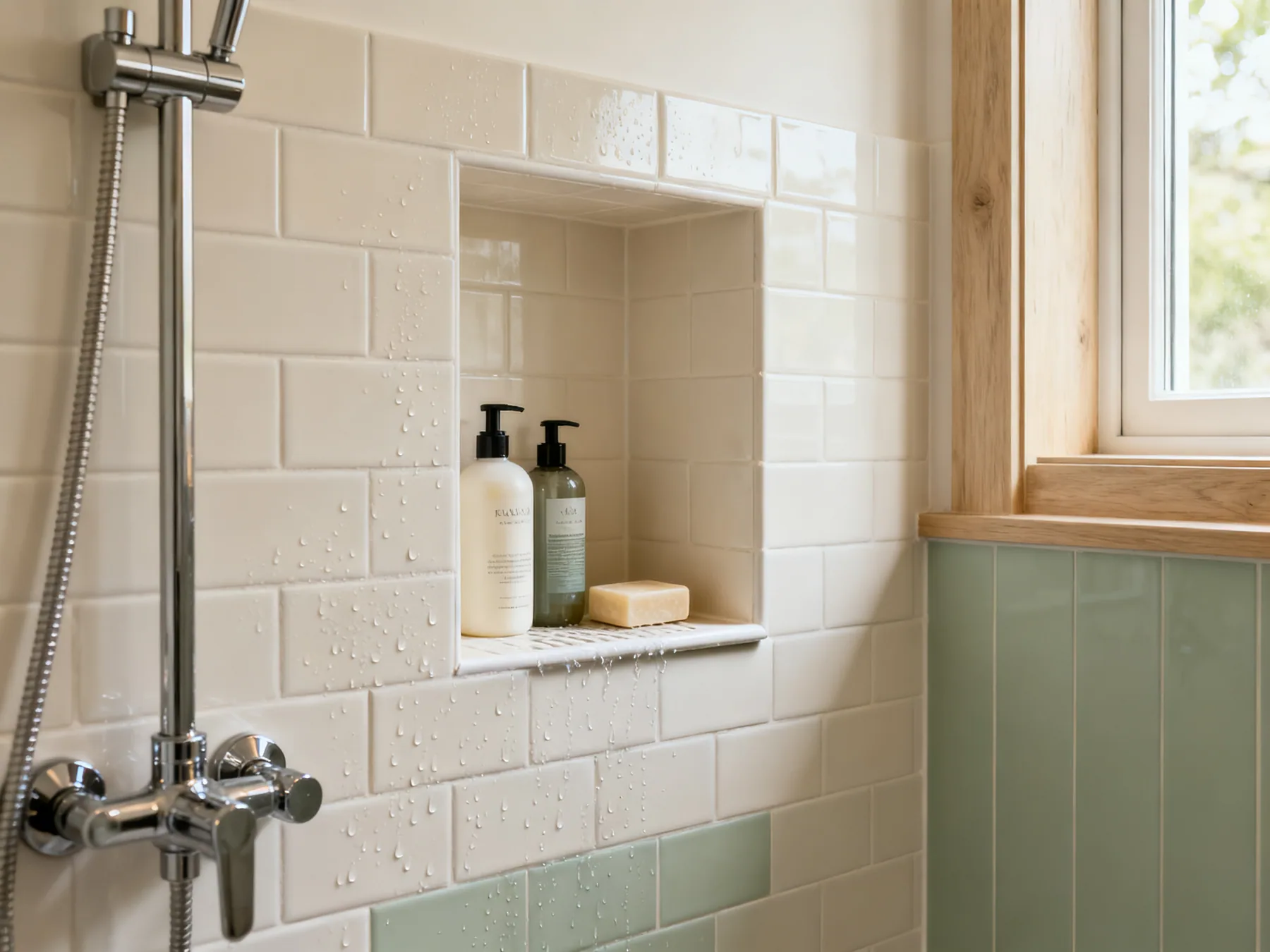
Recess a niche into the shower wall
A tiled niche set into a stud wall gives you shampoo storage that projects into the room by exactly nothing. Build it during tiling with a slight fall to the front so water drains out rather than pooling in the base. This is the single best small-bathroom move available and the one I push hardest for.
Swap a pedestal basin for a vanity unit
A pedestal wastes the entire volume beneath it. A vanity of the same width converts that void into 60 to 90 litres of storage for no change in footprint. Choose one with a U-shaped cutout so it clears the trap.
Use the wall above the door
The 300mm strip above a door frame is dead in every bathroom. One shelf there holds spare towels and bulk toiletries, and because it sits above eye line nobody registers it as clutter.
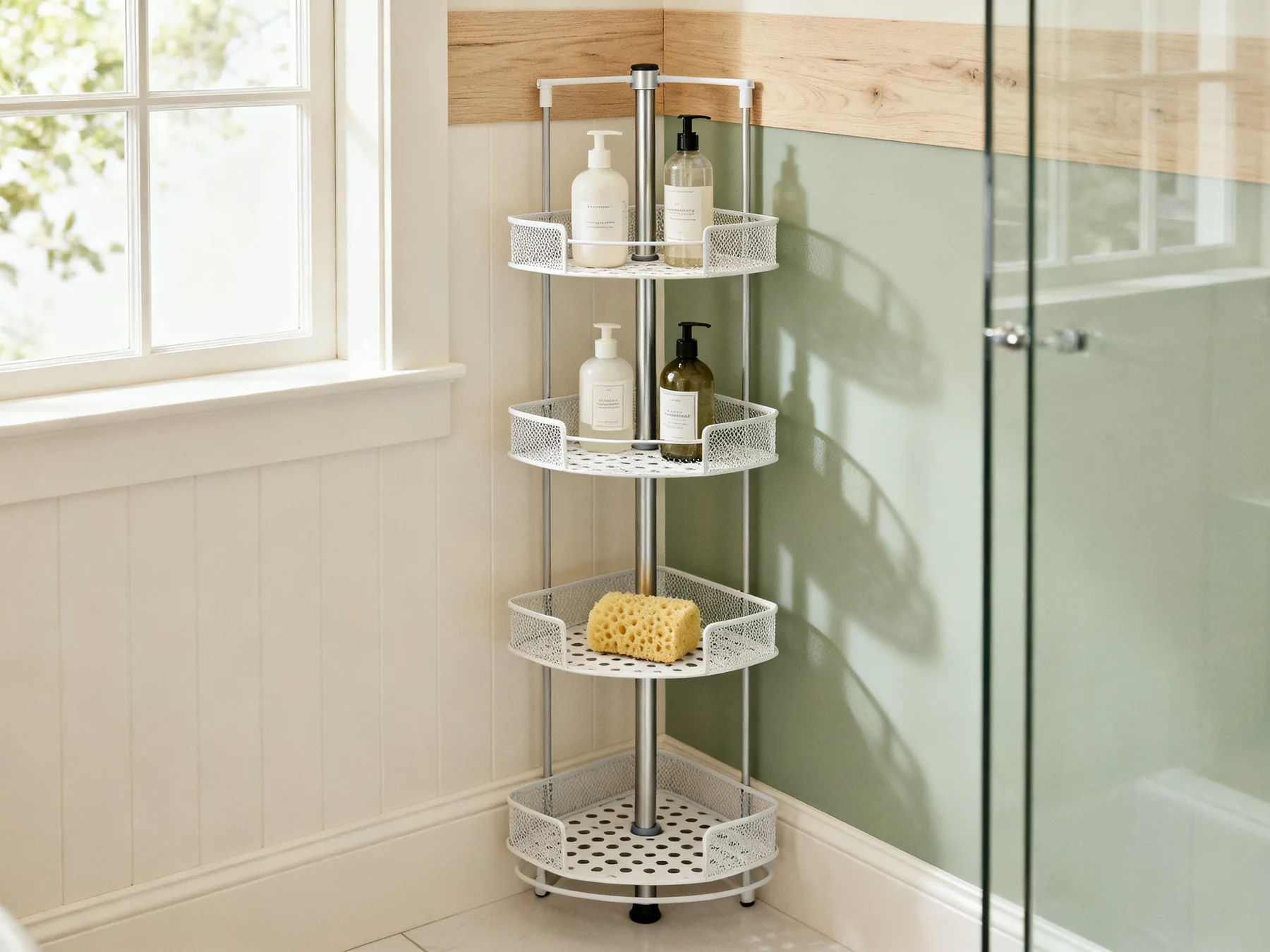
A corner shelf tower in the shower
Corners are the least useful part of a shower tray and the easiest place to add shelving without catching an elbow. Tension-pole versions need no fixings into the tile at all.
Renter friendly
The vanity, and the trap that ruins it
Under a basin is the largest single volume in most bathrooms, and the plumbing trap sitting in the middle of it is exactly why most of that volume goes unused. People open the door, see the pipework, and give up.
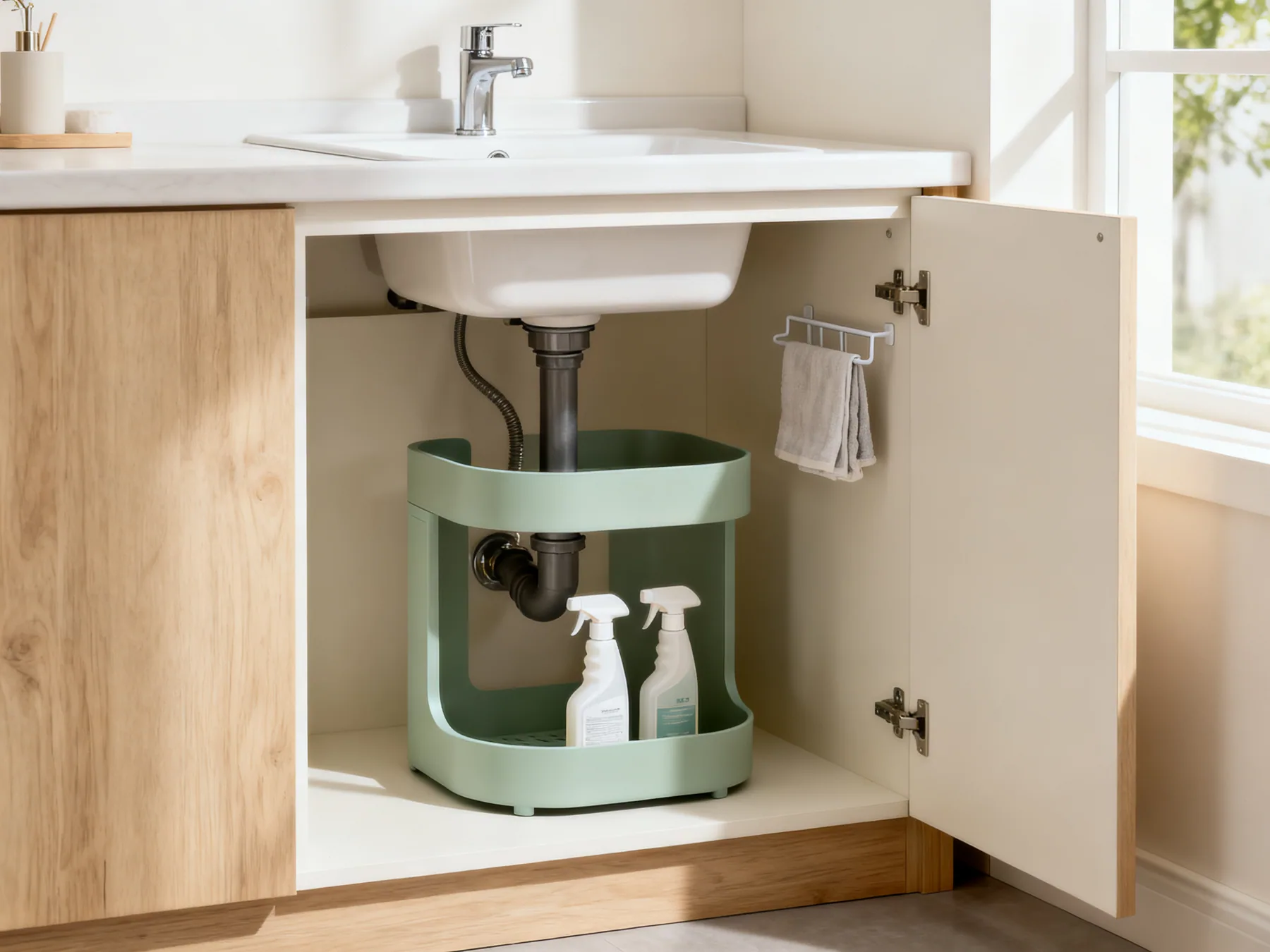
A U-shaped or two-tier organiser
These are shaped specifically to straddle the trap, turning an obstructed void into two usable levels. Measure the cabinet floor to the underside of the basin, and measure where the trap actually sits, before you buy anything. This is the measurement people skip and then return the product.
Low slide-out drawers either side of the trap
A shallow pull-out on each side makes the back of the cabinet reachable. Cleaning products in particular belong at the front where you can read the label without kneeling on the floor.
Racks inside the vanity doors
Brushes, spare soap and cloths fit in door-mounted caddies using space the cabinet itself cannot. Check the door clears the shelf edges first, because 40mm of rack needs 40mm of clearance.
One divided drawer for daily items only
Toothpaste, floss, moisturiser. Keeping the daily things in their own shallow drawer stops them being buried under the monthly ones, which is the whole game in a small bathroom.
Towels, and why folded ones start to smell
A damp folded towel does not dry. It sits at whatever humidity the room is at, and within a few weeks the bathroom smells and everyone blames the drains.
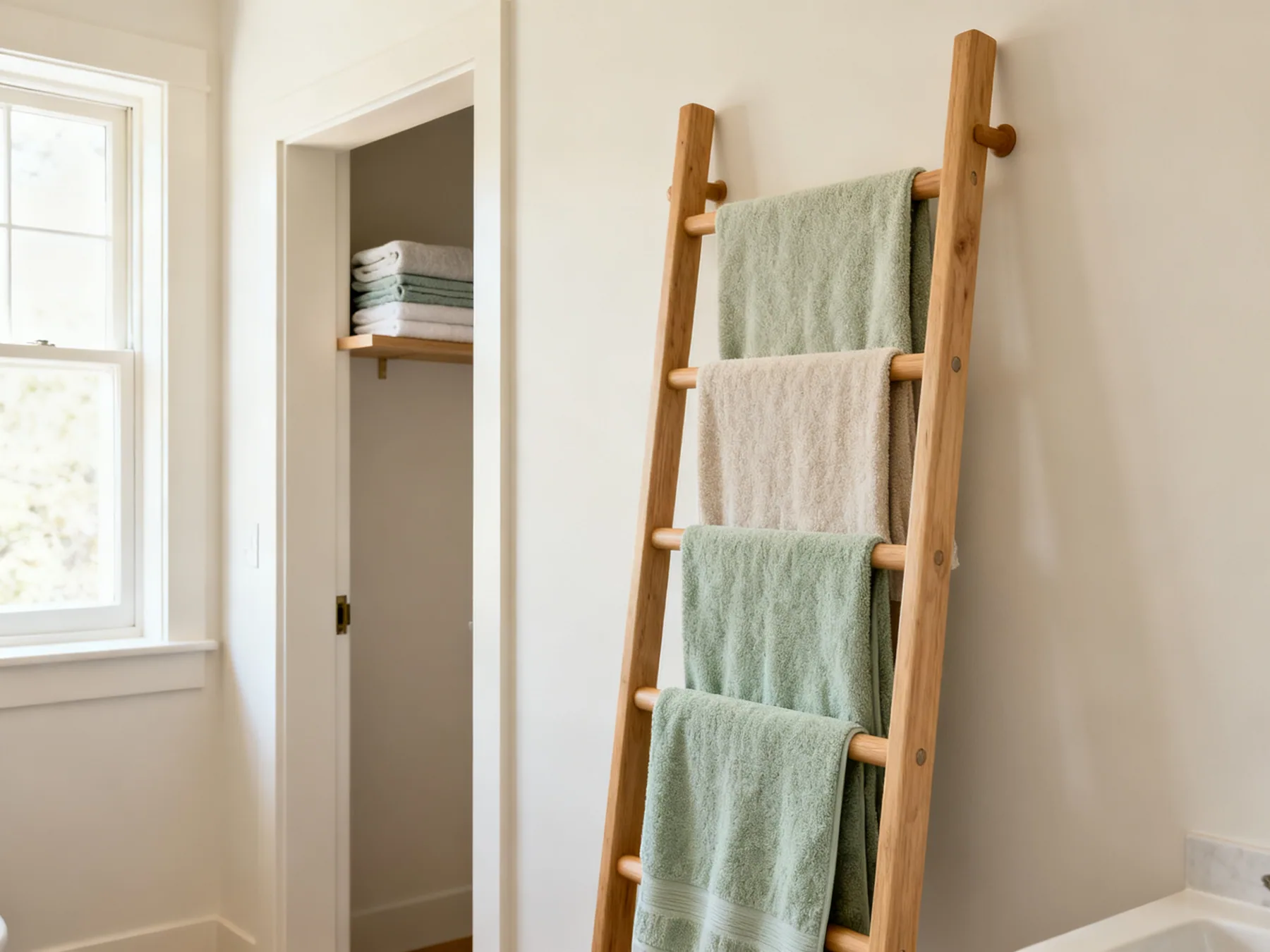
A ladder rail or stacked rails
Four towels in the footprint of one hook, each over its own rung with air between them so they actually dry. This is a smell fix as much as a storage one.
Keep folded spares out of the bathroom
Store the clean spare stack somewhere dry, on a shelf above the door or in a hallway cupboard. A bathroom at 85 percent humidity is not a good linen cupboard.
Shower storage that does not grow mould
Almost every mouldy shower caddy I see has one thing in common: a solid flat base. It holds a shallow pool of water permanently, and that standing water is where the pink film comes from. It is a design fault, not a hygiene failure.
Choose a caddy that drains
Open mesh or slotted bases dry between uses. Hanging caddies over the mixer bar are usually better than corner-wedged ones, which trap water against the tile and leave a mark you cannot scrub off.
A bath caddy board across the tub
A hardwood or bamboo board spanning the bath holds soap, a drink and a book, then lifts off entirely. Good where there is no adjacent surface at all.
A draining mesh bag for bath toys
Suction-cupped to the tile so the toys drain rather than sitting in a bucket of cold water growing things. This is a mildew fix disguised as storage.
The material and ventilation rules I will not bend on
This is the section other bathroom articles leave out, and it is the reason bathroom storage gets replaced so often. A bathroom regularly hits 80 to 90 percent relative humidity. Storage has to be specified for that, not chosen on looks and hoped for.
- Run the extractor for 15 to 20 minutes after a shower, not just during it. Most mildew forms afterwards.
- Use stainless steel or aluminium in the shower zone. Chrome-plated mild steel will rust through its plating within a few years.
- Seal any cut edges of MDF or chipboard vanity units, especially around the basin cutout.
- Leave an air gap behind wall-mounted units so the wall behind can dry.
- Avoid fabric-lined baskets in the shower zone. Use open weave or perforated plastic that drains.
- Store medicines outside the bathroom. Heat and humidity shorten their shelf life, and a bedroom drawer is better.
Bathroom storage ideas for a room with no spare wall: frequently asked questions
Where should I put storage in a small bathroom?
Work in this order: recessed niches take no space at all, wall-mounted units take no floor, over-the-toilet shelving uses genuinely dead space, and freestanding furniture is the last resort. The wall above the toilet cistern and the strip above the door are the two spaces most bathrooms leave completely empty.
How do I stop bathroom storage going mouldy?
Ventilation does most of the work. Run the extractor for 15 to 20 minutes after showering, not just during. Then choose materials that tolerate damp: stainless steel, aluminium, solid timber or plastic rather than chipboard and chrome-plated mild steel. Leave an air gap behind wall units and avoid solid-based caddies that hold standing water.
What is the best way to use the space under a bathroom sink?
A U-shaped or two-tier organiser designed to straddle the plumbing trap, which is the thing that makes that cabinet awkward. Add low slide-out drawers either side of the trap so the back is reachable, and door-mounted racks inside the vanity doors. Measure the trap position before buying anything.
Is it safe to store medicines in the bathroom?
It is not ideal. Bathrooms swing between hot and humid and cool, and both heat and moisture shorten the shelf life of many medicines. A bedroom drawer or a kitchen cupboard away from the hob is better, kept out of reach of children.
How much clearance do I need above a toilet cistern?
At least 250mm above the cistern lid so it can be lifted for maintenance, and keep the lowest shelf no more than about 200mm deep so anyone standing at the toilet does not hit it. Above that, shelf depth is limited only by how far you want the unit to project into the room.
Why do my bathroom towels smell even though they are clean?
Because a damp folded towel never fully dries, it just sits at room humidity. Hang each towel over its own rung with air space around it rather than folding it on a shelf, and keep the clean spare stack somewhere dry outside the bathroom.