Room Storage
Bedroom storage ideas: planning the whole room, not buying more boxes
Most bedrooms do not need more storage. They need the storage they already have to stop doing three jobs badly.
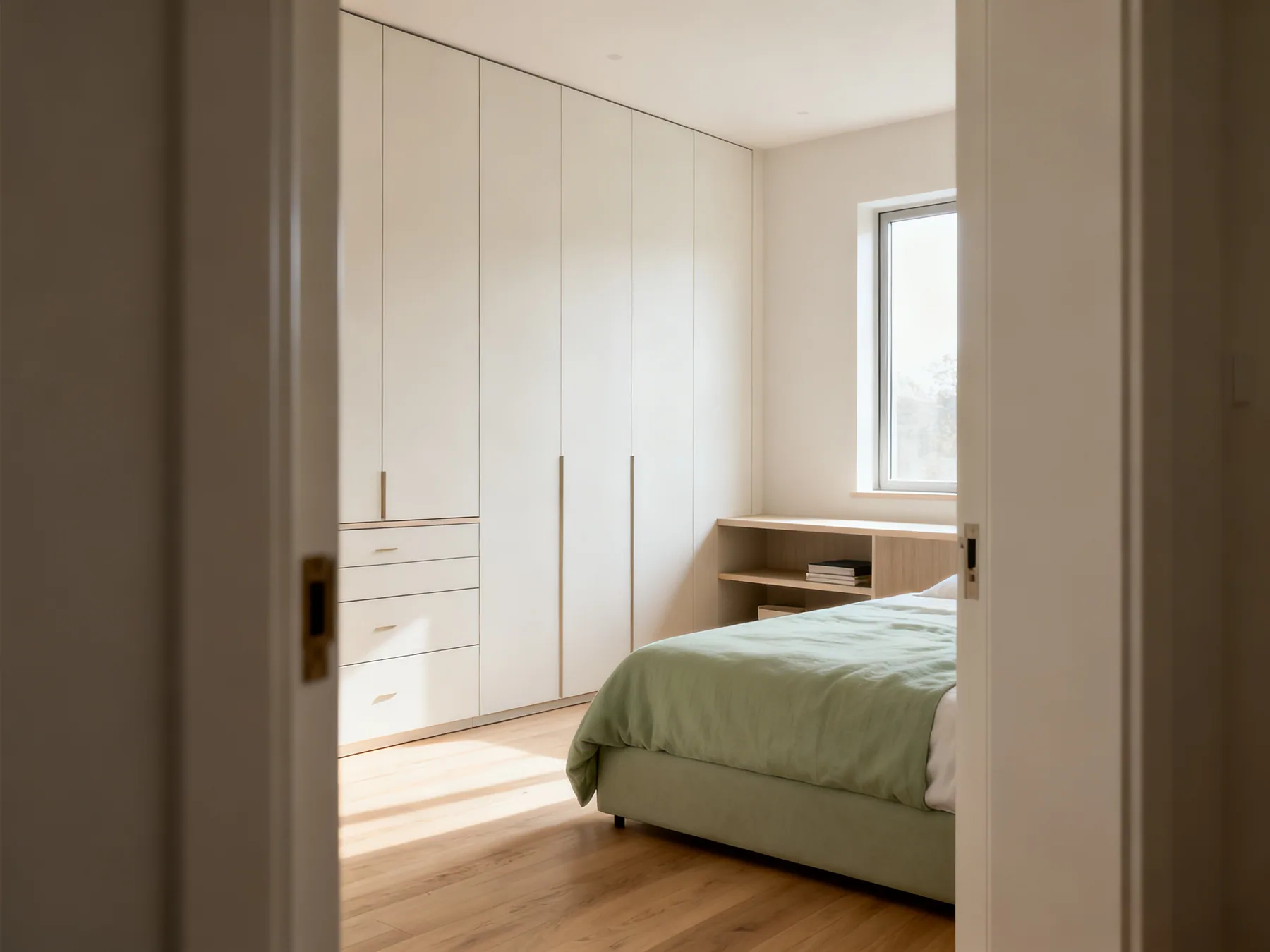
When a bedroom is not working, the thing I look at first is not how much storage there is. It is how many different places the same category of clothing is living in. Jumpers in a drawer, jumpers on a wardrobe shelf, jumpers in a box under the bed. That is the actual problem, and buying another chest of drawers makes it worse rather than better.
It happens because bedroom storage almost never gets planned. It accumulates. A wardrobe came with the house, a chest was bought when the wardrobe filled, a set of under-bed boxes arrived after that, and each piece was a reaction to the previous one running out. Nothing was ever given a job.
So this article is about assigning jobs. There are four zones in a bedroom and each one is genuinely good at something different. Get the categories into the right zones and most bedrooms turn out to have had enough storage the whole time.
The four zones, and what each one is actually good at
Before anything gets bought or moved, I want the categories decided. This takes ten minutes on paper and it is the step that makes everything after it easy.
Hanging space is for anything that creases and anything you choose by looking at it. Drawers are for soft folded items you can identify by touch and colour. Under-bed is for bulk you need seasonally, not weekly. And there needs to be one small, deliberately convenient spot for the things you use every single day, because if you do not design that spot it becomes the chair.
The chair is not a character flaw. It is a missing zone.
- Hanging: shirts, dresses, jackets, trousers, anything that creases.
- Drawers: knitwear, t-shirts, underwear, socks, activewear.
- Under-bed: spare bedding, off-season bulk, suitcases.
- Daily: tomorrow's clothes, the dressing gown, the bag you carry.
- Write down which zone each category belongs to before you buy or move anything.
Get the wardrobe working before you add furniture
This is where I find the most unused capacity in a bedroom, and it is capacity you have already paid for. Open almost any wardrobe and you will see one rail near the top, clothes hanging from it, and then a substantial volume of nothing underneath the hems.
On a standard wardrobe that empty band is often a third of the interior. It is doing nothing at all, and it is the single best-value thing to fix in the entire room.
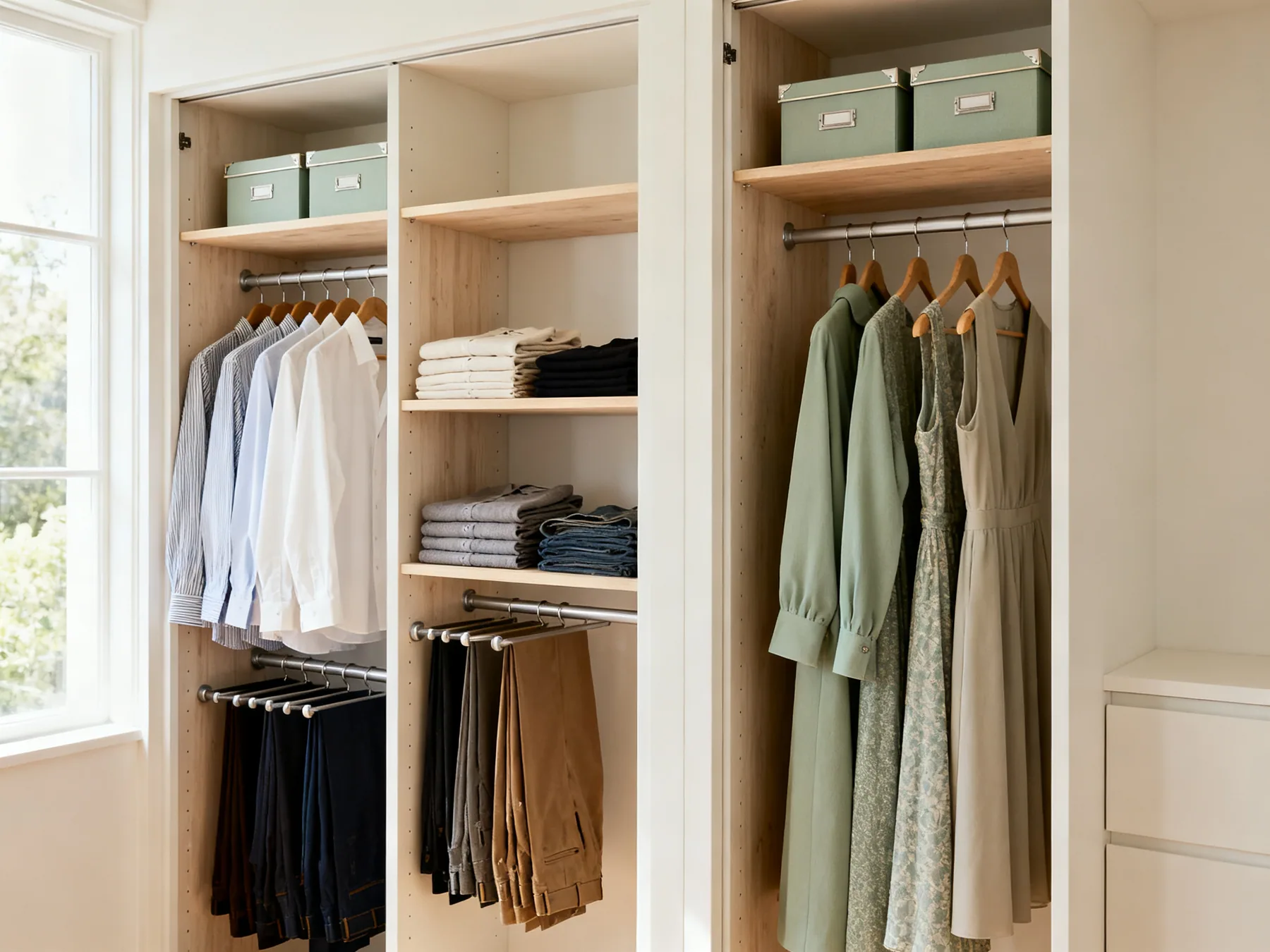
Add a second rail under the first
Shirts, tops, jackets and folded trousers need only about a metre of hanging drop. Put a second rail below the first and you roughly double the hanging capacity for the price of a rail and two brackets. Keep one full-height section undivided for dresses and long coats.
Cheapest capacity gain in the room
Take the wardrobe to the ceiling
The gap between the top of a freestanding wardrobe and the ceiling collects dust and holds nothing. Boxing it in, or choosing a full-height unit, adds a shelf the full depth of the wardrobe. That is where suitcases and off-season boxes belong.
Swap internal shelves for shallow drawers
A shelf inside a wardrobe becomes a vertical stack you have to excavate, and the bottom jumper becomes permanently invisible. Shallow drawers or pull-out baskets show their contents and cost you nothing in volume.
Use the inside of the doors
Slim hooks or a shallow rack on the inside face of a wardrobe door hold belts, scarves, ties and soft bags in space that is otherwise pure air. Keep it light so the door still closes true on its hinges.
Choose sliding doors only if you have to
A hinged door needs about 600mm of clear swing in front of it, and in a tight room that can decide whether a wardrobe fits at all. Sliding doors need none. The honest trade is that you can only ever see half the interior at once, which I find slows people down.
Drawers: fold on edge, not in a stack
Drawers are the zone people most often get wrong, and the mistake is almost always the same. Clothes are folded flat and stacked, which means you can see exactly one item and the rest are archaeology.
File them on edge instead, standing up like books on a shelf, and the whole drawer becomes readable in one glance. It takes the same space. It is purely a change in orientation, and it is the fastest improvement available in a bedroom.
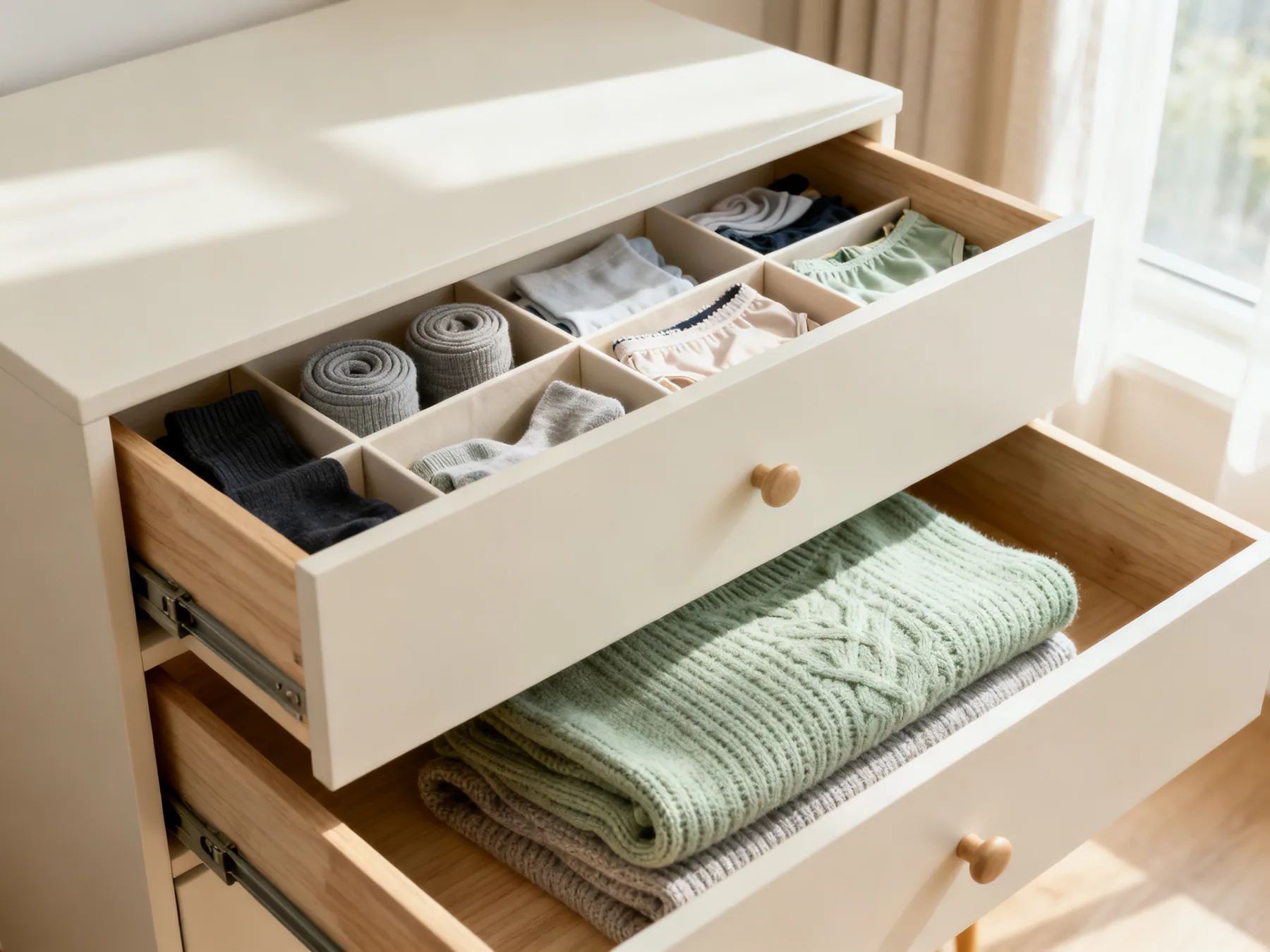
Stand folded items on edge
Knitwear, t-shirts and activewear all stand up perfectly well once folded to a consistent width. You see everything, you stop pulling the pile apart to reach the bottom, and the drawer stays tidy for far longer because nothing has to be disturbed.
Divide the small-item drawer
Socks and underwear need compartments or they merge into one mass. Fabric dividers or small open boxes inside the drawer keep categories apart. This is the one drawer where I think dividers are genuinely essential rather than nice to have.
Put the heaviest things in the lowest drawers
It keeps a chest bottom-heavy and stable, which matters if there are children in the house, and it saves your back. Jeans and knitwear low, light and daily items at chest height.
Leave one drawer deliberately half empty
Laundry comes back in waves. A drawer with no slack means the clean washing sits in a basket for three days waiting for space. I always plan for about a fifth spare.
The wall above everything else
Stand in the doorway and look at the band above roughly 1.9m, right around the room. In nearly every bedroom I walk into it is completely empty, and the reason is simply that no standard furniture is tall enough to reach it. It never registers as space.
It is the best remaining capacity in a normal bedroom, and the wall above the door is the easiest part of it to use.
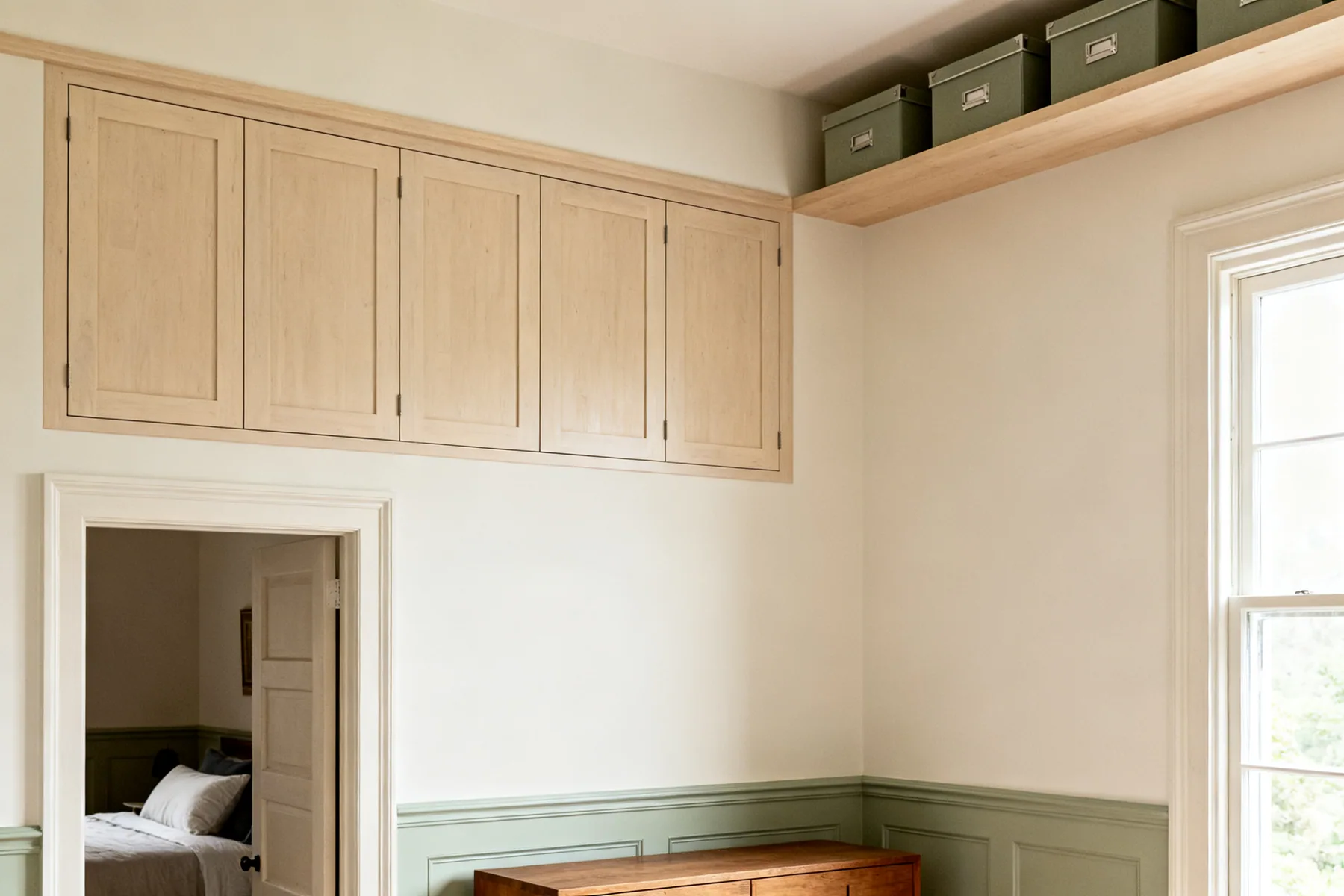
Fit closed cabinets above the doorway
The wall above a door is structurally simple and completely unused. A run of closed cabinets there holds a surprising amount and intrudes on no usable floor whatsoever. Closed rather than open, because open shelving at that height reads as clutter from the bed.
Run a high shelf around the perimeter
One continuous shelf at about 1.9m reads as architectural moulding rather than as storage. It takes lidded boxes and books on a plane that nothing else in the room can use.
Build over the headboard
The wall above the bed head is the other large blank surface. Cabinets there work well, though I would fix them properly into structure and keep anything heavy out of them, for reasons I hope are obvious at three in the morning.
Replace bedside tables with floating shelves
Same surface, no legs, and visible floor underneath. Visible floor is what makes a bedroom read as calm, and a bedroom is the one room where that matters more than capacity.
Under the bed, and the seasonal rotation nobody does
There is roughly 0.75 cubic metres under a standard double, which is more than most chests of drawers hold. It is also the dustiest, stillest air in the room, so it suits a narrow set of things: bulk you need seasonally, in lidded containers, completely dry when it goes in.
Which brings me to the thing that fixes more overfull bedrooms than any product I could recommend. Roughly half your clothes are unwearable for roughly half the year. If they stay in the room, the wardrobe is permanently holding double what it needs to. Moving them out is free, reversible, and almost nobody does it.
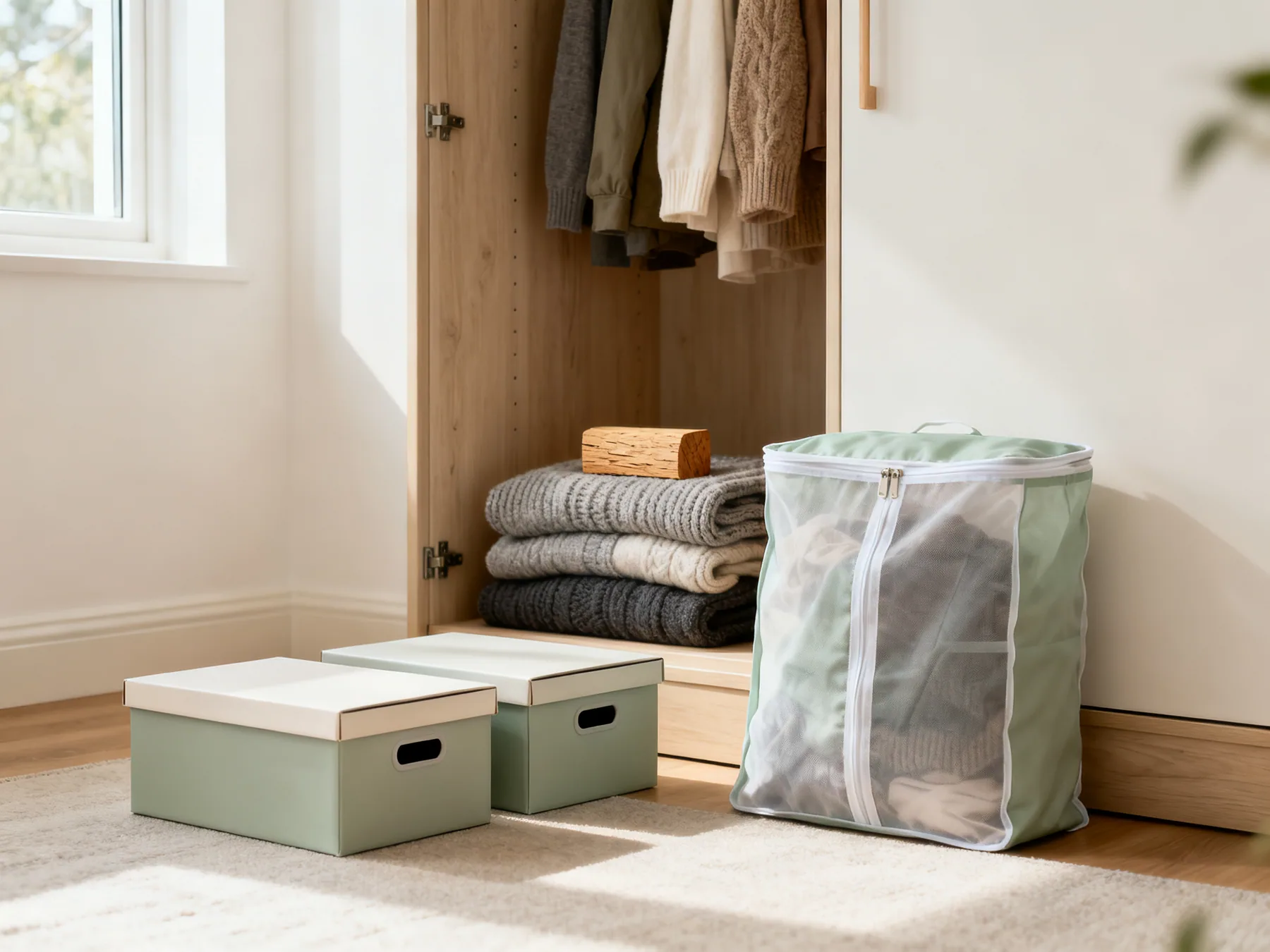
- Twice a year, move the unwearable half of your clothing out of the bedroom entirely.
- Everything must be clean and completely dry before it is boxed. Damp plus still air equals mustiness.
- Use lidded containers under the bed, because it collects more dust than anywhere else in the room.
- Keep wool and cashmere sealed with cedar rather than loose. This is where moths do their work.
- Do not leave down or synthetic fill vacuum-compressed for years. It loses loft permanently.
- Label the boxes by season and category, not by which room they came from.
- Keep the opening clearance clear. A rug over an ottoman lift makes the storage useless.
Bedroom storage ideas: frequently asked questions
How do I get more storage in a bedroom without buying furniture?
Add a second hanging rail under the first in the wardrobe, which roughly doubles hanging capacity, and refold your drawers so items stand on edge rather than stacking flat. Then rotate off-season clothing out of the room. Those three changes cost almost nothing and between them usually solve the problem people were about to buy a chest of drawers for.
What is the most underused space in a bedroom?
The empty band underneath the hanging clothes in the wardrobe, which is often a third of the interior, and then the wall above door head height, which no standard furniture reaches. After those, the volume under the bed, which is around 0.75 cubic metres beneath a standard double.
Should clothes be folded or hung?
Hang anything that creases or that you choose by looking at it, so shirts, dresses, jackets and trousers. Fold anything soft you can identify by touch and colour, so knitwear, t-shirts, underwear and activewear. Knitwear in particular is better folded, because hanging it stretches the shoulders out over time.
How do I stop clothes piling up on a chair?
Give the daily items their own deliberate spot. The chair happens because there is nowhere designed for tomorrow's clothes, the dressing gown and the bag you carry, and those things do not belong in a wardrobe. One hook, one small shelf or one open basket near the door solves it, and it is a missing zone rather than a bad habit.
How much space should I leave spare in a bedroom drawer?
About a fifth. Laundry returns in waves, and a drawer packed to capacity means clean washing waits in a basket until something is worn. Planning slack into the system is the difference between a bedroom that stays tidy and one that is tidy only on the day you sort it.
Is under-bed storage a good idea?
For the right things, yes. It is bulk storage for items you need seasonally rather than weekly, and it needs lidded containers because under a bed collects the most dust in the room. Make sure everything is completely dry before it goes in, since the airflow under a bed is close to nil and mustiness sets in within weeks otherwise.