Room Storage
Kids room storage ideas that they can use and you can adapt
A child's bedroom has to work for who they are now and be cheap to change in two years. Almost nothing else in a house has that requirement.
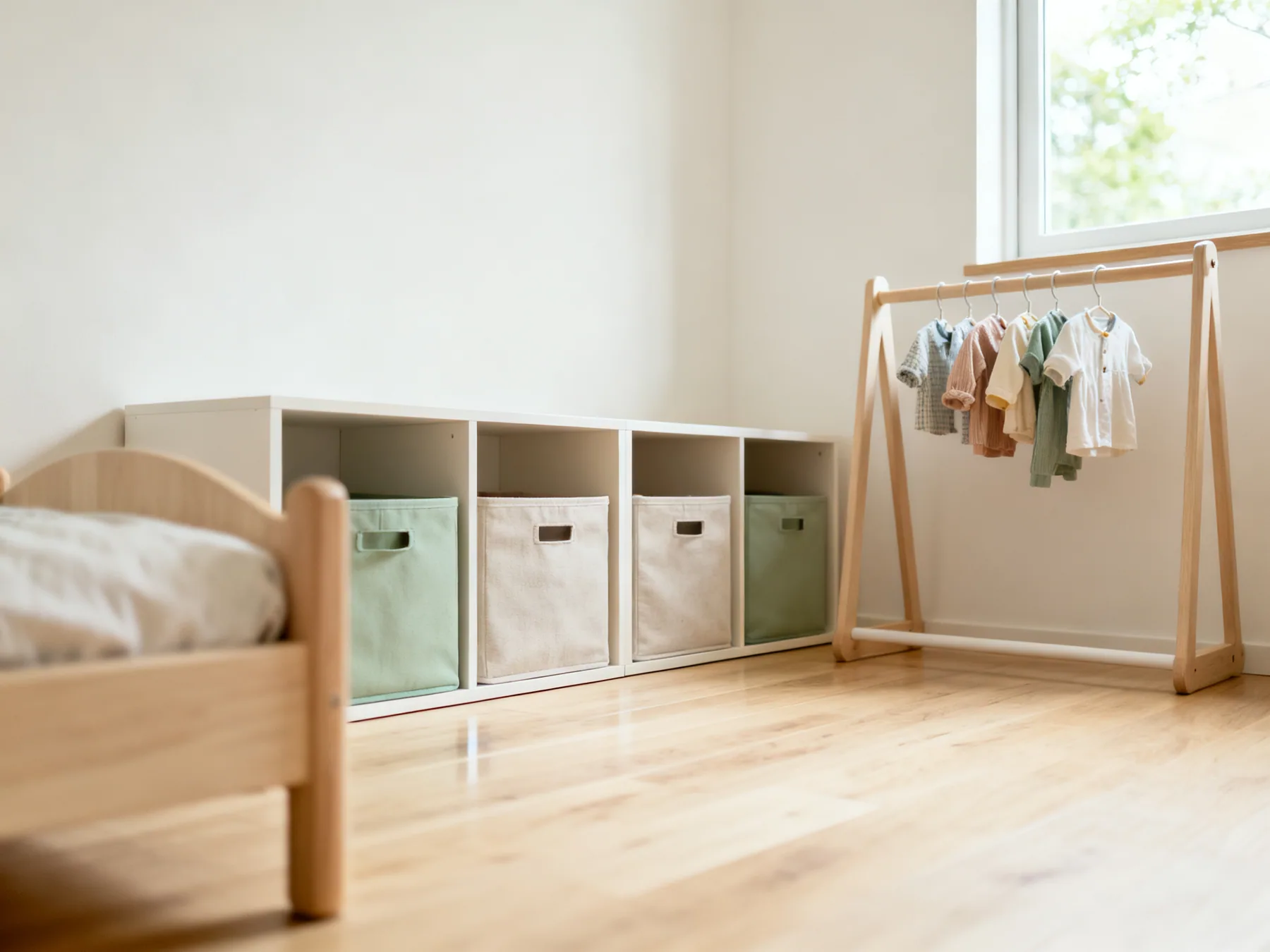
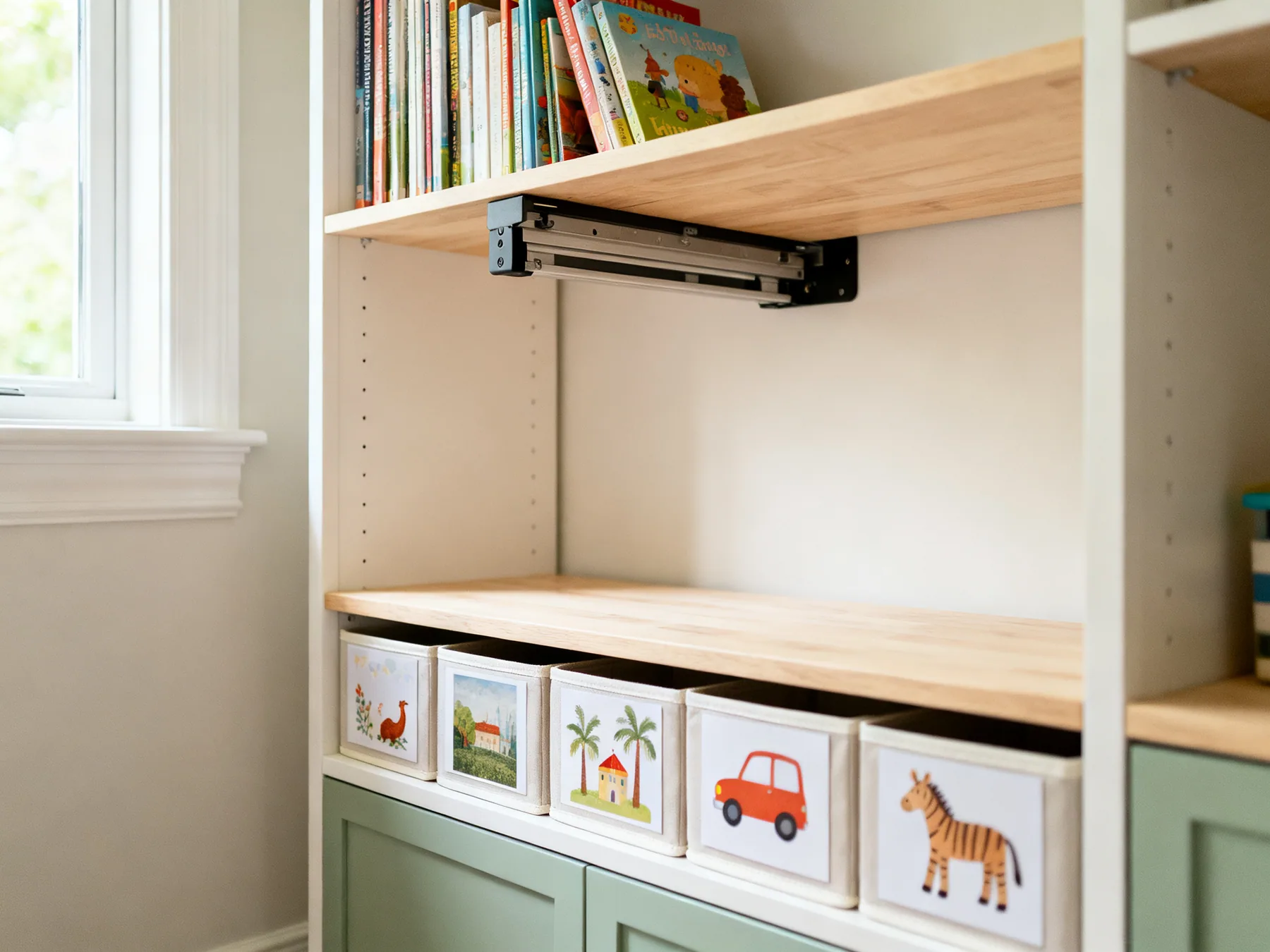
A child's bedroom asks more of its storage than any other room. It has to hold clothes, toys, books and school things in a space that is usually the smallest bedroom in the house. It has to be usable by somebody who cannot reach a normal rail. And it has to be adaptable, because the child who needed a low rail and picture labels will, quite soon, need a desk and somewhere for a games console.
That last point is the one that costs people money. Themed furniture sized for a four-year-old is bought twice, because it is outgrown before it wears out. Adjustable shelving and movable rails cost about the same and last a decade.
So my two tests for anything in a child's bedroom are: can they use it without me, and can I raise it or repurpose it in two years.
Height decides whether they use it
The same rule as anywhere else with children, and it is the difference between a tidy room and a room you tidy. If a child cannot reach and cannot see into the container, an adult is involved every single time.
Measure your child's shoulder height and treat that as the ceiling for anything used daily. Everything above it is adult storage, and that is genuinely useful, just for different things: the out-of-season clothes, the toys in rotation, the craft supplies that need supervising.
Low open bins for toys and daily things
Open-topped and at floor or knee level. A lid is an extra step managed while holding something, and that friction is reliably enough to stop a young child putting anything away.
Keep books front-facing at their height
A pre-reader chooses a book by its cover, so a row of spines is close to invisible to them. A sling shelf or shallow front-facing rack noticeably increases how often books get read.
One low hook for the dressing gown and school bag
At around 1m. It is the same fix as coats in a hallway: the bag ends up on the floor because there is nowhere they can reach to put it.
Reserve above shoulder height for your things
Rotation boxes, spare bedding, off-season clothes. Awkward for them to reach is the point, and it keeps the useful low space for what they use.
Raise the system as they grow
Adjustable shelves and a movable rail mean the room adapts in an afternoon rather than needing new furniture. Check this before buying anything.
Clothes, and lowering the rail
Children's clothes are short, which has a useful consequence: a wardrobe rail set at adult height wastes an enormous amount of the interior when what hangs from it is 400mm long.
Drop the rail to child height and you gain two things at once. They can hang their own clothes, and there is now a large clear space above the rail for a second one, which is where you put next season's clothes and the size up that they have not grown into yet.
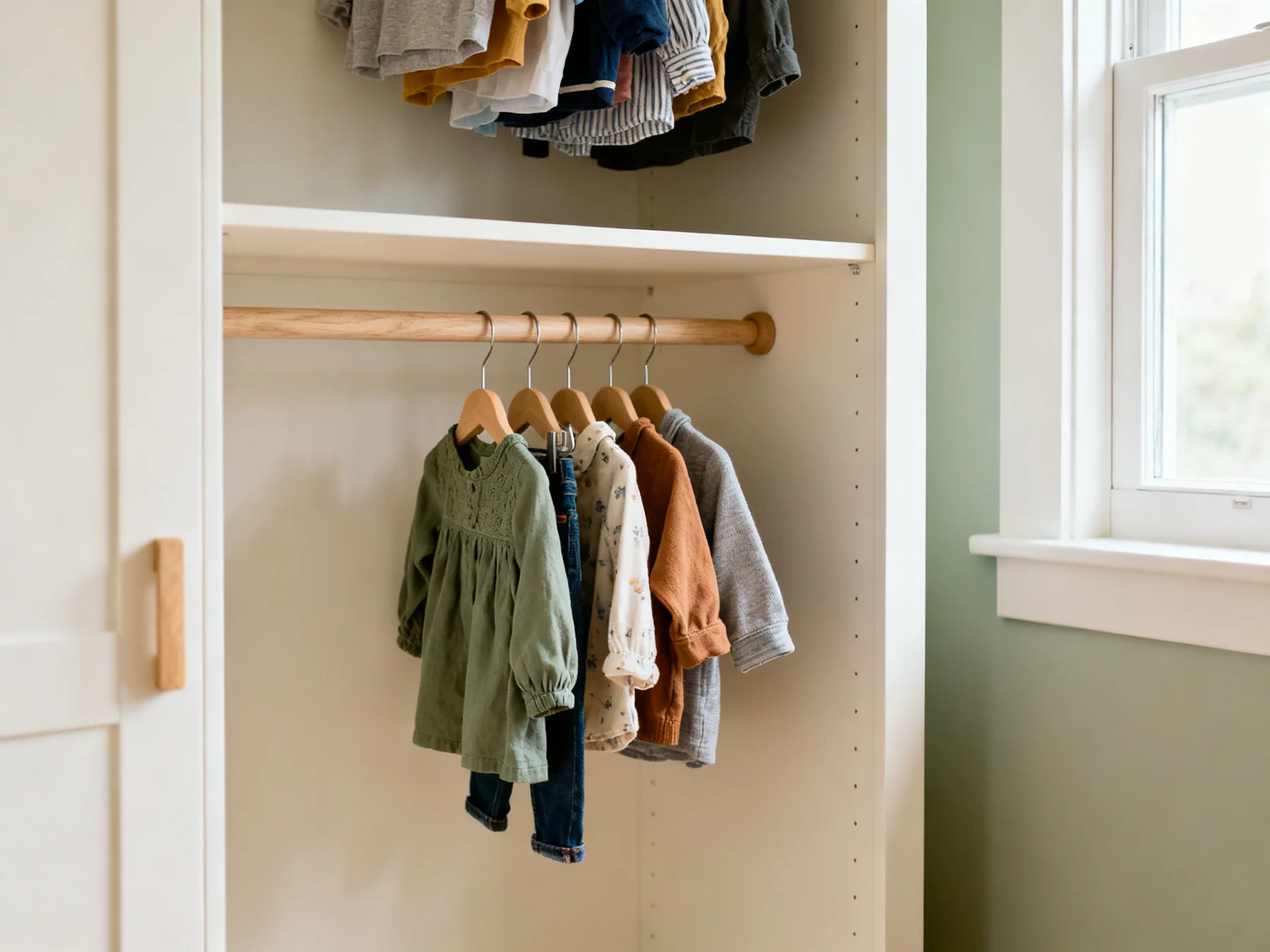
Set the child rail at about waist to chest height
Roughly 900mm to 1.1m depending on the child. Low enough that they can hang a garment on a hanger, which is genuinely achievable from about four with practice.
The change that gets clothes hung up
Add a second rail above it for your storage
Next size up, next season, and the things you would rather they did not choose. It uses the height a child rail leaves free and costs the price of one rail.
Use drawers rather than shelves for folded clothes
A shelf becomes a vertical stack a child pulls apart looking for one t-shirt. Shallow drawers, filed on edge, let them see everything and take one item.
Keep only the current size in the room
Children's wardrobes fill with three sizes at once. Keeping only what fits now roughly halves the volume the room handles and makes getting dressed much easier for them.
Label drawers with pictures for the pre-readers
A photo of socks on the sock drawer. It sounds excessive and it means a three-year-old can get their own socks, which is worth a printed photograph.
Under the bed, and other found space
A child's bedroom is usually the smallest in the house, so found space matters more here than anywhere. There is roughly 0.5 to 0.75 cubic metres under a bed, and in a small room that is more capacity than any piece of furniture you could add.
The requirement, though, is that the child can use it. A heavy lidded box pushed right under a bed is adult storage. Boxes on castors with a lip they can grip are theirs.
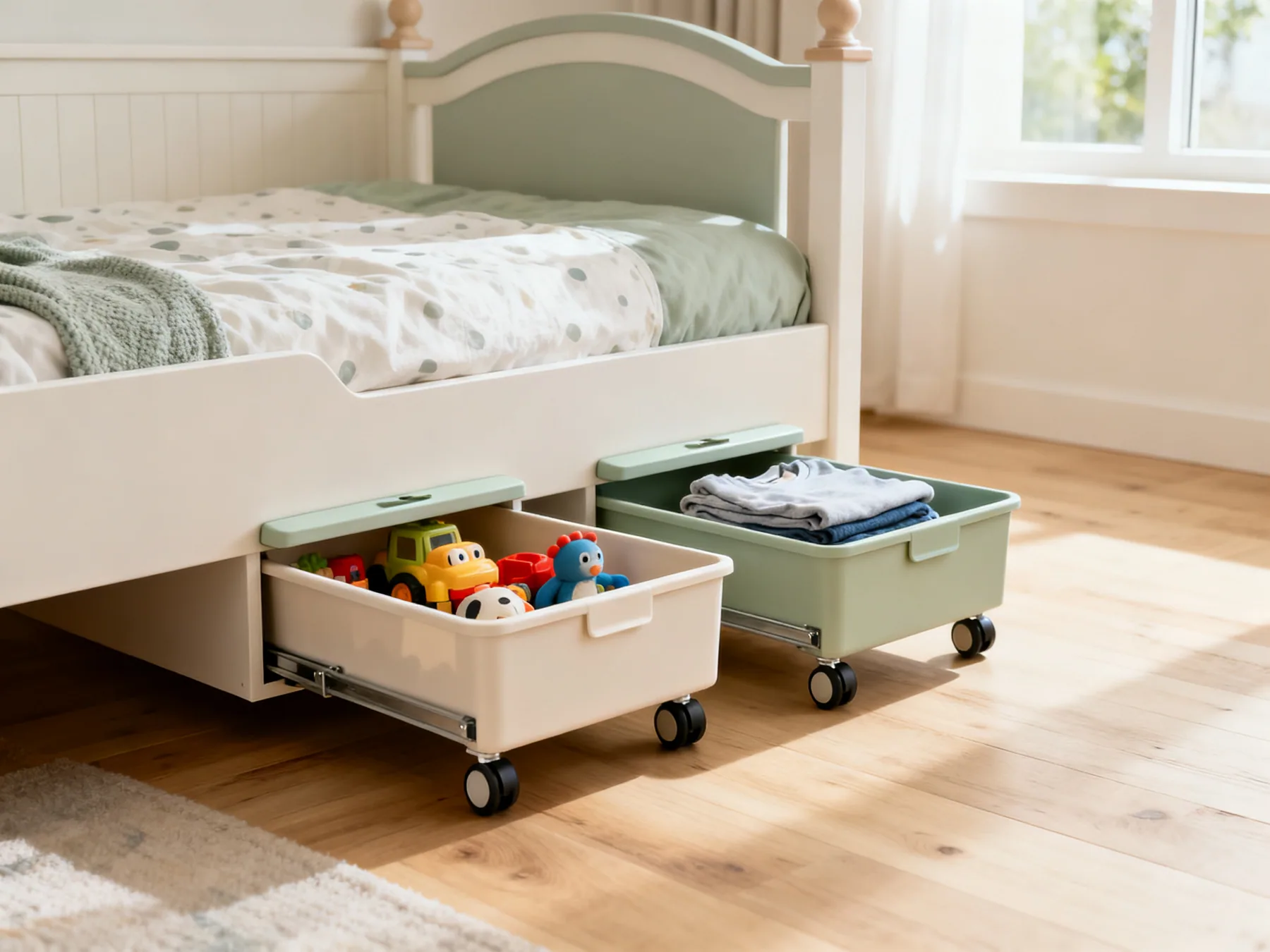
Shallow boxes on castors they can pull
Light enough to move when full, and stopping short of the far side of the bed so they are reachable. Measure the clear height under the frame and take 20mm off for the castors.
Consider a bed with drawers or a raised platform
In a small room this is the biggest single gain available, turning the whole bed footprint into storage. Check the ceiling height honestly before any raised or loft bed.
Use the wall above the bed head carefully
Good space, and I would keep it to light items only and fix them properly into structure. Nothing heavy above where a child sleeps, for reasons that need no explaining.
Light items only above a bed
Put a shelf above the doorway
The 300mm band above a door frame is dead space in every room and well out of a child's reach, which makes it ideal for the things you are storing rather than the things they use.
Use the back of the door
An over-door hook rack or a slim shoe organiser takes dressing gowns, bags and soft toys and claims the last unused vertical surface in the room.
Safety, which matters more in this room
I want to be direct here because a child's bedroom is where storage decisions have the highest consequences, and the risks are well documented rather than theoretical.
Children climb furniture, including furniture nobody expects them to climb, and a loaded chest or shelving unit tipping forward onto a small child causes serious and sometimes fatal injury. Anchor straps cost very little and take ten minutes. Looped blind cords are a separate and equally documented strangulation risk, and a cleat fixed high on the wall solves it.
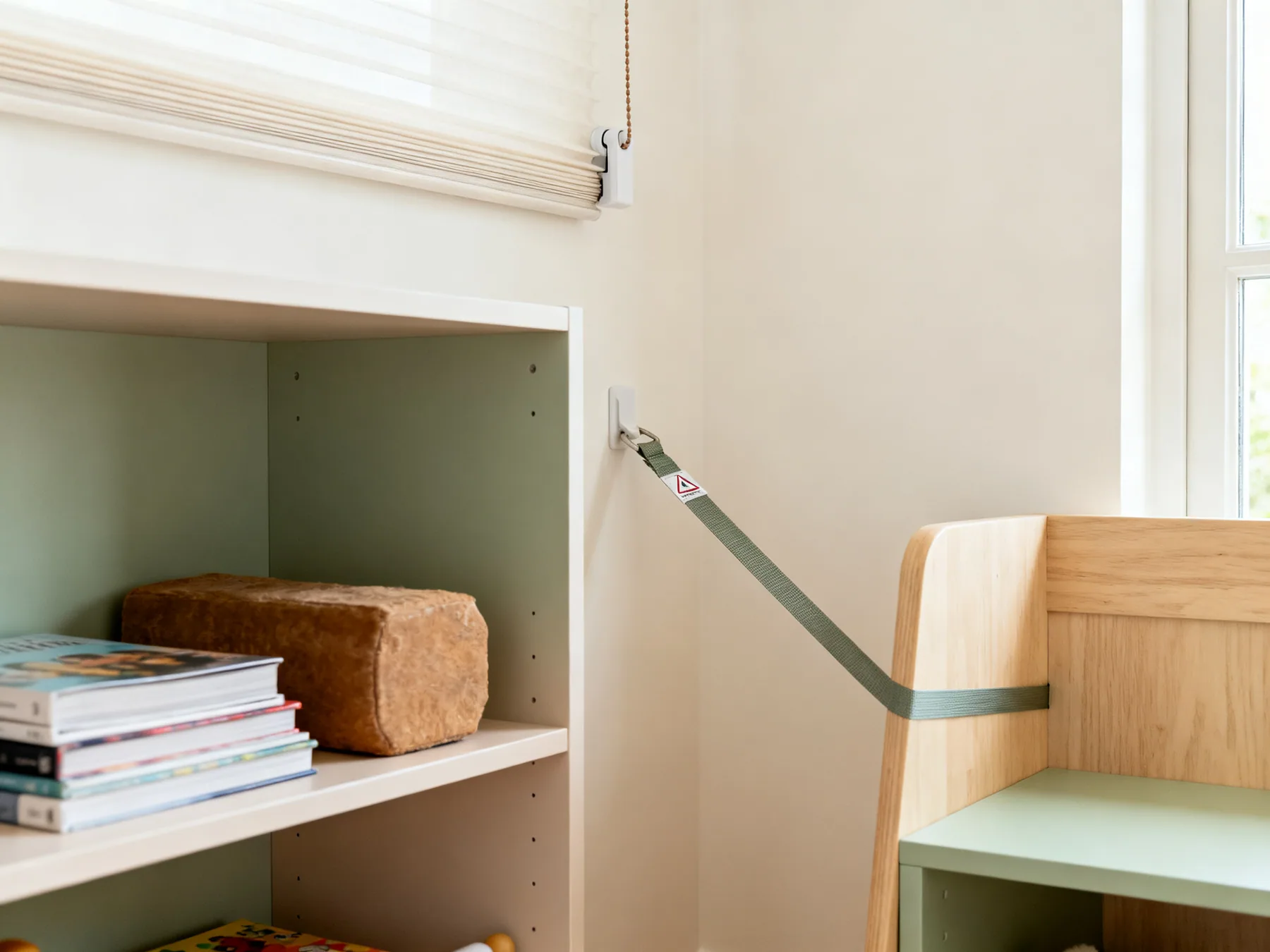
- Anchor every item of furniture to the wall, including low units, which also tip.
- Put the heaviest contents in the lowest drawers so the unit stays bottom-heavy.
- Fit blind cord cleats high on the wall and keep cords wound onto them.
- Keep the cot or bed away from windows, blinds and curtain cords entirely.
- Check toy chest lids have slow-close supports, or take the lid off.
- Keep small parts, button batteries and magnets out of reach of any child under three.
- Avoid glass, mirrors and hard sharp corners at their head height.
- Never store anything heavy on a high shelf a child might try to reach.
Making it survive, and adapt
A child's room drifts faster than any other because the person using it is not motivated by tidiness and is growing out of the system while you build it. Two things carry most of the weight here: fewer things out at once, and a short daily reset rather than a weekly clear-out.
And plan the next version while you build this one. The rail comes up, the low bins become bookshelves, the picture labels come off. If the furniture allows that, you buy once.
- Rotate toys, keeping perhaps a third out and the rest boxed above shoulder height.
- Do a five-minute tidy at the same point each day rather than a big weekly effort.
- Tidy alongside them when they are small. Sorting into labelled bins is a game before it is a chore.
- Keep one bin permanently empty for whatever arrives next.
- Choose adjustable shelving and movable rails over fixed or themed furniture.
- Move outgrown clothes and toys out of the room promptly rather than letting them accumulate.
- Watch where things get abandoned. That is where storage is missing, not where you think it should be.
- Re-do the picture labels when contents change, or they stop meaning anything.
Kids room storage ideas that they can use and you can adapt: frequently asked questions
How do I get a child to put things away in their room?
Make it physically possible first. Anything in daily use has to sit below their shoulder height, in open containers with no lid to manage, one category per container so putting away is sorting rather than cramming. Most reluctance I see is a storage design problem rather than a behaviour one, and it changes as soon as the containers do.
How high should a child's clothes rail be?
Around 900mm to 1.1m depending on the child, which is low enough for them to hang a garment on a hanger themselves. Children's clothes are short, so an adult-height rail wastes most of the wardrobe interior anyway. Add a second rail above the child one and use it for next season and the size up.
What is the best storage for a small kids bedroom?
Under the bed, because there is roughly 0.5 to 0.75 cubic metres of it and that beats any furniture you could add to a small room. Use shallow boxes on castors light enough for the child to pull out, stopping short of the far side so they are reachable. A bed with drawers or a raised platform is the bigger version of the same idea.
Do I really need to anchor children's bedroom furniture?
Yes, and it is the one thing in this article I would not treat as optional. Children climb furniture, including pieces nobody expects them to climb, and a loaded unit tipping forward onto a small child causes serious injury. Anchor straps cost very little and take ten minutes, and low units tip as well as tall ones.
How do I stop buying storage furniture twice as they grow?
Choose adjustable shelving and movable rails over fixed or themed furniture. A unit with adjustable shelves and a rail you can reposition adapts in an afternoon when the child grows, where a themed bed or a chest sized for a four-year-old gets outgrown long before it wears out. Plan the next version while you build this one.
Should I use labels in a child's room?
Pictures rather than words for anyone who cannot read yet. A photograph of socks on the sock drawer means a three-year-old can get their own socks, which is worth the printing. Add word labels alongside if you like, but the picture is doing the work. Re-do them when the contents change, or they teach the child that labels mean nothing.