Room Storage
Small bathroom storage ideas for a room with no spare floor
A small bathroom has no floor to give you. Every solution here is a wall, the space above a fixture, or the back of the door.
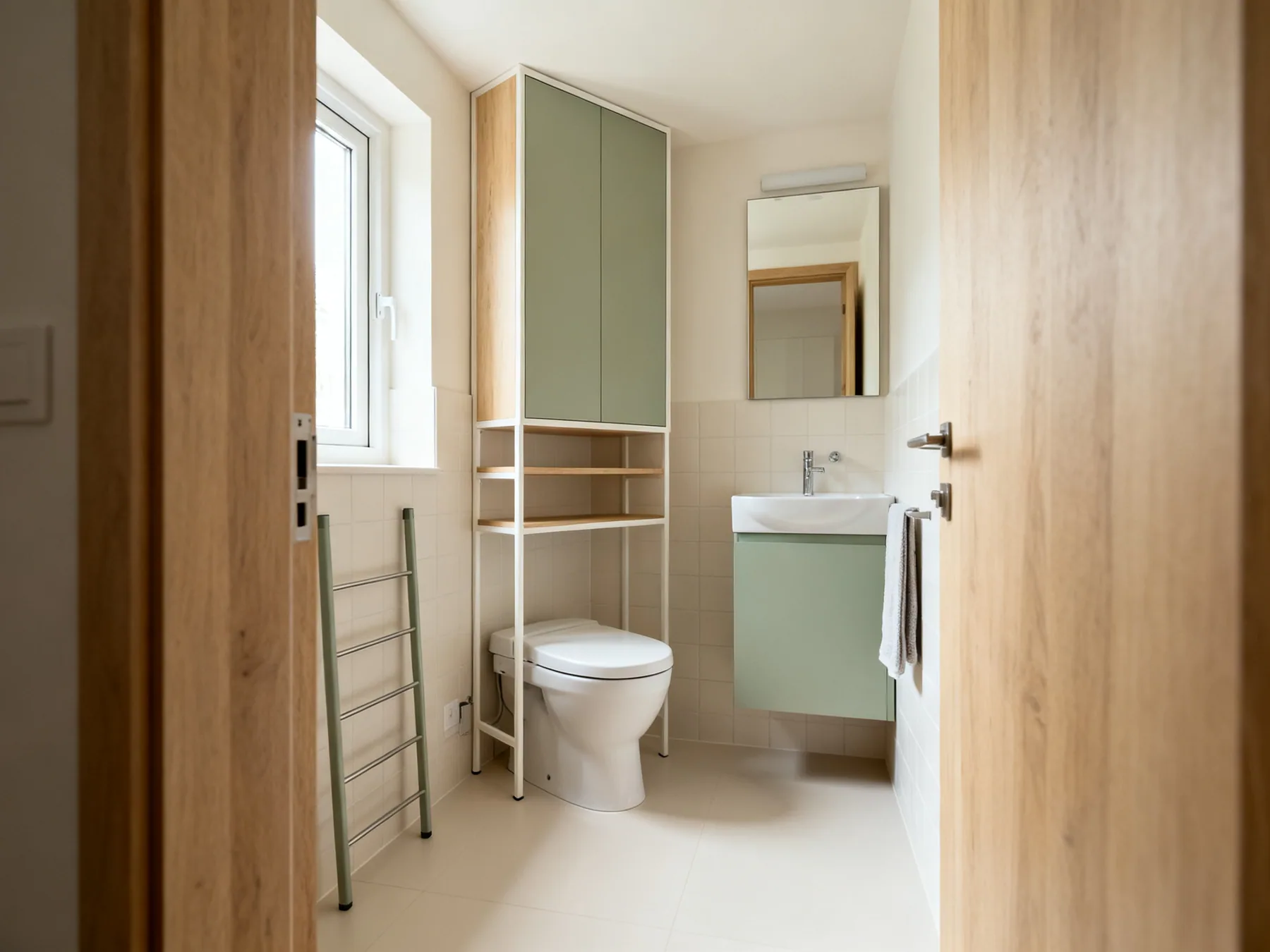
A small bathroom is the hardest room in the house to add storage to, and it is worth being clear about why. Three fixtures are bolted in place and cannot move. The floor left over is circulation, so it is not really available. And the room is wet, warm and badly ventilated for part of every day, which rules out a lot of storage that would be perfectly fine anywhere else.
So there is no spare floor, and the things that work in a bedroom will grow mould in here. That sounds discouraging and it is not meant to be, because bathrooms have more unused vertical space than almost any other room. Above the cistern, above the door, the wall beside the basin, the back of the door itself. Nobody uses any of it.
What I want to do here is go fixture by fixture, because that is how the space actually presents itself.
Start above the toilet
This is the first place I look in a small bathroom, and it is almost always empty. The wall above a cistern is a clear rectangle roughly 500mm wide and often more than a metre tall, and it is holding nothing at all.
The one thing to get right is depth. Keep it shallow, around 150 to 200mm, so it clears your head when seated and does not visually close the room in. Deep shelving there feels oppressive and you will resent it.
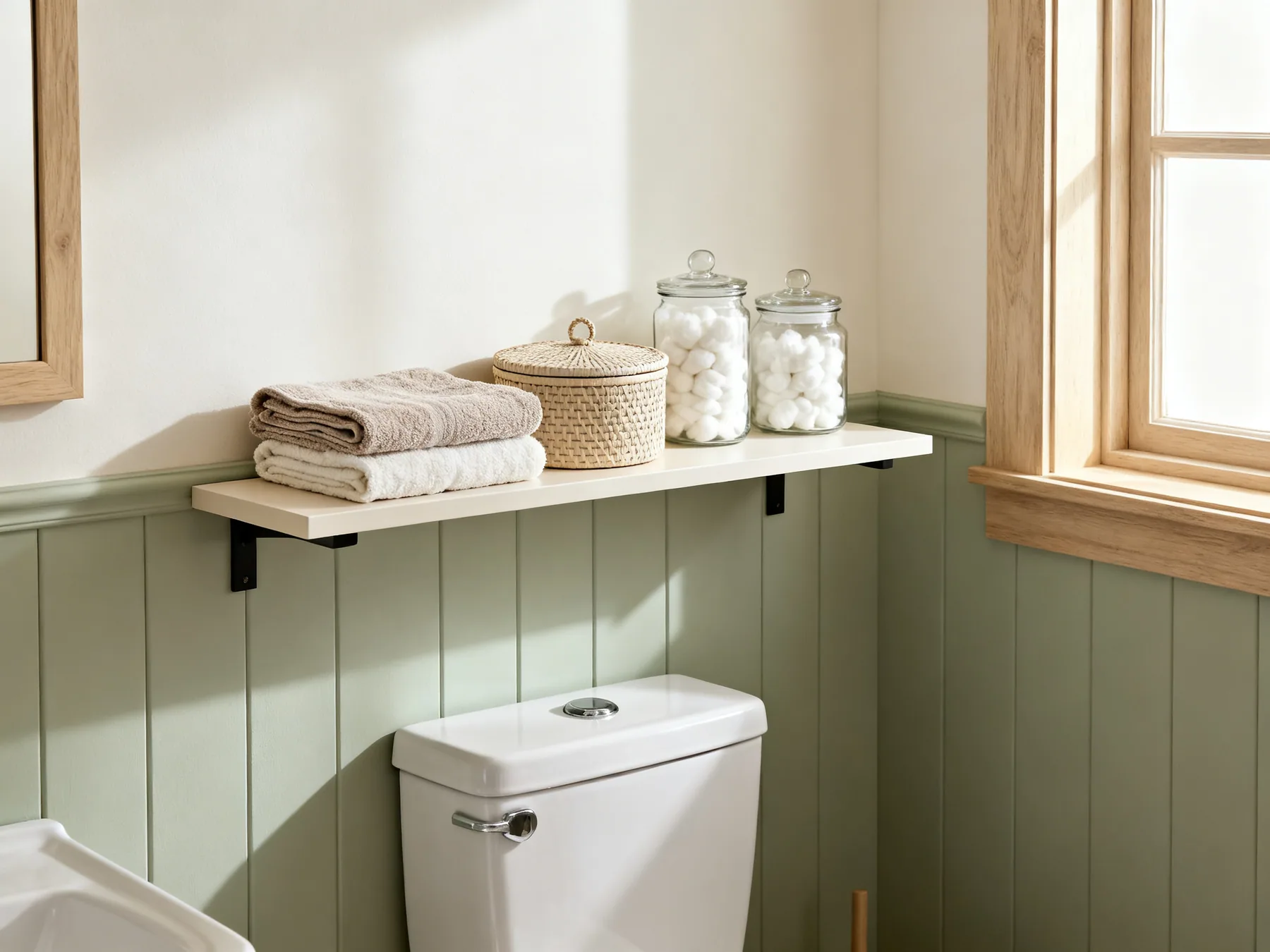
Fit slim shelving or a cabinet over the cistern
Two or three shallow shelves take folded hand towels, a lidded basket and jars of cotton pads. If you would rather not see it all, a shallow wall cabinet in the same footprint does the same job behind a door, which in a small room I often prefer.
Keep it 150 to 200mm deep
Use a freestanding over-toilet frame if you cannot drill
A frame that straddles the cistern and stands on the floor either side needs no fixings at all, which suits a rental. Check the feet are not going to sit in the splash zone and that it is stable if it gets knocked.
Put the least-used things highest
The top shelf of an over-toilet unit is awkward to reach and that is fine. Spare soap, refills and the things you buy twice a year belong there. Daily items should never be above shoulder height in a bathroom.
Keep it in lidded containers
Open shelving in a bathroom collects dust that then combines with steam, and cotton pads and paper products sitting in the open absorb humidity. Baskets with lids or closed jars solve both, and they make a small room look considerably calmer.
The basin, and the trap that ruins the cupboard
If you have ever opened an under-sink cupboard and felt that it holds far less than it should, the reason is the trap. That length of pipework comes down through the middle of the space and splits it into two awkward slivers, and most people end up standing bottles in one sliver and writing off the rest.
The fix is to stop treating it as a box with a pipe in it and start storing around the pipe.
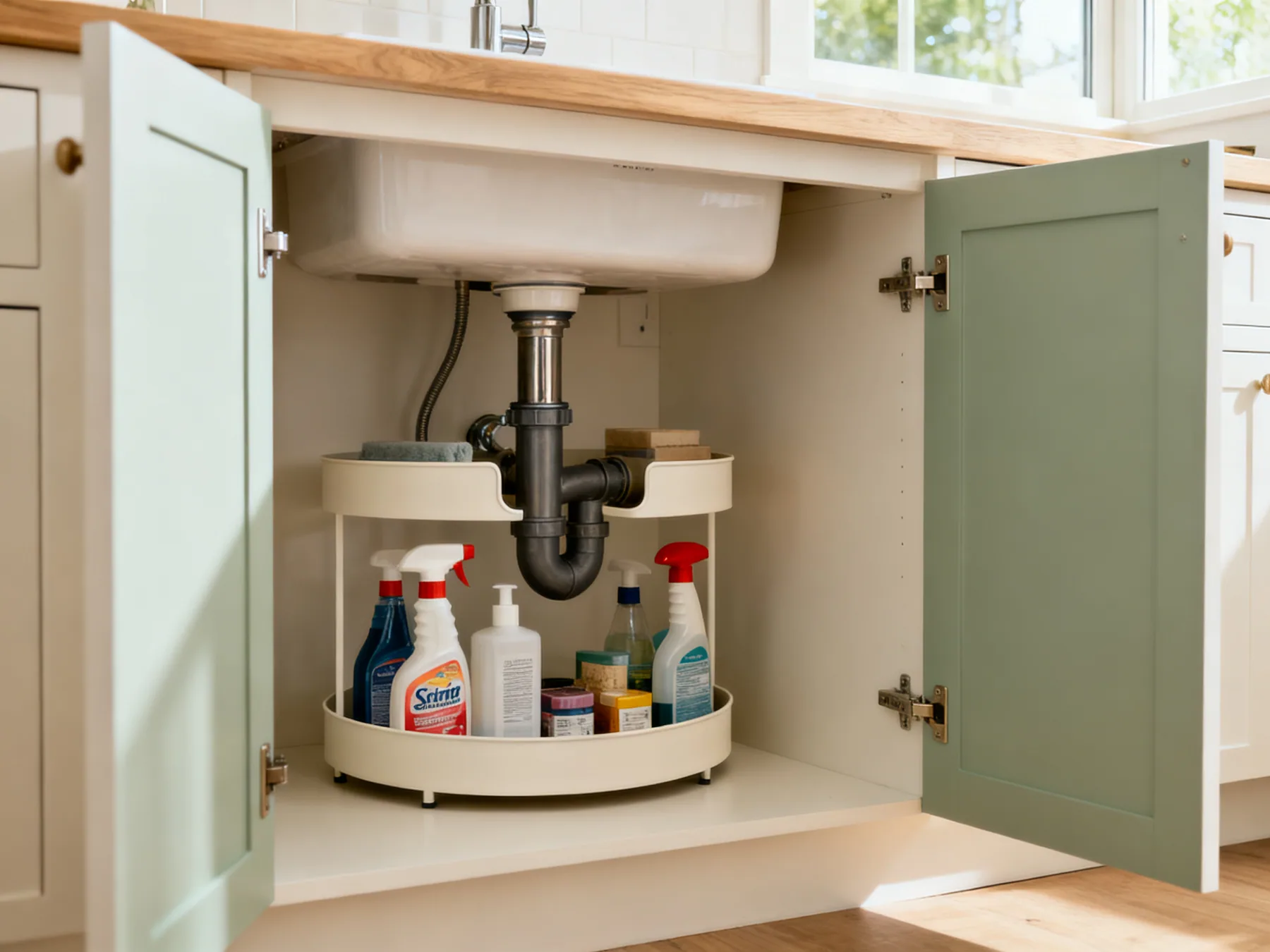
Use a U-shaped tiered organiser
A tier shaped to straddle the trap uses the full width of the cupboard and adds a second level above the pipework. This is the single best-value thing you can buy for a small bathroom, and it turns a cupboard you had given up on into real storage.
Measure the trap position before ordering
Add a small pull-out for the front strip
The clear space in front of the trap suits a shallow pull-out drawer or a slim basket on runners. Things at the back of an under-sink cupboard are invisible otherwise, and invisible means unused.
Hang a small caddy on the cupboard door
The inside face of the door takes a shallow caddy for cloths and small bottles without fouling the pipework. Keep it thin enough that the door still shuts, which is a smaller margin than you think.
Choose a wall-hung basin unit if you are refitting
Only relevant if the room is being redone, but worth knowing. A wall-hung unit gives the same storage while leaving the floor visible underneath, and visible floor is what stops a small bathroom feeling boxed in.
Swap the mirror for a mirrored cabinet
A mirror is a flat surface doing one job. A mirrored cabinet in the same wall space does that job and holds everything you reach for at the basin, which gets the clutter off the basin surround entirely.
The shower or bath, where materials matter most
Inside a shower is the harshest storage environment in the house. Constant wetting, poor drying, and warm air, which is the exact combination mould wants. This is the one place where I care more about the material and the drainage than about the capacity.
The rule is simple: nothing lives on the tray floor, and everything must be able to drain and dry.
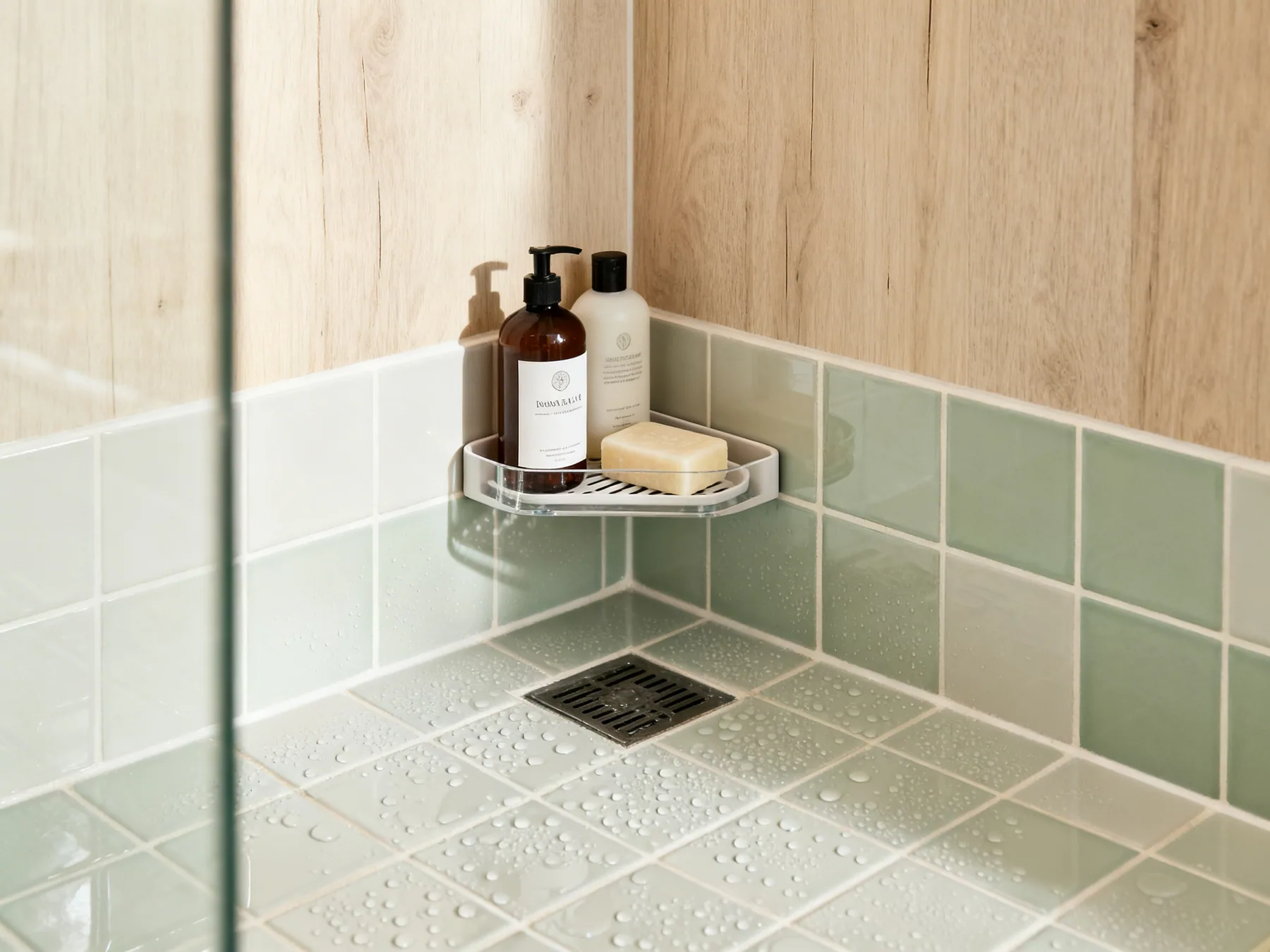
Fit a corner caddy at chest height
A slim corner caddy uses the one part of a shower nobody stands in, keeps bottles at the height you reach for them, and lets water run off. Chest height rather than low down, so you are not bending into the spray.
Never leave bottles on the tray
A bottle standing on the shower floor traps water underneath it, and within weeks there is a dark ring that will not scrub off. Everything up off the tray, without exception. This is the most common thing I have to point out in a bathroom.
Use a draining soap dish, not a solid one
A bar of soap sitting in its own puddle turns to sludge and halves its life. A dish with slots or ridges that lets it dry between uses costs almost nothing and genuinely works.
Consider a recessed niche only during a refit
A tiled recess is the best shower storage there is, because it takes up no space at all and drains properly if it is laid with a slight fall. It is a refit job rather than a weekend one, so I mention it for the planning stage.
Choose a tension caddy over a suction one
Suction cups in a shower fail eventually, usually with a bottle in them. A pole braced between the tray and the ceiling in the corner, or a properly fixed caddy, will still be there in a year.
The door, the walls and the last few hundred millimetres
By this point the fixtures are handled and what is left is the leftovers. In a small bathroom these add up to more than you would expect, and the back of the door is usually the last completely unclaimed surface in the room.
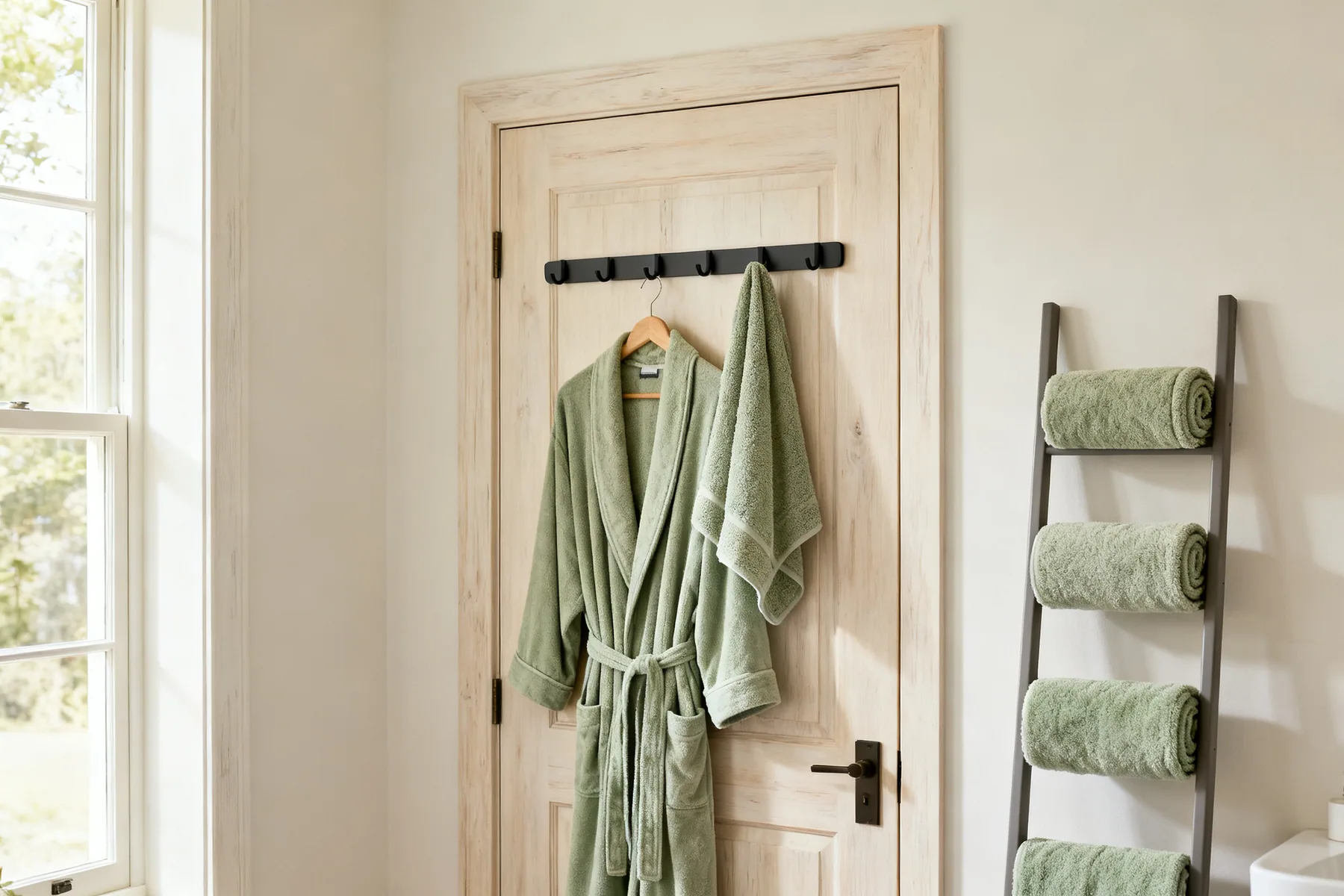
Hang hooks or a slim rack on the back of the door
Dressing gowns, today's towel, a washbag. An over-door rack needs no fixings and claims a surface that was doing nothing. Keep it slim so the door still opens fully against the wall.
Use a leaning towel ladder
A ladder takes three or four rolled towels in about 400mm of wall and roughly 200mm of depth, which is less than any cupboard could. It also lets towels dry properly, which a stack in a cupboard does not.
Put a shelf above the door
The strip above a bathroom door is high, dry and completely unused. It is the best place in the room for spare toilet rolls and refills, and being awkward to reach does not matter for things you touch monthly.
Add a narrow rail for daily items
A short rail with S-hooks on any spare strip of wall holds a face cloth, a brush and a loofah where they can dry. Better than any container, because air gets all the way round everything.
What actually belongs in a small bathroom
The last thing, and the one that makes the most difference once the shelving is up. A small bathroom cannot also be the household supply cupboard. If it is holding six spare shampoos and a value pack of toilet rolls, no amount of shelving will make it feel adequate, because the room is being asked to do a job it is not big enough for.
Keep what you use in here. Keep the backstock somewhere else, even if somewhere else is a box on top of a wardrobe.
- Keep only what you use in this room. Move backstock out entirely.
- Choose sealed, coated or plastic containers over bare timber and cardboard.
- Nothing absorbent stored open. Cotton wool, paper and card all take up humidity.
- Anything in the shower must be able to drain and dry between uses.
- Run the extractor for ten minutes after a shower, or leave the door ajar if there is no fan.
- Check medicines are not stored in the steam zone. Heat and humidity shorten their life.
- Keep daily items below shoulder height and the rest above it.
- Leave one shelf or basket deliberately empty for whatever arrives next.
Small bathroom storage ideas for a room with no spare floor: frequently asked questions
How do I add storage to a small bathroom with no floor space?
Go to the walls and the space above the fixtures. The wall above the cistern is empty in nearly every bathroom and takes shallow shelving around 150 to 200mm deep. After that, a mirrored cabinet above the basin, a corner caddy in the shower, hooks on the back of the door, and a shelf above the door frame for refills.
Why does my under-sink cupboard hold so little?
The trap. That pipework runs down through the middle and splits the cupboard into two awkward slivers, so most of the volume goes unused. A U-shaped tiered organiser that straddles the trap uses the full width and adds a second level above the pipe, and it is the best-value fix in a small bathroom.
How do I stop bathroom storage going mouldy?
Keep everything off the shower tray floor so water cannot sit trapped underneath, choose sealed or plastic containers rather than bare timber and cardboard, and make sure anything in the shower can drain and dry between uses. Then run the extractor for about ten minutes after a shower, because ventilation does more than any product choice.
How deep should over-toilet shelving be?
Around 150 to 200mm. That is enough for folded hand towels, jars and small baskets, and shallow enough to clear your head when seated. Anything deeper starts to feel oppressive in a small room and you will find yourself ducking, which is how these units end up being removed.
Is it safe to store medicines in a bathroom?
Not ideally. Heat and humidity shorten the shelf life of a lot of medicines, and a bathroom is the most humid room in the house. If you keep them there, choose a high cabinet away from the shower steam rather than a low cupboard, but a bedroom drawer is genuinely a better place for anything you want to stay effective.
Where should towels be stored in a small bathroom?
A leaning towel ladder takes three or four rolled towels in about 400mm of wall and 200mm of depth, which beats any cupboard on space and lets them dry properly. Stacked in a closed cupboard in a humid room, towels stay slightly damp and start to smell, so open storage is genuinely better here.