Room Storage
Over the toilet storage ideas, and the clearance nobody mentions
The wall above a toilet is the most wasted surface in most bathrooms. It also has two clearances that decide whether what you fit there is a help or a nuisance.
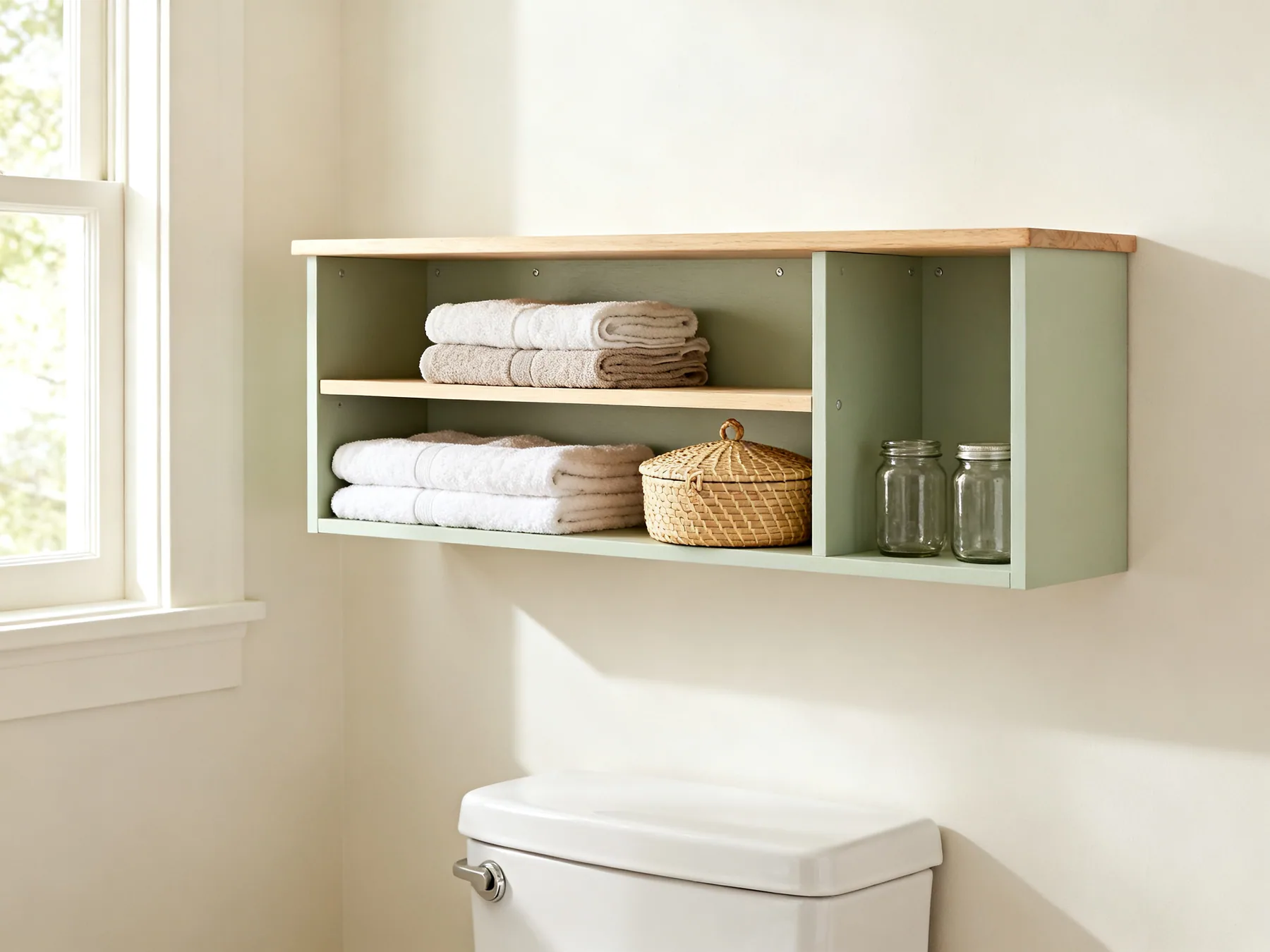
The wall above a toilet is a clear rectangle roughly 500mm wide and often more than a metre tall, and in most bathrooms it is holding nothing at all. In a room where there is no spare floor, that makes it the most obvious place to start.
It is also the place I see the most avoidable mistakes, and they come down to two measurements that no product listing mentions. How deep the unit is, which decides whether you spend the next decade ducking. And how much space is left above the cistern lid, which decides how annoying your next plumbing repair is.
Get those two right and the rest is straightforward.
Depth: 150 to 200mm and no more
This is the measurement that decides whether you like the thing you have fitted. A unit projecting 300mm or more from the wall above a toilet is at head height for anyone seated, and it dominates a small room visually as well.
At 150 to 200mm you can still fit folded hand towels, jars, lidded baskets and most bathroom products, and the unit reads as part of the wall rather than as an object hanging over you. That shallow depth is also why over-toilet storage suits open shelving less well than you might expect, since a shallow open shelf shows everything on it.
Measure a folded towel before you buy
A folded hand towel is around 150mm across, which is where the 150 to 200mm figure comes from. If the shelf takes a folded towel and a jar, it is deep enough for what actually belongs there.
Deeper than 200mm starts to intrude
Keep the lowest shelf highest of all
The lowest shelf is the one you will hit your head on. Set it well above head height when seated, which for most people means around 600mm or more above the cistern lid, not the minimum the bracket allows.
Go tall rather than deep
Three shallow shelves hold more than two deep ones in this position, and they do not intrude at all. The wall above a toilet usually has a metre of height available and almost nobody uses the top of it.
Check the wall before you fix anything
Bathroom walls are often stud partitions with tiles on them, and a tiled stud wall needs the right fixings and preferably a stud. Drill through tile with the correct bit and go slowly, because a cracked tile in a bathroom is a bigger job than the shelf.
The clearance above the cistern lid
This is the one that catches people out and it only bites later, which is why it is worth saying plainly.
A cistern lid has to come off. Not often, but when a float valve fails or a flush mechanism needs replacing, that lid needs to lift vertically and come out. If you have fitted a shelf 100mm above it, the lid cannot clear the shelf, and a straightforward twenty-minute repair becomes a job that starts with dismantling your storage.
I leave at least 300mm above the lid. It costs you nothing except starting the shelving a little higher, and one day it will save you an hour and a lot of bad language.
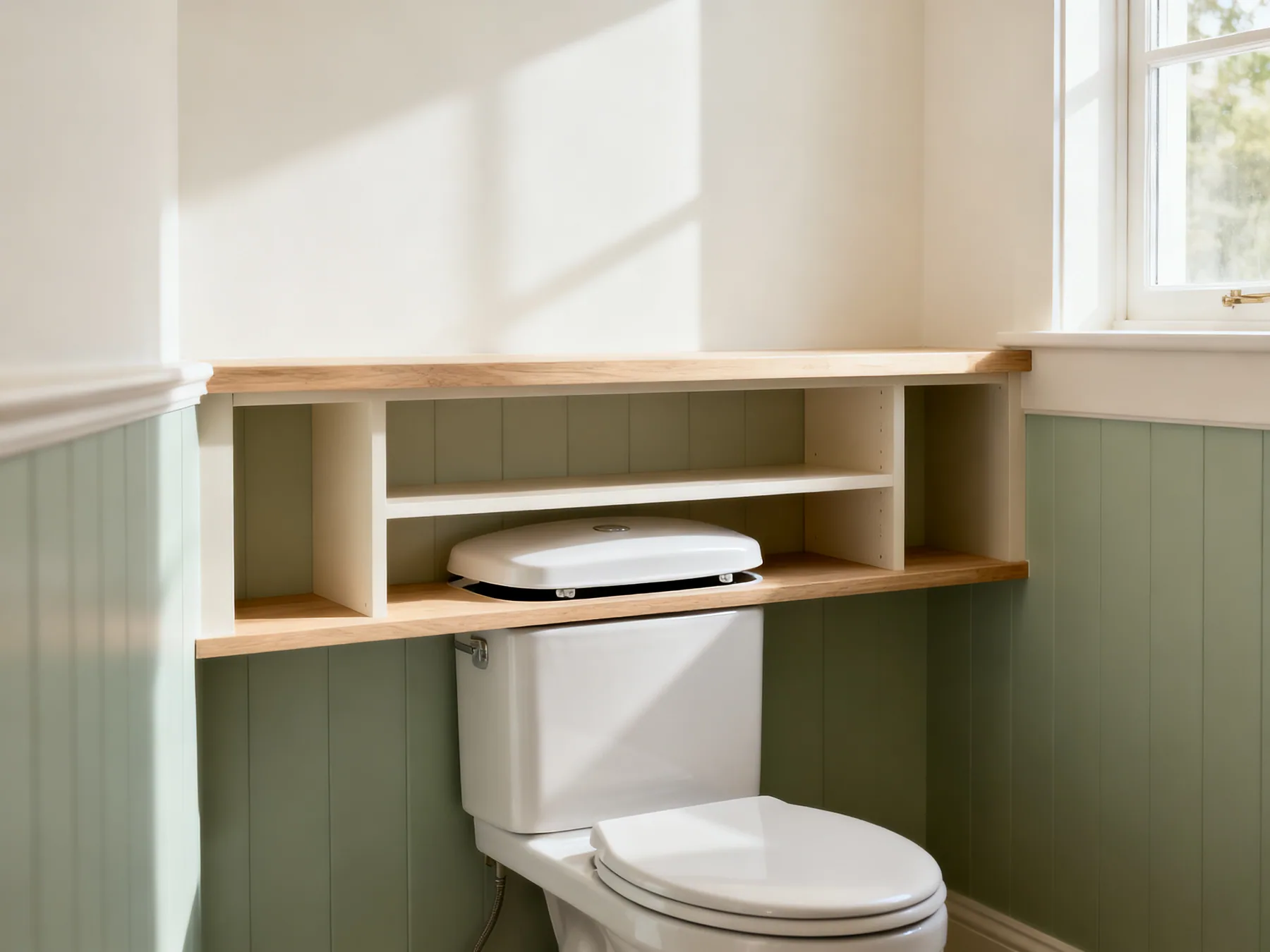
Leave 300mm minimum above the lid
Lift your cistern lid before you fix anything and see how much vertical space it needs to clear. Some are heavier and taller than they look, and concealed cisterns behind a panel have their own access requirements.
Plumbers will thank you
Check the isolation valve is still reachable
There is usually a small valve on the supply pipe feeding the cistern. If your new unit makes it impossible to reach with a screwdriver, you have removed your ability to shut the water off at the fixture.
Leave the flush accessible without ducking
Obvious once said, and easy to get wrong with a low bottom shelf, particularly with a top-mounted push button.
Consider access to the wall behind
If the cistern is concealed in a boxed panel, do not fix a heavy unit over the access hatch. That hatch exists for a reason and you will need it.
Fixed unit, or freestanding frame
Two ways to occupy that wall, and the choice mostly comes down to whether you can drill and how much weight you want to carry.
A wall-fixed unit is neater, uses less space, and looks deliberate. A freestanding frame straddles the toilet with feet either side on the floor, needs no fixings at all, and comes with you when you move, which makes it the obvious answer in a rental.
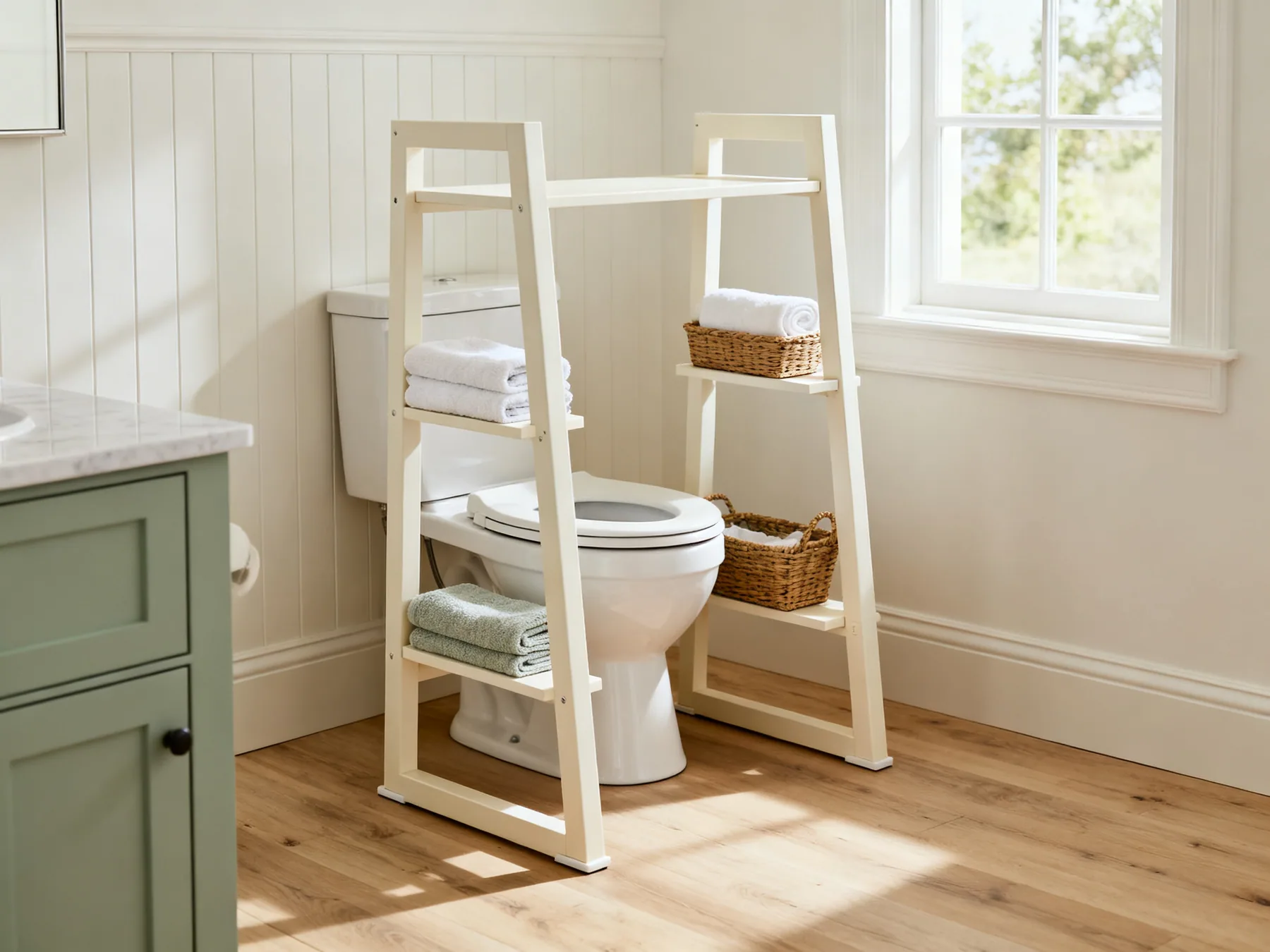
Fix to the wall for the neatest result
Nothing on the floor to clean around, no feet in the splash zone, and you can set the heights exactly where you want them rather than where a manufacturer put them.
Use a straddle frame if you cannot drill
No holes, no damage, and it takes twenty minutes with an allen key. Check the feet sit outside the area that gets wet around the base of the toilet, and that the frame is stable if it gets knocked.
Renter-friendly
Be wary of tension-fit and suction fixings
In a warm, humid room with temperature swings, suction cups fail eventually, and they tend to fail with something on the shelf. For anything holding weight above a hard floor I would fix properly or use a floor-standing frame.
Check the load rating honestly
Towels are light and bottles are not. A shelf holding six full bottles is carrying real weight, and bathroom walls are often the weakest in the house. Rate the fixings for considerably more than you plan to put up there.
Open shelves or a closed cabinet
In most rooms I would say this is a matter of taste. In a bathroom it is closer to a practical question, because of what the air does.
A bathroom fills with steam daily, and steam plus the dust that settles on an open shelf produces a film that is genuinely unpleasant to clean off. Anything absorbent stored open, like cotton wool, spare toilet rolls or paper packaging, also takes up humidity and goes limp.
So I lean towards a closed cabinet above a toilet, or a mix: closed at the bottom where you keep the practical things, one open shelf at the top for a plant and a couple of jars.
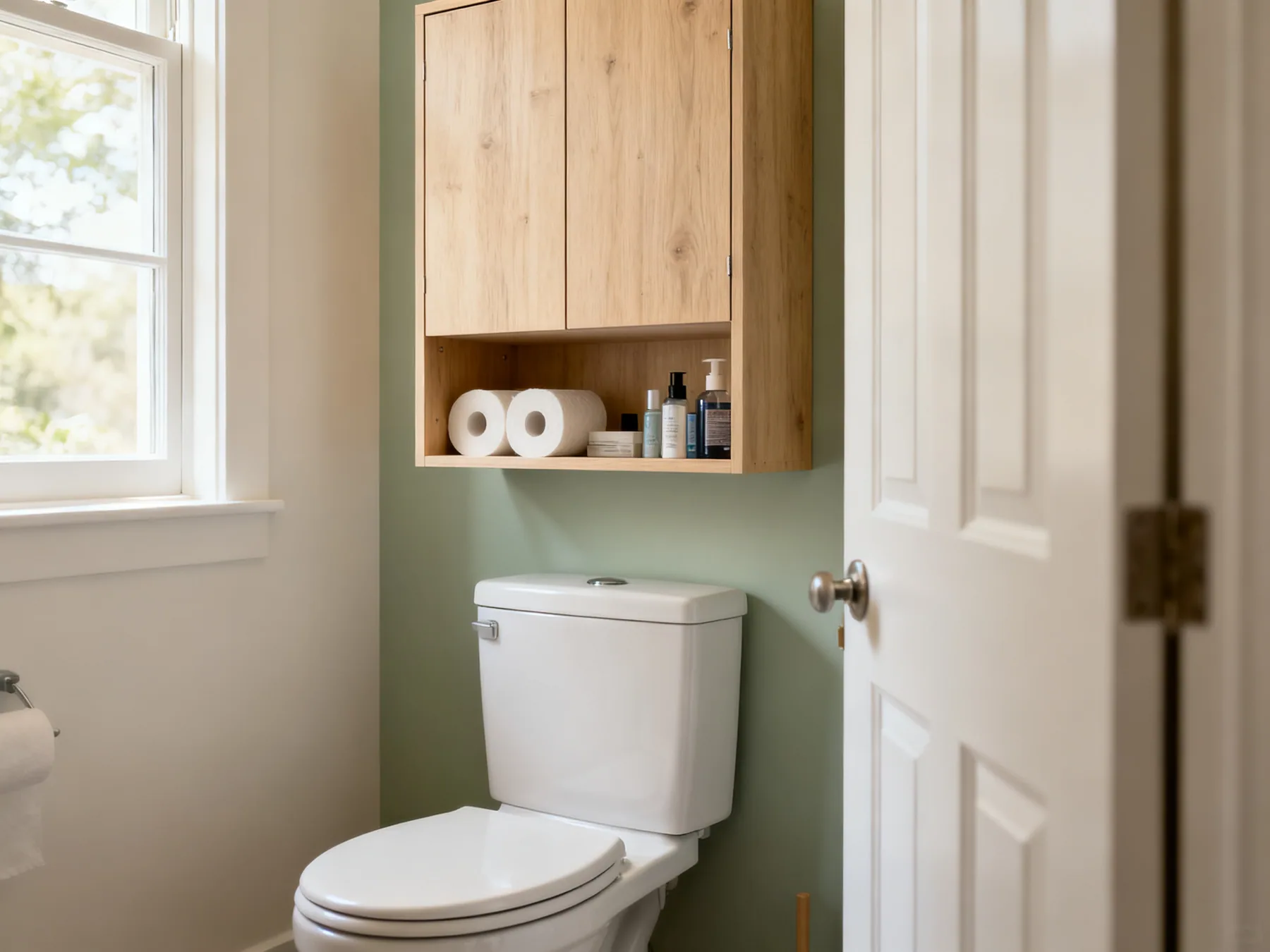
Choose a shallow closed cabinet
A cabinet 150 to 200mm deep with a door hides everything, keeps steam and dust off, and makes a small bathroom look considerably calmer than a wall of visible products.
If shelves are open, use lidded containers
Lidded baskets and closed jars give you most of the benefit of a cabinet while keeping the lighter look of open shelving. Matching containers matter more here than anywhere, because everything is on show.
Do not store medicines up there
Heat and humidity shorten the shelf life of a lot of medicines, and above a toilet in a steamy bathroom is close to the worst spot in the house. A bedroom drawer is a better home for anything you want to stay effective.
Humidity degrades medicines
Keep it away from the shower spray line
In a small bathroom where the shower is close, check what actually gets wet before deciding what lives on the lowest shelf.
What to actually put up there
The last question, and the one that determines whether the unit earns its place. The wall above a toilet is awkward to reach, which is not a flaw. It makes it the right home for the things you need rarely and the wrong home for the things you need every day.
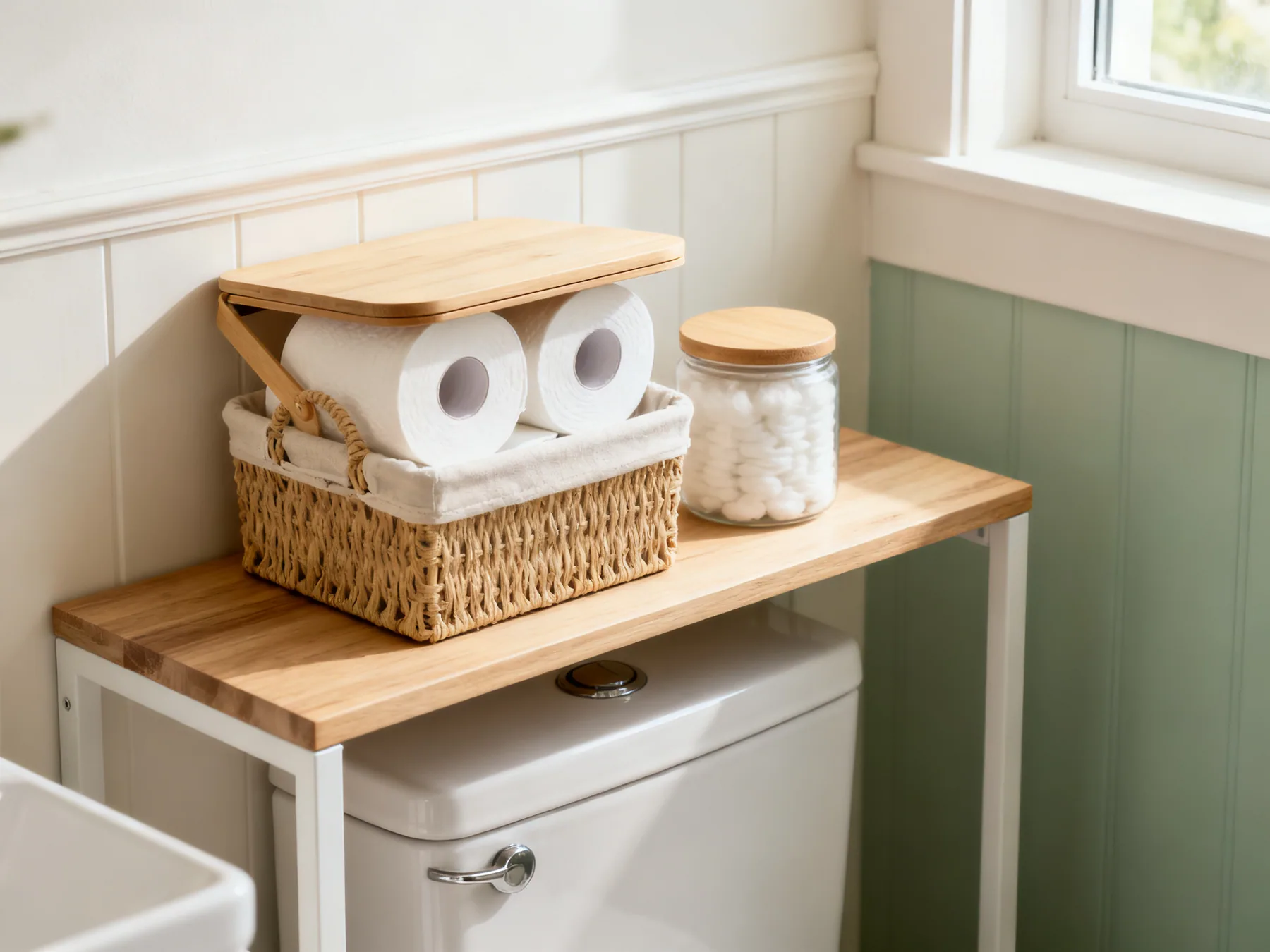
- Spare toilet rolls, in a lidded basket so they do not take up humidity.
- Folded hand towels, which are the right depth for the shelf.
- Refills and backstock you touch monthly rather than daily.
- Cotton pads and similar in closed jars, never open.
- A plant on the top shelf, if the room has any natural light.
- Not medicines, and not anything you reach for every morning.
- Nothing heavy on the highest shelf, since lifting weight above head height over a hard floor is how accidents happen.
- Leave a little space. A packed over-toilet unit is the most visually dominant thing in a small bathroom.
Over the toilet storage ideas, and the clearance nobody mentions: frequently asked questions
How deep should over the toilet storage be?
Between 150 and 200mm. That takes a folded hand towel, jars and most bathroom products, and it stays out of the way of your head when seated. Anything projecting 300mm or more sits at head height and dominates a small room visually, and you will spend years ducking around it.
How much space should I leave above the cistern?
At least 300mm, so the cistern lid can be lifted vertically and taken out. Lids have to come off when a float valve or flush mechanism fails, and a shelf fitted tight above one turns a twenty-minute repair into a job that starts by dismantling your storage. Lift your own lid and check how much clearance it needs before fixing anything.
Is over the toilet storage safe to fix to the wall?
Yes, with the right fixings, but check what the wall is first. Bathroom walls are often tiled stud partitions, which need cavity anchors rated well above the load or, better, a fixing into a stud. Drill tile slowly with the correct bit. Rate everything for considerably more weight than you plan to store, since full bottles are much heavier than towels.
What is the best over the toilet storage for a rental?
A freestanding straddle frame that stands on the floor either side of the toilet. No fixings, no damage, about twenty minutes to assemble, and it moves house with you. Check the feet sit outside the area that gets wet around the base of the toilet, and that the whole thing is stable if it gets knocked.
Should over the toilet storage be open or closed?
Closed suits a bathroom better. Steam plus the dust that settles on open shelves makes a film that is genuinely unpleasant to clean, and anything absorbent stored open takes up humidity and goes limp. If you prefer the lighter look of open shelves, use lidded baskets and closed jars to get most of the same benefit.
What should I store above the toilet?
Things you need rarely rather than daily, because that wall is awkward to reach and that is what makes it useful. Spare toilet rolls in a lidded basket, folded hand towels, refills and monthly backstock. Not medicines, since heat and humidity shorten their life, and nothing heavy on the top shelf.