Room Storage
Kitchen cupboard storage ideas: most cupboards are half air
Open a cupboard and look at the gap between the top of your tins and the shelf above them. That gap, repeated on every shelf, is most of your missing storage.
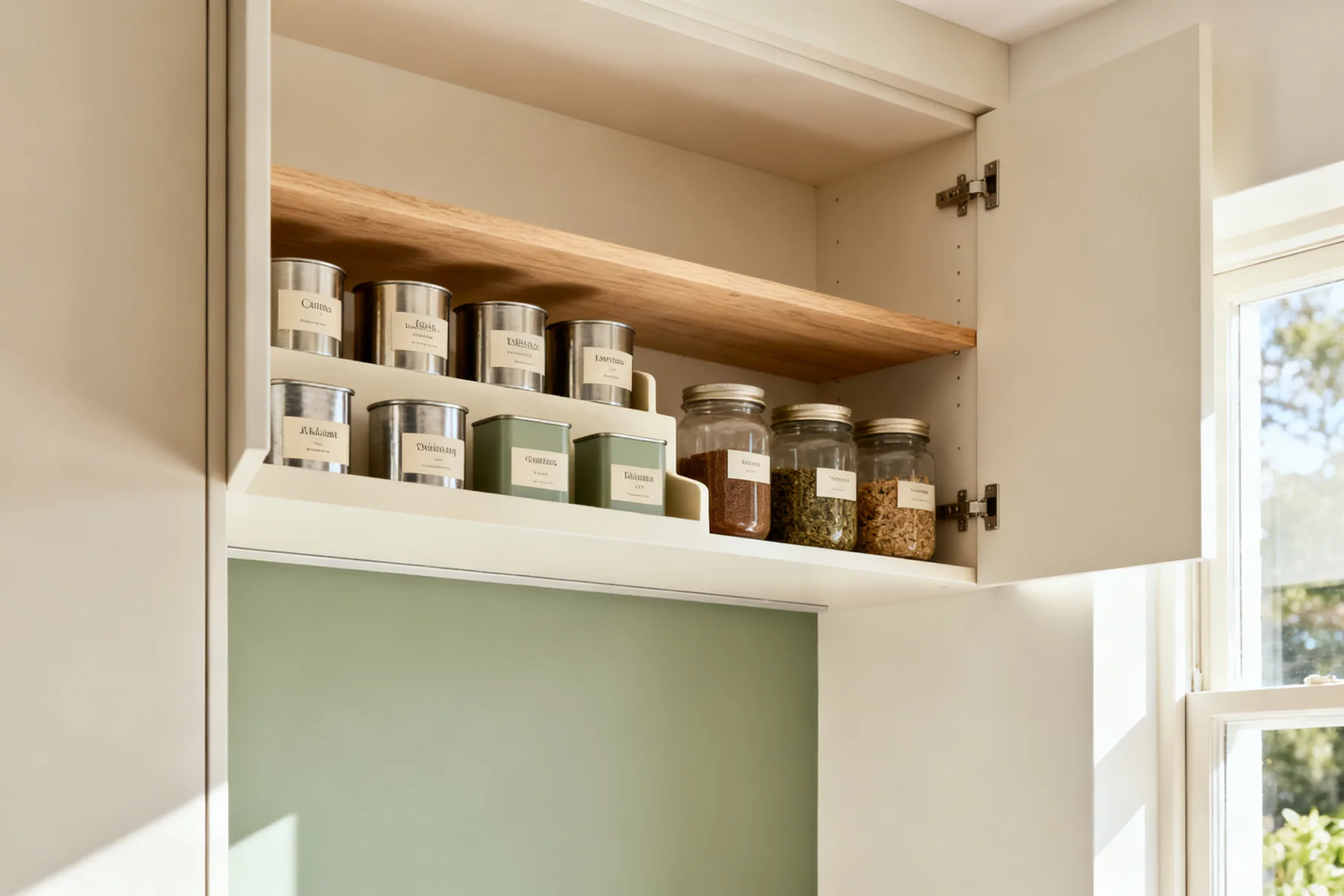
Cupboards are manufactured with their shelves spaced for the tallest thing anyone might reasonably put in one. That is sensible from a factory, and it means that in your actual kitchen, where a shelf holds tins that are 110mm tall in a gap that is 300mm, more than half of that shelf is holding air.
Multiply it by every shelf in the kitchen and it is a substantial amount of storage you already own and are not using. Which is why my first move inside a cupboard is never to buy an organiser. It is to measure the gap above each row and see how much of it is doing nothing.
Everything below is a way of subdividing that air, and most of it costs very little.
Subdivide the wasted height
This is the highest-value thing you can do inside a cupboard and it needs no tools. If a shelf holds tins, mugs or small jars, there is a band of unused air above them, and there are two ways to claim it.
A freestanding half-shelf insert simply stands on the existing shelf and gives you a second level. A stepped riser tilts the whole arrangement so the back row sits higher than the front and you can read every label without moving anything. They solve slightly different problems: the insert adds capacity, the riser adds visibility.
I would use inserts for crockery and mugs, and risers for tins, jars and spices, where the problem is knowing what you already own.
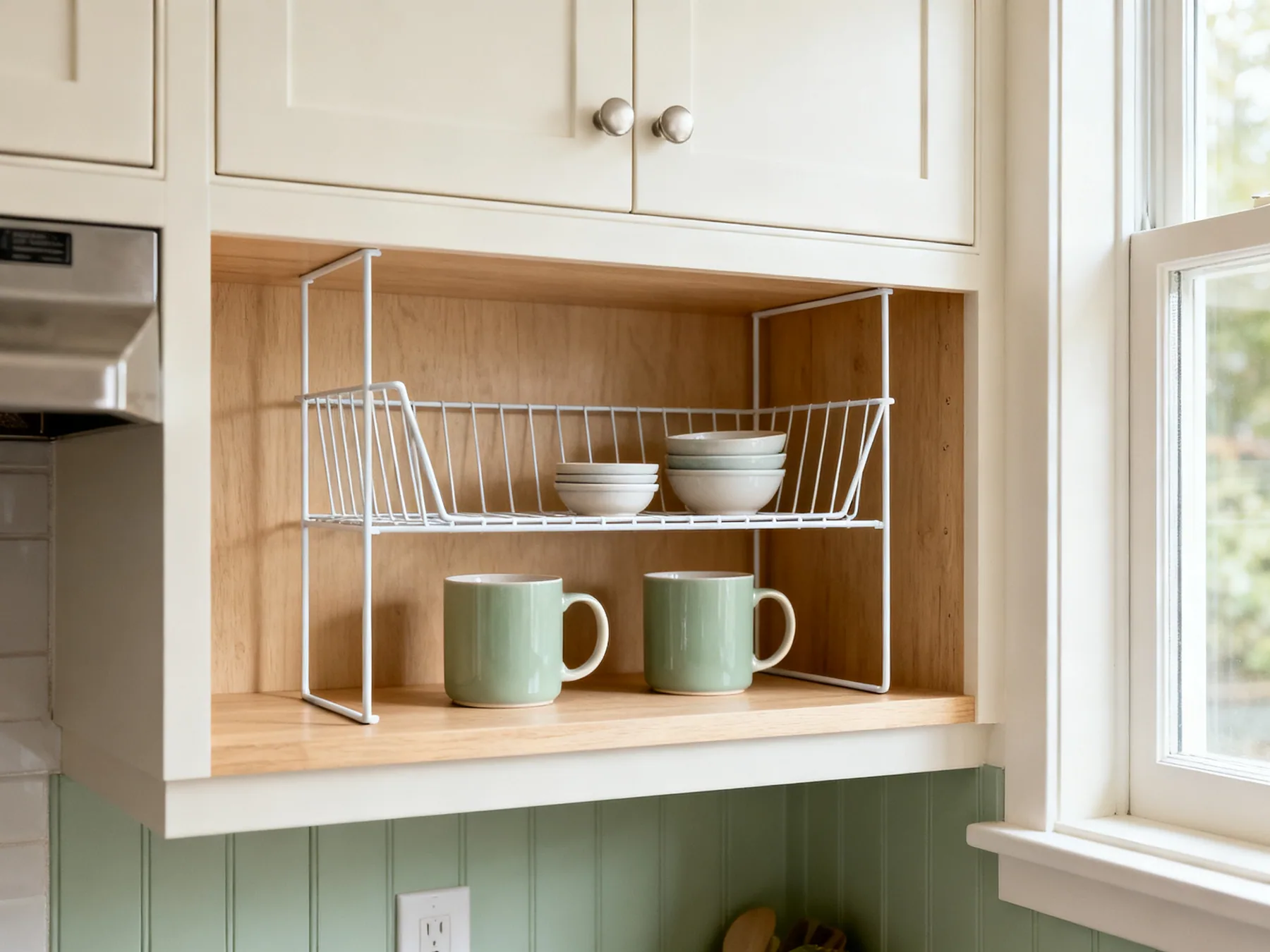
Add a freestanding half-shelf insert
Mugs underneath, small bowls or plates on top. No drilling, no commitment, and in a cupboard with generous shelf spacing it can add a third more usable space for very little money. Measure the internal width and height before buying, because a millimetre too wide is useless.
Best value change inside a cupboard
Use a stepped riser for tins and jars
Three tiers means three rows of labels all readable at once. This is what stops you owning four tins of chopped tomatoes and knowing about one. It is also the cheapest thing on this list.
Move the shelves if they are adjustable
Most carcass cupboards have adjustable shelf pins and almost nobody moves them from the factory position. Setting each shelf to what actually sits on it, rather than to a generic spacing, is free and can gain you a whole extra shelf.
Add a shelf if there is room for one
Where the spacing is very generous, an additional shelf beats any insert. Cut to size from shelving board with pins or small brackets, it turns one tall wasted cavity into two usable ones.
Stack only things that nest
Nesting bowls and stacking containers are fine to pile. Anything that does not nest properly becomes an unstable tower where you need the bottom item, which is how crockery gets chipped.
The inside of the door
The inside face of a cupboard door is a flat vertical surface holding nothing, and it is right where you are already standing when the cupboard is open. It is the most convenient unused space in a kitchen.
The one constraint is depth, and it is tighter than people expect. Whatever goes on the door has to pass the shelf edges when the door closes, so measure the gap between the closed door and the front of the shelves before you buy anything.
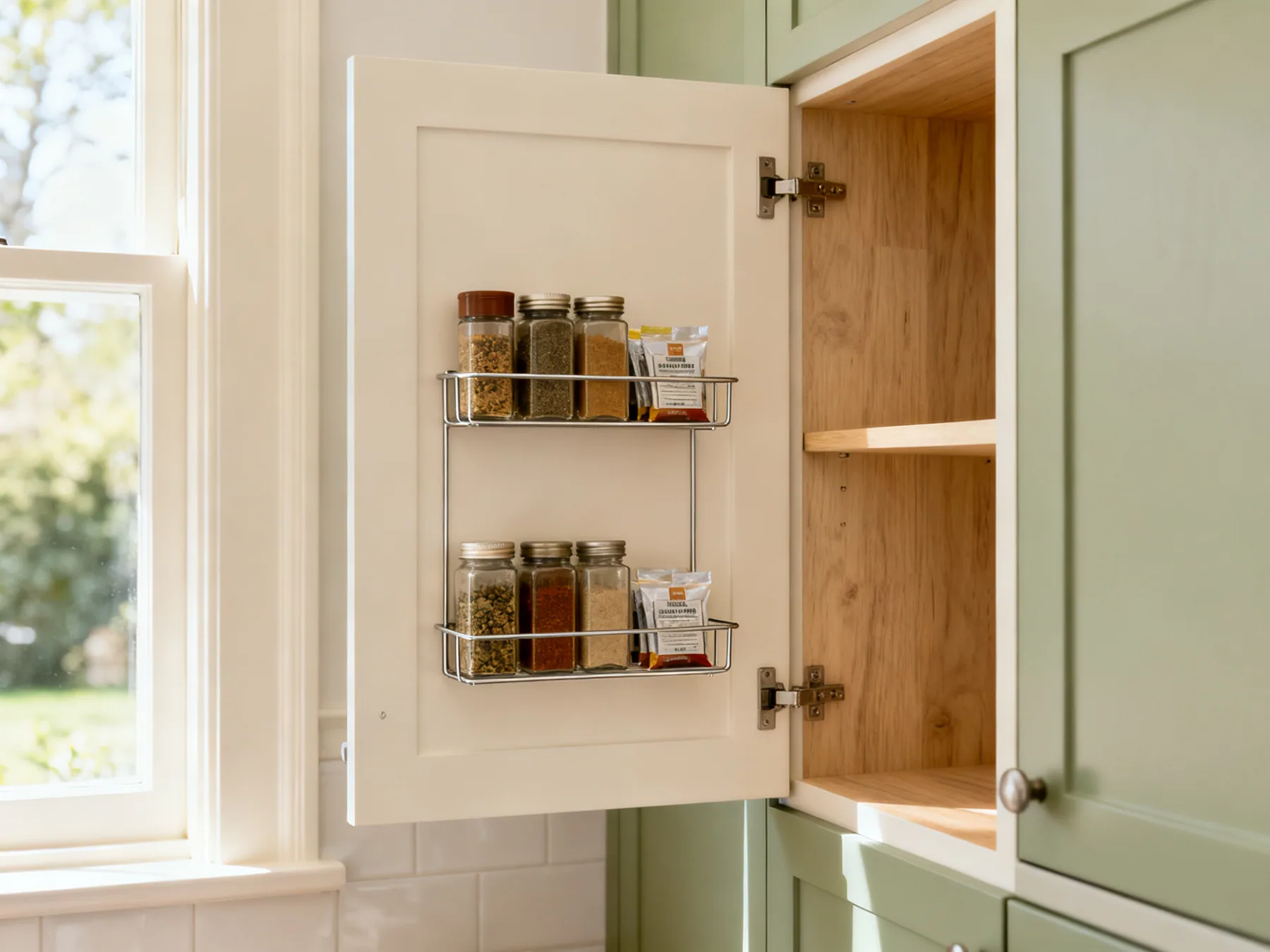
Fit slim wire racks for spices and packets
Spice jars are the ideal door item: shallow, numerous, and much easier to find in a single visible row than jumbled at the back of a shelf. Sachets, cling film and small bottles work equally well.
Measure the shelf clearance first
Put cleaning sprays on the sink cupboard door
Under-sink cupboards are the worst-organised in most kitchens because of the plumbing. Hanging the sprays and cloths on the door clears the floor of the cupboard for something that actually fits around a trap.
Use adhesive hooks for measuring spoons and small tools
Two hooks on a door hold the things that otherwise live loose in a drawer and never get found. Check the weight rating and clean the surface first, because adhesive fixings fail messily above their limit.
Keep the load light
A heavily loaded door starts to drop on its hinges and then stops closing flush. If a door has begun to sag, take weight off it before adjusting the hinges, or you will just be adjusting them again.
Pans, lids and the noisy cupboard
Pan lids are the single worst-behaved thing in a kitchen cupboard. They do not stack, they slide, they are all slightly different sizes, and a pile of them is both unsearchable and unreasonably loud.
The fix is to stand them upright so each one is individually reachable, and it is a genuinely satisfying change to make.
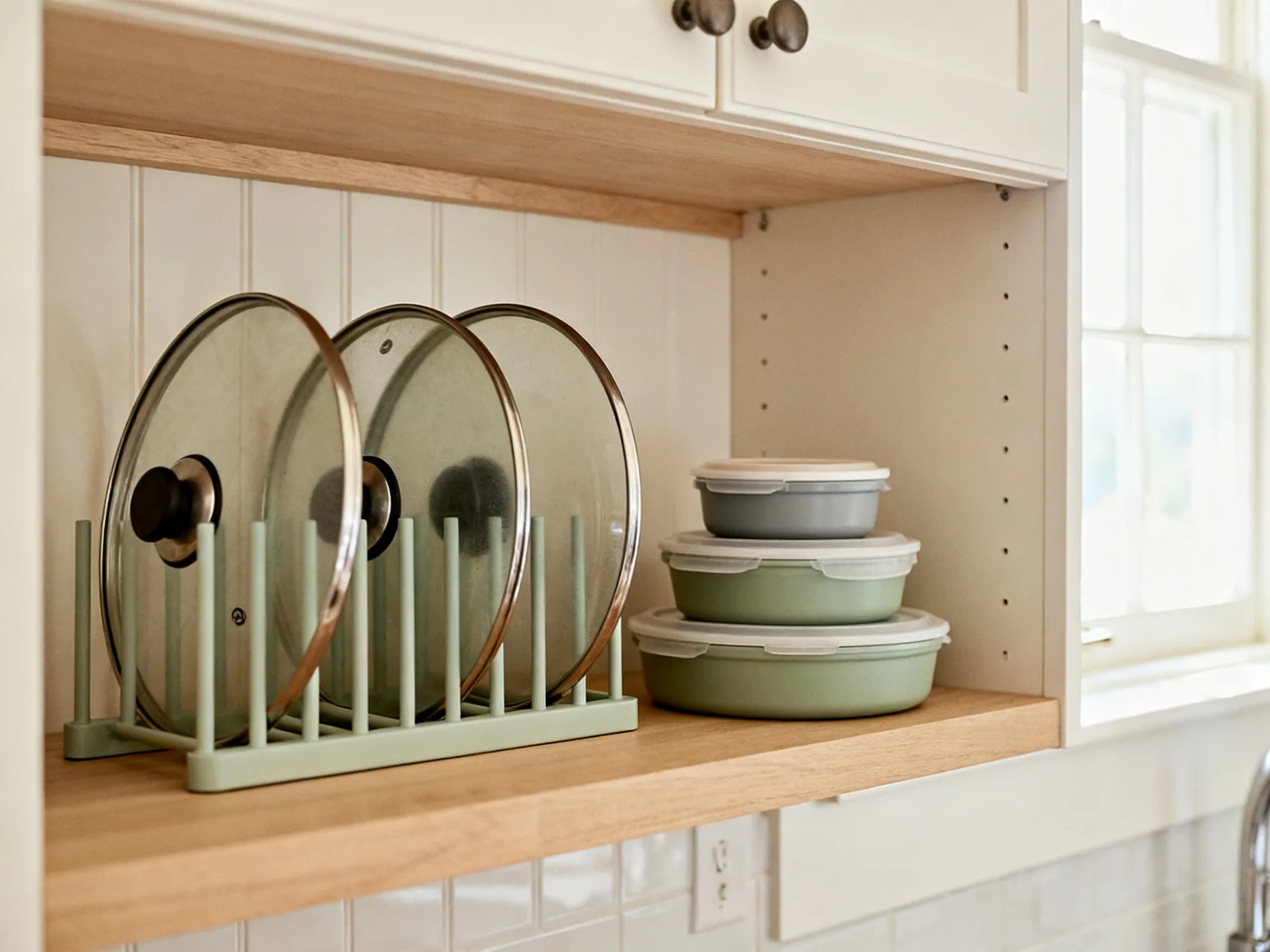
Stand lids upright in a slotted rack
A lid rack on the shelf or fixed to the door holds each lid separately, so you take the one you want rather than lifting three. Sort them largest to smallest and matching a lid to a pan becomes instant.
Nest pans, but only two or three deep
Pans nest reasonably well, but a stack of five means unloading four to reach the one you want, and non-stick coatings scratch against each other. Two or three, with a cloth or a pan protector between coated surfaces.
Put a tension rod across a deep cupboard
A spring rod fitted vertically or horizontally inside a deep base cupboard divides it into slots for baking trays and cooling racks, which otherwise slide into a heap at the back.
Keep the plastic containers in one place with their lids
Containers in one stack, lids upright in a slotted box or held by a rod beside them. Separating them by category rather than keeping each lid with each container is what makes this survive.
Match a pan cupboard to the hob if you can
Pans belong in the cupboard or drawer nearest the hob, and the frequently used ones at the front. It sounds obvious and it is very often not what has happened, because things get put away where there was room.
Group by how often, not by what
This is the organising principle that keeps a cupboard tidy after the first month. Most people group by category: all the crockery together, all the baking together, all the tins together. It is logical, and it means the cake tin you use twice a year occupies the same prime shelf as the plates you use every day.
Group by frequency instead. Eye level and the shelf below it for daily things. Above eye level for the weekly and monthly. Very top for seasonal and the specialist equipment.
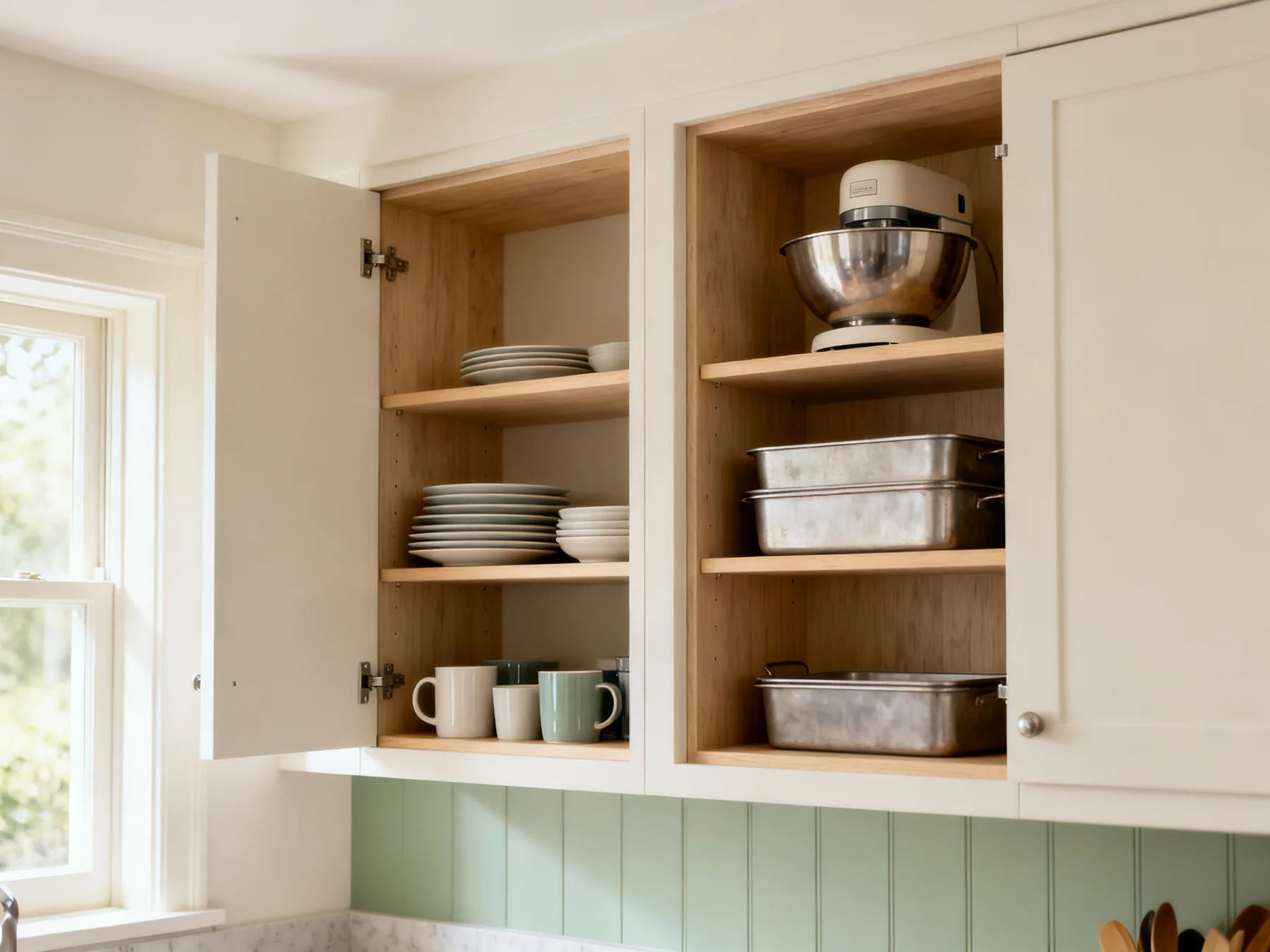
- Daily crockery, mugs and glasses between shoulder and hip height.
- Weekly items on the shelf above that.
- Baking tins, roasting trays and specialist equipment on the top shelf.
- Heavy things low, always, whatever their frequency.
- Pans in the cupboard nearest the hob, everyday ones at the front.
- Nothing behind anything else on a shelf you use daily.
- Leave one shelf about a fifth empty, so there is somewhere for what arrives next.
- Anything not touched in a year is a candidate for leaving the kitchen entirely.
The under-sink cupboard, which needs its own answer
Worth a separate section because it is the cupboard everybody has given up on, and the reason is structural rather than a lack of organisation. The waste trap comes down through the middle of the space and splits it into two awkward slivers, so people stand bottles in one sliver and write off the rest.
Stop treating it as a box with a pipe in it and start storing around the pipe.
- Use a U-shaped tiered organiser that straddles the trap and uses the full width.
- Put the sprays and cloths on the inside of the door to free the floor of the cupboard.
- Add a slim pull-out or basket for the clear strip in front of the trap.
- Keep a small tray under anything that could leak, so a slow drip is visible early.
- Do not store paper or cardboard down there. It wicks moisture and hides leaks.
- Keep cleaning chemicals above child height or fit a cupboard catch if that applies.
- Check around the trap occasionally. Under-sink cupboards are where leaks go unnoticed longest.
Kitchen cupboard storage ideas: frequently asked questions
How do I get more space in my kitchen cupboards?
Measure the gap between the top of what is on each shelf and the shelf above it. Cupboards are built with spacing for the tallest thing anyone might store, so a shelf of tins is usually more than half air. Freestanding half-shelf inserts and stepped risers subdivide that space with no fixings, and moving adjustable shelves to match what actually sits on them is free.
What is the best way to store pan lids?
Upright in a slotted rack, either on the shelf or fixed to the inside of the door, sorted largest to smallest. Lids do not stack, they slide, and a pile of them is both unsearchable and very loud. Standing them separately means you take the one you want instead of lifting three others out of the way.
Can I put storage on the inside of a cupboard door?
Yes, and it is the most convenient unused space in a kitchen since you are already standing there. The constraint is depth: whatever you fit has to clear the shelf edges when the door closes, so measure that gap first. Keep the load light too, because a heavy door drops on its hinges and stops closing flush.
How should I organise kitchen cupboards?
By how often you use things rather than by what they are. Grouping by category puts the cake tin you use twice a year on the same prime shelf as your everyday plates. Daily items between shoulder and hip height, weekly above that, and baking and specialist equipment on the top shelf, with heavy things low regardless of frequency.
Why is my under-sink cupboard so useless?
The waste trap. It comes down through the middle of the space and splits it into two awkward slivers, so most of the volume goes unused. A U-shaped tiered organiser that straddles the trap uses the full width and adds a second level, and moving the sprays onto the inside of the door frees the cupboard floor.
Should I add extra shelves to a kitchen cupboard?
If the existing spacing is generous, yes, and it beats any insert. Most carcass cupboards have adjustable shelf pins that nobody ever moves from the factory position, so start by repositioning what you have. Where there is genuinely room for another shelf, cut one from shelving board and add pins or small brackets.