Room Storage
Pantry storage ideas that survive a month of actual use
Most pantry advice is written to be photographed. The test that matters is whether it still looks like that in a month.
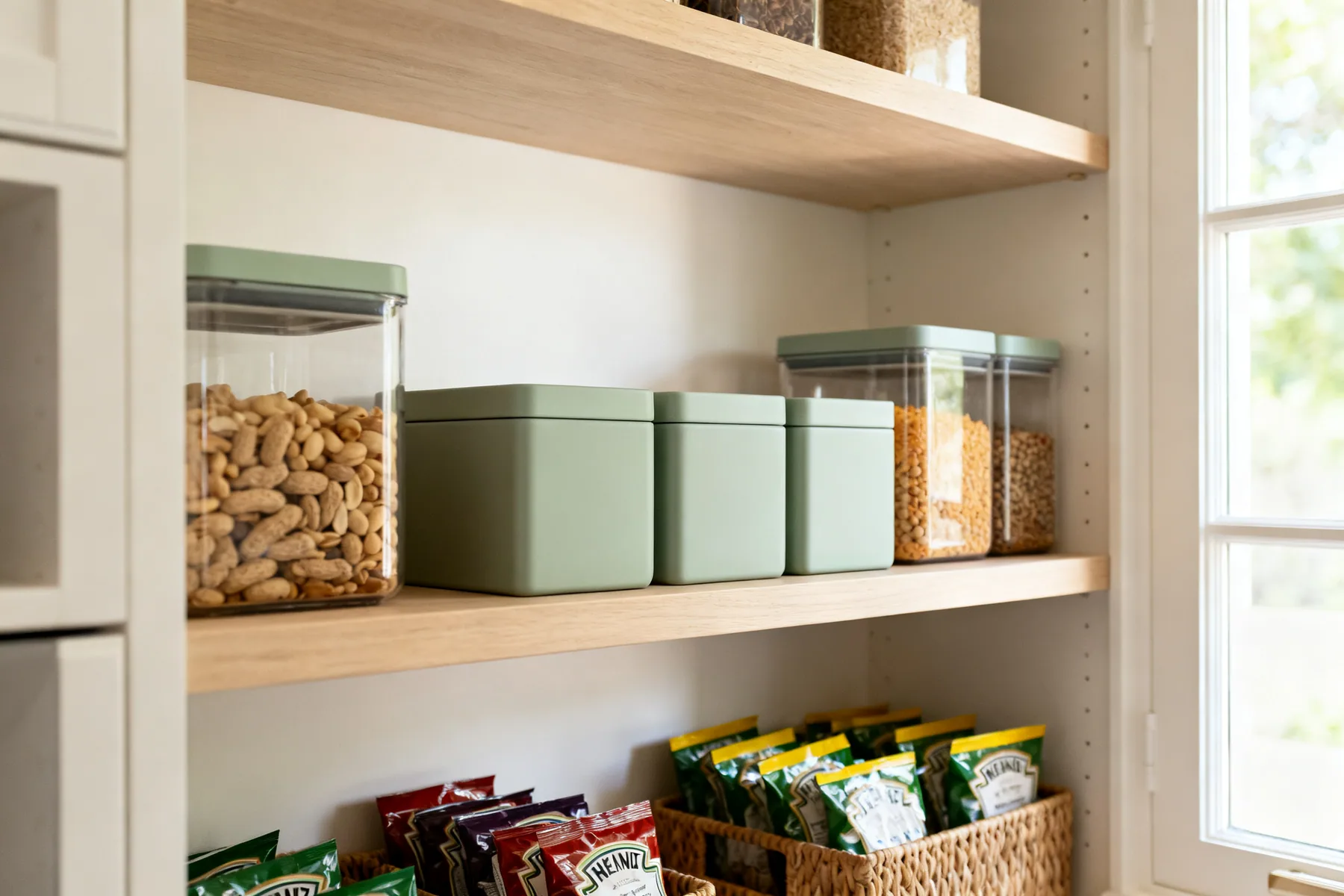
A pantry is the easiest room in the house to make look organised and one of the hardest to keep that way, and the reason is that most of the advice optimises for the photograph. Matching jars in a straight row, everything decanted, labels aligned. It looks superb on day one.
Then real life arrives: a shop with things that do not fit the jars, a half-used packet, a tin bought because it was on offer. Within a month the front row is fine and the back is a geological record.
The two decisions that actually determine whether a pantry stays usable are how deep the shelves are and how you group things. Get those right and the containers barely matter. Get them wrong and no amount of decanting saves it.
Shelf depth decides everything
This is the one I would fix before buying a single container. A deep shelf sounds like more storage and behaves like less, because anything past the front row is invisible, and invisible food does not get eaten. It gets rediscovered two years later.
I aim for around 200 to 300mm for the shelves holding jars, tins and packets. That is one row deep, everything visible, nothing hidden. If the cupboard itself is deeper than that, the answer is not to fill the depth but to put something on the shelf that comes out: a basket, a pull-out, or a stepped riser.
More shallow shelves in the same cupboard beats fewer deep ones almost every time.
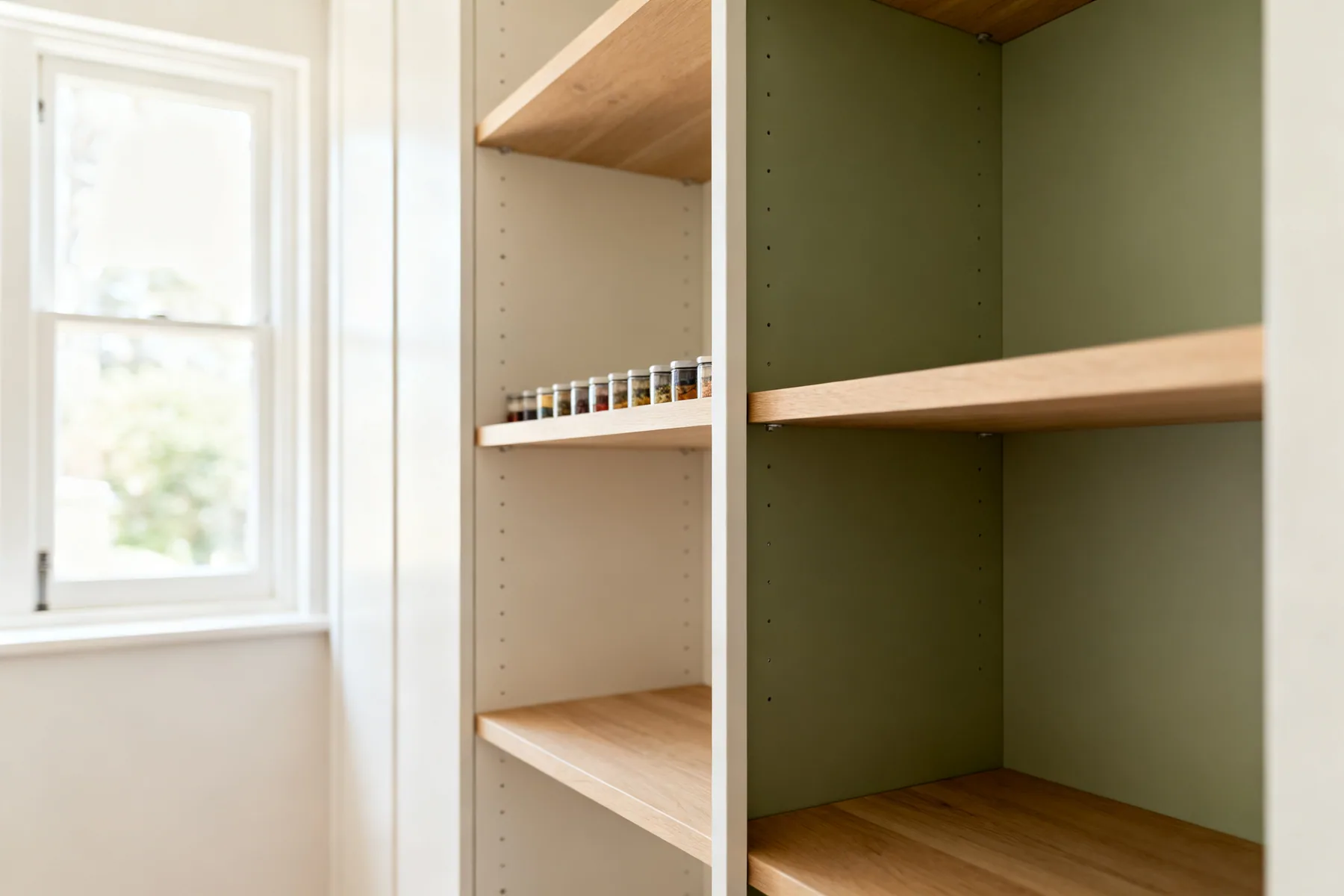
Add more shelves rather than deeper ones
Most pantry cupboards have shelves spaced for tall bottles throughout, which wastes a band of air above every row of tins. Extra shelves at tighter spacing, matched to what actually sits there, can add a third more usable storage in the same box.
Put baskets in a deep shelf
Where the depth exists and cannot be changed, a basket makes it work: pull the whole basket out, take what you need, push it back. What fails is loose items in a deep shelf, because reaching the back means unpacking the front.
Use a stepped riser for tins
A three-tier riser lets you read the label on the back row without moving the front. This is the single cheapest thing you can put in a pantry and it fixes the classic problem of owning four tins of chopped tomatoes and knowing about one.
Keep the deep bottom shelf for bulk
The lowest shelf is awkward anyway, so give it the things you buy in quantity and use as a unit: bags of flour, boxes of tins, bottled water. Depth is not a problem for something you take out whole.
Zone by meal, not by category
Here is where most organised pantries quietly fail. They are grouped by what things are: all the tins together, all the packets together, all the baking together. That is a logical system and it is not how anyone cooks.
You do not go to the pantry looking for a tin. You go looking for breakfast. So group by the moment you need things: a breakfast shelf, a baking shelf, a lunchbox shelf, a shelf for the four things that go into the meals you cook every week.
The test of a pantry system is whether someone else in the house can put the shopping away correctly without being told. Meal zones pass that test. Categories mostly do not.
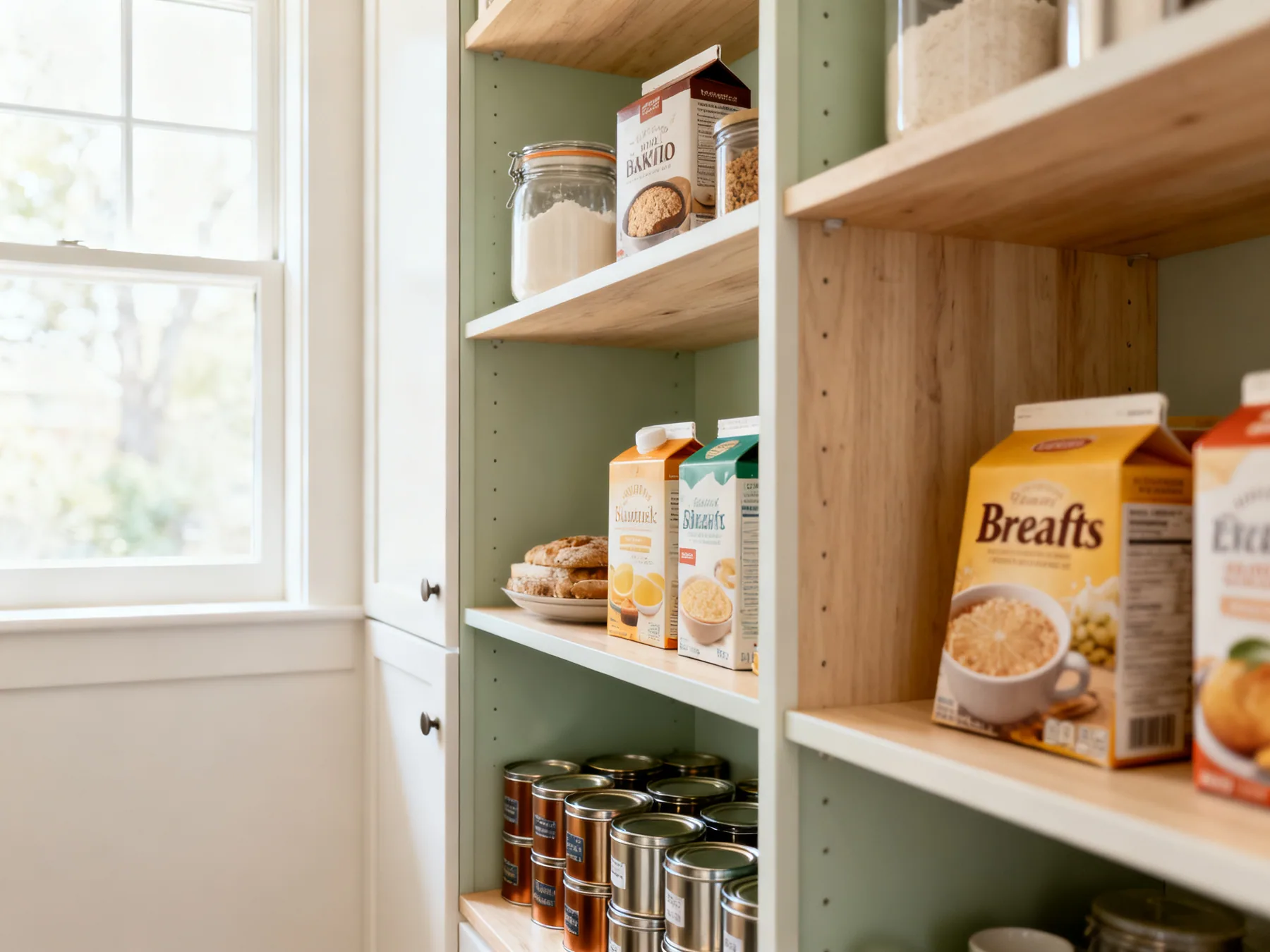
Give each zone a shelf or a defined block
One shelf per zone if you have the shelves, or a clearly bounded section if you do not. Boundaries are what stop zones bleeding into each other, and a basket is a boundary.
Label the shelf edge, not just the containers
Labelling the containers tells you what is in them. Labelling the shelf tells everyone where things go back to, which is the half of the problem that actually causes drift.
Put the daily zone at eye level
Breakfast and the weekday staples go between roughly shoulder and hip height. Baking, if you bake occasionally, can go high. The rule is the same everywhere in a house: effort matched to frequency.
Keep a small overflow basket
Every pantry needs one place for the thing that does not fit a zone, or it gets shoved behind something. One labelled basket for oddments is honest and it keeps the rest of the system intact.
Containers, and when not to decant
Decanting genuinely helps. It makes quantities visible, it keeps things airtight, and a shelf of consistent containers is easier to read than a shelf of competing packaging.
The shape matters more than people expect. Round jars only touch at one point, so a row of them leaves a gap either side of every jar. Square and rectangular containers sit flush and use roughly a fifth more of the same shelf. On a small pantry shelf that is a real difference for no extra cost.
But there is one thing to be careful about, and it is the reason some decanted pantries go wrong.
Choose square over round
Same volume, less wasted shelf, and they stack more stably. I would pick a square container over a prettier round one in a pantry every time.
Roughly a fifth more shelf used
Write the cooking instructions on the label
This is the trap. Decant rice, lentils or anything with a ratio and a time, and you have thrown away the information you needed. Put the ratio and the cooking time on the label, or keep the cut-out panel from the packet inside the jar.
The most common decanting mistake
Add the date, not just the contents
Once food is out of its packaging its date is gone. A small date on the label, in pencil or on tape, is what stops a jar of flour becoming an unknown quantity.
Do not decant what you buy rarely
Decanting has a maintenance cost, so spend it on the things you refill often. A packet bought once a year can stay a packet in a basket.
Use the inside of the door for anything shallow
Slim wire racks on a pantry door hold spices, sachets and small bottles in space that is otherwise pure air. Keep them shallow enough that the shelves still clear when it closes.
Stock rotation, which is the whole maintenance job
If you do one thing after the pantry is set up, do this. Load new stock from the back so the oldest is always at the front. It takes three extra seconds when you put the shopping away and it eliminates the entire category of problem where you find something a year past its date behind something you bought last week.
Nothing else in pantry organisation pays back as reliably, and almost nobody does it.
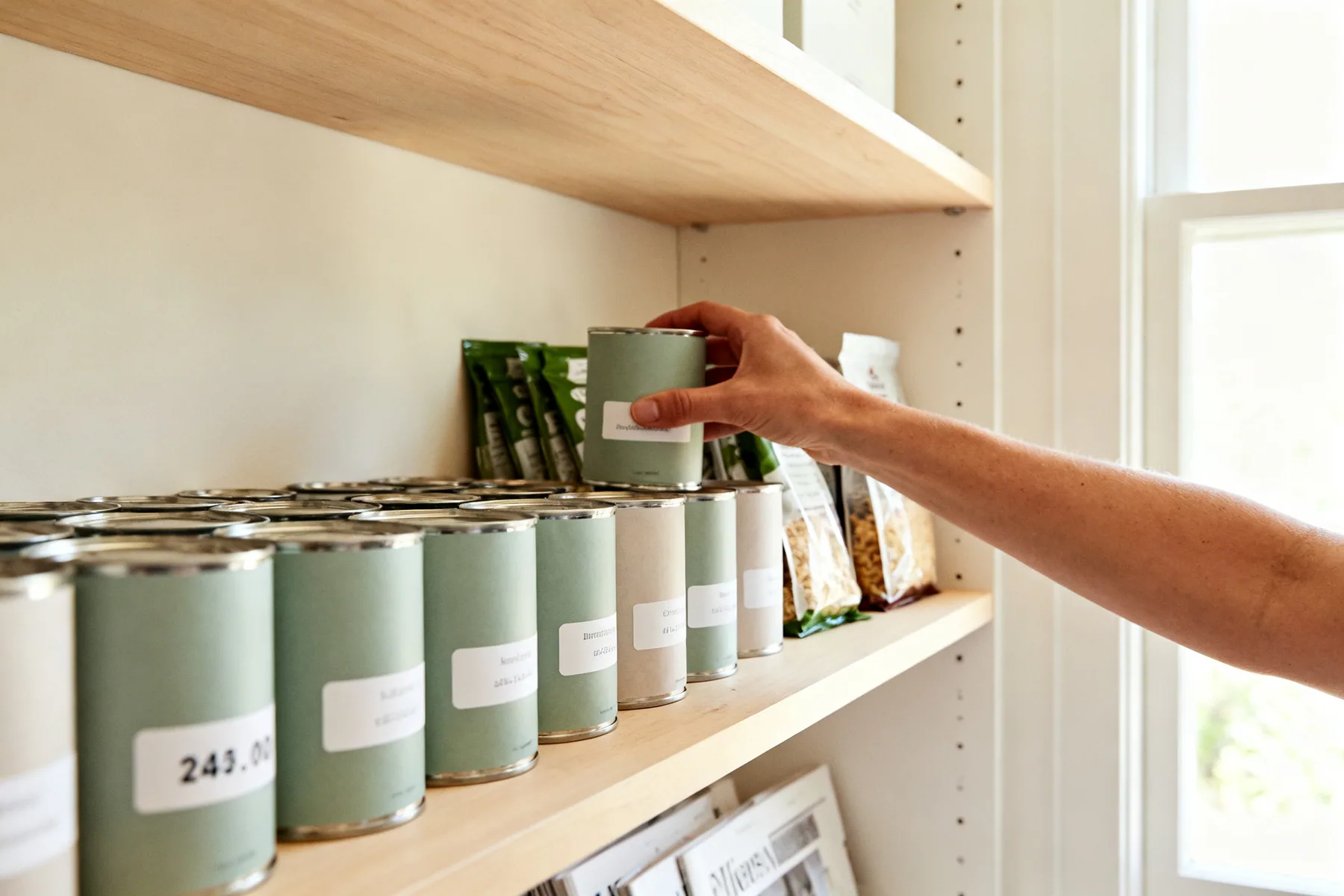
- Put new tins and packets at the back of the row, always, so the nearest date is at the front.
- Turn labels outward when you put things away. If you cannot read it, you will not use it.
- Keep everything one row deep where you can, so nothing is hidden.
- Do a five-minute front-to-back check monthly rather than a big clear-out yearly.
- Move anything close to its date to a defined "use next" spot at eye level.
- Store flour, rice and grains in airtight containers, which also keeps pantry moths out.
- Keep the floor of a walk-in pantry clear, so you can see and sweep it.
- Check for spills under containers occasionally. Sticky rings are how pantry pests start.
Pantry pests, and the conditions they need
Worth a short section because it is the thing that turns a pantry problem into an expensive one, and it is largely preventable with airtight containers.
Pantry moths and weevils usually arrive inside a packet from the shop rather than flying in, which is why a single infested bag of flour can spread through an entire shelf of loose packets. Airtight containers do two jobs here: they stop anything that arrives from getting out, and they stop anything already present from getting in.
- Decant flour, rice, grains, cereal, pasta and dried fruit into airtight containers.
- Keep the pantry dry and reasonably cool. Warmth speeds up every kind of infestation.
- Clean up spills immediately, particularly anything sugary.
- If you find larvae or webbing, empty the shelf completely and wash it before restocking.
- Bay leaves are a mild deterrent, not a solution. Containers are the solution.
- Freeze flour or grains for a few days after buying if you have had a problem before.
- Do not top up an old container with a new bag. Empty, wash and dry it first.
Pantry storage ideas that survive a month of actual use: frequently asked questions
How deep should pantry shelves be?
Around 200 to 300mm for the shelves holding jars, tins and packets, so everything sits one row deep and nothing is hidden. Anything deeper grows a back row you stop seeing, and food you cannot see does not get eaten. If the cupboard is deeper than that, put baskets, pull-outs or stepped risers in it rather than filling the depth with loose items.
Are square or round pantry containers better?
Square or rectangular, clearly. Round jars only touch at a single point, so a row of them wastes a gap either side of every jar, while square containers sit flush and use roughly a fifth more of the same shelf. They also stack more stably. It is the same volume of container for meaningfully more storage.
How should I organise a pantry so it stays organised?
Group by when you use things rather than by what they are, so a breakfast shelf and a baking shelf rather than all the tins together. The test is whether someone else can put the shopping away correctly without being told, and meal zones pass that test where categories usually do not. Label the shelf edge as well as the containers.
Should I decant everything into containers?
Only the things you refill often, because decanting has a maintenance cost. And when you do decant anything with a cooking ratio or time, write those on the label or keep the cut-out packet panel inside the jar. Throwing away the cooking instructions along with the packaging is the most common decanting mistake I see.
How do I stop food expiring at the back of the pantry?
Load new stock from the back so the oldest is always at the front. It adds about three seconds to putting the shopping away and it removes the entire problem. Combine it with turning labels outward and keeping things one row deep, then do a quick front-to-back check monthly rather than a big clear-out once a year.
How do I prevent pantry moths?
Airtight containers for flour, rice, grains, cereal, pasta and dried fruit. Pantry moths and weevils usually arrive inside a packet from the shop rather than flying in, so containers both stop what arrives from spreading and stop anything present from getting in. Clean spills promptly, and if you find webbing, empty and wash the whole shelf before restocking.