Room Storage
Living room storage ideas that keep the room feeling calm
A living room is the one room where storage is judged on how it looks as well as what it holds. That changes what the right answer is.
Every other room in a house lets you optimise storage for capacity. A living room does not, because it is also the room you sit in to relax, and a wall of visible stuff does not let you do that. So the brief here is different: hold a lot, and be quiet about it.
What makes that hard is the mix. A living room accumulates four unrelated categories at once. Soft bulky things like blankets and cushions. Electronics with cables. Small objects that migrate, remotes, chargers, glasses, coasters. And whatever hobby or paperwork has colonised the room.
Each of those wants a different kind of storage, and the single most useful decision you can make is how much of it is behind a door.
Start with the alcoves
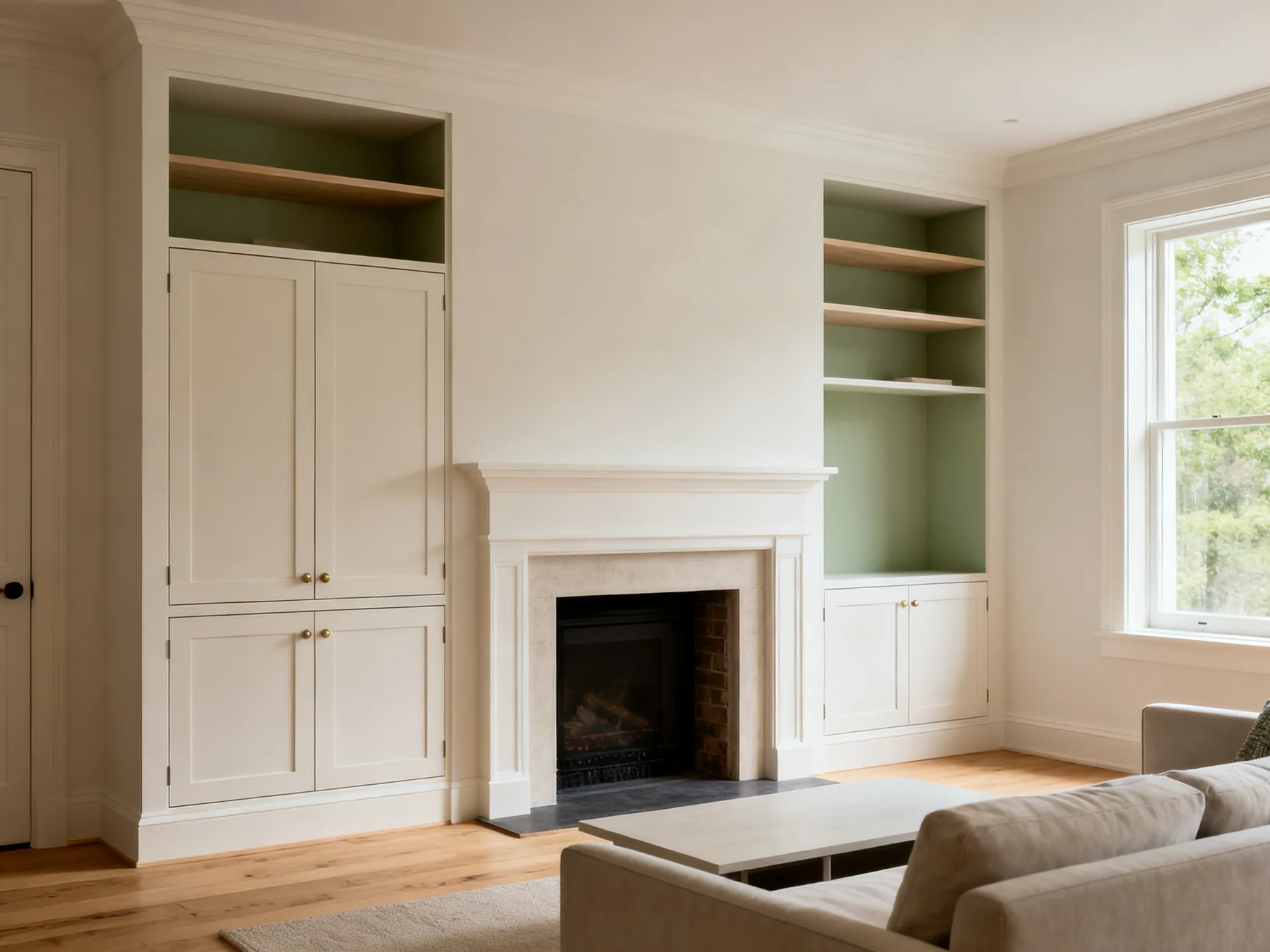
If your living room has a chimney breast, you have two recesses either side of it that are the best storage opportunity in the room and are almost always underused. They are typically 250 to 400mm deep, they are already bounded on three sides, and freestanding furniture fits them badly because it comes in standard widths that never match.
Fitted cabinetry in an alcove reads as part of the building rather than as furniture placed against a wall, which is exactly the quality you want in a living room. It also uses depth that a sofa or a sideboard would otherwise leave as an awkward gap.
Closed cupboards to about waist height, shelves above
This is the configuration I fit most often and it works in almost any room. The closed lower half swallows the things you do not want to look at, and the open upper half gives you somewhere deliberate for books and a few objects.
The most reliable alcove layout
Match the depth to the chimney breast
Bringing the cabinetry flush with the front face of the breast makes the whole wall read as one plane, which is calmer than a stepped arrangement. It also gains you every millimetre available.
Take it to the ceiling, or stop deliberately
Either run it full height or stop at a clear line like picture-rail height. What looks unresolved is stopping 300mm short of the ceiling, which also leaves a dust ledge.
Use the alcove for the least attractive things
Board games, cables, paperwork, the router. Alcove cupboards are the highest-capacity closed storage in the room, so spend that capacity on whatever you least want on display.
Closed below, open above
This is the decision that determines how the room feels, and most living room articles get it backwards because open shelving photographs beautifully and lives badly.
Here is the mechanism. When you sit down, your eye rests naturally at and slightly below eye level, and it reads whatever is there continuously. A shelf of mixed objects at that height is visual noise you cannot switch off, and in a room whose purpose is to be restful that matters more than in a kitchen or an office.
So I put closed storage at and below eye level, and reserve open shelving for above it, where you look up deliberately rather than constantly.
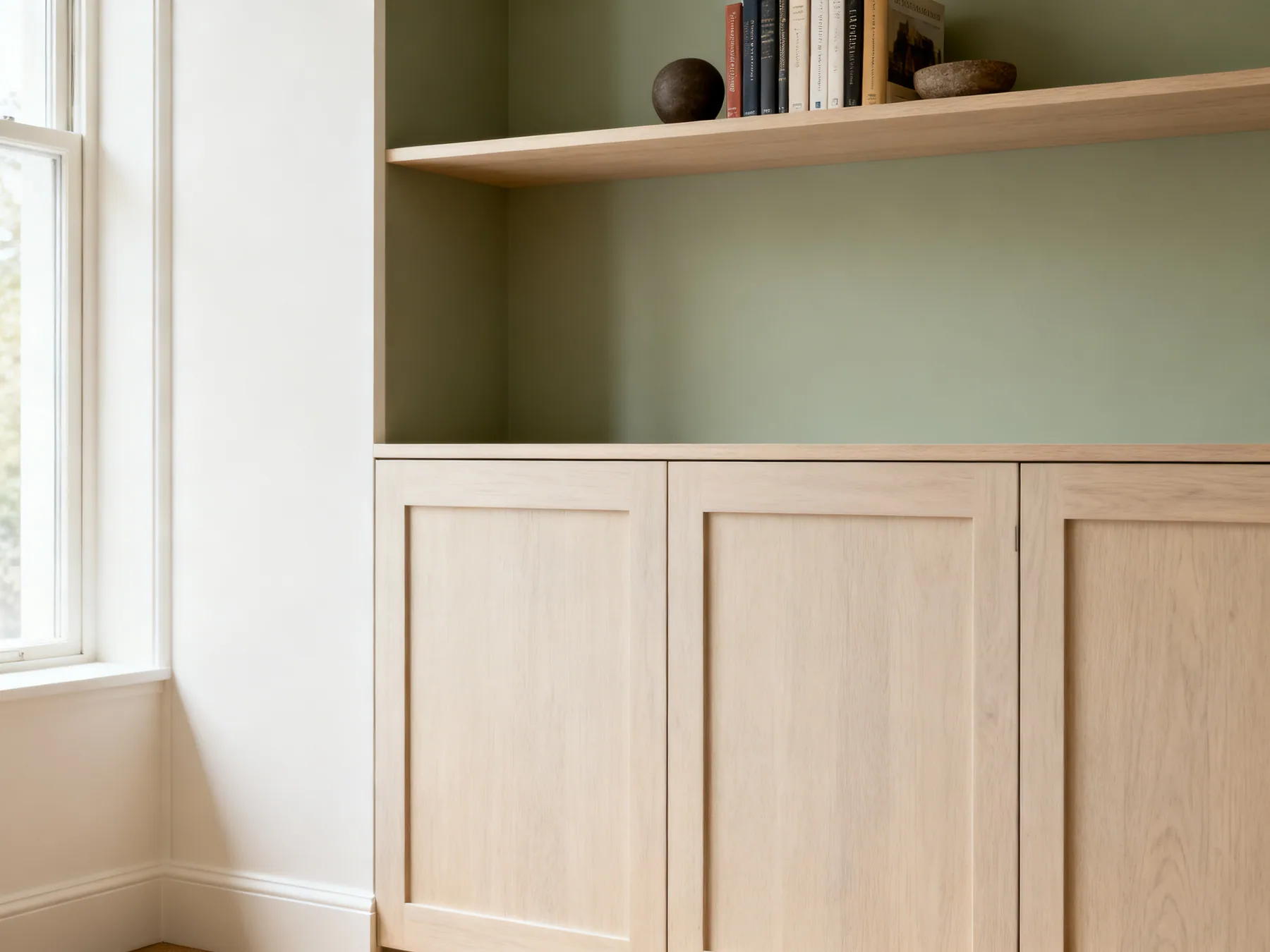
Keep open shelving curated and sparse
Open shelves work when they hold a small number of things you actually chose to show. They stop working the moment they become the place where everything goes because there is a gap. Leave real space between groupings.
Use one container style throughout
Where things must be visible, matching baskets or boxes make the storage read as a single system rather than an accumulation. This is the cheapest way to make existing storage look intentional.
Put books behind glass if there are a lot
A large book collection is one of the few things that looks good open, but glazed doors let you have the collection visible while keeping dust off and softening the visual busyness.
Do not put storage on the wall you face
The wall you look at from the sofa should be the quietest one in the room. Tall storage belongs on the wall the doorway is in, or the one you see least when seated.
The television, and dealing with cables once
Media equipment is the least attractive thing in most living rooms and the one with real technical constraints, so it needs a plan rather than a cupboard.
The constraint people miss is heat. Amplifiers, consoles and set-top boxes all need airflow, and sealing them into a closed cabinet with no ventilation shortens their life and can make them throttle or fail. This is the one place in a living room where I would not use a solid door.
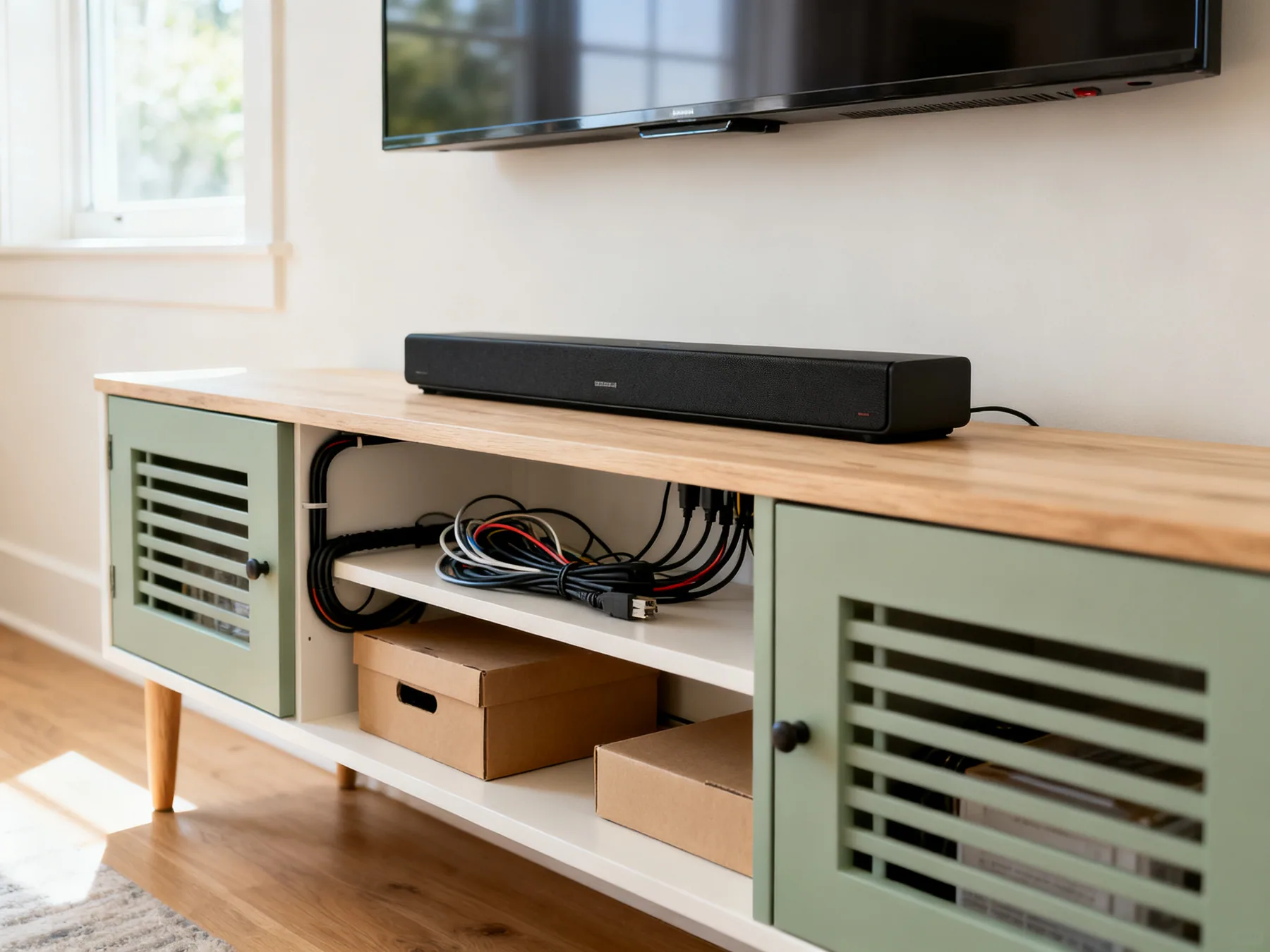
Vent the doors, or leave the back open
Slatted, perforated or fabric-fronted doors let equipment breathe while hiding it. If the doors are solid, cut a generous opening in the back panel of the unit so air can move through rather than sit.
Sealed media cabinets overheat
Do the cables properly once
A trunking channel or a run of cable ties behind the unit takes twenty minutes and stays tidy for years. Cables are the single biggest source of visual mess behind a television and the easiest to fix permanently.
Put the router where it can be reached
It is unattractive and you will occasionally need to restart it, so a vented cupboard is right and a sealed box behind a bookcase is not. Signal also suffers inside a metal-lined or fully enclosed space.
Give remotes a defined home
A shallow tray or a small lidded box on the coffee table. Remotes are the classic living room migratory object, and the reason they migrate is that they have no named place.
Wall-mount the television if the unit is low
A wall-mounted screen with a low unit beneath gives you a full-depth surface for storage instead of a stand, and it keeps the floor visible under the unit, which makes the room read as larger.
The soft bulk, and the objects that migrate
Two categories left, and they are the ones that make a tidy living room untidy again within a day. The soft bulk is blankets, throws and cushions, which are large, light and needed at short notice. The migratory objects are small, numerous and used constantly.
Both fail for the same reason: they need to be put away in one movement while you are already sitting down and comfortable. Anything that requires standing up and opening a door does not happen.
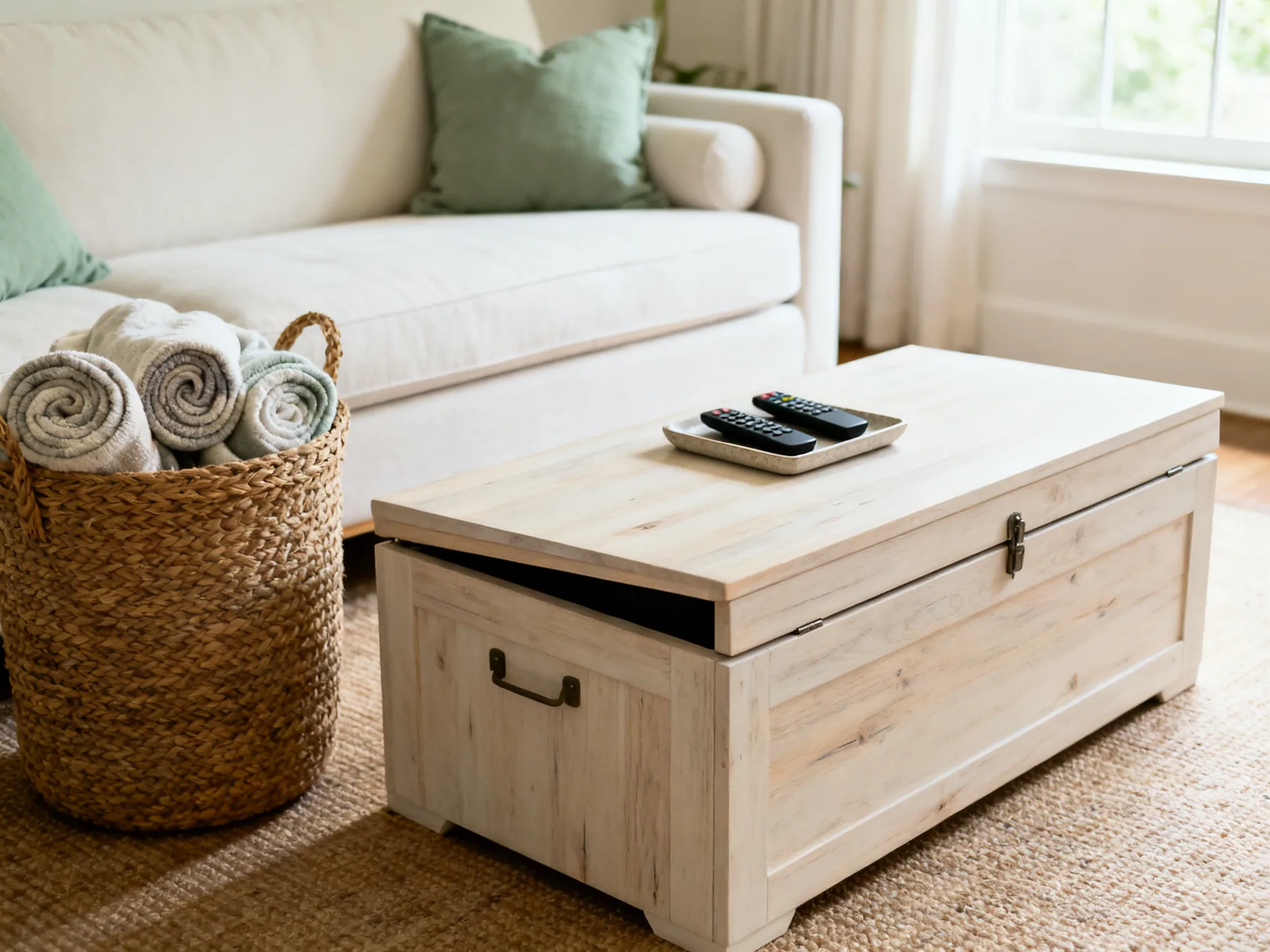
Use a lidded ottoman as the coffee table
It holds a lot of soft bulk, it gives you a surface, and putting something in it is a single motion from a seated position. This is the highest-value single piece of storage furniture in a living room.
One large basket, not three small ones
A single generous basket beside the sofa takes rolled blankets and is forgiving of untidy replacement. Several small baskets look tidier empty and turn into a jumble in use.
Put a tray on every surface that collects things
A tray turns a scatter into a group. It sounds trivial and it is the most effective thing I know for the coasters, chargers, glasses and remotes that otherwise spread across a coffee table.
Use the strip behind a floating sofa
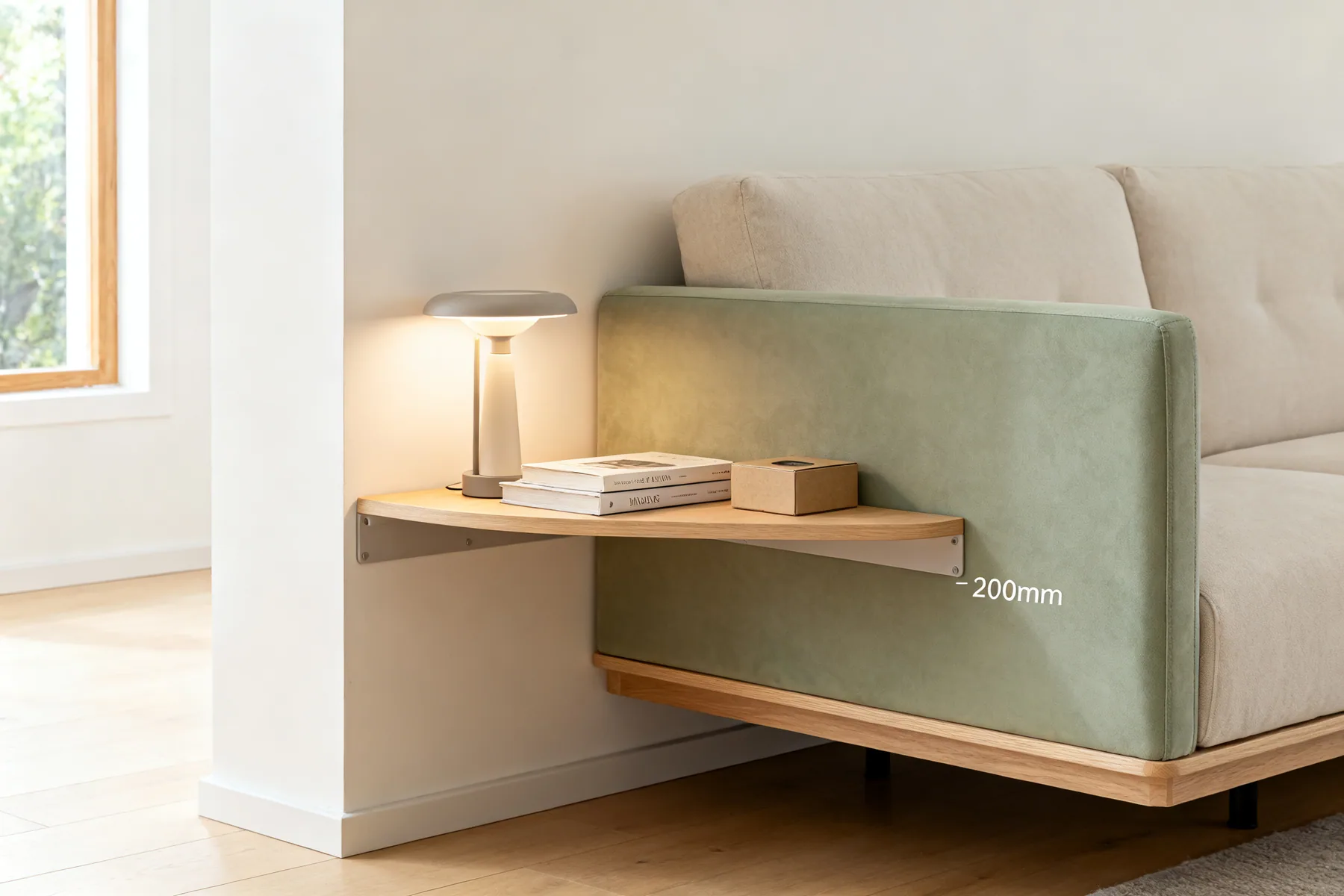
If the sofa is not against the wall, there is usually a 200 to 300mm gap doing nothing. A slim console table there holds a lamp, books and a small box, and it reads as deliberate rather than as filler.
Give children a single named container
If toys come into the living room, one large lidded box that gets filled at the end of the day works far better than trying to keep them out. Sorting can happen elsewhere; the living room just needs the floor clear.
Keeping it that way
A living room drifts faster than any other room because everyone uses it and nobody owns it. These are the things that hold the line, and none of them require anybody to be tidy by nature.
- Every category needs one named place, or it will end up on a surface.
- Keep one surface deliberately empty. A living room with no clear surface always feels full.
- Choose furniture on legs over solid plinths, because visible floor reads as more space.
- Do a two-minute reset at the end of the day rather than a big tidy weekly.
- Anything that has not been used in the room for a season probably belongs in another room.
- Keep the sightline from the doorway across the room clear of tall furniture.
- Leave about a fifth of the closed storage empty, so there is somewhere for what arrives next.
Living room storage ideas that keep the room feeling calm: frequently asked questions
What is the best storage for a living room?
Fitted cabinetry in the alcoves either side of a chimney breast, if you have them. They are typically 250 to 400mm deep, already bounded on three sides, and freestanding furniture fits them badly, so they are usually the most underused space in the room. Closed cupboards to about waist height with open shelves above is the configuration that works in almost any room.
Should living room storage be open or closed?
Closed at and below eye level, open above it. When you sit down your eye rests at around eye level and reads whatever is there continuously, so a shelf of mixed objects at that height is visual noise you cannot switch off. Most articles recommend open shelving because it photographs well, which is close to the opposite of what keeps a room restful.
How do I hide TV cables and equipment?
Use vented, slatted or fabric-fronted doors rather than solid ones, because amplifiers, consoles and set-top boxes need airflow and sealing them in shortens their life. If the doors are solid, cut a generous opening in the back panel. Then deal with the cables once, with trunking or ties behind the unit, which takes twenty minutes and stays tidy for years.
Where should I store blankets and cushions in a living room?
A lidded ottoman used as the coffee table, plus one large basket beside the sofa for rolled blankets. Both let you put something away in a single movement from a seated position, which is the actual requirement. One generous basket works better than several small ones, because it is forgiving of untidy replacement.
How do I stop the coffee table filling up with clutter?
Put a tray on it. A tray turns a scatter of coasters, chargers, glasses and remotes into a single group, and it is the most effective small intervention I know. Then give the remotes their own shallow box, because the reason they migrate around the room is that they have no named place to return to.
How can I add storage to a small living room without making it feel smaller?
Use the alcoves and the walls rather than the floor, keep the wall you face from the sofa as the quietest one, and choose furniture on legs over solid plinths so the floor stays visible. If the sofa floats off the wall, the 200 to 300mm strip behind it will take a slim console table that adds storage without taking any usable floor.