Closets, Halls & Garages
Attic storage ideas, and the two things nobody tells you first
Ceiling joists were sized to hold a ceiling up, not a floor. And boarding straight onto them destroys your insulation. Both come before any shelving.
An attic is the biggest empty volume in most houses, which makes it enormously tempting, and it is the space where I see the most genuinely consequential mistakes. Not untidiness: actual damage to the house and to what people store.
Two of them come before you think about storage at all. The joists you would be standing on were sized to hold a ceiling up rather than to carry a floor and its contents. And laying boards directly onto those joists compresses the insulation between them, which destroys its performance and can cause condensation on the underside of the new boards.
The third is about what you put up there. An attic cycles from below freezing to very hot, several times a year, and a specific list of things simply do not survive that.
Board above the insulation, not on it
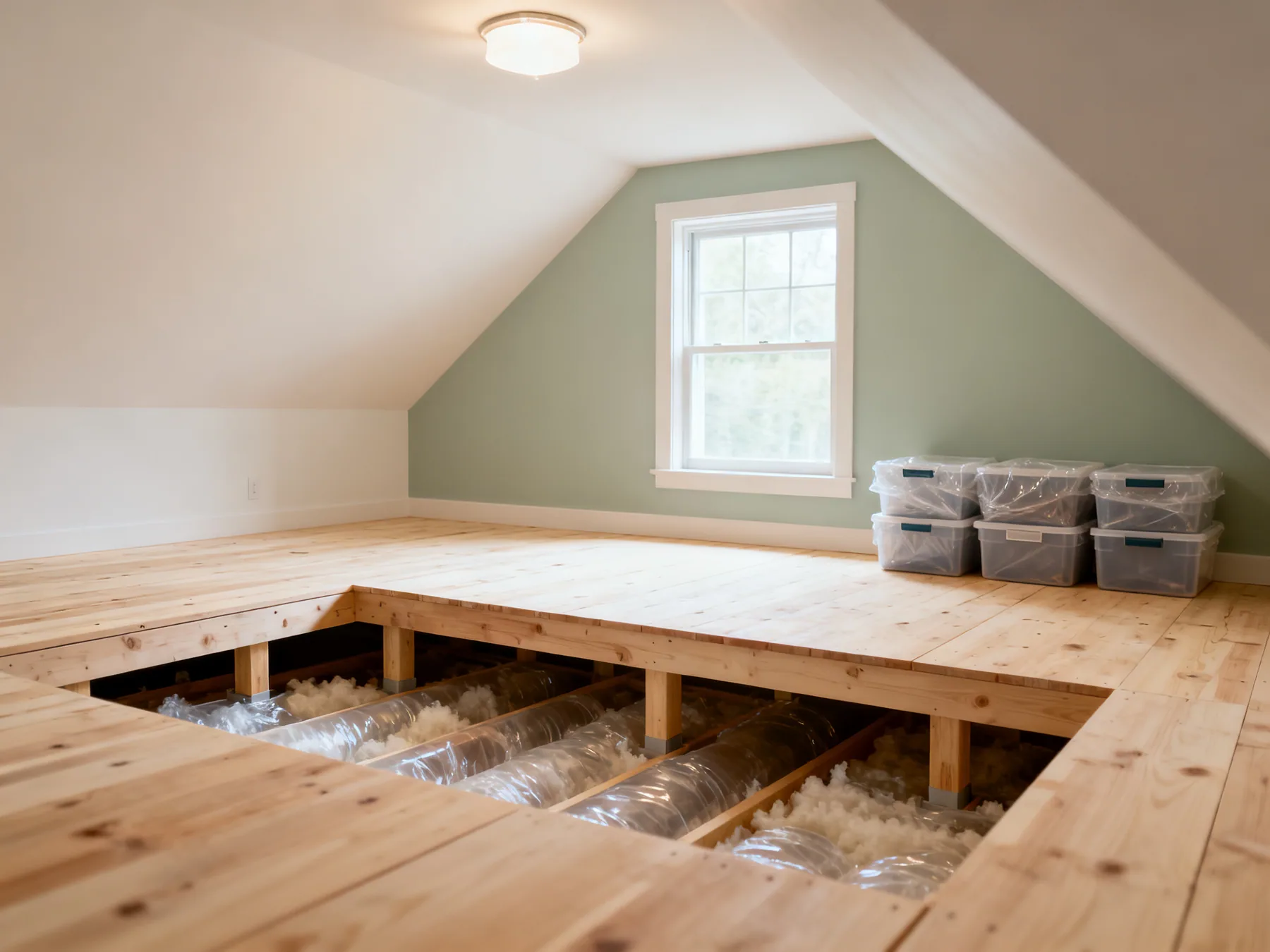
Current insulation depths are considerably greater than the height of a typical ceiling joist. So if you lay boards straight across the joists, you squash the insulation underneath, and compressed insulation loses much of its value. You have converted a warm house into a colder one in exchange for somewhere to put boxes.
There is a second problem, which is condensation. Boards resting on compressed insulation with no air gap can get cold and damp on their underside, and that is how a loft develops mould you cannot see.
The fix is raised loft legs, sometimes called loft stilts: plastic supports that sit on the joists and lift the boards clear, leaving the insulation at full depth with a ventilated gap above it. It is a standard product and it is the right way to do this.
Use raised loft legs, not boards on joists
They lift the deck above full-depth insulation and leave an air gap. Slightly more work and more cost, and it is the difference between adding storage and downgrading your house.
Compressed insulation loses much of its value
Do not block the eaves ventilation
Roof voids are ventilated at the eaves, and pushing insulation or boxes tight into them stops the airflow that keeps the timbers dry. Leave the eaves clear.
Board only the area you will actually use
A boarded walkway plus one storage platform is usually enough. Boarding the whole void costs more, weighs more and encourages you to fill it.
Check for a vapour issue if the roof is a warm construction
Some newer or converted roofs are insulated at the rafter line rather than the joists, and the rules are different. If yours looks like that, get advice before boarding.
Joists were sized for a ceiling
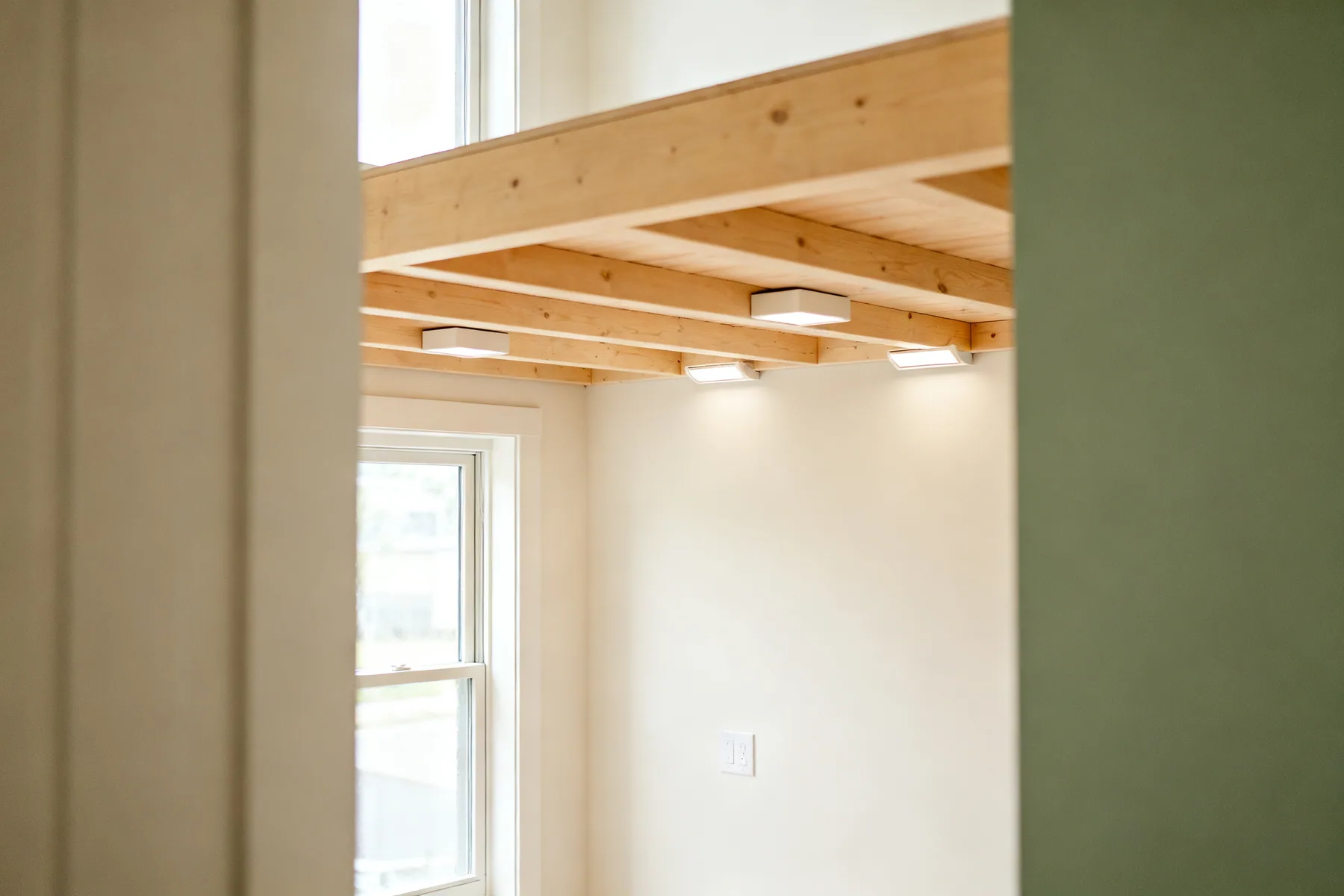
This is the part I most want people to take seriously. The joists across the bottom of a roof void are usually sized to carry a plasterboard ceiling and the insulation, plus occasional access. They are not floor joists, and a domestic floor is designed for a considerably higher load.
That does not mean an attic cannot store anything. It means loads should be light, spread across several joists rather than concentrated, and kept nearer the supporting walls than the middle of a span, because the middle is where a joist deflects most.
If you are planning anything substantial, or you notice ceiling cracks appearing below, that is a conversation with a structural engineer rather than a storage decision.
- Keep stored weight light and spread it across several joists.
- Store nearer the supporting walls rather than the middle of a span.
- Put heavy items low and close to the hatch, so you carry them the shortest distance.
- Do not stack bins more than about three high, for stability as much as load.
- Watch for new cracks in the ceilings below, which is the first sign of overloading.
- Never store anything heavy on a boarded area you have not confirmed is supported.
- Get advice before storing anything substantial, or before a full boarding job.
- Remember insulation, boards and legs are themselves added weight.
The temperature swing decides what can go up
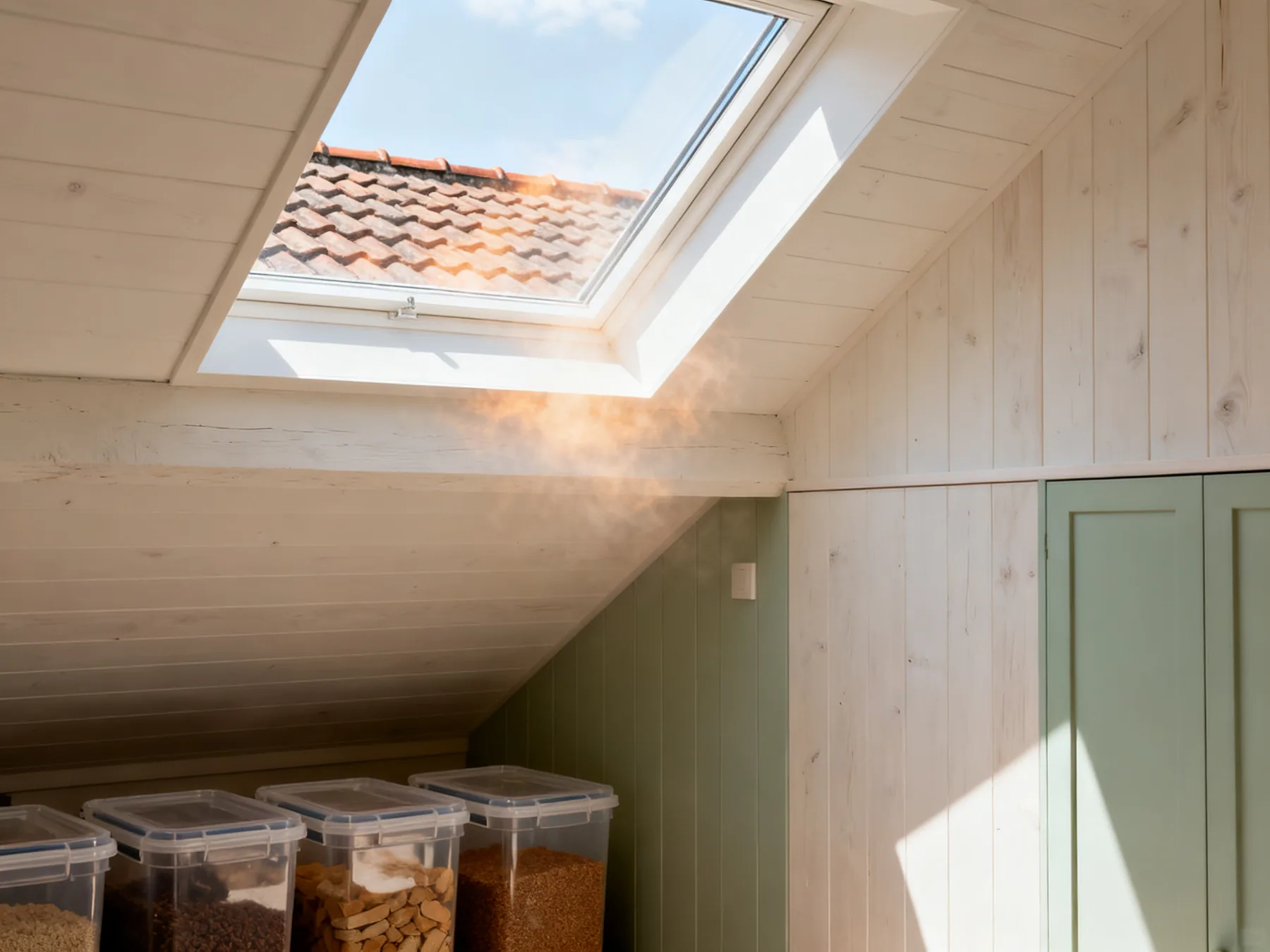
A roof void follows the outside temperature and then exceeds it. On a summer afternoon under dark tiles it can get very hot indeed, and in winter it drops below freezing. That cycle repeats hundreds of times over the years an object sits up there.
Which produces a specific list of things that reliably fail in an attic, and unfortunately it overlaps heavily with what people put there.
- Photographs and negatives stick together and the emulsion lifts. Keep them downstairs.
- Candles soften and bend, and in a hot loft they can slump entirely.
- Vinyl records warp. Vinyl is a thermoplastic and a hot loft is well past safe.
- Electronics corrode at the solder joints and batteries can leak or swell.
- Paint is ruined by freezing, and water-based paint especially.
- Wooden instruments and anything with glued joints crack as they cycle.
- Documents and paper cockle, and mould can start in the fold lines.
- Textiles are workable only in sealed containers with desiccant, and check them annually.
Sealed plastic, labelled on the end
Cardboard fails in an attic for three separate reasons: it takes up moisture and softens, it is a food source and a nesting material for rodents and insects, and it holds damp against its contents. Rodents in particular are the reason I would never store cardboard in a roof void.
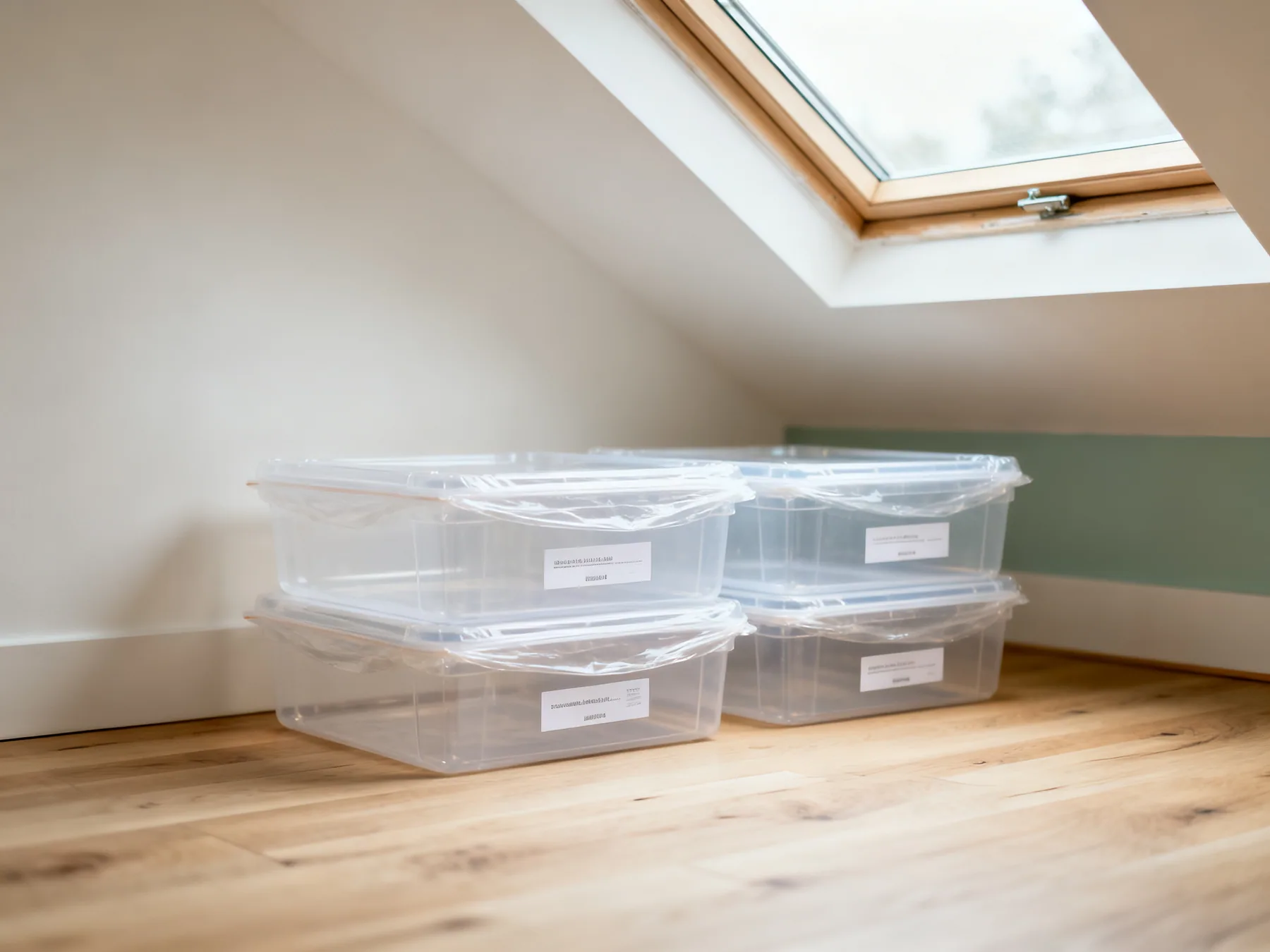
Clear sealed plastic bins solve all of it and let you see what is inside without opening anything. Then label the end that faces the hatch, because a label on the lid is invisible the moment a bin is on the floor of a loft.
Clear bins with clip-down or gasketed lids
Sealed keeps moisture and pests out, and clear means you can identify contents from the hatch without unstacking. Buy one or two sizes so they stack squarely.
Label the short end, not the lid
The end faces you when the bin is on the deck. Describe the contents rather than the room they came from, because "spare room" means nothing in two years.
Keep bins small enough to carry down a ladder
This is the real size limit. A bin you can only lift with two hands is a bin you cannot get down a loft ladder safely.
You have to carry it down a ladder
Add a desiccant sachet to anything textile
And check it annually. Textiles can work in a loft if they are sealed, clean and dry going in, but they are the category I would keep an eye on.
Access, light and getting up there safely
Most loft accidents are not about the storage. They are the ladder, or a foot going between joists in the dark, or carrying something down with both hands occupied.
So I would spend on access before shelving. A proper fitted ladder, a boarded landing area immediately inside the hatch so you have somewhere solid to stand while you turn round, and a light you can switch on before you go up.
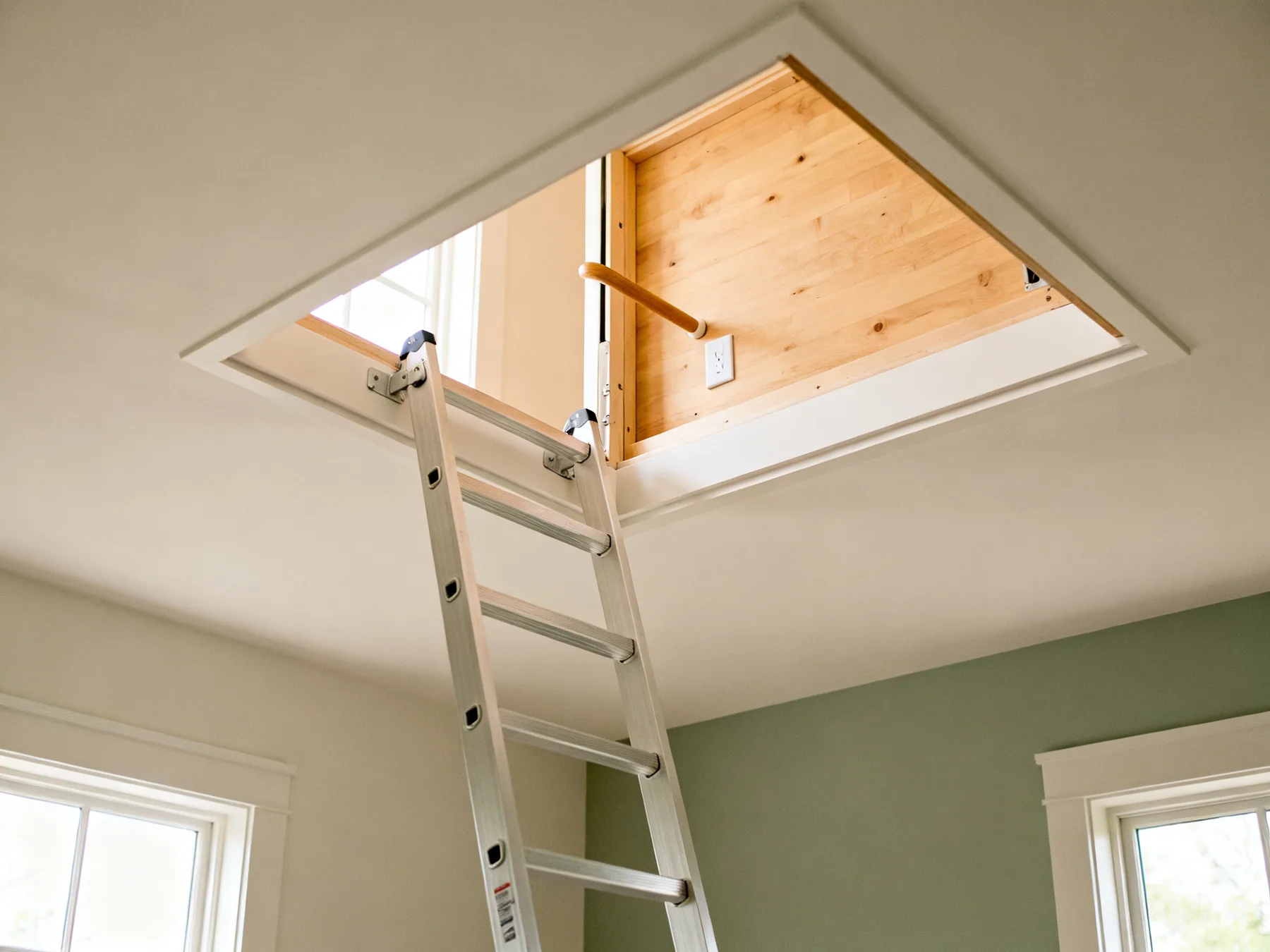
- Fit a proper loft ladder rather than using a stepladder through the hatch.
- Board a landing area immediately inside the hatch so there is somewhere solid to stand.
- Fit a light, switched from below, so you never go up into the dark.
- Keep one hand free on the ladder. Pass things up and down rather than carrying them.
- Never step between joists onto plasterboard, which will not hold you.
- Mind your head on the rafters and any purlin, especially coming back to the hatch.
- Keep the hatch area clear so you are not stepping over boxes as you come through.
- Check for wasp nests and rodent signs before working up there in summer.
Attic storage ideas, and the two things nobody tells you first: frequently asked questions
Can I lay boards straight onto my attic joists?
You can, and it compresses the insulation underneath and destroys much of its performance, because modern insulation depths are greater than a typical joist. It can also cause condensation on the underside of the boards. Use raised loft legs instead, which lift the deck clear and leave the insulation at full depth with a ventilated gap.
How much weight can an attic floor take?
Less than a normal floor, because ceiling joists were sized to carry a plasterboard ceiling and insulation plus occasional access, not a loaded floor. Keep weight light, spread it across several joists, and store nearer the supporting walls rather than the middle of a span. New cracks in the ceilings below are the first sign of overloading.
What should you not store in an attic?
Photographs, candles, vinyl records, electronics, paint, wooden instruments and documents. A roof void cycles from below freezing to very hot many times over the years, and all of those fail: emulsion lifts, candles slump, vinyl warps, solder joints corrode, water-based paint is ruined by freezing and glued joints crack.
Why not use cardboard boxes in a loft?
Three reasons. Cardboard takes up moisture and softens, it holds damp against its contents, and it is a food source and nesting material for rodents and insects. Rodents are the main one, and they are common in roof voids. Use clear sealed plastic bins with clip-down lids and label the short end that faces the hatch.
How big should attic storage boxes be?
Small enough to carry down a ladder with one hand free. That is the real size limit, not the shelf space. A bin you can only lift with two hands is a bin you cannot get down a loft ladder safely, so put heavy contents in small bins and light bulky things in larger ones.
What should I do before using my attic for storage?
Fit a proper loft ladder, board a landing area immediately inside the hatch so you have somewhere solid to stand while you turn around, and install a light switched from below so you never go up into the dark. Most loft accidents are the ladder or a foot going through plasterboard between joists, not the storage itself.