Closets, Halls & Garages
Shed storage ideas that keep tools off the floor
A 6x4 shed has about 2.2m² of floor and nearly 20m² of wall and roof structure. Almost every shed I open is using only the floor.
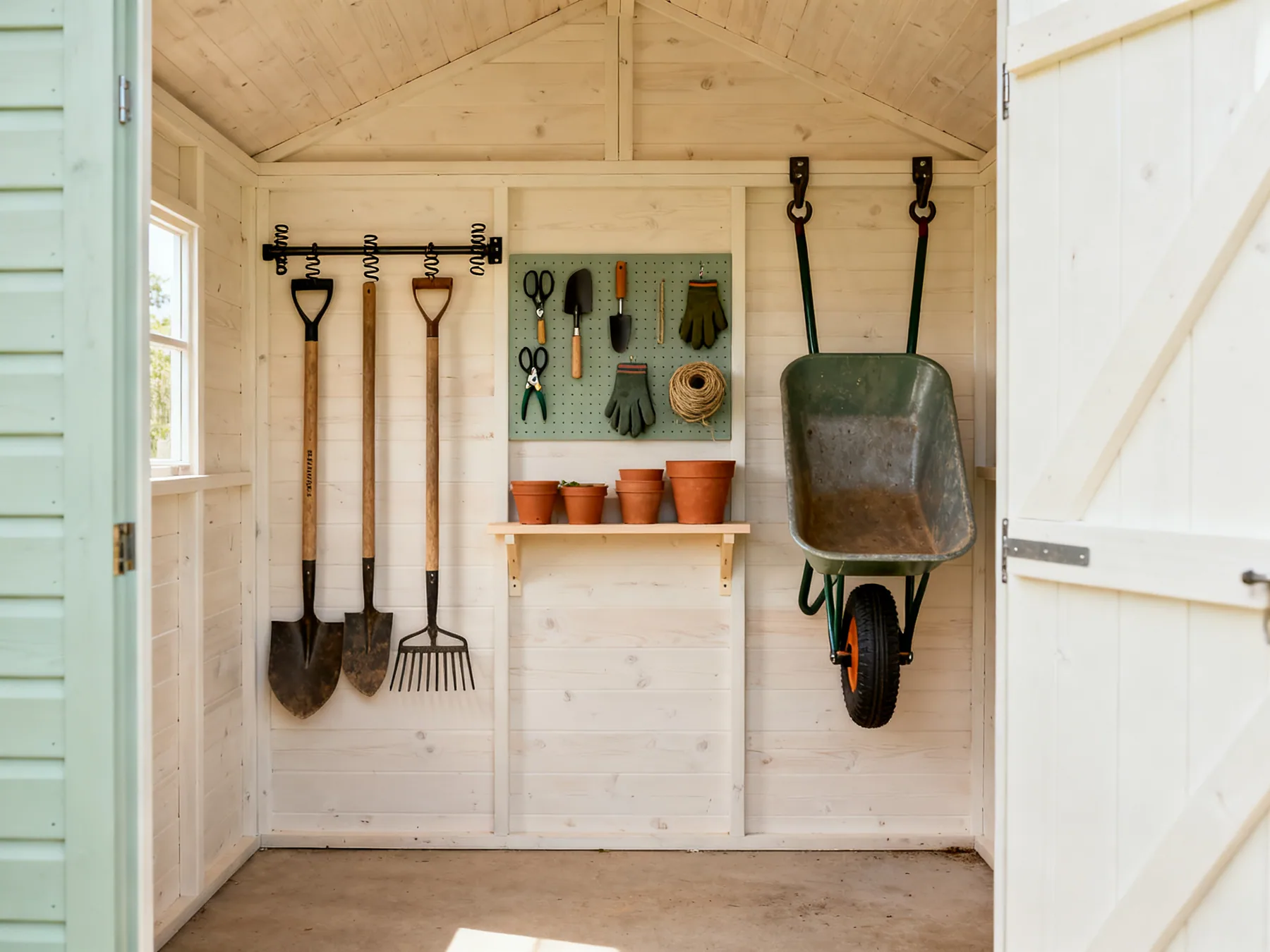
A shed is a garage with a tenth of the space and twice the damp. When I open one for the first time, I can usually guess what I am going to find before the door swings: a mower, a wheelbarrow, and a dozen long-handled tools all leaning on each other in a corner, with the mower buried at the back so it has to be dragged out past everything else.
The thing I want you to notice is that a shed already contains a storage system. That timber frame is not just holding the walls up. Every stud, rafter and noggin is a fixing point, which means shelves, rails and hooks go up in an afternoon and you never touch a wall plug. What the shed does not give you is any defence against damp, and that is where I see most shed storage go wrong.
I clear the floor first, then I keep it clear
Everything comes out onto a tarp. I know that sounds like a lot of effort for a 6x4 shed, but you cannot plan around things you cannot see, and a shed is the one space where I have never regretted emptying it completely.
Then I sort into five piles: long-handled, powered, chemical, small hand tools, and things that are not garden equipment at all. That last pile is always bigger than people expect. Paint tins, a broken parasol, half a bag of cement gone solid. Be honest with it.
The last decision is the one that matters most. Pick the single thing that genuinely has to live on the floor, which is almost always the mower, give it a defined footprint, and then design everything else onto the walls and roof structure around it.
- Empty the shed completely onto a tarp.
- Identify the single largest item and give it a defined floor footprint.
- Remove anything that is not garden, outdoor or DIY related.
- Check the floor for soft spots and damp before anything goes back.
- Lift everything that goes back in onto a rack, shelf, hook or pallet.
Wall storage ideas for a shed
This is where a shed differs from a plastered room, and the difference works in your favour. In a house I have to find the studs. In a shed I can see them.
Fit a rail for the long handles
One horizontal rail at about 1.5m with spring grips or J-hooks holds spades, rakes, forks, brooms and hoes upright against the wall. If you only do one thing on this page, do this one. I have never fitted a tool rail in a small shed and recovered less than a third of the floor.
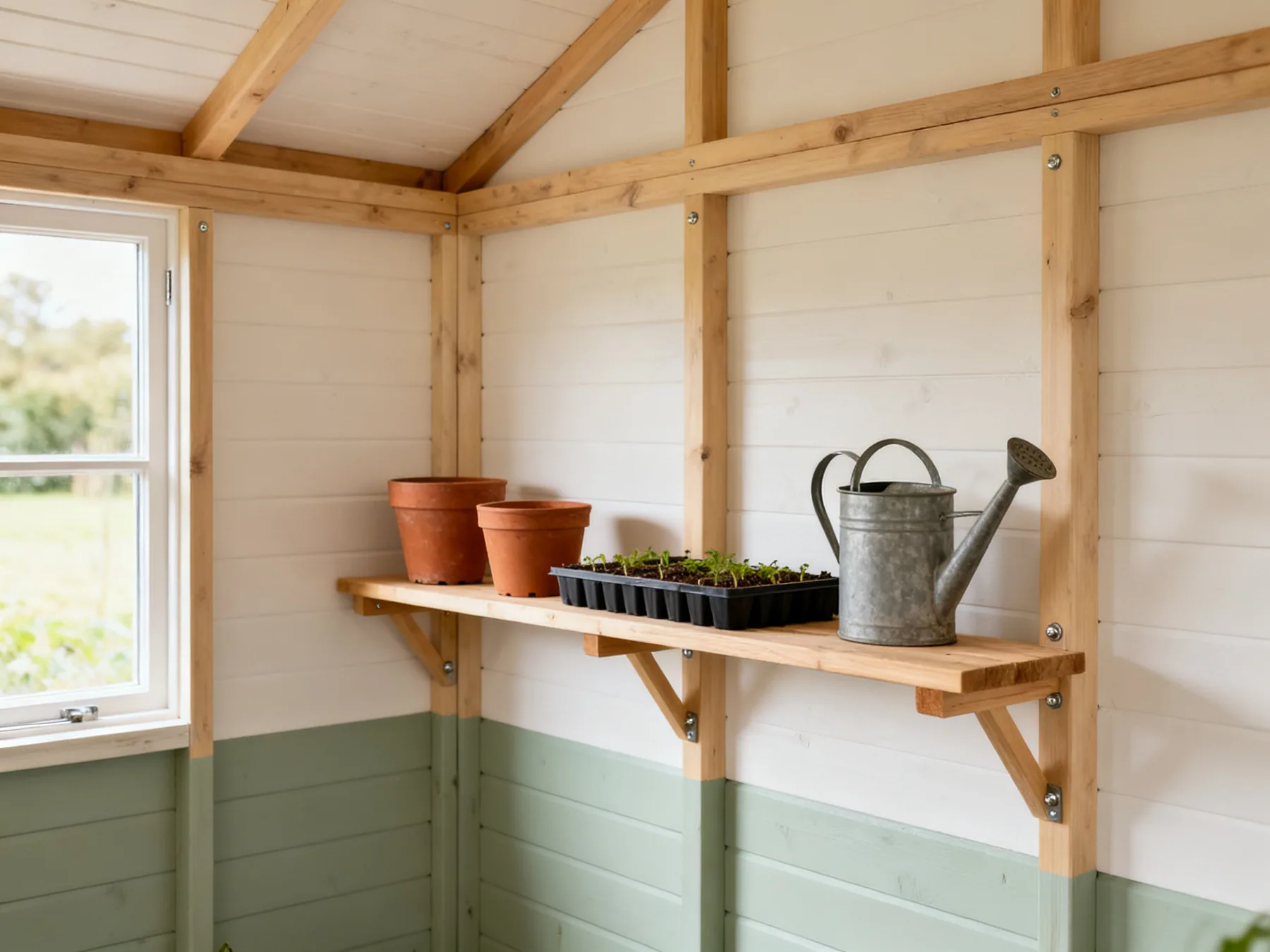
Fix directly into studs
Add pegboard between the studs
A pegboard panel screwed to battens between two studs holds secateurs, trowels, string, gloves and hand tools where you can see them. Sheds are dark, and I weight visible storage much more heavily here than I would in a garage. A drawer in a shed is a place where things go to be forgotten.
Use the gaps between studs as shelf bays
The studs project into the room, which hands you a row of ready-made bays 400 to 600mm wide. A shelf spanning two of them needs two screws and no plugs. This is the cheapest storage in the whole shed and the one people most often walk past.
Hang the wheelbarrow vertically
A barrow standing on the floor eats about 0.8m², which in a 6x4 shed is more than a third of your floor. Hung by its front lip on two heavy hooks it takes almost nothing. Fix into a stud for this one. A wheelbarrow is heavier than it looks and it will find out whether you did.
Put magnetic strips inside the door
The back of the door is doing nothing. A magnetic strip takes small metal tools, or a shallow rack takes gloves and twine. Keep the weight low, because a loaded shed door starts to drop on its hinges and then it stops closing properly.
The roof space is the driest part of the shed
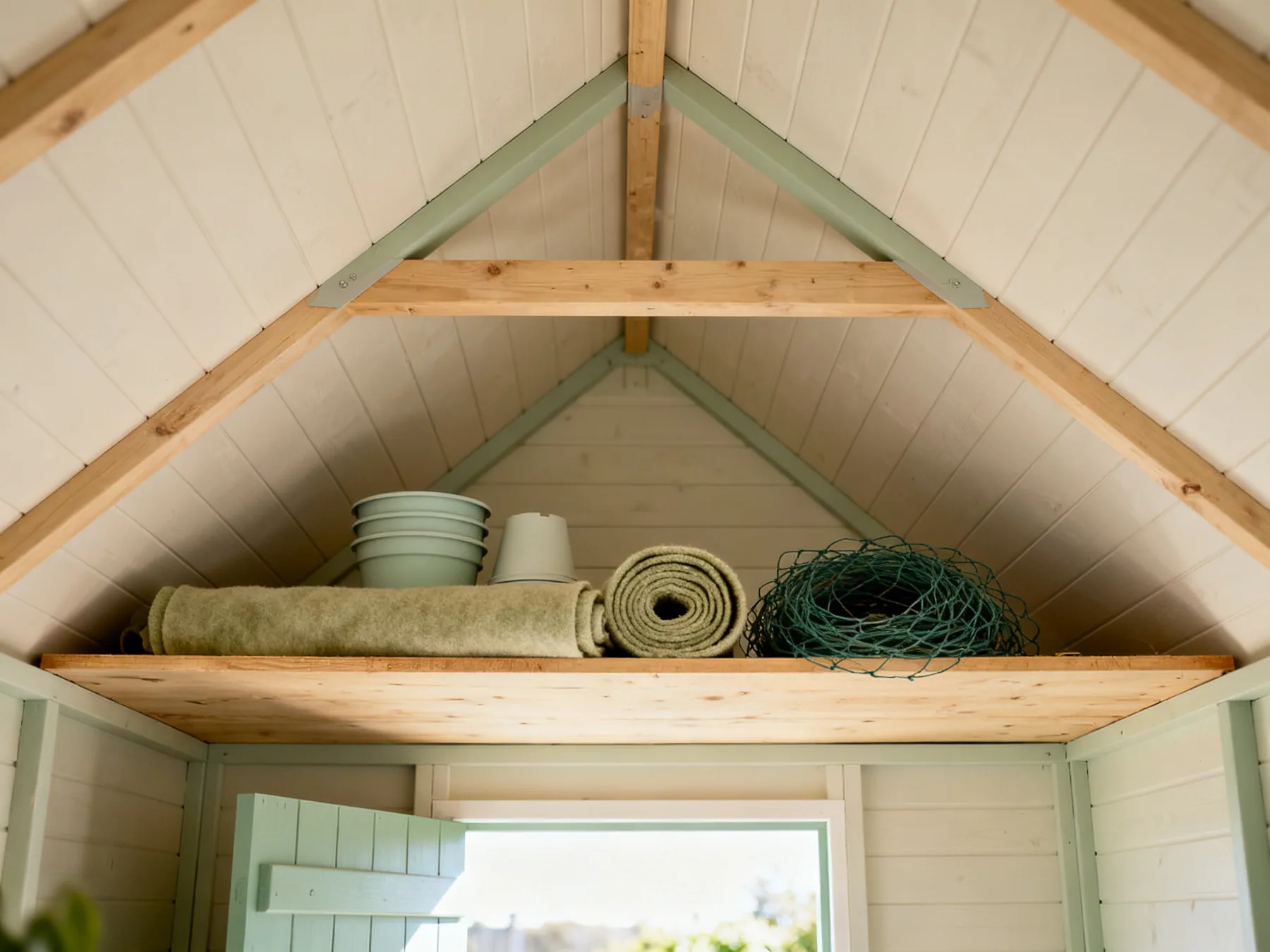
The triangle above door height in an apex shed is completely dead space in most sheds I look at. It is also the driest air in the building, because it is the furthest point from the floor. That combination makes it the best place in a shed for anything you want to keep dry and rarely need.
Lay boards across the tie beams
Boards laid across the horizontal roof ties give you a small loft platform. Plant pots, fleece, netting, cushions. Keep the load light and spread it out, because these members were sized to hold a roof up, not to carry storage. If a board flexes when you press on it, take weight off rather than adding a second board.
Light items only. Do not overload roof members
Hook coils and baskets from the rafters
Hose coils, extension leads, netting and rope hang from rafter hooks and stay untangled, which is considerably more than they manage in a heap on the floor.
Store timber offcuts on overhead bearers
Two brackets spanning the shed at high level hold offcuts flat and out of the way. Being off the floor also means they stay dry enough to actually be worth keeping, which is the difference between a useful offcut pile and a damp one you eventually throw out.
Mowers, bikes and the bulky things
Bulky items are where shed layouts fail, and the failure is nearly always about sequence rather than space. If the thing you use every week is behind the thing you use every year, you will be unpacking the shed all summer.
Give the mower the floor by the door
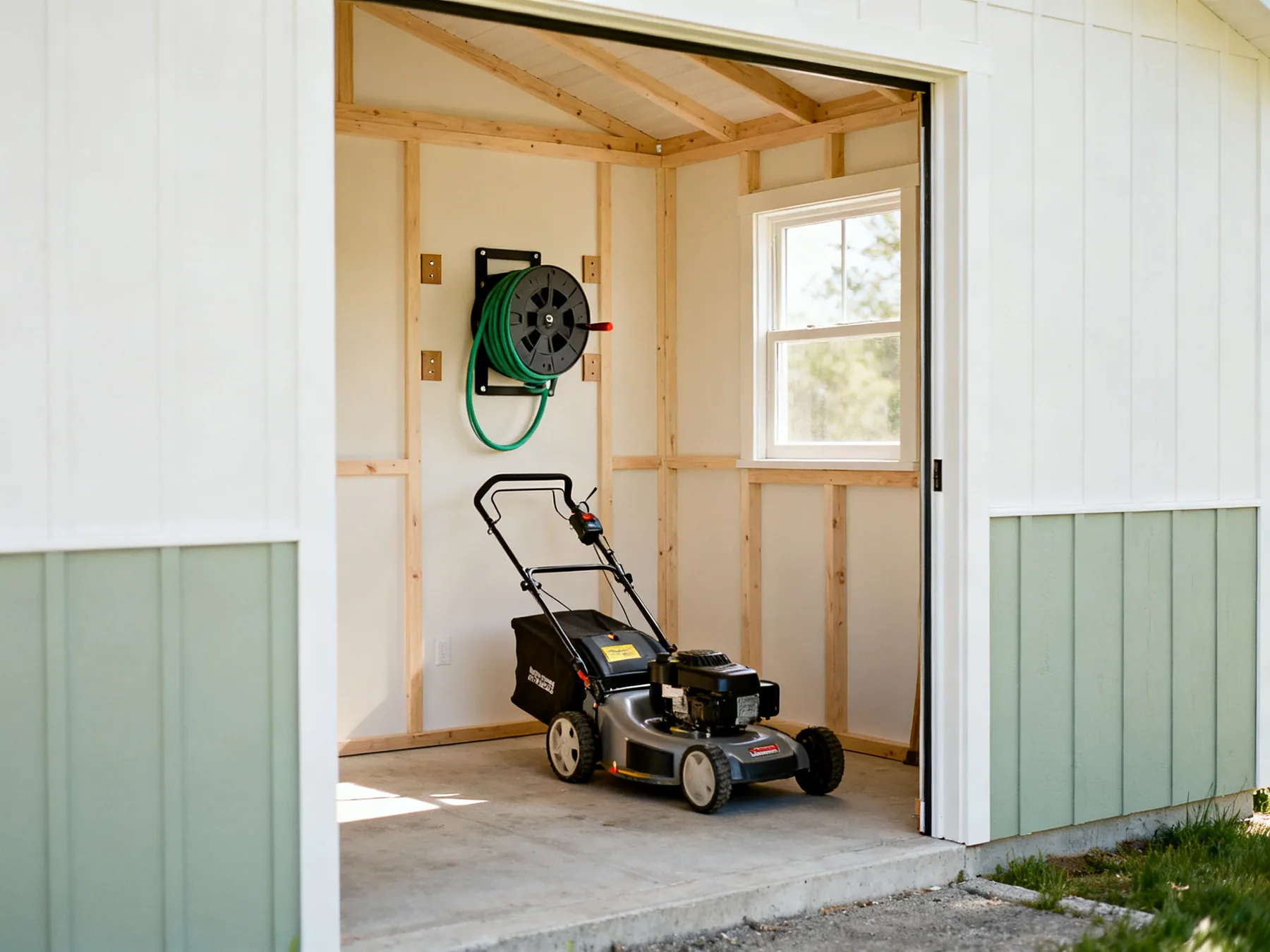
The mower is the heaviest thing in most sheds and the one that comes out most often, so it gets the spot where it can be rolled straight out. Store it at the back and you have guaranteed that everything else in the shed gets moved twice every time you mow. I see this one constantly and it is free to fix.
Hang bikes on the wall or from the rafters
A vertical wheel hook takes a bike in about 400mm of wall. In a really small shed I often prefer a rafter hook that lifts the bike above head height instead, so it is not competing with the tool wall. Let a wet bike dry before you hang it against timber.
Coil the hose on a wall reel
A hose on the floor is a trip hazard and it kinks permanently, which is how hoses die. A wall reel fixed into two studs fixes both problems. Drain it before winter, because trapped water splits a hose from the inside when it freezes.
Stand the strimmer and hedge trimmer on hooks
Powered garden tools are awkward shapes with vulnerable cutting heads. Two hooks per tool, head upward, keeps the blades clear of everything else and the cable coiled instead of trailing.
Damp, ventilation and shed security
Here is the part I would most like you to take seriously. A shed is a thin timber box with no insulation, so the air inside it follows outdoor humidity closely and then condenses on any cold metal surface it can find. Damp is not an occasional problem in a shed. It is the default condition, and storage has to be designed around it rather than hoping for a dry year.
The good news is that the fix is cheap and mostly geometric. Get air moving, and get everything off the floor.
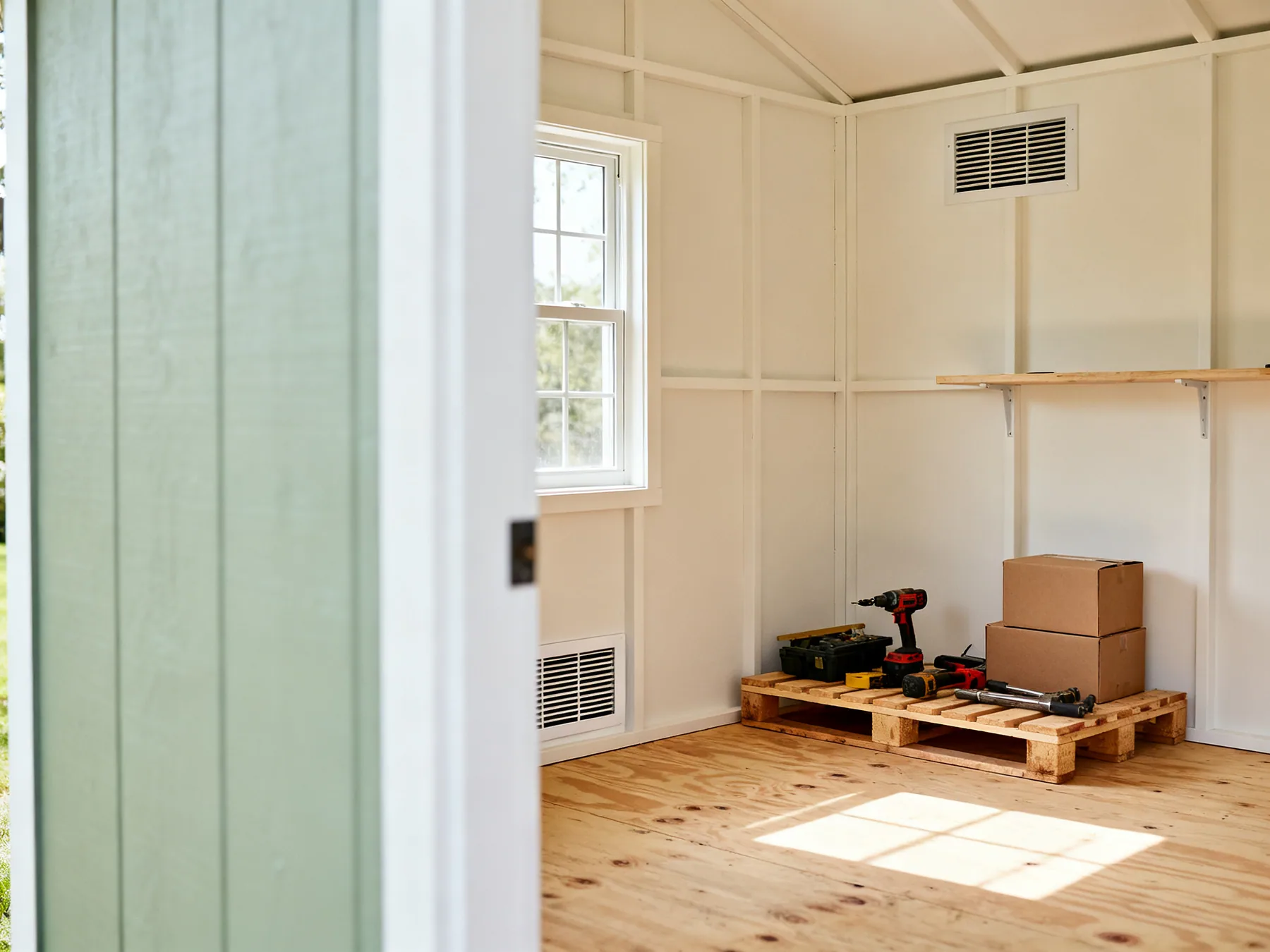
- Raise the shed off the ground on bearers or a paved base with a damp-proof membrane.
- Lift everything inside off the floor. Pallets, shelves, or feet under any tool cabinet.
- Add a vent low on one wall and one high on the opposite wall, so you get airflow rather than trapped air.
- Wipe metal tools with an oily rag before winter. Unprotected steel will pit in a single damp season.
- Keep the roofing felt intact. Most shed damp arrives through the roof, not the walls.
- Store chemicals and fuel in a sealed, frost-tolerant, lockable box, and check labels for temperature limits.
- Do not store petrol or propane in a small enclosed shed near any ignition source.
- Fit a hasp with a closed-shackle padlock and consider hinge bolts. Shed hinges are usually the weak point.
Shed storage ideas that keep tools off the floor: frequently asked questions
How do I fit more in a small shed?
Get the long-handled tools off the floor and onto a wall rail. On its own that usually recovers about a third of the floor in a 6x4 shed. Then use the gaps between the wall studs as shelf bays, and lay boards across the roof tie beams for light bulky items. In my experience sheds run out of organization long before they run out of volume.
Can I fix shelves straight to a shed wall?
Fix into the studs and rafters, not the cladding. Shed cladding is thin boarding and fixings will pull straight through it under load, but the frame behind it is solid timber at roughly 400 to 600mm centres and takes screws directly with no plugs. A shelf spanning two studs is genuinely strong.
How do I stop tools rusting in a shed?
Keep them off the floor, get airflow through the shed with a low vent and a high vent on opposite walls, and wipe steel with an oily rag before winter. The mechanism is damp condensing on cold metal, so anything that reduces standing humidity or puts a barrier on the steel helps.
Is it safe to store petrol or a mower with fuel in a shed?
Petrol should only be kept in an approved container, in the smallest quantity you need, in a well-ventilated space away from any ignition source, and a small sealed shed is a poor location for it. For a petrol mower, run the tank low before storing it for winter, and check your local regulations on domestic fuel storage.
What can I store in a shed over winter?
Tools, garden furniture, pots, and anything metal that has been oiled. I would avoid anything absorbent unless it is in a sealed hard container, so cushions, fabric, paper and bedding are better off indoors. Keep water-based paint indoors too, because freezing ruins it. Drain hoses and outdoor taps before the first frost.