Closets, Halls & Garages
Wardrobe storage ideas for a box you cannot make bigger
A built-in closet is a space you fit out. A wardrobe is a box someone else sized, so every gain has to come from inside it.
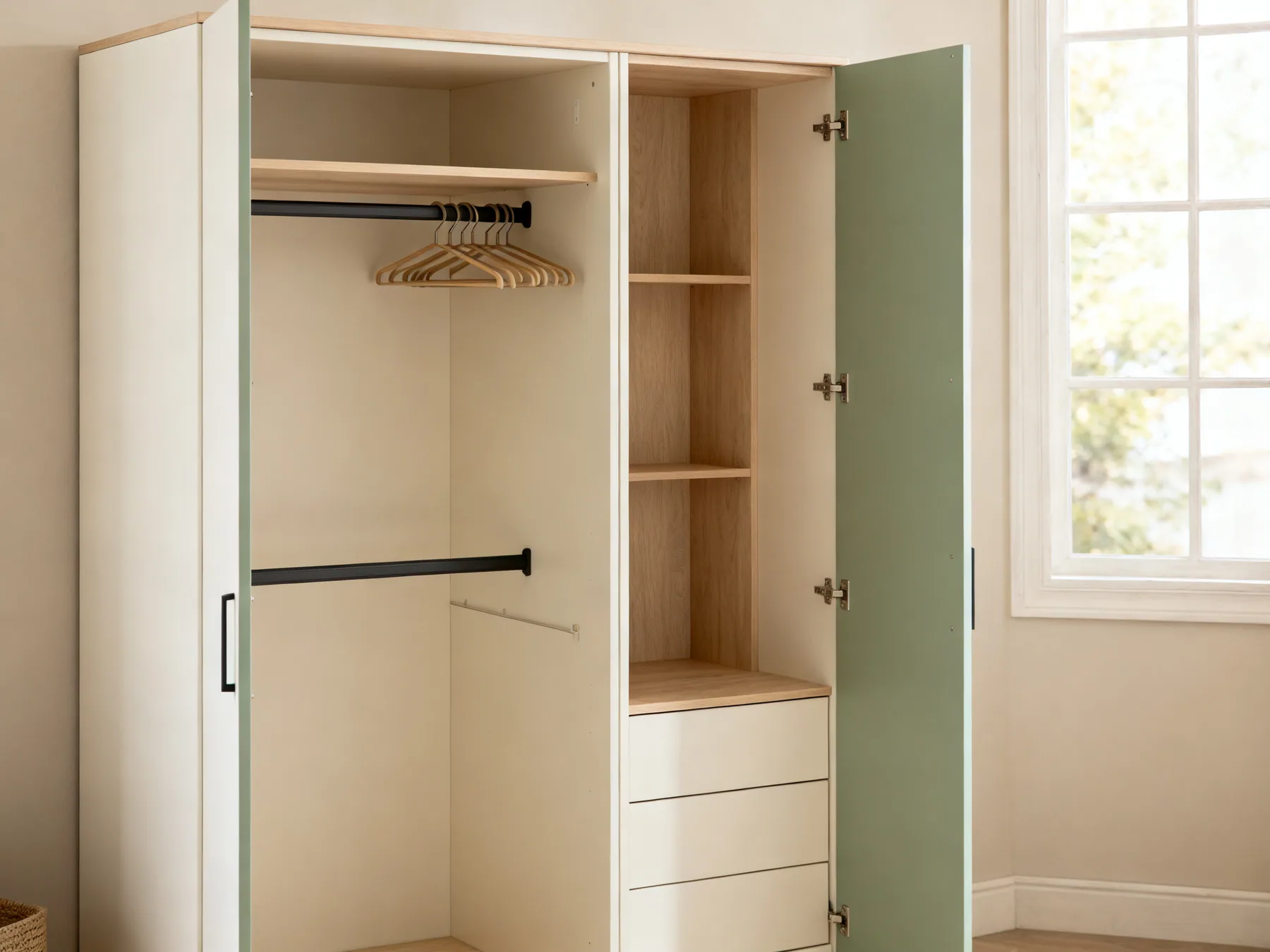
A wardrobe and a closet get treated as the same problem and they are not, in one way that matters. With a built-in closet you decide the dimensions: how deep, how wide, where the rails go. With a freestanding wardrobe, a manufacturer decided all of that, usually to fit a lorry and a price point, and you cannot change any of it.
So the whole job is internal. You are looking for volume inside a fixed box that is currently holding air, and there is almost always a lot of it, because factory wardrobes are fitted out to the cheapest specification that looks complete: one rail near the top, one shelf above it, and a large empty space underneath the hanging clothes.
That empty space is typically a third to a half of the interior. You have already paid for it. Claiming it is an afternoon of work and it is the best-value thing you can do to any wardrobe.
Measure before you buy a single thing
Open the wardrobe, hang your longest shirt on the rail, and measure from the bottom of its hem to the base. That figure is what you are working with, and on most wardrobes it is between 500mm and 900mm of completely unused height running the full width of the unit.
Then measure the internal width and the internal depth, because those two numbers decide what will physically fit. Internal, not external: a 900mm wardrobe might have 860mm inside it, and a hanging rail insert sized 880mm is useless. This is the most common ordering mistake in wardrobe fit-outs.
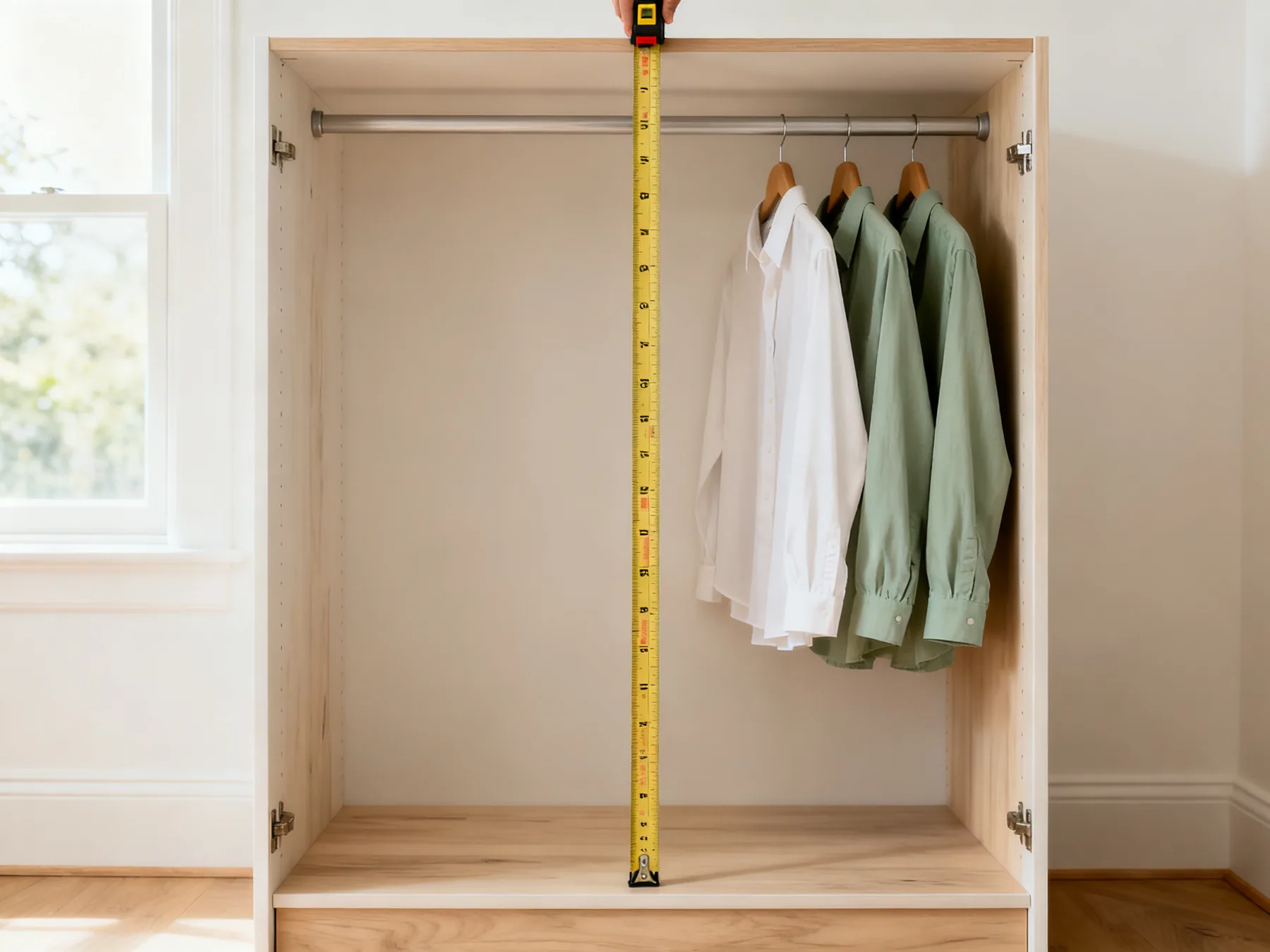
- Drop from the hanging hems to the base, which is the volume you are claiming.
- Internal width, measured at the narrowest point rather than the opening.
- Internal depth, front to back, ignoring the door thickness.
- Height from the rail to the top of the interior, for any shelf above it.
- Clearance between the closed door and the front of the shelves, for door-mounted storage.
- The gap between the top of the wardrobe and the ceiling.
- Write them all down before you shop, because you will need every one.
The second rail is the whole game
Almost everything most people hang needs about a metre of drop. Shirts, blouses, jackets, folded trousers, skirts. Only dresses, coats and full-length garments need the whole height, and most wardrobes contain very few of those.
So dividing the hanging space into two tiers roughly doubles what it holds, and it costs the price of a rail and two brackets. Keep one section undivided at full height for the long things, and split the rest.
If you would rather not drill into the carcass, a hanging rail extender clips onto the existing rail and gives you a second tier with no fixings at all. It is not as robust and it works.
Fit a second rail about a metre below the first
Measure your longest shirt on a hanger and add a little clearance. Screw a rail across at that height, or use a clip-on extender. This is the single biggest capacity change available in any wardrobe.
Roughly doubles hanging capacity
Keep one full-height section
Dresses, coats and anything long. Reserving a third of the width for these means the double-rail section can be sized tightly to shirts rather than compromised for everything.
Group by length within each tier
Hanging shortest to longest along a rail creates a usable block of floor beneath the short end, which is where a shoe rack or a drawer unit fits neatly.
Use slim flocked hangers
They take up considerably less rail width than chunky plastic or wooden ones and stop things sliding off. On a full rail, switching hangers alone can gain you a noticeable amount of space.
Do not overfill the rail
A rail packed solid creases everything on it and stops air moving, which matters in a room prone to damp. If you cannot slide a hanger along it, you need the second tier rather than more force.
The base, and why the floor is not storage
With the hanging space divided, there is often still a band at the bottom, and this is where wardrobes go wrong in a predictable way. Things get put on the wardrobe floor: shoes, bags, a broken hairdryer, a carrier bag of something. Then they get pushed towards the back by the hanging clothes, and the back of a wardrobe floor is the least visible place in a bedroom.
Anything on the floor of a wardrobe is functionally lost. Give the base a defined fit-out instead.
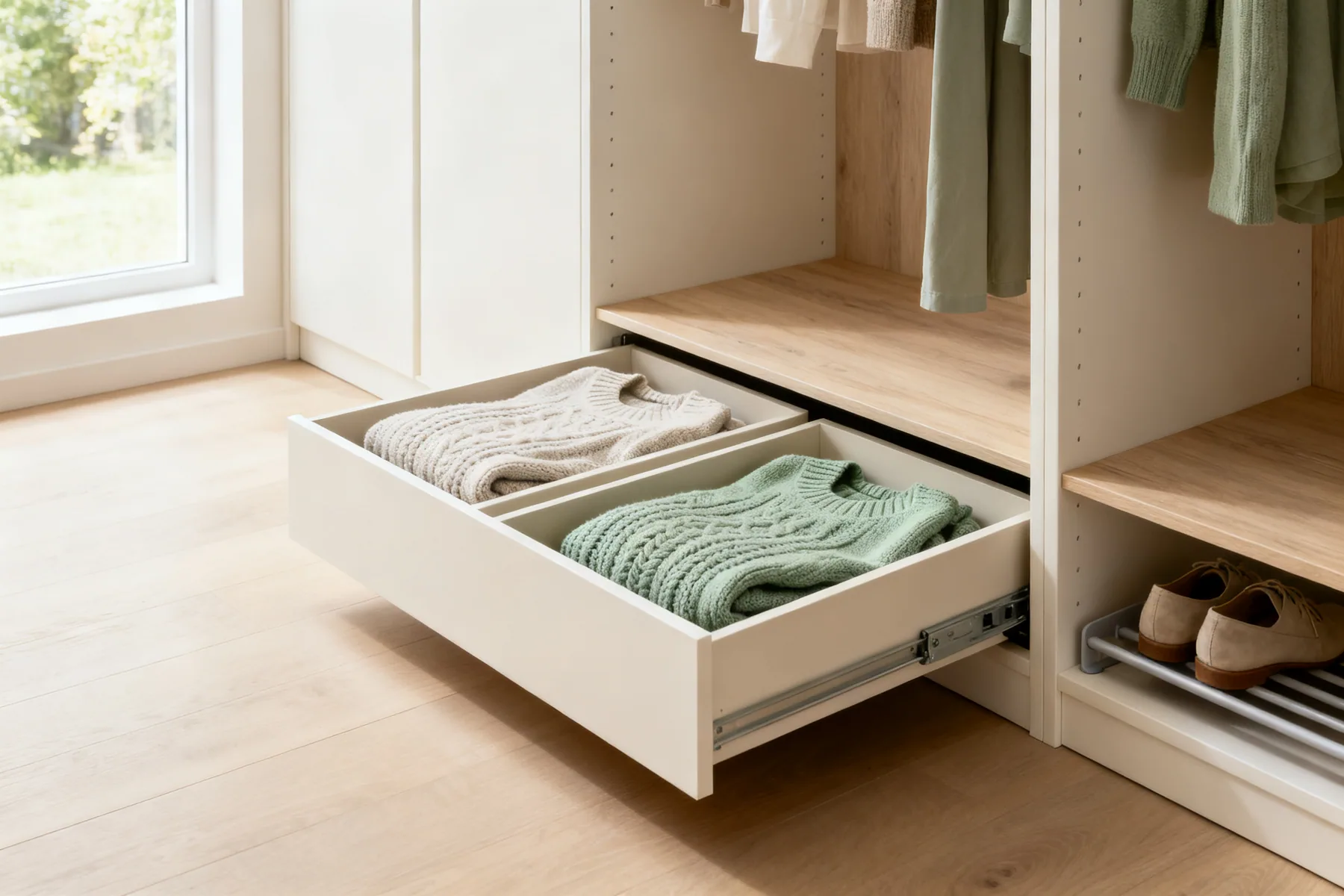
Add shallow pull-out drawers or baskets
Two or three shallow drawers in the base hold folded knitwear and t-shirts and show their contents when you pull them out. Far better than a shelf, which becomes a vertical stack you excavate.
Use a slim shoe rack, not a pile
A tilted or tiered rack keeps shoes visible and off each other. Shoes in a heap at the bottom of a wardrobe are how you end up owning shoes you have forgotten about.
Fit a single low drawer unit under the short-hanging section
This is where grouping garments by length pays off. The floor under the shirts is a clean rectangle, and a small chest of drawers slots straight into it.
Keep nothing loose at all
If it does not have a drawer, a basket or a rack, it does not go on the wardrobe floor. That single rule prevents most of the slow decay a wardrobe interior suffers.
Above, and inside the doors
Two more pockets of space, both usually empty and both easy.
The gap between the top of a freestanding wardrobe and the ceiling is dead space that collects a layer of dust and holds nothing. Boxing it in with a matching panel gives you a full-depth shelf, and it is exactly the right place for suitcases and off-season boxes because it is awkward to reach and you need them twice a year.
The inside of the doors is flat, vertical, and right where you are standing when the wardrobe is open. The constraint is depth, and it is tighter than people expect.
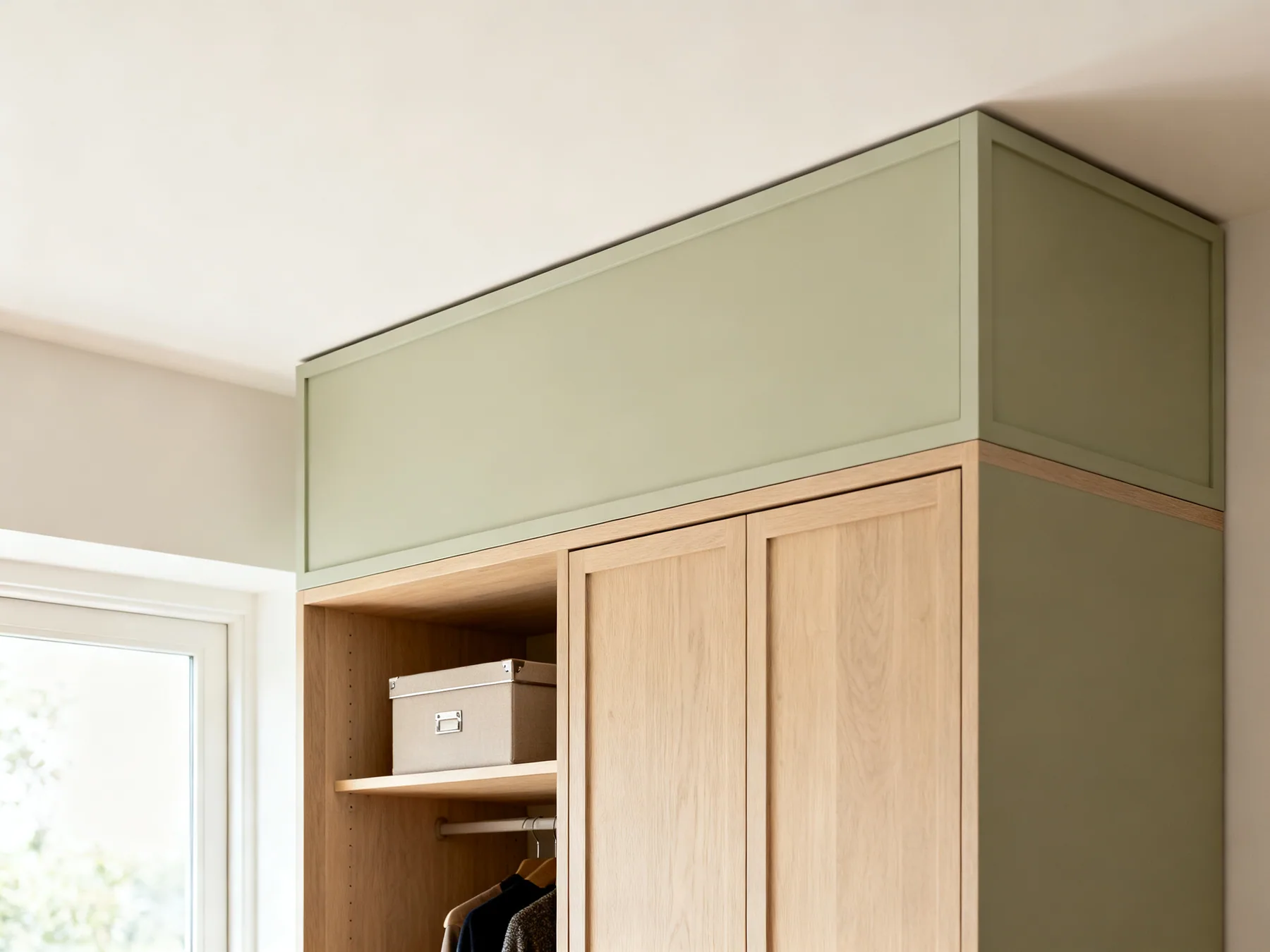
Box in the gap to the ceiling
A panel across the top, matched to the wardrobe finish, turns dead space into a shelf and stops the dust ledge. It also makes the wardrobe read as built-in rather than as furniture standing in front of a wall.
Hang belts, scarves and ties inside the doors
Slim hooks or a shallow rack. Keep the weight low on the door so it does not drop on its hinges, and check the rack clears the shelves when the door closes, which is usually a tighter margin than it looks.
Measure the door-to-shelf clearance
Put a mirror inside a door
Not storage, but it means you do not need a separate mirror standing on the floor of a small bedroom, and that is floor space recovered.
Use the shelf above the rail for soft things
The factory shelf above the rail is usually the full depth of the wardrobe and awkwardly high. Lidded boxes of bedding and off-season clothes suit it. Nothing heavy, since you are lifting it down above head height.
Doors, damp and buying a wardrobe
A few things that are decided when you buy rather than when you organise, and one that catches people out in an older house.
A hinged wardrobe door needs about 600mm of clear floor in front of it to open fully, which in a small bedroom can be the difference between a wardrobe fitting and not. Sliding doors need none at all, and the honest trade is that you can only ever see half the interior at once, which I find slows people down day to day.
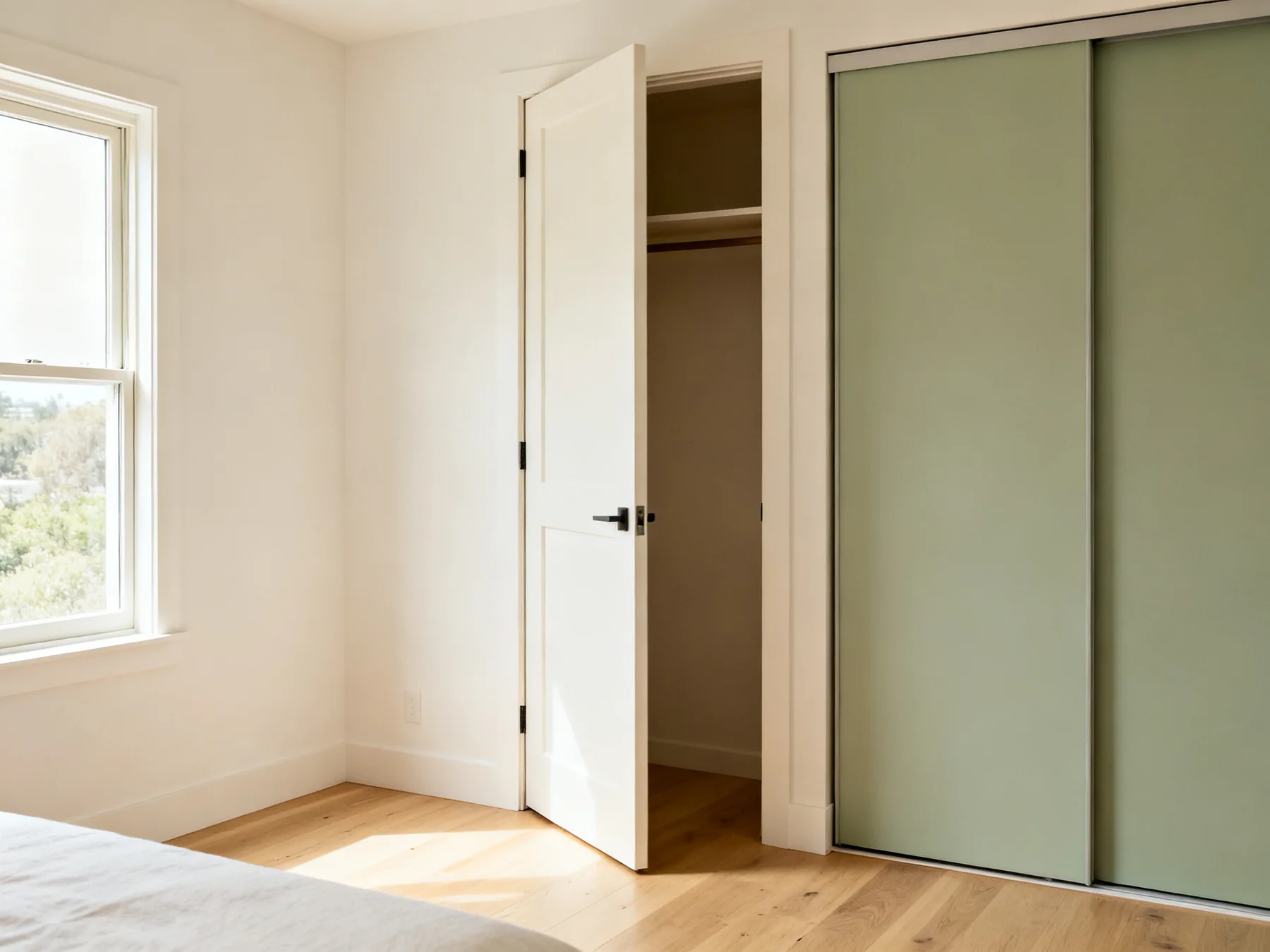
- Allow 600mm of clear floor in front of a hinged door, and check it does not clash with the bed.
- Choose sliding doors only where the floor space genuinely decides it.
- Pull a freestanding wardrobe 20 to 30mm off an external wall so air can move behind it.
- Never push a wardrobe tight against a cold external wall, which is where condensation forms.
- Anchor a tall wardrobe to the wall. Loaded and top-heavy, they tip.
- Check the carcass depth suits a hanger, which needs around 550 to 600mm to hang square.
- Buy adjustable internals where you can, since what you own changes over time.
- Leave about a fifth of the hanging space free, or laundry has nowhere to return to.
Wardrobe storage ideas for a box you cannot make bigger: frequently asked questions
How do I get more space in a wardrobe?
Add a second hanging rail about a metre below the first. Shirts, blouses, jackets and folded trousers only need around a metre of drop, so most wardrobes have a third to a half of their interior sitting empty beneath the hanging clothes. A rail and two brackets roughly doubles the hanging capacity, and a clip-on extender does it with no fixings at all.
What should I measure before buying wardrobe organisers?
Internal width at the narrowest point, internal depth front to back, the drop from your longest hanging hems to the base, and the clearance between the closed door and the front of the shelves. Internal rather than external is the one that catches people: a 900mm wardrobe might only have 860mm inside, which makes an 880mm insert useless.
Is it bad to store things on the floor of a wardrobe?
Yes, because they get pushed to the back by the hanging clothes and the back of a wardrobe floor is the least visible place in a bedroom. Anything down there is functionally lost. Fit shallow pull-out drawers, baskets or a tilted shoe rack instead, and adopt the rule that nothing loose goes on the base.
Should I choose sliding or hinged wardrobe doors?
Hinged unless floor space decides it. A hinged door needs about 600mm of clear floor to open fully, which in a small bedroom can determine whether a wardrobe fits at all. Sliding doors need none, but you can only ever see half the interior at once, which makes finding things slower day to day.
What can I do with the gap above my wardrobe?
Box it in with a panel matched to the wardrobe finish. It turns dead space into a full-depth shelf, removes the dust ledge that collects up there, and makes the wardrobe read as built-in rather than as furniture parked in front of a wall. It is the right place for suitcases and off-season boxes.
Why do my clothes smell musty in the wardrobe?
Usually poor airflow, and often a wardrobe pushed tight against a cold external wall where condensation forms behind it. Pull it 20 to 30mm off the wall, do not pack the rail so tight that air cannot move between garments, and never hang anything even slightly damp inside a closed wardrobe.