Closets, Halls & Garages
Small closet storage ideas, and the honest limit of them
A small closet can be organised into holding perhaps a third more. It cannot be organised into holding a full year of clothes.
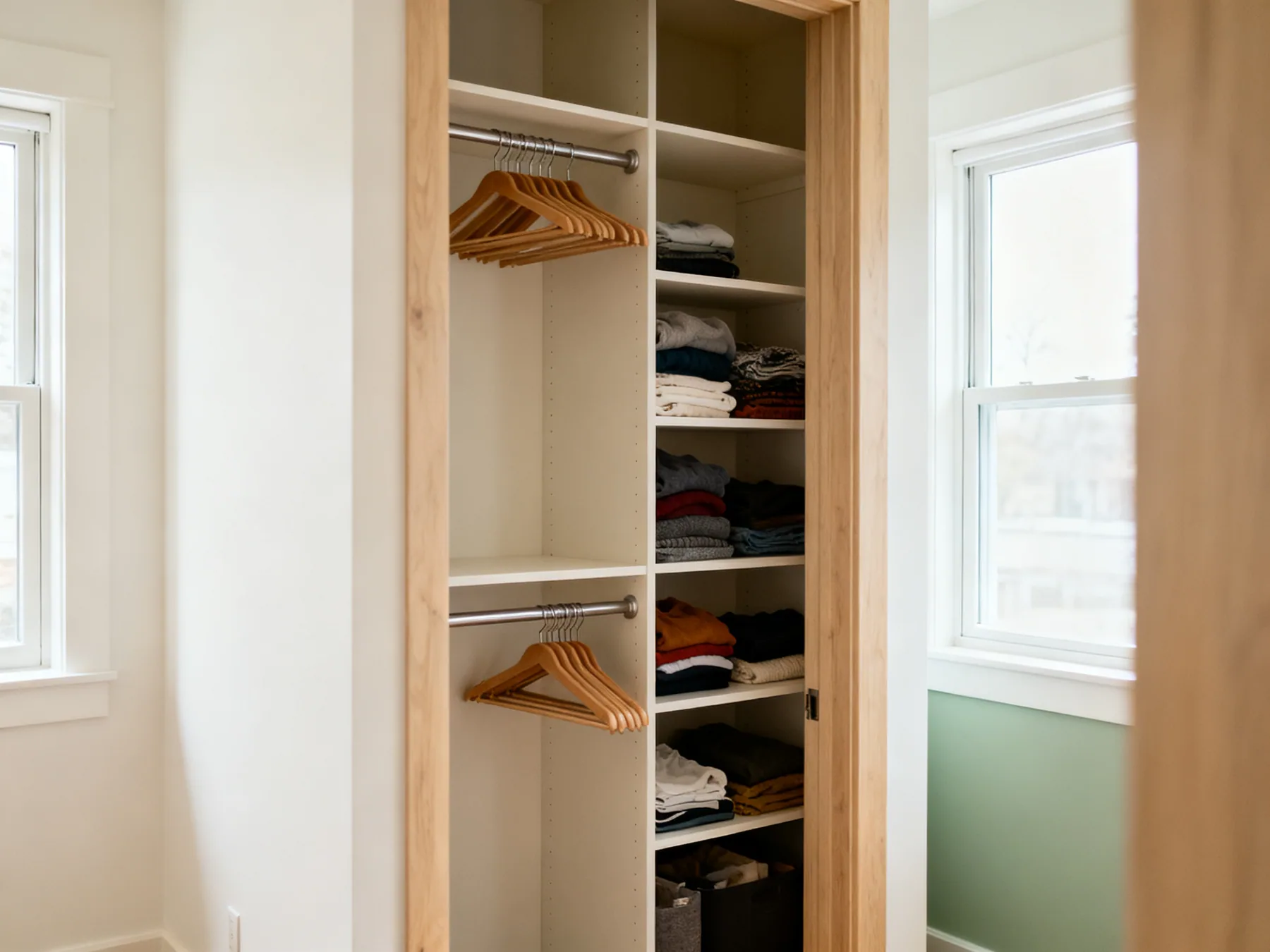
There is a lot you can do inside a small closet, and I want to be straight about the ceiling on it before we start. Dividing the height, changing the hangers and using the door will typically get you around a third more capacity, which is a genuine and worthwhile gain.
What none of it will do is make a small closet hold a full wardrobe of four seasons. If that is the situation, the fix is not another organiser, it is moving some of the clothes out of the room, and I would rather say that at the top than at the bottom.
So: the changes worth making, in the order I would make them, and then the honest part.
Divide the height first
Before anything else, hang your longest shirt and measure from its hem to the floor of the closet. On most small closets that is 500mm to 900mm of completely unused height, running the full width, and it is the same wasted band you find in almost every wardrobe.
Shirts, blouses, jackets, skirts and folded trousers all need only about a metre of drop. So splitting most of the hanging space into two tiers roughly doubles it, for the price of a rail and two brackets or a clip-on extender if you would rather not drill.
Add a second rail about a metre down
Measure your longest short garment on its hanger and allow a little clearance. Keep one section undivided at full height for dresses and coats, and split the rest.
The single biggest gain available
Use a clip-on extender if you cannot fix
It hangs from the existing rail and gives you a second tier with no fixings at all. Less robust than a fitted rail and perfectly serviceable, which matters in a rental.
Group garments by length
Hanging shortest to longest creates a clean rectangle of floor under the short end, and that is exactly where a shoe rack or a small drawer unit fits.
Add a shelf above the rail if there is height
The band between the top rail and the ceiling is usually full closet depth and awkwardly high, which suits lidded boxes of off-season things perfectly.
Change the hangers
This is the cheapest change on the page and the one people are most surprised by. Chunky plastic and wooden hangers are 15 to 20mm thick at the shoulder. Slim velvet-flocked ones are around 5mm.
Across a full rail that difference adds up to roughly a third more garments in exactly the same width, with no fixings and no work beyond a swap. The flocking also stops silk and fine jersey sliding off onto the closet floor, which is where those garments get creased and dusty.

Switch the whole rail to slim flocked hangers
Do the lot rather than mixing, because a mixed rail sits at the thickness of the fattest hanger. Buying a job lot is cheap and it is the fastest capacity gain here.
Keep broad shaped hangers for jackets and coats
The one exception. Tailoring needs a hanger roughly as wide as the shoulder or the sleeve head collapses, so those stay chunky and it is worth the rail width.
Throw the wire hangers away
They dent shoulders, rust in a humid room and bend under weight so garments hang crooked. There is no garment they are the right choice for.
Do not pack the rail solid
If you cannot slide a hanger along it, everything on it is creasing and no air is moving through. That is the point at which you need the second tier, not more force.
Use the door and the shelves properly
Two more pockets of capacity. The inside face of the door is a flat vertical surface holding nothing whenever the closet is shut, and it is right where you stand when it is open.
And shelves inside a small closet fail in a specific way: folded stacks lean into each other until two stacks become one heap, and then the whole shelf is unusable.
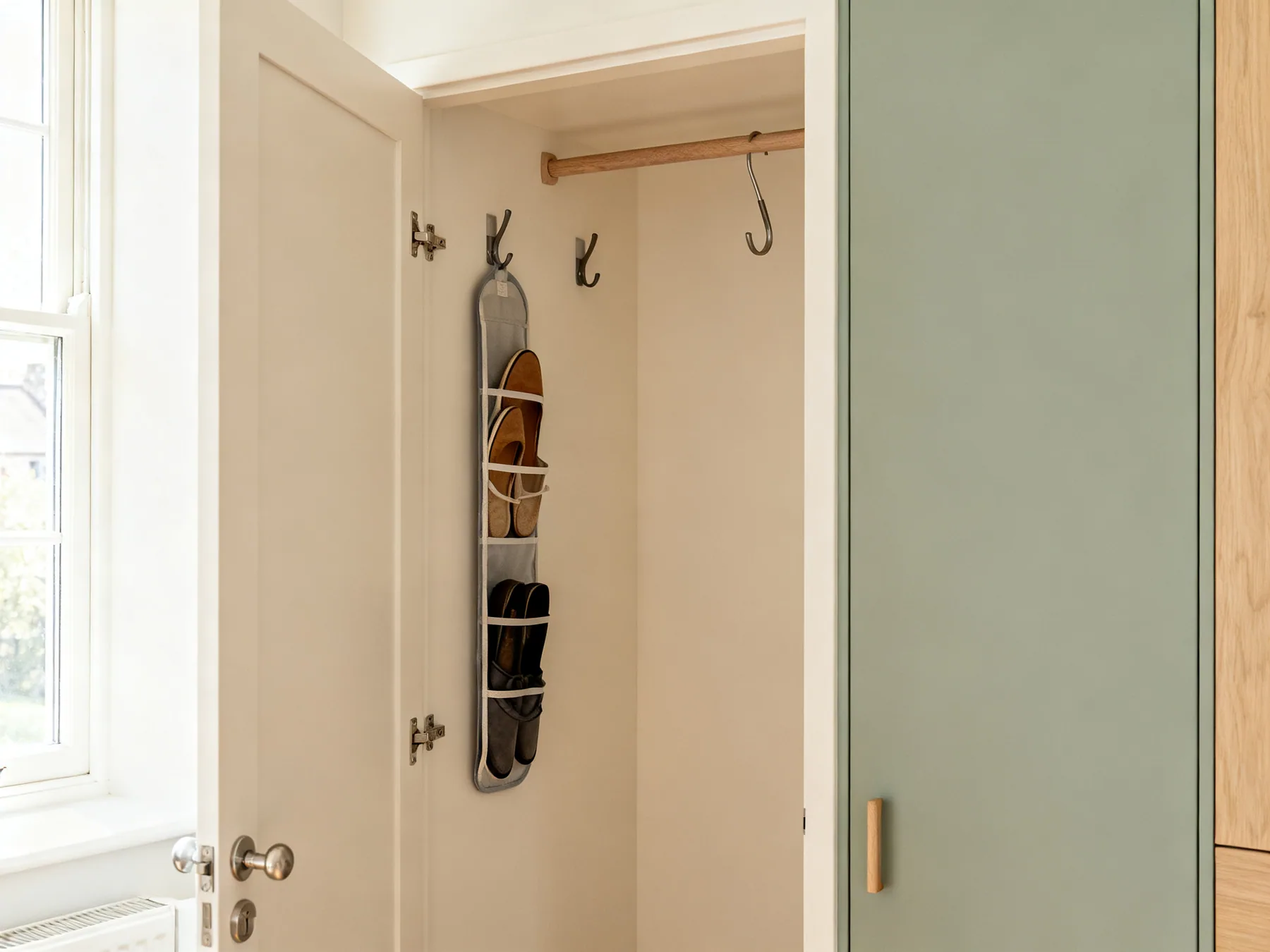
Fit a slim organiser inside the door
A shoe organiser, a shallow rack or a row of hooks. Shoes, belts, scarves, bags, small accessories. Measure the gap between the closed door and the shelf fronts first, because that is the deciding dimension.
Check the door-to-shelf clearance
Put dividers between folded stacks
Clear acrylic dividers hold each stack upright and separate. Without them a small closet shelf becomes one collapsed pile within a fortnight.
File folded items on edge where the shelf is deep
Standing folded knitwear on edge like files means you see everything and can take one item without disturbing the rest. Same space, entirely different usability.
Nothing loose on the closet floor
It gets pushed to the back by the hanging clothes and the back of a closet floor is the least visible place in a bedroom. A shoe rack or a drawer, or nothing.
The honest part
Now the thing that actually decides whether a small closet works. Roughly half of what most people own is unwearable for roughly half the year, and if all of it lives in the closet then the closet is permanently holding double what it needs to.
Rotating seasons is free, entirely reversible, discards nothing, and it is the single most effective change available. It is also the one almost nobody does, because it takes an afternoon twice a year and buying an organiser takes ten minutes.
If you have done the rail, the hangers, the door and the dividers and it is still full, this is the answer. There is not a cleverer one.
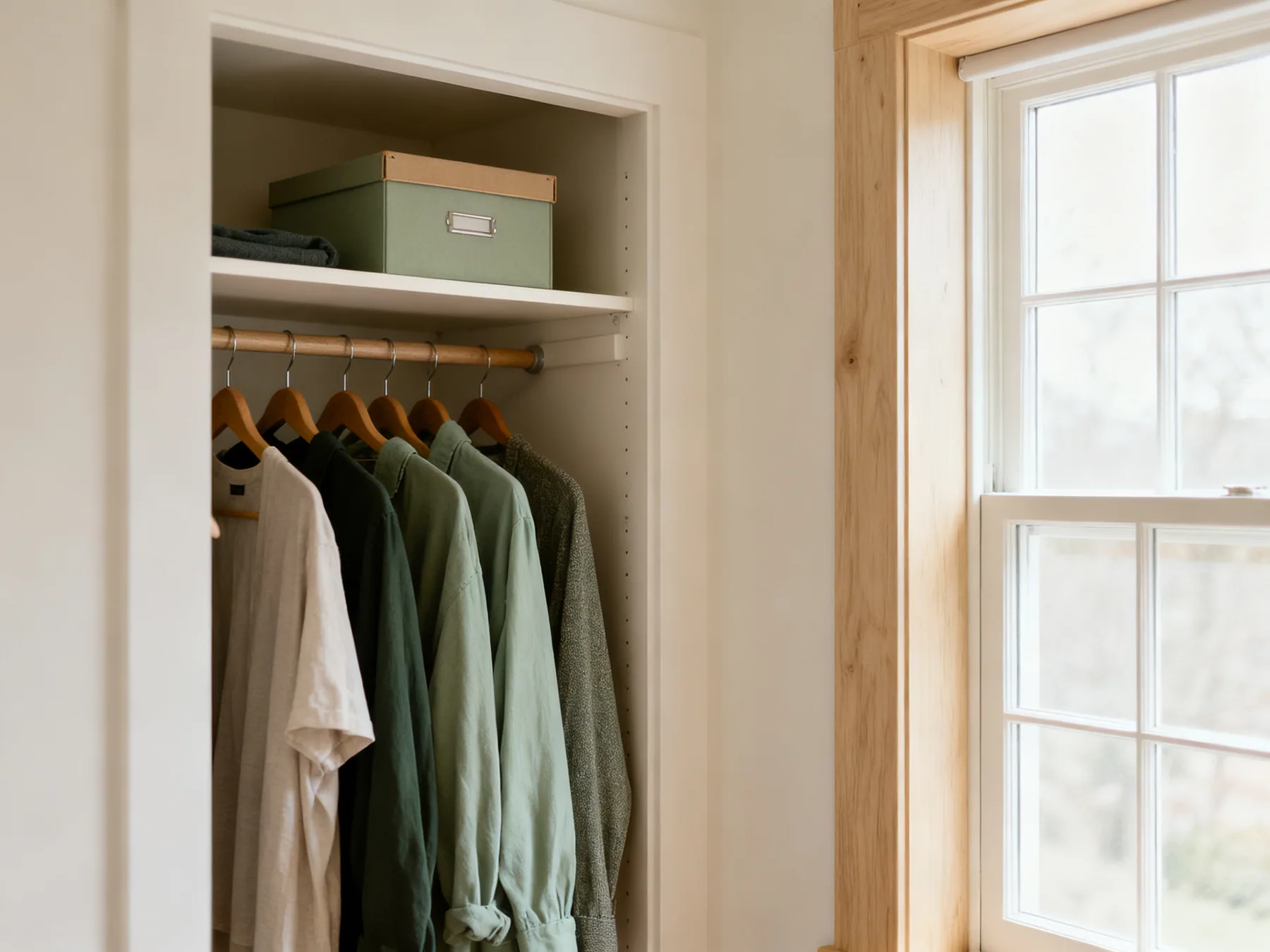
- Twice a year, move the unwearable half out of the closet entirely.
- Store it in lidded boxes under the bed, on a high shelf, or outside the room.
- Wash everything before it goes away, since moths go for the skin oils in worn fibre.
- Use breathable cotton bags or lidded boxes rather than sealed plastic for wool.
- Add cedar to anything woollen and refresh it annually.
- Keep about a fifth of the rail free, or clean laundry has nowhere to return to.
- Be honest about anything unworn for a full year, especially if it is bulky.
- Do the rotation when a season turns rather than when the closet overflows.
If the closet is very small indeed
Some closets are too small to work however well they are fitted out, and at that point the answer is to stop treating the closet as the whole clothing system.
- Add a slim freestanding rail elsewhere in the room for current-season hanging.
- Use a tall narrow chest rather than a wide low one: roughly the same capacity in half the floor.
- Put the bulky knitwear under the bed and keep the closet for hanging only.
- Use the 300mm band above the bedroom door for a shelf of boxed off-season things.
- Hooks on the back of the bedroom door for the daily items that land on a chair.
- Consider whether a second rail in a hallway or spare closet can take coats.
- Accept a smaller working wardrobe. A rail you can see is worth more than one you cannot.
Small closet storage ideas, and the honest limit of them: frequently asked questions
How do I get more space in a small closet?
Add a second hanging rail about a metre below the first, since shirts, blouses, jackets and folded trousers only need that much drop and most small closets have 500mm to 900mm of unused height beneath the hanging clothes. Then switch the whole rail to slim flocked hangers, which adds roughly a third more garments in the same width.
Do slim hangers really make a difference?
Yes, and it is the cheapest change available. Chunky plastic and wooden hangers are 15 to 20mm thick at the shoulder against about 5mm for slim flocked ones, so across a full rail that is roughly a third more garments in the same space. Swap the whole rail, because a mixed rail sits at the thickness of the fattest hanger.
What can I put on the inside of a closet door?
A slim shoe organiser, a shallow rack or a row of hooks, holding shoes, belts, scarves, bags and small accessories. It is a flat vertical surface holding nothing whenever the door is shut. Measure the gap between the closed door and the front of the shelves first, because that clearance is the deciding dimension.
Why do the folded stacks in my closet keep collapsing?
Because nothing is holding them apart. Folded stacks lean into each other until two become one heap and the shelf stops being usable. Clear acrylic shelf dividers fix it, and on a deep shelf, filing items on edge like books instead of stacking them means you can see everything and take one item without disturbing the rest.
What is the real fix for a small closet?
Seasonal rotation. Roughly half of what you own is unwearable for half the year, so if it all lives in the closet then the closet is permanently holding double what it needs to. Moving the off-season half into boxes under the bed or on a high shelf is free, reversible and discards nothing, and it is more effective than any organiser.
What if the closet is too small even when perfectly organised?
Stop treating it as the whole clothing system. Add a slim freestanding rail elsewhere in the room for current-season hanging, put bulky knitwear under the bed, use a tall narrow chest rather than a wide low one, and take the 300mm band above the bedroom door for a shelf of boxed off-season things.