Closets, Halls & Garages
Cupboard storage ideas that stop it becoming the everything cupboard
Every house has one cupboard that absorbs anything homeless. Zoning it is what turns it from a hiding place into storage.
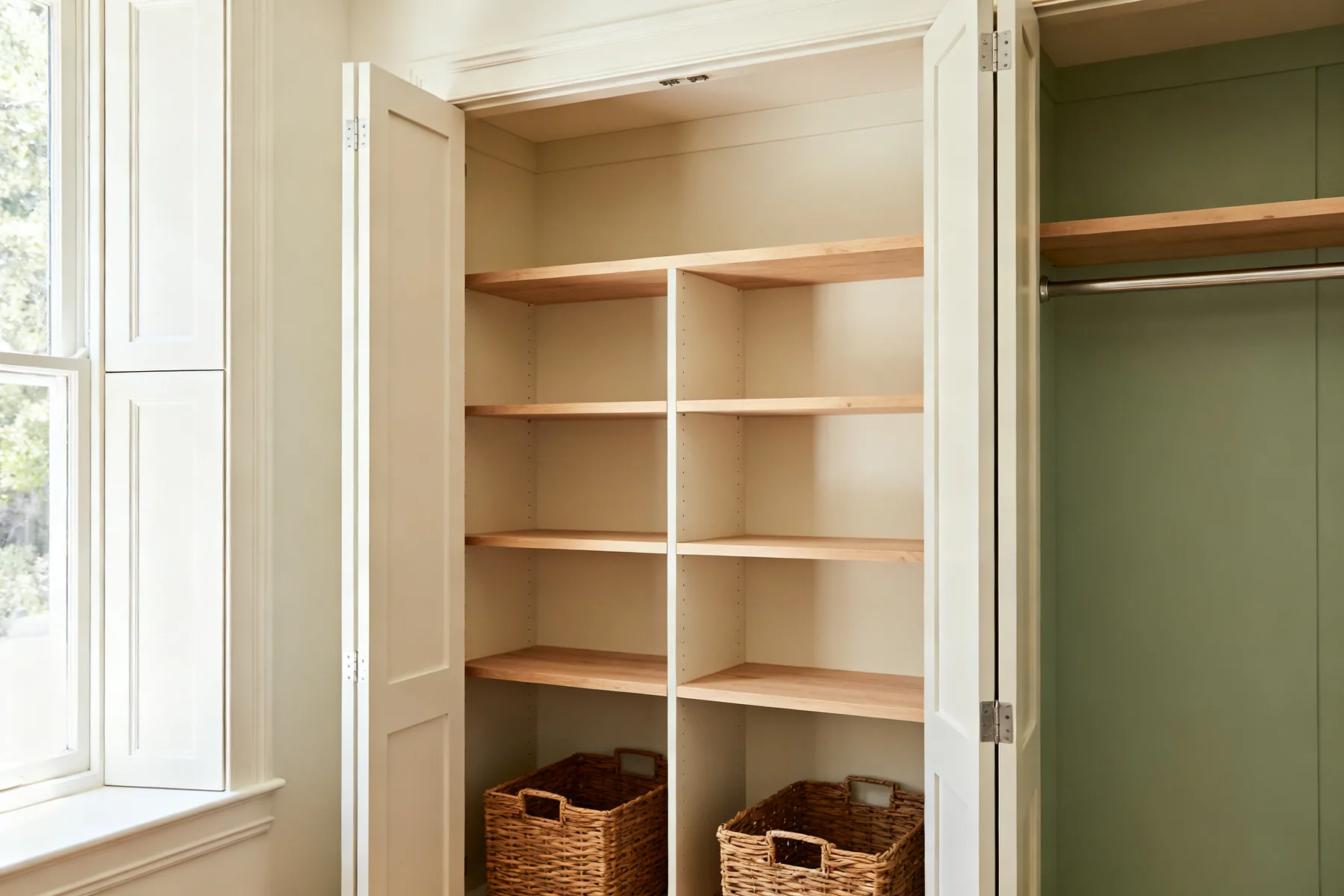
The general-purpose cupboard is the most useful and worst-organised space in most houses. It is where the vacuum lives, and the spare bedding, and the cleaning things, and the tools, and a carrier bag of light bulbs, and something nobody can identify. It absorbs whatever has no home, which makes it valuable and means nothing in it can be found.
Two things fix it, and neither involves buying much. The first is shelf spacing: an empty cupboard usually comes with shelves set evenly, and evenly is wrong for almost everything, because it leaves a band of air above every row. The second is zoning, because a cupboard with no defined areas will always drift back to a heap.
Get those right and one cupboard can genuinely replace two.
Space the shelves to the contents
Start by taking everything out and measuring the tallest thing in each category. A cupboard fitted with shelves at 400mm intervals holding tins that are 110mm tall is wasting roughly two thirds of every shelf, and that is the normal state of most cupboards because factory spacing is a compromise for anything.
Set each shelf to the group that will live on it, with maybe 30mm of clearance for getting things in and out. You will usually find you can fit an extra shelf, sometimes two, into the same carcass.
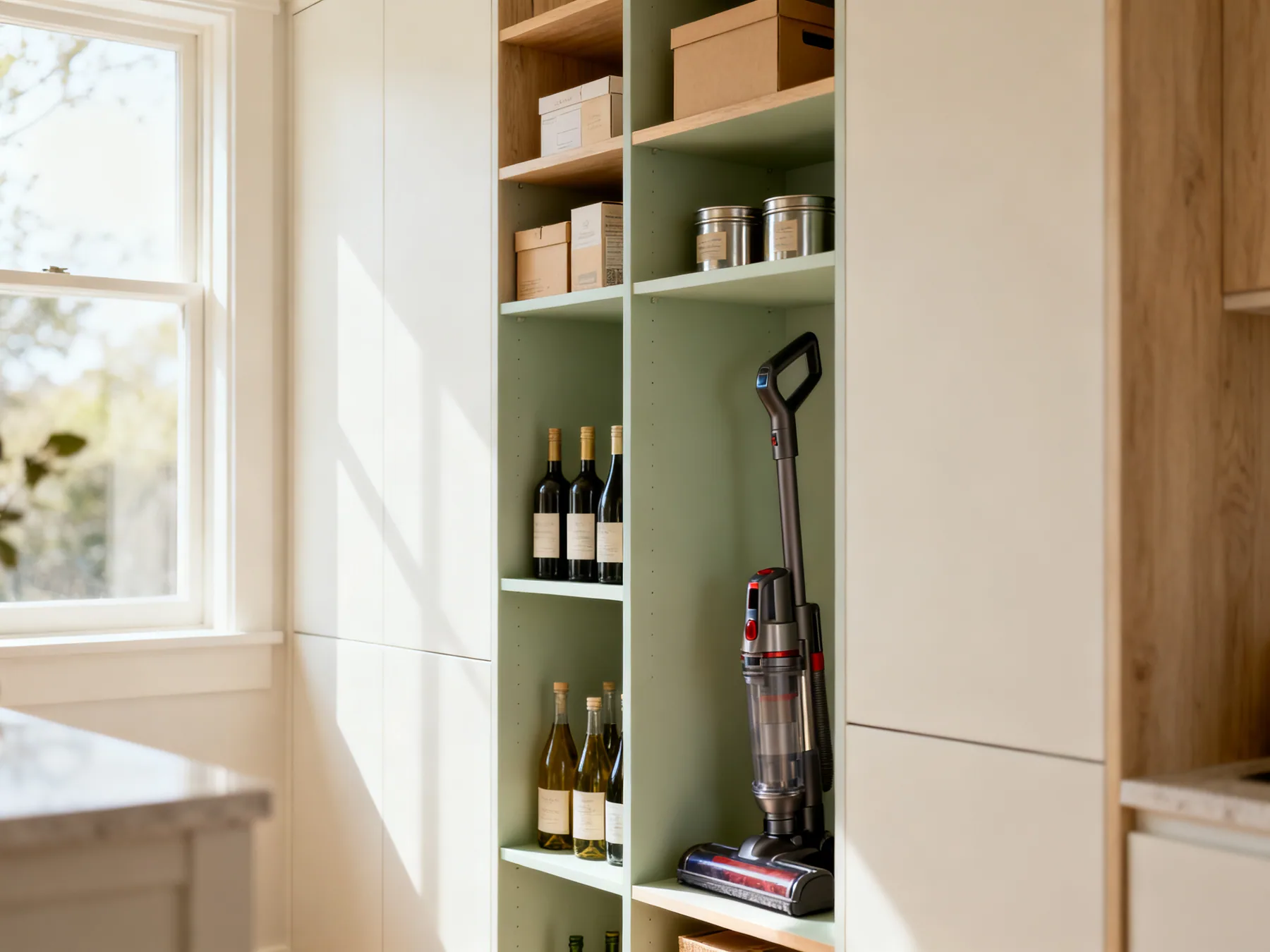
Group first, then set the heights
Decide what goes where before you move a single shelf pin. Setting shelves and then finding a home for things is how you end up with a tall gap holding tins again.
Add shelves rather than deepen the gaps
Most carcasses have more pin holes than shelves supplied. An extra shelf cut from shelving board is cheap, and it is a bigger gain than any organiser you could buy.
Keep one tall gap deliberately
You need somewhere for the bulky awkward items, so plan a generous gap rather than discovering you have nowhere for the toolbox.
Heaviest at the bottom, always
Both for stability and because lifting a heavy box down from above shoulder height is how people hurt their backs. It costs nothing to plan that way.
Deep shelves need something that moves
Depth is the other thing that quietly wastes a cupboard. Past about 400mm, whatever is at the back is out of sight and awkward to reach, so in practice it becomes a place things go rather than a place things come from.
The fix is not to stop using the depth, it is to make the depth come out to you. A basket, a wire pull-out or even a stiff tray you can hook forward turns an unusable back half into real storage.
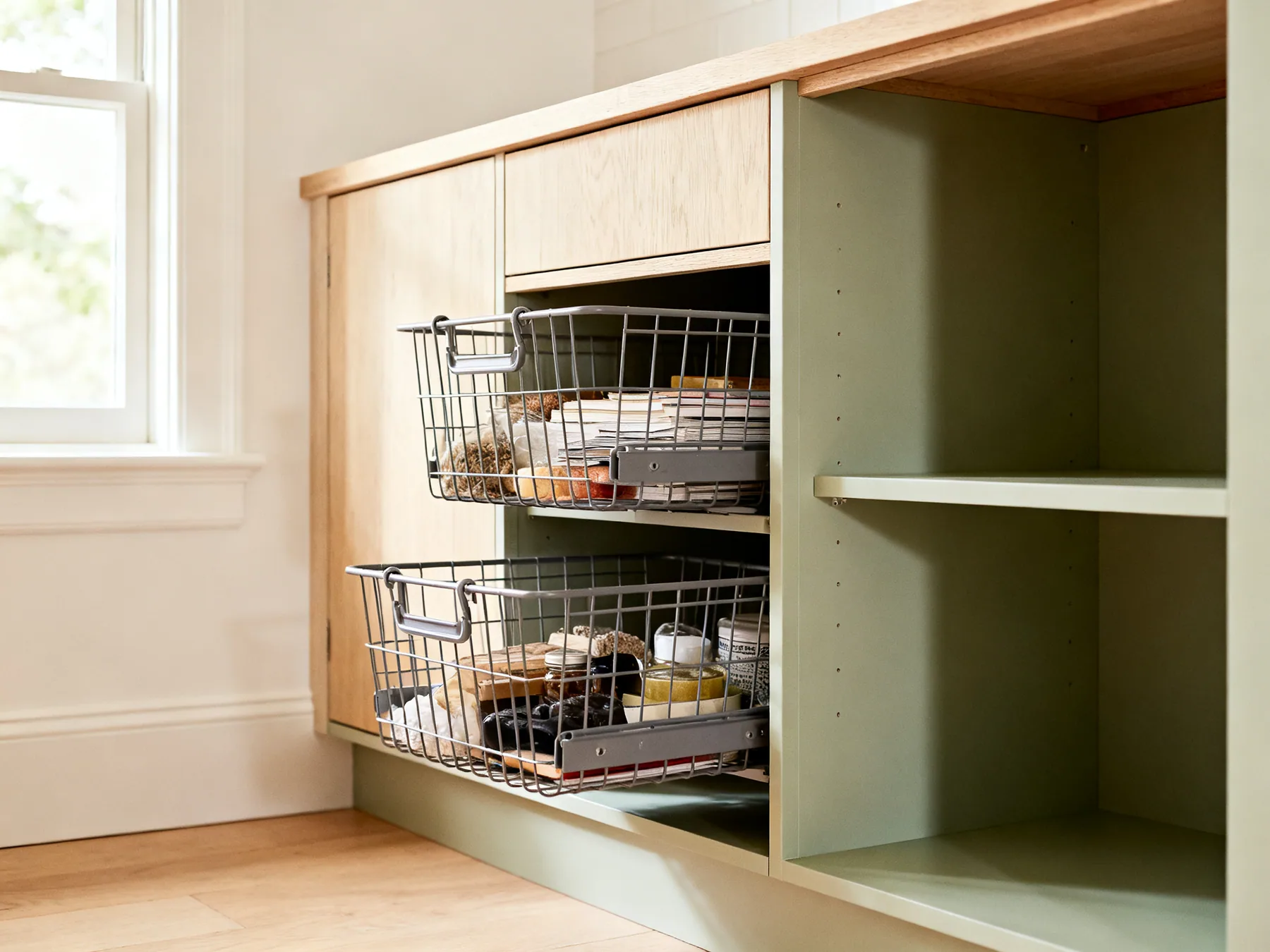
Put baskets on the deep shelves
Pull the whole basket out, take what you need, push it back. Cheap, needs no fixings, and it stops the back of the shelf becoming an archaeological layer.
Fit wire pull-outs where it is worth the money
On the shelves you use daily, a runner-mounted pull-out is a genuine improvement. On the ones you open twice a year, a basket is enough.
Store one large thing in a deep gap
Where nothing pulls out, put a single item you take out whole rather than several small ones. A stack of bowls, a boxed appliance, a bag of something.
Never two rows deep on a daily shelf
Anything you reach for regularly should be one row deep. Two rows guarantees you knock the front row over reaching past it.
The vacuum, and the full-height slot
Tall awkward objects defeat shelving completely, and they are usually the reason a cupboard is a mess: shelves get left off, or removed later, or the vacuum ends up in the hall because it will not fit anywhere.
So plan one undivided column, floor to top, before you set any shelves. It costs you a strip of shelf width and it solves the single most common cupboard failure.
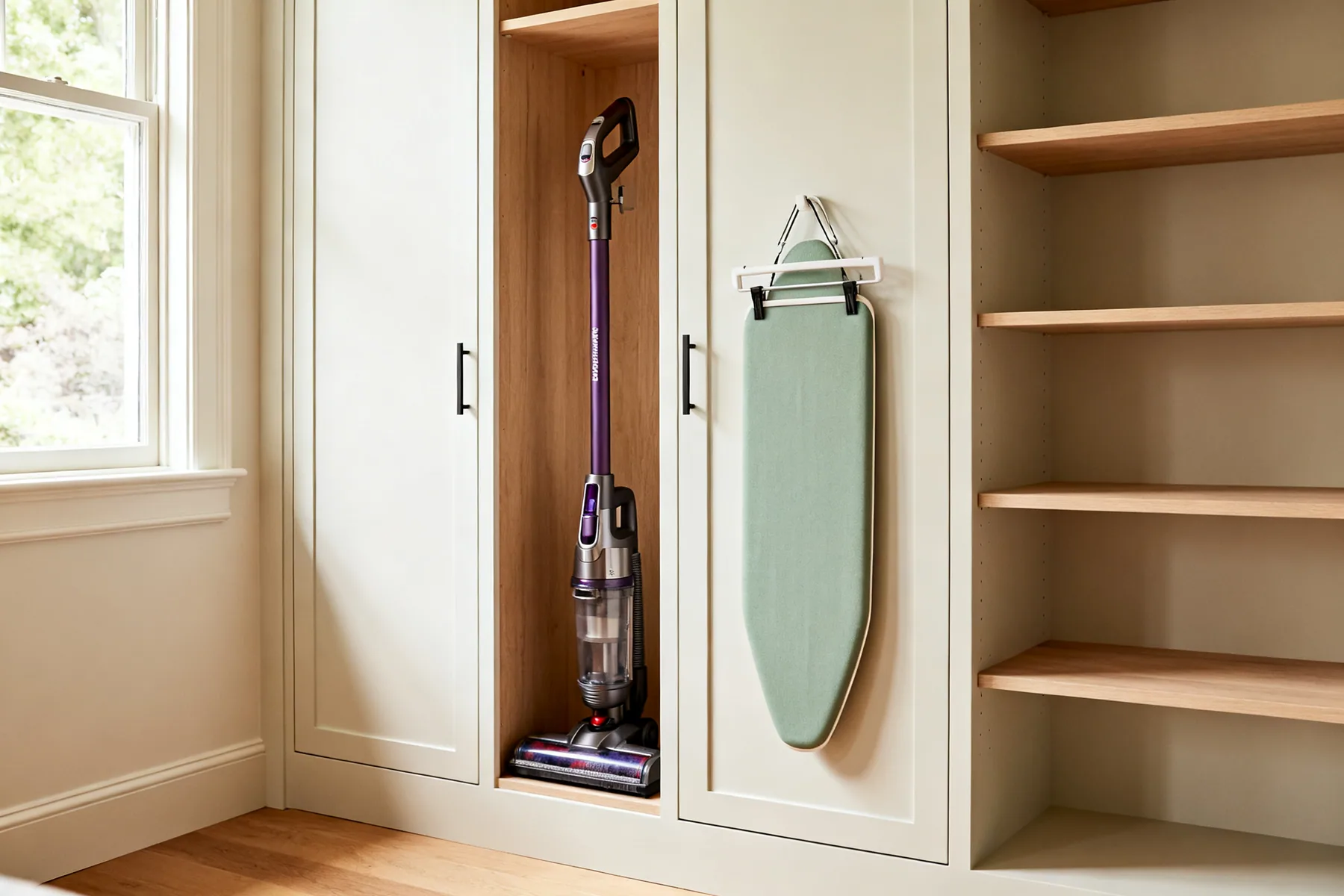
Leave one column with no shelves at all
Vacuum, mop, broom, ironing board. Measure the tallest and widest of those before deciding how wide the column needs to be.
Plan this before setting shelf heights
Clip the ironing board to the door
A purpose-made bracket or two strong hooks on the inside of the door holds it flat and out of the way. Keep the weight low on the door so the hinges do not drop.
Hang the mop and broom rather than standing them
Standing them means the heads deform and they fall over every time you open the door. Two spring grips on the side wall or the door hold them upright.
Keep a cable tidy on the vacuum
A hook-and-loop strap round the cable is what makes the difference between putting the vacuum away and shoving it in.
Zone it, or it drifts back
This is the part that determines whether the cupboard still works in three months. A cupboard is the default destination for anything homeless in the house, so unless every shelf has a declared purpose, it will absorb whatever arrives and revert to a heap.
The test I use is whether somebody else in the house could put something away correctly without asking. Labelled shelf edges pass that test. A tidy cupboard with no labels does not, because the tidiness is in your head rather than in the cupboard.
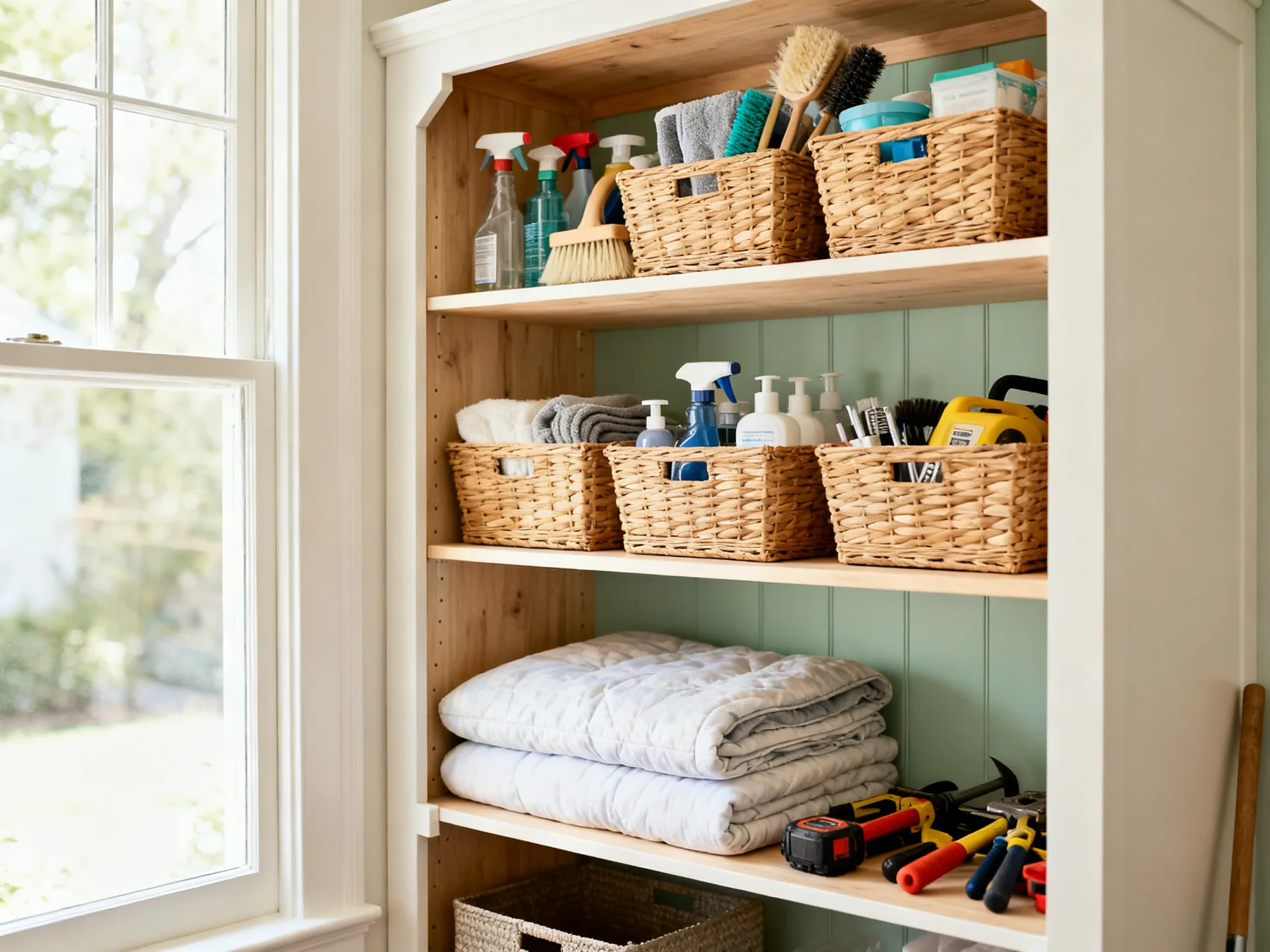
- Give every shelf a declared purpose: cleaning, bedding, tools, paperwork, spares.
- Label the shelf edge, not just the containers, so things go back to the right place.
- Use one container style throughout so the cupboard reads as a single system.
- Put the daily zone between hip and shoulder height, and the yearly zone at the top.
- Keep one basket for genuine oddments, so the homeless things have a declared home too.
- Leave about a fifth of the space free, or the next thing that arrives goes on top of something.
- Review it twice a year. A cupboard is the first place hoarding shows up.
Damp, meters and the safety points
A few things that depend on where the cupboard is, because a cupboard on an external wall, under stairs or backing onto a bathroom has constraints a landing cupboard does not.
- Leave the electricity meter, consumer unit and any stopcock completely clear and reachable.
- Do not block a boiler, a gas meter or any service that needs access or ventilation.
- Keep contents 20 to 30mm off an external wall so air can move behind them.
- Never store anything absorbent against a wall that has previously been damp.
- Keep cleaning chemicals above child height or behind a catch, and never decanted into unlabelled bottles.
- Do not store aerosols or solvents in a cupboard containing a boiler or any heat source.
- Fit a battery light inside if it is dark, because dark storage is storage you forget.
- Check the shelf fixings if you have added shelves, since a loaded shelf pulling out takes the wall with it.
Cupboard storage ideas that stop it becoming the everything cupboard: frequently asked questions
How do I organise a general-purpose cupboard?
Space the shelves to what actually goes on them rather than evenly, then give every shelf a declared purpose and label the shelf edge. The test is whether someone else could put something away correctly without asking. A cupboard with no zones absorbs whatever is homeless in the house and reverts to a heap within a month.
How far apart should cupboard shelves be?
Measure the tallest item in each group and add about 30mm of clearance. Factory spacing is usually a compromise of around 400mm throughout, which wastes roughly two thirds of a shelf holding tins. Setting each shelf to its contents usually frees enough room to add an extra shelf, sometimes two, in the same carcass.
What can I do with a very deep cupboard?
Make the depth come out to you. Past about 400mm the back of a fixed shelf is out of sight and awkward, so it becomes a place things go rather than come from. Baskets are the cheap answer, runner-mounted pull-outs are worth it on shelves you use daily, and a single large item works where nothing slides.
Where should I keep the vacuum cleaner?
In an undivided full-height column, planned before you set any shelf heights. Tall awkward objects defeat shelving, and a vacuum with nowhere to go is the most common reason a cupboard ends up disorganised or the vacuum ends up in the hall. Measure the tallest of your vacuum, mop, broom and ironing board first.
Is it safe to store things in a cupboard with the fuse box?
Only if you leave the consumer unit, meter and any stopcock completely clear and reachable. You will need that access in a hurry one day, and blocking it can breach the terms of your home insurance. Do not store aerosols or solvents in a cupboard containing a boiler or other heat source either.
Why does my cupboard get untidy again so quickly?
Because it is the default destination for anything homeless in the house, so without declared zones it absorbs whatever arrives. Label the shelf edges, use one container style so it reads as a single system, and keep one basket specifically for oddments so the genuinely homeless things have a declared home rather than landing on top of something else.