Closets, Halls & Garages
Basement storage ideas that do not end in a damp box
A basement is a humidity problem before it is a storage problem. Solve it in that order or you are just choosing what to ruin.
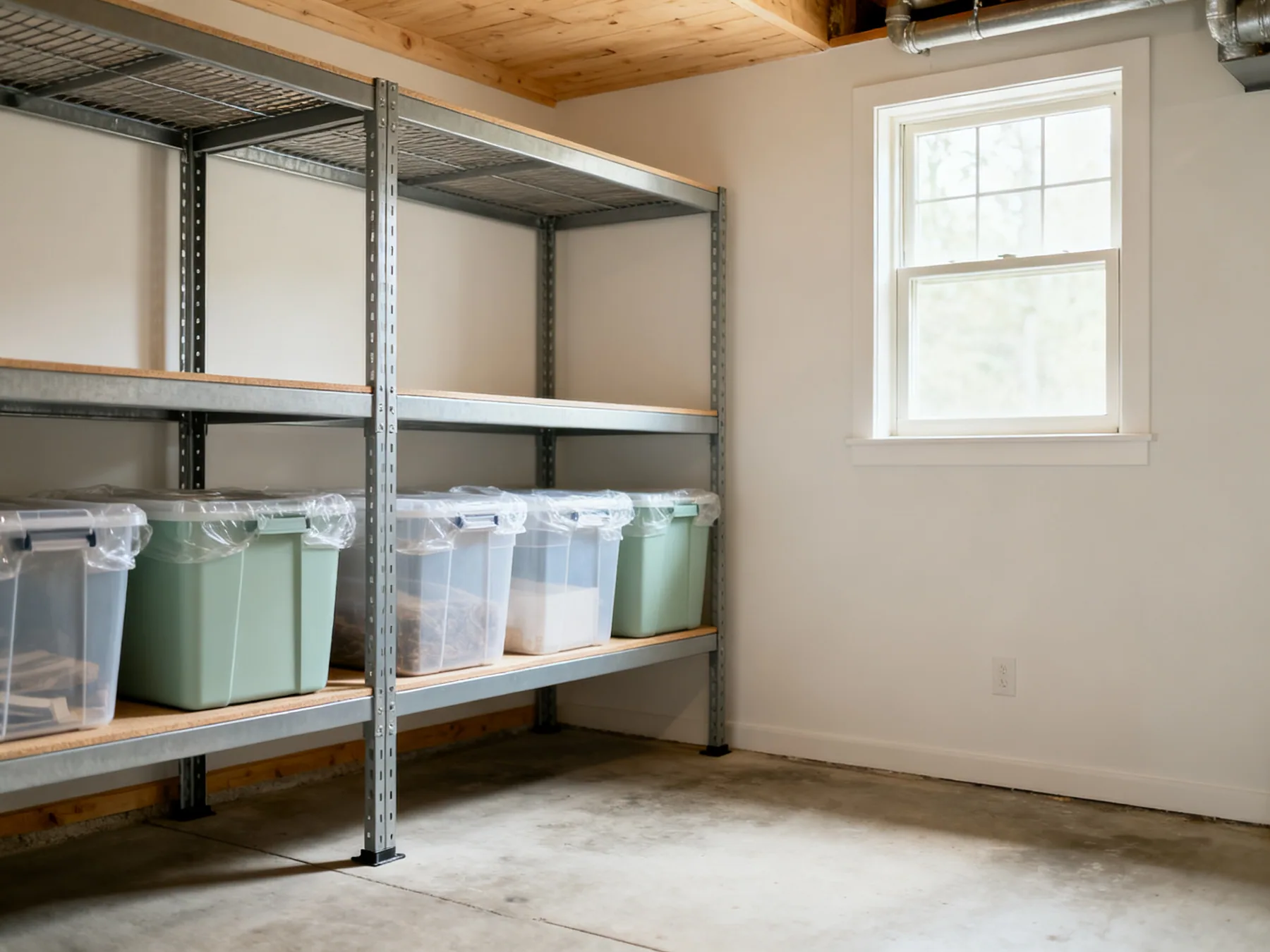
A basement is the most tempting storage space in a house, because it is large and it is out of the way. It is also below ground on at least two sides, which means the concrete around it is in contact with damp earth, and concrete moves moisture through itself steadily whether it looks wet or not.
That single fact drives everything. The floor slab wicks moisture upward, the walls wick it inward, and the air in a cool basement holds relative humidity high because cool air reaches saturation sooner. So a cardboard box sitting on a basement floor against a basement wall is in contact with two moisture sources and surrounded by damp air.
None of which means a basement is a bad place to store things. It means the strategy is air gaps, sealed containers, and being honest about a short list of things that should stay upstairs.
Get everything off the floor and off the walls
This is the first thing I do and it costs nothing but effort. Freestanding shelving, pulled 50mm or so clear of the wall, with nothing stored directly on the slab. Even the lowest shelf should sit above floor level rather than on it.
Two reasons, and they are separate. The gap at the wall lets air circulate behind the shelving, so moisture coming through the wall does not condense against the back of your boxes. And keeping things off the slab handles both the moisture wicking up through the concrete and the much more immediate problem of a minor flood, a burst pipe or a blocked drain, which in a basement is not a remote possibility.
A hundred millimetres off the floor is the difference between an inconvenience and losing everything on the bottom shelf.
Use steel or plastic shelving, not timber or MDF
Timber absorbs moisture and MDF swells and delaminates permanently. Powder-coated steel or heavy plastic shelving is the right material for a basement and it costs about the same.
MDF does not survive a damp basement
Leave a gap behind the shelving
Around 50mm off the wall. It looks like wasted space and it is what stops condensation forming against the backs of your containers on the coldest wall in the house.
Keep the lowest shelf raised
At least 100mm off the slab, and more if the basement has ever taken water. This is cheap flood insurance and it also lets you see and sweep the floor, which matters for spotting a problem early.
Anchor tall shelving to the wall
A loaded shelving unit is heavy, and basement floors are often slightly uneven. Anchor the top to the wall with a bracket, especially if anyone is going to be pulling bins off the upper shelves.
Leave a clear aisle you can carry a box down
A basement crammed to the walkway becomes a place where things go in and never come out. Plan the aisle first and the shelving around it.
Plastic bins, not cardboard boxes
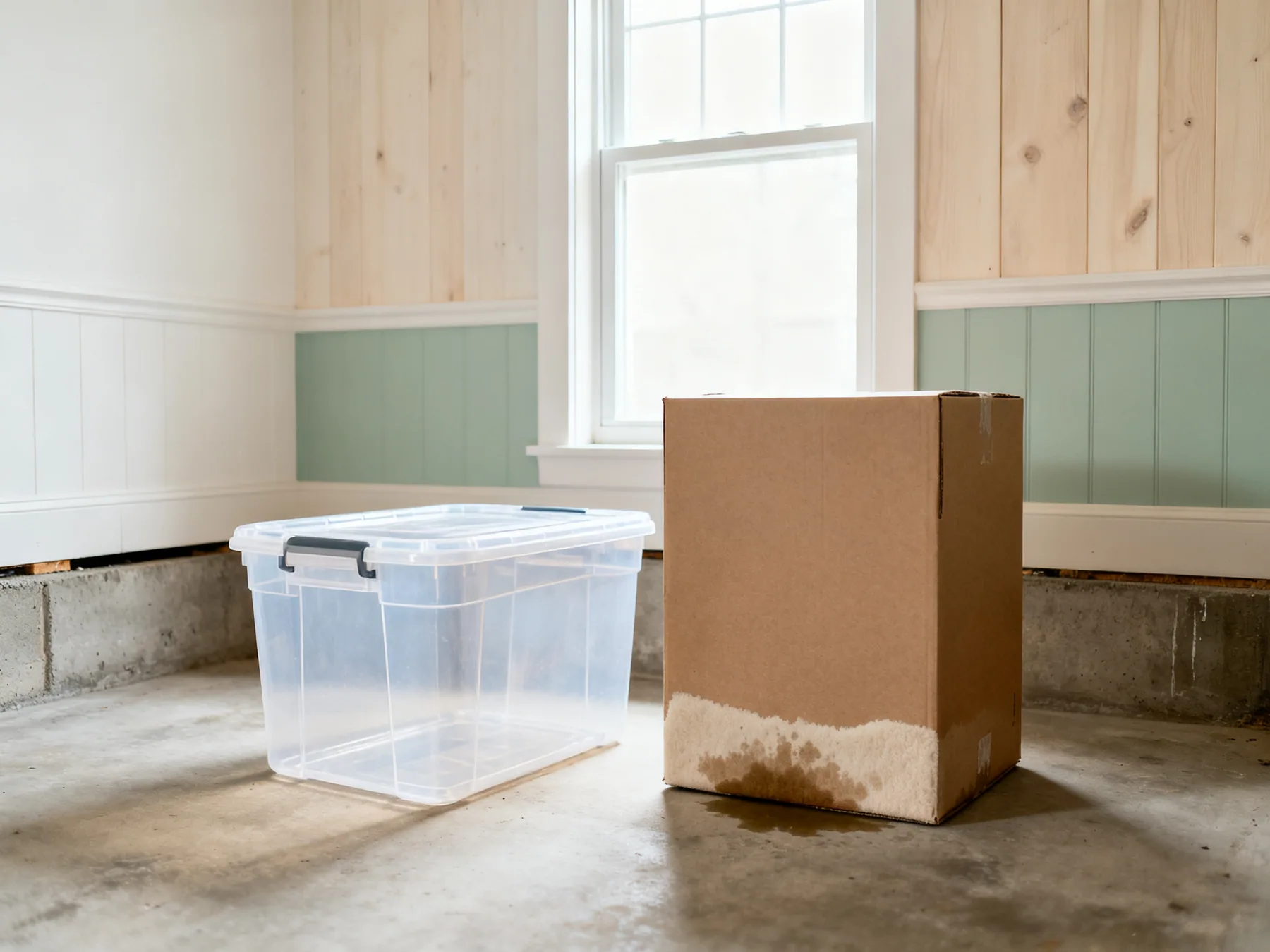
If there is one substitution to make, this is it. Cardboard in a basement fails in three separate ways and all of them are predictable.
It wicks moisture out of the concrete and out of the air, so the base softens and eventually collapses under its own contents. It is a food source and a nesting material, so silverfish, cockroaches and mice are actively attracted to it. And it holds moisture against whatever is inside it, so the contents get damp even when nothing visible has gone wrong.
Plastic bins with properly sealing lids solve all three at once, and clear ones let you see what is inside without opening every lid.
Choose bins with gasket or clip-down lids
A loose-fitting lid is not a seal. For anything you care about, a gasketed lid is worth the extra, and for textiles I would add a desiccant sachet inside.
Buy one size and stack them
Matching bins stack stably and use shelf space efficiently, where an assortment wastes the gaps between different footprints. Pick one large size and one small and stick to them.
Do not overfill, and mind the weight
A large bin filled with books is genuinely too heavy to lift safely off a high shelf. Put heavy contents in small bins and light bulky things in large ones, which is the opposite of what people naturally do.
Keep bins closed even when in use
An open bin in a basement collects dust and damp air continuously. Lid on, every time, even if you will be back tomorrow.
Unpack cardboard as it arrives
Boxes that come down for temporary storage tend to stay for years. Decanting into bins on the way in is much easier than dealing with sixteen soft boxes later.
Measure the humidity before you spend anything
I would buy a hygrometer before a dehumidifier. They cost very little and they tell you which problem you actually have, which changes the solution completely.
Aim to keep relative humidity below about 60%. Above that, mould becomes viable on organic surfaces and metal starts to corrode. If the reading is high but the basement smells fine and nothing is wet, you may have an airflow problem that a fan and an open vent will fix. If it is high and there are damp patches, tide marks or efflorescence on the walls, you have water ingress, and a dehumidifier is treating a symptom while the cause carries on.
That distinction is worth an afternoon, because one path costs almost nothing and the other is a building repair.
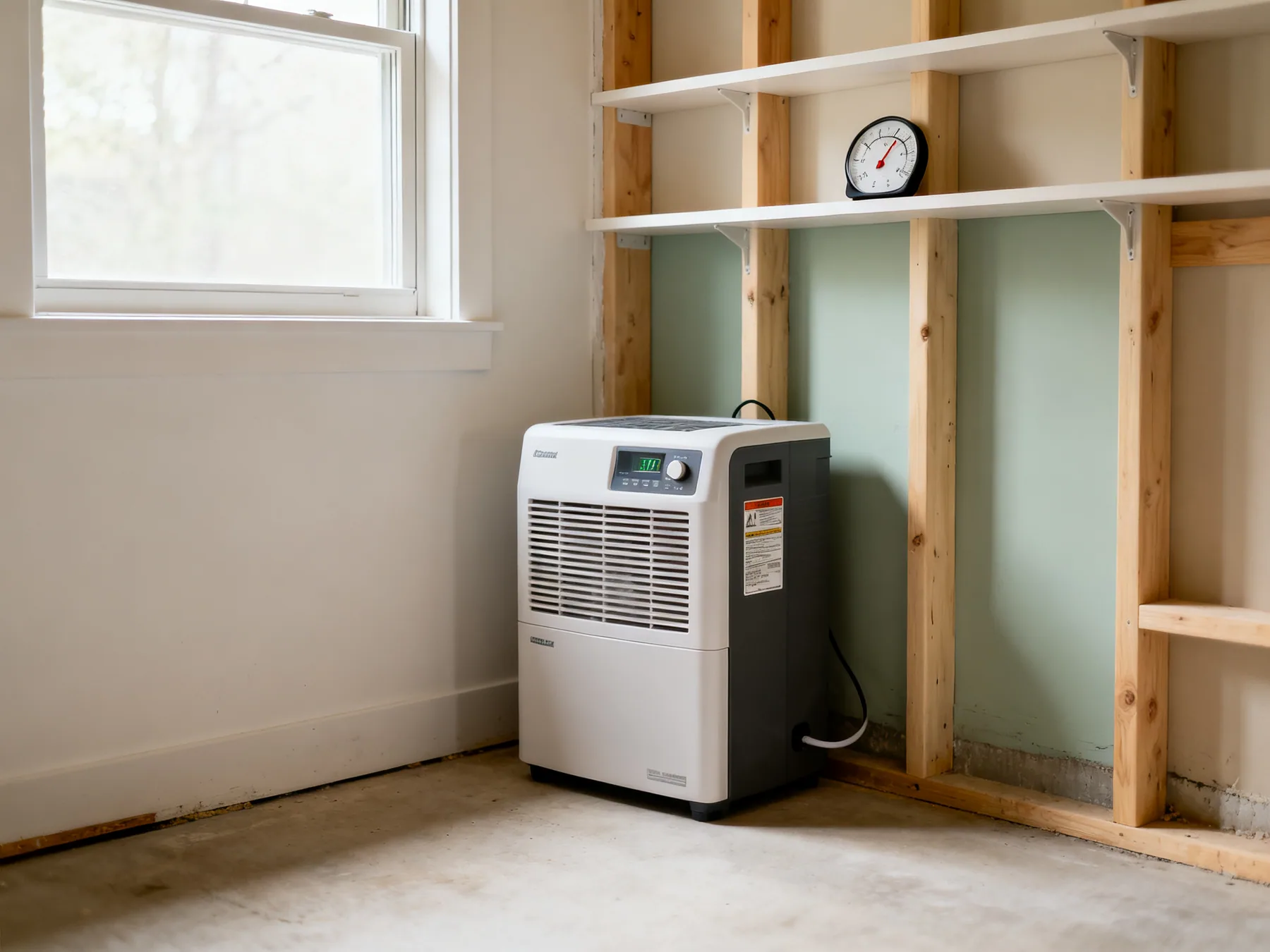
- Buy a hygrometer and take readings over a couple of weeks before deciding anything.
- Keep relative humidity under about 60%.
- Look for tide marks, white efflorescence and flaking paint, which indicate water coming through.
- Check gutters, downpipes and the ground level outside first. Most basement damp starts there.
- Improve airflow before buying equipment. Stagnant air is often the whole problem.
- If you use a dehumidifier, plumb it to a drain or you will empty it forever and eventually stop.
- Do not seal a damp basement airtight. Trapped moisture makes it worse, not better.
- Get a persistent damp problem looked at properly rather than managing it indefinitely.
Label the end that faces you
A small point that makes a large difference. People label the lid, because that is the surface facing you when the bin is on the floor in front of them. Then the bin goes onto a shelf and the lid is invisible.
Label the short end that faces the aisle. And label it with what is inside rather than which room it came from, because "spare room" tells you nothing in two years.
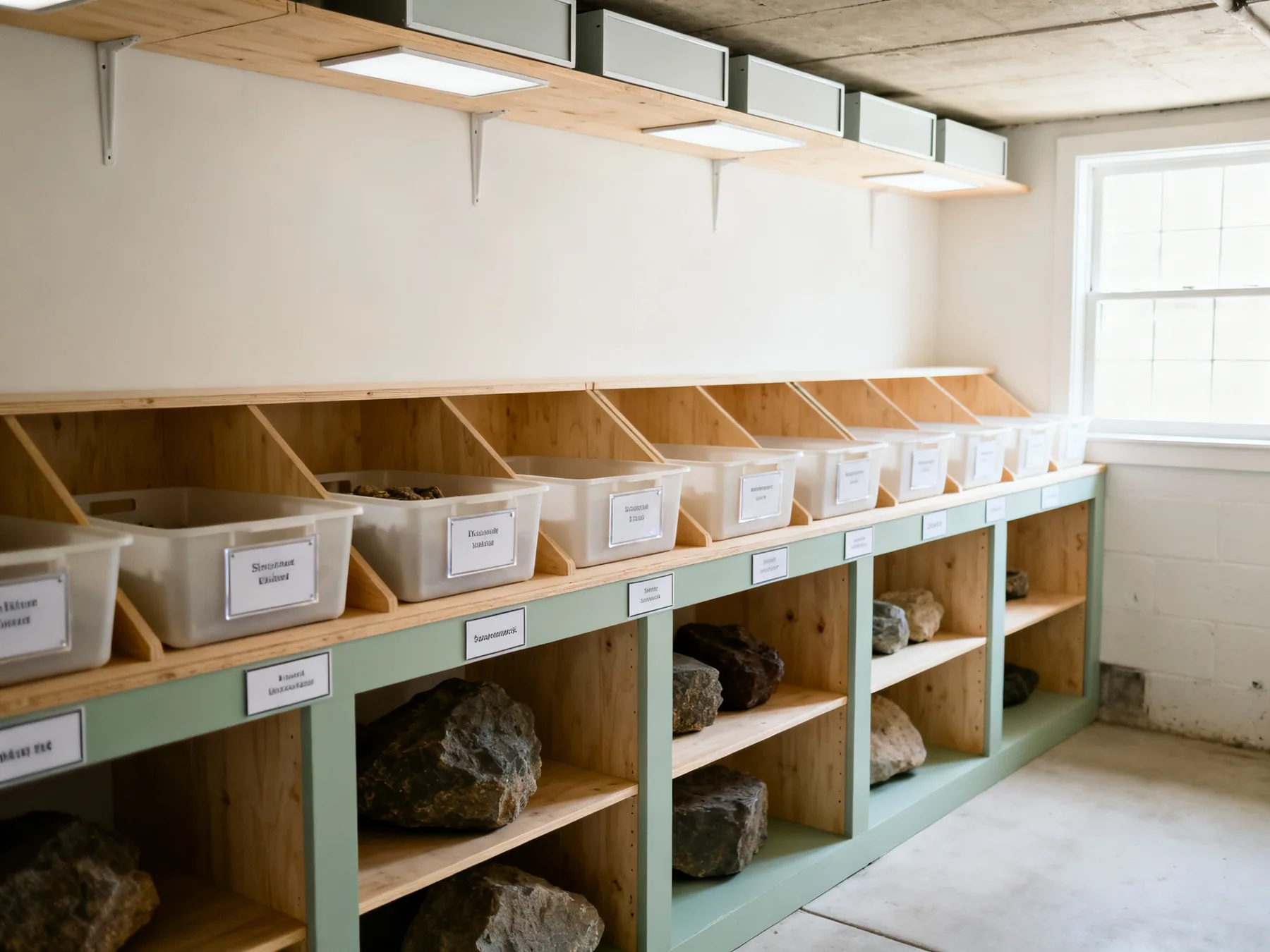
- Label the short end of the bin, the face that will be visible on the shelf.
- Describe the contents, not the origin. "Camping" beats "garage stuff".
- Group bins into zones and put a sign on each bay of shelving.
- Heavy bins on the lowest shelves, light ones high, whatever the labelling says.
- Keep an index on your phone if there are more than about twenty bins.
- Date anything you are keeping "for now", so you can see how long that has been.
- Keep the most-used zone nearest the stairs.
What should not go down there
This is the section most basement articles leave out, and it is the most useful one, because the things people lose in basements are almost always the things that mattered.
Anything that holds water or is made of paper, fabric or organic material is at risk in a basement even when everything is going well. Photographs stick together and the emulsion lifts. Documents cockle and grow mould in the fold lines. Wooden instruments crack when they come back up into a heated room. Electronics corrode internally at the solder joints, which you do not discover until you try to use them years later.
A basement is a good place for tools, camping gear, sports equipment, decorating supplies, tinned food and anything sealed and inorganic. It is a poor place for memories.
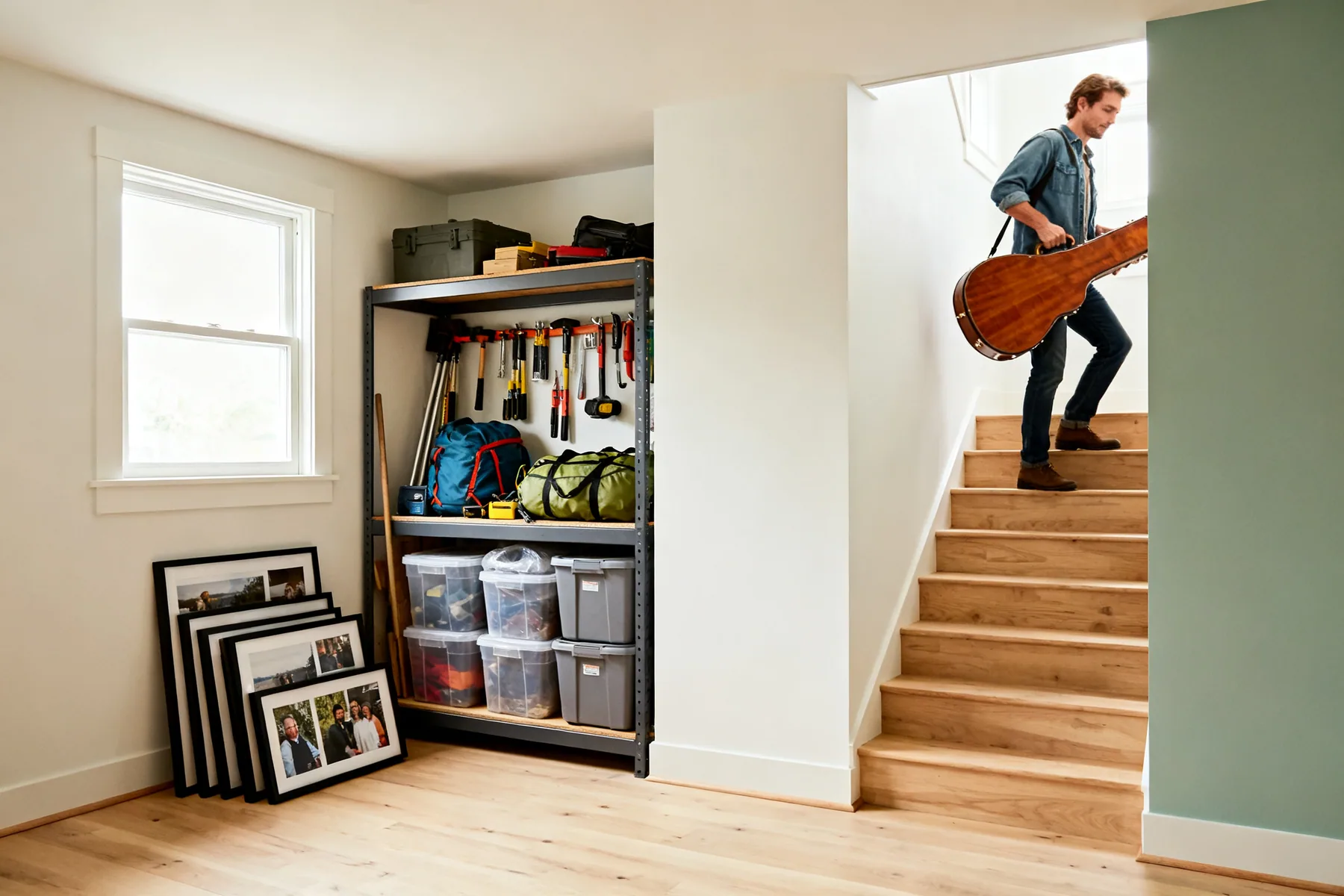
- Keep photographs, negatives and albums upstairs, in a wardrobe or under a bed.
- Keep documents, certificates and anything irreplaceable upstairs, ideally in a fireproof box.
- Keep wooden instruments and anything with glued joints out of a basement entirely.
- Do not store electronics you intend to use again, because solder joints corrode.
- Keep paint out of an unheated basement if it can freeze. Water-based paint is ruined by freezing.
- Do not store petrol, propane or anything flammable in a basement, especially near a boiler.
- Keep textiles in sealed bins with desiccant if they must go down, and check them annually.
- Anything you would be upset to lose belongs on a floor with a roof over it.
Basement storage ideas that do not end in a damp box: frequently asked questions
How do I stop things going damp in a basement?
Get everything off the floor and away from the walls, and put it in plastic bins with sealing lids rather than cardboard. The slab wicks moisture upward and the walls wick it inward, so air gaps on both sides are the core of it. Then measure the humidity with a hygrometer and aim to keep it under about 60%.
Can I store cardboard boxes in a basement?
I would not. Cardboard wicks moisture out of the concrete and the air so the base eventually softens and collapses, it is a food source and nesting material that actively attracts silverfish and mice, and it holds damp against whatever is inside. Clear plastic bins with gasketed lids fix all three problems and let you see the contents.
Do I need a dehumidifier in my basement?
Measure before you buy. If humidity is high but nothing is wet and it does not smell, you may have an airflow problem that a fan and a vent will fix. If there are tide marks, white efflorescence or flaking paint, water is coming through and a dehumidifier treats the symptom while the cause continues. Check gutters, downpipes and outside ground levels first.
What should you not store in a basement?
Photographs, documents, wooden instruments and electronics, which is unfortunately the list of things people most often put down there. Photos stick together and the emulsion lifts, paper cockles and grows mould in the folds, glued wooden joints crack on returning to a heated room, and electronics corrode at the solder joints. Also keep flammables and freezable paint out.
What kind of shelving is best for a basement?
Powder-coated steel or heavy plastic, pulled about 50mm clear of the wall, with the lowest shelf at least 100mm off the slab. Avoid timber and especially MDF, which swells and delaminates permanently in damp air. Anchor tall units to the wall, since basement floors are often uneven and a loaded unit is heavy.
How should I label basement storage bins?
On the short end that faces the aisle, not on the lid, because the lid is invisible once the bin is on a shelf. Describe the contents rather than where things came from, since "spare room" means nothing two years later. Group bins into zones with a sign on each bay, and keep an index on your phone past about twenty bins.