Closets, Halls & Garages
Entryway storage ideas for everything that arrives at once
Four different things land in an entryway within ten seconds of the door opening. Whichever one has no home ends up on the floor.
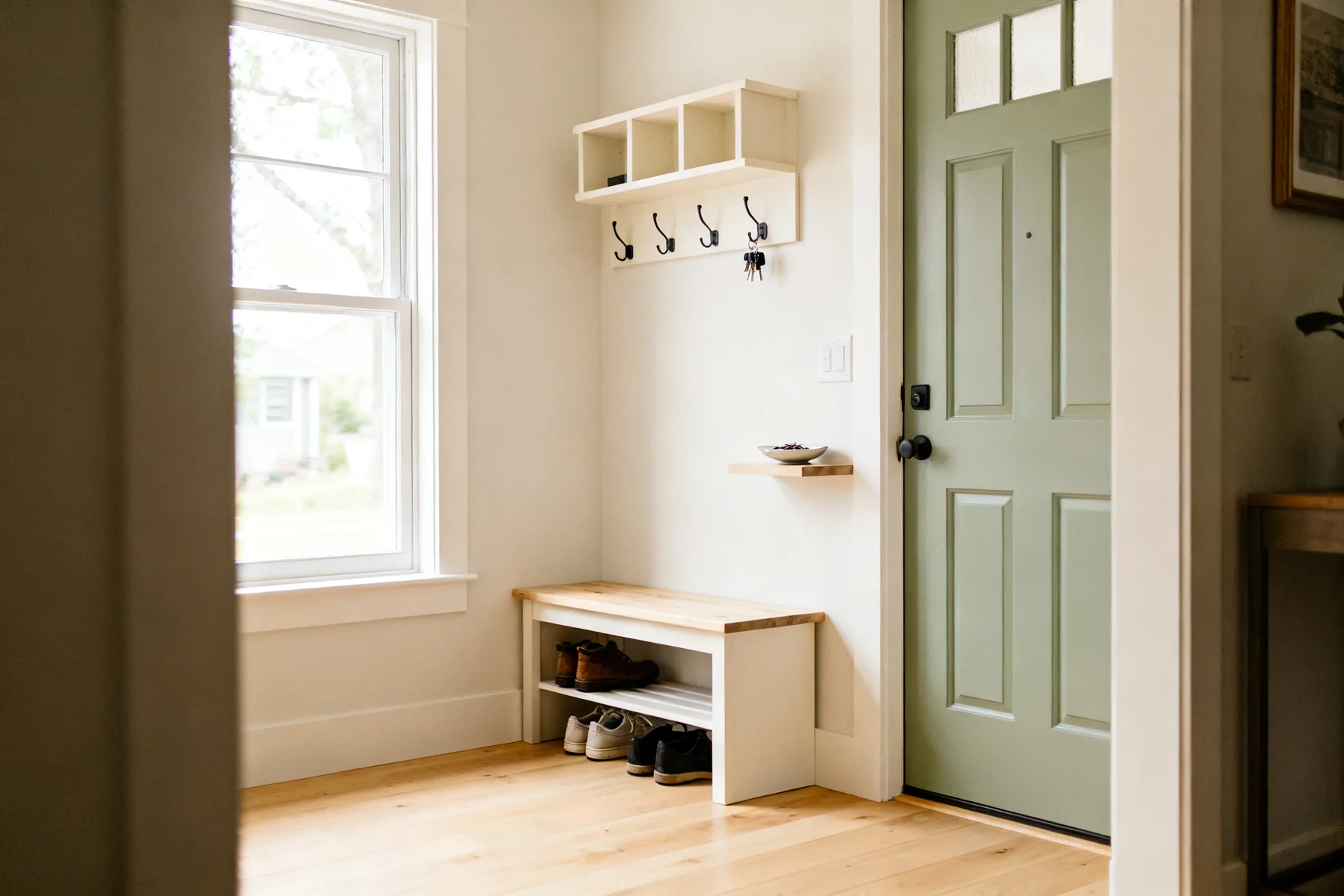
An entryway has a harder job than its size suggests. In the ten seconds after the door opens, a coat comes off, shoes come off, a bag goes down, and keys, post and a parcel leave somebody's hands. Four unrelated categories, all at once, all needing somewhere within about a metre of the door.
What I notice is that most entryways handle two or three of those well and one not at all, and the one that has no home is the one you see on the floor. It is almost never a capacity problem. It is a missing category.
So rather than starting with furniture, I would start by watching what actually gets abandoned there for a week. That tells you which of the four is missing, and it is usually cheaper to fix than you expect.
Work out which category is missing
Before buying anything, spend a week noticing what lands on the floor or on the stairs. That is diagnostic information rather than untidiness, and it points straight at the gap.
Shoes on the floor usually means there is nowhere to sit. Coats over a newel post means there are not enough hooks, or none at the right height. Post on the kitchen counter means there is no tray by the door. A bag in the middle of the hall means there is no hook it fits on, because most hooks are sized for a coat rather than a rucksack.
- Outerwear: enough hooks for the coats actually in season, at two heights.
- Footwear: somewhere to sit, plus a defined place for the shoes in current use.
- Bags: a hook robust and wide enough for a loaded rucksack or work bag.
- Small things: a dish for keys and a small upright tray for post.
- Outbound: one basket for returns, library books and things to pass on.
- Wet things: a tray with a lip for boots and an umbrella.
- Everything within about a metre of the door, or it will not get used.
A bench is the highest-value piece
If I could put one thing in an entryway it would be somewhere to sit, and the reason is mechanical rather than aesthetic. Taking shoes off standing up requires balancing on one foot, so people step out of them and walk on, and the shoes stay exactly where that happened.
A bench turns it into a two-second job, and because the storage is directly underneath, the shoes go into it rather than beside it.
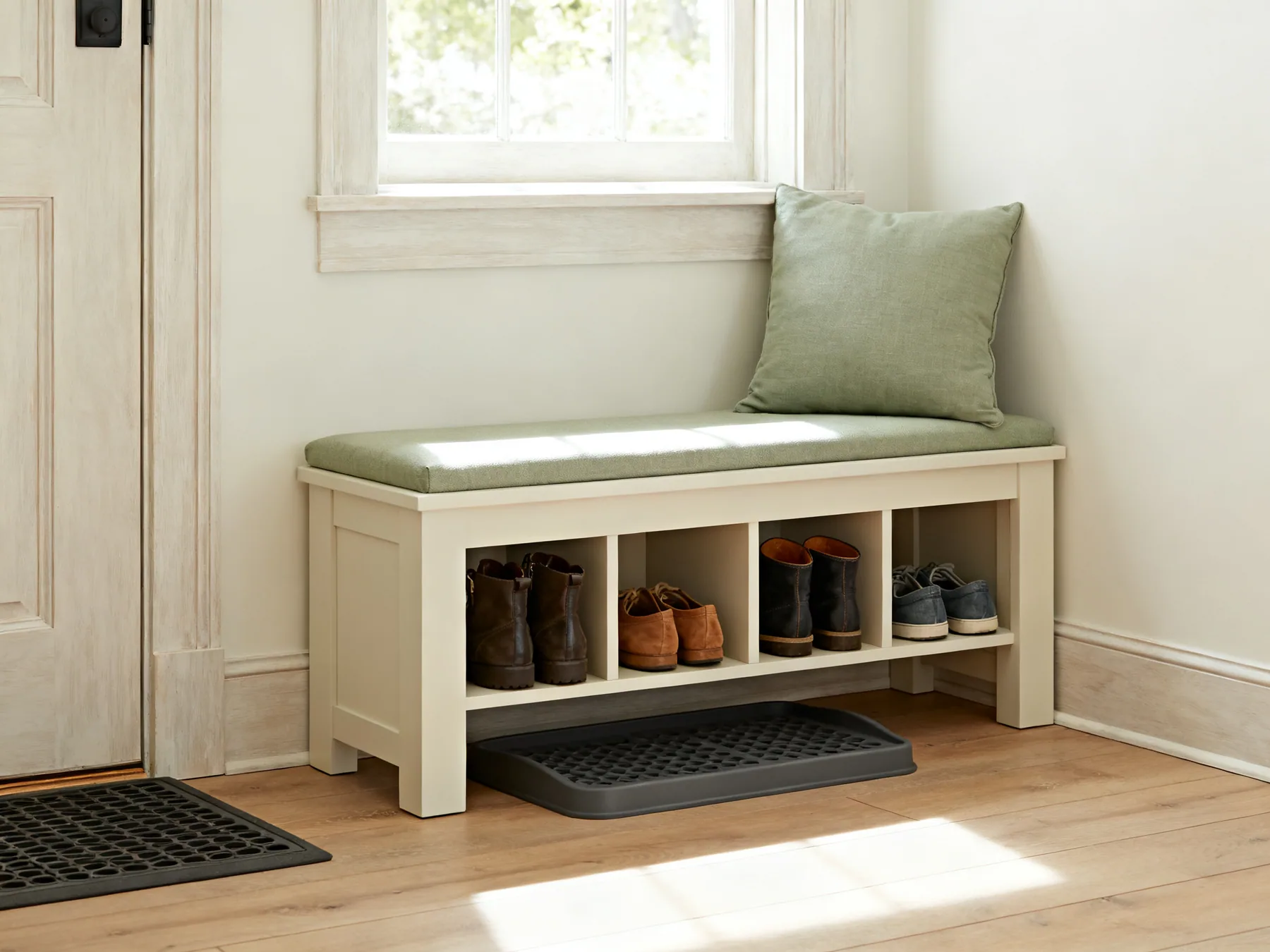
Seat at about 450mm, depth under 400mm
That is comfortable to sit on and shallow enough not to obstruct a normal entrance. Deeper than 400mm and you start squeezing past it while carrying shopping.
The single best entryway addition
Open cubbies underneath, not doors
A door is an extra step and an extra step is enough to stop the storage being used. Open cubbies get filled, closed ones get walked past.
Only the shoes in current use
Two pairs per person here and the rest in a bedroom. An entryway trying to hold the household's entire footwear collection is permanently overflowing.
A boot tray for wet things
A shallow tray with a lip that can be wiped out. Without one the grit and water spreads down the hall, and wet boots in a closed cupboard go musty fast.
Let boots dry before they go in the cubby
Enclosed damp footwear smells within days and transfers it to everything around it. Tray first, cubby once dry.
Hooks, and the second row
Hooks are cheap, they take five minutes, and they are the thing most commonly got wrong in one specific way: they are all at adult height.
A child who cannot reach the rail has exactly one other option. Fitting a second row at around 900mm to 1.1m is the change that makes children hang their own coats, and it stops being needed as they grow rather than becoming a permanent fixture.
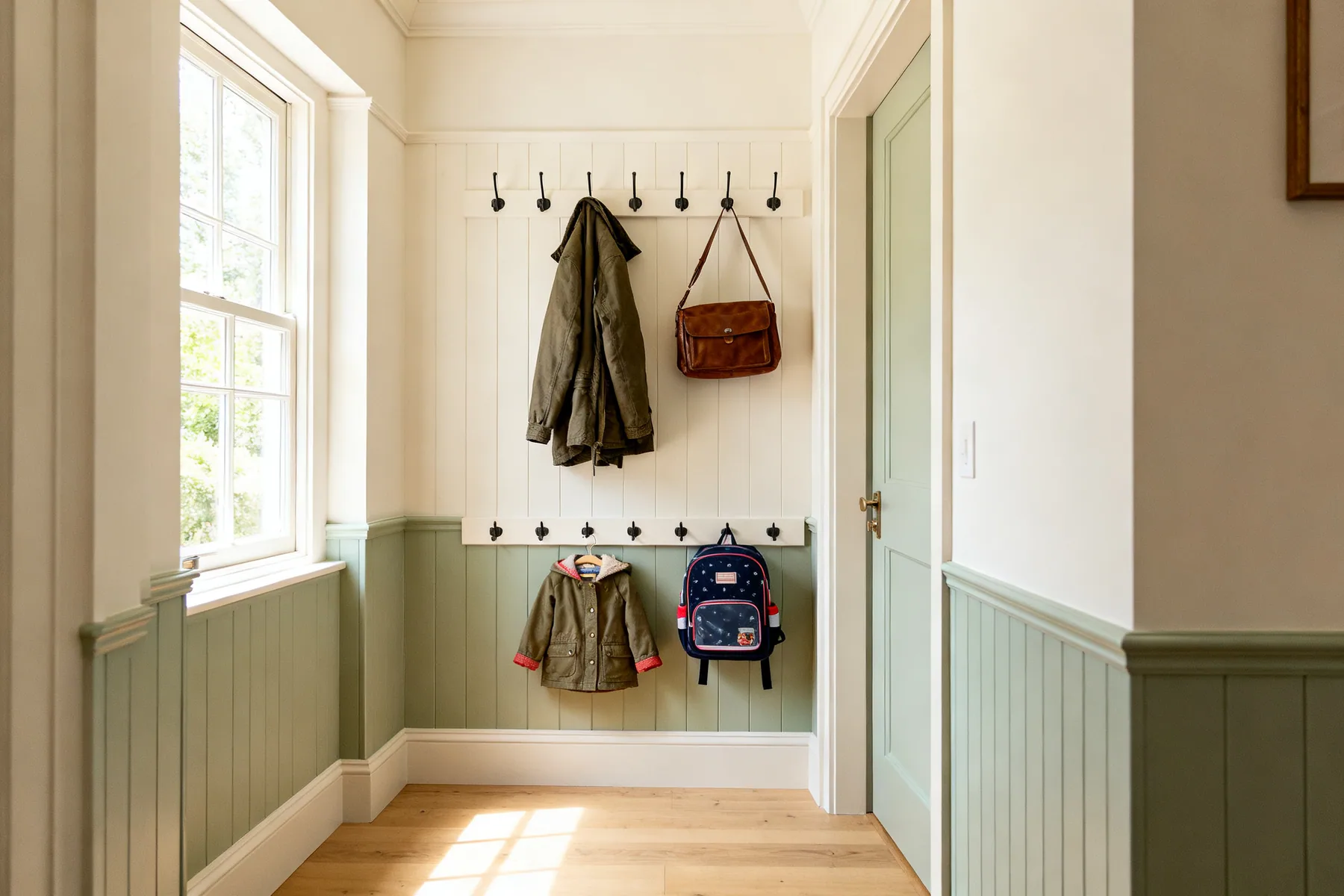
A low row for children
Coats, school bags, swimming kit. It removes the excuse rather than requiring anyone to change habits, and it works from the first day.
Fix into studs or use proper anchors
A loaded coat rack carries real weight, and a wet winter coat with a bag over it is heavier than people plan for. Rate the fixings well above what you expect.
Fewer hooks than you think
Twelve hooks end up holding twelve coats, four of which nobody wears. Match the hook count to the coats in season and store the rest elsewhere.
Keep one hook permanently free
For visitors and for whatever you are carrying right now. A rack with no free hook pushes things onto the floor.
Use a wide hook for bags
A narrow coat hook concentrates a rucksack's weight into one strap point and marks it. Wider or padded hooks for anything heavy.
Keys, post and the outbound basket
The small category, and it causes a disproportionate amount of household friction because losing keys is a bad start to a day. All of it needs to land within reach of the door.
The outbound basket is the one people have not thought of, and it is the one I would add if the rest is already working. Returns, library books, the thing to give back to a neighbour: without a declared place, those circulate the house for weeks and then go back late.
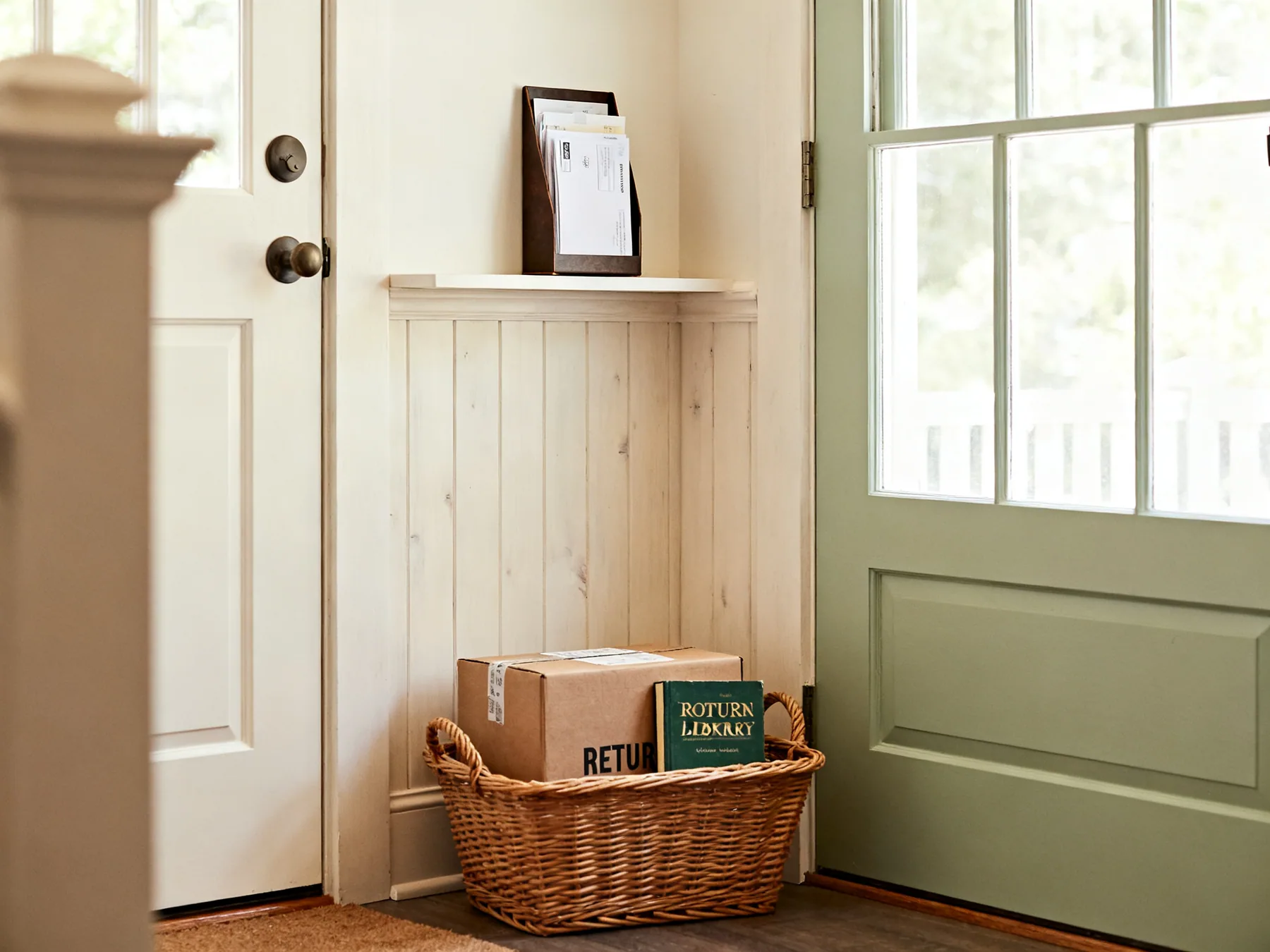
One shallow dish, keys only
Not a bowl for everything. A dish that holds nothing but keys means a glance tells you whether they are there, which is the entire point.
An upright tray for post
Vertical rather than flat, because a flat pile grows indefinitely and a small upright tray fills visibly and prompts you to deal with it. Keep it deliberately small.
A basket for things going out
One basket by the door for outbound items. It sounds trivial and it removes a whole category of low-level household nagging.
A defined parcel spot, out of the walking line
Otherwise deliveries sit in the middle of the entryway until somebody trips over one. A corner or under the bench is enough.
A charging point away from the door
Phones and keys both get put down on arrival, and a phone by the front door is the easiest thing in the house to steal through a letterbox with a hook.
Keep keys out of reach of the letterbox
Keeping it clear
An entryway drifts faster than any other space because everybody uses it and nobody owns it. It is also the first thing anyone sees, so mess there colours how the whole house reads.
Two habits carry most of the weight: rotating outerwear by season, and a very short daily reset. Neither requires anyone to be naturally tidy.
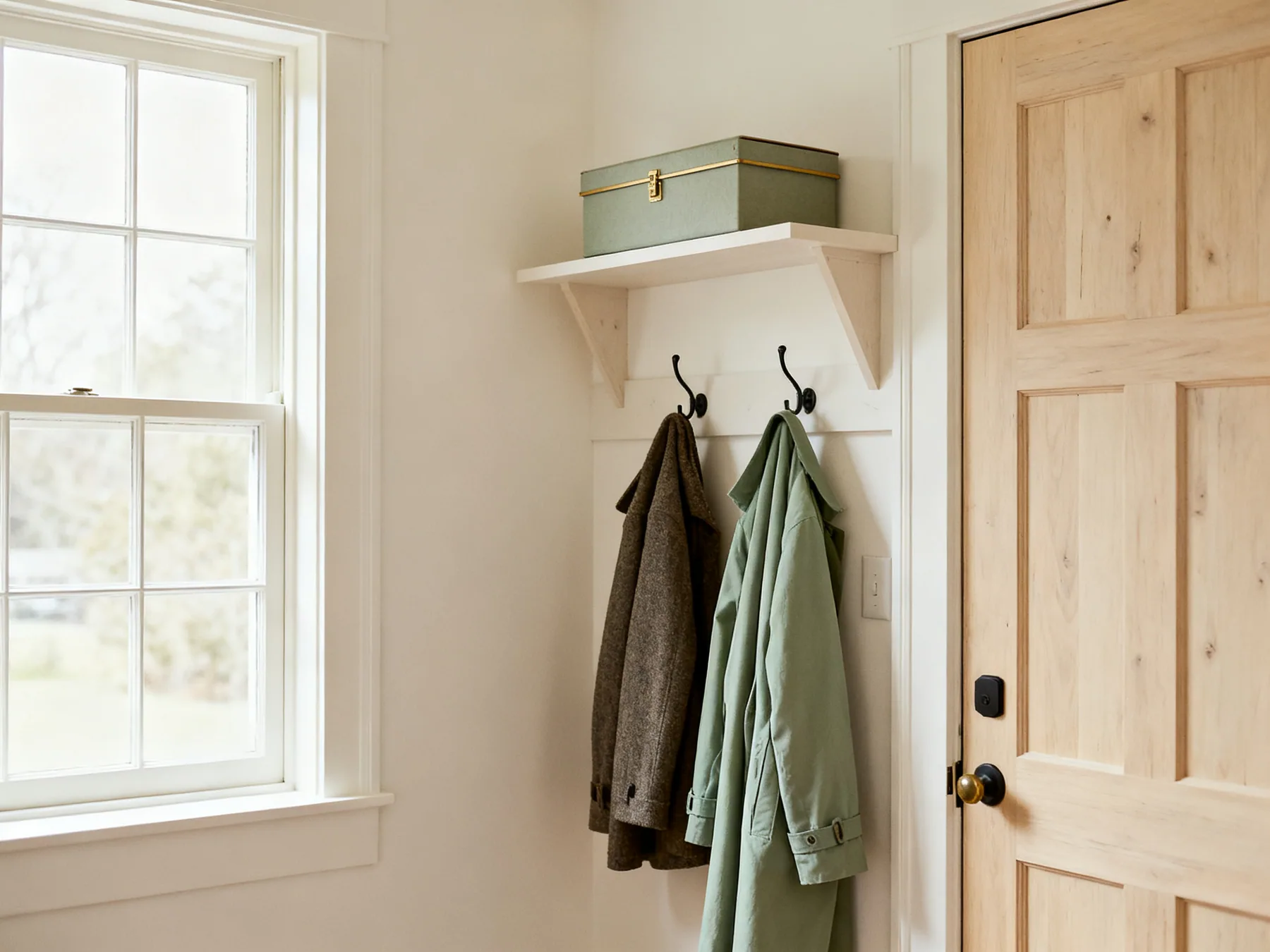
- Rotate coats by season. Winter coats in July are taking hooks for no reason.
- Keep the floor completely clear. Anything on an entryway floor reads as clutter immediately.
- Do a 60-second sweep daily rather than a clear-out weekly.
- Store the household shoe collection elsewhere and keep only current pairs here.
- Use the 300mm band above the door for seasonal things, in lidded boxes.
- Fit a mirror if the space is dark or narrow, which makes it feel considerably wider.
- Check nothing obstructs the door arc or any escape route, which matters more here than anywhere.
- Leave one hook and a bit of bench free so arrivals have somewhere to put things.
Entryway storage ideas for everything that arrives at once: frequently asked questions
What storage does an entryway actually need?
Somewhere for four things that all arrive at once: outerwear on hooks, footwear with somewhere to sit, bags on a wide hook, and the small things in your hands, meaning a dish for keys and a tray for post. Most entryways handle three of those well and one not at all, and the missing category is the one you see on the floor.
What is the best entryway furniture for a small space?
A bench about 450mm high and under 400mm deep with open shoe cubbies beneath it. Shoes end up abandoned mainly because taking them off standing requires balancing on one foot, so somewhere to sit changes the behaviour more than extra capacity does. Use open cubbies rather than doors, because a door is enough friction to stop it being used.
How high should entryway hooks be?
Two rows: one at adult shoulder height and one at around 900mm to 1.1m for children. Most entryway hooks are all at adult height, and a child who cannot reach has one other option. Fix into studs or use anchors rated well above the load, because a wet coat with a bag over it is heavier than people plan for.
How do I stop shoes piling up by the front door?
Add somewhere to sit, and keep only the shoes in current use there, roughly two pairs per person with the rest in a bedroom. An entryway trying to hold a whole household's footwear is permanently overflowing. Add a shallow boot tray with a lip for wet things, and let boots dry before they go into an enclosed cubby.
Where should keys go in an entryway?
In a shallow dish that holds only keys, within reach of the door, so a glance tells you whether they are there. A bowl that holds everything defeats the purpose. One safety point: keep keys out of reach of the letterbox, since a phone or keys left near the door are the easiest things in the house to take with a hook.
What is the one thing most entryways are missing?
A basket for things leaving the house. Returns, library books, something to give back to a neighbour. Without a declared outbound place those circulate the house for weeks and then go back late. It is the cheapest addition on this page and it removes a whole category of low-level nagging.