Closets, Halls & Garages
Mudroom storage ideas for things that arrive wet
A mudroom is a drying room before it is a storage room. Everything arriving is wet or muddy, and storage that ignores that will smell by November.
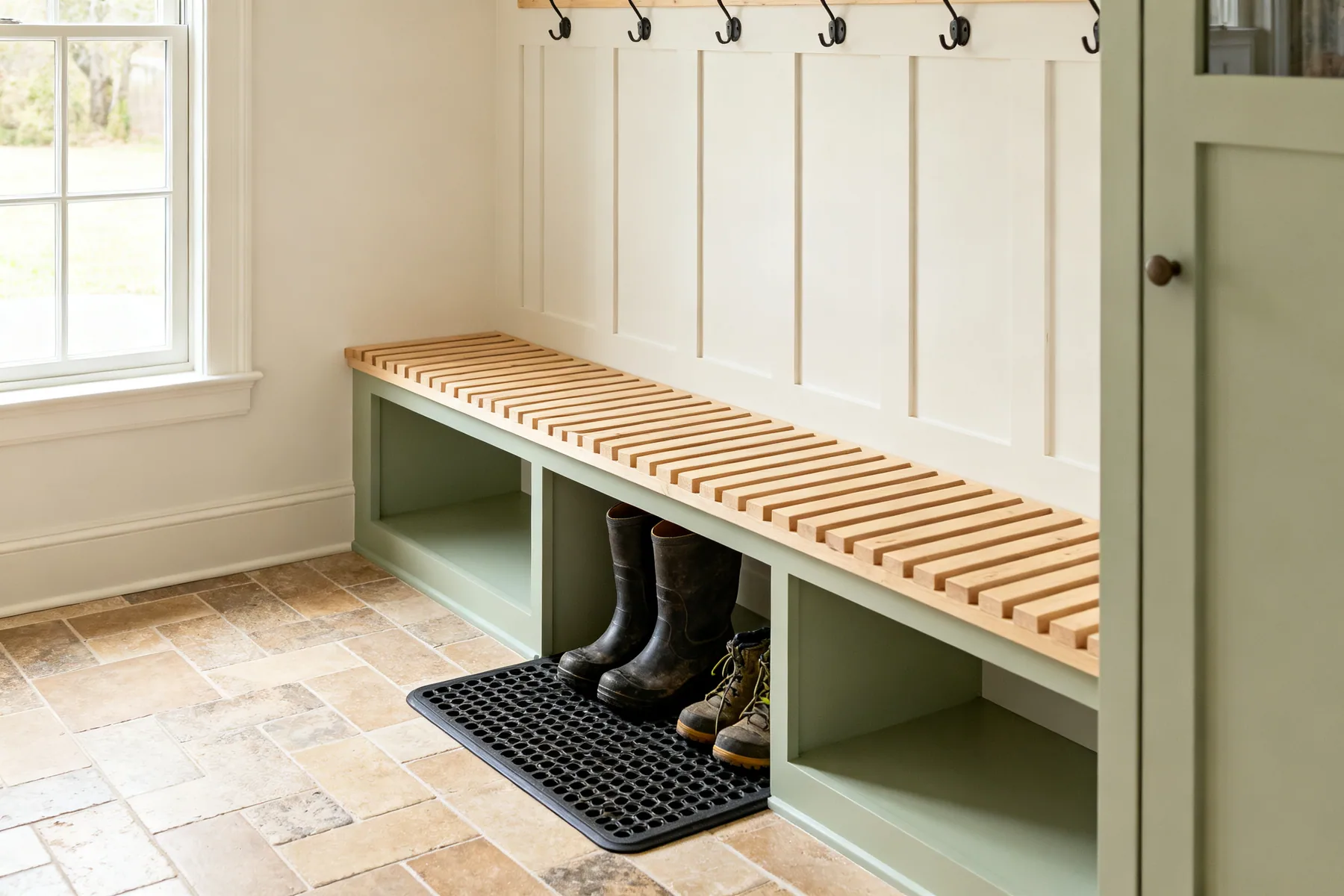
A mudroom exists to stop the outdoors getting into the house, which makes it the only storage space in a home whose contents are deliberately wet and dirty when they arrive. That single fact reorders every priority.
In a bedroom or a hallway I would think about capacity first and airflow somewhere near the end. In a mudroom it is the other way round. A beautifully fitted mudroom with closed cupboards and a solid bench will smell within a season, because wet coats and muddy boots put into enclosed spaces do not dry, and things that do not dry go sour.
So the brief is: get the water out, separate the wet things from the dry things, and only then worry about how much it holds.
Split wet from dry
The organising decision is a line down the room. On one side goes everything that arrives wet: boots, waterproofs, wet dog, umbrellas, sports kit. On the other goes everything that must stay dry: clean shoes, indoor coats, bags, the things you take out with you.
Keeping them apart matters because damp transfers. A wet coat hung next to a dry one makes both damp, and a boot tray under a shelf of clean shoes is a slow-motion problem. If the room is small, the split can be as simple as one wall wet and the opposite wall dry, with the door between them.
Hard floor and drainage on the wet side. Tile, resin or sealed concrete with a slight fall, or at minimum a large tray you can lift out and hose.
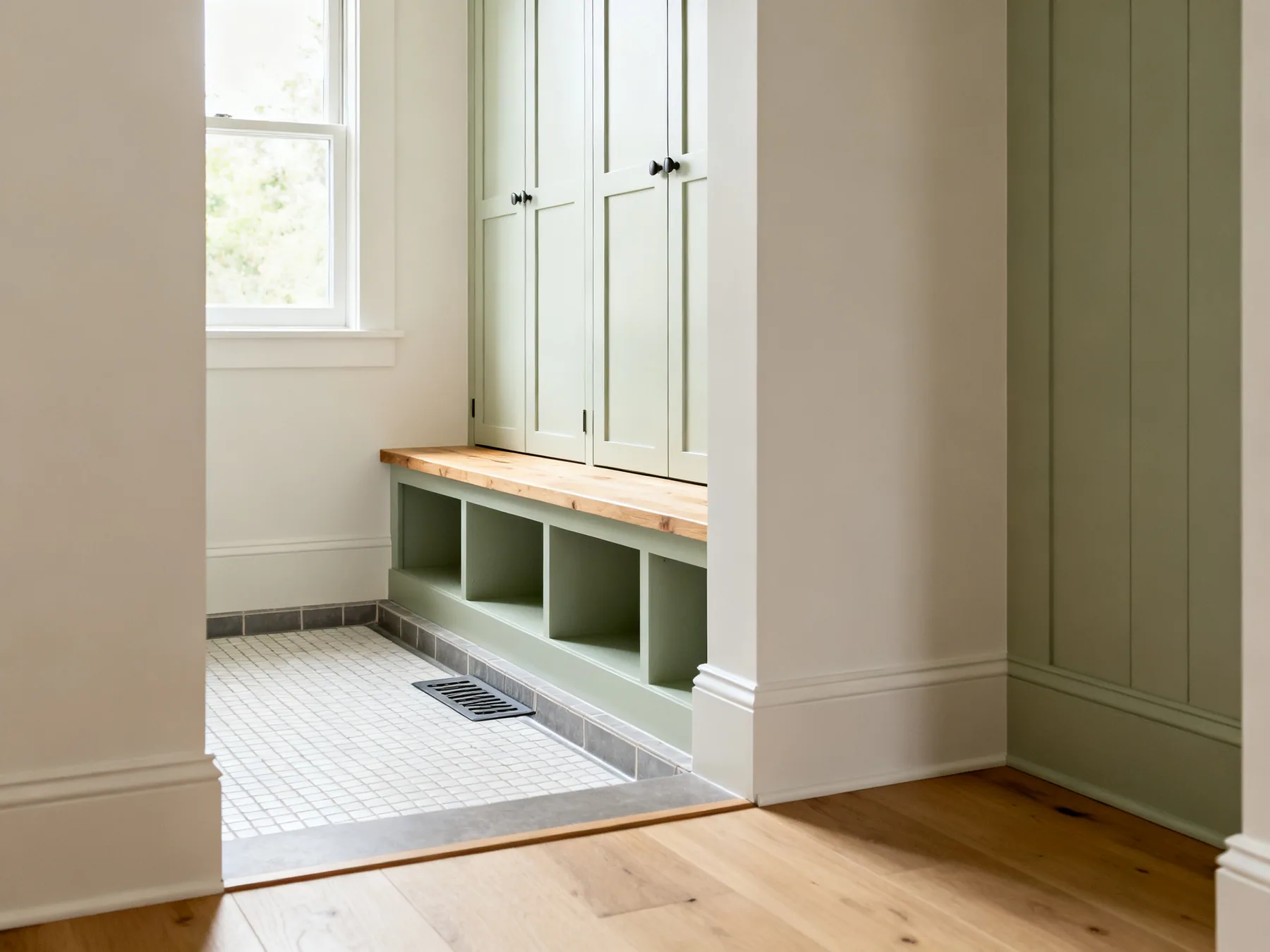
- Draw the line before fitting anything, and put the door on the wet side.
- Hard, sealed, hoseable floor on the wet side. Never carpet or unsealed timber.
- A large boot tray with a lip if the floor cannot be made hoseable.
- Nothing absorbent on the wet side: no fabric baskets, no cardboard, no untreated wood.
- Keep clean shoes and dry bags physically separated from the boot zone.
- Put a door mat outside as well as inside, which removes most of the mud before it arrives.
- Slope or drain the wet floor if you are building from scratch.
Open cubbies, one per person
Closed cupboards look tidier in a photograph and they are the wrong choice here. Anything shut into a cupboard while damp stays damp, and a mudroom cupboard with a wet coat in it is where the smell starts.
Open cubbies also solve the social problem, which in a family mudroom is the real problem. One cubby per person, with a hook, a shelf and a boot space, means everybody knows where their things go and nobody is negotiating for hook space on a wet Tuesday morning.
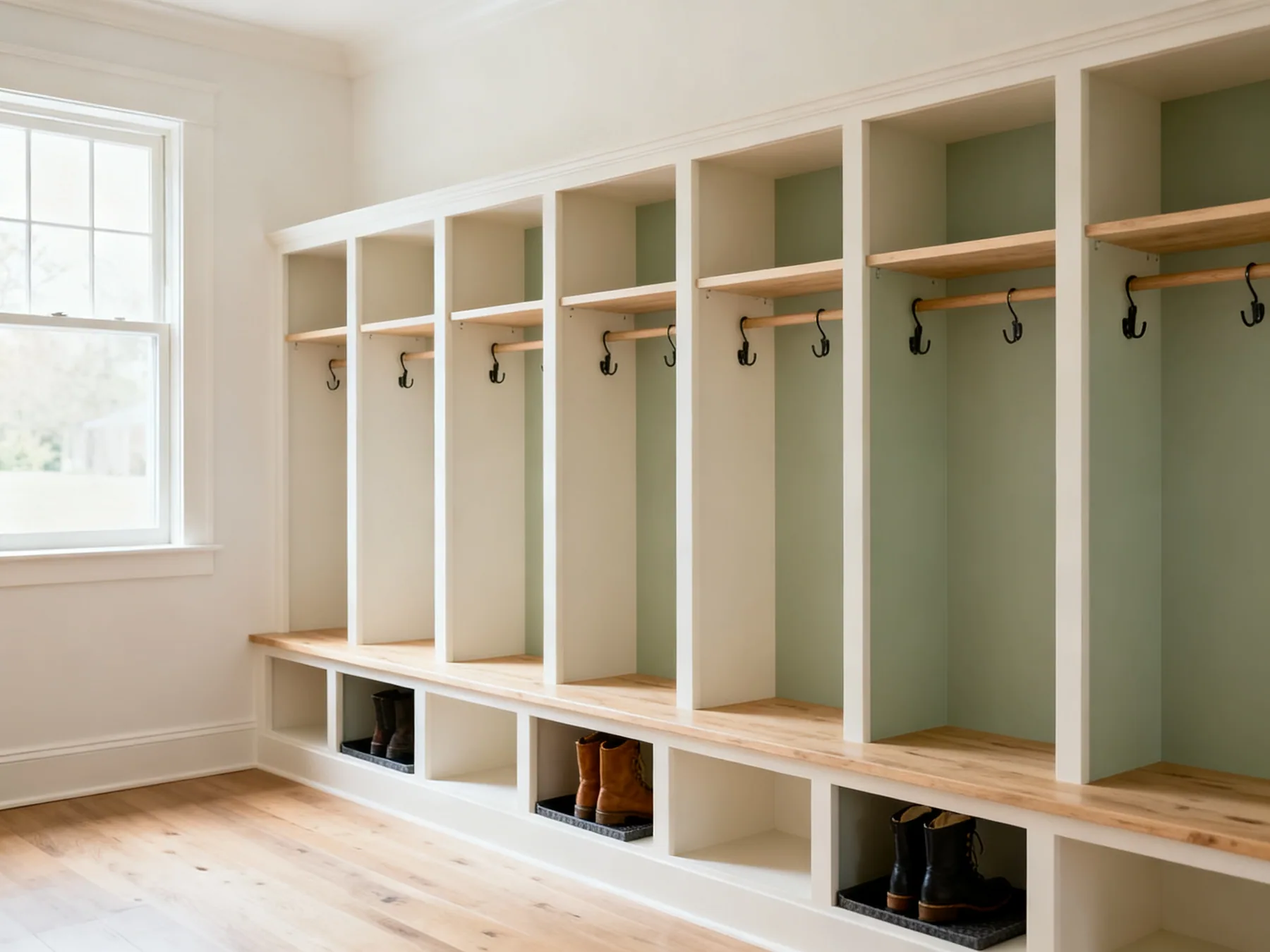
A hook, a shelf and a boot space each
That combination covers coat, hat and gloves, and footwear. Repeat it per person and label them, even for adults, because labels settle ownership permanently.
Ownership stops the arguing
Set the children's cubbies at their height
Hook at around 1m for a young child. A cubby they cannot reach is a cubby you are operating on their behalf every single afternoon.
Leave the boot space open at the bottom
Open and off the floor if you can, on a slatted shelf, so boots drain and air passes under them. A closed boot box is the single worst mudroom fitting.
Use a bench with a slatted seat
Somewhere to sit is what gets boots taken off properly rather than kicked off. Slatted rather than solid so water falls through rather than pooling.
Keep one cubby for guests
Or one spare hook and a bit of bench. Visitors arriving in the rain need somewhere, and without it their things go on the floor.
Drying is the actual job
A mudroom has to dry things, and drying needs two things that storage design often removes: space between items and moving air.
A rail packed with coats does not dry, because most of the surface of each coat is touching another coat. And a small sealed room full of wet gear simply raises its own humidity until nothing dries at all and the walls start to suffer.
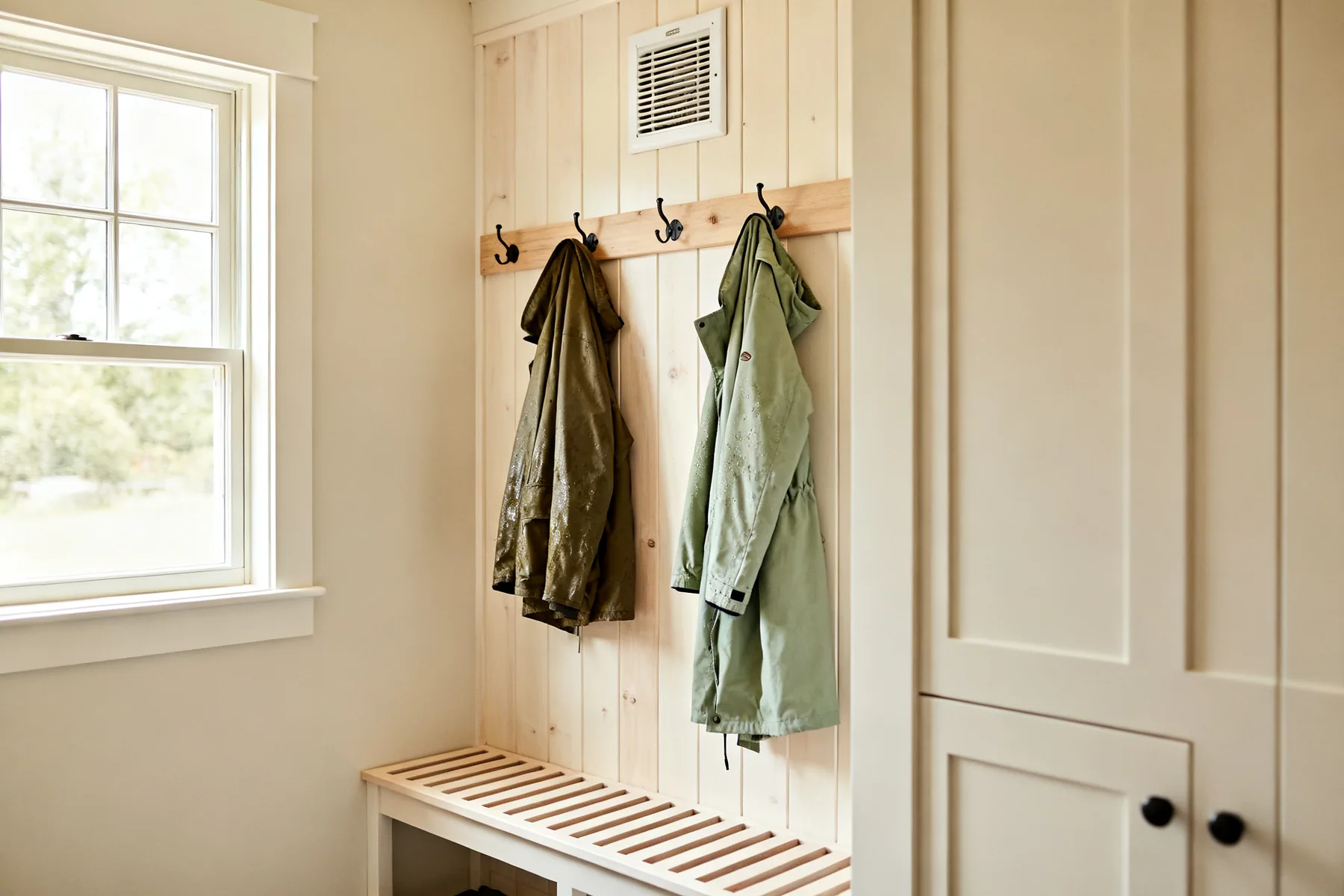
Space wet coats apart on the rail
Air on both sides of each one. If there is not enough rail, that is an argument for more rail or fewer coats, not for doubling up.
Ventilate the room actively
An extractor is best. Failing that, a window that gets opened, or a door left ajar. A mudroom with no airflow is a mould problem waiting to happen.
Wet kit plus no airflow equals mould
Add a heated rail or a radiator if you can
Gentle warmth plus airflow dries far faster than either alone. It also makes the room usable in winter, which increases the chance boots come off there rather than in the kitchen.
Hang wet gloves and hats rather than shelving them
Small wet items in a basket stay wet for days. A few small hooks or a mesh basket with air all round it works far better.
Use boot dryers or newspaper for soaked footwear
Boots hold a surprising amount of water in the lining. Standing them upside down on a slatted shelf, or stuffing them, gets them usable by morning.
The things that actually fill it
In practice a mudroom is rarely overwhelmed by coats. It is overwhelmed by sports kit, dog paraphernalia and the seasonal outdoor equipment that has nowhere else to live.
Those categories are worth planning for explicitly, because they are the ones that end up in heaps on the floor.
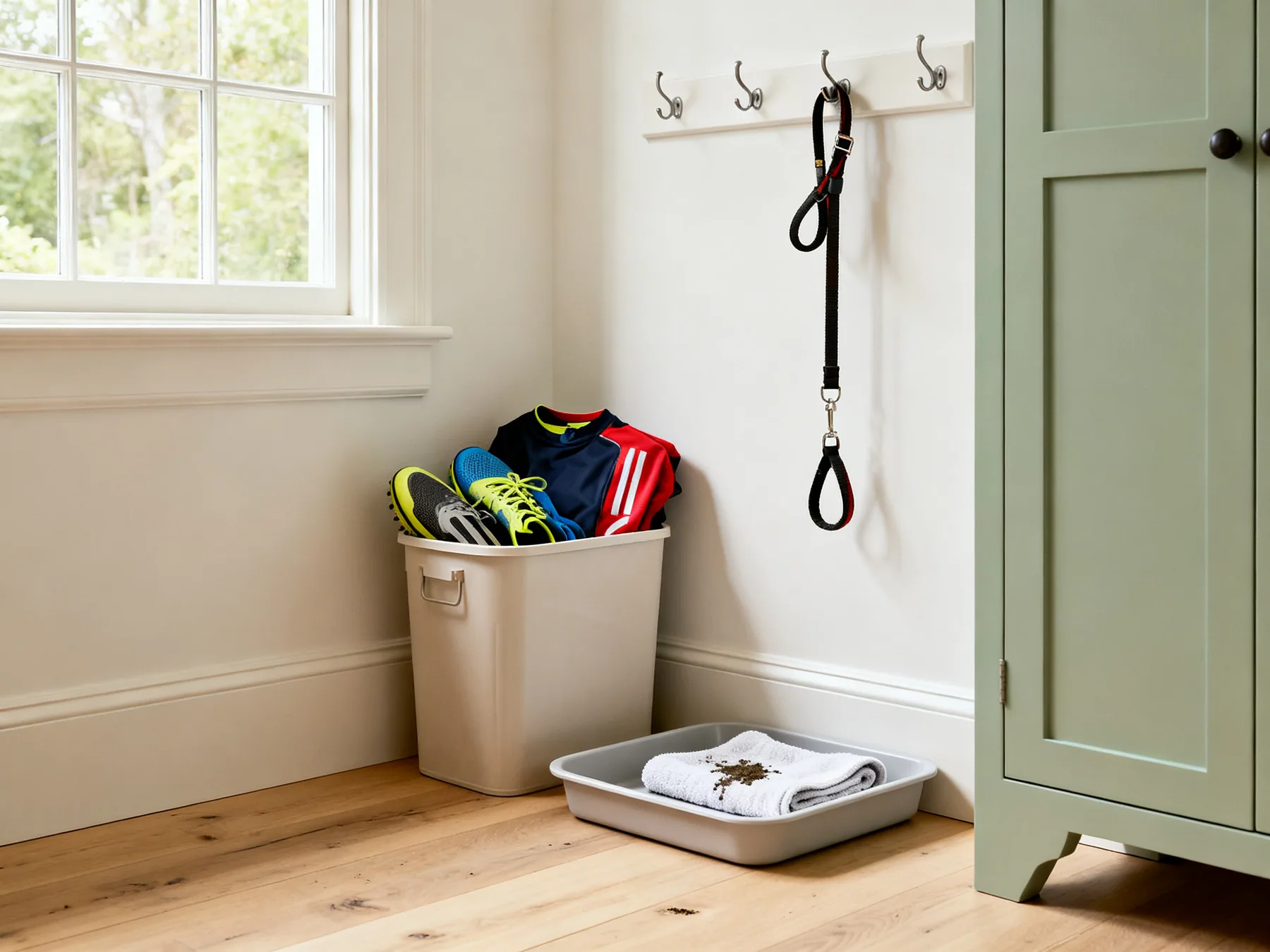
One labelled bin per activity
Football, swimming, riding, whatever the household does. A bin per activity is grabbed whole on the way out, which is what actually saves time on a match morning.
Give the dog a defined corner
Lead on a hook, a shallow tray for muddy paws, a towel on its own hook, food and treats in a sealed container. It is a lot of small things and they need one place.
Hang bulky outdoor gear high
Waders, ski kit, walking poles. Above adult shoulder height, out of the daily zone, since you need them seasonally rather than weekly.
Keep a shelf for the outbound things
Library books, returns, the thing to take to work. In a house where people leave through the mudroom, this belongs here rather than by the front door.
Store chemicals and tools out of the wet zone
If the mudroom doubles as a utility store, keep anything chemical high, sealed and away from the damp end, and out of reach if there are children.
Materials, and keeping it working
A mudroom is the wettest, dirtiest room in a house and its fittings need to accept that. Choosing materials that tolerate water rather than materials that look good dry is what makes the difference over years.
- Sealed or tiled floor, coved or sealed at the edges so water cannot get under it.
- Painted or sealed timber, powder-coated steel or plastic. Never MDF, which swells permanently.
- Wipeable walls at least to waist height, since the wet zone gets splashed.
- Slatted shelves anywhere footwear or wet kit sits.
- Metal or plastic hooks rather than anything that can rust and mark a coat.
- A hard-wearing washable mat rather than anything absorbent.
- Check for damp behind and under fittings once a year.
- Rotate the seasonal gear out, because a mudroom holding four seasons at once is always full.
Mudroom storage ideas for things that arrive wet: frequently asked questions
What is the most important thing in a mudroom?
Drying, not capacity. It is the only storage space in a house whose contents arrive deliberately wet and muddy, so airflow, a hoseable floor and a split between wet and dry things come before how much it holds. A well-fitted mudroom with closed cupboards and a solid bench will smell within a season.
Should mudroom storage be open or closed?
Open. Anything shut into a cupboard while damp stays damp, and that is where the smell starts. Open cubbies with a hook, a shelf and a boot space also settle the social problem in a family mudroom, because one cubby per person means nobody is negotiating for hook space on a wet morning.
How do I stop a mudroom smelling?
Space wet coats apart on the rail so air reaches both sides of each, ventilate the room actively with an extractor or a window that actually gets opened, and keep boots off the floor on a slatted shelf so they drain and air underneath. Never shut anything damp into a closed cupboard.
What flooring is best in a mudroom?
Something sealed and hoseable: tile, resin or sealed concrete, ideally with a slight fall and sealed at the edges so water cannot get underneath. Never carpet or unsealed timber. If the floor cannot be made hoseable, use a large boot tray with a lip that you can lift out and rinse.
How do I organise sports and pet gear in a mudroom?
One labelled bin per activity, so it can be grabbed whole on the way out, which is what saves time on a match morning. For the dog, a defined corner with the lead on a hook, a shallow tray for paws, a towel on its own hook and food in a sealed container, because it is a lot of small things that otherwise spread.
What materials should I avoid in a mudroom?
MDF above all, which swells and delaminates permanently once damp. Also fabric baskets, cardboard and untreated timber anywhere in the wet zone, and anything that can rust and mark a coat. Use painted or sealed timber, powder-coated steel or plastic, with slatted shelves wherever wet kit sits.