Closets, Halls & Garages
Under stairs cupboard storage ideas for an awkward wedge
The space is a wedge and shelves are rectangles. Almost all the wasted volume in an understairs cupboard comes from that mismatch.
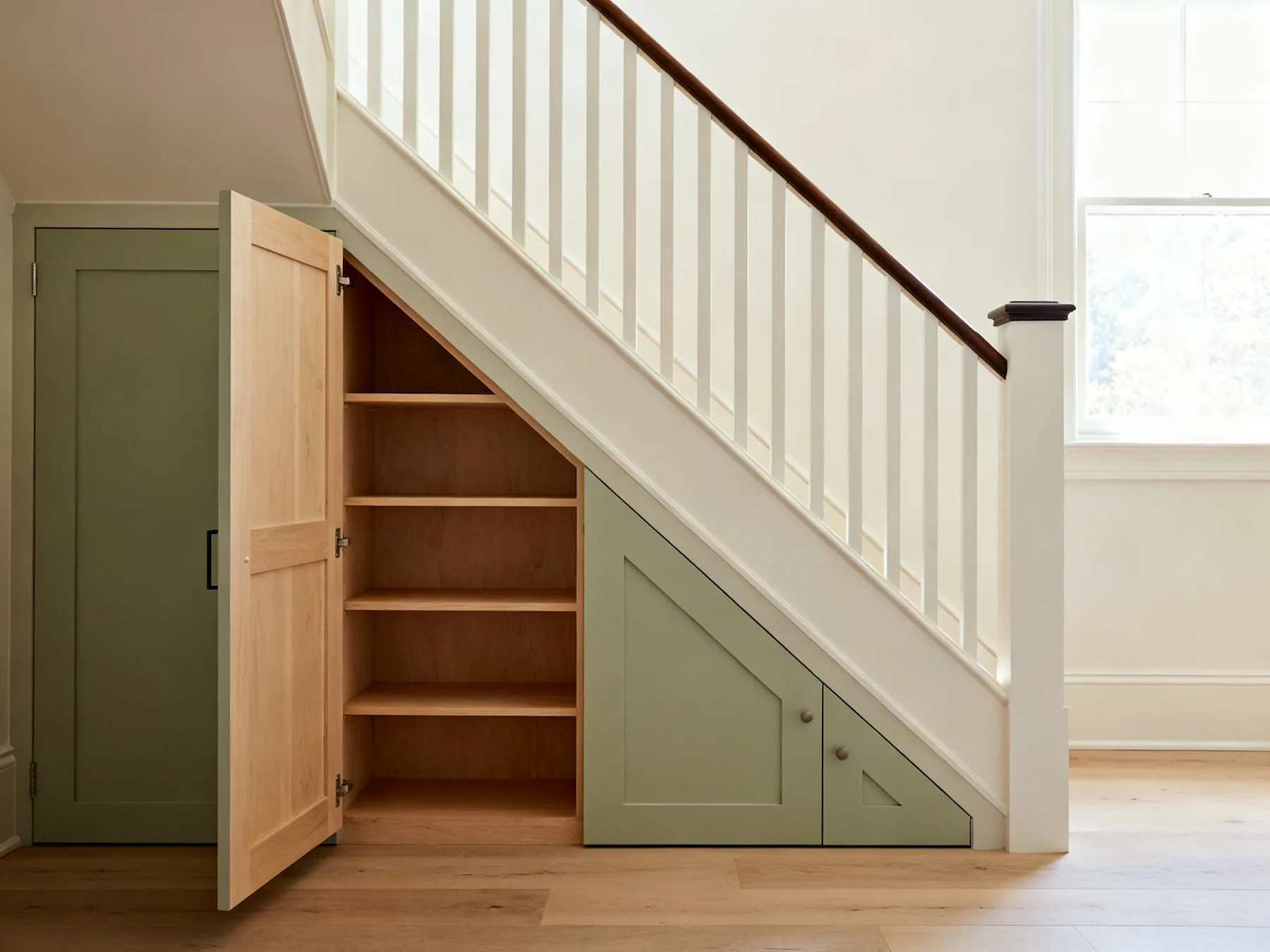
An understairs cupboard is one of the most useful spaces in a house and one of the worst used, and the reason is geometric. The space is a triangle in section, tall at one end and pinching to nothing at the other. Shelving comes in rectangles. Put a rectangular shelf in a triangular space and you either lose the tall end or you cannot reach the thin end.
So the fitting-out is genuinely different from any other cupboard. You are working along a slope, and the answer is to step the shelves to follow it rather than fighting it with one level.
There is also one thing to check before you fit anything, and it is not about storage at all. Most understairs cupboards contain the electricity meter, the consumer unit, and sometimes the stopcock.
Check what is in there before you fit anything
Open the door and look at the walls rather than the floor. In a great many houses this cupboard holds the electricity meter, the consumer unit, the gas meter or the mains stopcock, and sometimes several of those.
All of them need to be reachable in a hurry, one day, probably in the dark, possibly by somebody who does not live there. Stacking boxes in front of a consumer unit is a genuinely bad idea, and blocking access can also breach the terms of a home insurance policy.
So map those first and design the storage around them, leaving a clear standing space in front of each.
- Locate the consumer unit, the electricity and gas meters and the mains stopcock.
- Leave each one clear, reachable and with room to stand in front of it.
- Do not fit a shelf across a consumer unit, however tempting the height is.
- Check for a boiler or any appliance needing ventilation before enclosing anything.
- Note where the cupboard light switch is, and whether there is one at all.
- Look for signs of damp on the outside wall if the stairs back onto one.
- Check whether the staircase underside is plasterboarded or open to the treads.
Step the shelves along the slope
Here is the change that makes the difference. Instead of running shelves level from wall to wall, run them in short sections that step down as the ceiling drops, each one following the line of the staircase above it.
You end up with a staircase of shelves mirroring the real one. Each section is only as deep as it needs to be, nothing is wasted above any shelf, and every shelf is a usable height for something.
It is more work than fitting two long shelves and it roughly doubles what the cupboard holds.
Mark the stringer line and work to it
Hold a batten against the underside of the stairs and mark the slope on the side wall. That line is your guide, and every shelf sits parallel below it with a little clearance.
Follow the slope, do not fight it
Use short shelf runs, not full-width ones
Short spans are also stronger, which matters because these shelves often carry heavy household things. Under about 800mm needs no central support.
Set each step to what goes on it
Tallest items at the tall end, then decreasing. Measure the household objects you actually need to store before deciding the step heights.
Keep the very thin end for flat things
The last 200mm of a staircase is too low for almost anything except flat items lying down. Spare floor tiles, a folded step stool, flat boxes.
Tall things at the tall end
This sounds too obvious to state and it is the most common understairs mistake, because things get put away in the order they arrive rather than by size. Then the vacuum will not fit and ends up in the hall permanently.
Decide the tall end is for the tall awkward objects before anything else goes in, and leave it undivided.
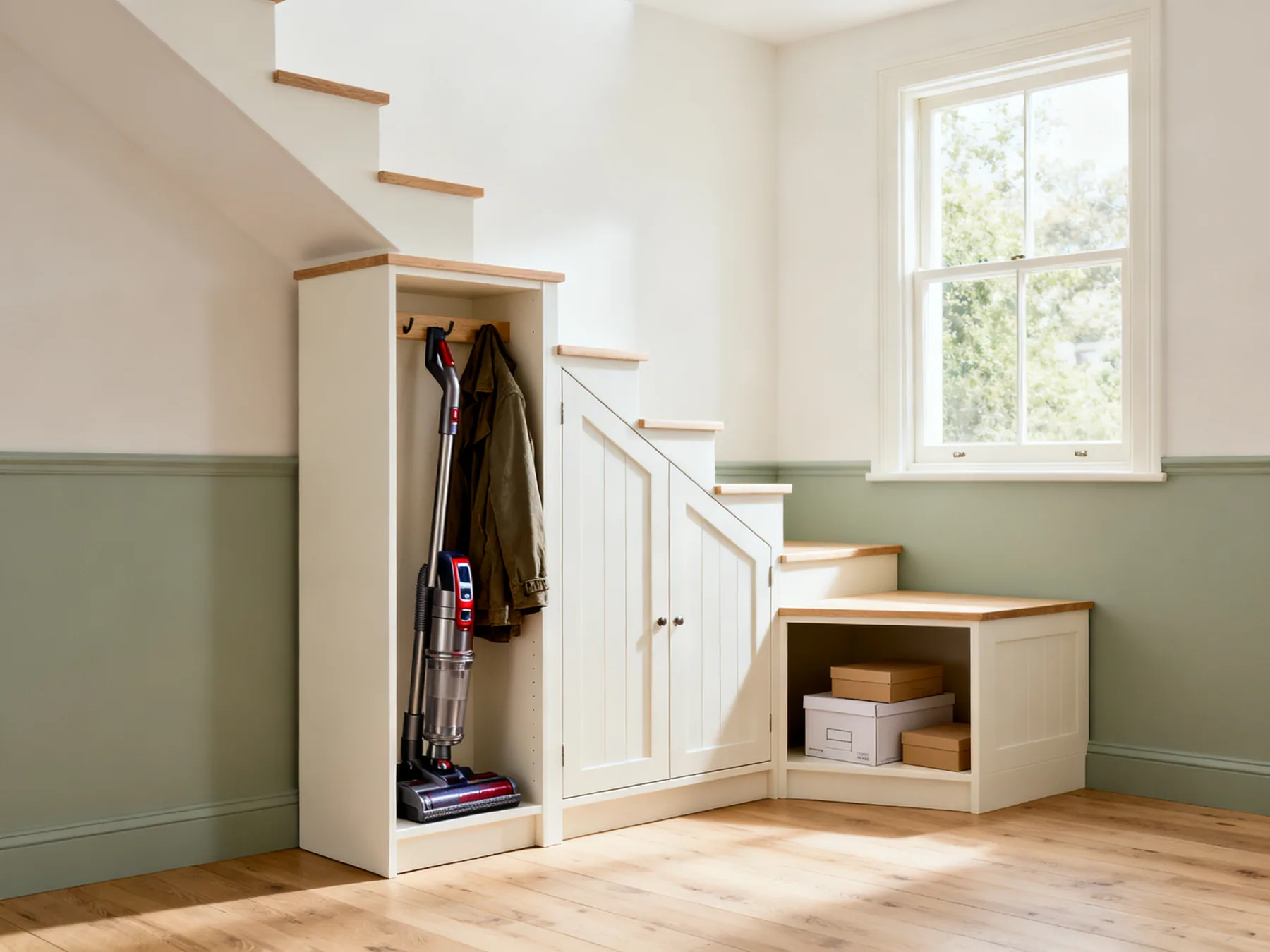
Leave the tall end undivided
No shelves at all in the highest section. Vacuum, mop, broom, ironing board, folding chairs. Measure the tallest before deciding how much width to give it.
Add a short hanging rail if there is height
The tall end will often take a metre of drop, which is enough for coats. An understairs cupboard doubling as a coat cupboard is a good use of a hallway.
Hang the mop and broom rather than standing them
Two spring grips on the side wall. Standing them means the heads deform and they fall over every time the door opens.
Keep the door swing clear
Check what the door opens against, and make sure the tall items can actually come out past it. A cupboard you have to unpack to open is a failed cupboard.
The deep wedge needs to come out to you
The far low end of the space has two problems at once: it is low, and it is deep. You cannot see into it, and you cannot reach it without crawling. So whatever goes there is effectively gone.
The fix is the same as any deep cupboard, made more urgent by the geometry. Put the contents on something that slides.
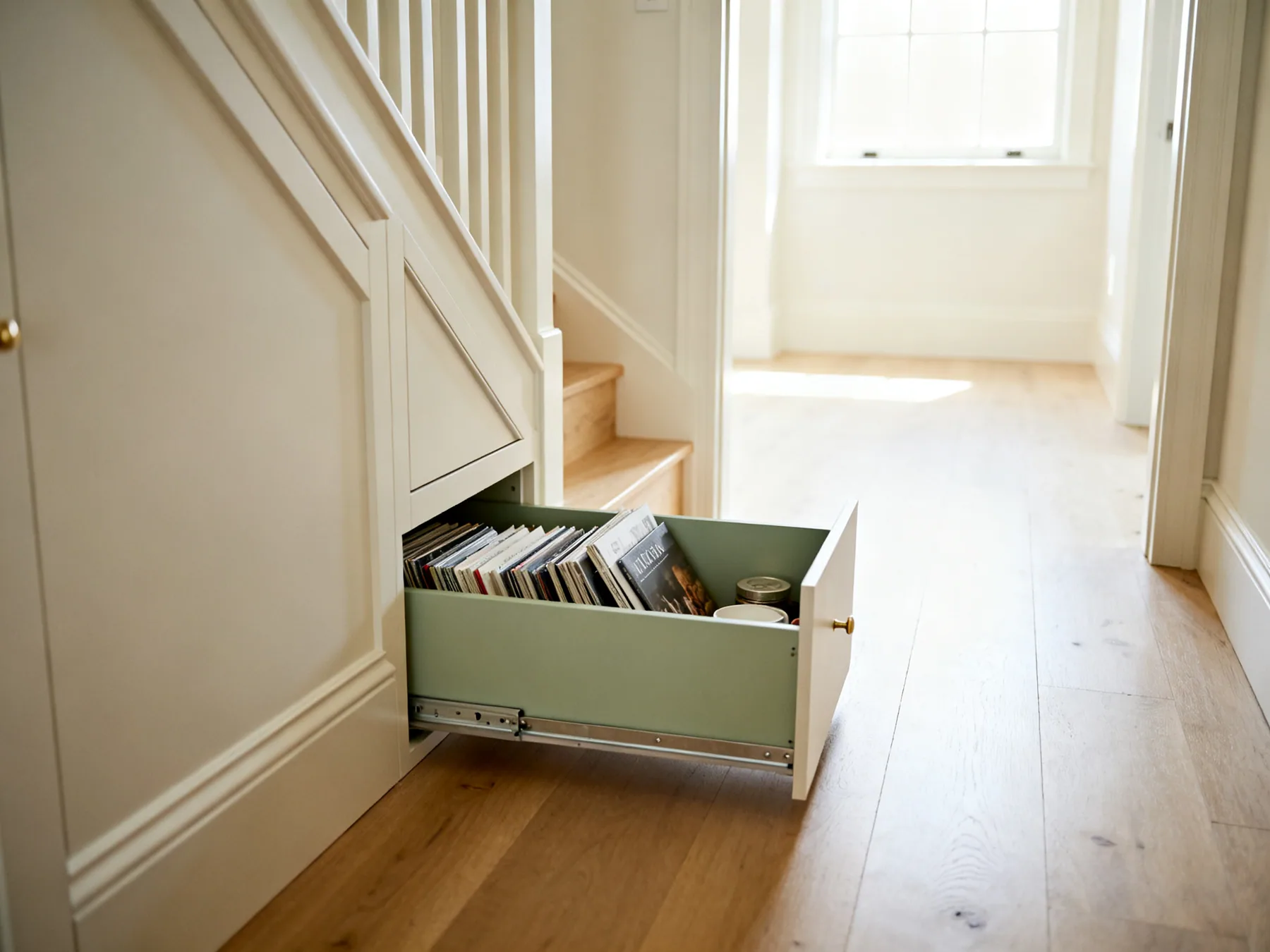
Fit a slim pull-out unit on castors
A shallow trolley or a purpose-built pull-out on runners brings the far corner out into the hall where you can see it. This is the single best-value fitting for an understairs cupboard.
Or use one large item you take out whole
Where nothing slides, a single big object beats several small ones: a boxed appliance, a suitcase, a bag of something. You retrieve it in one movement rather than excavating.
Never store small loose things down there
They migrate to the back and stay there for years. If it is small, it belongs on a stepped shelf where you can see it.
Consider drawers accessed from the side
If the stairs are open to a hallway on the long side, drawers set into the treads or the side panel reach the deep wedge far better than a door at one end ever will.
Light, damp and the finishing touches
Two small things that change how much of the cupboard you actually use, and one that decides whether what you store survives.
Understairs cupboards are dark, often have no light at all, and a dark cupboard is one where things go in and are forgotten. And if the staircase runs against an external wall, that wall is the coldest surface in the cupboard and the place condensation will form.
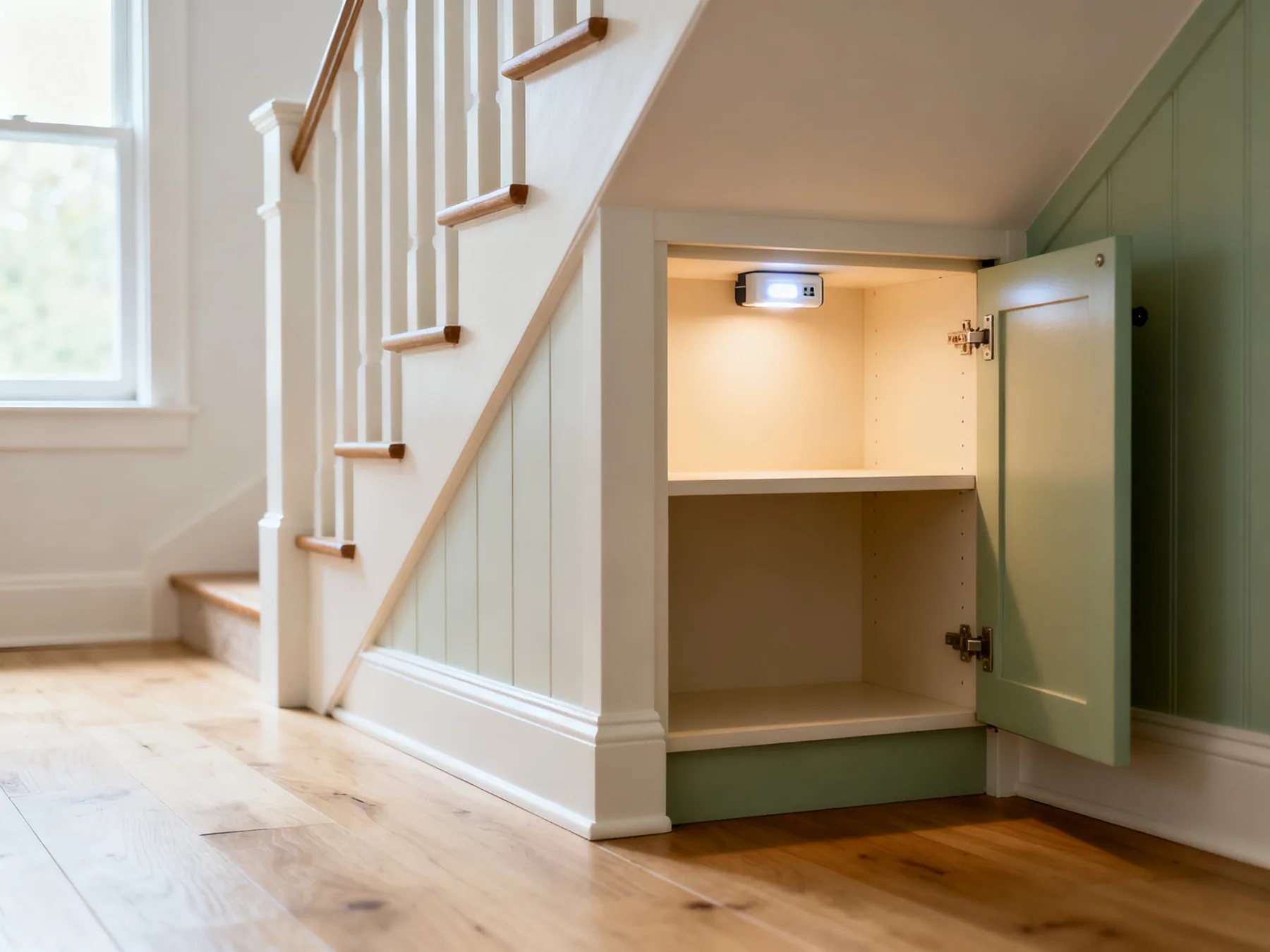
- Fit a light. A stick-on battery LED costs very little and transforms how usable it is.
- Keep contents 20 to 30mm off any external wall so air can move behind them.
- Do not store anything absorbent against a wall that has been damp before.
- Line the underside of the stairs if it is open, or dust falls through onto everything.
- Put a hook on the inside of the door for the ironing board or a folding chair.
- Label shelf edges, since a stepped cupboard is hard to scan at a glance.
- Keep a torch in there, because this is where you will be when the power goes out.
- Leave the floor in front of the meters clear permanently.
Under stairs cupboard storage ideas for an awkward wedge: frequently asked questions
How do I fit shelves in an understairs cupboard?
Step them to follow the staircase rather than running them level. Hold a batten against the underside of the stairs, mark that slope on the side wall, and fit short shelf runs parallel below it. You get a staircase of shelves mirroring the real one, nothing is wasted above any shelf, and it roughly doubles what the cupboard holds.
What should I store at the tall end of an understairs cupboard?
The tall awkward things, and leave that section undivided: vacuum, mop, broom, ironing board, folding chairs. Decide this before anything else goes in, because things otherwise get put away in the order they arrive and then the vacuum will not fit and lives in the hall instead.
How do I reach the back of an understairs cupboard?
Make it come out to you. The far end is both low and deep, so you cannot see or reach it without crawling, and anything small stored there is effectively gone. A slim pull-out unit on castors is the best-value fitting for the space. Failing that, put one large item there that you retrieve in a single movement.
Can I store things in front of the fuse box?
No. The consumer unit, meters and stopcock all need to be reachable in a hurry, possibly in the dark and possibly by somebody who does not live in the house. Blocking access is a real safety problem and can also breach the terms of a home insurance policy. Map them first and design the storage around them.
Why does my understairs cupboard smell damp?
Usually because the staircase runs against an external wall, which is the coldest surface in the cupboard and where condensation forms. Keep contents 20 to 30mm off that wall so air can move behind them, do not store anything absorbent against it, and if the underside of the stairs is open, line it so dust and draughts do not come through.
Is it worth putting a light in an understairs cupboard?
Yes, and it is the cheapest improvement on this list. These cupboards are dark and often have no light at all, and a dark cupboard is one where things go in and get forgotten. A stick-on battery LED costs very little. Keep a torch in there too, since this is where you will be standing when the power goes out.