Closets, Halls & Garages
Hallway storage ideas for a space you have to walk through
A hallway is circulation first and storage second. Get the depth wrong and you have made the house worse to live in.
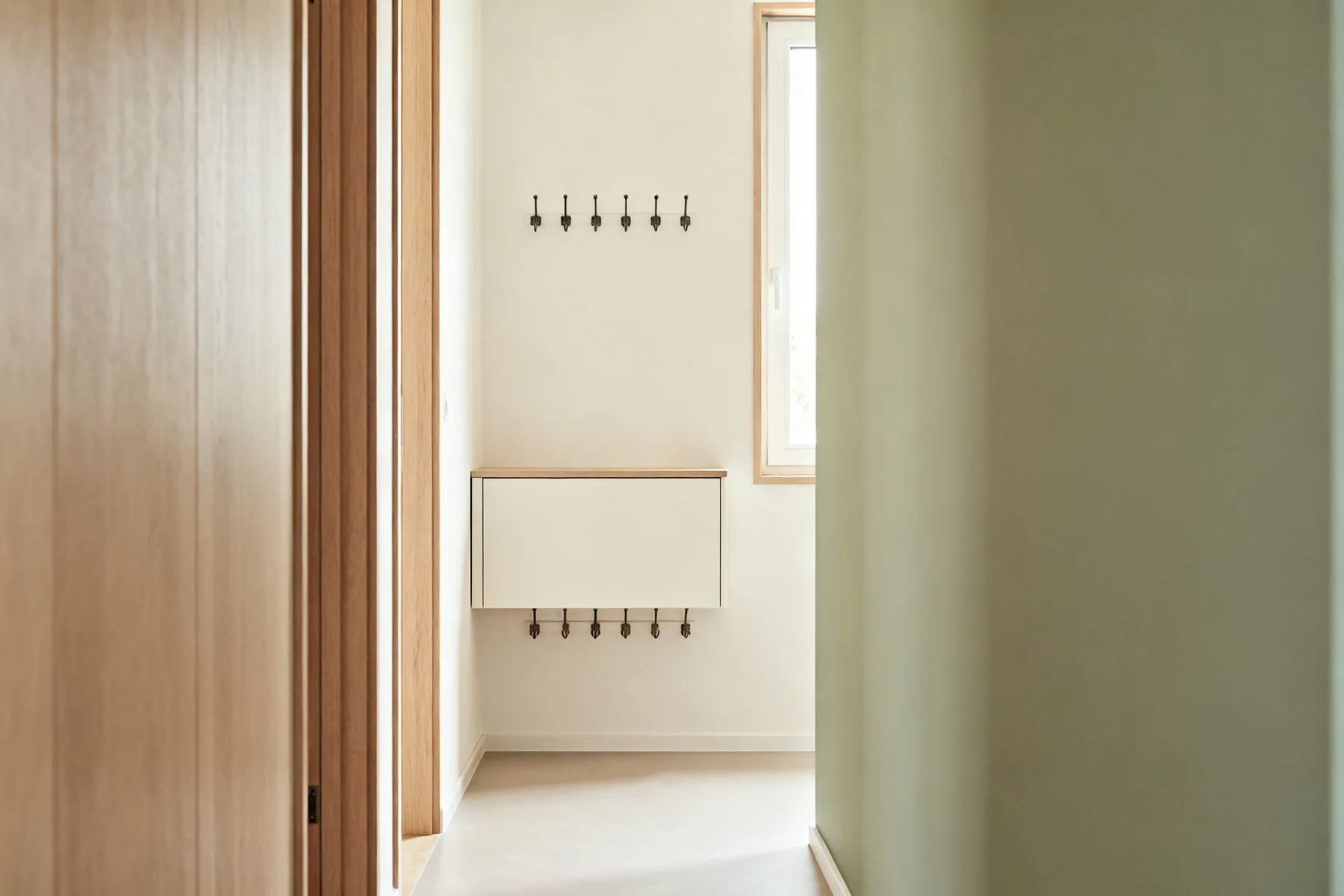
A hallway carries more traffic than any other space in a house and it is the only one whose primary job is to be empty. That makes it the one place where I start with a constraint rather than an opportunity: how much depth can I take before walking through becomes annoying.
The number I work to is about 900mm of clear width left over, and storage no more than 300mm deep. Past that you are squeezing past things while carrying shopping, and a hallway that is irritating to walk down will quietly get emptied again within a year.
Which sounds restrictive, and it is not, because a hallway has an enormous amount of wall. The trick is to go shallow and vertical rather than deep, and to fix the one thing that actually causes hallway mess, which is not a lack of storage.
Depth first, and go shallow
Before anything else, measure the width of the hallway and subtract 900mm. What is left is your depth budget, and if it comes to less than about 200mm then this is a hooks-and-shelf hallway rather than a furniture one. That is a perfectly good outcome and much better than a unit you resent.
A standard shoe cabinet is 350 to 400mm deep and a standard chest of drawers is 450mm, which is why so much hallway furniture makes a corridor unusable. Purpose-made slim units at 250 to 300mm hold a surprising amount and leave the passage intact.
Choose 250 to 300mm deep units
Slim console tables, shallow shoe cabinets with tilting fronts and narrow wall-hung cupboards all exist at this depth. A tilting shoe cabinet is particularly good value, because it stores shoes at an angle and therefore in far less depth than a shelf would need.
Roughly the maximum for a corridor
Wall-hang rather than stand on the floor
A wall-hung unit leaves the floor visible and clear, which makes a narrow hallway read as wider and makes it far easier to clean, since hallways collect more grit than anywhere else in the house.
Put storage on one wall only
Splitting storage across both walls of a corridor halves the clear width twice. Pick the wall without the doors and keep the other one empty, even if that means less capacity.
Mind the door swings
Map where every door in the hallway opens to before fixing anything. A unit that fouls a door swing gets moved, and the front door in particular needs its full arc.
Use the full height instead of the depth
A shallow unit taken to head height holds more than a deep one at waist height, and costs you nothing in walking space. This is the trade to make in any corridor.
Hooks, at two heights
Hooks are the highest-value thing in a hallway and the most commonly got wrong, in one specific way: they are all fitted at adult height.
A child who cannot reach the rail has two options, and one of them is the floor. Fitting a second row at around 900mm to 1.1m, depending on the child, is the single change that makes children hang their own coats, and it stops being needed as they grow rather than becoming a permanent feature.
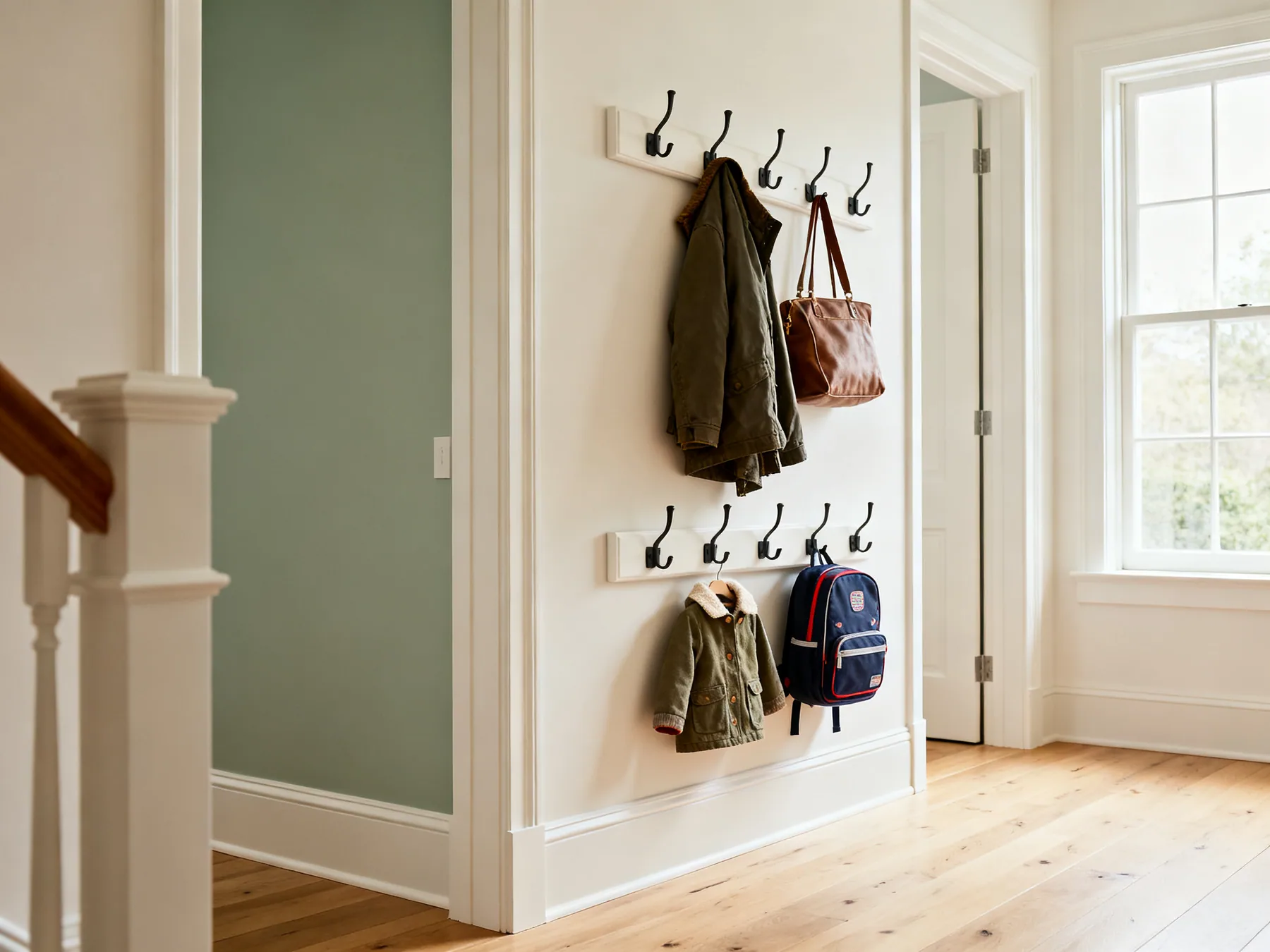
Fit a low row for children
Around 900mm to 1.1m off the floor. Coats, school bags, swimming kit. It is not about tidiness so much as removing the excuse, and it works immediately.
The fix for coats on the floor
Fix hooks into studs or with proper anchors
A loaded coat rack takes real weight, and a wet winter coat with a bag over it is heavier than people plan for. Into a stud, or with cavity anchors rated well above what you expect to hang.
Use fewer hooks than you think
A hallway with twelve hooks ends up with twelve coats on it, including four nobody wears. Limit the hooks to the coats actually in season and store the rest elsewhere. The hook count is a capacity decision, not a hardware one.
Add one hook you keep empty
For visitors, or for the bag you are carrying right now. A rack with no free hook forces things onto the newel post or the floor.
Keep hooks clear of the walking line
A hook at shoulder height projecting into a 900mm corridor catches sleeves and shopping. Where the hallway is very narrow, a shallow over-door rack or a rail with slim hooks is better than chunky ones.
Shoes, and the reason they end up everywhere
Shoes are the bulk of hallway mess and the cause is usually not storage capacity. It is that taking shoes off standing up is awkward, so people step out of them and move on, and the shoes stay exactly where that happened.
Give somebody somewhere to sit and the whole behaviour changes. A bench turns it from a balancing act into a two-second job, and shoes go into the cubby underneath because it is right there.
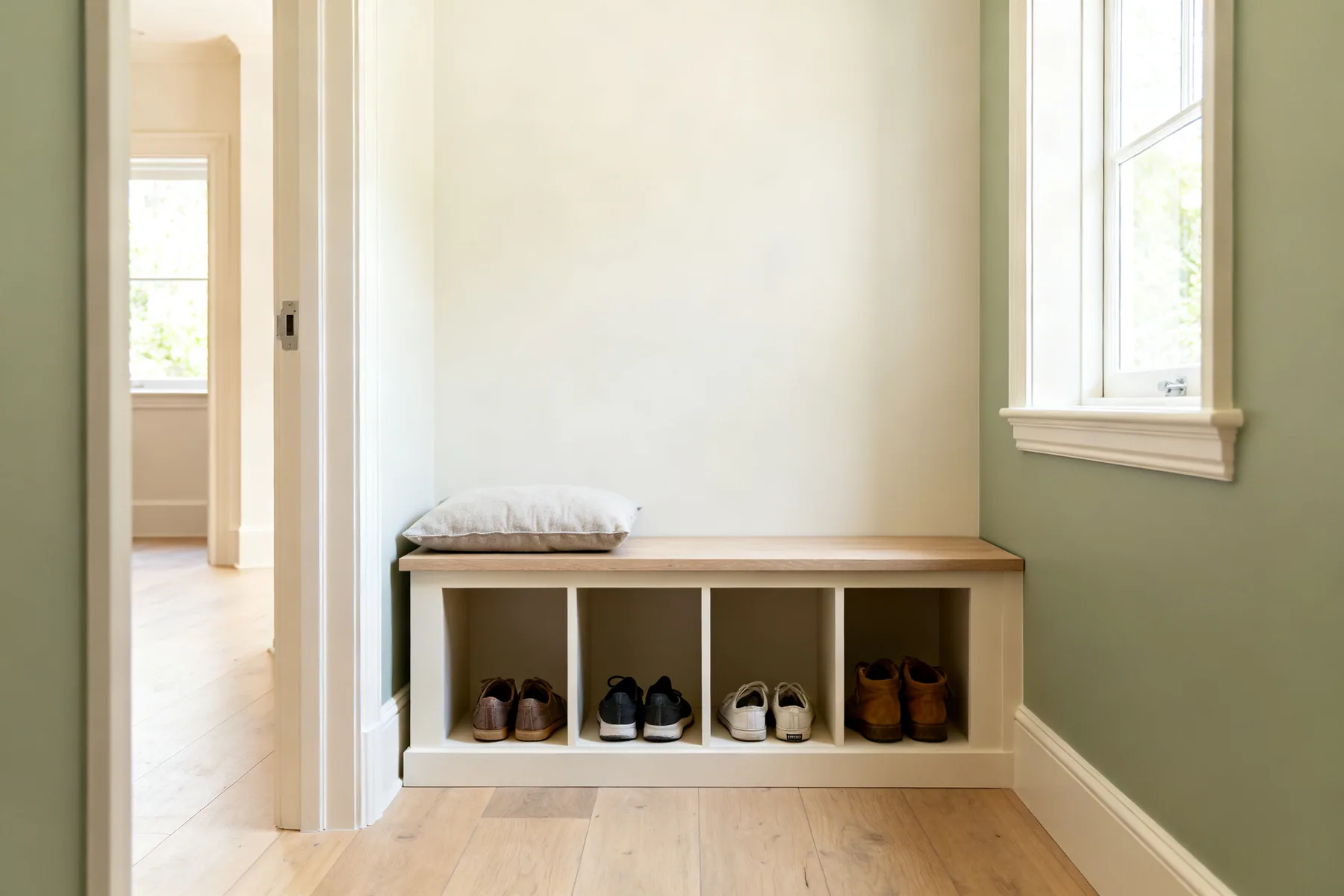
Fit a shallow bench with shoe storage under it
A seat at about 450mm high and no more than 350mm deep. Open cubbies underneath rather than doors, because a door is a step and a step is enough friction to stop it being used.
The single best hallway addition
Store only the shoes in current use
Two pairs per person in the hallway, the rest in a bedroom or a cupboard. Hallway shoe storage that tries to hold an entire household collection is always overflowing and always in the way.
Use a tilting shoe cabinet where depth is tight
These hold shoes at an angle, so a cabinet 250mm deep takes a shoe that would need 300mm on a flat shelf. In a narrow hallway that difference decides whether anything fits.
Put a boot tray by the door
Wet and muddy footwear needs a defined place that can be wiped out, or the grit spreads down the hall. A shallow tray with a lip is the whole solution.
Leave the shoes to dry before they go in a cabinet
A closed shoe cabinet with damp boots in it goes musty quickly and the smell transfers. Wet things go on the tray until they are dry, then into storage.
The things you are holding when you come in
The last category is small and it causes a disproportionate amount of household friction: keys, post, sunglasses, the parcel, the thing you meant to take back to the shop. All of it arrives in your hands and all of it needs to be put down within about a metre of the door.
If there is nowhere, it goes on the stairs, the radiator cover or the kitchen counter, and then keys get lost. This is the cheapest problem in the house to solve.
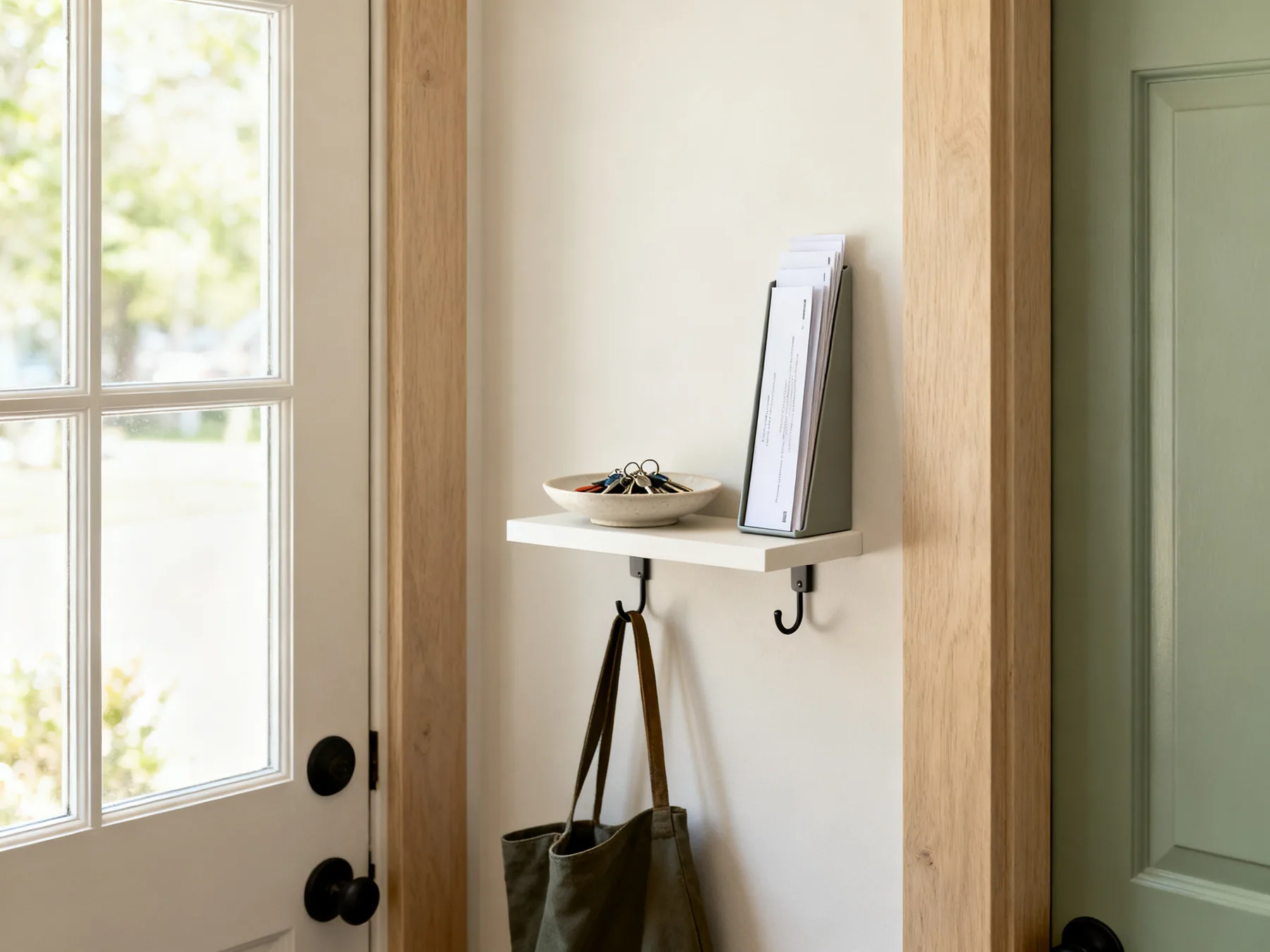
One shallow dish for keys, at the door
Not a bowl for everything. A small dish that only holds keys, so a glance tells you whether they are there. Mounted on a tiny shelf or on top of a slim unit, within reach of the door.
An upright tray for post
Vertical rather than flat, because a flat pile grows and a vertical tray fills up visibly and prompts you to deal with it. Keep it small deliberately.
A basket for things going out
Returns, library books, the thing to give back to a neighbour. One basket by the door for outbound items stops them circulating round the house for weeks.
Somewhere for parcels, if they get left
A defined spot just inside the door, out of the walking line. Otherwise parcels sit in the middle of the hallway until somebody trips over one.
The rest of the wall, and keeping it clear
Two things left. The band above the doorways is dead space in every hallway I have measured, and it is easy to use for the things you need seasonally. And a hallway needs a maintenance habit more than most rooms, because everybody passes through and nobody feels responsible for it.
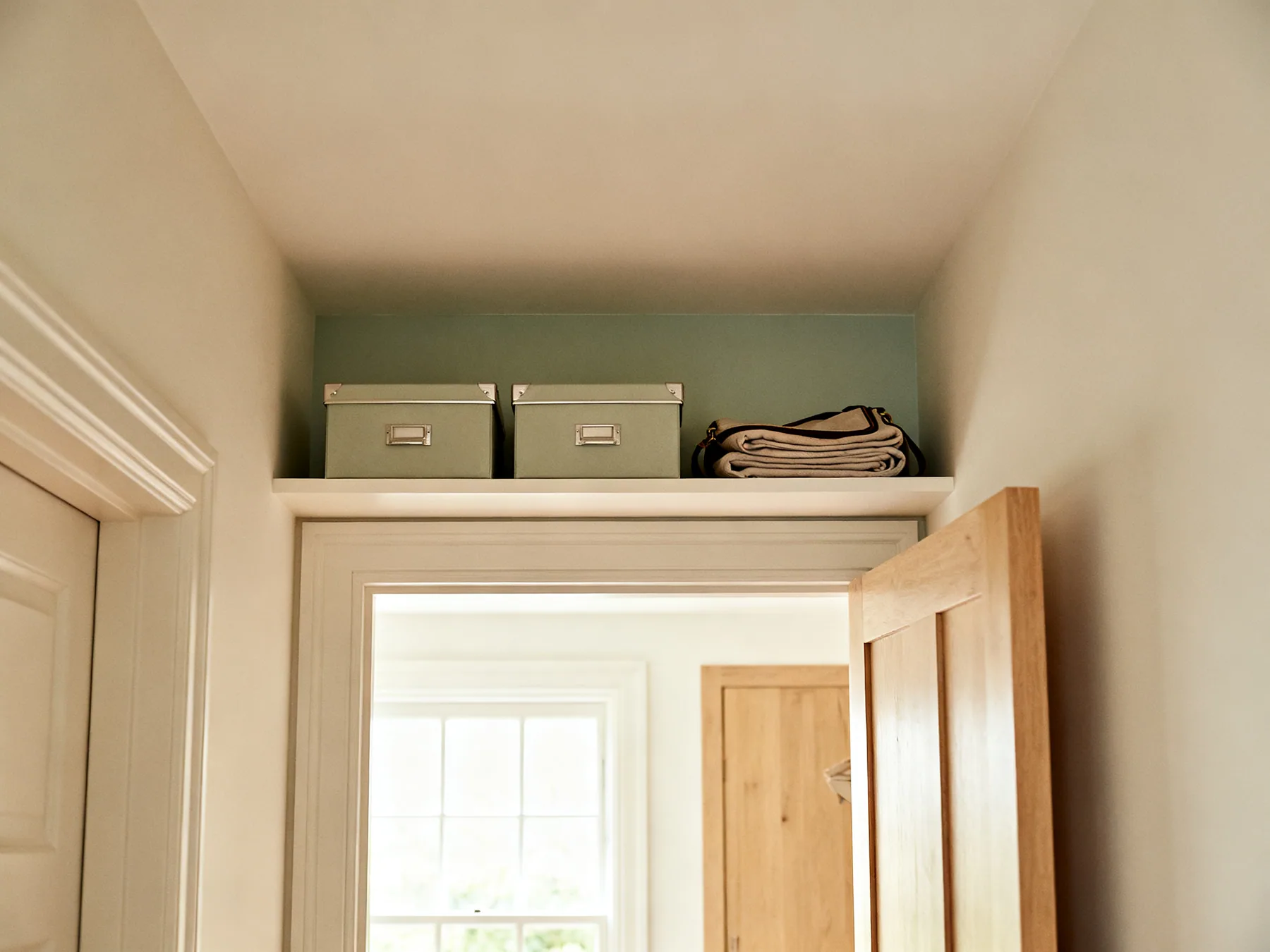
- Fit a shelf in the 300mm band above the door frame for seasonal and rarely needed things.
- Use lidded boxes up there, since a high open shelf collects dust you never see.
- Keep the floor completely clear. A hallway floor with anything on it reads as cluttered immediately.
- Fit a mirror if the hallway is dark or narrow, which makes it feel considerably wider.
- Do a 60-second sweep of the hallway daily rather than a clear-out weekly.
- Rotate coats by season. A rack holding winter coats in July is holding them for no reason.
- Check nothing blocks the front door arc or any escape route, which matters more here than anywhere.
- Keep one hook and a bit of bench free, so arrivals have somewhere to put things.
Hallway storage ideas for a space you have to walk through: frequently asked questions
How deep can hallway storage be?
Around 300mm, and less in a narrow corridor. Work it out by measuring the hallway width and subtracting about 900mm of clear walking space, which is what you need to pass comfortably while carrying something. A standard shoe cabinet is 350 to 400mm and a chest of drawers is 450mm, which is why so much hallway furniture makes a corridor unusable.
How do I stop coats ending up on the hallway floor?
Fit a second row of hooks at child height, around 900mm to 1.1m off the floor. Most hallway hooks are all at adult height, and a child who cannot reach the rail has only one other option. It removes the excuse rather than requiring anybody to change habits, and it works straight away.
What is the best hallway shoe storage?
A shallow bench about 450mm high and no more than 350mm deep, with open cubbies underneath. Shoes end up everywhere mainly because taking them off standing up is awkward, so somewhere to sit changes the behaviour more than extra capacity does. Use open cubbies rather than doors, because a door is enough friction to stop it being used.
Where should keys and post go in a hallway?
Within about a metre of the front door, since that is where they leave your hands. One shallow dish for keys only, so a glance tells you whether they are there, and a small upright tray for post rather than a flat one, because a vertical tray fills visibly and prompts you to deal with it while a flat pile just grows.
How can I add storage to a very narrow hallway?
Go shallow and tall rather than deep. A 250mm unit taken to head height holds more than a deep one at waist height and costs no walking space. Use hooks, a slim wall-hung shelf, a tilting shoe cabinet, and the 300mm band of wall above the door frame. Keep everything on one wall and leave the other clear.
Should hallway storage be open or closed?
Closed for anything that would look untidy, since a hallway is the first thing you see coming in and the shallowest depths make mess very visible. The exception is shoes going into a bench, where open cubbies work better than doors because opening a door is enough friction to stop the storage being used at all.